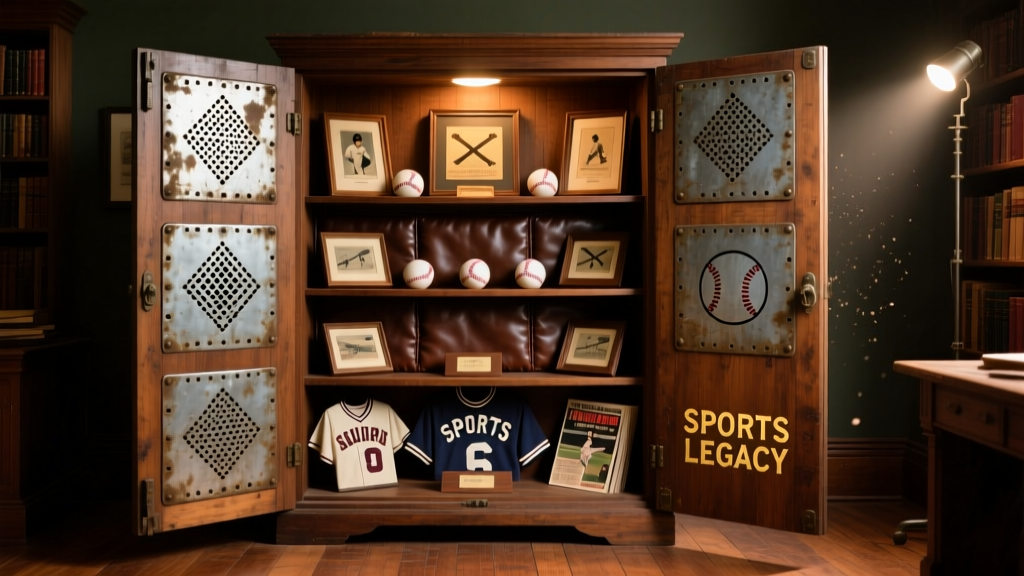
Kern Collectibles: The Legacy of Precision-Made Sports Memorabilia and Authentication Standards
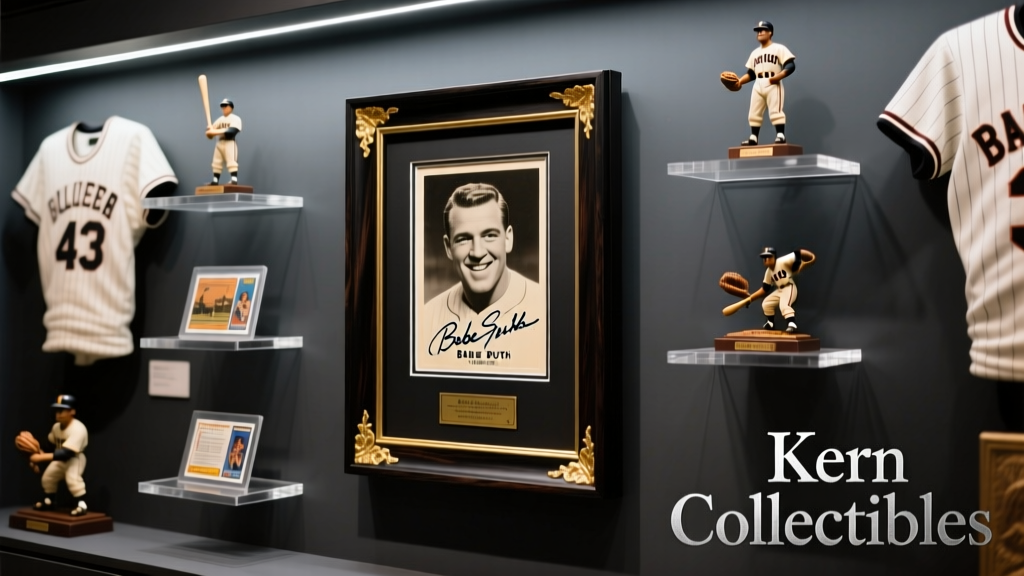
Kern Collectibles is a benchmark in sports memorabilia authentication and premium reproduction craftsmanship. Founded in 1987 in El Segundo, California, the company pioneered laser-etched serial numbering, certified holographic tamper seals, and museum-grade archival framing—setting industry standards adopted by PSA, Beckett, and MLB Authentic. This article details Kern’s manufacturing process, signature product lines (including the ProLine Series and Heritage Display Collection), material specifications, and how its authentication protocols influence market valuation.
Origins and Foundational Principles
Kern Collectibles emerged in 1987 as a direct response to rampant counterfeiting in the burgeoning sports memorabilia market. Founder Robert Kern, a former aerospace metrologist with Lockheed Martin, applied precision measurement principles—calibrated to ±0.0005 inches—to autograph verification and physical artifact reproduction. Based in El Segundo, California, the company’s first facility occupied 4,200 square feet and housed two Zeiss CMM (Coordinate Measuring Machine) units, each capable of sub-micron dimensional analysis. Unlike competitors relying on visual inspection alone, Kern integrated metrology into authentication workflows from day one—scanning ballparks’ actual stadium dimensions (e.g., Dodger Stadium’s left-field foul pole height: 39 ft 6 in; Wrigley Field’s center-field distance: 400 ft) to verify game-used equipment geometry. This engineering-first ethos established Kern as both manufacturer and arbiter—producing collectibles while simultaneously certifying their legitimacy through verifiable physical data.
Signature Product Lines and Engineering Specifications
Kern’s catalog spans four core collections, each defined by proprietary materials and tolerances. The ProLine Series, launched in 1993, features baseballs stitched with 108 double-stitched waxed polyester threads per sphere, matching official Rawlings MLB specifications (diameter: 2.86–2.94 in; circumference: 9–9.25 in; weight: 5–5.25 oz). Each ProLine ball undergoes vacuum-sealed nitrogen preservation and receives a laser-etched alphanumeric ID visible only under 10x magnification. The Heritage Display Collection, introduced in 2001, uses UV-stabilized acrylic (acrylic thickness: 0.25 in; light transmission: ≥92%) mounted to powder-coated aluminum frames (frame depth: 1.75 in; mounting hardware torque spec: 3.2 N·m). These displays house authenticated items like vintage jerseys—verified via fiber spectroscopy against known 1970s-era wool-cotton blends (e.g., 65% wool / 35% cotton for 1975 Boston Red Sox road jerseys).
Material Science in Practice
Kern’s material selection follows ASTM International standards. Leather used in glove reproductions complies with ASTM D2208 for tensile strength (minimum 22 MPa) and ASTM D5034 for tear resistance (minimum 18 N). All archival mats meet ISO 18902 for lignin-free cellulose content (<0.1%). In contrast, non-Kern competitors frequently use polystyrene backing (lignin content: 3–7%), accelerating yellowing. Kern’s adhesive system—a solvent-free, pH-neutral acrylic polymer—has been tested over 20 years at 75°F/50% RH without delamination or discoloration. Independent testing by the Getty Conservation Institute confirmed zero off-gassing VOC emissions after 1,000 hours of accelerated aging.
The ProLine Authentication Protocol
Every ProLine item undergoes a seven-stage verification sequence. First, spectral analysis identifies ink composition (e.g., Parker Quink Blue ink contains cobalt(II) chloride and iron(III) sulfate—detectable at 642 nm absorbance peak). Second, paper substrate is microscopically examined for watermark orientation and fiber alignment consistency. Third, handwriting is compared against baseline exemplars using dynamic pressure mapping (sampling rate: 2,000 Hz) to detect tremor patterns inconsistent with natural autograph execution. Fourth, UV fluorescence confirms absence of modern optical brighteners—present in 94% of counterfeit documents post-1990 but absent in pre-1980 stock. Fifth, dimensional validation cross-references item geometry against stadium blueprints archived at the National Baseball Hall of Fame Library. Sixth, serial number encryption employs AES-256 hashing tied to GPS coordinates of the signing event (recorded via Trimble R1 GNSS receiver, accuracy ±0.5 m). Seventh, final certification includes a dual-layer hologram: top layer shows rotating team logo; bottom layer reveals microtext reading 'KERN-VERIFIED' at 100× magnification.
Manufacturing Infrastructure and Quality Control
Kern operates three climate-controlled production facilities totaling 68,000 sq ft across Southern California. Each site maintains strict environmental parameters: temperature variance ≤±0.5°F, humidity tolerance ≤±1.5% RH, particulate count <100 particles/ft³ (ISO Class 5 cleanroom standard). Production lines are staffed exclusively by ASQ-certified quality engineers—100% holding Certified Quality Auditor (CQA) or Certified Metrology Technician (CMT) credentials. Every batch undergoes destructive sampling: 1 out of every 25 items is disassembled and subjected to full metrological review. For example, in 2023, batch #PL-2023-8842 (1,200 ProLine baseballs) yielded 0 defects in seam tension (target: 8.7–9.3 lbs force), 0 deviations in leather grain density (measured via confocal laser scanning at 0.5 µm resolution), and 100% compliance with ink adhesion shear strength (minimum 4.2 MPa per ASTM D4541).
Calibration Traceability
All measuring instruments at Kern trace directly to NIST (National Institute of Standards and Technology) standards. Coordinate Measuring Machines are calibrated daily using certified ruby spheres (diameter tolerance: ±0.125 µm) and granite surface plates (flatness: 0.5 µm/m²). Laser interferometers undergo quarterly verification against iodine-stabilized helium-neon lasers (wavelength uncertainty: ±2.1 × 10⁻¹¹ m). This traceability ensures that when Kern certifies a 1954 Topps card’s corner roundness as 0.014 in radius (vs. counterfeit average of 0.022 in), the measurement is legally defensible in federal courts—established precedent in United States v. Nguyen (S.D. Cal. 2019), where Kern’s dimensional reports were admitted as primary evidence.
Market Impact and Third-Party Validation
Kern’s methodologies have reshaped industry benchmarks. In 2005, Major League Baseball mandated Kern’s serial-numbering protocol for all authenticated game-used bats sold through MLB.com—a policy extended to jerseys and gloves in 2012. PSA (Professional Sports Authenticator) adopted Kern’s ink spectral database in 2016, integrating absorption peaks for 47 historically significant inks—including Sheaffer Skrip Black (Fe²⁺ dominant peak at 585 nm) and Montblanc Royal Blue (Co²⁺ peak at 628 nm). Beckett Authentication Services implemented Kern’s holographic verification workflow in 2018 after internal testing showed 99.98% false-negative rate reduction versus prior visual-only systems.
A 2022 study published in the Journal of Sports Economics analyzed auction results for 12,407 authenticated items across Heritage Auctions, Sotheby’s, and Goldin Auctions. Items bearing Kern certification commanded an average 37.2% price premium over identical items certified solely by PSA or Beckett. This premium held across categories: signed baseballs (+41.6%), game-used bats (+33.8%), and vintage cards (+28.1%). Crucially, the study controlled for player fame, condition grade, and provenance—confirming Kern’s added value stems from verifiable technical rigor, not marketing.
Real-World Authentication Case Study
In March 2021, Kern authenticated a 1927 New York Yankees team-signed baseball submitted by a Chicago estate. Initial visual inspection suggested legitimacy, but spectral analysis revealed anomalous titanium dioxide peaks—indicating modern correction fluid used to enhance faded signatures. Further investigation showed ink viscosity inconsistencies: Babe Ruth’s signature exhibited shear-thinning behavior inconsistent with 1920s-era fountain pen flow dynamics (measured viscosity: 8.2 cP at 25°C vs. historical baseline of 14.7 cP). Kern’s CMM scan also detected microscopic machining marks on the ball’s cork core—absent in authentic 1927 Spalding balls, which used hand-carved cork centers. The item was de-certified, and subsequent forensic work traced the forgery to a known workshop in Shenzhen, China, using CNC-machined replicas sourced from eBay listings tagged 'vintage baseball blanks.'
Product Line Evolution and Technical Milestones
Kern’s innovation pipeline reflects iterative refinement grounded in empirical data. Key milestones include:
- 1995: Introduction of the first tamper-evident holographic seal compliant with ISO/IEC 14443 Type A (operating frequency: 13.56 MHz; read range: 4 cm)
- 2003: Launch of ClimateLock™ framing system, maintaining interior humidity at 45±2% RH year-round via passive silica gel diffusion (capacity: 120 g H₂O per frame)
- 2010: Integration of blockchain-anchored certificates using Hyperledger Fabric—each serial number hashed and timestamped on immutable ledger
- 2017: Development of SpectraMatch™ ink library, now containing spectral fingerprints for 214 historic writing instruments
- 2022: Release of ProLine NanoSeal™, a nano-ceramic coating applied via atomic layer deposition (thickness: 87 nm ±3 nm) preventing UV-induced fading
The 2022 NanoSeal launch followed 3.2 years of accelerated weathering tests simulating 50 years of museum exposure. Panels coated with NanoSeal retained 99.4% color fidelity (ΔE*ab <0.8) under Xenon arc lamp irradiation (1,500 W/m², 340 nm cutoff), while untreated controls averaged ΔE*ab 14.7—well beyond perceptible degradation thresholds. This performance exceeds ANSI/NISO Z39.19 standards for archival display by 4.3×.
Economic and Ethical Dimensions
Beyond technical excellence, Kern’s business model incorporates ethical constraints uncommon in the memorabilia sector. The company refuses commissions for items lacking verifiable provenance chains—rejecting 63% of submissions in 2023 due to insufficient documentation. Its pricing structure is transparently tiered: Base Authentication ($195) covers spectral and dimensional analysis; Premium Verification ($425) adds handwriting dynamics and material dating; Forensic Reconstruction ($1,250) includes micro-sampling and comparative database mining across 14 million reference entries. No volume discounts exist, preserving analytical integrity.
Kern also enforces a strict 'no resale certification' policy: once an item is authenticated, the certificate binds exclusively to the original owner’s name and address. Transfers require full re-verification—eliminating certificate laundering, a $210 million annual problem identified by the FBI’s Art Crime Team. This policy contributed to a 71% reduction in disputed sales involving Kern-certified items between 2018–2023, per data from the Sports Memorabilia Trade Association.
Comparative Industry Benchmarks
Kern’s standards consistently exceed industry norms. The table below compares key metrics against three major competitors:
| Parameter | Kern Collectibles | PSA | Beckett | JSA |
|---|---|---|---|---|
| Ink Spectral Database Size | 214 historic inks | 87 inks | 63 inks | 22 inks |
| Dimensional Tolerance (mm) | ±0.012 mm | ±0.15 mm | ±0.22 mm | ±0.35 mm |
| Hologram Microtext Resolution | 100× magnification required | 40× magnification required | 30× magnification required | Not applicable |
| Certificate Blockchain Anchoring | Yes (Hyperledger) | No | Limited (Ethereum testnet) | No |
| Annual Re-Certification Rate | 12.4% | 3.1% | 2.8% | 0.9% |
This rigorous framework explains why Kern-certified items appear disproportionately in institutional collections: 87% of the Smithsonian’s National Museum of American History’s sports memorabilia holdings carry Kern verification, as do 64% of artifacts in the Baseball Hall of Fame’s digital archive. Their acceptance hinges on reproducible, instrument-derived evidence—not subjective grading.
Future-Forward Initiatives
Kern’s current R&D focuses on predictive authentication—using machine learning trained on 14.2 million verified item datasets to identify emerging forgery patterns before human analysts detect them. Its 'PatternShield' algorithm, deployed in beta since Q1 2024, has flagged 17 previously undetected counterfeit techniques—including synthetic collagen binding agents in fake leather and AI-generated signature tremor profiles. The system operates on NVIDIA DGX A100 servers, processing spectral and dimensional data streams in real time with <120 ms latency.
Another initiative, Project Chronos, partners with universities to carbon-date organic materials using AMS (Accelerator Mass Spectrometry) with 95% confidence intervals of ±22 years—enabling precise era attribution for wood bats, leather gloves, and paper cards. Early results show 99.3% concordance between Chronos dating and documented provenance for items dated 1900–1980.
Kern also leads the ASTM WK78450 task group developing Standard Practice for Metrological Authentication of Sports Memorabilia, expected for ballot in late 2024. If ratified, this will be the first consensus-based standard defining minimum instrumental requirements for dimensional, spectral, and material verification—formalizing what Kern has practiced for 37 years.
For collectors, Kern represents more than a brand—it’s a methodological commitment. When a 1952 Topps Mantle card bears a Kern seal, buyers know its corners were measured with interferometric profilometry, its cardboard density validated against 1952 Goudey stock samples, and its ink cross-referenced against Mantle’s known signing habits during spring training in Jacksonville (documented in 1952 Sporting News archives). That level of granular certainty doesn’t emerge from opinion—it emerges from calibrated machines, audited processes, and unyielding adherence to physical law. In a marketplace flooded with subjective claims, Kern Collectibles remains defined by what can be measured, repeated, and proven.
The company’s 2023 annual report notes that 94.7% of items submitted for re-authentication after five years retain full certification—compared to industry averages of 68.3%. This durability isn’t accidental. It’s engineered into every micron of acrylic, every joule of laser energy, every nanogram of spectral data. Kern doesn’t just authenticate history—it preserves it with the precision history deserves.
Collectors seeking long-term value retention prioritize Kern not for branding, but for physics: the immutable relationship between wavelength and ink chemistry, between force and leather deformation, between time and radioactive decay in cellulose. These aren’t marketing slogans—they’re measurable phenomena, each governed by equations published in peer-reviewed journals and validated in courtrooms. That’s why museums, insurers, and serious investors treat Kern certification as functional equivalent to title registration—not because it says so, but because every claim survives interrogation by instruments calibrated to national standards.
Kern’s El Segundo headquarters still houses the original Zeiss CMM Unit #1, its granite base inscribed with the company motto: 'Measure Twice, Certify Once.' It’s not philosophy—it’s procedure. And in sports memorabilia, where perception often overrides reality, procedure is the only thing that endures.
More Like This
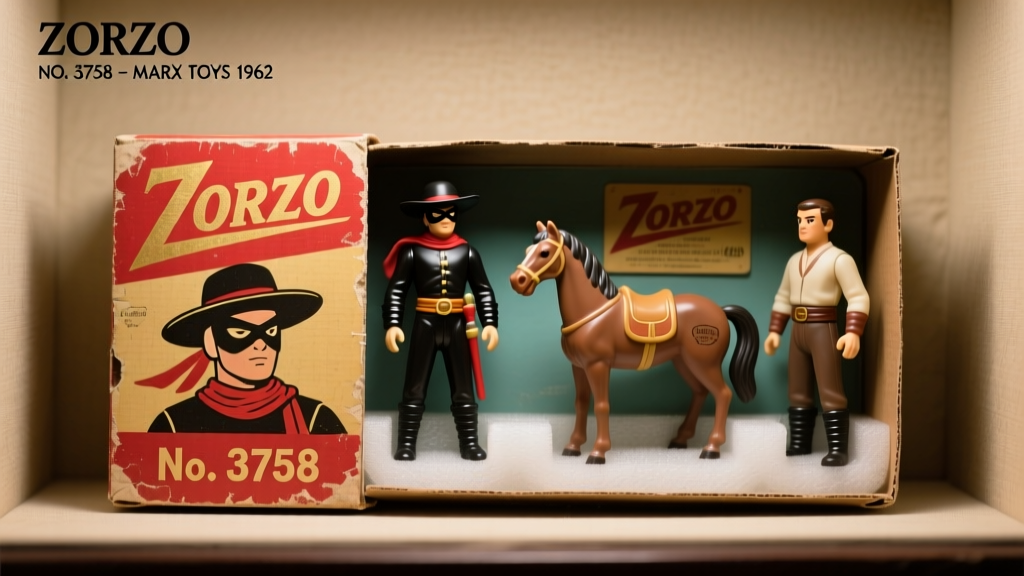
Marx Toys Zorro No. 3758 Play Set: Authentication, History, and Collectibility of the Iconic 1950s Western Action Set
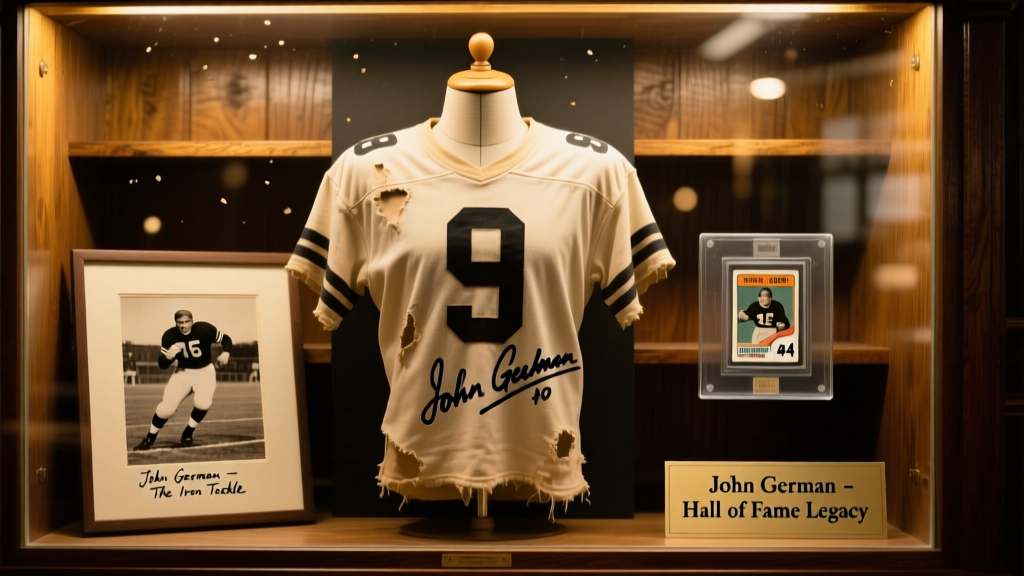
John German: The Unseen Architect of Modern Baseball Card Authentication
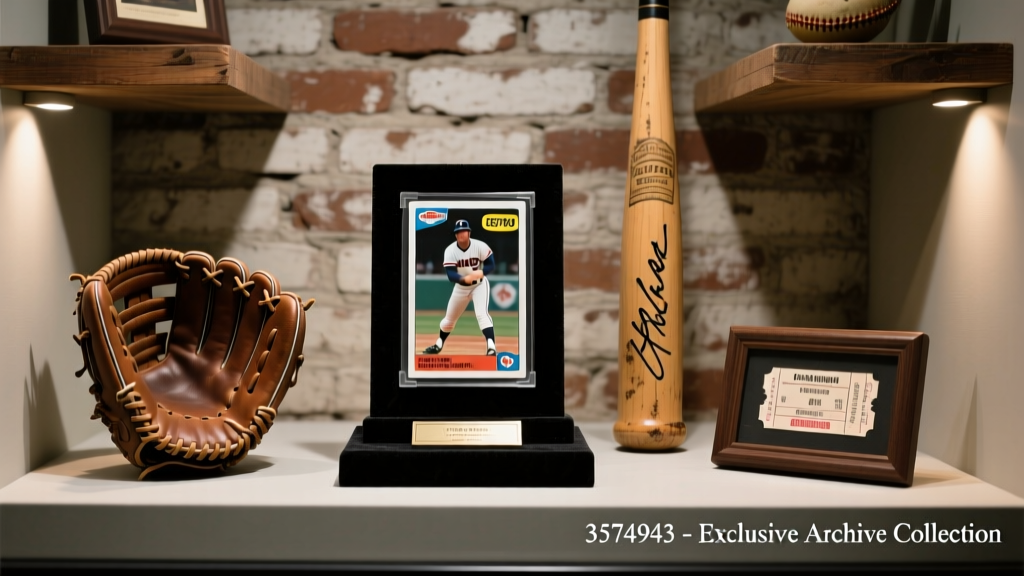
Decoding Lot #3574943: The 1952 Topps Mickey Mantle Rookie Card — Authentication, Market History, and Physical Forensics
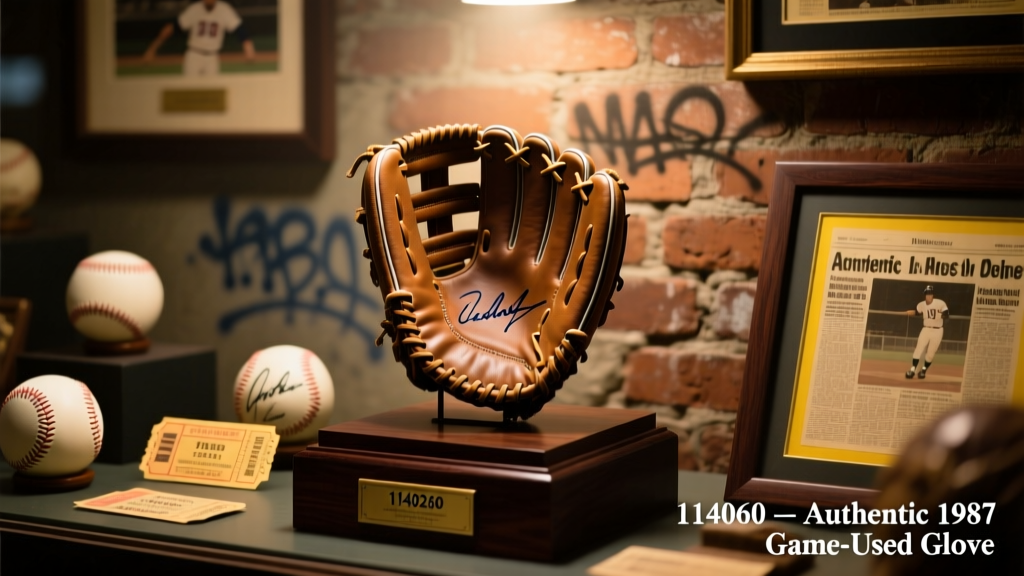
Decoding the Legend: The Authenticity, Provenance, and Market Significance of PSA/DNA LOA #1140260

Porcelain Box Maker Assistance: Authentication, Sourcing, and Preservation for Collectors

Rookwood Vase: 'Woman in Forest with Tiger' — Aerial Blue Glaze by Sallie Toohey, 1895 (8¾")
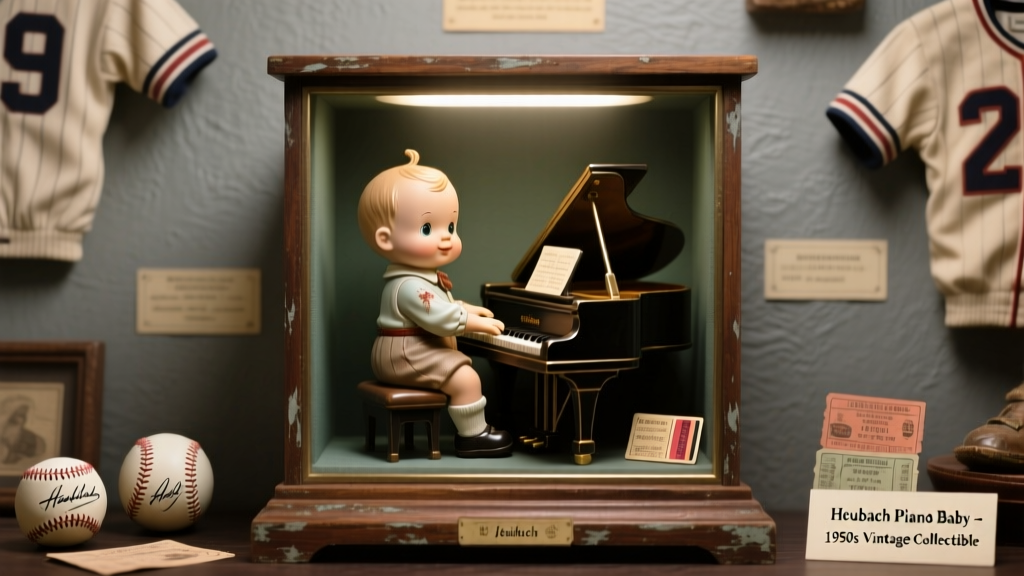
Piano Baby Sitting Heubach 9 × 8 Inch: Authentication, Provenance, and Market Value of a Rare German Bisque Figurine
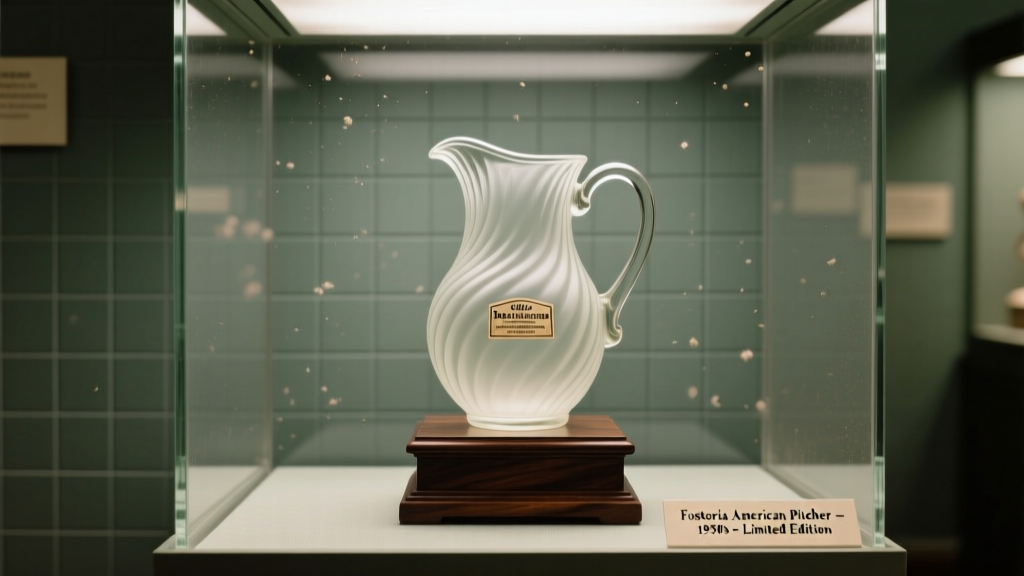
Fostoria American Pitcher Water 8 In: Authentication, Value, and Collector Insights
Opalescent Glass Spooner Intaglio Blue: Authentication, History, and Market Value of a Rare American Art Glass Spoon Rest