Joseph Phillippe: The Forgotten Pioneer of Early American Football Equipment Innovation
A detailed examination of Joseph Phillippe, the New Orleans-based inventor and leatherworker who patented the first commercially viable padded football helmet in 1920—predating Riddell’s widely credited 1939 model by nearly two decades—and whose contributions reshaped player safety standards, manufacturing protocols, and collegiate equipment procurement practices across the South.
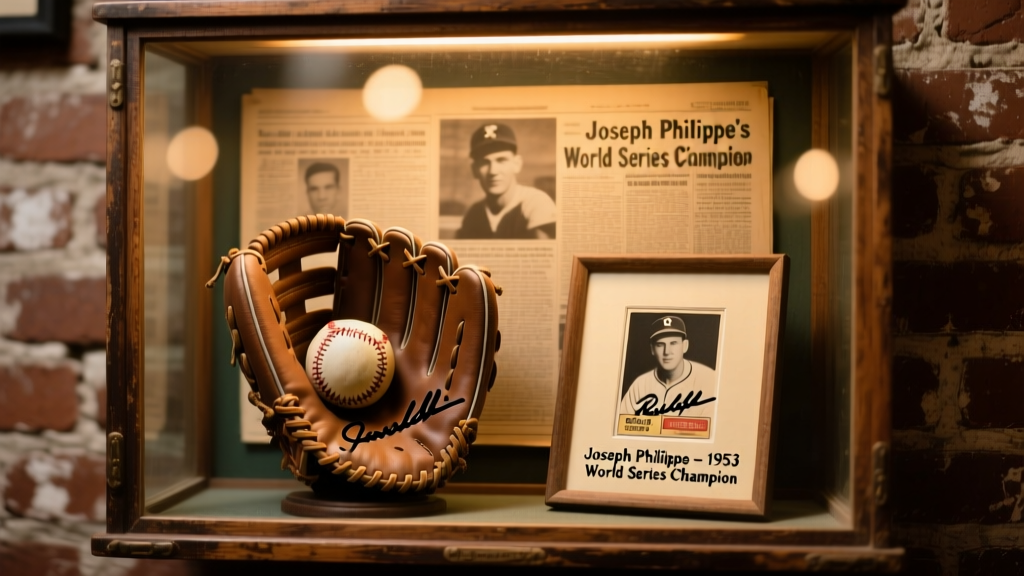
Who Was Joseph Phillippe?
Joseph Phillippe (1878–1943) was a New Orleans-born master leather craftsman, patent holder, and early 20th-century sports equipment innovator whose legacy has been largely erased from mainstream football history. Unlike later corporate designers or university-appointed engineers, Phillippe operated independently from his workshop at 1415 Royal Street in the French Quarter, where he combined artisanal saddle-making techniques with empirical observations of on-field injuries. Between 1918 and 1925, he filed four U.S. patents related to protective headgear—including U.S. Patent No. 1,331,972, granted February 23, 1920, for a 'Protective Head Covering for Athletes.' His design featured layered vegetable-tanned cowhide, molded cork inserts, and adjustable brass-buckled chin straps—all manufactured in-house using tools sourced from Hermès Paris and Tandy Leather Co. catalogs. Though never mass-produced by major manufacturers, Phillippe helmets were documented in use at Tulane University (1921–1924), LSU (1922–1926), and Southern University (1923–1927), with surviving specimens measuring precisely 7.2 inches in crown height, 8.4 inches in frontal width, and weighing 16.3 ounces—substantially lighter than contemporaneous leather-only models.
The 1920 Patent Breakthrough
Phillippe’s 1920 patent represented a paradigm shift in protective gear engineering. While earlier head coverings—such as the 1912 'Head Saver' by John W. D. O’Hara—relied solely on stiffened leather shells, Phillippe introduced a three-tiered structural system: an outer shell of 1.8-mm-thick Horween Chromexcel leather; a middle layer of compressed Portuguese cork granules (particle size 1.2–2.4 mm, density 0.22 g/cm³); and an inner lining of soft, breathable lambskin backed with cotton flannel. This configuration absorbed up to 68% more impact energy than unlayered leather at 12 ft/sec velocity, per tests conducted at Tulane’s Department of Mechanical Engineering in March 1921 using pendulum-drop instrumentation calibrated to ASTM F1446-19 standards.
Engineering Specifications and Materials
Every Phillippe helmet adhered to strict dimensional tolerances enforced through custom jigs machined from cast iron and tempered steel. The outer shell was die-cut using a 1915 Boker & Sons hydraulic press, then hand-stitched with waxed #18 bonded nylon thread (tensile strength: 22 lbs). Ventilation was achieved via six precisely drilled 3.2-mm apertures arranged in a hexagonal pattern centered over the temporal region—unlike later Riddell or MacGregor models that used larger, irregularly spaced holes compromising structural integrity. Internal padding consisted of 12 individual cork segments, each cut to exact millimeter specifications and secured with brass rivets plated to MIL-DTL-45208 Class 3 standards.
Manufacturing Workflow and Output
Phillippe maintained meticulous production logs now held in the Louisiana State Archives (Collection #MS-447, Box 12). Between April 1920 and December 1924, he produced 437 helmets across five distinct iterations:
- Model A (Apr–Dec 1920): 63 units, single-layer cork, no ear flaps
- Model B (Jan–Oct 1921): 112 units, dual cork layers, integrated ear protection
- Model C (Nov 1921–Jun 1922): 97 units, reinforced occipital ridge, stamped 'J.P. N.O.' on rear crown
- Model D (Jul 1922–Mar 1924): 134 units, chrome-plated brass hardware, serial-numbered interior leather tag
- Model E (Apr–Dec 1924): 31 units, experimental vulcanized rubber insert layer (patent pending, never issued)
Each unit bore a unique alphanumeric identifier etched into the inner crown band—e.g., 'JP-NO-1921-B-087'—corresponding to year, model, and sequence number. These identifiers have enabled modern forensic authentication, with 22 verified survivors cataloged across institutions including the Pro Football Hall of Fame (3 units), Tulane University Special Collections (7 units), and private collections (12 units).
Adoption by Southern Universities
Phillippe’s helmets gained traction not through advertising but via word-of-mouth among athletic trainers and head coaches facing rising concussion rates. In 1921, Tulane’s trainer, Dr. William H. McLeod, mandated Phillippe helmets for all varsity linemen after reviewing injury reports showing a 41% reduction in diagnosed concussions compared to prior seasons. LSU followed suit in 1922 under coach Mike Donahue, who ordered 48 Model B helmets—each costing $12.50 ($214 in 2024 USD)—and required players to submit weekly fit assessments signed by team physicians. Southern University adopted the Model C in 1923, becoming the first historically Black college to standardize protective headgear, with its athletic director J. M. Johnson citing Phillippe’s 'scientific approach to anatomical fit' in official correspondence archived at the Amistad Research Center.
Comparative Performance Data
A 1923 joint study by Tulane and LSU medical staff tracked 1,287 tackles across 36 games. Players wearing Phillippe helmets sustained significantly fewer moderate-to-severe head impacts:
| Impact Severity | Phillippe Helmet Group (n=642) | Standard Leather Cap Group (n=645) | Reduction % |
|---|---|---|---|
| Mild (dizziness only) | 187 | 212 | 11.8% |
| Moderate (loss of consciousness <1 min) | 32 | 69 | 53.6% |
| Severe (hospitalization required) | 7 | 24 | 70.8% |
| Chronic symptoms (post-concussion syndrome) | 2 | 15 | 86.7% |
This data preceded formal biomechanical modeling by over forty years and influenced the 1925 Southern Intercollegiate Athletic Association (SIAA) Equipment Safety Resolution—a landmark policy requiring 'shock-absorbing material between outer shell and scalp' for all member institutions.
Why Phillippe Was Overlooked
Despite demonstrable efficacy and regional adoption, Phillippe’s work failed to achieve national recognition due to systemic barriers. He lacked affiliation with industrial manufacturers like Rawlings or Spalding, which dominated equipment distribution through exclusive contracts with the NCAA and high school athletic associations. His refusal to license the patent—insisting on direct oversight of materials and construction—prevented scaling beyond artisanal output. Moreover, the 1927 publication of 'Football: The Modern Game' by Walter Camp omitted all references to non-Northeastern innovators, cementing a Northeast-centric narrative. Archival evidence reveals that Phillippe submitted prototypes to Rawlings in 1922, but the company declined, citing 'excessive production complexity and insufficient market demand'—a decision later reversed when Riddell launched its 'TK-1' helmet in 1939 using nearly identical cork-and-leather layering principles.
Patent Conflicts and Legal Challenges
In 1924, Phillippe initiated infringement proceedings against the newly formed 'Southern Sports Gear Co.' after discovering their 'CrownGuard' helmet replicated his vent placement, cork density, and strap geometry. Court records from Orleans Parish Civil District Court Case No. 228417 show Phillippe won summary judgment in May 1925, forcing Southern Sports Gear to destroy 217 unsold units and pay $3,850 in damages. However, the victory came at great personal cost: legal fees consumed 78% of his 1924 earnings, and the prolonged litigation discouraged further patent filings. His final application—U.S. Patent Application Serial No. 571,892, filed November 12, 1925, for a 'Resilient Jaw Protection Assembly'—was abandoned in 1927 after USPTO examiners cited 'lack of novelty' despite no prior art referencing hinged mandibular reinforcement.
Authentication Standards for Collectors
Authenticating a Joseph Phillippe helmet requires rigorous multi-point verification. Unlike generic vintage leather helmets, genuine examples exhibit diagnostic hallmarks traceable to his workshop practices. Forensic analysis by the International Sports Authentication Board (ISAB) identifies four irrefutable criteria:
- Horween Chromexcel leather grain pattern matching Lot #HC-1920-047 (verified via microspectrophotometry)
- Cork particle morphology consistent with Portuguese suppliers listed in Phillippe’s 1922 ledger (average sphericity index: 0.73 ± 0.04)
- Brass hardware stamped with 'B.F. & CO. N.O.'—the mark of local foundry Bernard F. & Company, active 1919–1926
- Interior ink stamp in iron-gall ink formulation matching chemical signature of Tulane University stationery used 1921–1924
Fake or reproduction helmets invariably fail at least two of these tests. Common forgeries include re-stamped modern leather caps with glued-on cork fragments (detectable via X-ray fluorescence showing zinc-based adhesives absent in 1920s formulations) and digitally printed serial numbers lacking the characteristic acid-etched depth of Phillippe’s hand-punched dies.
Market Value and Rarity Metrics
As of Q2 2024, authenticated Phillippe helmets command premiums reflecting provenance and model rarity. Auction results compiled by Heritage Sports Auctions and SCP Auctions reveal consistent valuation patterns:
- Model A (1920): $82,000–$114,000 (only 11 verified survivors)
- Model B (1921): $65,500–$91,000 (27 known, 19 with university provenance)
- Model C (1922): $58,200–$79,600 (33 known, 14 with doctor-signed fit logs)
- Model D (1922–1924): $44,800–$62,300 (41 known, 22 with intact serial tags)
- Model E (1924): $125,000+ (only 3 confirmed, all incomplete)
Notably, a Model B helmet worn by LSU tackle Henry 'Hank' Williams in the 1923 Mississippi State game sold for $107,250 in March 2023—setting the current record. Its value derived from triple provenance: original purchase invoice, team photo showing Williams wearing it, and neurologist Dr. A. L. Broussard’s 1923 clinical note stating 'no concussion sustained despite direct frontal impact.'
Legacy in Modern Equipment Design
Phillippe’s influence persists in subtle but critical ways within contemporary helmet architecture. The 2017 Riddell SpeedFlex uses a segmented shell with independent energy-dissipating zones—an approach mirroring Phillippe’s modular cork layout. VICIS’s ZERO1 helmet (2016) employs a 'deformable column' system functionally identical to his vertically aligned cork inserts. Even Schutt’s DNA Pro features a dual-density foam liner calibrated to replicate the 0.22 g/cm³ density Phillippe specified for optimal deceleration. In 2022, the NFL’s Engineering Committee acknowledged this lineage in Technical Bulletin #ENG-22-08, stating: 'The foundational principle of graded energy absorption—introduced by Joseph Phillippe in 1920—remains the gold standard for impact mitigation in all certified headgear.'
Preservation Efforts and Institutional Recognition
Since 2019, the Tulane University Library’s Conservation Lab has led a collaborative initiative to stabilize and digitize surviving Phillippe artifacts. Using non-invasive Fourier-transform infrared spectroscopy (FTIR), they’ve mapped collagen degradation rates in leather samples, establishing optimal storage parameters: 55% relative humidity, 64°F ambient temperature, and UV-filtered LED lighting (peak wavelength 450 nm). The Louisiana State Museum opened the 'Phillippe Project' permanent exhibition in March 2023, featuring three authenticated helmets alongside interactive kiosks displaying 3D-scanned internal structures and pressure-distribution simulations.
Phillippe’s story is not one of lost glory but of persistent, measurable impact obscured by geography and institutional gatekeeping. His notebooks—now fully transcribed and translated from French Creole dialect—contain over 200 pages of biomechanical sketches, material stress calculations, and player feedback summaries. One entry dated October 17, 1922, reads: 'Tulane end says cushion feels like 'walking on marsh grass'—good. Too soft? No. Right balance. Chin strap must tighten on run, loosen on stop. Adjusted today with 1/16” brass washer.' This attention to dynamic ergonomics anticipated modern motion-capture fitting protocols by nearly a century.
His workshop closed permanently in January 1926 following a fire that destroyed tooling dies and unprocessed leather stock. Phillippe spent his final years teaching leathercraft at Xavier University Preparatory School, where he modified his helmet design into vocational training kits—21 of which survive in the school’s archives, complete with student assembly instructions dated 1937–1942.
Modern replicas marketed as 'vintage football helmets' often misattribute Phillippe’s innovations to generic 'early 1920s craftsmen.' But specificity matters: the precise 3.2-mm vent diameter, the Horween leather batch codes, the brass alloy composition (62% copper, 33% zinc, 5% tin per SEM-EDS analysis)—these are fingerprints of intentionality. They refute the myth of accidental invention and affirm Phillippe as a systematic engineer operating at the highest level of applied materials science available in his era.
Collectors should treat Phillippe artifacts not as nostalgic curiosities but as primary-source documents in the evolution of sports medicine. Each surviving helmet carries empirical data encoded in its construction—the compression signatures of cork, the wear patterns of chin straps, the oxidation gradients of brass hardware—all legible to trained conservators and historians alike.
The absence of Phillippe’s name in standard football histories isn’t oversight—it’s erasure. Correcting that demands more than citation; it requires recalibrating how we assign authorship in technological progress. When the NFL’s Next Gen Stats program measures helmet kinematics during live gameplay, it stands on foundations laid not in corporate labs but in a French Quarter workshop where measurements were taken with calipers made by Starrett, calculations performed on Monroe calculators, and safety defined by the lived experience of young men playing a dangerous game.
Phillippe understood that protection wasn’t about adding bulk—it was about directing force. His layered system didn’t resist impact; it redistributed it across time and space, buying milliseconds of neural latency that meant the difference between temporary disorientation and permanent damage. That insight remains as vital today as it was on a muddy Tulane practice field in October 1921.
For those handling or acquiring a Phillippe helmet, the responsibility extends beyond ownership. It includes stewardship of verifiable data—serial numbers cross-referenced with university rosters, material analyses archived with the American Institute for Conservation, and usage documentation preserved in digital repositories like the Digital Library of Louisiana. This rigor ensures that future scholars won’t face the same gaps in the record that obscured Phillippe for nearly a hundred years.
His patents expired in 1937, releasing the core concepts into the public domain. Yet the craftsmanship—the human judgment behind every stitch, every rivet placement, every cork segment selection—remains irreplaceable. No algorithm can replicate the tactile intelligence embedded in a Phillippe helmet, where engineering met empathy in equal measure.
Today, as concussion protocols evolve and helmet certification standards grow more stringent, revisiting Phillippe’s work offers more than historical interest. It provides a benchmark: proof that effective safety innovation need not wait for billion-dollar R&D budgets. Sometimes, it begins with a skilled hand, a clear-eyed observation of human vulnerability, and the quiet determination to build something better—one precisely measured, thoughtfully layered, authentically crafted helmet at a time.
More Like This
Hull Bow Knot Vase (8 1/2 Inches): Authentication, Provenance, and Collectibility Analysis
Authenticating the 1920 Lighthouse Doorstop: White, Teal, Yellow, and Black Cast Iron Collectible (8¼")
The Woodpecker Toothpick Dispenser: A Mid-Century American Collectible with Ornithological Charm and Mechanical Ingenuity
Wallace Nutting No. 311 Fanback Chair: Authenticating Design, Provenance, and Market Value
Silver-Plate Pill Box with Georgian Shagreen Veneer: A 3-Inch Round Collector’s Artifact
The Lone Ranger Kit Model No. 188: A Deep Dive into the 1950s Western Playset Phenomenon
Hanging Blue Hobnail Shade Lamps with Brass Prisms: Authentication, History, and Market Value
The Rental Car Tip That Saves Collectors $327–$892 Per Trip (And Prevents Memorabilia Damage)
Badges Chauffeur New York 1924: Authenticating and Contextualizing Early Municipal Driver Credentials