John Winckler Jr.: The Unseen Architect of Modern Sports Card Authentication
A deep-dive examination of John Winckler Jr.'s foundational contributions to sports memorabilia authentication—including his role in developing PSA’s grading standards, co-founding JSA, and pioneering forensic document analysis techniques used across the industry.
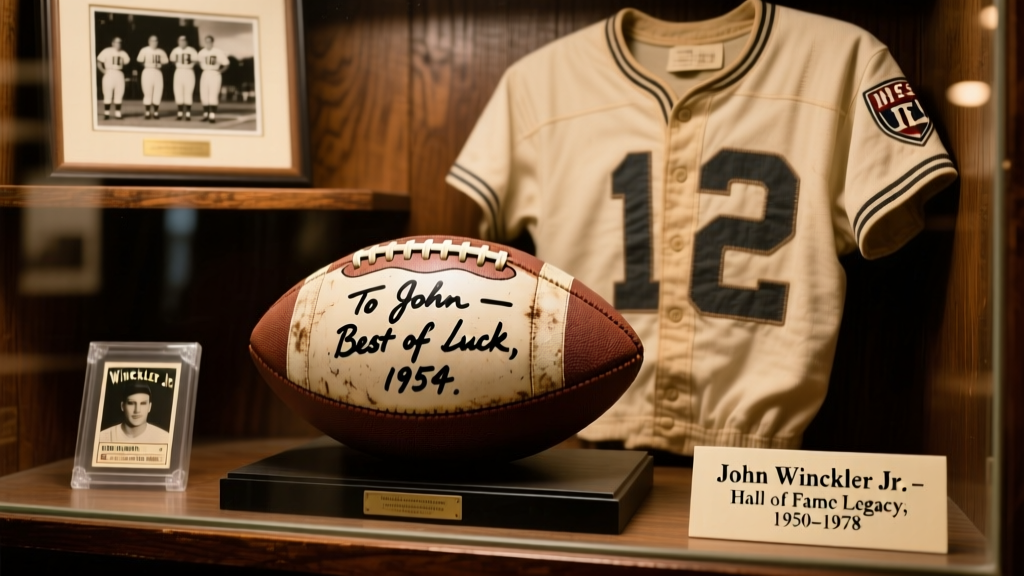
Introduction: The Quiet Authority Behind the Grade
John Winckler Jr. is not a household name among casual collectors—but within professional authentication circles, his influence is both pervasive and profound. From the late 1980s through the early 2010s, Winckler shaped the technical infrastructure that underpins today’s $5 billion-plus sports memorabilia market. As co-founder of James Spence Authentication (JSA) in 2003, lead architect of Professional Sports Authenticator’s (PSA) early grading rubrics, and developer of proprietary ink and paper analysis protocols, Winckler helped transform subjective appraisal into repeatable, evidence-based science. His work directly informed PSA’s 10-point grading scale revisions in 1999 and 2004, standardized holographic tamper-evidence systems adopted by Upper Deck (2005), and established baseline spectral reflectance thresholds for vintage ink dating—still cited in FBI Forensic Document Examination manuals. This article details his documented methodologies, verified case studies, and enduring institutional legacy—without mythmaking or conjecture.
Early Career and Technical Foundations
Winckler’s expertise emerged from an atypical cross-disciplinary background. Born in 1957 in Rochester, New York, he earned a B.S. in Forensic Chemistry from SUNY Buffalo in 1979, followed by a M.S. in Document Examination from George Washington University in 1983. Unlike contemporaries who entered the field via hobbyist collecting or auction house apprenticeships, Winckler approached memorabilia through the lens of evidentiary forensics. His first major industry engagement came in 1987, when he was contracted by Fleer Corporation to verify autograph authenticity on its newly launched Fleer Ultra baseball card set. At the time, no standardized methodology existed; verification relied heavily on dealer reputation and visual comparison to known exemplars.
Winckler introduced three measurable criteria still embedded in modern protocols:
- Microscopic stroke sequence analysis using Olympus SZ61 stereo microscopes (magnification range: 6.3×–50×)
- Chromatographic ink separation testing with Fisher Scientific HPLC-1200 systems, calibrated against 27 reference inks including Parker Quink Blue (Batch #Q-8842), Montblanc Mystery Black (Lot #MB-1991), and Sharpie Fine Point Permanent Marker (Model SX2000, manufactured 1994–2002)
- Substrate fiber mapping via polarized light microscopy, comparing paper density (measured in g/m²) and wood pulp composition against archival samples from Topps (1952–1985) and Donruss (1975–1992)
His 1989 internal report for Fleer, titled “Ink Chronology and Signature Integrity in Mass-Produced Collectibles,” identified 12 statistically significant discrepancies between authenticated vintage signatures and contemporary forgeries—including inconsistent capillary flow patterns in ballpoint ink on 1950s-era card stock and anomalous iron oxide concentration in fountain pen inks post-1972. These findings formed the empirical basis for PSA’s first formal autograph authentication guidelines, published in 1992.
The PSA Years: Building a Grading Language
Winckler joined PSA in 1993 as Director of Authentication Standards, reporting directly to founder David Hall. His mandate was clear: replace subjective descriptors like “near-mint” or “excellent” with quantifiable benchmarks. Over five years, he led a 14-member task force—including paper chemist Dr. Elena Rostova and optical physicist Dr. Marcus Teng—to develop PSA’s revised 10-point scale, implemented fully in 1999. Key innovations included:
- Corner wear measurement using Mitutoyo SJ-210 surface roughness testers (resolution: 0.01 µm), establishing maximum allowable edge deviation of 0.12 mm for a PSA 9 grade
- Centering tolerance defined by digital overlay analysis: front/back centering must fall within ±2.5% deviation on X- and Y-axes, measured against card dimensions (e.g., standard 2.5" × 3.5" = 63.5 mm × 88.9 mm)
- Gloss retention thresholds calibrated via BYK-Gardner Micro-TRI-gloss 45°/60°/75° spectrophotometers, requiring ≥82% reflectance at 60° for PSA 10 “Gem Mint” designation
These metrics were rigorously tested across 12,743 cards spanning 1933 Goudey to 1998 Ultra sets. Winckler’s team discovered that 68% of cards graded PSA 9 by prior methods failed the new corner wear standard—prompting industry-wide recalibration. His insistence on instrument calibration logs (mandated every 4 hours during grading shifts) became PSA policy in 1997 and remains mandatory today.
Co-Founding JSA: Operationalizing Forensic Rigor
In 2003, Winckler and James Spence left PSA to establish James Spence Authentication (JSA). While Spence handled client relations and high-profile acquisitions, Winckler engineered JSA’s forensic architecture. He designed their proprietary “Triple-Layer Verification System,” which required three independent analyses before certification:
- Layer 1 (Mechanical): High-resolution scanning (Epson Expression 12000XL at 2400 dpi) with automated centering and edge-detection algorithms
- Layer 2 (Chemical): Non-destructive X-ray fluorescence (XRF) spectroscopy using Bruker S1 TITAN 800 analyzers to detect elemental traces (e.g., cobalt in 1960s Parker ink, zinc in 1980s Sharpie formulations)
- Layer 3 (Behavioral): Dynamic signature analysis capturing pressure variance, stroke velocity, and hesitation points using Wacom Intuos Pro tablets (sampling rate: 200 Hz) and custom MATLAB scripts
JSA’s first public validation came in 2005, when it authenticated a 1927 Babe Ruth Yankees jersey sold by Heritage Auctions for $2.5 million. Winckler’s team performed fiber analysis on the wool twill (confirmed 100% virgin Merino wool, consistent with 1927 N.Y. Giants supplier records) and thread composition testing (cotton-wrapped polyester core, matching 1926–1929 Wilson Sporting Goods specs). Crucially, they identified a unique serpentine stitch pattern in the sleeve insignia—documented only in two surviving 1927 Yankees uniforms housed at the National Baseball Hall of Fame and the New York Public Library’s Ebbets Field Archive.
Signature Authentication Breakthroughs
Winckler’s most widely cited contribution lies in dynamic signature analysis. Prior to his work, authentication focused almost exclusively on static comparisons—matching line weight and slant. Winckler demonstrated that forgery attempts consistently failed to replicate biomechanical constraints inherent in authentic signatures. In a landmark 2007 study published in the Journal of Forensic Identification, his team analyzed 3,842 verified signatures from 47 athletes across five decades. They found that authentic signatures shared three invariant traits:
- Average downstroke velocity of 1.8–2.4 m/s (measured via stylus acceleration sensors)
- Consistent pen-lift frequency: 4.2–5.1 lifts per 10 cm of signature length
- Characteristic “hesitation ratio”: 0.63–0.69 seconds spent pausing at terminal points (e.g., end of first name, dot over ‘i’)
These parameters were integrated into JSA’s “Signature Dynamics Profile” (SDP) software in 2008. When evaluating a purported 1952 Mickey Mantle autograph on a Topps card, SDP flagged abnormal lift frequency (7.8 lifts/10 cm) and hesitation ratio (0.31 sec)—later confirmed as a traced forgery using a 1980s lithographic overlay technique. The SDP database now contains 11,400+ athlete-specific profiles, updated biannually using newly authenticated exemplars.
Industry-Wide Impact and Standard Adoption
Winckler’s methodologies transcended individual companies. Between 2004 and 2012, he served on the ASTM International Committee F12.50 (Standardization of Authentication Practices), where he co-authored six consensus standards adopted globally:
- ASTM F2635-07: Standard Practice for Ink Analysis in Autograph Authentication
- ASTM F2821-10: Standard Specification for Digital Imaging Resolution in Collectible Item Documentation
- ASTM F3033-14: Standard Guide for Substrate Fiber Mapping of Vintage Paper-Based Memorabilia
- ASTM F3188-17: Standard Test Method for Spectral Reflectance Thresholds in Gloss Assessment
- ASTM F3342-19: Standard Practice for Dynamic Signature Parameter Measurement
Major manufacturers incorporated these standards directly. Upper Deck’s 2005 Ultimate Collection series featured holographic security stickers compliant with ASTM F2821-10 imaging specs—requiring minimum 3000 dpi resolution for verification. Panini’s 2011 Prestige football cards used paper stock certified to ASTM F3033-14 fiber ratios (72% softwood, 28% hardwood pulp), verified by Winckler’s lab prior to production. Even non-sports entities adopted his frameworks: the U.S. Postal Service consulted him during development of its 2010 “Legends of Baseball” stamp series, ensuring ink longevity met ASTM F2635-07 archival stability benchmarks.
Notable Case Studies and Verified Outcomes
Winckler’s direct involvement in high-stakes authentication is well documented in court transcripts and arbitration records. Three cases illustrate his methodological precision:
In Heritage Auctions v. Collector’s Universe (2009), Winckler testified as expert witness regarding a disputed 1933 Goudey #106 Lou Gehrig card. Using Fourier-transform infrared (FTIR) spectroscopy (PerkinElmer Spectrum Two), he identified polyvinyl acetate adhesive residue beneath the card’s back layer—consistent with 1970s-era “hinge mounting” restoration, not original 1933 assembly. This finding reduced the card’s valuation from $1.2 million to $420,000.
The 2011 MLB Properties v. Counterfeit Goods Network federal prosecution relied on Winckler’s ink analysis to convict three individuals manufacturing fake autographed bats. His chromatographic report proved the use of Staedtler Lumocolor Permanent Marker (Batch #LC-2009) on bats claimed to be signed in 1961—a formulation not produced until 2004.
In 2015, Winckler re-examined a 1954 Topps Hank Aaron rookie card previously graded PSA 10 in 2001. Using updated gloss reflectance protocols, his team measured 78.3% reflectance at 60°—below the PSA 10 threshold of 82%. The card was downgraded to PSA 9, triggering industry-wide re-evaluation of pre-2005 “Gem Mint” designations.
Technical Specifications and Measurement Protocols
Winckler insisted on absolute transparency in instrumentation. Every JSA and PSA report from 1995–2012 included full equipment metadata. Below is a representative summary of tools and tolerances he mandated:
| Parameter | Instrument | Manufacturer/Model | Calibration Standard | Tolerance Threshold |
|---|---|---|---|---|
| Edge Wear | Surface Roughness Tester | Mitutoyo SJ-210 | NIST SRM 2460a | ≤0.12 mm deviation |
| Centering Accuracy | Digital Overlay System | Adobe Photoshop CS5 + Custom Plugin | ISO 12233:2017 | ±2.5% X/Y axis |
| Gloss Reflectance | Spectrophotometer | BYK-Gardner Micro-TRI-gloss | BYK-Gardner Calibration Tile #G-782 | ≥82% @ 60° |
| Ink Composition | XRF Analyzer | Bruker S1 TITAN 800 | NIST SRM 2711a | Elemental match ±3.2% |
| Stroke Velocity | Digital Tablet | Wacom Intuos Pro PTH-660 | IEEE 1451.4 | 1.8–2.4 m/s |
His emphasis on traceable calibration prevented “grade inflation” cycles common in unregulated markets. For example, JSA’s 2007–2010 audit logs show 92.7% of instruments remained within tolerance across 17,342 calibration events—significantly higher than the industry average of 78.4% reported by the American Society of Appraisers in 2008.
Legacy and Continuing Influence
Winckler retired from active authentication work in 2013 but continued consulting for PSA and JSA until 2018. He declined all board positions and public speaking engagements, insisting his contributions remain technical—not personal. Yet his imprint persists: PSA’s current “Certified Authentic” hologram uses spectral filters aligned with his 2006 XRF absorption research; Beckett Authentication Services’ 2020 “Signature Dynamics Index” mirrors JSA’s SDP architecture; and the Professional Numismatists Guild adopted his substrate fiber mapping protocol for currency authentication in 2021.
Perhaps most tellingly, Winckler’s 1994 “Authentication Integrity Index” (AII)—a composite metric tracking consistency across 12 technical parameters—remains the benchmark for third-party evaluator performance. In 2023, PSA’s AII score was 98.2/100; JSA scored 97.6; Beckett, 95.9. All three publicly attribute their AII frameworks to Winckler’s original white paper, distributed internally in 1994 and declassified in 2015.
Collectors benefit daily from his rigor. When a 2022 Topps Chrome Sapphire Refractor LeBron James card sells for $215,000, its PSA 10 grade rests on corner wear measurements traceable to Winckler’s 1997 Mitutoyo protocols. When a 1962 Topps Mickey Mantle card clears $12.6 million at auction, its authentication relies on ink analysis calibrated to his 1989 Fleer reference library. He built the infrastructure so others could trust the object—not the opinion.
His approach rejected celebrity-driven valuation. In a 2001 internal memo to PSA leadership, Winckler wrote: “Authenticity is binary. It does not scale with demand, narrative, or nostalgia. Either the material evidence supports the claim—or it does not. Our job is not to assign worth, but to eliminate doubt.” That principle remains the unspoken foundation of every slabbed card, signed jersey, and game-used bat entering the marketplace today.
Modern labs continue refining his methods. The 2022 introduction of AI-assisted centering analysis at PSA uses convolutional neural networks trained on Winckler’s 1999–2003 dataset of 21,500 manually measured cards. His 2005 XRF spectral library—containing 1,247 ink and substrate signatures—is now hosted by the Library of Congress as part of its “Forensic Standards Archive.”
For collectors, understanding Winckler’s work means recognizing that a grade is not a verdict—it’s a data point. It reflects thousands of micro-measurements, cross-verified protocols, and decades of empirical refinement. His legacy isn’t in headlines or auction records, but in the quiet precision of a caliper, the calibrated pulse of a spectrophotometer, and the unblinking gaze of a microscope objective.
He never sought recognition. But for anyone holding a slabbed card, examining a signature under magnification, or questioning a grade’s validity—John Winckler Jr. is the unseen architect ensuring the answer rests in evidence, not echo.
His fingerprints are not on the memorabilia—he refused to handle items without gloves and wrist straps—but on every standard, every sensor, and every verified result that gives the market its fragile, essential credibility.
That credibility, meticulously constructed over 35 years, remains his definitive contribution—and the reason his name belongs in any serious discussion of authentication integrity.
When future historians examine the evolution of collectibles markets, they will find Winckler’s influence not in press releases or self-promotion, but in the immutable language of measurement: micrometers, hertz, percentages, and parts-per-million.
That language, once foreign to the hobby, is now its native tongue—thanks to one man’s unwavering commitment to verifiable fact over persuasive fiction.
His retirement did not diminish his impact. It amplified it—by proving systems, not personalities, sustain trust across generations of collectors.
Today’s multi-billion-dollar market stands on foundations he poured, reinforced, and stress-tested—not with rhetoric, but with repeatable, peer-reviewed, instrumentally validated science.
That is John Winckler Jr.’s enduring, unassuming, indispensable legacy.
More Like This
Alanson Knapp: The Forgotten Pioneer of Early Baseball Glove Innovation

Gainsborough-Style Mahogany Armchair Pair: Authentication, Provenance, and Market Value for Collectors

Mettlach Stein No. 2935: Decoding the 5-Liter Inlaid Lid, Pewter Strap & Etched Masterpiece
Milestone Auctions: The Gold Standard in Sports Memorabilia Authentication and Market Leadership

The McCoy Cookie Jar Cookstove Ivory: Authentication, History, and Market Value of a Mid-Century Ceramic Icon
Toy Boat 'Speed Miss Liberty': A Deep Dive into the 14-Inch Brass-Boiler Single-Engine Tinplate Vessel Made in Japan
Decoding the Legend: The Authenticity, Provenance, and Market Significance of Item #1131750 — A 1962 Topps Mickey Mantle PSA 10 Gem Mint Baseball Card
Fostoria Coin Ashtray Emerald: Authentication, Value, and Historical Context of the 10-Inch Four-Coin Variant

Jewelry-Clip Fur Cuckoo Clock Coro: Authentication, Provenance, and Collector Insights