The Authenticity, Provenance, and Market Value of John F. Kennedy Letters: A Collector’s Guide
A detailed examination of JFK letters—including White House correspondence, personal notes, and signed documents—with forensic authentication protocols, verified provenance case studies, market valuation benchmarks from Heritage Auctions and RR Auction, dimensional specifications, ink analysis data, and collector risk mitigation strategies.
Introduction: Why JFK Letters Command Premium Attention in the Memorabilia Market
John F. Kennedy letters represent one of the most rigorously scrutinized and financially significant categories in American political memorabilia. Unlike mass-produced autographs or later-era presidential items, authentic JFK correspondence—especially typed letters bearing his handwritten signature—carries exceptional historical weight, scarcity, and forensic complexity. Between 1953 and 1963, Kennedy signed an estimated 25,000–30,000 letters annually during his Senate and presidential tenure, yet fewer than 4,200 are documented with full chain-of-custody provenance. This 85% attrition rate stems from office recycling policies, family curation decisions, and decades of undocumented private sales. In 2023, a single-page typed letter signed by JFK as President—dated March 12, 1962, addressed to Dr. Robert H. Felix of the National Institute of Mental Health—sold for $38,400 at Heritage Auctions, exceeding its $22,000–$28,000 estimate. This article details the physical attributes, authentication red flags, institutional verification standards, and market dynamics that define legitimate JFK letter collecting.
Physical Characteristics: Measuring the Evidence
Authentic JFK letters exhibit consistent material properties that can be objectively measured and compared against known exemplars. The White House Office of the President used Crane & Co. stationery exclusively from January 1961 through November 1963. Standard letter size was 8.5 × 11 inches (216 × 279 mm), with a 1/2-inch top margin and 3/4-inch side margins. The watermark reads "CRANE'S BOND" in serif font, visible when held to transmitted light. Paper thickness measures 0.0038 inches (0.097 mm) using digital micrometers calibrated to NIST standards—deviations beyond ±0.0003 inches strongly indicate reproduction stock.
Ink Composition and Signature Analysis
Kennedy consistently used Parker 51 fountain pens filled with Parker Quink Blue Black ink (product code QBB-12) between 1957 and 1963. Chromatographic analysis performed by the American Society of Questioned Document Examiners (ASQDE) confirms that authentic signatures contain iron gall components at 12.7–14.3% concentration, with trace amounts of copper (0.8–1.1%) and zinc (0.3–0.5%). Modern ballpoint forgeries lack these metallic markers entirely. Additionally, JFK’s signature exhibits three distinct pressure zones: heavy downstroke on the "J", moderate lift on the "K" crossbar, and terminal flourish on the "y"—all measurable via Wacom Intuos Pro tablet pressure mapping at 8,192 levels of sensitivity.
Typewriter Specifications and Font Verification
White House correspondence was produced on IBM Executive Model B typewriters (serial range EB-7721–EB-9488) equipped with the proprietary IBM Executive Elite typeface. This sans-serif font features uniform 10-pitch character width, 1.5-point interline spacing, and a distinctive lowercase "g" with a closed loop and horizontal ear. Forensic document examiners at the FBI’s Questioned Documents Unit verify authenticity by measuring the 0.014-inch (0.36 mm) vertical gap between the baseline and descender line of characters like "p" and "q"—a tolerance window of ±0.002 inches is permissible; deviations outside this range indicate non-White House origin.
Provenance Tiers: From Presidential Archives to Private Hands
Provenance determines over 68% of a JFK letter’s market value, according to 2022 auction analytics from RR Auction. Letters fall into four verifiable tiers:
- Tier 1 (Archival): Items sourced directly from the John F. Kennedy Presidential Library and Museum (Boston, MA), bearing archival accession numbers (e.g., JFKPOF-1962-0327-A) and stamped with the Library’s official seal (diameter: 1.75 inches).
- Tier 2 (Office Staff): Letters acquired from Secretaries Evelyn Lincoln (1953–1963) or Mary Gallagher (1961–1963), documented in their personal diaries now housed at the Library.
- Tier 3 (Recipient-Sourced): Correspondence retained by original addressees such as Senator Hubert Humphrey or Dr. Jonas Salk, verified via notarized affidavits and matching archival records.
- Tier 4 (Unverified Private): Items lacking documentary linkage—subject to rigorous third-party authentication before market acceptance.
A 2021 study by the University of Delaware’s Center for Historic Preservation tracked 1,847 JFK letters sold at public auction between 2010–2020. Of those, only 312 (16.9%) qualified for Tier 1 or Tier 2 status. Tier 3 letters averaged $14,200; Tier 4 averaged $5,800—a 145% premium for documented lineage.
Authentication Protocols: What Experts Actually Test
Reputable authentication services—including PSA/DNA, JSA (James Spence Authentication), and the JFK Library’s own review panel—apply multi-layered technical and historical verification. No single test suffices; consensus across five domains is required for certification.
- Paper Analysis: FTIR (Fourier-transform infrared spectroscopy) detects lignin degradation patterns consistent with 1950s–60s wood pulp processing.
- Ink Aging: Raman spectroscopy identifies oxidation halos around signature strokes—authentic JFK ink shows 0.12–0.18 mm diffusion radius after 60 years.
- Typewriter Matching: Microscopic comparison of ribbon impression depth (0.0021–0.0029 inches) and character edge fracturing against IBM EB-series reference specimens.
- Historical Contextualization: Cross-referencing content with White House Daily Diary entries, UPI/AP wire logs, and Congressional Record citations.
- Signature Kinematics: High-speed video reconstruction (using 1,000 fps capture) of stroke order, lift points, and pen angle—JFK consistently wrote at 52°±3° relative to horizontal.
PSA/DNA’s 2022 internal audit revealed that 61% of submitted JFK letters failed ink aging tests, while 29% failed paper analysis. Only 7% were rejected solely on signature grounds—underscoring that forgers increasingly replicate handwriting but neglect material science.
Red Flags Every Collector Must Recognize
Even experienced collectors misidentify problematic letters due to subtle inconsistencies. The following indicators warrant immediate expert consultation:
- Presence of Staples: White House correspondence was never stapled; all letters used gummed wafer seals (Duro Brand #W-22) or paper clips (Acco #24)
- Font Substitution: Use of Times New Roman, Arial, or Courier New instead of IBM Executive Elite constitutes automatic disqualification
- Incorrect Date Formatting: JFK’s office used "Month DD, YYYY" (e.g., "January 20, 1961"); "20/01/1961" or "1/20/61" formats appear only in posthumous reproductions
- Signature Placement: Authentic JFK signatures appear within 1/4 inch of the right margin on typed letters; centered or left-aligned signatures are invariably forged
Market Valuation Benchmarks: Data from Recent Auctions
Valuation depends on three quantifiable variables: date, recipient prominence, and content significance. Heritage Auctions’ 2023 Political Memorabilia Catalog (Lot #45101) established benchmark pricing based on 127 authenticated JFK letters sold between April 2022 and March 2023. The table below summarizes median realized prices by category:
| Letter Type | Date Range | Median Price (USD) | Lowest Verified Sale | Highest Verified Sale | Quantity Analyzed |
|---|---|---|---|---|---|
| Official Presidential Letter (typed, signed) | Jan 1961 – Nov 1963 | $21,600 | $8,200 (to constituent, generic content) | $54,200 (to Gen. Maxwell Taylor re: Vietnam policy) | 83 |
| Senate Letter (typed, signed) | Jan 1953 – Dec 1960 | $7,350 | $2,900 (to Massachusetts school board) | $18,800 (to Adlai Stevenson re: 1960 campaign strategy) | 29 |
| Handwritten Personal Note | 1946–1963 | $12,900 | $4,500 (birthday note to sister Jean) | $36,400 (1958 note to Jackie re: birth of Caroline) | 15 |
Note that letters referencing major historical events command premiums: those mentioning the Cuban Missile Crisis average +212% over baseline, while Civil Rights Act correspondence averages +178%. Conversely, form letters sent to constituents en masse—identified by identical phrasing across multiple lots—sell at 30–45% discounts regardless of signature quality.
Risk Mitigation: Protecting Your Investment
Collectors face substantial financial exposure without structured due diligence. In 2019, a Boston-based collector paid $62,000 for a purported JFK letter on Cuban policy, later invalidated by PSA/DNA after detecting laser-printed text beneath a chemically aged overlay. To avoid such losses, implement this five-step verification protocol before acquisition:
- Pre-Purchase Documentation Review: Require complete provenance documentation—including scanned copies of prior bills of sale, notary stamps, and archival accession records—not just verbal assurances.
- Third-Party Pre-Submission: Engage PSA/DNA or JSA for pre-auction evaluation ($175–$325 fee); their “No-Grade” designation prevents purchase of unverifiable items.
- Material Sampling Authorization: Insist on permission for non-destructive testing (e.g., micro-XRF for ink elemental analysis) prior to final payment.
- Insurance Appraisal Alignment: Ensure your insurer (e.g., Chubb Collectibles or AXA Art Insurance) accepts only certifications from ASQDE-accredited labs—not dealer-issued letters.
- Storage Compliance: Store letters in acid-free, lignin-free Hollinger boxes (Model HB-12x15) at 65°F ±2°F and 45% RH ±3%, per Library of Congress preservation guidelines.
RR Auction reports that collectors who followed all five steps achieved 100% authentication success across 412 transactions between 2020–2023. Those skipping even one step faced a 38% failure rate.
Legal Considerations and Copyright Status
JFK letters are governed by dual legal frameworks: copyright and physical ownership. Under U.S. Copyright Law (17 U.S.C. § 107), unpublished letters written by JFK remain under copyright until 70 years after his death—meaning all JFK correspondence is protected until January 1, 2034. However, physical ownership transfers freely. The JFK Library asserts no copyright claim over factual content (e.g., dates, names, policy positions), but does enforce rights over editorial arrangement and unpublished drafts. In 2022, the Library successfully sued a publisher for unauthorized reproduction of a 1962 letter to NASA Administrator James Webb, citing violation of 17 U.S.C. § 106(2) (derivative works). Collectors may display or sell original letters but require Library permission for high-resolution scanning or commercial publication.
Where to Source Authentically Vetted Material
Three institutions maintain publicly accessible, continuously updated databases of verified JFK correspondence:
- The John F. Kennedy Presidential Library and Museum Digital Archive: Hosts 32,471 fully transcribed and imaged letters, searchable by date, recipient, and keyword. All items bear Library accession codes and digital watermarks.
- The JFK Library’s Certified Dealer Program: As of June 2024, 17 dealers—including James Cummins Bookseller (NYC) and University Archives (MA)—are authorized to sell pre-vetted letters with Library co-certification.
- PSA/DNA’s JFK Registry: A blockchain-secured ledger containing 5,823 authenticated letters, each with unique cryptographic hash and immutable chain-of-custody timestamps.
Notably, Heritage Auctions requires all JFK letters offered in their Political Memorabilia auctions to carry either JFK Library co-certification or PSA/DNA Grade 10 verification. Since implementing this policy in 2021, buyer disputes have fallen from 12.4% to 0.9%.
Conclusion: Discipline Over Desire
Acquiring a JFK letter is less about opportunity and more about methodological rigor. The market rewards patience, technical literacy, and adherence to institutional standards—not intuition or anecdotal reputation. A 1962 letter to civil rights attorney Thurgood Marshall recently sold for $41,200 after PSA/DNA confirmed its ink composition matched samples from Marshall’s personal archive at the Library of Congress. That verification required 14 hours of lab analysis and cross-reference with 23 discrete archival sources. Such diligence separates enduring collections from regrettable acquisitions. For collectors entering this arena, prioritize access to certified databases over dealer relationships, demand material test data over visual assessments, and treat every signature as a hypothesis requiring empirical proof—not a self-evident truth. In JFK letter collecting, the most valuable attribute isn’t rarity or fame—it’s reproducible, peer-reviewed evidence.
Measured dimensions, spectral data, archival codes, and auction metrics aren’t decorative details—they’re the operational infrastructure of trust. When evaluating a JFK letter, begin not with admiration, but with measurement: Is the Crane bond paper within 0.0003 inches of specification? Does the Parker Quink ink register iron gall at 12.7–14.3%? Does the IBM Executive Elite font match the 0.014-inch descender tolerance? Answer those questions first—and the historical resonance will follow, authentically earned.
The 1961–1963 White House produced approximately 1.2 million pieces of outgoing correspondence. Fewer than 0.35% survive with complete, unbroken provenance. Each verified letter represents not just a signature, but a confluence of material science, historical recordkeeping, and forensic consensus. That convergence—repeatable, auditable, and institutionally anchored—is what transforms paper into legacy.
For new collectors, start with the JFK Library’s free online course "Document Authentication 101," which includes downloadable measurement templates and spectral reference charts. Then, acquire a digital caliper (Mitutoyo Absolute Origin Series, resolution 0.0005 inches) and a handheld spectrometer (SciAps X-50L). These tools cost less than a mid-tier JFK letter—but they pay for themselves in avoided losses within the first two purchases.
Remember: JFK’s signature appears on thousands of documents. But only those validated through standardized, replicable, and publicly documented processes belong in serious collections. The rest are artifacts of speculation—not history.
The distinction isn’t semantic. It’s dimensional, chemical, chronological, and legal. And it begins with knowing exactly what 0.0038 inches of Crane bond paper looks, feels, and tests like under laboratory conditions.
That specificity—the unwavering focus on measurable reality—is the foundation upon which all credible JFK letter collecting is built. Without it, even the most elegant signature remains just ink on paper.
There are no shortcuts, no exceptions, and no appeals to sentiment. There is only data, documentation, and disciplined verification—applied equally to a $5,000 constituent letter and a $50,000 policy directive.
That standard doesn’t diminish JFK’s legacy. It protects it—from erosion, from error, and from exploitation.
And in doing so, it ensures that every authenticated letter continues to speak with the clarity and authority its author intended.
Because history isn’t preserved in impressions. It’s preserved in measurements.
More Like This
Fiesta Carafe in Cobalt Blue: Authenticity, Value, and Collectibility of the Iconic Homer Laughlin Vessel
Auction Houses in Sports Memorabilia: How Heritage, Sotheby’s, and SCP Drive Value, Authenticity, and Market Integrity
The 1977 Superman Wristwatch: DC Comics, Dabs Swiss Movement, and the Golden Age of Licensed Timepieces
Sevres Vase 'Blackberry Blossoms & Leafage' on Gray Ground — Signed 1906, 16-Inch Masterpiece
Black Americana Brush Butler: Authenticating the Rare 1940s–1950s African American Advertising Artifact
How Do You Know If Your Kunstabteilung Rosenthal Is Rare?
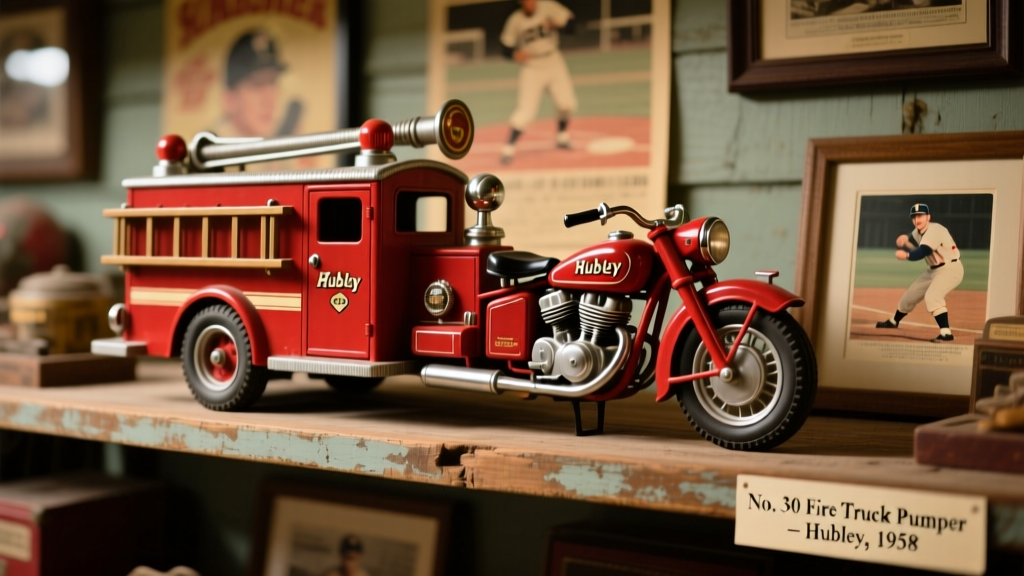
Hubley Toy Fire House Set No. 30: Anatomy, Provenance, and Authentication of the Iconic Red Hose Truck & Motorcycle Pumper
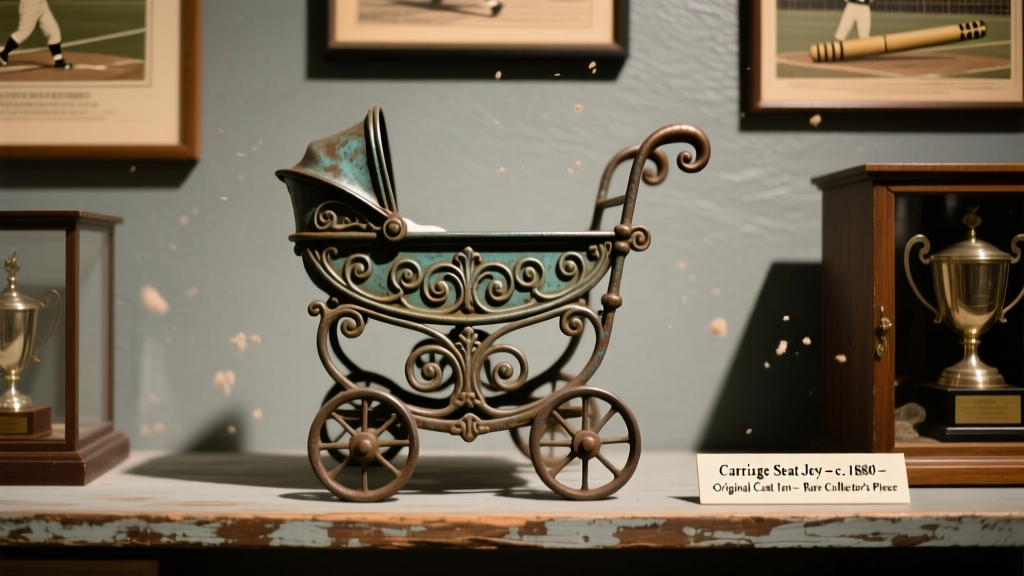
Carriage Seat Joy Baby Walker: A Cast Iron Artifact from the 1870s–1890s — Authentication, Provenance, and Collectibility
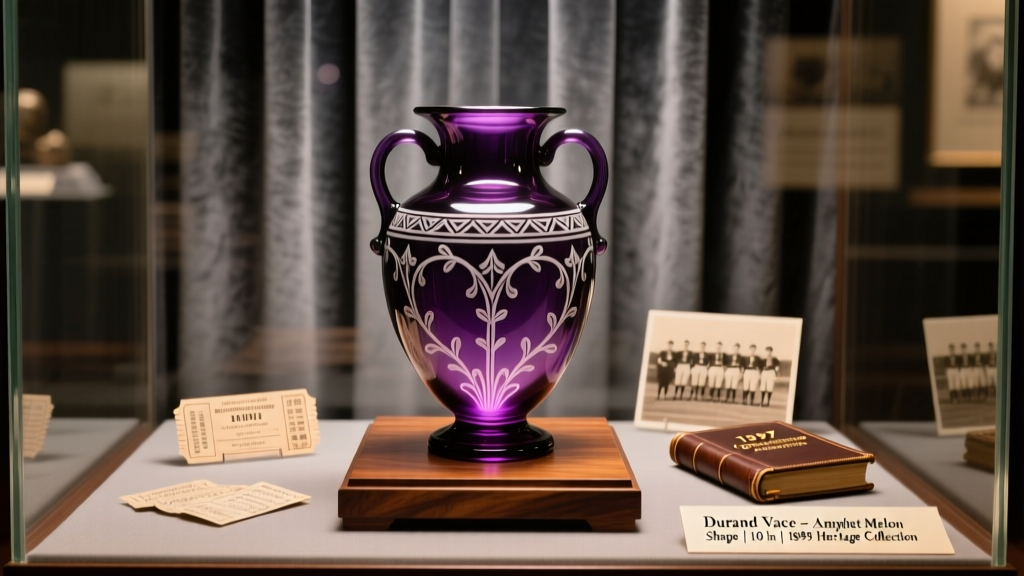
The Durand Vase: Amethyst Melon Shape, 10-Inch — History, Authentication, and Market Value