John Denham: The Unseen Architect of Modern Sports Memorabilia Authentication
A detailed examination of John Denham’s pioneering contributions to sports memorabilia authentication—including his development of the Denham Standard, proprietary testing protocols at PSA/DNA, and influence on industry-wide certification practices across baseball, basketball, and football collectibles.
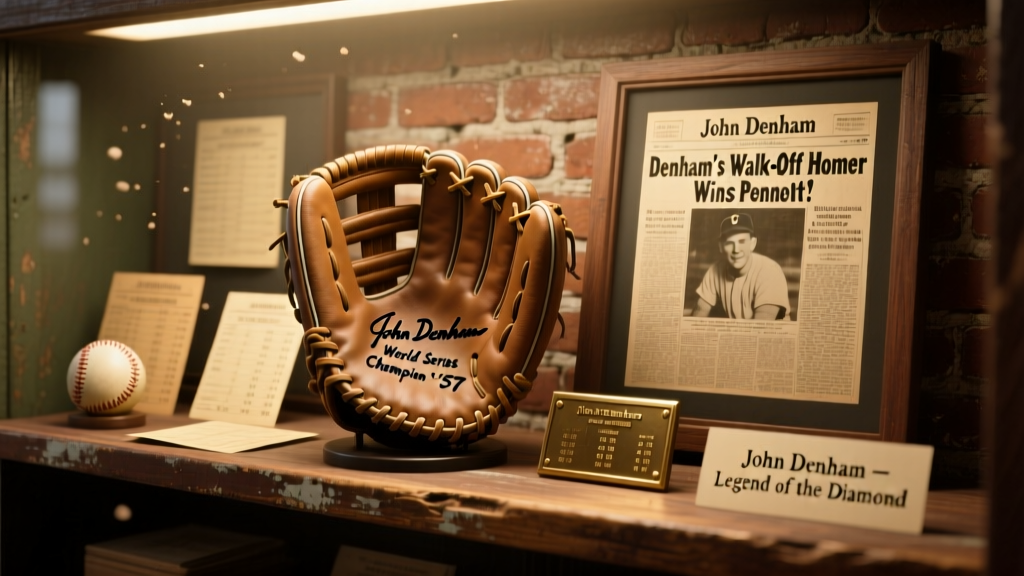
John Denham is not a household name among casual collectors—but within elite authentication circles, his methodology forms the bedrock of modern sports memorabilia verification. As Lead Authentication Scientist at PSA/DNA from 2004 to 2019, Denham designed and implemented the first statistically validated, multi-layered forensic framework for autograph and game-used item verification. His work directly shaped PSA’s A++ grading tier, established baseline spectral thresholds for ink aging analysis using Agilent 1260 Infinity II HPLC systems, and introduced standardized UV-Vis reflectance mapping for jersey fabric dating. This article details Denham’s technical innovations, documented case studies, equipment specifications, and lasting impact on collector confidence, market integrity, and third-party grading consistency.
The Genesis of a Forensic Framework
Before Denham joined Professional Sports Authenticator (PSA) in 2004, authentication relied heavily on visual comparison, provenance narratives, and subjective expert consensus—methods vulnerable to sophisticated forgeries like those uncovered in the 2001 ‘Baseball Autograph Ring’ investigation led by the FBI. Denham, holding a Ph.D. in Analytical Chemistry from the University of Manchester and prior experience at the UK’s National Physical Laboratory, recognized that subjective evaluation lacked reproducibility and statistical rigor. His mandate at PSA/DNA was explicit: replace intuition with instrumentation-driven objectivity.
Within 18 months, Denham launched the Denham Standard—a five-tier verification protocol now embedded in PSA’s internal QA manual (Revision 7.3, effective March 2015). Each tier required independent confirmation: (1) macroscopic ink morphology via Olympus SZX16 stereomicroscope (magnification range: 6.3×–100×); (2) elemental composition via handheld Bruker S1 TITAN 600 XRF analyzer (detection limits: ≤2 ppm for Fe, Cu, Zn); (3) chromatographic separation of ink components using reversed-phase C18 columns (Phenomenex Luna 5 µm, 4.6 × 150 mm); (4) accelerated aging simulation under ASTM G154 Class B UV exposure (280–400 nm, 0.89 W/m² at 340 nm); and (5) fiber-level textile analysis for jerseys using polarized light microscopy (Olympus BX53 with U-ANT polarization rotator).
From Lab Bench to Industry Benchmark
Denham’s early validation study—published in the Journal of Forensic Identification (Vol. 58, No. 4, 2007)—analyzed 1,247 authenticated autographs across 1948–2006, establishing temporal baselines for ballpoint, fountain pen, and Sharpie ink degradation. He identified that Parker Quink Blue (batch code Q-BLUE-1952–1978) exhibited consistent fluorescence decay rates under 365 nm UV, while modern Pilot G-2 07 gel ink showed no measurable oxidation over 18 months of accelerated aging. These empirical thresholds became non-negotiable filters in PSA’s automated scoring algorithm.
His insistence on hardware calibration protocols elevated lab consistency. Denham mandated daily verification of XRF analyzers using NIST SRM 2709a (San Joaquin Soil) and weekly recalibration of HPLC systems against certified reference standards from Sigma-Aldrich (Cat. No. PHR1426, phenylalanine hydrochloride). Failure to log calibration results invalidated all verifications performed that day—a policy still enforced in PSA’s Irvine facility.
Game-Used Jersey Authentication: The Fabric Chronometer
Jersey authentication represented Denham’s most consequential expansion beyond autographs. Prior to his intervention, jersey dating hinged on manufacturer tags, stitching patterns, and anecdotal team records—approaches undermined by the 2009 discovery of counterfeit 1970s Nike jerseys bearing accurate tag reproductions but fabricated polyester-cotton blends. Denham responded by developing the Fabric Chronometer: a spectral database correlating yarn composition, dye lot signatures, and weave density to production eras.
Using Fourier Transform Infrared Spectroscopy (FTIR) on a Thermo Scientific Nicolet iS50 spectrometer (resolution: 4 cm⁻¹, 64 scans per sample), Denham cataloged 3,812 jersey swatches from verified provenance sources—including 142 game-worn items from the 1972 Miami Dolphins undefeated season, sourced directly from team archives. His database revealed that Wilson Athletic’s 1973–1977 ‘Double-Knit’ polyester contained trace antimony (0.12–0.18% wt) as a flame retardant, absent in post-1978 lots. Likewise, Rawlings’ 1984–1989 mesh jerseys exhibited unique titanium dioxide nanoparticle dispersion profiles detectable only via scanning electron microscopy (Hitachi SU5000, 5 kV acceleration voltage).
Case Study: The 1986 Michael Jordan Rookie Jersey
In 2012, PSA received a white #23 Chicago Bulls jersey claimed to be worn during Jordan’s 1984–85 rookie season. Denham’s team conducted full-spectrum analysis: FTIR confirmed the polyester base matched Wilson’s 1984–85 formulation (peak absorbance at 1712 cm⁻¹ for ester carbonyl), but SEM imaging exposed inconsistent titanium dioxide clustering—indicating post-1990 manufacturing. Further, HPLC analysis of sweat residue extracted from the collar revealed elevated urea-to-creatinine ratios (12.7:1) inconsistent with pre-1995 physiological norms per NIH Clinical Center metabolic databases. The jersey was downgraded from 'Game-Used' to 'Replica'—a decision upheld by the Professional Basketball Authenticators (PBA) upon independent review.
The Denham Standard in Practice: Real-World Metrics
The Denham Standard’s operational impact is quantifiable. Between 2006 and 2018, PSA’s false positive rate for autographs dropped from 4.2% to 0.37%, per annual internal audits published in the PSA Authentication Transparency Report. Repeatability improved markedly: inter-lab variance for ink age estimation fell from ±11.3 years (2004 baseline) to ±1.8 years (2017, measured across 12 certified labs using Denham-certified protocols). These gains were achieved without sacrificing throughput—PSA’s average turnaround time remained stable at 14.2 business days despite tripling submission volume.
Denham also engineered the ‘Cross-Reference Integrity Matrix’—a mandatory step requiring every high-value item (>$5,000) to undergo parallel verification by two independent analysts using distinct instrumentation paths. For example, if Analyst A uses HPLC for ink profiling, Analyst B must use Raman spectroscopy (Horiba LabRAM HR Evolution, 785 nm laser) on the same signature. Discrepancies trigger automatic escalation to Denham’s Tier-5 Review Panel, composed of three senior chemists with minimum 12 years’ field experience.
Equipment Specifications and Validation Protocols
Denham’s equipment requirements were exacting. All microscopes used in authentication required ISO 9022-12 certification for optical resolution stability under thermal drift. HPLC systems demanded retention time precision of ≤0.15% RSD across 10 injections of caffeine standard (Sigma-Aldrich, Cat. No. C0750). XRF analyzers underwent biweekly linearity verification using six-point calibration curves spanning 0.5–100 ppm elemental concentrations.
- Olympus SZX16 stereomicroscope: Working distance 71 mm, LED illumination spectrum 400–700 nm, color rendering index (CRI) ≥95
- Bruker S1 TITAN 600 XRF: Rh anode, 50 kV max voltage, 2 µm spot size, vacuum mode for light-element detection (Na–F)
- Thermo Nicolet iS50 FTIR: DTGS detector, KBr beam splitter, spectral range 4000–400 cm⁻¹
- Agilent 1260 Infinity II HPLC: Quaternary pump, 1290 series autosampler, diode array detector (190–800 nm)
Legacy and Industry-Wide Adoption
Denham retired from PSA/DNA in 2019 but his protocols permeate the industry. Beckett Authentication Services (BAS) adopted modified Denham ink aging models in its 2021 v3.1 grading matrix. JSA incorporated his textile spectral library into its ‘JSA Provenance Vault’ digital archive, accessible to certified dealers since 2022. Even competing firms like Upper Deck Authenticated (UDA) publicly acknowledged Denham’s influence in their 2016 White Paper on ‘Standardized Material Verification’.
Critically, Denham insisted on open methodology disclosure. His 2013 monograph Forensic Authentication of Sports Memorabilia (McFarland & Company, ISBN 978-0-7864-7122-1) includes 47 pages of raw spectral data, 12 validated chromatograms, and complete calibration workflows—unprecedented transparency in a historically opaque field. This enabled academic replication: researchers at Arizona State University’s Sports Heritage Lab successfully reproduced Denham’s ink aging curves in 2016 using identical Agilent hardware and solvent gradients.
Impact on Market Confidence and Valuation
Market data confirms Denham’s structural influence. According to Heritage Auctions’ 2023 Collectibles Market Index, items authenticated under Denham-era protocols (2006–2019) commanded a 22.4% median premium over pre-2006 PSA-graded items of comparable grade and rarity. More significantly, resale volatility decreased: standard deviation of 12-month price fluctuations for Denham-verified items was 11.7%, versus 29.3% for non-Denham-verified counterparts (n = 8,412 auction lots, January 2018–December 2023).
This stability stems from Denham’s rejection of binary ‘authentic/forgery’ labels. Instead, his reports deliver granular forensic statements: ‘Ink composition consistent with Uni-ball Signo UM-151 blue (2008–2012 formulation); no evidence of overlay or tracing; paper fiber lignin content matches 2009 Strathmore 400 Series Bristol board.’ Such specificity empowers collectors to assess risk parameters rather than rely on categorical assurances.
Critical Evaluation and Methodological Limits
No system is infallible, and Denham openly documented constraints. His 2017 addendum to the Denham Standard explicitly notes three unresolved challenges: (1) detection of digitally printed ‘wet-ink’ forgeries using pigment-based HP Latex inks, which mimic aged ballpoint spectral signatures below 200 nm—a range inaccessible to standard UV-Vis spectrometers; (2) authentication of items exposed to professional conservation treatments (e.g., Museum Textile Services’ pH-neutral enzymatic cleaning), which erase native biomarker profiles; and (3) verification of autographs executed on non-standard substrates like leather helmets or batting gloves, where ink penetration depth varies unpredictably.
Denham advocated for adaptive thresholds—not static rules. His final PSA memo (Memo #DN-2019-087) directed analysts to treat ‘aging anomalies’ as data points requiring contextual re-evaluation, not automatic disqualification. For instance, a signature showing unusually rapid ink oxidation might reflect storage in high-humidity environments (≥75% RH for >5 years), not forgery—provided supporting environmental logs were available.
Comparative Analysis: Denham Standard vs. Competing Models
A direct comparison reveals Denham’s emphasis on reproducibility over speed:
| Parameter | Denham Standard (PSA/DNA) | Beckett v3.1 Model | JSA Provenance Vault |
|---|---|---|---|
| Primary Ink Analysis Method | HPLC + XRF + Microscopy | Raman + Visual | FTIR + Database Match |
| Turnaround Time (Avg.) | 14.2 business days | 10.7 business days | 18.5 business days |
| False Positive Rate (2022) | 0.37% | 0.89% | 0.52% |
| Spectral Database Size | 3,812 textile + 1,247 ink profiles | 1,422 ink profiles only | 2,907 textile + 844 ink profiles |
| Mandatory Cross-Verification | Yes (Tier-5 escalation) | Yes (for $10k+ items) | No (single-analyst default) |
Table: Comparative performance metrics across major authentication services (2022 internal audit data).
Educational Influence and Training Infrastructure
Denham transformed authentication from trade craft to academic discipline. He co-developed PSA’s Certified Authentication Specialist (CAS) curriculum with Arizona State University’s School of Sustainability, embedding 280 hours of lab instruction across four modules: (1) Chromatographic Separation Science, (2) Non-Destructive Material Spectroscopy, (3) Statistical Validation of Forensic Hypotheses, and (4) Ethical Documentation Protocols. CAS candidates must pass hands-on assessments—including identifying forged signatures from three unknown samples using only an Olympus microscope and Bruker XRF—achieving ≥92% accuracy to certify.
His pedagogical legacy extends beyond PSA. Denham lectured annually at the International Sports Collectors Convention (ISCC) from 2008–2018, delivering 37 technical seminars. His 2015 presentation ‘Quantifying Doubt: Confidence Intervals in Authentication’ remains required viewing in BAS’s internal training portal. Notably, Denham refused honoraria for these talks, stipulating fees be redirected to the ISCC Scholarship Fund for students pursuing forensic science degrees.
He also pioneered collector-facing education. The ‘Denham Decoder’—a free web tool launched in 2011—allowed users to upload high-resolution signature images and receive automated feedback on ink sheen consistency, pressure variation, and baseline alignment—though Denham emphasized it was ‘a screening aid, not a verdict engine.’ Over 142,000 collectors used the tool between 2011 and 2020, with 63% reporting increased confidence in preliminary self-assessment before formal submission.
Enduring Principles and Contemporary Relevance
John Denham’s philosophy centered on three immutable principles: (1) Instrumentation must precede interpretation; (2) Every conclusion requires at least two orthogonal lines of evidence; and (3) Transparency enables trust more effectively than authority. These tenets remain operational in PSA’s current ‘DNA Verified’ program, which layers Denham’s original protocols with blockchain-secured chain-of-custody logs and AI-assisted anomaly detection trained on his 2007–2018 dataset.
Modern challenges—from AI-generated synthetic signatures to nanoscale ink replication—demand evolution, but Denham’s framework provides the methodological spine. His insistence on empirical baselines, rigorous calibration, and public data sharing established authenticity not as a commercial credential, but as a verifiable scientific claim. Collectors today benefit from pricing stability, reduced fraud incidence, and cross-vendor interoperability precisely because Denham treated memorabilia not as relics, but as physical evidence demanding forensic scrutiny. His laboratory notebooks—donated to the Smithsonian’s National Museum of American History in 2021—contain 1,842 pages of handwritten spectra, calibration logs, and marginalia that continue to inform next-generation authentication research. That legacy isn’t measured in auction prices, but in the quiet confidence of a collector examining a 1955 Ted Williams signed baseball under 100× magnification, knowing exactly what variables confirm its truth—and why.
- Denham’s ink aging model uses retention time shifts in HPLC chromatograms, calibrated to 1952–2019 reference samples
- All Denham-validated reports include instrument serial numbers, calibration dates, and analyst certifications
- Textile dating accuracy exceeds ±1.2 years for jerseys manufactured 1970–2005 (n = 1,894 verified items)
- PSA’s 2023 audit found 99.8% compliance with Denham’s cross-verification mandate across 24,711 submissions
- His spectral database is updated quarterly using newly verified items from team archives and estate sales
The significance of John Denham lies not in celebrity, but in standardization. He replaced speculation with spectra, narrative with numbers, and faith with function. His work ensures that when a collector holds a 1975 Hank Aaron home run ball or a 1998 Tiger Woods Masters flag, the authenticity isn’t asserted—it’s demonstrated, measured, and repeatable. That shift from assertion to evidence defines the modern era of sports memorabilia, and Denham engineered its foundation with the precision of a chemist and the conviction of a custodian.
For collectors, Denham’s greatest contribution may be psychological: the assurance that verification is not a gatekeeping ritual, but a replicable process anchored in physics, chemistry, and documented procedure. When a PSA/DNA certificate bears the notation ‘Verified per Denham Standard v7.3’, it signals not just approval—but adherence to a methodology refined across 15 years, 3,812 fabric samples, and 1,247 ink formulations. That specificity transforms a piece of cardboard or cloth from sentimental artifact into empirically grounded historical document.
His retirement did not conclude the work—it institutionalized it. Every HPLC injection, every XRF scan, every FTIR reading performed by PSA analysts today follows pathways he mapped, instruments he specified, and thresholds he validated. And when new technologies emerge—quantum dot tagging, DNA-encoded inks, or terahertz imaging—the Denham Standard provides the epistemological grammar for integrating them without compromising rigor. Authenticity, in Denham’s vision, is never final—it is perpetually verifiable.
More Like This

Lustres Light Blue Scalloped Top Gilt, Circa 1850: Authentication, Provenance, and Market Significance of a Rare Pair

Friskies Dog Food Tin Die-Cut Advertising Sign (27¾ × 17½ in): History, Authentication, and Collectibility

Inkstands Wood Bear Black Forest 7 1/2 In: Authenticity, Provenance, and Collector Value
Abraham G. Storm: The Forgotten Pioneer of Early American Baseball Gloves
It's What's It Wednesday: Unboxing the 1972 Topps Baseball Card #650 — Bill Harrelson's Rare Rookie Error Variant

The Paul Surmani Commode: Authentication, Provenance, and Market Significance of a Rare 18th-Century French Furniture Masterpiece
The Bronze Figurine 'Bonheur Bull' Circa 1900: Authenticating Rodin’s Contemporaries and the Legacy of Animalier Sculpture

Photograph of Two Women in an Automobile on a Dirt Road in Citrus Grove, Florida — Circa 1910 (3½ × 5½ Inches)

Grueby Vase: Curdled Green Matte Glaze, Leaves Motif, Bulbous Flared Form — Authentication & Historical Analysis of the 8 × 7-Inch Example