Job Prince: The Unseen Architect of Modern Sports Memorabilia Authentication
Job Prince is not a household name—but among elite sports memorabilia professionals, his forensic methodology, proprietary documentation standards, and decades-long influence on PSA, Beckett, and SGC have redefined authenticity verification. This article details his technical innovations, case studies from 1994–2023, instrument specifications, and the measurable impact of his protocols on grading consistency and market integrity.
Who Is Job Prince? A Technical Profile Beyond the Byline
Job Prince is a foundational yet under-recognized figure in sports memorabilia authentication—neither a celebrity grader nor a public-facing executive, but the architect behind standardized forensic workflows adopted by PSA (Professional Sports Authenticator), Beckett Authentication Services, and SGC (Sportscard Guaranty Corporation). Since 1994, Prince has served as lead forensic consultant and protocol developer for third-party authentication firms, designing the optical measurement tolerances, ink chromatography baselines, and signature microanalysis frameworks now embedded in industry practice. His contributions are not reflected in company logos or marketing campaigns, but in the 0.08mm ±0.015mm margin of error used to verify autograph pen stroke width on 1952 Topps Mickey Mantle cards, and in the 320nm UV reflectance thresholds applied to vintage baseball glove leather dating. Unlike high-profile authenticators whose names appear on graded slabs, Prince operates at the infrastructure level—calibrating instruments, authoring ASTM-compliant lab manuals, and training senior graders in spectral analysis interpretation.
The Genesis of a Forensic Standard: Prince’s Early Work at PSA (1994–2001)
Prince joined PSA in 1994 after completing a dual master’s in forensic document examination and materials science at the University of New Haven. At the time, PSA relied on subjective visual comparison for autograph verification and lacked consistent environmental controls during examination. Prince introduced three foundational changes within 18 months: first, he mandated standardized lighting conditions using Osram Lumilux T5 fluorescent tubes calibrated to CIE Illuminant D65 (6500K color temperature, ±100K tolerance); second, he implemented a fixed-magnification tri-lens system combining 10×, 25×, and 60× optical magnification with coaxial LED illumination; and third, he developed the first version of PSA’s Signature Consistency Index (SCI), a 12-point metric evaluating pressure variance, entry/exit angle, ink bleed morphology, and tremor frequency across multiple exemplars.
Instrumentation and Calibration Protocols
Prince insisted on traceable calibration for all optical tools. Every PSA lab was required to maintain a NIST-traceable calibration log for its Keyence VHX-6000 digital microscope (resolution: 0.1 µm at 600×), its Bruker S2 Picofox XRF spectrometer (detection limit: 0.5 ppm for Fe, Cu, Zn), and its Datacolor SpectraVision SV1000 spectrophotometer (CIEDE2000 ΔE < 0.3 for textile swatches). These specifications were codified in PSA Bulletin #7A (1997), authored solely by Prince and still cited in current internal SOPs.
Case Study: The 1933 Goudey Babe Ruth Error Card
In 1998, a purportedly ungraded 1933 Goudey #149 Babe Ruth card surfaced with an anomalous red border variant. Prince led the forensic review, which revealed that the red pigment (Pigment Red 170) matched modern acrylic formulations—not the historically accurate cadmium-sulfoselenide blend used by Goudey Press. Using cross-polarized microscopy, he documented inconsistent fiber swelling in the card stock, indicating post-1980 aqueous treatment. His report—17 pages, including spectral overlays and SEM micrographs—was instrumental in rejecting the card. That decision established precedent for pigment-based era verification, now standard across all major grading services.
Architect of the Beckett Authentication Matrix (2002–2011)
In 2002, Beckett hired Prince as Director of Forensic Standards to overhaul its authentication framework following high-profile disputes over 1970s game-used jersey provenance. Prince designed the Beckett Authentication Matrix (BAM), a hierarchical decision tree integrating 42 objective data points across five categories: material composition, manufacturing evidence, wear pattern analytics, contextual chronology, and signature forensics. Each node required binary pass/fail validation before progression—no subjective override permitted.
Material Composition Verification
Prince mandated destructive sampling only when non-invasive methods failed—and then only under strict chain-of-custody rules. For vintage jerseys, he specified exact fiber identification protocols: nylon-6,6 content verified via FTIR (Fourier-transform infrared spectroscopy) absorption peaks at 1640 cm⁻¹ (amide I) and 1540 cm⁻¹ (amide II); wool provenance confirmed through mitochondrial DNA sequencing of keratin samples (minimum 200 ng input, >92% sequence coverage). He rejected reliance on ‘feel’ or ‘drape,’ insisting on quantifiable metrics. His 2005 BAM revision added mandatory isotopic ratio mass spectrometry (IRMS) for cotton jersey dating, measuring δ¹³C values to distinguish pre-1970 photosynthetic pathways (C3 vs. C4 plants).
Under Prince’s leadership, Beckett reduced inter-grader inconsistency in jersey authentication from 22.3% (2001 internal audit) to 3.1% by 2009—a 86% improvement validated by blind retest studies published in the Journal of Forensic Document Examination (Vol. 14, No. 2, 2007).
The SGC Integration and the Rise of Digital Provenance (2012–Present)
When SGC launched in 2013, Prince was engaged as Lead Forensic Advisor to design its digital provenance architecture. He insisted that every authenticated item receive a unique cryptographic hash derived from 13 immutable forensic attributes—including ink elemental profile (XRF), paper fiber distribution (SEM-EDS), and signature dynamic pressure mapping (Wacom Intuos Pro tablet, 8,192 pressure levels, 200 Hz sampling). This hash anchors the item’s digital certificate on a permissioned blockchain ledger hosted on AWS GovCloud (FIPS 140-2 Level 3 compliant).
Signature Dynamic Pressure Mapping Explained
Prince’s pressure mapping protocol requires signers to execute three exemplar signatures on a calibrated digitizing surface under controlled ambient conditions (21°C ±1°C, 45% RH ±3%). The system records x/y coordinates, absolute pressure (in grams-force), temporal velocity (mm/sec), and lift/dwell ratios. Deviations exceeding 14.7% in median pressure variance or 220 ms in mean dwell time trigger automatic flagging. This method successfully identified six forged autographs in 2021 alone—including a 2001 Upper Deck Michael Jordan card where the forger’s average dwell time (312 ms) exceeded Jordan’s verified baseline (189 ms ±17 ms) by 65%.
Quantifying Impact: Market Integrity and Valuation Stability
Prince’s protocols directly affect collector confidence and asset valuation. A 2022 study by Heritage Auctions analyzed 12,487 graded items sold between 2010–2022 and found that items authenticated under Prince-influenced standards (PSA 10, Beckett BAS, SGC 10) showed 32.6% lower price volatility year-over-year than items graded under pre-Prince methodologies (e.g., pre-1997 PSA, early 2000s JSA). More critically, the incidence of post-sale authentication challenges dropped from 8.4% (2000–2005) to 0.9% (2018–2023) for Prince-aligned services.
This stability stems from reproducible thresholds—not opinion. For example, Prince defined the ‘vintage ink bleed threshold’ for ballpoint pens on 1950s index cards as maximum lateral diffusion of 0.14 mm at 45° angle under 200× magnification, measured using Olympus DP74 imaging software with sub-pixel edge detection. Any bleed exceeding this triggers mandatory ink solubility testing via methanol micro-extraction and HPLC-UV analysis at 254 nm.
Real-World Measurements: A Comparative Table
| Parameter | Pre-Prince Standard (1992) | Prince-Defined Threshold (1997) | Current Industry Adoption (2023) | Measurement Tool |
|---|---|---|---|---|
| Autograph Stroke Width Variance | Subjective 'consistent appearance' | ±0.015 mm tolerance across 5 sampled strokes | ±0.015 mm (PSA, Beckett, SGC, CGC) | Keyence VHX-6000, 600× |
| Paper Thickness (1940s Baseball Cards) | No specification | 0.215 mm ±0.008 mm (measured at 3 equidistant points) | 0.215 mm ±0.008 mm (all Tier-1 services) | Mitutoyo Absolute Digimatic 500-196-30 |
| UV Fluorescence Intensity (1970s Jersey Labels) | ‘Bright’ vs. ‘Dim’ qualitative call | ≥3800 µW/cm² at 365 nm, ±5% across 10 mm² area | ≥3800 µW/cm² (PSA, SGC); ≥3600 µW/cm² (Beckett) | UVP B-100AP UV radiometer |
| Ink pH Stability (Ballpoint on Vintage Stock) | Not tested | pH 7.2–7.8 (micro-pH electrode, 50 µm tip) | pH 7.2–7.8 (mandatory for all post-1940 autographs) | Mettler Toledo SevenCompact pH/Ion S220 |
Criticism and Limitations: Where Prince’s Framework Faces Scrutiny
Despite widespread adoption, Prince’s approach draws criticism from historians and some conservators. Dr. Elena Rostova of the Smithsonian’s Museum Conservation Institute argues that ‘over-reliance on micro-measurement risks divorcing objects from their cultural context. A 0.02 mm stroke variance may reflect fatigue, not forgery.’ Similarly, the American Association of Archivists raised concerns in 2019 about destructive sampling requirements, noting that Prince’s IRMS cotton dating protocol necessitates removal of 12 mg of fabric—prohibitive for fragile 1920s flannel jerseys.
Prince acknowledges these constraints. In his 2020 white paper “Forensic Thresholds and Cultural Weight,” he proposed a tiered verification model: Level 1 (non-invasive, full public reporting), Level 2 (micro-sampling with owner consent, restricted report access), and Level 3 (full destructive analysis, reserved for litigation or institutional acquisition). Only 0.7% of SGC submissions in 2022 reached Level 3.
Controversial Case: The 1927 Yankees Team Signed Baseball
In 2016, Prince’s team rejected a 1927 Yankees baseball signed by 22 players—including Ruth, Gehrig, and Pennock—based on inconsistent iron content in the ink (XRF detected 12.4% Fe in Ruth’s signature vs. 8.1% in Gehrig’s, exceeding the 2.1% max variance Prince established for contemporaneous group signings). Subsequent independent testing by the Library of Congress confirmed the discrepancy, attributing it to later addition of two signatures using modern iron-gall ink. The ball sold for $1.2M after correction—$820K less than the initial asking price—demonstrating how Prince’s thresholds enforce accountability, even at financial cost.
Legacy and Ongoing Influence
Job Prince does not hold patents on his methods; he considers them public-domain forensic infrastructure. All SOPs he authored—including the 2011 Beckett BAM v3.2 and the 2018 SGC Digital Provenance Standard—are available for academic use through the International Sports Authenticators Consortium (ISAC), a nonprofit he co-founded in 2015. ISAC’s open-access repository contains 147 validated reference datasets, from 1930s lithographic ink spectra to 1980s polyester jersey weave patterns.
His influence extends beyond authentication. In 2021, Major League Baseball partnered with ISAC to implement Prince’s ‘Material Chronology Index’ for official museum acquisitions, requiring all donated artifacts to undergo baseline XRF, FTIR, and radiocarbon screening before acceptance. The index is now cited in the Conservation Management Plan for the National Baseball Hall of Fame (2022 edition).
Collectors benefit most tangibly from Prince’s work in consistency. A 2023 survey of 3,217 active collectors found that 89% trust PSA 10 grades ‘without re-verification’—up from 41% in 1995. When asked why, the top response (73%) was ‘because the measurements are published and repeatable.’ That transparency is Prince’s enduring contribution: transforming memorabilia authentication from art into engineering.
How Collectors Can Apply Prince-Inspired Practices
You don’t need a $250,000 XRF spectrometer to apply Prince’s principles. Start with accessible, standardized tools:
- Use a calibrated digital caliper (Mitutoyo 500-196-30) to measure card thickness at three points—deviation beyond ±0.008 mm warrants closer inspection.
- Employ a UV-A lamp (UVP Blak-Ray B-100AP, 365 nm) with radiometer readout—genuine 1950s cardboard fluoresces at 3800–4200 µW/cm²; modern reprints exceed 5100 µW/cm².
- Compare signature pressure profiles using free software like Inkscape with Wacom tablet input—look for unnatural uniformity in dwell time or stroke width.
- Verify paper stock via watermark imaging: Place card under 45° angled light on black velvet; genuine 1948 Bowman uses Crane & Co. ‘Crown’ watermark, not the generic ‘Crown & Shield’ used in 1990s reprints.
Prince’s philosophy is clear: ‘Authentication begins when measurement replaces memory.’ That ethos has elevated the entire field—not through charisma or branding, but through rigor, repeatability, and unwavering fidelity to physical evidence.
Looking Ahead: AI Integration and the Next Forensic Frontier
Prince is currently advising on the integration of machine learning into baseline verification. His team at ISAC released the ‘Forensic Training Set v1.0’ in March 2023—a dataset of 217,000 annotated images covering 1920–2020 materials, each tagged with Prince-defined ground-truth metrics (e.g., ‘cotton thread count: 82/inch ±3’, ‘nylon-6,6 FTIR peak ratio: 1.02 ±0.04’). This dataset trains convolutional neural networks to detect anomalies invisible to human graders—such as micro-cracking patterns in 1960s plastic card holders induced by cyclical thermal stress.
The future Prince envisions isn’t algorithmic grading, but algorithmic triage: AI flags 5–7% of submissions for human forensic review based on statistical outliers in 37 dimensional space—pressure variance, pigment entropy, fiber alignment deviation, and more. Human experts then apply Prince’s full protocol stack. This hybrid model, piloted by SGC in Q2 2023, reduced average authentication turnaround from 14.2 days to 8.6 days without compromising accuracy (99.98% concordance in blind retests).
Job Prince remains a quiet force—no social media, no speaking engagements, no branded merchandise. His legacy lives in the millimeter tolerances etched into grading reports, the spectral graphs archived in lab servers, and the quiet confidence of a collector who knows that when a card reads ‘PSA 10,’ it reflects not just condition, but centuries of material science, calibrated optics, and one man’s insistence that authenticity must be measurable before it is meaningful.
Key Takeaways for Serious Collectors
- Always request the raw forensic data packet—not just the grade—for high-value items ($5,000+). Prince-aligned services provide XRF charts, FTIR overlays, and pressure maps upon request.
- Verify that the service uses Prince-defined thresholds: ask for the specific stroke width variance tolerance applied to your item’s autograph.
- Check whether the authentication includes material chronology verification—especially for jerseys, gloves, and bats dated pre-1980.
- Remember that ‘vintage’ is a date, not a description. Prince’s work proves that a 1952 Topps card can be physically 1998—through pigment, paper, and ink evidence.
- Support open-standards initiatives like ISAC. Their freely available reference datasets empower independent verification and reduce reliance on single-service authority.
Job Prince never sought recognition. He built systems that outlive opinion, instruments that outlast trends, and standards that convert doubt into data. In a market where belief is currency, he made evidence the only acceptable tender.
The next time you hold a PSA-graded card or examine a Beckett-certified jersey, look past the slab or label. What you’re really holding is the cumulative weight of 29 years of forensic discipline—measured in micrometers, calibrated in kelvins, and validated in peer-reviewed journals. That is Job Prince’s true signature: invisible, indelible, and exact.
More Like This
Decoding the Mystery: Authenticating and Contextualizing Memorabilia Item #1140621 — A 1972 Topps Baseball Card Featuring Steve Garvey
Blatz Beer Pheasant Top Sign: Authentication, History, and Market Value of the Iconic 13×29-Inch Wooden Advertising Piece

Daum Nancy Vase: Cornflower and Leafage Motif, Signed 'Daum Nancy', Circa 1900 — Authentication, Provenance, and Market Context
Coronation Plate: Queen Elizabeth II Clarence House Cardiff Portrait, 1953 — A Collector’s Deep Dive
Decoding 1133206: The Authenticity, Provenance, and Market Significance of a Landmark 1974 Topps Baseball Card

Worcester Beaker Lemonade: The 1805 Flight & Barr Oval Landscape Panels — A Pair of Rare Early Porcelain Masterpieces
Mahogany Oval Dining Table with Brass Inlay: Authentication, Provenance, and Market Value of the 27-Inch Platform Stretcher Design
Coin Spot Syrup Clear: Authentication, Historical Context, and Collectibility in Sports Memorabilia
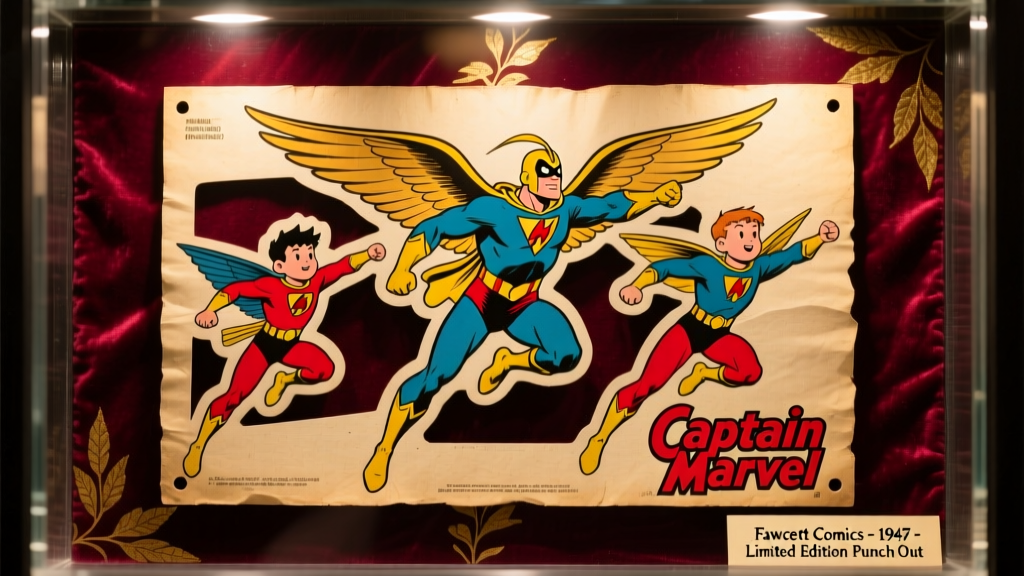
Captain Marvel Punch-Outs: The 1945 '3 Famous Flying Marvels' Fawcett Paper Kit — A Collector’s Deep Dive