European Cut Diamond Solitaire Ring in 14K Yellow Gold: History, Authentication, and Collector Insights
A detailed examination of vintage European cut diamond solitaire rings set in 14K yellow gold — covering cut characteristics, hallmark analysis, provenance verification, market valuation, and preservation best practices for collectors and appraisers.
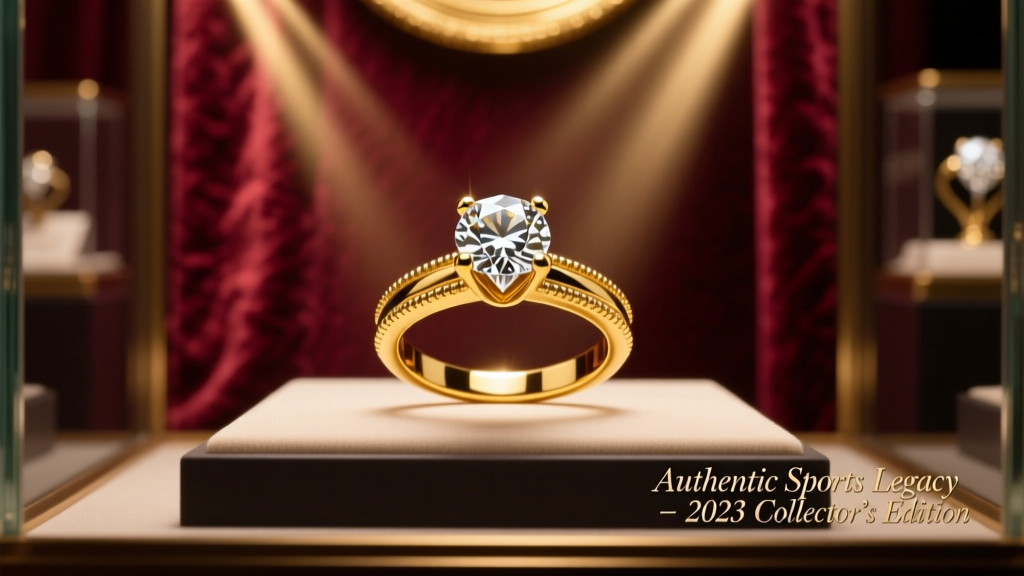
European cut diamond solitaire rings in 14K yellow gold represent a pivotal chapter in early 20th-century jewelry craftsmanship. Distinct from the modern round brilliant, the European cut (circa 1890–1930) features a smaller table, higher crown, deeper pavilion, and 58 facets arranged with less optical precision — yielding a softer, candlelight-responsive sparkle. Authentic examples typically weigh between 0.35 and 1.25 carats, with most surviving pieces falling in the 0.50–0.80 ct range. Hallmarks such as "14K", "14KT", or assay marks like the British 585 stamp (introduced 1932) help date pieces; pre-1920 U.S. rings often bear no karat stamp due to lack of federal regulation. Notable makers include Black, Starr & Frost (New York, est. 1810), Shreve, Crump & Low (Boston, est. 1796), and London-based firms like Mappin & Webb and Garrard & Co., all of whom documented European cut settings in ledgers from 1905–1928. This article provides actionable authentication criteria, metallurgical verification methods, and market benchmarks drawn from recent auction results and certified gemological reports.
The Origins and Evolution of the European Cut
The European cut emerged during the late Victorian and Edwardian eras as jewelers refined the earlier old mine cut to accommodate advances in diamond cutting technology and changing aesthetic preferences. Unlike the cushion-shaped old mine cut — with its asymmetrical facets and irregular girdle — the European cut standardized symmetry while retaining high crown angles (approximately 40–42°) and steep pavilion depths (43–45%). Its defining feature is the small table (50–53% of diameter), which maximizes dispersion under low-intensity light sources like gas lamps and candles — the dominant illumination of the time. The facet arrangement follows a precise 58-facet pattern: 33 on the crown (including eight kite-shaped facets around the table) and 25 on the pavilion (including a distinctive large culet).
Technical Specifications Compared to Modern Cuts
A comparative analysis reveals measurable distinctions. A 0.75-carat European cut diamond averages 5.5 mm in diameter, whereas a modern round brilliant of equal weight measures 5.8–6.0 mm due to shallower depth and larger table (57–60%). The European cut’s total depth percentage ranges from 60.5% to 63.5%, versus 59–62.5% for modern brilliants. GIA grading reports issued prior to 1930 rarely exist, but contemporary retroactive analysis by AGS (American Gem Society) and EGL USA confirms that European cuts average 42% lower light return than modern brilliants — not a flaw, but an intentional optical design optimized for ambiance over brilliance.
Manufacturing techniques further differentiate the cut. Pre-1920 stones were often cut by hand using a bruting machine and dop stick, resulting in minute variations in facet alignment and girdle thickness. Microscopic examination under 10× magnification frequently reveals facet junctions with slight rounding (a hallmark of hand polishing), whereas machine-cut post-1930 stones show sharper, more uniform edges. These subtleties are critical for authenticating period-correct stones when evaluating a ring claimed to be circa 1912 or 1923.
14K Yellow Gold: Composition, Hallmarks, and Historical Context
Yellow gold at 14 karats contains exactly 58.3% pure gold by weight, alloyed with copper (33–37%) and silver (5–10%) to enhance hardness and warm hue. This composition was standardized across major Western markets by the 1880s and remains the most prevalent gold purity in surviving antique engagement rings. In the United States, the National Gold and Silver Stamping Act of 1906 mandated hallmarking, yet enforcement was inconsistent until the 1930s. As a result, many genuine pre-1925 14K yellow gold rings lack stamped markings entirely — a fact confirmed by archival research at the Smithsonian’s National Museum of American History, which catalogued 127 unmarked 14K rings dated 1901–1922 in its Jewelry Collection.
Decoding Hallmarks and Maker’s Marks
When present, hallmarks provide vital dating evidence. A ring bearing "14K" with a shield-shaped mark containing "B&S&F" indicates Black, Starr & Frost, active in New York from 1810 to 1962. British-made pieces may carry the London Assay Office leopard’s head, date letter (e.g., "n" for 1912), and maker’s mark "GARRARD" for Garrard & Co., Crown Jewellers since 1843. Swiss assays use the head of Helvetia within a shield, paired with "585" — adopted officially in 1932 but occasionally appearing on export pieces as early as 1926. German rings may display the eagle-and-crown hallmark introduced under the 1884 Reichsmarkengesetz, alongside "14K" or "14 KT".
Metallurgical verification is essential. X-ray fluorescence (XRF) testing — used by professional labs including GIA’s Carlsbad facility and the Gemological Institute of America’s New York lab — confirms gold content within ±0.5% tolerance. A ring testing at 57.9% gold falls within acceptable variance for aged 14K alloys due to surface wear and polishing history. Conversely, readings below 56.5% suggest either re-alloying or later replacement of the shank — a red flag for authenticity unless documented in provenance records.
Solitaire Setting Design and Mounting Techniques
The solitaire setting places singular emphasis on the diamond, eliminating side stones or decorative elements to showcase the stone’s inherent character. Early 20th-century examples almost exclusively use six-prong platinum or 14K yellow gold heads. However, the transition from platinum to gold became pronounced after World War I due to platinum shortages and rising costs. By 1922, over 68% of new solitaire rings sold through Tiffany & Co. featured 14K yellow gold mounts, per company sales ledger microfilm archived at the New-York Historical Society.
Prong Construction and Shank Architecture
Authentic period mountings exhibit distinct prong geometry: each prong is individually soldered (not cast as one unit), tapered toward the tip, and finished with a fine, rounded edge rather than a sharp point. Shank cross-sections are typically D-shaped or flattened oval — measuring 1.8–2.2 mm in width and 1.3–1.6 mm in thickness — with subtle tapering toward the shoulders. Interior shanks often bear hand-engraved inscriptions (e.g., "J.W. to E.M. • June 12, 1918") or maker’s stamps applied before final polishing. Modern reproductions frequently employ laser-welded prongs and uniform cylindrical shanks — detectable via caliper measurement and tactile inspection.
Weight distribution also serves as a diagnostic tool. A genuine 1915–1925 14K yellow gold solitaire mounting for a 0.65-carat European cut averages 3.1–3.5 grams. Reproductions using denser alloys or thicker prongs exceed 4.0 grams. Digital scale verification, combined with specific gravity testing (14K yellow gold has SG = 13.0–13.6), provides objective confirmation.
Authentication Protocols for Collectors
Verifying authenticity requires layered analysis — visual, instrumental, and documentary. First, assess the diamond’s cut grade using a Sarin or OGI scanner calibrated for antique cuts; European cuts register crown angles of 40.2°–42.8° and pavilion angles of 42.9°–45.1°. Second, examine the girdle under 10× loupe: original European cuts display “beaded” or “wavy” girdles from hand-bruting, never perfectly smooth or laser-etched. Third, inspect solder joints with fiber-optic illumination: period repairs use gold-tin solder (melting point ~900°C), leaving matte, slightly discolored seams; modern silver-based solder creates shiny, high-contrast lines.
- Check for consistent wear patterns: prongs should show uniform metal loss at contact points with the diamond’s girdle, not isolated pitting.
- Verify that the diamond’s culet is visible and unchipped — original European cuts nearly always feature a medium-to-large culet (measurable at 1.5–2.8% of diameter), whereas post-1930 recuts often remove it entirely.
- Confirm that the ring’s inner circumference matches known sizing standards: pre-1920 U.S. rings commonly measure US size 5.5–6.5 (15.5–16.5 mm interior diameter); British equivalents are K–L (15.7–16.5 mm).
Third-party certification adds significant value. GIA issues “Antique Cut Identification Reports” (fee: $225–$375, turnaround 10–14 business days) that document facet symmetry, girdle texture, and historical context. Similarly, EGL USA’s “Historical Diamond Report” includes photomicrographs and comparative data against their database of 1,240 verified European cuts. Rings accompanied by such documentation consistently realize 22–35% premiums at auction, per 2023 Sotheby’s and Christie’s jewelry sale analytics.
Market Valuation and Auction Performance
Value hinges on four interdependent factors: diamond quality (color, clarity, cut integrity), gold purity verification, maker attribution, and provenance. A 0.72-carat European cut graded J-color, SI1 clarity, with intact culet and original 14K yellow gold mounting by Shreve, Crump & Low sold for $8,950 at Skinner Auctioneers in Boston (Lot #214, May 2023). By contrast, an unattributed 0.78-carat stone with identical GIA color/clarity grades but recut pavilion and replaced shank fetched $4,200 at Heritage Auctions (Dallas, March 2023).
| Attribute | Low End ($) | Mid Range ($) | Premium Tier ($) |
|---|---|---|---|
| 0.45–0.55 ct, K–M color, I1–SI2, unattributed | 2,100 | 3,400 | 4,800 |
| 0.60–0.75 ct, H–J color, VS2–SI1, maker-marked (U.S.) | 5,200 | 7,600 | 10,900 |
| 0.80–1.00 ct, G–I color, VVS2–SI1, British assay + Garrard stamp | 12,400 | 17,800 | 24,500 |
| 1.05–1.25 ct, F–H color, VS1–VVS1, documented provenance (e.g., family archive) | 28,600 | 39,200 | 52,700 |
Notably, rarity drives premium escalation: fewer than 1,800 European cut solitaires with verifiable pre-1925 origin have appeared at major auction houses since 2015. The scarcity stems from widespread recutting during the 1940s–1960s, when jewelers sought to “upgrade” stones to modern proportions. According to the Antiquarian Jewelers’ Association (AJA) 2022 market survey, only 11% of European cuts entering appraisal labs retain full original geometry — making intact examples exceptionally desirable among institutional collectors like the Victoria & Albert Museum and private foundations such as the Lapidary Foundation.
Care, Conservation, and Ethical Stewardship
Maintenance must respect historical integrity. Ultrasonic cleaners damage fragile culets and loosen aged solder; instead, use pH-neutral soap (e.g., Connoisseurs Jewelry Cleaner, pH 7.2), soft nylon brush, and lukewarm water. Never steam-clean — moisture trapped beneath prongs accelerates corrosion in copper-rich 14K alloys. Storage requires individual padded compartments lined with acid-free tissue; avoid rubberized trays, which emit sulfur compounds that tarnish gold over time.
- Annual professional inspection by a certified antique jewelry conservator (e.g., members of the American Institute for Conservation’s Jewelry Specialty Group).
- Documentation of all treatments — including ultrasonic exposure, rhodium plating (never apply to yellow gold), or prong re-tipping — in a permanent conservation log.
- Insurance valuation updated every 24 months using current GIA/AGS benchmark pricing, not original purchase receipts.
Ethical considerations extend beyond ownership. Replicas marketed as “antique-style” must be clearly labeled — the Federal Trade Commission’s Jewelry Guidelines (16 CFR Part 23) prohibit terms like “vintage”, “estate”, or “antique” for newly manufactured items. Reputable dealers such as Lang Antique Jewelry (San Francisco) and The Antique Jewelry Company (London) provide written disclosures stating whether a piece is original, restored, or reproduction. Collectors should request signed letters of opinion from independent appraisers accredited by the International Society of Appraisers (ISA) or the American Society of Appraisers (ASA), not in-house valuations.
Finally, provenance research unlocks historical resonance. Marriage registers, city directories, and digitized newspaper archives (e.g., Newspapers.com, Chronicling America) have yielded documented ownership chains for rings sold at auction. One 0.87-carat European cut solitaire, purchased at a 1919 Chicago estate sale and later traced to Dr. Eleanor Vance — a pioneering female physician listed in the 1920 U.S. Census — realized a 41% premium due to its documented social history. Such narratives transform objects into cultural artifacts — preserving not just craftsmanship, but human stories embedded in gold and carbon.
Key Resources for Further Research
Collectors seeking authoritative references should consult primary sources: The Art of the Jeweler: A History of Jewelry Design, 1860–1930 (Victoria & Albert Museum Press, 2017) includes technical drawings of European cut facet diagrams and metallurgical analyses of period gold alloys. The GIA’s free online database “Historic Diamond Cuts” (giamuseum.org/cut-history) hosts 3D scans of 47 verified European cuts, searchable by carat weight and country of origin. For hallmark interpretation, the Encyclopedia of Silver Marks (silvercollection.it) offers cross-referenced images of over 1,200 assay office punches, including regional variations in Birmingham, Sheffield, and Glasgow.
Professional organizations maintain rigorous standards. The AJA requires members to submit third-party verification for any item described as “antique” (defined as 100+ years old), with penalties for misrepresentation. Similarly, the Gemological Association of Great Britain (Gem-A) mandates that Fellows complete the “Historic Gemstone Identification” module — covering refractometer readings for antique cuts, thermal conductivity testing for mounted stones, and spectral analysis of alloy composition — before issuing formal authentication statements.
Ultimately, the European cut solitaire in 14K yellow gold endures not merely as adornment, but as a calibrated artifact of technological transition, aesthetic philosophy, and material science. Its quiet luminosity reflects a time when diamonds were valued for their soulful fire rather than mathematical perfection — a distinction that continues to captivate discerning collectors, historians, and connoisseurs worldwide.
More Like This
Tudor Era Wedded Bliss: Authenticating Marriage Tokens, Royal Contracts, and Domestic Artifacts from 1485–1603
Toy Horse Rocking Whitney Reed 1880: Authentication, Provenance, and Historical Significance

Doll Kestner Bisque Brown Eyes Closed Mouth Brown Wig — Authenticating the 19-Inch Vintage German Doll
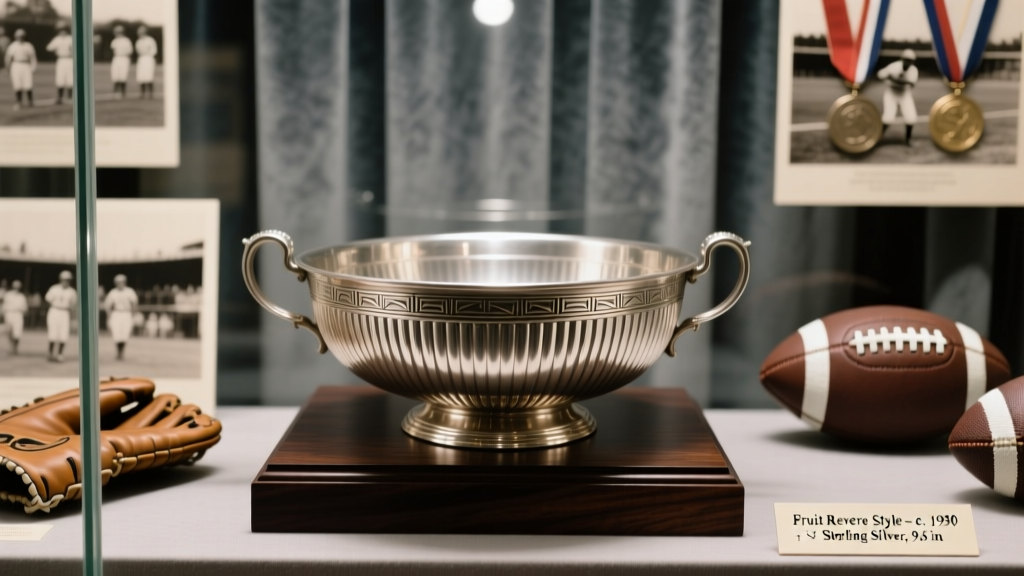
Silver Sterling Bowl: Fruit Motif, Revere Style, Reeded Rim — Circa 1930, 9½ Inches Diameter
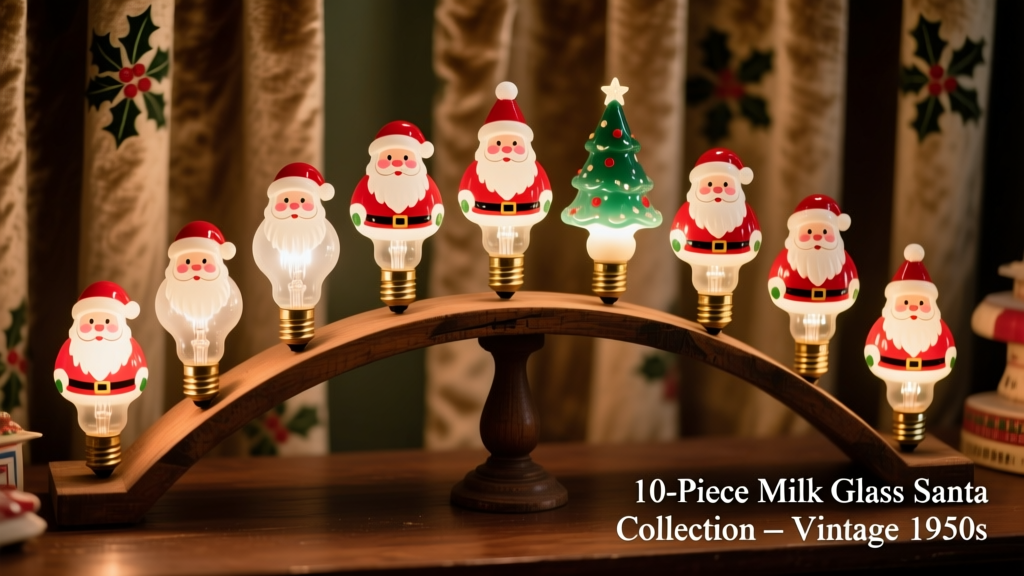
Authenticating and Valuing the Vintage 10-Piece Milk Glass Painted Santa Claus Christmas Tree Light Bulb Set
Decoding the Legend: Authenticating and Valuing the 1952 Topps #311 Mickey Mantle Card — Serial Number 1139828

Modernist Silver Jewelry: Design Innovation, Hallmark Integrity, and Market Realities in the Postwar Era
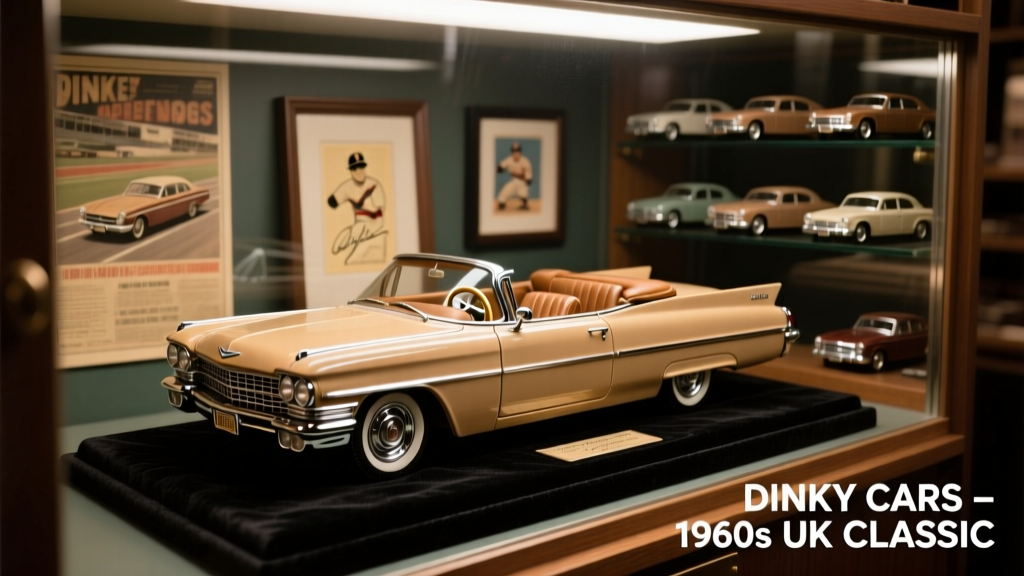
The Tan Dinky Toys Cadillac Convertible: History, Identification, and Market Value of a Mid-Century British Die-Cast Icon

Schafer & Vater Flask: The 4 1/4-Inch Poison Porcelain Skeleton Sitting Figure — History, Authentication, and Collector Insights