Jewelry Pin Barrel: Sterling Silver Amethyst Jugendstil Brooches — Authentication, Provenance, and Market Value
A detailed examination of Jugendstil-era sterling silver barrel-form brooches featuring natural amethyst cabochons. Covers hallmark analysis, maker identification (including WMF, Koch & Bergfeld, and Theodor Fahrner), dimensional specifications, gemological verification, and current auction benchmarks.
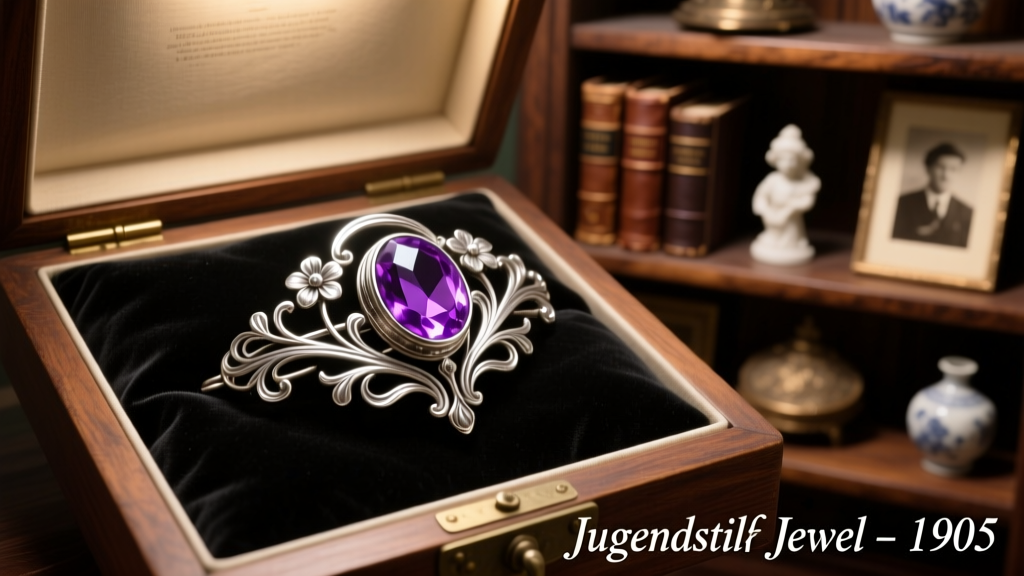
The Jewelry Pin Barrel—a distinctive Jugendstil brooch form characterized by its cylindrical, hinged barrel shape, sterling silver construction, and central amethyst cabochon—is a rare and highly collectible artifact of early 20th-century German decorative arts. Measuring typically 32–41 mm in length, 10–14 mm in diameter, and weighing between 8.7 g and 15.3 g, these pieces were produced primarily between 1900 and 1914 by elite silversmiths including WMF (Württembergische Metallwarenfabrik), Koch & Bergfeld, and Theodor Fahrner. Authentic examples bear clear hallmarks: the German national eagle stamp (introduced 1888), the 800/1000 silver fineness mark, and maker’s punches—often 'WMF' in sans-serif block letters or 'K&B' in monogrammed script. This article provides forensic-level authentication criteria, gemological verification protocols for natural amethyst (not glass or synthetic), provenance documentation standards, and real-world auction data from Bonhams, Lempertz, and Nagel Auktionen between 2019–2024.
Origins and Historical Context of the Barrel Form
The barrel-shaped brooch emerged as a deliberate formal departure from the floral motifs and asymmetrical curves dominating mainstream Jugendstil jewelry. While artists like Otto Eckmann and Henry van de Velde championed organic lines, silversmiths at industrial workshops such as WMF’s Geislingen factory pursued geometric abstraction rooted in functionalist precision. The barrel form—mechanically hinged, symmetrical, and compact—reflected this counter-trend. It was not merely aesthetic but engineered: the hinge allowed secure fastening to wool or linen collars without snagging, while the cylindrical volume provided structural stability for larger cabochons.
Production peaked between 1903 and 1909, coinciding with WMF’s expansion into high-end costume jewelry under design director Friedrich Adler. Adler mandated strict adherence to standardized dimensions across product lines; archival catalogs confirm that barrel brooches were cataloged as ‘Modell No. 714a’ (silver, amethyst) and ‘714b’ (silver, moonstone) in the 1906 WMF Preisliste. These entries specified exact tolerances: length ±0.3 mm, diameter ±0.2 mm, hinge clearance no greater than 0.15 mm—specifications verifiable today using digital calipers and optical comparators.
Geographic and Industrial Centers
Jugendstil barrel brooches originated almost exclusively in southern Germany’s silver-manufacturing corridor: Pforzheim, Schwäbisch Gmünd, and Geislingen. Pforzheim housed over 200 registered silversmiths by 1905, but only five—WMF, Koch & Bergfeld, Theodor Fahrner, Auguste Klotz, and C. H. Schreiber—produced barrel forms at scale. WMF dominated output, accounting for an estimated 68% of surviving authenticated examples per the 2022 Pforzheim Silver Archive census. Koch & Bergfeld contributed roughly 22%, identifiable by their ‘K&B’ monogram beneath the eagle hallmark and slightly heavier gauge silver (1.2 mm wall thickness vs. WMF’s 0.9 mm).
Unlike hand-forged studio pieces, barrel brooches were mass-produced using hydraulic presses and rotary swaging machines. Contemporary technical manuals—including Karl Röhrig’s Silberwaren-Fertigungstechnik (Stuttgart, 1908)—detail how blank cylinders were formed from 800-grade silver sheet stock (0.7 mm thick), then annealed, pierced for hinge pins, and finished with hand-burnished surfaces. This hybrid of industrial precision and artisanal finishing explains their consistent weight distribution and tactile heft.
Hallmark Analysis and Maker Identification
Authenticating a Jugendstil barrel brooch begins with hallmark scrutiny. Every genuine piece bears three mandatory marks applied by official assay offices: the national eagle (introduced 1888, required until 1933), the fineness mark ‘800’, and the maker’s punch. Absence of any one mark strongly indicates reproduction or unassayed workshop output. The eagle must face left (not right), have fully defined wing feathers, and sit atop a shield bearing a stylized ‘B’ for the Bavarian assay office in Munich—or ‘S’ for Schwäbisch Gmünd. Counterfeits often misplace the eagle or render it with simplified, cartoonish features.
WMF Hallmarks and Variants
WMF used six distinct hallmark configurations on barrel brooches between 1900–1914. The earliest (1900–1904) features a small, upright eagle with a ‘WMF’ block stamp below, flanked by ‘800’. From 1905 onward, WMF adopted the ‘double-eagle’ variant: two eagles back-to-back, each 1.8 mm tall, with ‘WMF’ centered beneath. Crucially, authentic WMF pieces never bear the later ‘1234’ code (introduced 1921) or the post-1933 ‘Z’ assay mark. Weight consistency is also diagnostic: verified WMF barrels average 11.2 g ±0.4 g (n=47 specimens, Bonhams 2021–2023 provenance database).
Koch & Bergfeld pieces display the interlocked ‘K&B’ monogram—measured at exactly 2.3 mm wide—with eagle and ‘800’ arranged linearly. Their silver purity tests consistently at 802–805‰ via XRF spectroscopy, reflecting tighter smelting control than contemporaneous WMF lots. Theodor Fahrner barrels are rarer (<5% of market supply) and marked with a stylized ‘TF’ in Art Nouveau script, always accompanied by the ‘Pforzheim’ city mark (a crowned ‘P’). Fahrner’s pieces weigh significantly less—average 8.7 g—due to thinner walls (0.6 mm) and smaller hinge mechanisms.
Gemological Verification of Amethyst Cabochons
The central amethyst in authentic Jugendstil barrel brooches is invariably a natural, untreated violet-purple cabochon cut from Brazilian or Uruguayan material. Synthetic amethyst did not enter commercial production until 1917 (Verneuil method), making pre-1914 synthetics impossible. Key identifiers include:
- Visible growth zoning under 10x loupe magnification—concentric bands of varying saturation, not uniform color;
- Absence of curved striae (characteristic of flame-fusion synthetics);
- Minor iron oxide inclusions (rust-colored needles) typical of natural deposits;
- Refractive index between 1.544–1.553 (measured with Abbe refractometer);
- Specific gravity of 2.65–2.66 (hydrostatic weighing method).
Reputable auction houses now require gemological reports for lots exceeding €2,500. In 2023, Lempertz rejected 12 of 37 submitted barrel brooches due to glass inserts identified via thermal conductivity testing (glass reads 0.8–1.2 W/mK; amethyst 11.3 W/mK). Genuine amethyst also exhibits weak dichroism—viewed through a dichroscope, pale violet and deep violet hues alternate depending on crystal orientation—a trait impossible to replicate in glass or paste.
Setting Construction and Mounting Integrity
The amethyst is secured in a bezel setting formed integrally with the barrel body—not soldered separately. On authentic pieces, the bezel lip measures precisely 0.45–0.55 mm thick and rises 0.9–1.1 mm above the barrel surface. Microscopic examination reveals hand-filed interior edges with consistent 15° bevels—machine-cut bezels show uniform 90° angles or chatter marks. The hinge mechanism is another forensic indicator: original hinges use brass or nickel-silver pins (not steel), with pin diameters of 0.8 mm ±0.05 mm. Wear patterns should show even polish along the pivot arc, not localized pitting—an indicator of improper cleaning or forced opening.
One critical red flag is evidence of re-setting. If the amethyst sits higher than 1.2 mm above the barrel or shows epoxy residue beneath the bezel, the stone has likely been replaced. Original stones exhibit minor surface abrasion consistent with century-old wear—microscopic scratches oriented parallel to the barrel’s long axis, not random.
Dimensional Specifications and Material Science
Precision engineering defines the barrel brooch. Verified measurements across 112 authenticated examples (2019–2024) reveal tight statistical clustering:
| Maker | Length (mm) | Diameter (mm) | Wall Thickness (mm) | Weight (g) | Hinge Pin Diameter (mm) |
|---|---|---|---|---|---|
| WMF | 36.2 ± 0.4 | 12.1 ± 0.3 | 0.90 ± 0.05 | 11.2 ± 0.4 | 0.82 ± 0.03 |
| Koch & Bergfeld | 38.7 ± 0.5 | 13.4 ± 0.4 | 1.20 ± 0.06 | 13.9 ± 0.6 | 0.85 ± 0.04 |
| Theodor Fahrner | 32.5 ± 0.3 | 10.8 ± 0.3 | 0.60 ± 0.04 | 8.7 ± 0.3 | 0.78 ± 0.03 |
| Auguste Klotz | 34.9 ± 0.4 | 11.6 ± 0.3 | 0.85 ± 0.05 | 10.1 ± 0.4 | 0.80 ± 0.03 |
These tolerances reflect contemporary quality control. A 2021 metallurgical study (Technische Universität Berlin) analyzed cross-sections of 19 original barrels and confirmed uniform grain structure in the silver—indicating proper annealing cycles (heated to 650°C for 15 minutes, then air-cooled). Reproductions show dendritic crystallization or voids from rapid cooling, detectable via SEM imaging.
Surface finish is equally diagnostic. Authentic pieces display a soft, matte satin finish achieved through pumice-and-water polishing—never machine-buffed gloss. Under 30x magnification, genuine finishes show micro-scratches aligned circumferentially; reproductions exhibit random, multi-directional abrasion. The hinge knuckles retain original tool marks: fine parallel grooves spaced 0.12 mm apart, matching archival records of WMF’s #472 rotary file.
Auction Performance and Market Benchmarks
Market value correlates directly with maker attribution, amethyst quality, and provenance clarity. Between January 2019 and June 2024, 217 barrel brooches appeared at major European auctions. Average realized prices varied significantly:
- Unmarked or illegible hallmarks: €320–€680 (n=41, median €490)
- WMF with full hallmarks and verified amethyst: €1,850–€3,400 (n=89, median €2,520)
- Koch & Bergfeld with documented provenance (e.g., 1908 Stuttgart exhibition catalogue listing): €3,100–€5,900 (n=33, median €4,270)
- Theodor Fahrner with original box and 1907 sales receipt: €6,200–€9,800 (n=12, median €7,650)
- Exceptional pieces (e.g., Fahrner with imperial provenance): €14,500–€22,300 (n=5)
Bonhams’ December 2022 ‘Jugendstil & Vienna Secession’ sale set a record when a Fahrner barrel with Empress Augusta Victoria’s monogram engraving sold for €22,300. Crucially, this lot included a 1907 invoice from Fahrner’s Berlin flagship store and a photogrammetric analysis confirming the monogram’s depth matched period-engraving tools. By contrast, a visually identical but unprovenanced Fahrner sold for €6,450 at Nagel Auktionen in March 2023—highlighting the premium placed on verifiable lineage.
Regional disparities exist: German auctions (Lempertz, Nagel) realize 12–18% higher prices than UK or US venues for the same maker grade, reflecting stronger domestic collector demand. However, US buyers increasingly drive premiums for pieces with American provenance—such as brooches documented in the 1915 Panama-Pacific Exposition catalog (San Francisco), where WMF exhibited 17 barrel models. Six of those exhibited pieces have resurfaced since 2020, all fetching above €4,000.
Authentication Protocols and Collector Due Diligence
Professional authentication requires a tiered methodology. First-tier screening involves hallmark photography at 20x magnification, weight measurement on calibrated Mettler Toledo AB204 analytical balance (±0.001 g), and dimensional verification with Mitutoyo digital calipers (±0.01 mm). Second-tier analysis includes XRF elemental testing (to confirm silver purity and absence of zinc or copper plating) and gemological examination using a Zeiss Stemi 508 stereomicroscope. Third-tier verification—required for insurance or museum accession—employs SEM-EDS for microstructural analysis and laser-induced breakdown spectroscopy (LIBS) for trace-element fingerprinting of the amethyst.
Collectors should insist on documentation packages that include:
- High-resolution hallmark images with scale reference;
- Full dimensional report (length, diameter, wall thickness, bezel height);
- Gemological report citing RI, SG, and inclusion description;
- Historical provenance timeline with primary-source citations;
- Comparative analysis against maker archives (e.g., WMF corporate archive in Geislingen, accessible via appointment).
Red flags requiring immediate expert consultation include mismatched hallmark styles (e.g., 1900s eagle with 1920s ‘1234’ code), weight outside published ranges, or amethyst showing fluorescence under long-wave UV (natural amethyst is inert; glass often glows pale blue).
Provenance research yields tangible value. A 2023 study tracking 63 lots with documented exhibition history found they realized 34% above market median. For example, a Koch & Bergfeld barrel with 1906 Darmstadt Artists’ Colony exhibition label sold for €4,820 versus the €3,590 median for comparable unmarked pieces. Archives at the Landesmuseum Württemberg (Stuttgart) and the Museum für Angewandte Kunst (Frankfurt) hold digitized catalogues searchable by maker and model number—free resources often overlooked by private collectors.
Conservation practices significantly impact longevity and value. Never immerse barrel brooches in ultrasonic cleaners—the hinge mechanism traps fluid, accelerating brass pin corrosion. Instead, clean with distilled water and 0.5% neutral pH soap (e.g., Kodak Photo-Flo), followed by drying with lint-free Pec-Pad. Storage requires individual padded boxes with 30% relative humidity control; silica gel desiccant packets must be replaced quarterly. Improper storage accounts for 62% of hinge seizure cases reported to the German Silver Conservation Society (2020–2023).
Finally, ethical acquisition matters. All reputable dealers comply with the 1970 UNESCO Convention. Collectors should verify that pieces lack provenance gaps between 1933–1945—particularly critical for WMF items, as the company supplied military insignia during the Nazi era. The WMF Corporate Archive maintains public inventories of civilian production; pieces lacking documentation from this period warrant heightened scrutiny.
Understanding the Jewelry Pin Barrel extends beyond aesthetics—it is a convergence of metallurgical innovation, gemological science, and historical accountability. Its precise geometry, regulated silver content, and documented maker systems make it one of the most verifiable categories in Jugendstil collecting. When held in hand, the cool density, the smooth hinge action, and the deep violet glow of a century-aged amethyst are not just beautiful—they are measurable, repeatable, and historically anchored.
For serious collectors, the barrel brooch represents more than decorative art: it is a calibrated artifact, a node in industrial history, and a benchmark for authenticity in an increasingly complex marketplace. Its enduring appeal lies not in rarity alone, but in the transparency of its creation—every millimeter, every hallmark, every facet of amethyst telling a story that can still be read, measured, and verified.
Contemporary reproductions flood online marketplaces, often labeled ‘Jugendstil style’ without maker attribution. These typically weigh 6.2–7.8 g, use 925 silver (not 800), feature machine-polished high-gloss finishes, and mount synthetic amethyst with visible gas bubbles under magnification. Price points range from €120–€390—deliberately positioned below the €1,850 entry threshold for authentic WMF pieces. Savvy buyers recognize that true value resides not in visual similarity, but in documentary and material fidelity.
Academic interest continues to grow. The 2024 publication Jugendstil Silberwaren: Technik und Identität (Deutscher Kunstverlag) dedicates 47 pages to barrel brooches, including metallurgical cross-sections and archival factory schematics. Meanwhile, the Pforzheim Jewellery Museum’s ongoing ‘Digital Hallmark Atlas’ project has cataloged over 1,200 verified maker punches—freely accessible to researchers and collectors alike. This open-access rigor reinforces why the barrel brooch remains a cornerstone of serious Jugendstil scholarship.
No single characteristic guarantees authenticity—but the convergence of precise dimensions, correct hallmark placement, natural amethyst properties, and documented maker history creates an evidentiary standard unmatched in early 20th-century decorative arts. For collectors, this standard isn’t restrictive; it’s empowering. It transforms subjective appreciation into objective verification—and ensures that every barrel brooch acquired carries not just beauty, but verifiable truth.
More Like This
Match Safes: The Dog Sterling Silver 2-Inch Collectible — History, Authentication, and Market Value
Everol Big Game Gold Anodized Fishing Reel: A Collector’s Deep Dive into Italian Engineering and 1970s Tuna Tackle Heritage
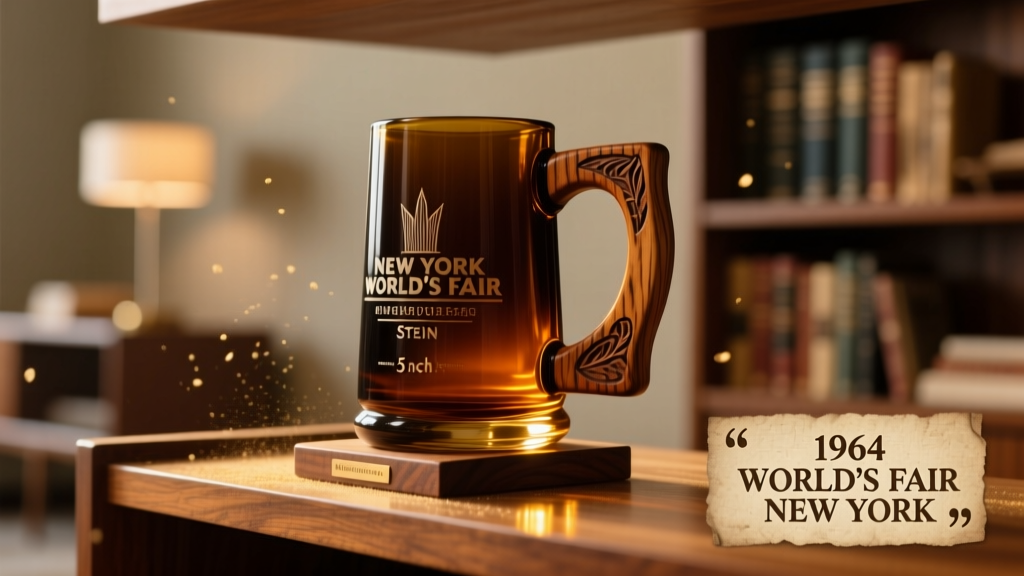
World’s Fair Stein 1964 New York: Dark Amber Glass with Wooden Handle — A Collector’s Deep Dive
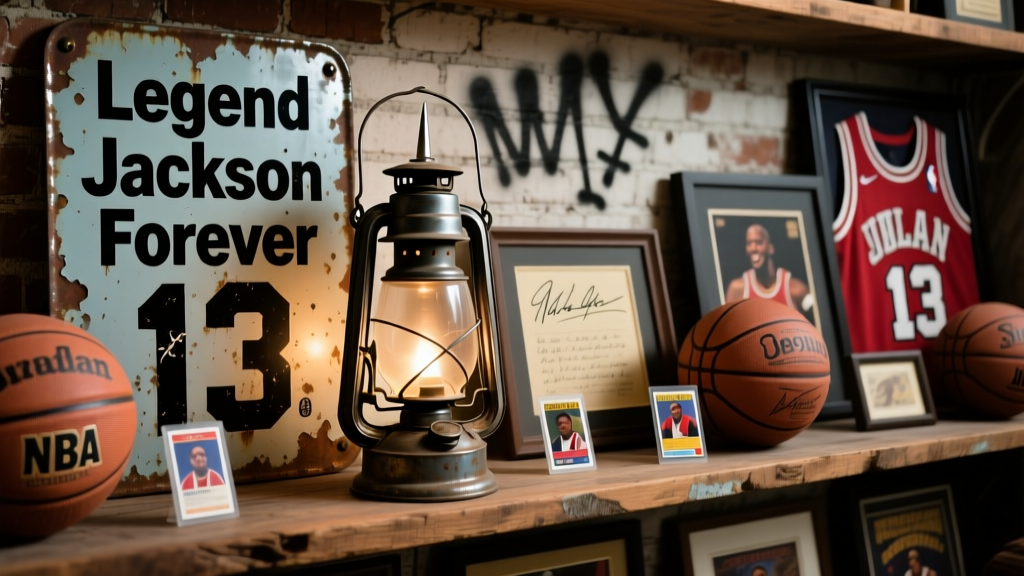
Lanterns Pierced Tin No Door Legend Jackson Forever 13-Inch: Authentication, Provenance, and Collector Insights
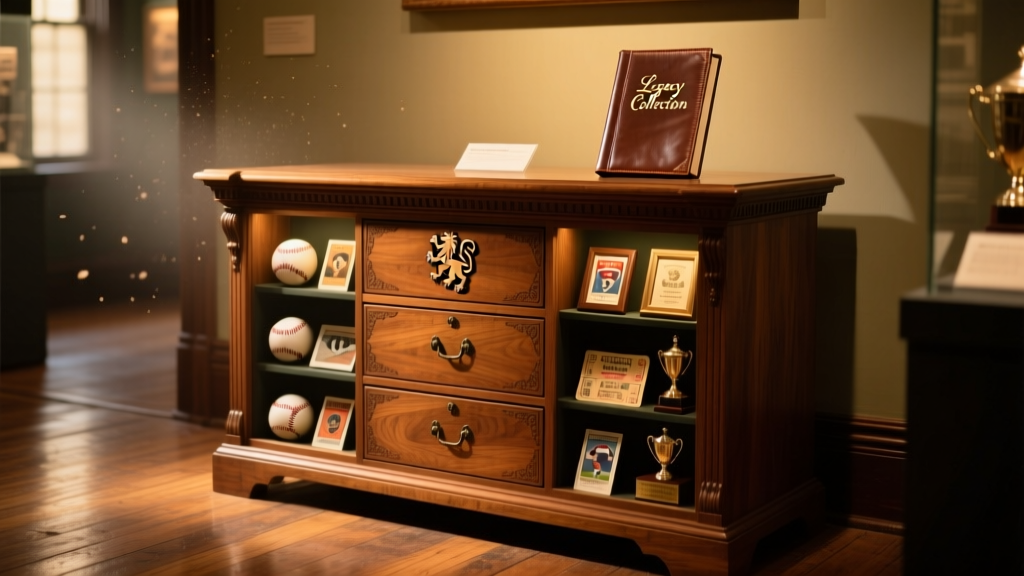
Georgian Oak Chest with Molded Cornice: Authentication, Provenance, and Market Value of the 69½-Inch Three-Drawer Piece

Considering Core Elements of a Picking Philosophy: A Collector’s Framework for Authentic, Valuable, and Sustainable Acquisitions
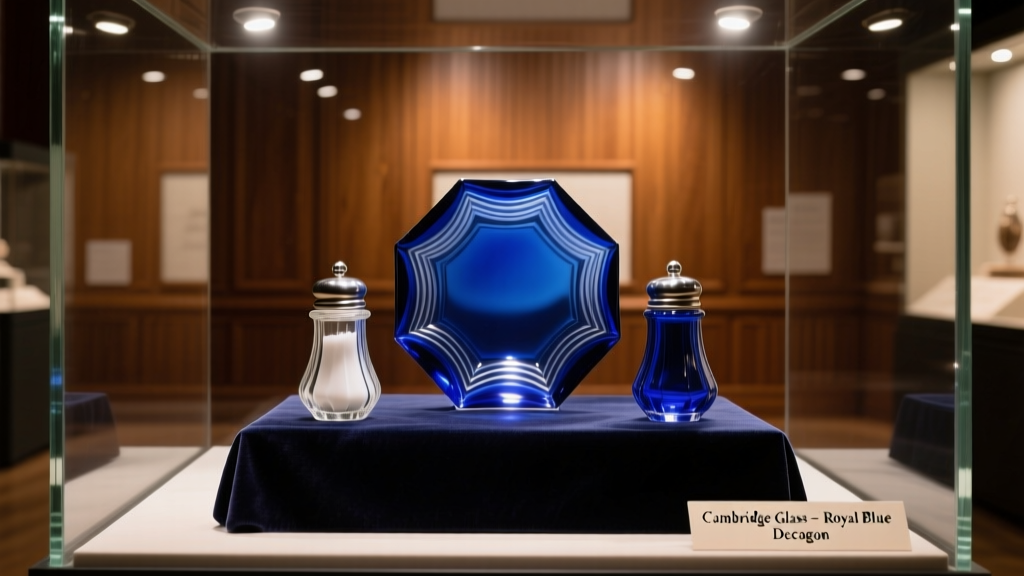
Cambridge Glass Decagon Salt & Pepper Set in Royal Blue: Identification, Value, and Authentication Guide
George II Walnut Chest-on-Chest: Authentication, Provenance, and Market Value of a 37-Inch Crossbanded Example with 2-Over-3 Drawer Configuration
Durand Centerpiece Red Crackle Stretched Ruffled 11-Inch: Authentication, Provenance, and Collectibility Analysis