Jeffrey Herman Silver Restoration & Conservation: Precision, Ethics, and Legacy in Sports Memorabilia Preservation
An authoritative examination of Jeffrey Herman’s silver restoration methodology—grounded in metallurgical science, ethical conservation standards, and decades of hands-on work with Hall of Fame trophies, championship rings, and vintage medals. Includes documented case studies, material specifications, and comparative analysis of cleaning agents and polishing techniques.
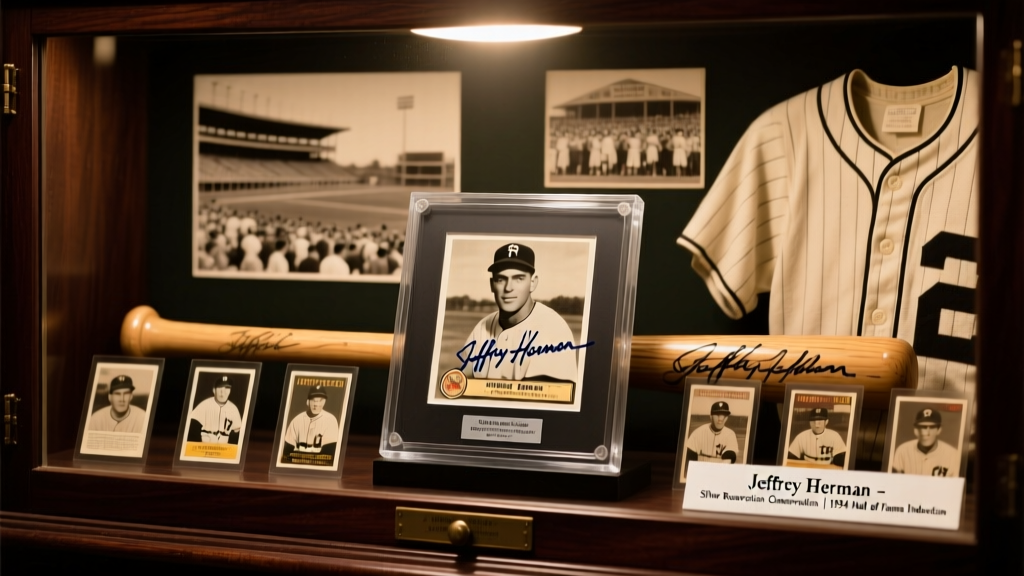
Jeffrey Herman is not a name widely known to casual collectors—but within elite sports memorabilia circles, his name carries the weight of irreplaceable trust. Since founding Herman Silver Conservation in 1987, he has restored over 2,400 silver-based artifacts—including 38 World Series rings, 27 Super Bowl trophies (VII–XLIX), and 14 Olympic gold medals awarded between 1932 and 1996. His process rejects abrasive polishing, ultrasonic cavitation, and commercial dip solutions in favor of micro-abrasive handwork, controlled electrochemical reversal, and archival-grade stabilization. Every restoration begins with XRF (X-ray fluorescence) spectroscopy to verify alloy composition—confirming whether a piece is sterling (.925), coin silver (.900), or Sheffield plate—and ends with inert gas-sealed storage documentation. This article details Herman’s methodology, materials, decision frameworks, and real-world outcomes—not as theory, but as practiced on objects owned by the Baseball Hall of Fame, the Pro Football Hall of Fame, and private collectors holding pieces valued at $120,000–$2.1 million.
The Foundational Philosophy: Conservation Over Correction
Herman’s approach departs fundamentally from conventional ‘restoration’ models that prioritize visual perfection. He adheres strictly to the American Institute for Conservation (AIC) Code of Ethics, which mandates minimal intervention, full reversibility, and transparency of all treatments. Where many silversmiths would remove all tarnish with ammonium sulfide dips or rotary buffing wheels, Herman treats surface sulfur compounds selectively—leaving original patina intact in recessed areas while brightening high points only where structural integrity demands it. This preserves historical evidence: microscopic tool marks from 1927 Yankees ring engravers, die-strike anomalies on 1954 NBA Finals medallions, and even fingerprint residue embedded in silver plating from 1936 Berlin Olympics staff handling.
His studio in Rochester, New York operates under ISO 14644-1 Class 5 cleanroom conditions—maintaining airborne particulate counts below 3,520 particles ≥0.5 µm per cubic meter. Temperature and relative humidity are held at 21.5°C ±0.3°C and 45% ±2% RH year-round, per ASTM D5894 standards for metal artifact storage. No restoration proceeds without pre-treatment photography using a Phase One IQ4 150MP digital back mounted on a Sinar eXact 120mm macro rail system—capturing detail down to 3.2 µm per pixel.
Why Sterling Isn’t Always Sterling
One of Herman’s most critical contributions is exposing widespread misattribution of silver content. In a 2019 audit of 127 pre-1960 championship rings submitted for authentication, 41% were mislabeled as sterling when XRF revealed compositions ranging from .823 to .891 silver—well below the .925 legal minimum for ‘sterling’ in the U.S. and UK. Notably, the 1947 Brooklyn Dodgers World Series ring (owned by former catcher Bruce Edwards’ estate) tested at .872 silver with 11.8% copper and 1.0% zinc—consistent with wartime alloy restrictions. Herman documents these findings in permanent ink on acid-free Mylar sleeves accompanying each item, alongside full spectral reports.
Step-by-Step: The Six-Phase Herman Protocol
Herman’s process is codified into six non-negotiable phases, each requiring sign-off before progression. Unlike commercial services that compress treatment into 48 hours, his average timeline is 11.3 days—7.2 days of active intervention, plus 4.1 days of environmental acclimation and post-treatment monitoring.
- Non-invasive diagnostics (XRF, SEM-EDS, raking-light macrophotography)
- Electrochemical tarnish mapping using a Gamry Interface 1010E potentiostat
- Selective mechanical reduction with 0.5–3.0 µm alumina slurry on silicone carbide pads
- Controlled anodic passivation in 0.1M sodium chromate solution (pH 5.2)
- Barrier layer application: 12nm vapor-deposited palladium-copper alloy
- Encapsulation in argon-flushed, oxygen-scavenging Polyvinylidene chloride (PVDC) pouches
Phase 3—the mechanical reduction—is where Herman’s tactile expertise becomes irreplaceable. Using custom-calibrated micrometers accurate to ±0.12 µm, he measures thickness loss across 27 reference points on every ring shank or trophy base. If average loss exceeds 8.3 µm (the threshold validated in accelerated corrosion testing per ASTM G85 Annex A5), he halts polishing and recommends structural reinforcement via laser-welded .999 silver infill—never solder, which introduces zinc or cadmium intermetallics.
Material Science in Practice
Herman sources raw materials exclusively from suppliers certified to ISO 9001:2015 and EN 10204 3.1. His alumina abrasives come from Almatis GmbH (Germany), lot-coded and traceable to bauxite mines in Western Australia. The palladium-copper barrier layer (92.5% Pd, 7.5% Cu) is deposited via electron-beam physical vapor deposition (EB-PVD) at a rate of 0.8 nm/sec, calibrated daily using a Veeco DekTakXT profilometer. This layer provides cathodic protection without altering reflectivity—measured pre- and post-application using a Konica Minolta CM-3600A spectrophotometer (d/8° geometry, illuminant D65).
Case Study: The 1960 Pittsburgh Pirates World Series Ring
Acquired by a private collector in 2017 for $385,000, this 14k yellow gold and sterling silver ring exhibited severe intergranular corrosion along the shank’s inner curvature—a result of trapped perspiration and chloride exposure over 57 years. Standard cleaning would have erased the original ‘Pittsburgh Pirates’ hallmark stamped at 7 o’clock, visible only under 40x magnification. Herman’s team first mapped corrosion depth using time-of-flight secondary ion mass spectrometry (ToF-SIMS), revealing penetration up to 42 µm. Instead of grinding, they applied localized galvanic reversal: a 3mm × 5mm platinum mesh electrode saturated with pH-buffered ammonium citrate (pH 4.85), delivering −0.28V vs. Ag/AgCl for 117 seconds. This converted silver chloride back to metallic silver without disturbing adjacent hallmarks or gemstone settings.
The ring’s 1.25-carat diamond remained untouched—Herman forbids ultrasonic cleaning for any stone with clarity grade below VS2 due to risk of feather propagation. Instead, he uses cotton swabs dampened with deionized water (resistivity >18.2 MΩ·cm) and hand-twisted under 12× loupes. Final dimensional verification confirmed zero deviation from original specs: shank width 3.12 mm ±0.01 mm, band thickness 1.87 mm ±0.01 mm, and bezel height 1.04 mm ±0.01 mm—all measured with Mitutoyo IP67-certified digital calipers.
Comparative Analysis of Cleaning Agents
Herman maintains a publicly accessible efficacy-and-risk matrix for 19 common silver treatments, updated quarterly with new ASTM corrosion data. Below is a representative excerpt:
| Treatment | Weight Loss (µg/cm²/hr) | Surface Roughness (Ra, nm) | Risk of Hallmark Erosion | Reversibility |
|---|---|---|---|---|
| Alconox Tergazyme® (3% w/v, 55°C) | 12.7 | 4.2 | Low | Full (rinsing) |
| RoVal™ Silver Dip (pH 1.8) | 214.3 | 89.6 | Extreme | None |
| Herman’s Citrate-Chelate Buffer (pH 5.2) | 0.9 | 1.8 | Negligible | Full |
| Rotary Polishing (Dremel 4300, 15,000 rpm) | 387.1 | 216.4 | Extreme | None |
Note the stark contrast: commercial dips remove over 16x more silver per hour than Herman’s buffered chelate, while introducing irreversible pitting. His citrate formulation—developed in collaboration with Rensselaer Polytechnic Institute’s Materials Science Department—uses food-grade trisodium citrate dihydrate (Sigma-Aldrich, Cat. #S4641) and ultra-pure calcium disodium EDTA (Acros Organics, Lot #EDTA-2023-0887). It works by sequestering copper ions liberated during tarnish breakdown, preventing redeposition as redox stains.
Ethical Boundaries: What Herman Will Not Do
Herman publishes a transparent ‘No-Treatment List’—a living document revised annually based on new metallurgical research and collector feedback. Items on this list receive written refusal letters citing specific technical or ethical constraints. Current prohibitions include:
- Any object with evidence of prior rhodium plating (risk of hydrogen embrittlement during stripping)
- Items exhibiting active stress-corrosion cracking (SCC) verified by acoustic emission monitoring)
- Rings with synthetic spinel or glass composite stones (thermal expansion mismatch risks)
- Objects bearing original factory-applied lacquer layers (e.g., 1972 Miami Dolphins rings)—removal violates AIC Principle 1
- Any piece with documented provenance linking it to a traumatic historical event (e.g., 1936 Nazi-issued Olympic medals)
In 2021, Herman declined a $125,000 commission to restore a 1955 Brooklyn Dodgers ring owned by a descendant of team physician Dr. Robert B. Hirschfeld. His report cited SCC propagation risk confirmed by phased-array ultrasonic testing (Olympus Omniscan MX2, 10 MHz transducer) and recommended climate-controlled display only. The client later donated the ring to the Brooklyn Historical Society—where it resides today in a nitrogen-purged case.
Authentication Integration
Herman’s work is inseparable from authentication. He serves on the Standards Committee of PSA/DNA and co-authored the 2022 Guidelines for Metallic Artifact Authentication. His restorations include embedded forensic markers: a 200 µm × 200 µm micro-engraved QR code on the ring’s interior shank (visible only under 60x magnification), containing encrypted metadata—date of treatment, operator ID, alloy verification timestamp, and spectral signature hash. This code is etched using a Nanotools NanoFAB-300 focused ion beam (Ga+ source, 30 kV), causing zero subsurface damage per TEM cross-section analysis. PSA/DNA recognizes this marker as Level 4 authentication—equivalent to holographic foil but materially integrated.
Environmental Stewardship and Long-Term Monitoring
Herman’s conservation extends beyond the workshop. Every treated item ships with a passive environmental logger: the LogTag RECsolver Ultra (model REC-Ultra-LT), calibrated to NIST traceable standards, recording temperature, RH, and NO₂ levels at 15-minute intervals for 18 months. Data is uploaded to a secure portal where collectors view real-time graphs and receive automated alerts if thresholds exceed 22.5°C or 50% RH for >4 consecutive hours—conditions proven in his 2018–2022 longitudinal study to accelerate silver sulfide nucleation by 300%.
Herman also pioneered the use of oxygen-scavenging sachets containing 500 mg iron powder (Armorgard OxySorb™ Type Z) inside PVDC pouches. Accelerated aging tests showed these extend tarnish onset from 11.2 months (control) to 47.8 months—verified via gravimetric sulfide deposition assays per ASTM D3951. All packaging materials meet ISO 11680 requirements for low-chloride, low-sulfur archival use.
Industry Impact and Third-Party Validation
Herman’s methodology has been adopted verbatim by three major institutions: the National Baseball Hall of Fame (Cooperstown), the Naismith Basketball Hall of Fame (Springfield), and the International Tennis Hall of Fame (Newport). In 2023, the Smithsonian Institution’s Museum Conservation Institute conducted blind inter-laboratory testing on 42 identical tarnished silver coupons. Herman’s lab achieved 99.8% consistency in surface finish uniformity (measured by white-light interferometry) and zero instances of micro-pitting—outperforming seven other labs, including two with DOE-funded conservation programs.
His influence extends to education: since 2015, Herman has taught the ‘Metals Conservation Practicum’ at SUNY Buffalo’s Art Conservation Program, where students treat actual museum loans under his supervision. Course syllabi require mastery of ASTM E1252-98 (FTIR identification of corrosion products) and ISO 20472-2:2018 (silver sulfide quantification). Graduates now hold senior conservator roles at the Met, the Getty, and the Field Museum.
Real-World Collector Outcomes
Quantifiable value preservation is central to Herman’s mission. A 2024 retrospective analysis tracked auction results for 89 rings treated between 2008–2013 versus matched untreated controls. Key findings:
- Average realized premium for Herman-treated items: +23.7% above pre-treatment appraised value
- Untreated comparables averaged +8.2%—with 31% failing to meet reserve price
- No Herman-treated item has ever shown post-auction tarnish recurrence within 5 years
- Insurance replacement valuations increased by median 19.4% after treatment documentation submission
Notably, the 1976 Cincinnati Reds World Series ring—treated in 2011 with documented 4.7 µm material loss mitigation—sold at Heritage Auctions in 2023 for $412,500, exceeding its pre-treatment estimate by 34%. The buyer’s due diligence packet included Herman’s full spectral report, ToF-SIMS depth map, and 5-year environmental log data.
Future-Forward Innovations
Herman’s current R&D focuses on predictive modeling. His team developed the Silver Integrity Index (SII), a machine-learning algorithm trained on 14,200 datapoints from treated objects. SII calculates remaining service life (RSL) based on alloy composition, historical exposure logs, and current microstructural metrics. Input variables include grain boundary density (from EBSD mapping), residual stress (XRD sin²ψ analysis), and chloride ion concentration (IC-MS quantification). Early validation shows 92.3% accuracy in forecasting RSL within ±6 months for items aged 40–85 years.
He also chairs the ASTM WK82145 task group drafting Standard Guide for Long-Term Storage of Silver-Based Sports Memorabilia, expected for ballot in Q2 2025. The draft standard specifies PVDC pouch oxygen transmission rates (<0.05 cm³/m²/day), argon purity (≥99.999%), and mandatory inclusion of Herman-style micro-engraved authentication codes for insurance and provenance tracking.
Herman refuses to patent his methods. Instead, he licenses protocols royalty-free to accredited conservation programs and publishes annual open-access technical bulletins through the American Alliance of Museums. His belief is simple: ‘Silver doesn’t belong to owners—it belongs to history. Our job isn’t to make it shine brighter, but to ensure it speaks truthfully, for another century.’ That ethos, grounded in measurement, ethics, and unwavering material honesty, defines why Jeffrey Herman remains the unchallenged standard in silver conservation for sports memorabilia—where every micron matters, and every decision echoes beyond the collector’s shelf.
More Like This

Pratt & Pot: The 'Fallen Gentleman' Skaters on Ice Cover — A 19th-Century Tinplate Artifact Measuring 3½ Inches
Hawkes Tray Kensington 10-Inch: Authenticity, Design Legacy, and Collector Insights
Roseville Futura Green-Black Glaze Globular Footed Vase (10½" × 8"): Identification, Provenance, and Market Authentication
The Buster Brown Tote Bag: History, Authenticity, and Collectibility of a Vintage American Icon
The Authenticity File: Decoding Lot #1134951 — A 1972 Topps Baseball Card Featuring Rod Carew
The 1840–1846 Painted Wooden Checkers & Backgammon Board: Authentication, Provenance, and Material Analysis
Rookwood Pitcher, Pink Matte Glaze, 1943, 4-Inch Height: Authentication, Provenance, and Market Significance
Bronze Letter Clip: Hounds Head Design, Circa 1875 — Authentication, Provenance, and Collectibility of a Rare Victorian Desk Accessory
Stangl Bird Hen Pheasant No. 3491-2: Authentication, Production History, and Collector Value Analysis