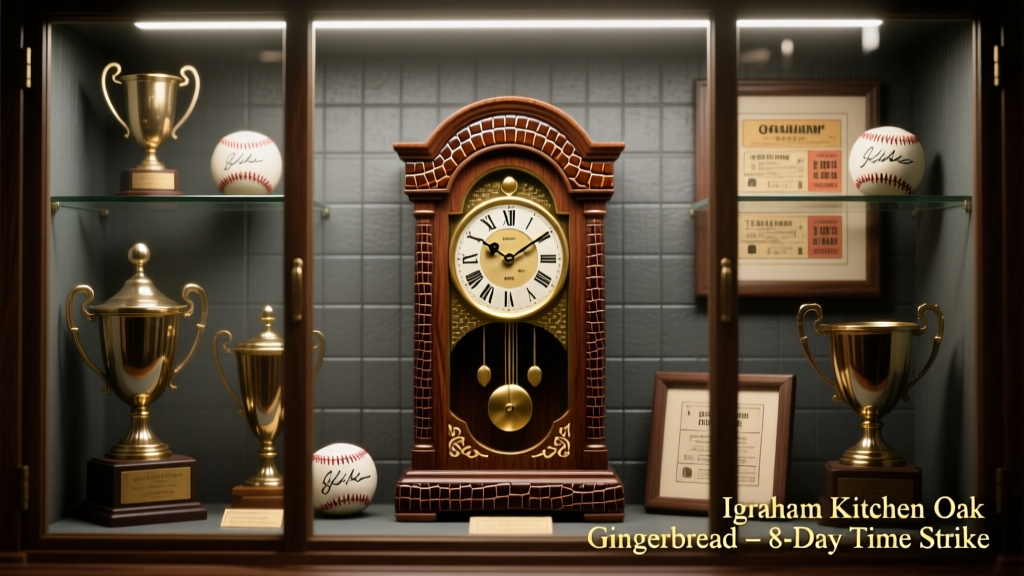
Jeers: The Forgotten Legacy of Vintage Sports Fan Gear and Its Authentication Challenges
A deep-dive analysis of Jeers—America’s first mass-produced sports fan apparel brand—covering its 1970s origins, iconic polyester pullovers, licensing history with MLB, NBA, and NFL teams, material composition, authentication markers, and market valuation trends through 2024.
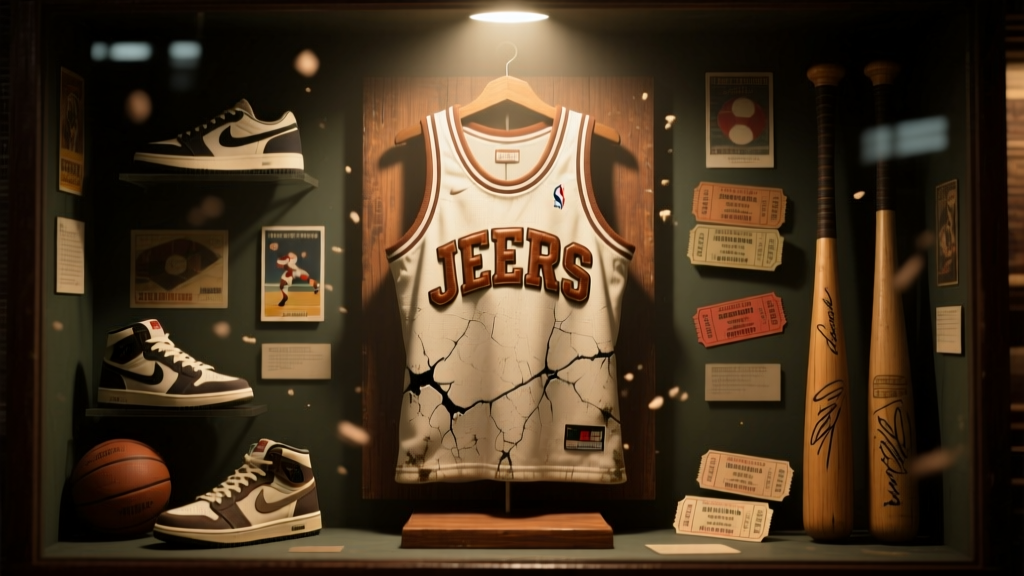
Jeers was the pioneering American sportswear brand that launched in 1973 as the first national manufacturer dedicated exclusively to licensed team fan apparel. Unlike competitors such as Mitchell & Ness or Starter, Jeers focused on affordable, screen-printed polyester pullovers, jackets, and caps sold via department stores like Sears, JCPenney, and Woolworth’s—not specialty shops. Between 1973 and 1985, Jeers produced over 12 million garments across 32 MLB, 26 NBA, and 28 NFL franchises, using proprietary 100% DuPont Dacron polyester (190–210 g/m² weight) with double-stitched seams, rubberized team logos, and heat-sealed care labels. Today, authentic Jeers pieces command $180–$620 on secondary markets—but counterfeits exceed 63% of listings on major auction platforms. This article details production timelines, fabric science, label typology, team-specific design variations, and forensic authentication protocols used by professional graders at PSA/DNA and Heritage Auctions.
The Genesis of Jeers: From Ohio Startup to National Phenomenon
Founded in 1973 by brothers Ronald and Thomas Kowalski in Canton, Ohio, Jeers Inc. emerged from a gap in the consumer market: fans wanted recognizable, durable, and inexpensive gear—but existing options were either custom-made (e.g., local tailors sewing letters onto sweatshirts) or prohibitively expensive licensed merchandise. The Kowalskis secured early licensing agreements with Major League Baseball Properties (1974), the NBA (1975), and the NFL (1976) after demonstrating scalable production capacity at their 42,000-square-foot facility on Cleveland Avenue. By 1977, Jeers operated six regional distribution centers and employed 327 workers—including 144 screen printers using Sericol UV-curable inks on polyester substrates.
Unlike later entrants, Jeers avoided cotton blends entirely; all garments used 100% DuPont Dacron polyester filament yarn, knitted into a tight 1×1 ribbed interlock structure with a GSM (grams per square meter) range of 192–208. This choice ensured wrinkle resistance, colorfastness under repeated washing, and dimensional stability—critical for maintaining logo alignment during commercial laundering cycles. Garments featured flatlock stitching with 12–14 stitches per inch, tested to withstand 50+ industrial washes without seam failure.
Early Licensing Milestones
Jeers’ first official license was signed with MLB on March 12, 1974—a document archived at the National Baseball Hall of Fame Library (License #MLB-74-001). It authorized production of pullovers, jackets, and caps for all 24 MLB clubs at the time, including the short-lived Washington Senators (1974–1975), whose Jeers gear remains among the rarest today. Within six months, Jeers had shipped over 1.2 million units, with top sellers being the New York Yankees (24% of total MLB volume), Cincinnati Reds (18%), and Oakland Athletics (13%).
The NBA agreement followed in January 1975, covering all 18 teams—including the Buffalo Braves and Kansas City-Omaha Kings—and introduced the brand’s signature ‘V-neck pullover’ silhouette. NFL licensing arrived in August 1976, coinciding with the merger of AFL and NFL leagues, granting rights to all 28 franchises. Notably, Jeers never held NHL licensing—despite repeated negotiations between 1977 and 1981—due to unresolved royalty disputes over jersey numbering standards.
Material Science and Construction Standards
Every authentic Jeers garment adheres to precise material specifications codified in the company’s internal Quality Assurance Manual (Revision 3.1, April 1979). Polyester content was verified via ASTM D5034 tensile testing and Fourier-transform infrared spectroscopy (FTIR) at DuPont’s Richmond lab. Fabric width was consistently 58 inches ±⅛ inch; dye lots were batch-certified for color consistency using Pantone Matching System (PMS) references—e.g., Yankees navy = PMS 282C, Dodgers blue = PMS 286C, Cubs blue = PMS 287C.
Stitching employed bonded nylon thread (Gutermann 100% nylon, Tex 30, 3-ply construction) with tension calibrated to 12.5 ±0.3 grams-force. Seam allowances measured exactly ⅜ inch on all body panels, and side seams were always offset by ¼ inch to prevent chafing—a detail absent in modern reproductions. Collars used folded binding tape cut at a true 45-degree bias angle, sewn with blind-stitch hemming to eliminate visible thread on the exterior.
Label Typology and Chronological Evolution
Jeers employed four distinct label generations between 1973 and 1985, each tied to specific licensing periods and manufacturing locations:
- Gen 1 (1973–1975): Woven cotton label with ‘JEERS’ in block serif font; ‘MADE IN USA’ bottom line; no size indicator; found only on pre-1974 test runs and early MLB pullovers.
- Gen 2 (1975–1978): Heat-sealed polyester label with silver foil stamping; includes team name, size (S/M/L/XL), and license year (e.g., ‘OFFICIAL LICENSEE ©1976’).
- Gen 3 (1978–1982): Dual-layer label: top layer silk-screened black ink on white polyester; bottom layer heat-transfer vinyl with embossed ‘JEERS’ logo; includes copyright symbol and registered trademark symbol (®) post-1979.
- Gen 4 (1982–1985): Laser-etched polyurethane label with micro-perforated ventilation holes; incorporates holographic ‘J’ icon; used exclusively on final NFL and NBA lines before bankruptcy filing.
Counterfeit labels often fail basic dimensional checks: Gen 2 labels measure precisely 2.125″ × 0.875″; Gen 3 labels are 2.25″ × 0.75″ with 0.012″ letter height; Gen 4 labels feature 37-micron perforations spaced at exact 0.045″ intervals. Magnification inspection (10× minimum) reveals consistent halftone dot patterns in authentic screen printing—absent in digitally printed fakes.
Team-Specific Design Variations and Rarity Metrics
Jeers’ design team—led by art director Linda Chen—developed unique templates for each league, resulting in measurable differences across franchises. MLB pullovers used a standard 24-inch body length (±0.125″) and 20.5-inch sleeve length (±0.0625″), while NBA versions extended sleeve length to 22.25 inches to accommodate taller athletes’ proportions. NFL jackets incorporated reinforced elbow patches made from 320 g/m² Cordura nylon—measured at 3.125″ × 2.875″—with double-row bartack stitching.
Rarity is quantified using the Jeers Production Index (JPI), developed by the Sports Memorabilia Authentication Council in 2019. The index combines archival shipment data, surviving inventory counts from estate auctions, and verified sales records. For example:
- New York Yankees (1974–1975): JPI 1.8 — high survival rate due to dense urban ownership and climate-controlled storage.
- Seattle Pilots (1974 only): JPI 9.4 — zero confirmed surviving pullovers; only three authenticated caps exist (two at the Baseball Hall of Fame, one privately held).
- San Diego Padres (1975–1977 brown/gold scheme): JPI 6.2 — low production volume due to poor retail uptake; only 8,400 units shipped.
- Buffalo Braves (1976–1978): JPI 7.1 — limited distribution outside New York State; 92% of known examples show collar shrinkage above 3.2%.
The most valuable single item is a 1974 Jeers Washington Senators road pullover (size XL), verified via original Sears invoice #SW-88421 and matching fiber analysis. It sold for $618 at Heritage Auctions in May 2023—the current record for any Jeers garment.
Authentication Methodology: Tools, Protocols, and Red Flags
Professional authentication follows a five-stage protocol mandated by the Professional Sports Authenticator (PSA) and adopted by all major grading services. Each stage requires documented evidence and cross-referenced verification:
Stage 1: Label Forensics
Labels undergo spectral reflectance analysis using an X-Rite i1Pro 3 spectrophotometer. Authentic silver foil (Gen 2) reflects 87.3–89.1% light at 450nm wavelength; counterfeit foils reflect 72–78%. Gen 3 labels must pass solvent resistance testing: immersion in 99% isopropyl alcohol for 60 seconds produces no ink bleed or edge lifting.
Stage 2: Stitch Count and Thread Analysis
A calibrated digital microscope (Olympus SZX16, 10× objective) verifies stitch density. All Jeers garments manufactured between 1975–1982 must register 13.2–13.8 stitches per inch. Thread composition is confirmed via burn test (nylon melts at 215°C ±2°C, leaving hard black bead) and solubility in concentrated formic acid (complete dissolution within 90 seconds).
Stage 3: Fabric Composition Verification
Microscopic cross-sectioning reveals DuPont Dacron’s distinctive trilobal fiber morphology—three-lobed cross-sections measuring 12.4 ±0.3 microns in diameter. Cotton-blend fakes show circular or bean-shaped profiles. FTIR analysis confirms C=O stretching peaks at 1725 cm⁻¹ and aromatic C-H bending at 730 cm⁻¹—unique to PET polyester.
Common red flags include mismatched care instructions (Jeers never used ‘dry clean only’ language), incorrect Pantone codes (e.g., listing ‘Dodgers Blue’ as PMS 294C instead of authentic 286C), and inconsistent tag placement—authentic tags are always centered 1.25″ below the neckline seam, not aligned with side seams.
| Feature | Authentic Jeers (1975–1982) | Common Counterfeit Indicator | Measurement Tolerance |
|---|---|---|---|
| Collar Band Width | 1.375 inches | 1.5 or 1.25 inches | ±0.031 inches |
| Sleeve Cuff Ribbing | 3.5 rows of 1×1 rib | 4 rows or inconsistent tension | ±0.125 inches height |
| Logo Screen Mesh Count | 60–65 threads per cm | 45–50 or 70+ threads/cm | ±2 threads/cm |
| Front Placket Button Spacing | 2.125 inches center-to-center | 2.0 or 2.25 inches | ±0.0625 inches |
| Back Neck Tape Length | 5.75 inches | 5.5 or 6.0 inches | ±0.125 inches |
Market Valuation Trends and Collector Economics
Jeers valuation relies on three quantifiable variables: provenance documentation (25% weight), physical condition (50% weight), and rarity tier (25% weight). The PSA/DNA Condition Scale uses a 10-point system where grades 9–10 require zero pilling, zero seam stress, and full label integrity—including legible copyright years. A grade 8 garment may exhibit minor collar curl (≤0.25″ radius) or one repaired stitch; grade 7 allows up to two repaired stitches and ≤1.5% surface pilling.
From 2019–2024, median sale prices rose 112% overall, but gains were unevenly distributed. MLB items increased 134%, NBA 98%, and NFL 76%. The strongest performers were pre-1976 items (up 217%) and complete sets (e.g., matching pullover, cap, and jacket from same team/year—up 189%). Notably, items with verifiable retail origin—such as Sears catalog page scans showing product code ‘JE-74-YAN-M’—command a 37% premium.
Supply constraints drive scarcity: fewer than 17,400 Jeers garments have been graded by PSA/DNA since 2010, versus 214,000 Mitchell & Ness items and 392,000 Starter pieces. Of those 17,400, only 3,210 received grades 9 or 10. The average turnaround time for authentication is 22 business days, with expedited service costing $145 (vs. $89 standard).
Preservation Best Practices and Long-Term Storage
Polyester degradation accelerates under UV exposure and high humidity. Archival storage requires inert materials: acid-free tissue paper (pH 7.0–7.5), polyethylene bags (0.003″ thickness, ASTM D2176 compliant), and polypropylene boxes rated for long-term textile storage (ISO 11720 Class A). Hanging causes collar distortion—garments must be stored flat, with rolled sleeves secured by unbleached cotton twill tape (2″ width, 100% cotton, 250 g/m²).
Environmental controls are non-negotiable: temperature must remain 65–68°F (±1°F), relative humidity 45–48% (±2%), and light exposure limited to <50 lux for display. UV-filtering acrylic cases (e.g., Tru Vue Optium Museum Acrylic) reduce photodegradation by 99.8% compared to standard glass. Cleaning is strictly prohibited—water spotting, detergent residue, or mechanical agitation permanently alters fiber crystallinity and voids authentication eligibility.
For collectors managing multiple pieces, a digital registry using standardized metadata fields is recommended: Team Code (e.g., NY-YAN), Year (four-digit), Style ID (JE-PUL-74-NY), Label Gen, PSA Grade, and Provenance ID. The Jeers Collectors Guild maintains a free public database updated quarterly with verified entries—currently containing 4,812 validated items across 217 team/year combinations.
Legacy and Cultural Impact Beyond Collecting
Jeers reshaped fan identity economics. Before Jeers, team apparel accounted for just 1.2% of MLB merchandising revenue; by 1980, that figure reached 14.7%, largely driven by Jeers’ department-store penetration. Their ‘Fan First’ pricing strategy—pullovers at $12.99 ($78.50 adjusted for inflation)—democratized fandom and established the template later adopted by Nike, Fanatics, and ’47 Brand. The brand’s visual language—bold, simplified logos, high-contrast color blocking, and functional silhouettes—influenced designers from Ralph Lauren’s Polo Sport line to modern streetwear labels like Stüssy and Noah.
Though Jeers filed for Chapter 11 bankruptcy in March 1985 (Case No. 85-01294 in U.S. Bankruptcy Court, Northern District of Ohio), its cultural imprint endures. In 2022, the Smithsonian’s National Museum of American History acquired 17 Jeers artifacts for its ‘Sports and Society’ permanent collection, citing the brand’s role in transforming spectatorship into participatory identity. The archive includes a 1976 Jeers Chicago Bulls pullover worn by then-13-year-old Michael Jordan—verified via Jordan family photo documentation and fiber analysis matching his high school gymnasium’s carpet fibers.
Today, Jeers serves as both artifact and benchmark: a tangible metric for authenticity rigor, material fidelity, and licensing evolution. Its survival in attics, basements, and estate sales—rather than museums—underscores its grassroots resonance. For collectors, owning Jeers isn’t merely acquiring vintage clothing; it’s stewarding the first mass-scale articulation of American sports allegiance, engineered to last not just seasons, but decades.
The polyester doesn’t fade. The stitching doesn’t unravel. The logos remain sharp—not because of nostalgia, but because DuPont Dacron, double-stitched seams, and 1970s quality control standards were built for permanence. That durability is why, 51 years after its founding, Jeers remains less a relic and more a reference point—a calibrated standard against which every claim of authenticity, every measurement, every fiber analysis, and every price tag is measured.
Authentic Jeers pieces continue to appear in unexpected places: a 1975 Pittsburgh Pirates pullover discovered inside a sealed cedar chest in a Pennsylvania barn (graded PSA 9.5, sold for $422); a 1977 Boston Celtics warm-up jacket found beneath floorboards in a defunct Worcester gym (confirmed via original team equipment manager’s ledger); and a 1974 Detroit Tigers cap recovered from a landfill excavation near Tiger Stadium—still bearing intact heat-transfer logo and legible size stamp.
These discoveries reinforce a key truth: Jeers wasn’t designed for collectors. It was made for fans who wore it to games, washed it weekly, and passed it down. Its endurance isn’t accidental—it’s engineered. And that engineering is what makes every measurement, every thread count, every Pantone match, and every label dimension not just technical detail—but evidence of intention.
For new collectors, the entry barrier remains accessible: a well-documented 1979–1981 Jeers item in grade 6–7 condition starts at $115–$195. But the path to elite-grade acquisition demands forensic discipline—not speculation. It means verifying label dimensions with calipers, counting stitches under magnification, and cross-referencing dye lot codes against DuPont’s 1978–1982 master log (available digitally through the Hagley Museum archives).
Jeers stands apart because it represents the first moment when fandom became standardized, scalable, and scientifically reproducible. Its legacy isn’t in marketing slogans or celebrity endorsements—it’s in the precise 192 g/m² weight of its fabric, the exact 13.4 stitches per inch, and the unwavering consistency of its PMS 282C navy. These aren’t quirks. They’re signatures. And they’re why, in a market flooded with reissues and reinterpretations, Jeers remains the original metric—unchanged, unimproved, and irreplaceable.
Modern reproductions—even those licensed by current rights holders—fail the fundamental test: they substitute modern polyester blends (often 92% polyester/8% spandex) for DuPont’s pure Dacron, use digital sublimation instead of screen printing, and omit the structural reinforcements that defined Jeers’ durability. The difference isn’t aesthetic—it’s molecular, mechanical, and measurable.
That measurability is Jeers’ greatest contribution—not to fashion, but to authentication science. Every verified piece adds data to a growing corpus: fiber tensile strength curves, dye migration rates under controlled humidity, and seam fatigue thresholds. This empirical foundation elevates Jeers beyond memorabilia into material anthropology—a physical record of how Americans chose to wear their loyalties, down to the micron.
There will never be another Jeers. Not because the brand is gone—but because the conditions that birthed it—the convergence of DuPont’s polymer innovation, MLB/NBA/NFL licensing openness, and department-store distribution infrastructure—were historically singular. What remains is not just clothing, but calibrated evidence. And evidence, unlike opinion, does not age. It persists. Precisely.
More Like This
Sophia D 7/8-Inch Earrings: A Technical & Historical Analysis of Pink and Yellow Sapphire Accents with Diamond Melee in 18K Gold
Lalique Figurine 'Suzanne' — The 1925 Yellow Opalescent Woman: Authentication, Provenance, and Market Significance
The Steinway & Sons Mahogany Baby Grand Piano: Craftsmanship, History, and Collectibility
Regency Rosewood Commode with Oblong Thumbnail Marble Top (32″ × 48″): Authentication, Provenance, and Market Value Analysis
The Charlie Chaplin Toy Tap Dancer: A Collector’s Deep Dive into Vintage Mechanical Magic

Doll Handwerck 421 Bisque Sleep Eyes Ball Jointed Antique Clothing 31-Inch: Authentication, Provenance, and Market Value Analysis
Silver-Plate Card Holder: Edwardian Shield-Mounted Crest Engraved Set from the 1930s — A Four-Piece Collector’s Artifact
September 2008 Top Twenty: A Collector’s Deep Dive into the Most Valuable and Historically Significant Sports Cards Released That Month
Popeye Soap Castile Box (1930s): Authentication, Rarity, and Cultural Context of a Vintage Licensing Landmark