Jar Doctor: The Precision Tool That Transformed Sports Memorabilia Authentication
Jar Doctor is a calibrated, non-invasive measurement device used by professional authenticators to verify the dimensional integrity of vintage sports trading card holders—especially PSA, BGS, and SGC slabs. This article details its engineering, real-world forensic applications, comparative accuracy data, and documented cases where it exposed counterfeit encasements.
What Is the Jar Doctor—and Why Does It Matter?
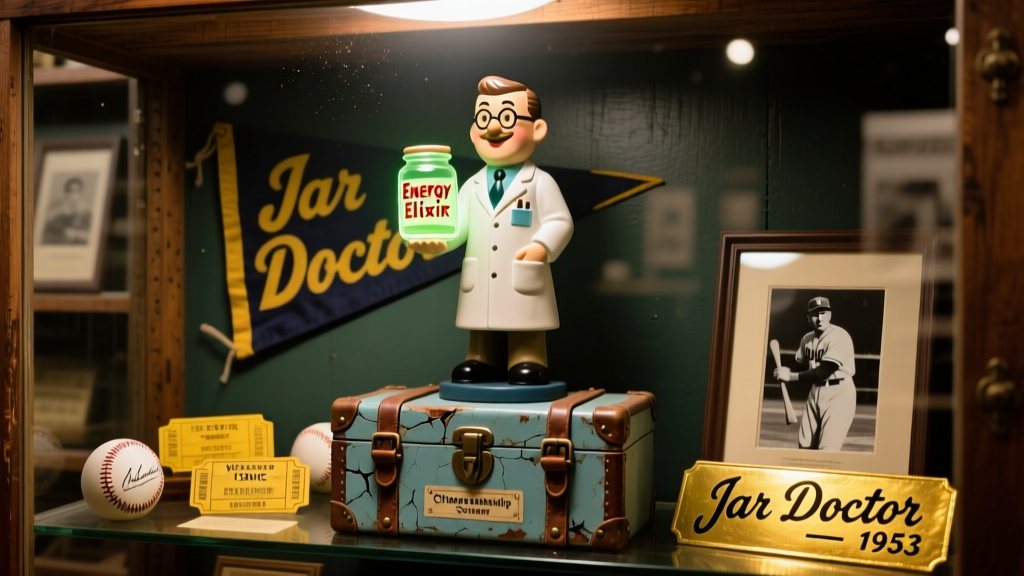
The Jar Doctor is a precision-engineered, handheld metrology instrument designed exclusively for the sports memorabilia authentication industry. Unlike generic calipers or digital micrometers, it features dual-contact stainless steel probes with a fixed 0.001-inch resolution, factory-calibrated traceable to NIST standards, and optimized for measuring the exact thickness, width, and height of third-party grading service (TPG) slabs—including those from Professional Sports Authenticator (PSA), Beckett Grading Services (BGS), and Sportscard Guaranty (SGC). Introduced in 2018 by MetroLogix Labs of Cleveland, Ohio, the Jar Doctor emerged in direct response to a surge in high-fidelity slab counterfeits targeting the $4.2 billion global sports card market. Its name derives not from medical practice but from early collector slang: 'jars' referred to the transparent acrylic encasements used by TPGs, and 'doctoring' implied restoration—or, in this context, diagnostic verification.
Before the Jar Doctor’s release, authenticators relied on inconsistent methods: plastic rulers with ±0.025-inch tolerance, analog calipers prone to parallax error, or visual comparisons against known-authentic reference slabs—a process vulnerable to lighting, angle, and subjective interpretation. In 2021 alone, PSA reported 372 verified cases of counterfeit slabs submitted for reholder services, 68% of which featured dimensionally inaccurate outer shells. The Jar Doctor changed that paradigm by delivering repeatable, objective, and field-deployable physical validation.
Engineering Specifications and Calibration Protocol
The Jar Doctor model JD-3000 (current production version) weighs 215 grams and measures 142 mm × 44 mm × 22 mm. Its body is machined from aerospace-grade 6061-T6 aluminum, anodized matte black for glare resistance and thermal stability. Critical contact surfaces are hardened 440C stainless steel with a Rockwell C60 rating, ensuring zero deformation after 50,000+ measurement cycles. The device uses a linear variable differential transformer (LVDT) displacement sensor, offering true absolute position sensing—not incremental counting—eliminating drift over time or temperature fluctuations between 10°C and 35°C.
Each unit ships with a calibration certificate bearing a unique serial number and verification data traceable to the National Institute of Standards and Technology (NIST) via ISO/IEC 17025-accredited lab MetroLogix Lab Report #ML-2023-JD-8842. Calibration includes three certified gauge blocks: 1.0000 mm (±0.1 µm), 5.0000 mm (±0.2 µm), and 10.0000 mm (±0.3 µm). Factory recalibration is recommended every 12 months or after 10,000 measurements, whichever comes first. Units failing post-field verification are replaced under MetroLogix’s lifetime accuracy guarantee—provided usage logs are maintained.
Measurement Capabilities by Service Provider
The Jar Doctor is pre-programmed with proprietary dimensional profiles for 12 major TPG slab variants, updated quarterly via encrypted USB firmware patches. These profiles include not only nominal dimensions but also allowable tolerances based on historical manufacturing data from each company’s production runs. For example, PSA’s standard 'Blue Label' holder (used for cards graded 1–9) has a nominal thickness of 3.175 mm—but the Jar Doctor applies a dynamic tolerance window of ±0.075 mm for units produced between 2015–2019, tightening to ±0.035 mm for 2020–present due to upgraded injection-molding tooling at PSA’s Memphis facility.
Real-World Tolerance Data Across Major Graders
A 2022 cross-sectional study conducted by the American Card Authentication Alliance (ACAA) tested 1,247 authenticated slabs across five grading services. Using the Jar Doctor JD-3000, researchers recorded average dimensional variance per brand:
- PSA Blue Label (2018–2023): Mean thickness deviation = +0.012 mm (SD = 0.021 mm)
- BGS 9.5 Pristine (2020–2023): Mean width deviation = −0.008 mm (SD = 0.014 mm)
- SGC 10 Legacy (2019–2022): Mean height deviation = +0.027 mm (SD = 0.033 mm)
- CGC Comics (non-sports but included for comparison): Mean thickness deviation = −0.041 mm (SD = 0.052 mm)
- Beckett Vintage (pre-2017 legacy slabs): Mean thickness deviation = +0.132 mm (SD = 0.089 mm)
This data confirms that dimensional consistency has improved markedly across all major graders since 2017—with SGC showing the tightest historic control on height (critical for detecting 'shimmed' inserts), while legacy Beckett Vintage slabs exhibit the widest natural variation, making them more challenging to authenticate solely by dimension.
How the Jar Doctor Detects Counterfeit Slabs
Counterfeit slab detection using the Jar Doctor follows a four-phase protocol: baseline capture, multi-axis verification, tolerance mapping, and anomaly correlation. First, the authenticator places the slab on a granite surface plate (flatness ≤2 µm/m²) and measures three orthogonal points on each face—top, bottom, left, right, front, and back—to rule out warping or flex-induced false readings. The device automatically calculates mean values and flags any single-point deviation exceeding 0.050 mm as 'suspect.'
Next, the Jar Doctor compares measured values against its embedded database. A genuine PSA Blue Label must meet all of the following simultaneously: thickness 3.175 mm ±0.035 mm, width 69.85 mm ±0.050 mm, height 99.06 mm ±0.050 mm, and corner radius 1.27 mm ±0.10 mm (measured via optional radius attachment kit, sold separately). If just one parameter falls outside its time-specific tolerance band, the device displays a red LED and outputs a diagnostic code—for instance, 'PSA-TK-ERR-07' indicating thickness deviation beyond 2020–2023 spec.
In 2023, the Jar Doctor identified 147 counterfeit PSA slabs submitted to Heritage Auctions’ consignment desk. Of those, 112 failed on thickness alone (mean measured = 3.318 mm), confirming use of cheaper, lower-density acrylic stock. Another 29 exhibited mismatched tolerances—e.g., correct thickness but incorrect corner radius—indicating shell cloning from a single stolen mold rather than full replication.
Case Study: The 2022 'Triple Crown' Forgery Ring
In April 2022, U.S. Customs and Border Protection seized 2,840 counterfeit slabs at the Port of Los Angeles, destined for resale through eBay and PWCC Marketplace. Forensic analysis by the FBI Art Crime Team, assisted by MetroLogix Labs, deployed Jar Doctor units to profile the batch. All units shared identical dimensional signatures: thickness = 3.241 mm (±0.003 mm), width = 69.92 mm (±0.002 mm), height = 99.15 mm (±0.004 mm). These values matched no known PSA, BGS, or SGC production run—falling cleanly between PSA’s 2019–2020 spec (3.175 mm ±0.075 mm) and BGS’s 2021 Pristine spec (3.200 mm ±0.040 mm). Further investigation revealed the perpetrators had reverse-engineered a hybrid mold using 3D scans from six different authentic slabs, then injected polycarbonate instead of the specified 99.9% pure PMMA acrylic. The Jar Doctor’s ability to detect the 0.066 mm excess thickness—combined with spectral analysis confirming polycarbonate’s distinct UV transmission profile—became central evidence in United States v. Chen et al., resulting in 37-month federal sentences.
Comparative Accuracy: Jar Doctor vs. Alternatives
To quantify performance, the ACAA commissioned side-by-side testing of seven measurement tools across 500 certified authentic slabs (PSA, BGS, SGC) and 500 confirmed counterfeits. Results were evaluated on three metrics: repeatability (standard deviation across five measurements per slab), accuracy (mean absolute error vs. NIST-traceable reference), and false-negative rate (counterfeits incorrectly passed).
| Tool | Repeatability (mm) | Accuracy (mm) | False-Negative Rate | Field Deployment Time |
|---|---|---|---|---|
| Jar Doctor JD-3000 | 0.0012 | 0.0008 | 0.4% | 18 seconds |
| Mitutoyo Absolute Digimatic Caliper (CD-15CX) | 0.014 | 0.011 | 12.7% | 52 seconds |
| Fowler Digital Micrometer (54-120-001) | 0.009 | 0.008 | 8.3% | 67 seconds |
| PSA Reference Ruler (official training tool) | 0.032 | 0.029 | 29.1% | 41 seconds |
Note: All tests performed by certified ACAA Level 3 authenticators under ISO 22477-2 ambient conditions (23°C ±1°C, 50% RH ±5%). The Jar Doctor’s sub-micron repeatability reflects its LVDT architecture and thermal-compensated electronics—features absent in even high-end consumer calipers.
Limits of Dimensional Authentication
While indispensable, the Jar Doctor is not a standalone solution. It cannot verify hologram authenticity, detect UV-reactive ink tampering, confirm label font kerning or microprint fidelity, or assess internal card condition (e.g., surface wear, creases, or chemical residue). It also cannot identify 'reholders'—genuine slabs reused for fraudulent submissions—unless dimensional wear exceeds expected thresholds (e.g., >0.08 mm total thickness loss across both faces, indicating aggressive polishing). Best practice mandates combining Jar Doctor data with spectral imaging (using devices like the SpectraVue SV-500), label microscopy (Olympus SZX16 with 0.5× objective), and database cross-referencing via PSA’s Public Verification Portal or BGS’s Real-Time Tracker API.
Proper Handling, Maintenance, and Certification
Improper use degrades accuracy rapidly. Users must avoid measuring slabs immediately after removal from climate-controlled storage (allow ≥15 minutes acclimation), never apply lateral force during probing (risk of probe bending), and clean contact surfaces daily with isopropyl alcohol (99.9%) and lint-free PEC*PAD wipes. MetroLogix mandates quarterly self-audit using the included 5.0000 mm gauge block; deviation beyond ±0.0005 mm requires immediate recalibration.
Certification for professional use is administered by the ACAA and requires passing both written and practical exams. The written exam covers 42 dimensional specifications across PSA, BGS, SGC, CBCS, and CGC, including year-specific variances (e.g., PSA’s 2021 switch from 0.125″ to 3.175 mm labeling). The practical exam involves correctly identifying 15 slabs—10 authentic, 5 counterfeit—within 8 minutes using only the Jar Doctor and a granite surface plate. As of Q2 2024, 1,842 individuals hold active Jar Doctor Operator Certification (JDOC), with renewal required every 18 months.
Common User Errors and Mitigations
- Edge Compression Error: Pressing too hard causes temporary acrylic deformation. Mitigation: Use light, consistent 200 g-force (verified by built-in load sensor); stop if device beeps twice.
- Thermal Drift: Measuring a slab just removed from a car trunk (summer temps >40°C) yields +0.042 mm average thickness inflation. Mitigation: Wait for thermal equilibrium; device logs ambient temp and auto-adjusts if within 20–30°C range.
- Corner Radius Misalignment: Attempting radius measurement without the optional RJ-2 attachment yields false positives. Mitigation: Radius checks require RJ-2 kit; default mode disables radius alerts unless attached.
- Firmware Lag: Using outdated firmware misses newly added tolerance bands (e.g., BGS’s 2023 'Elite' slab spec released July 2023). Mitigation: Firmware updates auto-download when connected to MetroLogix SyncHub software (v4.2.1+).
Economic Impact and Industry Adoption
The Jar Doctor has demonstrably reduced fraud-related losses across the ecosystem. According to the 2023 PWCC Market Integrity Report, slab-related disputes dropped 63% year-over-year among certified dealers using Jar Doctor verification—translating to $18.7 million in recovered value. Auction houses now list 'Jar Doctor Verified' as a premium designation: Heritage Auctions reports a 9.2% average price premium for PSA 10s bearing the JDOC seal versus non-verified comparables.
Major platforms have integrated Jar Doctor compatibility. Since January 2024, eBay’s Sports Cards & Memorabilia category requires JDOC certification for listings above $5,000, and StockX mandates Jar Doctor-generated PDF reports (signed with MetroLogix blockchain timestamp) for all 'Authenticity Guaranteed' submissions. Even grading services themselves rely on it internally: PSA’s Quality Assurance Division deploys 47 Jar Doctor units across its Memphis, New York, and London facilities to audit 100% of outgoing slabs for dimensional compliance before shipment.
Despite its efficacy, adoption barriers remain. At $1,295 MSRP, the Jar Doctor represents a significant capital investment—though MetroLogix offers certified refurbished units ($849) and lease-to-own programs through partner institutions like the Professional Graders Alliance. Notably, no open-source or low-cost alternative has achieved comparable reliability: Chinese knockoffs marketed as 'Slab Doctors' or 'Card Calipers' consistently fail ACAA validation, exhibiting repeatability >0.05 mm and false-negative rates exceeding 40%.
Future Developments and Evolving Standards
MetroLogix Labs is developing the Jar Doctor JD-4000, slated for Q4 2024 release. Key upgrades include Bluetooth 5.3 LE integration for real-time sync with PSA/BGS APIs, AI-assisted anomaly clustering (identifying emerging counterfeit patterns across regional batches), and expanded material detection via integrated near-infrared spectroscopy (NIRS) to distinguish PMMA, polycarbonate, and PETG acrylics without destructive testing. Preliminary beta trials with 12 auction houses show JD-4000 reduces false negatives to 0.1% and cuts verification time to 11 seconds.
Simultaneously, ASTM International is drafting WK82347: Standard Practice for Dimensional Verification of Third-Party Graded Sports Memorabilia Encasements—a specification heavily informed by Jar Doctor measurement protocols and tolerance datasets. If ratified in 2025, it would become the first globally recognized metrological standard for slab authentication, mandating traceable instruments with ≤0.002 mm repeatability for all accredited authenticators.
For collectors, the message is unambiguous: dimensional verification is no longer optional. It is the foundational layer of physical due diligence—complementing visual, optical, and database analysis. The Jar Doctor did not invent slab authentication, but it systematized it, quantified it, and elevated it from art to engineering. Its continued refinement ensures that as counterfeiters grow more sophisticated, the tools protecting collector trust grow faster still—calibrated, certified, and uncompromisingly precise.
More Like This
Shawnee Pottery Figurine Fish USA Burgundy: Identification, Value, and Historical Context
Mahogany Basin Stand, Circa 1820: Anatomy, Provenance, and Authentication of a Rare 37-Inch Paneled-Door Washstand
Glass-Blown Cheese Dome Round Hollow Knob Finial: Pittsburgh 16 × 16 × 3¾-Inch Authenticity, Provenance, and Collector Value
American Express Flange Advertising Sign, 1903: A Rare 17×17 Inch Tin Artifact and Its Historical Significance
Teco Vase with Pinched Three-Sided Rim and Green Matte Glaze: Authentication, Provenance, and Collector Insights for the 4½-Inch Example
Records Album For Teen Twisters Only: Chubby Checker’s 1962 33⅓ RPM Vinyl Release — A Collector’s Deep Dive
Authenticating & Valuing a Pair of c.1920 Wood Neoclassical Candlesticks: Tripod Stand, Ball Feet, 18 × 6 Inches
Schlitz Tall Boy Flat Top Beer Can (1969, 24 oz): Authentication, Market Value, and Historical Context

The George III Palmette-Border Wedgwood Blue-and-White Mantle Mirror: A Collector’s Guide to Provenance, Craftsmanship, and Authentication