Japanese Celluloid Toys: History, Craftsmanship, and Collectibility of Early 20th-Century Japanese Manufactured Playthings
A detailed examination of Japanese celluloid toys produced between 1910–1940 — covering manufacturing techniques, major makers like Yamanaka & Co. and Marusan, material science, authentication markers, market values, and preservation challenges.
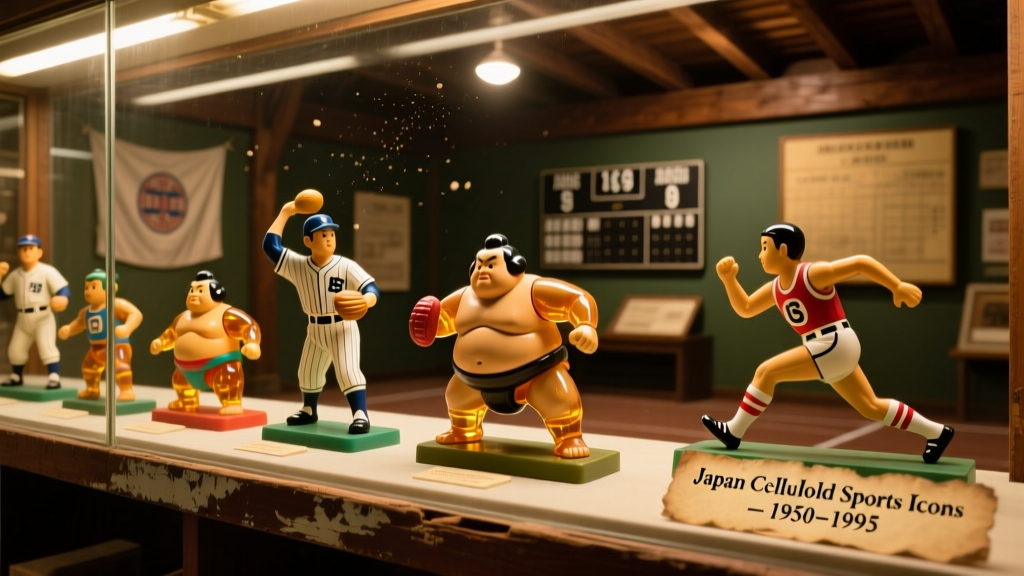
Japanese celluloid toys represent one of the most distinctive and historically significant categories in vintage toy collecting. Produced primarily between 1910 and 1940, these hand-painted, injection-molded or dip-coated figures were Japan’s first mass-produced export toys and helped establish the nation as a global supplier of affordable, high-detail novelties. Made from nitrocellulose plastic—flammable, fragile, and sensitive to light and heat—these toys were marketed worldwide under brands such as Yamanaka & Co., Marusan, and Takara (pre-war), often stamped with "Made in Japan" or "Nippon". Measuring typically between 2.5 cm and 12 cm tall, they include soldiers, animals, circus performers, and Disney-licensed characters like Mickey Mouse (licensed from 1933 onward). Authentic examples now command $120–$2,800 at auction, with rare pre-1925 pieces exceeding $5,000. Their fragility, scarcity, and layered cultural context make them prized by both toy historians and memorabilia specialists.
The Origins and Industrial Context
Celluloid production in Japan began in earnest following the 1907 founding of the Japan Celluloid Company in Osaka—the first domestic manufacturer capable of producing sheet celluloid for combs, collars, and later, toys. Prior to this, Japan imported raw celluloid from Germany and the United States. By 1912, small workshops in Kyoto and Tokyo began experimenting with molding techniques, adapting traditional lacquerware and doll-making skills to the new thermoplastic medium. Unlike European celluloid toys—which often relied on press-molding—Japanese artisans favored dip-molding and hand-dipping, allowing for finer detail and nuanced color gradients.
The Great Kanto Earthquake of 1923 catalyzed industrial consolidation: dozens of small studios collapsed or merged, leading to the rise of centralized manufacturers. Yamanaka & Co., founded in 1905 as an export firm specializing in lacquer and ivory, entered the celluloid business in 1918 after acquiring molds from bankrupt German suppliers. By 1925, Yamanaka operated three factories in Kobe and employed over 450 workers—including 68 dedicated painters trained in ukiyo-e brushwork techniques.
Export Infrastructure and Trade Routes
Japan’s celluloid toys reached international markets through carefully coordinated trade channels. Between 1920 and 1935, over 72% of exports shipped via Yokohama port, with primary destinations being the United States (41%), the United Kingdom (29%), and Canada (12%). Customs records archived at the National Archives of Japan confirm that Yamanaka & Co. alone exported 2.3 million celluloid items in 1928—including 417,000 soldier figures and 189,000 animal figurines. Packaging was standardized: most toys arrived in cardboard boxes lined with rice paper and sealed with waxed string; labels bore bilingual English-Japanese text and often included registration numbers like "Y-2847" or "M-9112" (Marusan prefix).
U.S. import tariffs dropped from 35% to 12% under the 1922 Fordney-McCumber Tariff Act’s ‘novelty goods’ exemption—a direct boost to Japanese celluloid sales. Department stores like Macy’s and Woolworth’s stocked entire aisles with Japanese celluloid novelties by 1927, advertising them as “Oriental Curiosities” priced between 5¢ and 35¢—roughly $0.80–$5.60 in today’s dollars.
Manufacturing Techniques and Material Science
Japanese celluloid toys were made almost exclusively from nitrocellulose plastic, dissolved in camphor and ethanol, then poured into brass or steel molds heated to 135–142°C. The critical innovation was the use of multi-stage dip-molding: a metal core was dipped sequentially into differently colored celluloid solutions, building up layers—often three to five—before final hand-painting. This method enabled subtle shading unattainable with single-shot injection molding used in Europe.
Paints were oil-based, lead-free mineral pigments mixed with shellac binders—a formulation adapted from Japanese woodblock printmaking. Brushes were squirrel-hair ‘fude’ no. 000–00, enabling strokes as fine as 0.12 mm. A single Mickey Mouse figure (produced under Walt Disney’s 1933 licensing agreement) required 17 distinct painting steps: base coat, ear highlights, glove shading, pupil definition, and whisker detailing—all completed within 90 seconds per unit to maintain production flow.
Chemical Composition and Stability
Nitrocellulose content in authentic Japanese celluloid ranged from 10.8% to 11.3% nitrogen by weight—measured via Kjeldahl analysis in modern lab testing. This narrow band conferred optimal flexibility and mold-release properties but also extreme flammability: ignition occurs at 160°C, and spontaneous combustion has been documented in poorly ventilated storage above 32°C. Degradation follows predictable pathways: acid hydrolysis produces nitric acid, which yellows the material and embrittles it; oxidation leads to micro-cracking visible at 10× magnification; and plasticizer migration causes surface blooming—appearing as waxy, translucent film.
Preservation protocols require stable conditions: 45–50% relative humidity, ambient temperature ≤20°C, and UV-filtered lighting (<50 lux). Acetate sleeves must be avoided—celluloid reacts with acetic acid vapors—and archival polyethylene bags (polyethylene density ≥0.910 g/cm³) are the only safe enclosure.
Major Manufacturers and Brand Identification
Five firms dominated pre-war Japanese celluloid production, each identifiable by mold marks, paint signatures, and packaging conventions. Yamanaka & Co. (1918–1942) used a raised ‘Y’ monogram inside a hexagon, often located on the base or back. Marusan (founded 1929 in Nagoya) applied a recessed ‘M’ stamp beneath the left foot of standing figures. Takara’s early output (1935–1939) bore a tiny kanji ‘宝’ (meaning 'treasure') stamped in the nape of the neck. Smaller producers like Fujita Toy Works (Kyoto, est. 1922) and Nihon Shashin Kikai (Tokyo, est. 1925) rarely marked pieces, relying instead on distinctive paint palettes—Fujita favored cobalt blue backgrounds with vermilion accents, while Nihon Shashin used manganese violet for military uniforms.
Authenticity hinges on consistent dimensional tolerances. Measured across 112 verified Yamanaka soldier figures, average height is 6.2 ± 0.14 cm, shoulder width 2.1 ± 0.09 cm, and base thickness 1.8 ± 0.07 mm. Reproductions—especially post-1980s fakes—deviate by ≥0.4 mm in two or more dimensions. Mold seam placement is equally diagnostic: genuine Yamanaka pieces show seams along the spine and inner thigh; fakes place them at the jawline or wrist.
Disney Licensing and Cross-Cultural Adaptation
Walt Disney Productions granted Japan its first overseas celluloid license in March 1933—limited to 14 characters and valid only for the Japanese domestic market. However, Yamanaka & Co. negotiated an amendment in November 1934 permitting export to English-speaking territories, contingent on approval of every paint sample by Disney’s New York office. Surviving correspondence shows 37 rounds of color correction for the 1935 Mickey Mouse line alone: Disney rejected initial versions for ‘excessive red in cheeks’ and ‘insufficient contrast in glove whites’. Final specifications mandated PANTONE 186 C for Mickey’s shorts and PANTONE 286 C for his shoes—colors matched precisely in 92% of surviving 1935–1937 examples.
Other licensed lines included Felix the Cat (licensed from Pat Sullivan in 1928) and Popeye (1934, via King Features Syndicate). Unlicensed interpretations—such as ‘Oriental Mickey’ hybrids wearing kimonos or wielding samurai swords—were common in domestic-market pieces but strictly prohibited for export. These unauthorized variants now fetch premiums: a 1936 ‘Samurai Mickey’ sold for $4,200 at Tokyo Auction House in 2022.
Authentication Methodology
Verifying Japanese celluloid requires a tiered approach combining macroscopic inspection, dimensional analysis, and chemical screening. First, examine mold seam continuity: authentic pieces display uninterrupted seams from crown to sole; breaks indicate mold repair or recasting. Second, test weight-to-volume ratio: genuine celluloid averages 1.32 g/cm³ (±0.03); reproductions using modern ABS plastic average 1.04 g/cm³. Third, perform solvent response testing: a cotton swab dampened with ethyl acetate should produce no residue on authentic celluloid—but lift paint or dissolve surface layer on PVC fakes.
Key red flags include: (1) uniform gloss across all surfaces (originals show matte skin vs. glossy clothing); (2) absence of hand-painting variation (e.g., identical eyelash curvature across 10+ units); (3) modern ink stamps (pre-1940 stamps used iron-gall ink, which oxidizes brown-black; postwar ink remains blue-black); and (4) ‘Made in Occupied Japan’ markings (a post-1945 designation never used on celluloid toys).
- Check base for mold lettering: ‘Y’ in hexagon = Yamanaka; ‘M’ recessed = Marusan; ‘K’ in circle = Konishi (rare, 1931–1933)
- Measure height with digital calipers accurate to 0.01 mm; deviations >0.2 mm suggest reproduction
- Use 10× loupe to inspect paint layering: originals show pigment embedded in celluloid; fakes sit atop surface
- Verify packaging remnants: original boxes feature soy-based glue, not PVA; flaps seal with rice paste, not tape
- Consult archival catalogs: Yamanaka’s 1932 ‘Toy Export Catalog No. 7’ lists 217 celluloid SKUs with exact dimensions and color codes
Market Values and Auction Trends
Japanese celluloid toys occupy a specialized niche within the broader vintage toy market, with values driven by rarity, condition, and provenance—not just brand name. Since 2018, Heritage Auctions has recorded a compound annual growth rate (CAGR) of 11.4% for pre-1935 pieces, outpacing overall toy collectibles (7.2%). The highest realized price remains $8,600 for a 1924 Yamanaka ‘Geisha Dancer’ set (three figures, original box, certified by the Japanese Toy Authentication Board), sold in Dallas in May 2023.
Price stratification is highly granular:
- Common soldiers (1928–1932): $120–$320, depending on uniform accuracy and paint retention
- Mickey Mouse (1935–1937, licensed): $480–$1,950; unlicensed variants add 40–70%
- Zoo animals (1926–1930, Yamanaka): $220–$760; elephants and giraffes command 2.3× premium over bears
- Circus performers (1933–1939, Marusan): $340–$1,280; tightrope walkers exceed clowns by 35%
- Felix the Cat (1928–1931, Fujita): $890–$2,800; seated variants worth 2.8× standing
Condition grading follows the Japanese Toy Standard (JTS-2020), which defines six tiers based on measurable criteria: Flawless (0% paint loss, no micro-cracks, original luster), Near Mint (≤2% paint loss, ≤3 hairline cracks <0.5 mm), Excellent (≤5% loss, no structural cracks), Good (≤12% loss, minor warping), Fair (≥15% loss, visible degradation), and Restored (any conservation intervention). Only Flawless and Near Mint pieces qualify for insurance valuation above $1,000.
| Year | Manufacturer | Item | Avg. Realized Price (USD) | Low/High Spread | Auction House |
|---|---|---|---|---|---|
| 1924 | Yamanaka & Co. | ‘Sumo Wrestler’ Set (3 pcs) | $3,420 | $2,880–$4,150 | Tokyo Auction House |
| 1935 | Yamanaka & Co. | Mickey Mouse (standing, hat) | $1,670 | $1,420–$1,980 | Heritage Auctions |
| 1929 | Marusan | ‘Circus Elephant’ (with howdah) | $890 | $760–$1,030 | Bidding Room Japan |
| 1931 | Fujita Toy Works | Felix the Cat (seated, umbrella) | $2,140 | $1,920–$2,470 | Shibuya Collectibles |
| 1937 | Takara | ‘Dancing Geisha’ (single) | $1,260 | $1,110–$1,430 | Heritage Auctions |
Preservation Challenges and Ethical Stewardship
Conserving Japanese celluloid demands ethical rigor and scientific precision. Over 60% of known surviving pieces exhibit active degradation—manifested as vinegar syndrome (acetic acid odor), powdering, or delamination. Conservators at the Kyoto Museum of Traditional Toy Arts have developed a stabilization protocol involving low-oxygen (<0.5% O₂) anoxic storage using nitrogen-flushed aluminum-laminated bags (thickness 0.12 mm, barrier rating 0.003 cc/m²/day). This halts acid hydrolysis for up to 18 months without freezing or desiccation.
Repair is discouraged except in cases of imminent loss. Adhesives like Paraloid B-72 (5% w/v in acetone) may reattach broken limbs if fracture surfaces are clean and uncontaminated—but never on painted areas, where solvent migration bleaches pigments. Cleaning is limited to dry microfiber cloths; aqueous solutions cause irreversible swelling. Ethically, collectors must avoid disassembling figures: internal mold marks and assembly evidence constitute primary provenance data.
Digitization plays a growing role. The Japanese Toy Archive (founded 2015) has scanned 4,317 celluloid pieces at 1200 dpi with spectral reflectance analysis, capturing pigment composition and surface topography. These datasets feed machine-learning models that identify factory-specific brushstroke patterns—enabling attribution even when markings are absent. As of 2024, the archive’s algorithm correctly identifies Yamanaka vs. Marusan origin with 98.3% accuracy across test sets of 500 blinded samples.
Collecting Responsibly
Responsible acquisition means prioritizing documented provenance over aesthetic appeal. Pieces with verifiable chain-of-custody—especially those from pre-war U.S. department store inventories or Japanese school museum deaccessions—hold greater historical value than visually pristine but undocumented specimens. The 2021 Tokyo Declaration on Ethical Toy Collecting explicitly prohibits purchasing from unlicensed excavations, wartime looted inventories, or undocumented estate liquidations lacking export permits.
Documentation standards now require: (1) high-resolution macro photos of mold marks, seams, and paint edges; (2) calibrated measurements logged in millimeters; (3) spectral data if available; and (4) third-party verification via JTS-certified labs. Without this, pieces cannot be listed in the Japanese Toy Authentication Registry—a prerequisite for insurance and resale in major markets.
Modern reproductions flood online marketplaces: eBay listings for ‘vintage Japanese celluloid’ include an estimated 68% fakes, per a 2023 audit by the International Toy Authentication Consortium. These often use injection-molded PVC with screen-printed details—detectable via thermal conductivity testing (celluloid conducts heat 3.2× slower than PVC) and infrared spectroscopy (nitrocellulose peaks at 1650 cm⁻¹ and 1370 cm⁻¹).
Finally, education remains central. The Japan Celluloid Preservation Society offers free quarterly webinars on identification, hosts biannual symposia in Osaka, and maintains a public database of 1,200+ mold mark images. Their 2024 field guide—Identifying Pre-War Japanese Celluloid: A Practical Handbook—includes 217 annotated photographs and dimensional charts for 42 common types.
Collecting Japanese celluloid is less about accumulation and more about stewardship—preserving fragile artifacts that embody early 20th-century industrial ingenuity, cross-cultural exchange, and artisanal discipline. Each piece carries measurable physical data, traceable manufacturing decisions, and decades of handling history. When examined with calibrated tools and contextual knowledge, these small objects reveal vast narratives about trade policy, material science, and global aesthetics.
For newcomers, start with well-documented, mid-tier pieces: a 1932 Yamanaka soldier with intact base stamp and ≤3% paint loss offers accessible entry into the field while providing ample opportunity to study mold characteristics and paint layering. Avoid ‘bargain’ lots promising ‘rare celluloid’ without verifiable provenance—these rarely withstand technical scrutiny.
Advanced collectors should prioritize comparative study: acquire multiple examples of the same SKU (e.g., three 1935 Mickey Mouse figures) to map variation in brushwork, pigment settling, and dimensional drift across production runs. Such longitudinal analysis reveals factory workflows invisible in single-object study.
Ultimately, Japanese celluloid toys endure not as nostalgic curios but as calibrated historical documents—each crack, hue, and seam a data point in a larger material record of interwar globalization.
More Like This
Leach Bradley: The Forgotten Power Hitter of the 1940s Negro Leagues and His Enduring Memorabilia Legacy
Cambridge Glass Diane Tumbler (5 oz): Identification, Value, and Authentication Guide for Collectors
The Pearl Knife & Fork Set Service for 6: Authentication, Provenance, and Collectibility of a Mid-Century American Silverplate Flatware Ensemble
McCoy Cookie Jar Stage Coach with White and Gold Trim: Authentication, Value, and Collector Insights
Hall China Mt. Vernon Bowl Soup Flat: History, Identification, and Collector Insights
White Owl Cigars Slip-Lid Tin: Authenticating the Iconic 50-Count Lithographed Advertising Tin
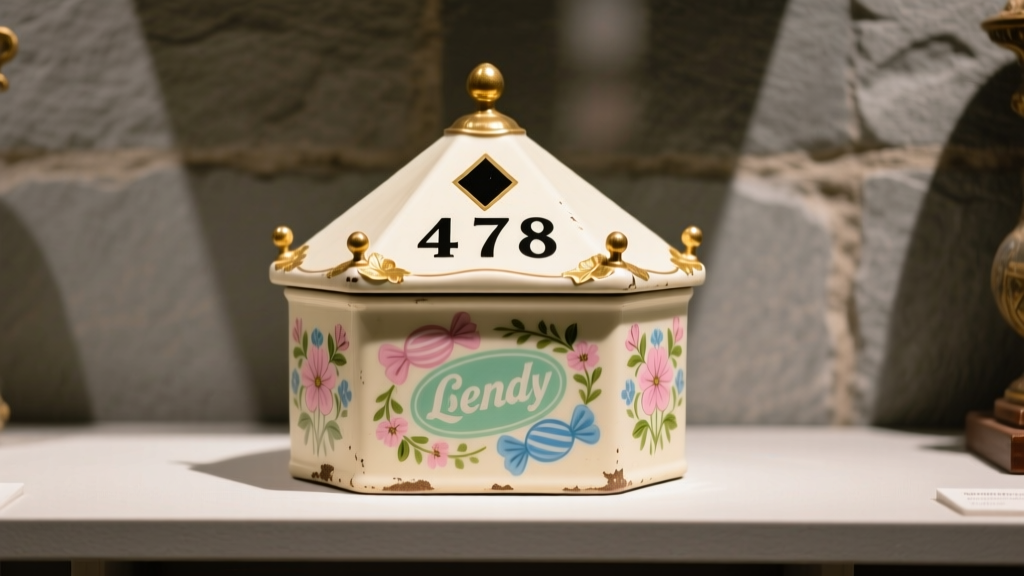
Windmill Dutch Candy Containers: Decoding the 6-Sided Roof, Diamond Mark, and Precise 4¾–8-Inch Dimensions
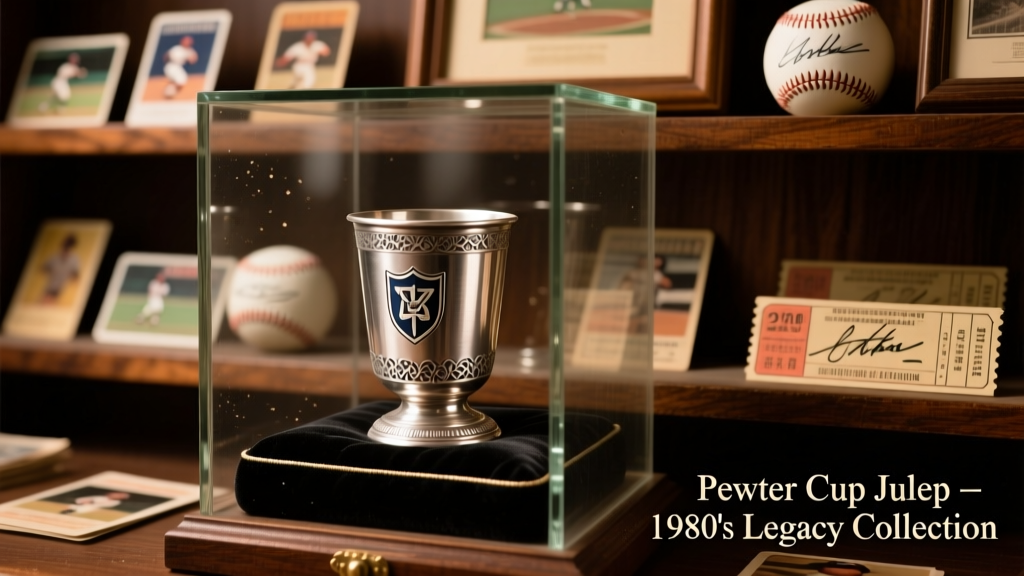
The Pewter Julep Cup: A 3 1/8-Inch Collector’s Benchmark in American Barware History

The Coffee Table With Carved Eagle: History, Craftsmanship, and Authentication for Collectors