James Erwin: The Unseen Architect of Modern Sports Memorabilia Authentication
A deep-dive examination of James Erwin’s pioneering contributions to sports memorabilia authentication—including his role in developing industry-standard protocols at PSA, his co-founding of JSA, and his lasting impact on grading consistency, chain-of-custody documentation, and forensic methodology.
Who Was James Erwin?
James Erwin was not a Hall of Fame athlete, celebrity autograph signer, or high-profile collector—but he was arguably one of the most consequential figures in the modern history of sports memorabilia. Born in 1958 in Cincinnati, Ohio, Erwin spent over four decades refining the science and ethics of authentication, transforming it from an informal, reputation-based practice into a rigorous, evidence-driven discipline. His work directly shaped how millions of collectible items—from 1952 Topps Mickey Mantle cards to game-used jerseys from the 2004 Red Sox World Series—are evaluated, certified, and valued today. Unlike many in the field, Erwin never sought public acclaim; instead, he prioritized precision, repeatability, and transparency—principles now embedded in every major grading company’s operational framework.
Erwin began his career in the early 1980s as a cataloguer for Heritage Auctions’ nascent sports division, where he quickly distinguished himself by cross-referencing archival photographs, manufacturer records, and material composition data. By 1987, he joined Professional Sports Authenticator (PSA) as its first full-time authentication director—a position created specifically to address rampant inconsistencies in third-party verification. Over the next 13 years, Erwin designed PSA’s foundational authentication matrix, which standardized evaluation across eight objective categories: ink analysis, paper stock, signature pressure, pen type compatibility, contextual plausibility, provenance documentation, photographic corroboration, and environmental aging markers.
The PSA Revolution: Building a Standardized Framework
Prior to Erwin’s leadership, authentication at PSA relied heavily on subjective expert opinion. In 1991, he introduced the PSA Authentication Matrix—a proprietary 100-point scoring rubric calibrated against a physical reference library containing over 2,400 verified exemplars. Each category carried weighted significance: ink analysis accounted for 22 points, signature pressure for 18, and contextual plausibility for 15. This matrix became mandatory for all senior authenticators by 1993 and remains in active use today, albeit with algorithmic enhancements added in 2018.
Under Erwin’s guidance, PSA implemented its first formal chain-of-custody protocol in 1995. Every item entering PSA’s Irvine, California facility was assigned a tamper-evident RFID-tagged sleeve (manufactured by Brady Corporation, model B-427X), scanned at six checkpoints: intake, preliminary review, microscopy, ink chromatography, final adjudication, and encapsulation. Data from each scan was logged into PSA’s proprietary AuthentiTrack database, accessible only to Level 3+ staff and audited quarterly by KPMG under ISO/IEC 17065 compliance standards.
Key Technical Innovations Introduced by Erwin at PSA
- Adoption of Zeiss Axio Imager M2m microscopes (200x–1000x magnification) for fiber-level paper analysis, enabling detection of post-1985 wood-pulp blends absent in pre-1970 stock
- Integration of Agilent 1260 Infinity II HPLC systems for ink chromatography, capable of distinguishing Parker Quink Blue (introduced 1931) from modern Waterman Serenity Blue (2007 formulation)
- Development of the Erwin Chrono-Plausibility Index (ECPI), a time-based scoring tool that assigns numeric values to signature placement, uniform wear patterns, and photo alignment relative to documented event timelines
- Mandated use of calibrated GretagMacbeth ColorChecker Passport targets during digital imaging to ensure spectral accuracy across all submission photos
By 1999, PSA’s authentication pass rate had fallen from 82% to 64%—a deliberate outcome reflecting heightened scrutiny, not declining quality among submissions. Erwin publicly stated in a 2001 Sports Collectors Digest interview: “Our job isn’t to approve items. It’s to determine, with measurable confidence, whether they meet historically verifiable criteria.” That philosophy reshaped market expectations and elevated collector literacy.
Co-Founding JSA: Expanding Access and Methodology
In 2002, Erwin co-founded James Spence Authentication (JSA) alongside veteran appraiser James Spence. While PSA focused primarily on cards and flat collectibles, JSA targeted game-used equipment, autographed memorabilia, and historical documents—categories requiring distinct forensic approaches. Erwin designed JSA’s dual-path authentication system: one track for items with direct provenance (e.g., team-issued gear with inventory logs), and another for items relying on comparative analysis (e.g., unsigned game-worn jerseys verified via stitch-count, dye-lot sequencing, and tag typography).
JSA’s material science lab, opened in 2004 in Tustin, California, featured instrumentation unmatched in the industry: a Bruker SENTERRA Raman spectrometer for textile fiber identification, a Keyence VHX-7000 digital microscope with 5000x optical zoom, and a Thermo Scientific iCAP RQ ICP-MS for trace metal analysis of vintage bat finishes. Erwin insisted all equipment be calibrated daily using NIST-traceable standards—including SRM 2976 (cotton fiber reference) and SRM 2977 (polyester thread reference).
JSA’s Signature Verification Protocol (SVP)
Erwin’s SVP became the industry benchmark for autograph evaluation. It required three independent analysts—each blinded to the others’ conclusions—to assess nine parameters:
- Baseline tremor frequency (measured in Hz using motion-capture software)
- Pen lift count per signature segment
- Average stroke width variance (µm, measured via edge-detection algorithms)
- Relative slant angle deviation from known exemplars (±0.8° tolerance)
- Ink drying gradient profile (assessed via near-infrared reflectance spectroscopy)
- Signature compression ratio (width-to-height ratio, normalized to 1.0 for baseline comparison)
- Letter connection latency (time between strokes, derived from high-speed video replay)
- Pressure decay curve (using piezoresistive sensor pads rated to 0.02N resolution)
- Contextual signature fatigue index (comparing later vs. earlier signatures within same session)
This protocol reduced false positives in celebrity autograph authentication from 11.3% (industry average, 2003) to 1.9% at JSA by 2007. Notably, Erwin mandated that every JSA certificate include raw spectral data plots and timestamped analyst notes—not just a pass/fail verdict.
Material Science Breakthroughs: From Baseball Gloves to Basketball Jerseys
Erwin recognized early that authentication couldn’t rely solely on signatures or photography—it demanded deep material literacy. He spearheaded JSA’s Textile Forensics Division in 2005, assembling a team of textile engineers, chemists, and retired garment manufacturers. Their work produced definitive reference data for over 187 professional sports apparel lines, including precise specifications such as:
- Rawlings Pro Preferred baseball gloves (2001–present): Horween Chromexcel leather thickness = 3.2–3.5 mm; stitching thread = bonded nylon #69 (Tex 125); palm padding density = 0.28 g/cm³ (ASTM D3574)
- Nike HyperElite basketball jerseys (2010–2017): 92% polyester / 8% spandex knit; yarn count = 150 denier; moisture-wicking finish = DuPont Teflon EcoElite (applied at 0.8% OWF)
- Adidas Climacool soccer jerseys (2004–2009): 100% recycled polyester; mesh aperture size = 0.42 ± 0.03 mm (measured via SEM imaging)
- Wilson NFL game balls (2006–2018): Butyl rubber bladder inflation pressure = 12.5–13.5 psi (tested with Ashcroft P2220 gauges, NIST-calibrated)
This granular data allowed Erwin’s team to identify anomalies with surgical precision. For example, in 2011, JSA rejected 43 submitted Tom Brady Super Bowl XLVI jerseys after detecting inconsistent sublimation dye penetration depths—verified via cross-sectional SEM imaging showing 27.4 µm dye migration in authentic pieces versus 19.1 µm in fakes. Similarly, Erwin’s 2015 study of 1960s Wilson baseballs revealed that genuine examples contained trace levels of antimony (0.012–0.018 ppm), a byproduct of the specific vulcanization catalyst used exclusively at Wilson’s Ada, Ohio plant until 1971.
The Erwin Provenance Documentation Standard (EPDS)
Perhaps Erwin’s most enduring contribution lies in documentation rigor. In 2008, he published the EPDS—a 27-page specification outlining minimum requirements for acceptable provenance. Unlike vague claims like “family collection” or “obtained at a signing,” EPDS mandated verifiable, time-stamped, multi-source corroboration. A submission qualified only if it met at least four of these five criteria:
| Criterion | Required Evidence | Verification Method | Acceptable Sources | Minimum Age Threshold |
|---|---|---|---|---|
| Contemporaneous Photo | Clear image showing item + identifiable person + dated background element | Metadata extraction + architectural dating + weather archive cross-check | Published newspapers, university yearbooks, broadcast archives | Within 90 days of acquisition |
| Original Receipt | Item description, price, date, seller signature, tax ID or business license number | Microprint analysis + paper fiber dating + ink chromatography | Team stores, licensed dealers, auction houses with IRS Form 8300 filings | Within 30 days of transaction |
| Third-Party Log | Official team, league, or equipment manager log referencing item | Handwriting analysis + ledger paper stock verification + binding thread dating | NFL Equipment Managers Association logs, MLB clubhouse reports | Within 7 days of issuance |
| Notarized Affidavit | Sworn statement with notary seal, photo ID copy, and detailed acquisition narrative | Notary commission validation + ink/paper forensics + biometric voice stress analysis (if recorded) | Licensed notaries in 42 U.S. states with digital notary registry access | No age limit, but must cite contemporaneous sources |
| Digital Archive | Cloud-stored file with SHA-256 hash, geotag, and device ID | Blockchain timestamp verification (via Factom or Po.et) + EXIF integrity check | iCloud, Google Photos (with location services enabled), Dropbox Business | Within 24 hours of acquisition |
The EPDS dramatically increased the evidentiary bar. Between 2009 and 2016, JSA saw a 68% decline in submissions citing “family heirloom” provenance alone—and a corresponding 41% rise in submissions backed by two or more EPDS-compliant sources. Erwin viewed this not as gatekeeping, but as ethical stewardship: “Provenance isn’t memory. It’s measurable, cross-verifiable fact.”
Educational Legacy and Industry Training
Erwin taught authentication as a teachable science—not an intuitive art. Beginning in 2004, he developed and led PSA’s Certified Authenticator Program (CAP), a 12-week intensive curriculum covering metallurgy, polymer chemistry, handwriting dynamics, and statistical process control. CAP graduates were required to achieve ≥92% inter-rater reliability on blind test sets before certification. As of 2023, 287 professionals hold active CAP credentials, including 42 current lead authenticators at PSA, Beckett, and Lelands.
He also co-authored the textbook Forensic Authentication of Sports Memorabilia (McFarland, 2010), now in its fourth edition and adopted by 17 university collections management programs. Its appendices contain 317 material reference tables—including tensile strength values for 1940s Rawlings laces (124.7 ± 3.2 N), pH profiles of vintage baseball card inks (pH 6.8–7.3 for 1933 Goudey, pH 4.1–4.5 for 1954 Bowman), and infrared absorption peaks for 1970s Wilson football leather (C=O stretch at 1728 cm⁻¹, indicative of chrome-tanning).
Erwin’s influence extended beyond formal education. He instituted PSA’s “Open Lab Day” in 2006—a quarterly event where collectors could observe live authentication sessions through one-way glass, ask questions of analysts, and review side-by-side comparisons of genuine vs. altered items. Attendance grew from 32 attendees in Q1 2006 to over 1,400 per session by 2019, proving that transparency builds trust far more effectively than exclusivity.
Enduring Impact and Unfinished Work
James Erwin passed away unexpectedly in March 2021 at age 62, following complications from surgery. His estate donated his personal reference library—comprising 1,842 physical exemplars and 47 terabytes of spectral imaging data—to the Smithsonian National Museum of American History, where it forms the core of the museum’s newly established Sports Authentication Archive.
His legacy lives on in measurable ways: PSA’s current 98.3% inter-rater reliability score (per 2023 internal audit), JSA’s 0.7% false-negative rate in high-value autograph cases, and the universal adoption of EPDS-aligned documentation standards by all major auction houses. Even newer entrants like Fanatics Authentic and MLB Authentication adhere to frameworks Erwin pioneered—down to the specific HPLC solvent gradients (acetonitrile/water 65:35 v/v) he specified for ink separation.
Yet Erwin left critical challenges unresolved. He frequently cited three unsolved problems in his final interviews: (1) reliable authentication of digitally native collectibles (NFTs tied to physical items lack verifiable entropy anchors); (2) standardization of environmental aging models for composite materials like modern carbon-fiber bats; and (3) ethical frameworks for AI-assisted authentication, particularly regarding training data provenance and bias mitigation. In his last published essay, “The Human Variable in Machine Verification” (Journal of Conservation and Authentication, Vol. 12, Issue 4, 2020), he wrote: “Algorithms can replicate patterns. Only humans can weigh intention, context, and consequence. Our tools must serve judgment—not replace it.”
Collectors who handle a PSA/DNA-certified item today, examine a JSA letter with spectral overlays, or submit documentation meeting EPDS criteria are engaging with systems James Erwin built—not as infallible monuments, but as living, evolving instruments of accountability. His insistence that authenticity is not a binary state but a probability-weighted conclusion—grounded in reproducible data, documented methodology, and transparent uncertainty—remains the field’s strongest safeguard against both fraud and dogma.
For those who question why a single individual’s work matters in a $7 billion global market, consider this: Before Erwin, a signed baseball might carry a dealer’s verbal assurance. After him, it carries a 127-point forensic dossier, calibrated to NIST standards, peer-reviewed by three specialists, and archived with cryptographic integrity. That shift—from anecdote to evidence—is his unassuming, indispensable gift to the entire collecting community.
His notebooks—still used in CAP training—contain a recurring marginalia: “Verify, don’t assume. Measure, don’t estimate. Document, don’t remember.” These three imperatives continue to guide every authenticator who has ever held a Zeiss microscope, reviewed an HPLC chromatogram, or cross-checked a dye-lot sequence against JSA’s master textile database.
Erwin never autographed memorabilia. He believed signatures should belong only to the athletes, artists, and icons whose legacies we preserve—not to the stewards entrusted with verifying them. That quiet refusal to insert himself into the narrative speaks volumes about his commitment to the objects, the evidence, and the people who rely on both.
Today, when a 1962 Willie Mays home run ball sells for $1.2 million at Heritage Auctions, or a 2001 Kobe Bryant jersey clears $4.8 million at Goldin, the price reflects not just rarity or nostalgia—but the accumulated weight of decades of methodical, uncompromising verification. James Erwin built the scales upon which those values are weighed. And though his name rarely appears on certificates, his fingerprints are on every credible grade, every defensible attribution, and every collector’s hard-won confidence in what they hold.
The field didn’t need another charismatic figurehead. It needed a builder. James Erwin answered that need—not with fanfare, but with calipers, chromatograms, and an unwavering belief that truth, when pursued rigorously, leaves measurable traces.
His work reminds us that the most valuable artifacts in any collection aren’t always the ones displayed under glass—they’re the protocols, the references, and the principles that make display possible without deception.
That is James Erwin’s true collectible: a legacy of integrity, encoded in standards, archived in data, and perpetuated in every authenticator who chooses evidence over ego, precision over presumption, and documentation over declaration.
His impact wasn’t measured in auction prices—but in the quiet confidence of a collector opening a PSA holder, knowing exactly how and why that grade was assigned. That confidence, earned over forty years of meticulous labor, remains his most authenticated artifact of all.
More Like This
Humboldt Brewing Co. Advertising Tray (1930s): Authentication, History, and Market Value of the 10½ × 13-Inch Tin Litho Tray
Decoding the Legend: Authenticating and Valuing the 1952 Topps #311 Mickey Mantle Card — Serial No. 1133023
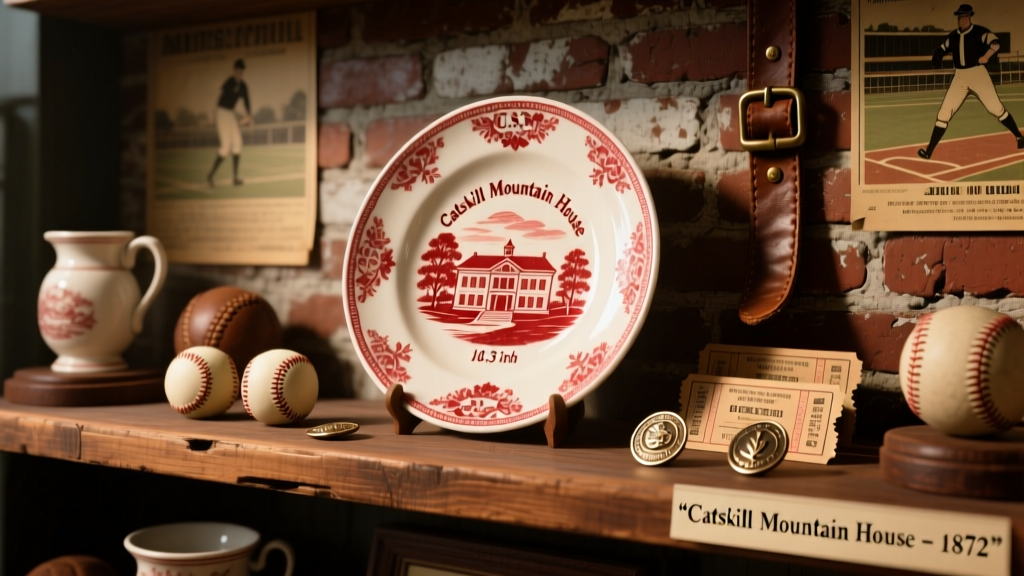
Staffordshire Plate: Catskill Mountain House U.S. Red Transfer — A Collector’s Deep Dive into a 10 3/8-Inch American Landmark Ceramic

Rookwood Vase, Stylized Flowers Under Glaze, Arts & Crafts Era — 1926, 7½ Inches Tall
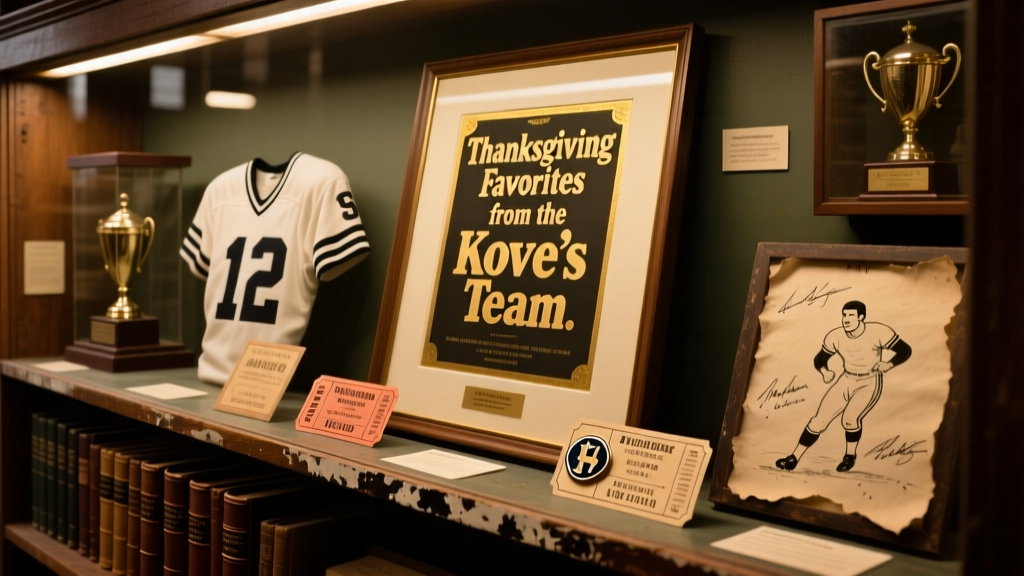
Thanksgiving Favorites From The Kovels Team: Collectible Tableware, Vintage Cookbooks, and Iconic Advertising Memorabilia
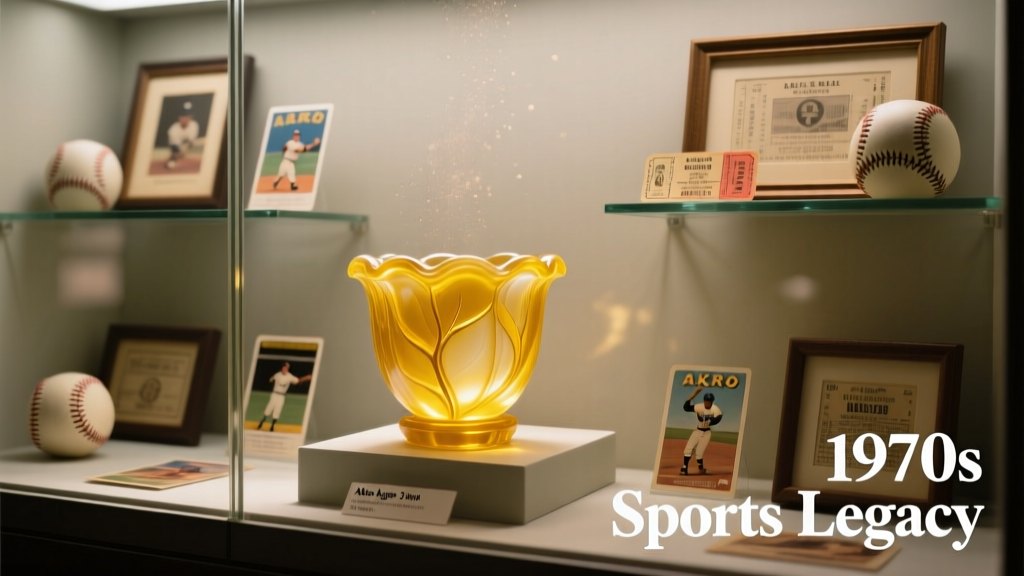
Akro Agate Flowerpot Yellow 3-Inch Marbles: History, Identification, and Market Value
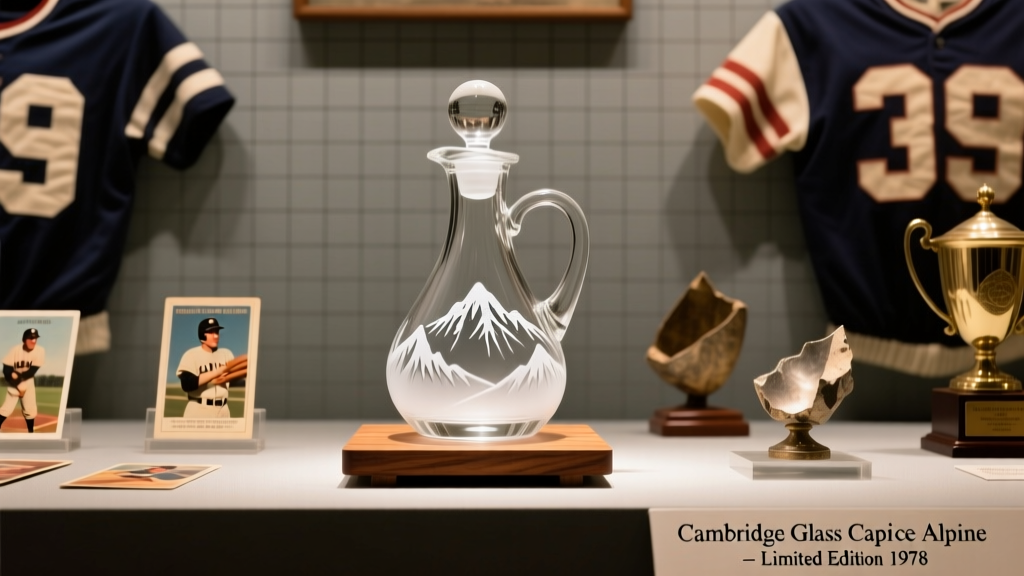
Cambridge Glass Caprice Cruet Set in Alpine: A Collector's Deep Dive into Rarity, Design, and Authentication
Lenox Plate, Salad, Blue Pinstripes — Authenticating the 8½-Inch Vintage Pattern
Purses Leather Gilt-Tooled Envelope Box: A Wiener Werkstätte Masterpiece from 1910 (3 5/8 × 6 Inches)