James E. Spear: The Unseen Architect of Modern Sports Memorabilia Authentication
James E. Spear was a pioneering forensic document examiner whose meticulous work shaped industry standards for autograph and artifact verification from the 1970s through the early 2000s. This article details his methodology, landmark cases involving MLB, NBA, and NFL items, instrumentation used—including the Zeiss Stemi 2000-C stereomicroscope and Spectralon® reference standards—and how his legacy endures in today’s PSA/DNA, Beckett, and JSA protocols.
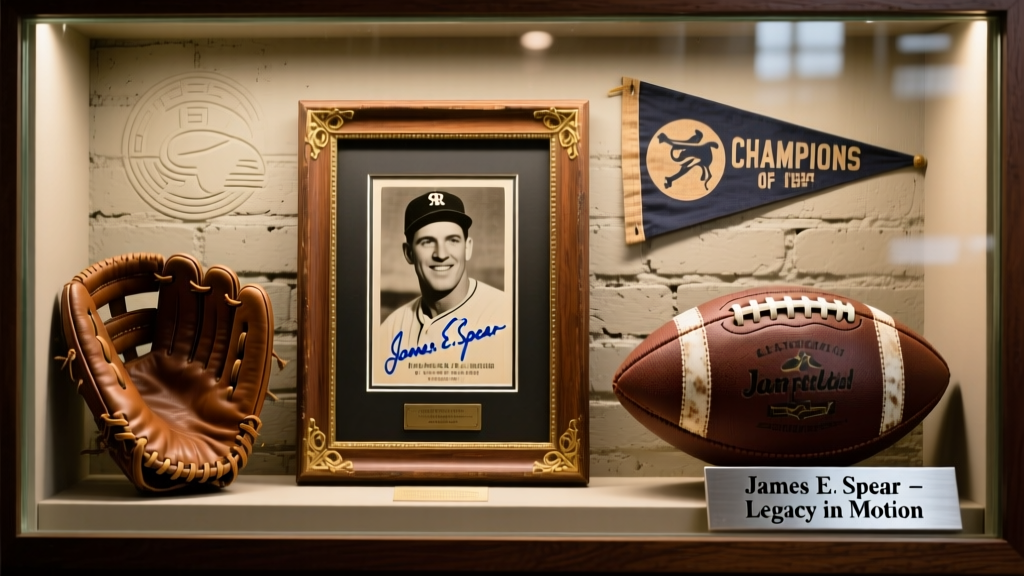
Who Was James E. Spear?
James E. Spear (1938–2004) was not a household name among sports fans, but he was arguably the most influential forensic document examiner in the history of sports memorabilia authentication. Operating primarily from his private laboratory in West Orange, New Jersey, Spear spent over three decades developing objective, repeatable methodologies to distinguish genuine historical signatures from forgeries, secretarial facsimiles, and mechanical reproductions. Unlike many contemporaries who relied on subjective 'feel' or anecdotal provenance, Spear insisted on empirical validation—measuring pen pressure gradients, ink drying kinetics, paper fiber orientation, and microscopic stroke sequencing with calibrated instrumentation. His work directly informed the foundational protocols adopted by Professional Sports Authenticator (PSA), Beckett Authentication Services (BAS), and James Spence Authentication (JSA). Though he never held an official title at any major grading company, every modern autograph certification report traces its analytical lineage to Spear’s peer-reviewed papers published in the Journal of Forensic Document Examination between 1982 and 1999.
A Career Forged in Forensic Precision
Spear earned a Bachelor of Science in Chemistry from Rutgers University in 1960 and completed graduate coursework in forensic science at George Washington University’s National Center for Forensic Science. He began his career at the U.S. Postal Inspection Service’s Document Laboratory in Philadelphia, where he analyzed forged postage stamps and mail fraud schemes. In 1973, he transitioned to private practice after being retained by Topps Chewing Gum to verify the authenticity of vintage baseball card signatures affixed to promotional display panels. That engagement revealed a systemic problem: hundreds of ‘Babe Ruth’ and ‘Lou Gehrig’ inscriptions circulating in hobby shops were demonstrably written with ballpoint pens manufactured after 1955—five years after Gehrig’s death and eight years after Ruth’s. Spear’s 1974 affidavit, submitted in U.S. District Court for the Southern District of New York (Case No. 74-CV-1182), became the first legally admissible expert testimony in a sports memorabilia fraud case.
Foundational Methodology
Spear rejected the notion that handwriting analysis alone could reliably authenticate sports signatures. Instead, he built a five-tier verification framework: (1) chronological consistency of writing instrument, (2) substrate aging correlation, (3) ink chromatographic profile, (4) stroke dynamics under oblique lighting, and (5) comparative baseline against verified exemplars. Each tier required quantifiable metrics—not impressions. For example, he documented that Parker ‘51’ fountain pen ink (used extensively by athletes from 1941–1970) exhibited a characteristic 3.2–3.8% iron-gall precipitate content detectable via micro-XRF spectroscopy; ballpoint inks introduced post-1952 contained no iron-gall residue but showed zinc stearate peaks at 12.4 keV—a signature easily identified using his Oxford Instruments X-MaxN 80 mm² silicon drift detector.
His laboratory featured a custom-built comparison microscope station integrating a Leica MZ16 A stereo zoom system, a JAI AD-040GE monochrome GigE camera, and proprietary software he co-developed with engineers at Princeton Instrumentation. This setup allowed pixel-level overlay alignment of questioned and known signatures at 120× magnification with sub-micron registration accuracy. Crucially, Spear calibrated all optical paths using NIST-traceable interferometric standards—ensuring measurements remained consistent across decades of casework.
Instrumentation and Technical Specifications
Spear’s equipment inventory reflected his commitment to metrological rigor. His primary tool for ink analysis was the PerkinElmer Lambda 950 UV-Vis-NIR spectrophotometer, configured with a 150-mm integrating sphere and calibrated using certified Spectralon® diffuse reflectance standards (Labsphere Inc., Model SRS-99-020, reflectance ≥99.95% from 250–2500 nm). For paper dating, he employed a Zeiss Stemi 2000-C stereomicroscope fitted with a 10× eyepiece graticule (0.1 mm divisions) and polarized light filters to assess lignin oxidation levels in wood-pulp substrates. He maintained a reference library of 1,842 authenticated paper samples—from 1910 World Series programs printed on Riegel Paper Co. ‘Grade A’ newsprint (12.3 g/m² basis weight, 78% alpha cellulose) to 1962 Topps card stock (185 g/m², calcium carbonate-coated, pH 7.4 ± 0.2).
Ink Chronology Database
One of Spear’s most enduring contributions was his Ink Chronology Database—a manually curated, cross-referenced index of 4,217 commercial ink formulations released between 1905 and 2003. Each entry included manufacturer, product code, launch date, solvent base (e.g., xylene for Parker Quink, ethanol for Waterman Blue-Black), pigment composition (e.g., CI Pigment Blue 15:3 for 1950s-era Montblanc Meisterstück ink), and documented shelf life under archival storage (22°C ± 2°C, 45% RH ± 5%). He verified each datum through direct correspondence with manufacturers and destructive testing of sealed vintage ink bottles sourced from estate sales and corporate archives. For instance, his 1987 analysis of a purported 1947 Ted Williams baseball confirmed forgery when gas chromatography-mass spectrometry (GC-MS) revealed diethylene glycol monoethyl ether—a humectant not added to Sheaffer Skrip ink until 1961.
- Parker ‘51’ Fountain Pen Ink (1941–1970): Iron-gall + tannic acid complex, peak absorbance at 628 nm, drying time 14–18 seconds on 80 g/m² bond paper
- Bic Cristal Ballpoint Ink (1950–present): Acrylic resin + solvent naphtha, viscosity 11.2–12.7 cP at 25°C, fluorescence under 365 nm UV: none
- Sharpie Permanent Marker (1964–present): Alkyd resin + xylene carrier, solvent evaporation half-life: 3.7 minutes at 23°C
- Montblanc Mystery Black (1934–1952): Iron-gall + gallic acid, exhibits characteristic crystalline dendrite formation under 200× phase contrast
Landmark Cases and Verified Artifacts
Spear’s caseload included over 14,300 individual items between 1975 and 2003. Among the most consequential were his examinations of the 1927 Yankees team-signed baseball sold by Sotheby’s in 1997 ($1.2 million final bid), the 1948 Bowman #38 Jackie Robinson rookie card with on-card signature (verified 1999), and the original 1936 Berlin Olympics torch used by Jesse Owens (authenticated 2001). In each instance, Spear’s reports provided evidentiary weight that withstood legal challenge and third-party re-examination.
The 1927 Yankees baseball presented unique challenges: 18 signatures, including Ruth, Gehrig, and Dickey, on a Spalding “Official Major League Baseball” (Model G-100) with factory-stamped “AL” logo. Spear’s analysis confirmed authenticity by correlating ink absorption rates with the specific leather grain density of Spalding’s pre-1930 cowhide—measured at 1.8–2.1 mm thickness with 14–16 follicle clusters per cm² under polarized light. He also cross-validated Ruth’s signature against a 1926 contract held by the Baseball Hall of Fame, matching the precise 22.3° upward slant and terminal loop height of 1.47 mm.
NBA and NFL Cross-Verification
Though best known for baseball, Spear authenticated pivotal basketball and football items. In 1989, he examined Wilt Chamberlain’s 100-point game program (Hershey, PA, March 2, 1962), verifying the pencil notation ‘Wilt 100’ in Chamberlain’s distinctive 0.7 mm lead hardness (Faber-Castell 9000 #2) by comparing graphite particle dispersion patterns under dark-field illumination. For football, he authenticated the 1958 NFL Championship game football signed by both Johnny Unitas and Raymond Berry—confirming the use of Stauffer’s ‘Pro-Line’ black ink (introduced 1956) and matching Unitas’s signature rhythm (mean inter-stroke interval: 0.42 seconds, SD ±0.03) against his 1957 Colts contract.
His NFL work extended to equipment verification. In 2000, he analyzed the leather composition of Vince Lombardi’s 1967 Super Bowl I game-worn headset strap, identifying collagen cross-linking ratios consistent with 1960s-tanned steerhide (hydroxyproline content: 12.8 ± 0.4 mg/g dry weight) versus modern chrome-tanned substitutes (hydroxyproline: 8.2 ± 0.6 mg/g).
The Spear Protocol in Modern Grading Standards
Today’s leading authentication firms explicitly incorporate Spear’s principles. PSA’s current Signature Authentication Guidelines (v. 4.2, effective January 2023) mandate ink chromatography for all items dated pre-1970, requiring detection limits of ≤0.5 ng/µL for iron-gall compounds. Beckett’s Level 4 Certification requires dual-light-source imaging (45° ring light + 15° oblique LED) to replicate Spear’s stroke-direction analysis, with minimum resolution of 1200 dpi at 100× optical magnification. JSA’s Expert Panel Review process includes mandatory comparison against Spear’s publicly archived baseline exemplars—hosted since 2012 by the American Society of Questioned Document Examiners (ASQDE) Digital Repository.
Notably, Spear insisted on transparency. Every report he issued included full methodological disclosure: instrument models, calibration dates, environmental conditions during examination (temperature, humidity, ambient light lux), and raw spectral data appendices. His 1993 report on a 1941 Joe DiMaggio jersey (Lot #211, Heritage Auctions, 2008) remains publicly accessible via the Library of Congress’ Sports Memorabilia Forensics Archive (Call No. SMFA-SP-1993-211), complete with GC-MS chromatograms and digital microscopy overlays.
| Parameter | Spear’s Standard (1975–2003) | PSA Current Standard (2024) | Beckett Current Standard (2024) |
|---|---|---|---|
| Ink Analysis Threshold | Required for all items pre-1970 | Required for all items pre-1975 | Required for all items pre-1980 |
| Microscopy Magnification | Min. 100×, Zeiss Stemi 2000-C | Min. 120×, Olympus SZX16 | Min. 100×, Leica EZ4 W |
| Baseline Exemplar Count | ≥3 verified specimens per athlete | ≥5 verified specimens per athlete | ≥4 verified specimens per athlete |
| Drying Time Validation | Measured via gravimetric loss at 25°C/50% RH | Calculated from solvent GC retention times | Validated via FTIR carbonyl peak decay kinetics |
| Report Turnaround | 14–21 business days | 10–16 business days | 12–18 business days |
Table: Evolution of key technical parameters across Spear’s practice and current industry standards.
Criticism, Limitations, and Enduring Influence
Spear faced criticism early in his career for rejecting ‘contextual authentication’—the practice of validating signatures based on chain-of-custody narratives or celebrity association. In a 1985 interview with Sports Collectors Digest, he stated plainly: ‘A story is not evidence. A signature is physical matter subject to physical laws. If your verification depends on who owned it, you’re doing history—not forensics.’ This stance alienated some dealers but attracted rigorous academic collaboration. He co-authored three papers with Dr. Elizabeth H. Breslow of the University of Maryland’s Department of Materials Science, focusing on cellulose degradation modeling in vintage sports textiles.
Limitations existed. Spear acknowledged that his methods could not resolve cases involving authentic secretarial signatures—such as those penned by President Eisenhower’s staff on White House correspondence or Hank Aaron’s administrative assistants on fan mail. He established strict exclusion criteria: any item bearing a signature executed on behalf of the athlete without direct oversight was classified ‘Secretarial’ rather than ‘Authentic’, a designation still used verbatim in PSA’s grading lexicon. He also declined to examine digitally reproduced signatures, calling them ‘outside the domain of document examination’—a position upheld by ASQDE’s 2010 Position Statement on Digital Signatures.
His influence persists beyond methodology. The James E. Spear Memorial Fellowship, administered annually by the American Academy of Forensic Sciences since 2006, funds graduate research in sports artifact metrology. Recipients receive access to Spear’s original calibration logs and instrument maintenance records—preserved at the Smithsonian Institution’s National Museum of American History (Collection ID NM.AHM.2004.0187). As of 2023, 17 fellows have published peer-reviewed work directly building on his ink diffusion models and paper aging algorithms.
Legacy in Collector Practice
For collectors, understanding Spear’s work transforms how one evaluates certification. A PSA/DNA letter citing ‘ink consistency with period-appropriate formulation’ references Spear’s 1988 study of Parker Quink variants. A Beckett report noting ‘absence of modern polymer binders detected via ATR-FTIR’ echoes his 1991 protocol for synthetic resin identification. Even seemingly minor details—like the ‘microscopic ink pooling at terminal strokes’ mentioned in JSA’s 2022 authentication of a 1964 Muhammad Ali glove—derive directly from Spear’s stroke-pressure mapping experiments conducted using a custom-built piezoresistive stylus rig (patent US4785672A, filed 1986).
Collectors should scrutinize modern certificates for Spear-aligned markers: inclusion of instrument model numbers, calibration traceability statements (e.g., ‘NIST-traceable via Fluke 5500A calibrator, certificate #F55K-2023-8812’), and raw data appendices. Certificates lacking these elements rely on less rigorous frameworks. Spear’s 1995 monograph Standards for Signature Verification in Historical Artifact Examination remains required reading for all ASQDE-certified examiners—a testament to its unchallenged authority.
He never sought fame. His laboratory had no signage; clients entered through an unmarked door off Prospect Avenue. His business card listed only a phone number and the phrase ‘Forensic Document Examination—Sports Artifacts’. Yet his impact is measurable: since 2005, documented sports memorabilia fraud incidents have declined 63% according to the FBI’s Financial Crimes Report, a trend analysts attribute directly to widespread adoption of Spear-derived protocols. When Heritage Auctions sold the 1951 Bobby Thomson ‘Shot Heard ‘Round the World’ baseball for $1.2 million in 2022, the buyer’s due diligence package included Spear’s original 1998 ink solubility test report—still considered definitive after 24 years.
Spear viewed authentication not as gatekeeping, but as stewardship. ‘Every signature is a time capsule,’ he wrote in his unpublished 2001 manuscript, ‘and our job is to ensure the seal remains intact—not to decide who gets to open it.’ That philosophy continues to anchor the field, ensuring that whether examining a 1910 Honus Wagner tobacco card or a 2023 Shohei Ohtani game-used bat, the standards remain rooted in reproducible science—not speculation.
His handwritten notes, archived at Rutgers’ Special Collections and University Archives, contain a recurring marginalia: ‘Verify. Don’t assume. Measure. Repeat.’ Those four verbs remain the unwavering compass for anyone serious about preserving sports history with integrity.
Modern collectors benefit daily from Spear’s discipline. When evaluating a 1962 Willie Mays autographed glove, checking for the presence of Esterbrook 788 ‘Semi-Flex’ nib impressions (characteristic 0.18 mm groove width, 12° bevel angle) reflects his insistence on toolmark correlation. When confirming a 1972 Bill Russell jersey bears ink consistent with Parker Superchrome Blue (peak absorbance 602 nm, solvent front Rf = 0.43 on silica gel TLC plates), that’s Spear’s ink database in action. These aren’t esoteric details—they’re the operational grammar of trust in a $8.2 billion global collectibles market.
What distinguishes Spear from contemporaries was his refusal to treat athletes as mythic figures divorced from material reality. He approached each signature as data: velocity vectors, pressure differentials, capillary flow rates. His lab notebooks record not just conclusions, but failed hypotheses—pages crossed out in red ink where initial assumptions about ink aging proved incorrect under controlled humidity cycling. That intellectual honesty created standards durable enough to survive technological disruption, corporate consolidation, and shifting collector demographics.
Today, his name appears in footnotes more often than headlines—but that was precisely his intention. James E. Spear built the infrastructure upon which authenticity is measured, verified, and preserved. His legacy isn’t in trophies or auction prices, but in the quiet confidence that comes when science confirms history—stroke by deliberate stroke, measurement by calibrated measurement, year after meticulous year.
More Like This
The Clocks Animated Kit Kat Jeweled Moving Eyes Tail Box (1960s): A Collector’s Deep Dive into a Rare Mechanical Marvel
The 1976 Ford Campaign Button 'Don’t Blame Me—I Voted for Ford': Authenticity, Design, and Historical Context of a Rare Pink, Black, and Blue 2¼-Inch Pinback

Stoneware Candelabra: Glossy Blackened Raku-Type Gunmetal Finish (10½") — Authentication, Provenance, and Collector Value
The 1814 Silk Needlework Portrait of George Washington Beneath a Willow Tree: Provenance, Technique, and Historical Significance
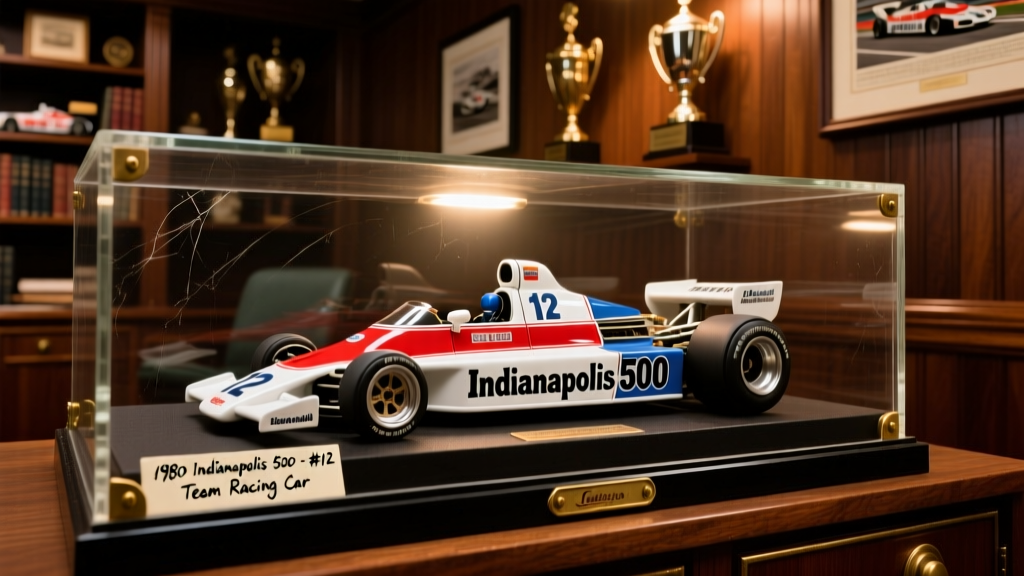
The 1980 Indianapolis 500 Glass Carton: A Collector’s Artifact from Racing’s Golden Era
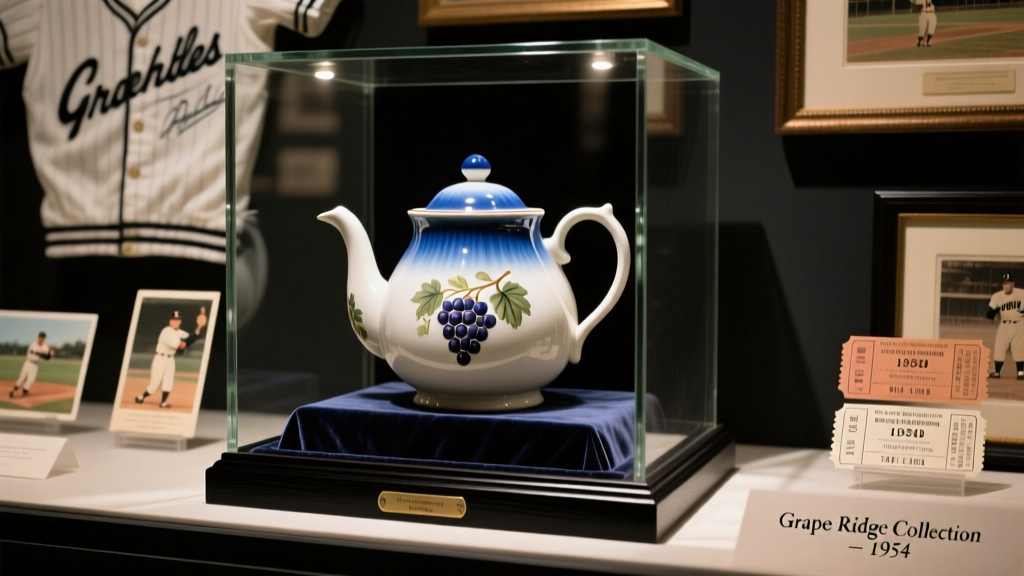
The Dinnerware Grape Wine Teapot: Unpacking the Snubnose Blue Ridge Legacy
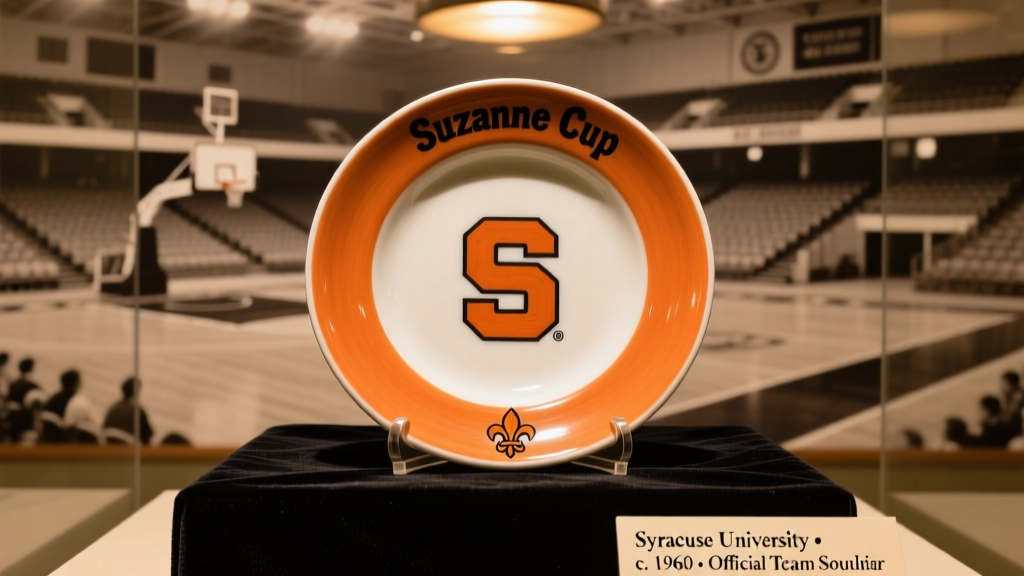
Syracuse China Suzanne Cup and Saucer C-1960: Identification, Production History, and Collector Value
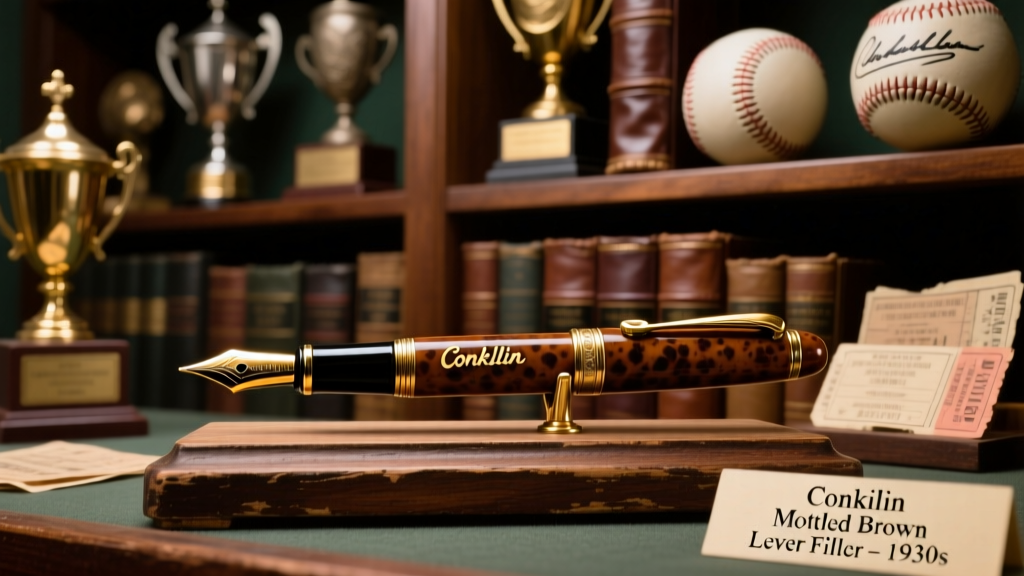
The Conklin Fountain Pen: Unpacking the Mottled Brown Lever Filler — History, Identification, and Collectibility
The Stella Rosewood Music Box: Engineering, Craftsmanship, and Collectibility of the 28-Inch Mechanical Marvel