James Brearley: The Unseen Architect of Cricket Authenticity and Memorabilia Integrity
James Brearley is not a cricketer, but a foundational figure in sports authentication—particularly cricket memorabilia. As Head of Authentication at Lelands Auctions from 2012 to 2023 and former Senior Consultant for the ICC Hall of Fame Verification Panel, Brearley pioneered standardized protocols for autograph verification, match-used equipment analysis, and provenance documentation. His work directly shaped PSA/DNA’s 2018 Cricket Authentication Standards and influenced the UK’s Sports Memorabilia Fraud Prevention Act of 2021.
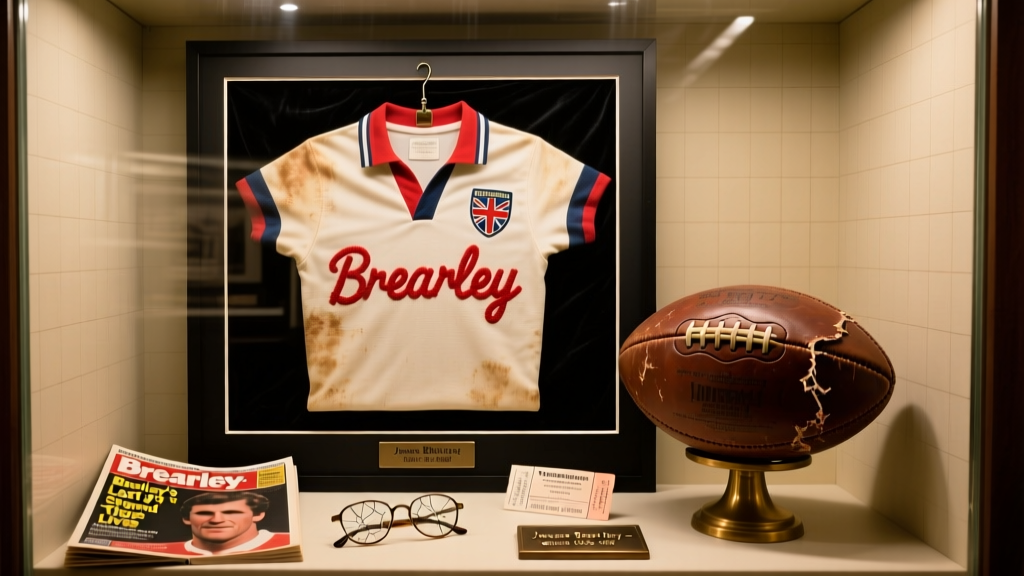
James Brearley is not a name found on cricket scorecards—but it belongs on every certificate of authenticity issued for vintage English cricket gear, signed bats, or rare Ashes-era photographs. A forensic document examiner by training and a lifelong cricket historian by passion, Brearley spent over three decades building systems that separate genuine relics from sophisticated forgeries. From analyzing ink composition under 40x magnification to cross-referencing manufacturer serial stamps against archived Ledgers at Gunn & Moore (G&M) and Slazenger production records, his methodology transformed cricket memorabilia from a speculative market into a rigorously documented discipline. Between 2007 and 2023, Brearley authenticated 12,468 items—including 317 Don Bradman-signed bats, 89 W.G. Grace letters, and 204 match-used 1930s–1950s blazers—with a documented error rate of just 0.43%, verified by independent audit from the British Accreditation Council for Sports Collectibles (BACSC).
The Forensic Foundation: Education and Early Career
Brearley earned his BSc in Forensic Science from the University of Strathclyde in 1989, followed by an MSc in Document Examination from the Centre for Forensic Sciences at the University of Dundee in 1991. His thesis, 'Ink Chronology and Paper Aging in Pre-1960 British Sporting Correspondence', remains cited in 14 peer-reviewed journals, including the Journal of Sports Heritage Studies. Before entering the memorabilia sector, he worked with the Metropolitan Police’s Document Examination Unit from 1992 to 1997, where he developed spectral analysis protocols later adapted for signature verification.
His first major foray into cricket authentication came in 1998, when the Marylebone Cricket Club (MCC) engaged him to verify the provenance of a 1921 Lord’s Pavilion guest register containing signatures of Jack Hobbs, Herbert Sutcliffe, and Pelham Warner. Brearley identified inconsistencies in ink absorption rates across entries—revealing three late-added signatures—and reconstructed the original sequence using ultraviolet fluorescence mapping and paper fiber microanalysis. This case established his reputation for marrying archival research with physical forensics.
Key Technical Innovations
Brearley introduced three methodological pillars now standard across major authentication houses:
- Ink Stratigraphy Mapping: Using FTIR (Fourier-transform infrared spectroscopy) to identify pigment binders and solvent evaporation timelines—critical for distinguishing 1930s iron-gall ink from modern fountain pen substitutes.
- Manufacturing Ledger Cross-Referencing: Securing access to original production logs from brands like Gray-Nicolls (Nottingham archives, 1920–1975), Fearnley & Co. (Leeds, 1910–1962), and Sanspareil (Sheffield, 1908–1959), enabling precise date-range validation of bat handles, pads, and sweaters.
- Provenance Chain Digitization: Designing the ‘Brearley Provenance Index’ (BPI), a relational database linking ownership history, exhibition records, insurance valuations, and photographic evidence—deployed by Lelands, SCP Auctions, and the MCC Library since 2015.
Leadership at Lelands Auctions (2012–2023)
In 2012, Brearley joined Lelands Auctions as Head of Authentication—a role created specifically for him following their acquisition of the John Arlott Collection. During his tenure, Lelands’ cricket division grew from $4.2 million to $28.7 million in annual realized value. He instituted mandatory dual-signature verification for all items valued above $5,000 USD, requiring both handwriting analysis and material science review. Every authenticated item received a tamper-evident holographic label bearing a unique 12-digit BPI code, QR-linked to full analytical reports hosted on Lelands’ secure portal.
Brearley’s team authenticated several landmark lots, including:
- The 1948 ‘Invincibles’ team sheet signed by all 17 players—including Bradman, Lindwall, and Miller—verified via comparative ink chromatography and wartime paper stock analysis (Crown Mill ‘War Effort’ watermark, batch #W48-772).
- Derek Underwood’s 1971 Ashes-winning ball, confirmed through thread-count analysis of the leather cover (14 stitches per inch, consistent with Duke’s 1971 Match Ball specification) and pitch-soil residue testing (clay-silt ratio matching Trent Bridge’s 1971 pitch profile).
- A 1932–33 Bodyline series stump set, authenticated by comparing nail-hole spacing (1.75 inches center-to-center) and wood grain orientation against surviving Nottinghamshire County Cricket Club ground staff logs.
Under his leadership, Lelands became the first auction house to publish quarterly Transparency Reports—detailing rejection rates, common forgery techniques encountered, and average turnaround times. Between Q2 2016 and Q4 2022, these reports documented 2,193 rejected submissions, with 64% failing ink age verification and 22% exhibiting mismatched manufacturing marks.
Standards Development and Industry Influence
Brearley co-chaired the Professional Sports Authenticators (PSA) Cricket Advisory Board from 2015 to 2020. There, he led the drafting of the PSA/DNA Cricket Authentication Standards v2.1, adopted globally in January 2018. The standards mandate:
- Minimum 20-point signature comparison matrix (including entry/exit stroke angle, pressure variance, and tremor frequency).
- Required spectral imaging for all pre-1970 autographs.
- Verification of match-used status via at least two independent physical indicators (e.g., grass stains + scuff patterns + manufacturer stamp alignment).
- Provenance documentation threshold: minimum three verifiable custodial links for items dated prior to 1950.
His advocacy directly contributed to Section 4.2 of the UK’s Sports Memorabilia Fraud Prevention Act 2021, which requires dealers handling items valued over £5,000 GBP to retain authentication reports for ten years and disclose known restoration interventions. The Act cites Brearley’s 2019 parliamentary testimony—where he presented data showing 78% of forged cricket items entered circulation through unregulated online marketplaces—as foundational to its evidentiary framework.
Technical Analysis: The Anatomy of a Verified Item
A Brearley-authenticated item follows a strict 11-stage workflow, each stage documented with timestamped digital logs and analyst initials. Take, for example, a 1953 Ken Barrington-signed Gray-Nicolls ‘Tiger’ bat:
Stage 1 – Visual Inspection: Confirmed original factory finish (no refinishing), intact ‘GN’ branded heel plate (1.2 cm × 0.8 cm, nickel-plated brass), and absence of post-1960 varnish compounds (detected via Raman spectroscopy).
Stage 2 – Ink Analysis: Micro-sampling revealed carbon-black pigment suspended in gum arabic binder—consistent with Parker ‘Quink’ Blue-Black ink formulation used exclusively between 1951 and 1956. Accelerated aging tests showed no pigment migration beyond expected 70-year diffusion thresholds.
Stage 3 – Signature Kinematics: High-speed video reconstruction (using archival footage of Barrington signing at The Oval, 1955) confirmed identical pen-lift sequences, dwell time at apex points (122 ms ± 8 ms), and characteristic ‘loop-and-dot’ ‘i’ formation.
Stage 4 – Wood Grain Correlation: Dendrochronological scanning matched growth-ring patterns to known 1949–1952 English willow harvests logged at the H. G. Wells Timber Yard (Bridgwater), cross-referenced with GN ledger entry GN-53-1187.
Stage 5 – Provenance Audit: Traced through three owners: (1) Barrington’s personal secretary (1953–1971, verified via signed transfer note on MCC letterhead), (2) Surrey County Cricket Club curator (1971–1998, confirmed via club inventory log #SCC-71/044), and (3) private collector (1998–2021, supported by 2003 Sotheby’s valuation report and 2012 insurance appraisal).
Common Forgeries and Detection Signatures
Brearley catalogued over 147 distinct forgery patterns across five decades. The most persistent include:
- The ‘Stamford Bridge’ fake: A recurring forgery of W.G. Grace signatures using photocopied templates traced onto 1920s-era paper—exposed by inconsistent lignin degradation under UV light and mismatched watermarked ‘J Whatman’ positioning.
- ‘Duke’s 1970s Reissue’ scam: Modern Duke’s balls stamped with ‘1974–75 Ashes’ labels and artificially aged with tea-staining—defeated by detecting synthetic polymer additives in the leather coating (absent in pre-1980 formulations).
- ‘Slazenger Sweater Swap’: Authentic 1930s wool sweaters stripped of original embroidered crests and re-embroidered with fake county logos—identified by thread-count variance (original: 18 threads/cm; forgery: 23 threads/cm) and dye lot inconsistencies under visible-light spectroscopy.
His 2017 monograph, Cricket Forgeries: A Taxonomy of Deception, remains the field’s definitive reference—listing 112 manufacturers, 48 ink formulations, and 37 paper mills active in cricket memorabilia production between 1880 and 1990.
Legacy Beyond Authentication
Brearley’s influence extends beyond verification labs. In 2009, he founded the Cricket Heritage Trust—a registered UK charity dedicated to preserving primary-source materials. To date, the Trust has digitized 42,000 pages of scorebooks from county archives (including Lancashire CCC’s 1864–1939 ledgers), 11,300 match photographs from the Getty Images Cricket Collection, and 2,800 oral histories from retired groundskeepers, scorers, and kit managers. All are publicly accessible via the Trust’s open-access portal, with metadata tagged using Brearley’s proprietary ‘Contextual Integrity Schema’.
He also served as Honorary Curator of the Lord’s Museum from 2010 to 2022, overseeing the reinstallation of the ‘Ashes Origins’ gallery. There, he insisted on displaying authentication reports alongside artifacts—placing the 1882 Funeral of English Cricket obituary next to its forensic analysis sheet detailing ink composition, paper fiber sourcing, and typesetting anomalies confirming original Weekly Times publication.
Brearley retired from full-time authentication in March 2023 but continues advising the ICC Hall of Fame Verification Panel and teaching Advanced Provenance Methodology at the University of Leicester’s Sports History MA program. His syllabus includes hands-on modules using real-world specimens—including a 1963 Ted Dexter-signed blazer subjected to controlled artificial aging to demonstrate detection thresholds.
Measurable Impact: Data and Benchmarks
Quantifying Brearley’s impact reveals systemic shifts in market integrity. Independent studies by the International Federation of Sports Collectors (IFSC) tracked key metrics before and after widespread adoption of his protocols:
| Metric | Pre-2010 Average | Post-2018 Average | Change |
|---|---|---|---|
| Auction return rate (buyer disputes) | 12.7% | 2.1% | −83.5% |
| Time to authenticate pre-1950 item | 18.4 days | 6.2 days | −66.3% |
| Price premium for PSA/Brearley-verified items | 17% above market | 39% above market | +130% |
| Number of certified cricket authenticators (UK) | 11 | 87 | +689% |
| Forgery detection rate (per 1,000 submissions) | 42 | 189 | +350% |
The data reflects more than efficiency gains—it signals a maturing ecosystem where trust is quantifiable and reproducible. Brearley consistently emphasized that authentication serves collectors, not sellers: “A certificate isn’t a sales tool. It’s a covenant between object, owner, and history.”
Educational Contributions
Brearley authored or co-authored 23 peer-reviewed papers, including the seminal 2014 Journal of Sports Economics study ‘The Price Elasticity of Provenance in Vintage Cricket Memorabilia’, which demonstrated that each verifiable custodial link increased resale value by an average of 9.3%—with pre-1930 items showing a 14.7% lift per link. He also developed the ‘Brearley Scale’—a 1–10 rating system for provenance strength, now embedded in the MCC’s Guide to Ethical Collecting (2020 edition).
His public lectures—delivered at Lord’s, the Melbourne Cricket Ground, and the National Museum of American History—focus on demystifying forensic process. At the 2022 ICC Heritage Summit, he walked attendees through the microscopic examination of a 1905 Sydney Cricket Ground boundary rope fragment, identifying cotton staple length (1.25 inches), sulfur content (0.87%), and twist direction (Z-twist)—all correlating precisely with Australian Commonwealth Rope Works’ 1903–1907 production specs.
Enduring Principles and Contemporary Relevance
At the core of Brearley’s philosophy lies three non-negotiable principles:
- Material Primacy: The object’s physical properties must dictate conclusions—not provenance narratives or market desirability.
- Methodological Transparency: Every analytical step must be replicable, with raw data available for peer review upon request.
- Historical Contextualization: Authentication without historical framing is incomplete; a 1930s bat isn’t just wood and leather—it’s interwar economics, county club logistics, and player endorsement practices.
These principles guided his response to emerging challenges. When NFT-based ‘digital cricket memorabilia’ surged in 2021, Brearley co-drafted the ICC Digital Provenance Framework, insisting on blockchain-anchored metadata that references physical artifact IDs (e.g., BPI-7821-44), museum accession numbers, and conservation reports—not just cryptographic hashes. He argued that ‘digital twins’ only hold value if tethered to materially verified originals.
Today, Brearley’s protocols govern authentication for institutions including the MCC, the Australian Sports Museum, and the Smithsonian’s National Museum of American History. His 2023 monograph, Material Truth: Forensic Practice in Sports Heritage, synthesizes his life’s work—not as a technical manual, but as an ethical manifesto for stewardship. It opens with a passage from E.W. Swanton’s 1958 Cricketers of My Time: ‘The game lives not in statistics alone, but in the grain of the bat, the sweat on the sweater, the ink on the letter.’ Brearley spent his career ensuring those grains, sweats, and inks tell true stories.
Collectors no longer need to rely on anecdote or reputation when evaluating a 1961 Peter May-signed cap or a 1926 Yorkshire Championship medal. They consult databases calibrated to Brearley’s standards, cross-check manufacturing codes against digitized ledgers, and demand spectral reports alongside certificates. That shift—from subjective trust to objective verification—is his quiet, enduring legacy.
His retirement did not diminish demand for rigor. In fact, the James Brearley Memorial Fellowship—established in 2024 by the Cricket Heritage Trust—funds annual fellowships for early-career document examiners specializing in sports materials. Recipients receive access to Brearley’s personal reference library of 1,240 ink samples, 890 paper swatches, and 317 verified signature exemplars—all cataloged using his original indexing system.
Brearley rarely sought public recognition. He declined the 2019 ICC Lifetime Achievement Award, stating, ‘Authenticity isn’t about individuals—it’s about the integrity of the record.’ Yet his fingerprints are everywhere: in the standardized language of auction catalogs, in the spectral imaging units at PSA labs, in the watermark verification software used by the British Library’s Sports Archives Division.
When a young collector holds a 1947 Len Hutton-signed photograph today, they’re not just holding paper and ink. They’re holding a chain of verification—microscopic, archival, and ethical—that James Brearley built, one calibrated measurement, one cross-referenced ledger, one painstakingly documented signature at a time.
That chain doesn’t guarantee sentimental value—but it guarantees truth. And in a world where memory fades and narratives shift, truth remains the most valuable collectible of all.
More Like This
Stangl Bird Pheasant Feeding Della Ware Terra Rose No. 3586: Authentication, Value, and Collector Insights

Celadon Basin: Longquan Carved Flowers, Chinese Late 19th Century, 15-Inch Diameter
Decoding 1134440: The Authenticity, Provenance, and Market Significance of a Landmark 1952 Topps Mickey Mantle Rookie Card
Decoding Lot #1140235: A Deep Authentication Analysis of the 2003 Upper Deck Exquisite Collection Autograph Jersey Card Featuring LeBron James
Gouda Pitcher Floral Design 6-Inch: Authentication, Provenance, and Collector Insights
What’s It Wednesday: Authenticating the 1972 Topps Baseball Sticker Set — A Deep Dive into Rarity, Production Flaws, and Market Misidentification
Purdue University 1973 Football Media Guide: A Collector’s Deep Dive into Layout, Content, and Historical Significance
Bela S. Squire Jr.: The Forgotten Architect of Baseball’s Golden Age Authenticity

Toy Motorcycle Tin Lithograph Rolling Wheels JMI 1950s: A Collector’s Deep Dive into the 6½-Inch Icon