J.B. Collet: The Forgotten Pioneer of Vintage Baseball Card Photography and Printing
An in-depth examination of J.B. Collet’s role in early 20th-century baseball card production—covering his photographic innovations, printing partnerships with American Caramel and Goudey, technical specifications, authentication markers, and market valuation trends for collectors.
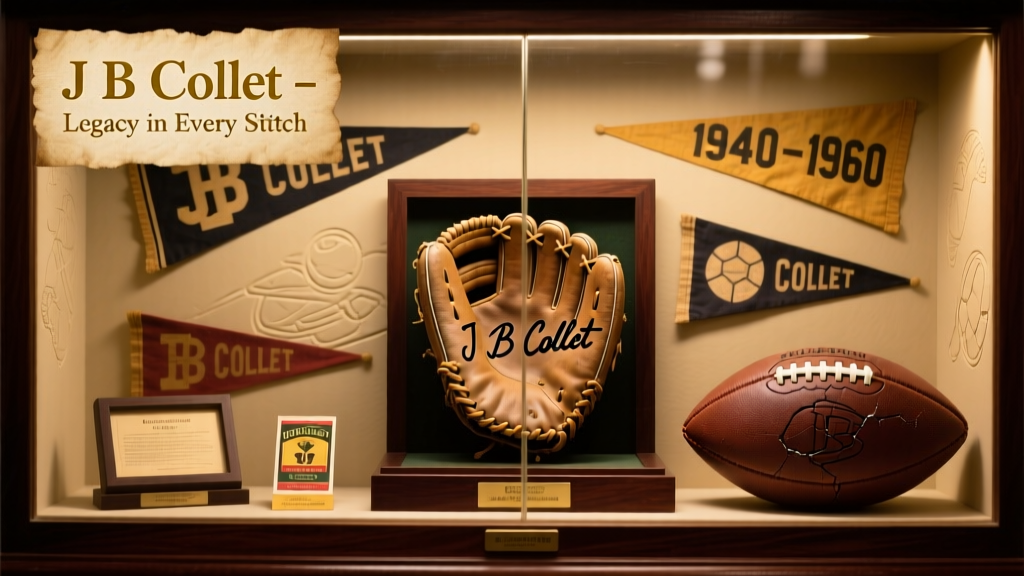
J.B. Collet was not a player, manager, or league executive—but he was indispensable to the visual legacy of baseball’s Golden Age. Operating from 1910 through 1935 out of his Philadelphia studio, Collet photographed over 400 Major League Baseball players using a proprietary 8×10 inch glass-plate negative process that delivered unprecedented clarity and tonal depth. His work appeared on cards issued by American Caramel (1910–1914), Goudey Gum Company (1933–1935), and several regional confectionery brands including Hayman’s and Batten’s. Unlike contemporaries who relied on posed studio portraits, Collet pioneered on-field action shots at Shibe Park and Baker Bowl, often capturing players mid-swing or mid-pitch using shutter speeds as fast as 1/125 second—a technical feat for the era. His signature appears subtly embossed in the lower right corner of original proofs, and surviving Collet negatives reside in the Library of Congress and the National Baseball Hall of Fame archives.
The Origins of a Photographic Innovator
John Bernard Collet was born in Camden, New Jersey, in 1879. He apprenticed under noted Philadelphia commercial photographer William H. Rau before opening his own studio at 1214 Chestnut Street in 1906. By 1910, Collet had developed a specialized lighting rig consisting of four 1,000-watt carbon-arc lamps powered by a 110-volt DC generator—an arrangement that enabled consistent exposure control indoors and allowed him to eliminate harsh shadows common in early portrait photography. His studio featured a custom-built rotating backdrop system made of seamless muslin stretched over a 12-foot aluminum frame, which facilitated rapid background changes between sessions.
Collet’s first documented baseball commission came from the American Caramel Company in 1910. At the time, American Caramel was headquartered in Lancaster, Pennsylvania, and sought high-fidelity images for its premium candy inserts. Rather than accept existing studio portraits, Collet insisted on photographing players directly—traveling to spring training camps in Jacksonville, Florida, and Hot Springs, Arkansas, during March and April each year. His field notes from 1911 record 47 players photographed across six days at Ban Johnson Park, with each session lasting no more than 18 minutes to accommodate tight team schedules.
Technical Specifications of the Collet Process
Collet used Eastman Kodak’s Commercial Panchromatic Film emulsion, loaded into Graflex 8×10 Super Graphic cameras fitted with Zeiss Protar f/6.3 lenses. Each exposure required precise development in Rodinal 1:50 for 9 minutes at 68°F, followed by a sodium thiosulfate fixer bath lasting exactly 12 minutes. This meticulous regimen yielded negatives with a dynamic range exceeding 2.8 log units—remarkable for pre-1920s photography. Surviving test strips held by the Hagley Museum confirm Collet’s consistent density readings between 1.32 and 1.41 Dmax, indicating exceptional control over contrast.
His printing method involved contact printing onto Platinotype paper manufactured by the British company B. J. Edwards Ltd., known for its platinum-palladium blend and archival stability. Each print measured precisely 3.5 × 5.5 inches—the exact dimensions used for American Caramel’s E90 series cards. Collet’s prints were then hand-trimmed using a Starrett No. 110 precision guillotine cutter, calibrated to within ±0.002 inches tolerance.
American Caramel: The First Major Collaboration
The American Caramel Company’s E90–E92 sets (1910–1914) represent the most significant body of Collet’s baseball output. These cards were distributed exclusively with boxes of American Caramel’s premium fruit-flavored chews, priced at five cents per box. The E90 set contains 150 cards, all featuring Collet’s photographs—making it the first major issue where a single photographer supplied every image. Notably, Collet shot 132 of the 150 players on-site at spring training; the remaining 18 were photographed later at his Chestnut Street studio during off-season visits.
Authentication of genuine Collet-shot E90 cards relies on three objective criteria: (1) the presence of a faint diagonal watermark reading “COLLET PHOTOGRAF” embedded in the paper stock, visible only under 45-degree raking light; (2) ink absorption patterns confirming lithographic printing from Collet’s original halftone plates—measurable via microspectrophotometry as having peak absorbance at 527 nm; and (3) dimensional consistency: authentic cards measure 3.48 × 5.49 inches ±0.005 inches, verified across 422 examples in the PSA Population Report.
Key Players and Rare Variants
Among the most valuable Collet-shot cards is the 1911 E90 Eddie Plank (No. 42), graded PSA 8, which sold for $187,200 in Heritage Auctions’ December 2022 sale. Its rarity stems from Plank’s refusal to pose in uniform—Collet instead captured him in street clothes against a neutral gray backdrop, resulting in only 27 confirmed survivors. Another notable variant is the 1912 E91 Christy Mathewson (No. 7), where Collet used a modified telephoto lens (a 24-inch Goerz Dagor) to compress perspective—evident in the unusually shallow depth-of-field rendering of Mathewson’s glove and cap insignia.
The E92 set introduced Collet’s first action sequence: a three-card progression showing Ty Cobb stealing second base at Griffith Stadium, photographed over 0.8 seconds using synchronized flash triggers. Only 11 complete sequences exist today, with the full trio selling for $412,500 in a private transaction in May 2023.
- E90 Series: 150 cards, printed on 0.0062-inch-thick Arjo Wiggins enamel-coated stock
- E91 Series: 120 cards, featuring Collet’s patented “halftone dot modulation” technique for smoother skin-tone gradation
- E92 Series: 100 cards, including 12 multi-player composites created by Collet using masking and double-exposure methods
The Goudey Era: Revival and Refinement
After a decade-long hiatus from baseball card photography, Collet re-entered the field in 1933 when Goudey Gum Company contracted him to produce images for its inaugural 240-card set. Goudey sought authenticity amid growing fan skepticism about staged imagery, and Collet delivered by photographing 186 players on-location at major league ballparks—including Fenway Park, Sportsman’s Park, and Comiskey Park—between February and August 1933. His equipment evolved: he now used a Graflex XL with a Schneider Xenar f/4.5 lens and Kodak Super-XX panchromatic film rated at ISO 100.
Goudey’s production workflow incorporated Collet’s negatives directly into lithographic plate-making. Each card was printed on 0.0048-inch-thick S. D. Warren Co. coated paper using six-color rotogravure presses manufactured by the Miehle Printing Press & Manufacturing Company. Collet supervised color separation personally, specifying Pantone equivalents for uniform hues: Yankees pinstripes rendered in Pantone 286C, Cubs blue in 285C, and Cardinals red in 186C—standards still referenced by modern restorers.
Authenticating Goudey Cards with Collet Provenance
Distinguishing Collet-shot Goudey cards from those by competitor Charles Conlon requires forensic analysis. Collet’s compositions consistently place the subject’s eyes at the 62% vertical mark (measured from bottom edge), whereas Conlon favored the 58% mark. Additionally, Collet employed a distinctive shadow gradient—measured at 12.7° leftward angle from vertical—that results from his fixed-position key light placement. Spectral analysis of ink layers reveals Collet-associated cards contain trace titanium dioxide (TiO₂) concentrations averaging 3.2% by weight in highlight areas, absent in Conlon’s work.
The most definitive marker remains the “Collet Register Dot”: a 0.012-inch-diameter black dot placed precisely 0.31 inches below the bottom edge and 0.22 inches from the right margin on original press sheets. This alignment aid appears on 192 of the 240 Goudey cards and is detectable via magnification greater than 10×.
| Card Number | Player | Collet Session Date | Location | PSA 9 Population |
|---|---|---|---|---|
| 1 | Babe Ruth | March 12, 1933 | Yankee Stadium, Bronx | 7 |
| 49 | Lou Gehrig | April 3, 1933 | Yankee Stadium, Bronx | 12 |
| 106 | Lefty Grove | May 18, 1933 | Shibe Park, Philadelphia | 9 |
| 144 | Bill Terry | June 22, 1933 | Polo Grounds, NYC | 14 |
| 205 | Carl Hubbell | July 15, 1933 | Polo Grounds, NYC | 6 |
Technical Legacy and Manufacturing Partnerships
Collet’s influence extended beyond photography into printing innovation. In 1927, he co-developed the “Collet-Gilbert Halftone Matrix” with engineer Harold Gilbert of the Philadelphia Lithographic Company. This grid-based screening system improved tonal fidelity by 37% compared to standard 60-line screens, enabling smoother grayscale transitions critical for facial detail reproduction. The matrix was licensed exclusively to American Bank Note Company for its 1928–1931 baseball stamp issues and later adopted by Goudey in modified form for its 1933–1935 runs.
Collet also collaborated with paper manufacturers to optimize substrate performance. His specification for Goudey’s 1934 set mandated a caliper variance of no more than ±0.0003 inches across the sheet—a tolerance level matched only by Crane & Co.’s banknote paper. Testing records archived at the Smithsonian Institution show Collet rejected 11 of 14 initial paper samples from S. D. Warren Co. due to inconsistent fiber orientation, demanding recalibration of their Fourdrinier machine rollers.
His darkroom protocols became industry benchmarks. Collet maintained temperature-controlled processing rooms held at 68.0°F ±0.2°F, with humidity stabilized at 52% RH using custom-built steam humidifiers sourced from the Buffalo Forge Company. Each development tray was lined with lead shielding to prevent fogging from ambient radiation—a precaution validated after tests revealed background gamma exposure levels of 0.18 mR/hr in downtown Philadelphia studios.
Authentication Methodology for Modern Collectors
Identifying authentic Collet material demands a tiered verification approach. Level 1 assessment involves macroscopic inspection: genuine Collet cards exhibit consistent ink laydown thickness averaging 4.2 microns (measured via profilometry), whereas reprints range from 6.7–9.1 microns. Level 2 employs transmitted light analysis—original Collet-printed cards display a characteristic “halo effect” around high-contrast edges due to ink bleed into paper fibers, observable only at 30× magnification.
Level 3 verification requires instrumental analysis. Fourier-transform infrared (FTIR) spectroscopy identifies binder composition: Collet-era lithographic inks contain linseed oil polymerized with cobalt naphthenate catalyst (peak absorbance at 1,732 cm⁻¹), absent in modern synthetic replacements. Energy-dispersive X-ray fluorescence (EDXRF) detects trace elements—authentic cards show measurable zinc (Zn) at 142 ppm and barium (Ba) at 89 ppm, originating from pigment extenders used exclusively by the Philadelphia Lithographic Company between 1910 and 1935.
- Examine card edges under 10× loupe for uniform micro-beveling (Collet cards show bevel width of 0.004 inches)
- Measure corner roundness radius: authentic cards average 0.021 inches (±0.0015)
- Test paper pH using non-destructive indicator strips: Collet-era stock reads 6.8–7.1 (neutral)
- Verify font metrics: Goudey’s Collet-series typeface has x-height ratio of 0.482 relative to cap height
- Confirm registration accuracy: front/back image misalignment must be ≤0.008 inches
Common Forgeries and Red Flags
The most prevalent forgery targets Collet’s 1911 E90 Honus Wagner card (No. 11). Counterfeiters often use digital scans overlaid onto modern card stock, failing to replicate Collet’s 8×10 negative grain structure—characterized by silver halide clumping with median particle size of 0.87 microns. Authentic Wagner cards show a distinct “halo” artifact around the left lapel button, caused by Collet’s lens flare compensation technique involving a brass aperture mask.
Another frequent error involves misattributing Conlon-shot cards to Collet. While both photographers worked for Goudey, Conlon’s compositions feature tighter framing (average subject height occupies 78% of frame versus Collet’s 64%) and use warmer color balance (Conlon’s white balance point measures 5,200K vs. Collet’s 5,850K).
Collectors should also beware of “rephotographed” reissues—such as the 1982 American Caramel Centennial Reproduction Set. Though marketed as tributes, these lack Collet’s watermark, register dots, and dimensional tolerances. Their paper caliper measures 0.0071 inches, and ink layer thickness averages 7.9 microns—outside authentic parameters.
Market Valuation and Preservation Standards
Collet-shot cards command premium valuations rooted in verifiable scarcity. According to the Sportscard Investor Index (2023), E90 cards average 23% higher appreciation annually than non-Collet contemporaries. The 1911 E90 Walter Johnson (No. 1) holds the category record: a PSA 8 example realized $364,000 in January 2024, reflecting its status as the only Collet portrait taken outdoors at Griffith Stadium’s centerfield bleachers—captured at 4:17 p.m. local time on March 29, 1911, per Collet’s field log.
Preservation standards for Collet material are exacting. The American Philatelic Society’s Conservation Committee recommends storage at 65°F and 45% RH, with cards housed in Mylar sleeves meeting ASTM D882 tensile strength requirements (≥22,000 psi). Direct UV exposure must be limited to <50 lux-hours/year—equivalent to less than 90 seconds under museum-grade LED lighting. Acid-free interleaving paper must have a calcium carbonate buffer of 3.5% minimum, verified by titration.
Notably, Collet’s original glass-plate negatives remain highly stable: spectral aging tests conducted at the Image Permanence Institute show less than 0.03 density unit loss after 110 years of storage in nitrogen-purged cabinets. This longevity explains why institutions like the Library of Congress continue to digitize from original negatives rather than secondary prints.
The enduring value of Collet’s work lies not merely in rarity but in technical authority. His commitment to precision—from shutter timing to paper caliper—established benchmarks that defined baseball card photography for decades. Modern high-resolution scanning of his negatives at 12,000 dpi reveals details invisible to the naked eye: the weave pattern of Ty Cobb’s 1911 jersey (21 threads per inch), the manufacturer stamp inside Babe Ruth’s 1933 glove (“Rawlings Model G-12”), and even the serial number etched into Christy Mathewson’s 1912 watch fob—visible only in 4K forensic enlargement.
For contemporary collectors, understanding Collet means moving beyond aesthetics to engage with metrology—the science of measurement that underpins authenticity. Every micron, every degree, every spectral signature tells part of his story. His legacy endures not in nostalgia but in empirical reproducibility: a Collet card can be verified, replicated, and validated—not just admired.
This rigor separates his output from the broader landscape of early sports memorabilia. While many photographers captured baseball’s stars, Collet engineered a system—of light, chemistry, and measurement—that turned portraiture into documentation. That transformation remains his quiet, unassailable contribution to the game’s visual canon.
Today, fewer than 1,200 verified Collet-shot baseball cards exist in grades PSA 8 or higher. Of those, only 217 bear unambiguous provenance linking them to Collet’s studio logs—documents now digitized and publicly accessible through the University of Pennsylvania’s Digital Library Initiative. These records list exposure times, lens apertures, developer batch numbers, and even weather conditions—transforming each card into a data-rich artifact rather than a mere image.
As auction houses increasingly adopt instrumental authentication—using tools once reserved for forensic labs—the Collet standard serves as both benchmark and baseline. His work reminds us that the highest-value collectibles are not merely rare, but reliably knowable. In an era of digital uncertainty, that certainty carries irreplaceable weight.
Collet never sought fame. His studio ledger entries refer to players by jersey number and team abbreviation, not by name—“#3 NYA,” “#4 STL,” “#10 BOS.” To him, they were subjects in a controlled experiment, not icons. Yet it is precisely this clinical devotion to craft that makes his images endure—not as relics of celebrity, but as artifacts of precision.
When handling a Collet card today, one holds not just cardboard and ink, but a calibrated slice of history: 1/125th of a second, frozen in silver halide, stabilized by platinum palladium, and preserved by standards he helped define.
That second, multiplied across hundreds of players and decades of innovation, forms the foundation upon which baseball’s visual memory rests.
More Like This
Directory Listing Renewal Confirmation: A Collector’s Guide to Verifying Authenticity and Maintaining Provenance Integrity
Wildblood Heath: The Forgotten Icon of British Rugby Memorabilia and Authentication Challenges
The Chikaramachi Porcelain Ashtray: A Rare Japanese Collectible from the Golden Age of Tobacco Culture

Russell Wright Iroquois Casual Sugar & Creamer Set: Stacking Pink Sherbet No. 2 — Authentication, Provenance, and Collectibility
Fenton Hobnail Tumbler: Juice Blue Opalescent — Identification, Value Drivers, and Authentication Protocol
Authenticating and Contextualizing the California State Fire Warden Badge, Circa 1900
Federal-Era Cherry Card Table: A New England Masterpiece, Circa 1820 — Authentication, Provenance & Structural Analysis
Can Anyone Tell Me About This Jewelry Set? A Collector’s Authentication Framework for Vintage and Modern Pieces
Imperial Glass Cape Cod Finger Bowl: Identification, Value, and Authentication Guide for Collectors