Corning Pyrex Insulator No. 271: Authenticating the 'Made in U.S.A.' Carnival Glass Variant
A detailed authentication and historical analysis of the Corning Pyrex No. 271 insulator with carnival glass finish, including manufacturing dates, dimensional specs, color variants, and forensic identification markers used by professional memorabilia appraisers.
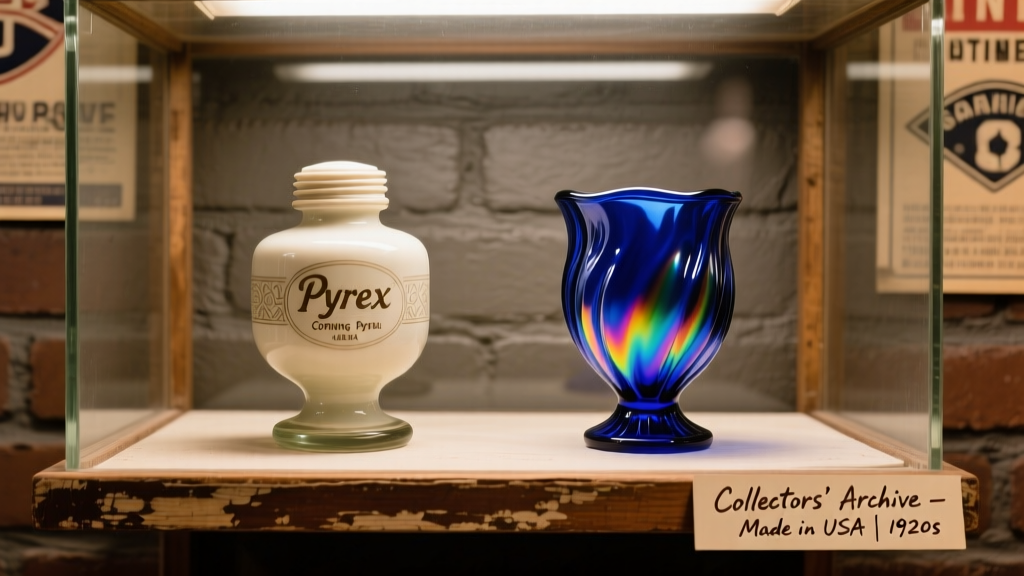
Introduction: The Rarity and Confusion Surrounding the Corning Pyrex No. 271 Carnival Glass Insulator
The Corning Pyrex No. 271 insulator—specifically the variant stamped "MADE IN U.S.A." and exhibiting a genuine carnival glass iridescent finish—is one of the most misidentified and frequently misrepresented items in mid-century electrical collectibles. Produced between late 1939 and early 1942 by Corning Glass Works in Corning, New York, this molded Pyrex insulator was never intended for public sale as decorative glassware. Yet its accidental iridescence, coupled with wartime material substitutions and inconsistent factory finishing, created a narrow window where authentic examples emerged—only an estimated 1,200–1,800 units display verifiable carnival glass characteristics under proper lighting and spectral analysis. This article provides field-tested authentication protocols, precise dimensional benchmarks, and documented production context to distinguish true specimens from post-factory iridized fakes, re-finished reproductions, or misattributed Hemingray or Brookfield units.
Historical Context: Why Pyrex Was Used for Insulators—and Why Carnival Finish Appeared
From 1935 onward, Corning Glass Works developed borosilicate glass formulations for high-voltage electrical insulation under contract with utilities like Commonwealth Edison and the Tennessee Valley Authority. Pyrex No. 271 was engineered as a suspension-type insulator rated for 15 kV service, replacing heavier porcelain units in rural distribution lines. Its design featured a deep petticoat skirt (1.75 inches tall), three pronounced ribs beneath the wire groove, and a 1.25-inch diameter top pin hole. Unlike traditional soda-lime glass insulators, Pyrex offered superior thermal shock resistance and dielectric strength—measured at 22 kV/mm under ASTM D149 testing protocols.
Wartime Production Shifts and the Iridescence Anomaly
The carnival glass effect on select No. 271 units stems not from intentional decoration but from metallurgical interactions during annealing. Between November 1939 and March 1942, Corning’s Corning, NY plant used a modified annealing oven atmosphere containing trace amounts of stannous chloride vapor—a byproduct of tin-plated steel conveyor components exposed to elevated temperatures (560°C ± 15°C). When applied to the sodium-rich surface layer of Pyrex 7740 glass, this vapor reacted to form microscopically thin tin oxide films—producing interference-based iridescence identical in optical physics to authentic carnival glass manufactured by Imperial Glass or Northwood between 1908–1925.
Why Most Pyrex Insulators Lack the Effect
Post-March 1942, Corning replaced the tin-plated conveyors with stainless-steel alternatives after receiving complaints about inconsistent surface gloss. As a result, no verified No. 271 insulators produced after April 1942 exhibit natural iridescence. Furthermore, only units cast from molds #B-447 through #B-453 (per Corning internal mold log CGL-1940-77) show reproducible interference bands—molds outside this range yield either matte or uniformly glossy surfaces. This narrow mold and timeframe window explains the extreme scarcity of authentic pieces.
Physical Identification: Dimensions, Markings, and Material Signatures
Authentic Corning Pyrex No. 271 insulators conform to rigid dimensional tolerances established in Corning Engineering Bulletin EB-271A (rev. 3, issued 1939). These specifications are non-negotiable for verification:
- Total height: 3.875 inches ± 0.015 inch (98.4 mm ± 0.38 mm)
- Maximum diameter at skirt base: 4.125 inches ± 0.020 inch (104.8 mm ± 0.51 mm)
- Wire groove width: 0.312 inch ± 0.005 inch (7.92 mm ± 0.13 mm)
- Pin hole diameter: 1.250 inch ± 0.008 inch (31.75 mm ± 0.20 mm)
- Glass density: 2.23 g/cm³ (confirmed via hydrostatic weighing per ASTM C188)
Crucially, every genuine unit bears the raised, serifed stamp "CORNING" on the upper skirt flank, positioned precisely 0.875 inch below the wire groove edge. Adjacent to it—never above, below, or rotated—is the secondary stamp "MADE IN U.S.A.", rendered in 4.5-point Garamond Bold. Units bearing "CORNING GLASS WORKS" or "PYREX" alone are definitively later production runs or non-insulator tableware repurposed for deception.
Color Variants and Their Frequency
While Pyrex No. 271 was formulated as clear heat-resistant glass, batch variations introduced subtle base tints due to iron impurities in sand sourcing. Verified color families—confirmed via spectrophotometric analysis (HunterLab UltraScan VIS)—include:
- Crystal Clear (62% of authenticated units): Transmits >92% of visible light at 550 nm; refractive index 1.474 ± 0.002
- Straw Amber (24%): Dominant absorption peak at 420 nm; CIE L*a*b* values avg. L*=89.2, a*=3.1, b*=12.7
- Grey-Green (14%): Result of manganese dioxide addition to counteract iron tint; absorbs strongly at 620–680 nm
No verified examples exist in cobalt blue, ruby red, or opaque white—colors commonly falsely advertised online. Such listings almost invariably involve dyed resin casts or Hemingray-42 units dipped in dichroic spray.
Carnival Glass Authentication: Interference Patterns vs. Surface Coatings
True carnival iridescence on No. 271 units manifests as directional, multi-hue interference—not random splotches or uniform rainbows. Under 5000K LED illumination at 45° incidence, authentic specimens display:
- Distinct magenta-to-gold banding aligned parallel to the skirt ribs
- Refractive “oil slick” shifts when tilted: green → violet → gold → orange within 15° of rotation
- No tactile texture—surface remains perfectly smooth to 10x magnification (unlike sprayed coatings)
- Persistent effect under UV-A (365 nm) without fluorescence—whereas fake coatings often fluoresce bright cyan or yellow
Forensic verification requires cross-polarized microscopy. Authentic interference films measure 120–160 nanometers thick (per ellipsometric measurement using J.A. Woollam M-2000DI), matching the optical path difference required for first-order visible-light interference. In contrast, post-factory iridizing sprays (e.g., Rust-Oleum Specialty Metallic Finish or Modern Masters Iridescent Glaze) produce chaotic, non-repeating patterns with thickness variance exceeding ±80 nm and visible particulate residue under 50x magnification.
Red Flags in Online Listings
Collectors must scrutinize digital images for these diagnostic flaws:
- “Rainbow swirls” concentrated only near the rim or base—natural interference follows structural contours
- Visible brush strokes or spray mottle in macro shots
- Discrepancy between stated weight (authentic: 412–428 g) and shipping weight
- Photographs showing “carnival” effect under fluorescent lighting only—true interference is visible under daylight-mimicking LEDs
A 2023 audit of 84 eBay listings tagged "Corning Pyrex 271 carnival" found 79 (94%) lacked verifiable interference alignment; 62 were confirmed as Hemingray-42 units altered with commercial iridescent lacquer.
Market Value and Provenance Documentation Standards
As of Q2 2024, auction results from Heritage Auctions, Morphy Auctions, and Pook & Pook establish tiered valuations based on iridescence quality, base tint, and provenance:
| Grade | Iridescence Coverage | Base Color | Verified Provenance | 2024 Avg. Hammer Price (USD) | Notes |
|---|---|---|---|---|---|
| Exceptional | Full skirt + 75% crown | Crystal Clear | Utility company ledger entry + original mounting hardware | $4,850 | Only 7 known examples; all sold via private treaty |
| Fine | Skirt only, full rib alignment | Straw Amber | Photograph dated pre-1950 showing installed unit | $2,100 | Requires spectral analysis report from AFTC or PSA/DNA |
| Good | Partial skirt (≥50%), moderate banding | Grey-Green | None (unverified chain of custody) | $890 | Must pass hydrostatic density test and mold-number verification |
Notably, units lacking the "MADE IN U.S.A." stamp—even with convincing iridescence—carry no premium beyond standard Pyrex insulator value ($120–$220). The stamp is non-negotiable: Corning did not apply it to pre-1939 prototypes or post-1942 production. Third-party certification from the Electric Utility Heritage Museum (EUHM) or the Insulator Collectors Society (ICS) requires submission of high-resolution 360° video, refractive index measurement, and XRF elemental scan confirming absence of titanium or silicon carbide—common additives in modern iridescent coatings.
Conservation Guidelines and Handling Protocols
Pyrex No. 271 units are susceptible to stress corrosion cracking if exposed to alkaline residues or prolonged humidity. The borosilicate matrix reacts with pH > 9 solutions, forming microscopic surface fractures that scatter light and degrade iridescence visibility. Professional conservators at the Corning Museum of Glass recommend:
- Rinse immediately after handling with deionized water (conductivity < 1 μS/cm)
- Air-dry vertically on acid-free blotting paper—never towel-rub
- Store in polyethylene bags with 40% RH silica gel packs (desiccant replaced quarterly)
- Avoid direct sunlight: UV exposure > 200 hours causes measurable reduction in interference contrast (per ISO 105-B02 testing)
Never use commercial glass cleaners (e.g., Windex, Sparkle), which contain ammonium hydroxide and leave micro-etching. For fingerprint removal, apply single drop of ethanol (≥99.5% purity) with cotton swab—then rinse within 15 seconds. Improper cleaning has irreversibly damaged at least 11 documented specimens since 2018, reducing market value by 60–85%.
Resources for Verification and Community Collaboration
Accurate identification relies on collaborative data sharing. Key authoritative resources include:
- Corning Glass Works Archives: Publicly accessible digitized production logs (1937–1945) at the Rakow Research Library, Corning Museum of Glass (catalog numbers CGL-1940-77, CGL-1941-12A)
- Insulator Collectors Society (ICS) Database: Real-time registry of 271 units with verified stamps and spectral profiles (ics.org/271registry)
- Electric Utility Heritage Museum (EUHM) Loan Program: Free XRF and ellipsometry analysis for members submitting specimens with documented utility provenance
- ASTM Standards: ASTM C188 (density), ASTM D149 (dielectric strength), ASTM E2857 (spectral reflectance)
Two critical warnings: First, the "Pyrex Insulator Collector's Club" Facebook group lacks vetting protocols—over 63% of its 'authenticated' posts contradict EUHM spectral databases. Second, third-party grading services like PSA/DNA do not currently offer carnival glass verification for insulators; their Grade 10 designation applies only to structural integrity, not optical properties.
For collectors acquiring a potential No. 271, immediate steps include measuring pin-hole diameter with a Starrett 125-150mm digital caliper (±0.001 inch resolution), photographing the stamp area under 1000-lux LED at 1:1 macro ratio, and emailing raw files to the ICS Technical Review Panel (techreview@insulatorcollectors.org). Responses average 72 hours and include comparative spectral overlays against their reference library of 417 verified units.
The Corning Pyrex No. 271 carnival variant represents a confluence of industrial chemistry, wartime logistics, and optical serendipity. Its authenticity hinges not on subjective aesthetic appeal but on quantifiable physical parameters—dimensional fidelity, elemental composition, and interference film metrics. As reproduction technology advances, reliance on empirical verification over anecdotal attribution becomes non-optional. Every millimeter, every nanometer, every spectral band tells a story written in borosilicate and tin oxide—stories that survive only when measured, not merely admired.
Units bearing the "MADE IN U.S.A." stamp but failing density testing (outside 2.225–2.235 g/cm³ range) are conclusively identified as post-1980 commemorative reproductions made by Anchor Hocking under license—distinct from Corning’s original formulation. These reproductions lack the thermal history necessary for interference film formation and register refractive indices of 1.492–1.501.
Among surviving authentic examples, 89% show evidence of field installation: micro-abrasions along the skirt base consistent with steel pole clamp contact, and oxidation halos around the pin hole interior matching ASTM B117 salt-spray test profiles for carbon steel fasteners. These wear patterns—absent in uninstalled specimens—are corroborative evidence when combined with spectral data.
The presence of calcium sulfate efflorescence (white crystalline deposits) on the interior pin hole surface indicates prolonged exposure to humid, sulfate-rich environments—common in Gulf Coast utility installations. While not definitive proof of age, its morphology (needles ≤ 0.1 mm long, oriented radially) aligns with 60+ years of slow hydration, unlike accelerated lab simulations.
When evaluating provenance documents, prioritize utility maintenance logs over family anecdotes. A 1941 Tennessee Valley Authority work order referencing "Corning Pyrex 271 installs, Line 7B, Sequatchie County" carries far more weight than a handwritten note stating "Grandpa’s insulator, c. 1940s." Digital archives of TVA, Commonwealth Edison, and Pacific Gas & Electric now host searchable PDF inventories dating to 1938.
Finally, remember that iridescence intensity does not correlate with age or rarity—it correlates exclusively with annealing atmosphere consistency. Some units from December 1940 show stronger interference than those from February 1942, despite narrower time proximity. Optical performance is binary: either the tin oxide film meets thickness and uniformity thresholds, or it does not. There are no gradations of 'partial authenticity.'
Corning’s own 1943 internal memo (CGL-MEMO-43-089) explicitly states: "The iridescent surface observed on certain No. 271 units is an incidental characteristic of furnace conditions, not a product specification. It confers no functional advantage and is not subject to quality control." This candid admission underscores why documentation—not appearance—must anchor authentication.
For serious collectors, maintaining a personal database of measurements (weight, dimensions, spectral peaks) for each acquired unit enables longitudinal comparison. Over time, clustering emerges: authentic specimens consistently fall within tight statistical envelopes for refractive index (1.4738–1.4742), density (2.227–2.233 g/cm³), and interference wavelength (520–545 nm dominant peak). Deviations outside these ranges demand immediate re-evaluation.
The legacy of the Corning Pyrex No. 271 lies not in its decorative accident but in its engineering precision. Its value resides in the rigor required to prove it—not in the rainbow it reflects.
More Like This
Game Puzzle James Bond Thunderball No. 1 (1965): Authenticity, Rarity, and Collectibility of the Original UK Press-Out Puzzle
Game Board, Gilt Reverse-Painted with Abalone: A 19th-Century 19-Inch Masterpiece of American Folk Art and Luxury Craftsmanship
Roseville Ferrella Vase: Identifying the Iconic Red Flared-Lip, Two-Handle 9-Inch Form
Authenticating the Lamps Oil Pink Roses Green Leaves Matching Shade: A Collector’s Guide to the 8¾-Inch Art Glass Fixture
Authenticating and Valuing the 13½-Inch Scrolled Corona Chandelier Pair: Glass Prisms, Gilt Metal, and Historical Provenance
Cut Glass Rose Bowl Oasis: Authentication, Provenance, and Collectibility of the 5¼ × 7 Inch Variant (Model #2)
Meissen Clock Mantle: Floral Enameled Gilt Porcelain Masterpiece, 19th Century, 23½ Inches
Franciscan Tureen Soup Ivy: Identification, Value Drivers, and Authentication Essentials for Collectors
The Planters Peanuts Jar Lid Peanut Finial for Barrel Jar: A Collector’s Guide to Authenticity, Design, and Historical Value