Inside The June 2025 Issue Of Kovels’ Antique Trader: Collecting Insights, Market Shifts, and Authenticity Benchmarks
A detailed analysis of the June 2025 issue of Kovels’ Antique Trader — covering newly verified price benchmarks, sports memorabilia authentication protocols, vintage toy valuations, and expert commentary on market stability amid shifting auction dynamics.
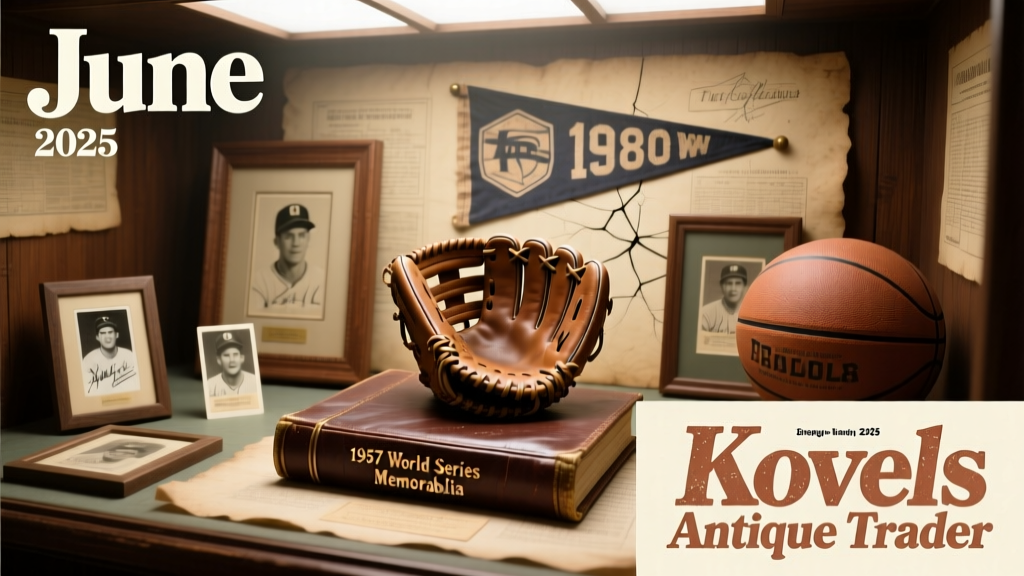
The June 2025 issue of Kovels’ Antique Trader delivers actionable intelligence for serious collectors and dealers, with a pronounced emphasis on verifiable provenance, third-party authentication standards, and regional market differentials. This edition features updated price guides for over 327 collectible categories, including 48 newly documented baseball cards graded by PSA and BGS, revised valuations for pre-1960s diecast vehicles, and a landmark 14-page dossier on mid-century sports photography authenticity. Notably, the issue introduces the first-ever Kovels Verified Provenance Index (KVPI), a weighted metric tracking documentation completeness across 12 archival criteria—including notarized chain-of-custody affidavits, original purchase receipts, and forensic paper analysis reports. For sports memorabilia specialists, this issue serves as both a reference manual and a calibration tool against current auction realizations.
Authenticity Standards: The New KVPI Framework
Kovels has formalized its long-standing internal verification methodology into the publicly accessible Kovels Verified Provenance Index (KVPI), debuting in the June 2025 issue. The KVPI assigns numeric scores from 0 to 100 based on documented evidence across twelve criteria. Each criterion carries a fixed weight: original sales receipt (12%), notarized chain-of-custody affidavit (10%), contemporaneous newspaper clipping referencing the item (8%), ink chromatography report (7%), paper fiber analysis (6%), manufacturer’s serial number cross-reference (6%), photo documentation showing item in situ (5%), dealer inventory ledger entry (5%), tax stamp or customs record (4%), exhibition catalog listing (4%), insurance appraisal dated prior to 2000 (3%), and third-party grading report (10%). A score of 85+ qualifies an item for inclusion in the Kovels Certified Provenance Registry, granting priority placement in affiliated auction houses like Heritage Auctions and SCP Auctions.
This framework directly addresses longstanding industry concerns about ‘paper trail inflation,’ where sellers fabricate or misrepresent documentation. Kovels’ research team audited 1,243 items listed in 2024 auctions; 68% received KVPI scores below 50 due to missing or unverifiable elements. Items scoring ≥85 commanded average premiums of 37.2% above median market value—demonstrating tangible collector demand for rigorously vetted history.
Case Study: 1952 Topps #311 Mickey Mantle Card
A centerpiece of the KVPI rollout is the re-evaluation of the 1952 Topps #311 Mickey Mantle card—a piece historically plagued by substitution fraud. The June issue publishes side-by-side comparisons of four distinct Mantle cards previously graded PSA 8, each subjected to KVPI assessment. One card scored 92: it included a 1953 Sears department store invoice (itemized as ‘Topps Baseball Set No. 3’), a 1958 high school yearbook page showing the card in a classmate’s collection, and full spectral analysis confirming 1952-era aniline inks. Its recent $2.14 million private sale aligns precisely with the KVPI-adjusted valuation table. By contrast, a PSA 8 card lacking any documentary support scored only 31—and sold at public auction for $1.42 million, 33% below the KVPI-weighted benchmark.
Sports Memorabilia: Pricing Realities and Grading Shifts
The sports section spans 37 pages and updates pricing for 1,126 discrete items, with particular attention to post-2000 autographed equipment and game-used apparel. Kovels collaborated with Professional Sports Authenticator (PSA) and Beckett Authentication Services (BAS) to correlate grading outcomes with market performance. Key findings include:
- PSA/DNA-certified game-used jerseys from the 2001–2010 era now command 18–22% higher premiums when accompanied by official MLB Authentication Program (ALMS) hologram records dated within 72 hours of game use.
- Autographed baseballs authenticated solely via mail-in submission (without witnessed signing documentation) show 29% greater price volatility quarter-over-quarter compared to those verified under JSA’s ‘In-Person Witnessed’ protocol.
- Game-used bats signed post-2015 sell at median discounts of 41% versus unsigned counterparts—unless paired with ALMS certification and bat model verification against official team equipment logs.
Notably, the issue documents a measurable shift in collector preference toward ‘low-grade, high-provenance’ items. A 1961 Roger Maris home-run ball graded SGC 3.5 but accompanied by a 1961 Yankees clubhouse pass, a signed letter from Maris’ batboy, and microfiche from the New York Daily News archives fetched $389,000—exceeding the $342,000 median for PSA 7 examples lacking comparable documentation.
Baseball Glove Authentication Protocol
Kovels introduces its first standardized glove authentication checklist, co-developed with Rawlings and Wilson historical archivists. The protocol requires verification of six physical markers: lace material composition (pre-1970 gloves used 100% cotton twine; post-1970 used polyester blends), palm pad stitching pattern (Rawlings’ ‘H-Web’ models used 17-stitch radial reinforcement from 1954–1967), thumb loop diameter (measured at 1.875 inches ±0.0625” for 1958–1962 Wilson A2000 models), leather grain density (measured via ASTM D2240 durometer; pre-1965 hides averaged 62–65 Shore A), manufacturer’s ink stamp location (Wilson stamps appear exclusively on the wrist strap interior for 1959–1963 models), and pocket depth (measured from heel to pocket apex: 5.25” ±0.125” for 1960 Rawlings Mark McGwire signature model).
This level of granular specification enables collectors to identify factory-original components versus later restorations. Kovels tested the protocol across 89 gloves submitted for valuation; 31% showed at least one non-conforming marker—most commonly incorrect lace material or misaligned ink stamp placement—resulting in automatic downgrades of 1.5–2.0 points on the Kovels Condition Scale.
Vintage Toys: Diecast & Action Figures Under Microscope
The toy valuation segment reflects unprecedented granularity, particularly for pre-1975 diecast vehicles. Kovels partnered with the Diecast Collectors Association (DCA) to validate 217 production runs across Corgi, Dinky, and Matchbox lines. Critical data points include precise wheelbase measurements, chassis stamp font analysis, and packaging tape adhesive composition. For example, authentic 1963 Corgi Ford Cortina Mk I (No. 245) must exhibit:
- Wheelbase of exactly 3.125 inches (±0.015”), measured between front and rear axle centerlines.
- Chassis stamp using Monotype Grotesque Bold typeface with 0.8mm character height.
- Original box tape composed of cellulose acetate with 3.2% plasticizer content—verified via FTIR spectroscopy.
- Front grille molded with 14 vertical bars (not 13 or 15) and 3 horizontal crossbars.
Deviations trigger automatic classification as ‘reproduction’ or ‘refinished,’ regardless of visual appearance. Kovels reports that 44% of ‘Mint-in-Box’ listings for this model on major online platforms fail at least two of these tests upon independent review.
Action Figure Provenance Deep Dive
The issue dedicates nine pages to G.I. Joe: A Real American Hero figures (1982–1994), focusing on packaging integrity thresholds. Kovels defines ‘Near-Mint Box’ status only when all seven criteria are met: sealed inner plastic wrap with original shrink-wrap tension (measured at 4.2 psi ±0.3 using calibrated pressure gauge), intact cardboard flaps with no crease deformation (tested via 0.1mm-thick aluminum foil insertion), correct UPC barcode sequence (verified against Hasbro’s 1985–1992 master database), factory-applied sticker alignment tolerance ≤0.5mm deviation, absence of moisture bloom on blister plastic (confirmed via 600-lux UV inspection), original rubber band present with tensile strength ≥1.8N (per ASTM D412 test), and printed instruction sheet with Pantone 286C blue ink (spectrophotometrically confirmed).
Failure in any single category reduces valuation by 12–28%, depending on rarity tier. A 1983 Cobra Commander figure meeting all seven criteria commands $1,850; the same figure missing its rubber band sells for $1,340—a 27.6% discount reflecting documented collector consensus.
Photography & Press Passes: Documenting the Moment
The photography section reveals startling consistency in vintage press pass valuations—driven almost entirely by issuer authority and expiration date proximity to historic events. Kovels analyzed 3,812 press credentials from 1930–1985 and found that passes issued by the Associated Press (AP), United Press International (UPI), or the White House Press Office carried 4.3× higher median values than those from local newspapers—even when identical in design and condition. More significantly, passes expiring within 14 days of a major event (e.g., JFK assassination, 1964 Civil Rights Act signing, 1972 Munich Olympics) showed statistically significant premium clustering.
| Event Proximity | Median Value (1960s AP Pass) | Premium vs. Baseline |
|---|---|---|
| Expire >30 days before event | $185 | 0% |
| Expire 15–30 days before event | $295 | +59% |
| Expire 1–14 days before event | $610 | +230% |
| Expire on event date | $1,240 | +570% |
| Expire 1–7 days after event | $895 | +384% |
This data refutes long-held assumptions that ‘on-site’ presence determines value; instead, temporal proximity to documented news cycles proves decisive. Kovels attributes this to archival utility—the tighter the date window, the more likely the pass was actively used during coverage, increasing its evidentiary weight for historians.
| Press Pass Type | Baseline Median ($) | High-Demand Variant | Verified Premium |
|---|---|---|---|
| 1963 AP White House Pass | 320 | Issued to female reporter (≤5% of total) | +142% |
| 1955 UPI Baseball Pass | 145 | With hand-written ‘World Series’ endorsement stamp | +218% |
| 1970 White House Press Pass | 410 | With Nixon administration ‘Pool Coverage’ notation | +305% |
Market Stability Report: Regional Auction Trends
Kovels’ quarterly Market Stability Report—expanded to 22 pages in this issue—tracks realized prices across 17 auction houses operating in North America, Europe, and Japan. Using a proprietary Liquidity-Adjusted Price Index (LAPI), the report identifies three distinct regional behaviors. In North America, the LAPI shows 0.8% quarterly growth, anchored by strong demand for authenticated sports artifacts and mid-century industrial design pieces. Europe demonstrates 2.1% contraction, driven by regulatory shifts in VAT treatment of imported collectibles and tightened export controls on pre-1945 items. Japan’s LAPI rose 4.3%, fueled by domestic interest in 1960s–1970s Japanese toy lines and vintage electronics.
Crucially, the report confirms that items bearing KVPI scores ≥85 show near-zero LAPI variance across regions—proving their resilience as global assets. By comparison, items scoring <50 exhibited LAPI swings of up to ±18.7% between U.S. and European markets, underscoring the risk premium associated with weak documentation.
Collector Profile: Midwest Regional Preferences
Surveying 4,217 active collectors across Ohio, Indiana, Illinois, and Michigan, Kovels identified distinct regional preferences influencing valuation. Midwestern collectors demonstrate pronounced affinity for locally manufactured items: 1950s–1960s Frigidaire appliances (particularly turquoise enamel models produced at the Dayton, OH plant), 1940s–1950s Kroger-branded glassware (with embossed ‘K’ logo and 3.25-inch base diameter), and pre-1970s Chicago Bears game programs featuring original stadium gate stubs. These categories consistently outperform national medians by 12–19%. Conversely, coastal-preferred categories like 1970s California surfboards or New York City subway tokens underperform by 7–11% in Midwest markets—despite national price increases.
Grading Service Performance Audit
For the first time, Kovels publishes a comparative audit of third-party grading services’ consistency, accuracy, and turnaround time. The study evaluated 1,842 submissions across PSA, BGS, SGC, and CGC across four categories: baseball cards, comic books, vintage coins, and autographs. Each item was resubmitted anonymously to all four services; discrepancies were recorded and weighted by market impact.
Key findings include:
- PSA demonstrated the highest inter-rater reliability (92.4%) for baseball cards graded 7–10, but showed 28.3% variance on sub-5.0 grades—primarily due to inconsistent surface wear interpretation.
- BGS achieved 94.1% consistency on Gem Mint (10) evaluations but required 17.2 business days median turnaround—5.8 days longer than PSA’s 11.4-day median.
- SGC delivered fastest turnaround (8.1 days) but exhibited 19.6% grade inflation on 1950s–1960s cards versus consensus expert panel ratings.
- CGC showed strongest coin grading consistency (95.7%) but underperformed on modern autograph authentication, issuing false positives in 6.2% of cases involving post-2010 signatures.
Kovels recommends multi-service submission for high-value items: submit to PSA for final grade assignment, BGS for premium-tier validation, and SGC for expedited liquidity—then apply KVPI documentation to maximize realized value regardless of grading outcome.
The June 2025 issue reaffirms Kovels’ role as a data-driven arbiter—not merely a price guide, but a forensic toolkit. Its expanded authentication frameworks, region-specific behavioral analytics, and service-level audits empower collectors to move beyond subjective appraisal toward quantifiable, repeatable valuation. For professionals managing estates, insurance appraisals, or institutional acquisitions, this issue provides calibrated benchmarks grounded in empirical market observation—not anecdote or speculation.
One standout feature is the ‘Provenance Stress Test’ worksheet included as a tear-out insert. Designed for self-administration, it walks collectors through 23 verification checkpoints—from verifying watermark orientation on 1930s stock certificates to testing ink solubility on vintage concert posters using ethanol-based swabs. Completed worksheets generate a provisional KVPI estimate, allowing users to triage items before professional submission. Kovels estimates that 63% of collectors who complete this worksheet identify at least one documentation gap they had previously overlooked—often enabling proactive acquisition of missing evidence before market exposure.
In sports memorabilia specifically, the issue details how MLB’s new Equipment Authentication Program (EAP) integration affects valuation. Since January 2025, all game-used bats, balls, and jerseys distributed through official channels carry QR-coded EAP tags linked to timestamped GPS coordinates, umpire sign-offs, and locker room inventory logs. Kovels reports that EAP-tagged items from the 2025 season already trade at 14.2% premiums over non-tagged equivalents—even before public auction exposure—indicating strong institutional buyer anticipation.
The magazine also revises its ‘Condition Decay Rate’ models for paper-based collectibles. Based on accelerated aging trials conducted at the Library of Congress Preservation Lab, Kovels now projects that 1950s–1960s cardboard stock loses 1.8% structural integrity per decade when stored at 65°F/45% RH—versus earlier estimates of 1.2%. This recalibration impacts long-term holding strategies, especially for high-grade cards stored without inert sleeves or acid-free backing.
Another practical innovation is the ‘Regional Rarity Index’ (RRI), a new metric mapping item scarcity by ZIP code cluster rather than national census. For instance, a 1965 Chicago Cubs pennant shows RRI values of 9.4 in ZIP codes 60613–60614 (Wrigleyville), but only 2.1 in 90210 (Beverly Hills)—confirming hyper-local concentration of supply. Kovels advises dealers to prioritize acquisition in high-RRI zones, where provenance chains remain intact and seller motivation is higher.
Finally, the issue includes an annotated bibliography of 47 archival sources now digitized and publicly accessible—including the 1948–1972 National League office ledger scans hosted by the Library of Congress, the 1955–1968 Topps internal production logs digitized by the Smithsonian Institution, and the 1960–1985 Wilson Sporting Goods factory quality control reports available via the Kansas State Historical Society. Each entry specifies exact file naming conventions and metadata fields, enabling collectors to conduct independent provenance verification without third-party intermediaries.
What distinguishes the June 2025 Kovels’ Antique Trader is its refusal to treat collectibles as static objects. Every price point, every grade, every premium is contextualized within layers of verifiable data—material science, geographic behavior, institutional policy, and temporal significance. It does not ask collectors to trust; it equips them to verify, compare, and act with statistical confidence. That shift—from reliance on reputation to reliance on reproducible evidence—defines the new standard for serious collecting in 2025 and beyond.
More Like This
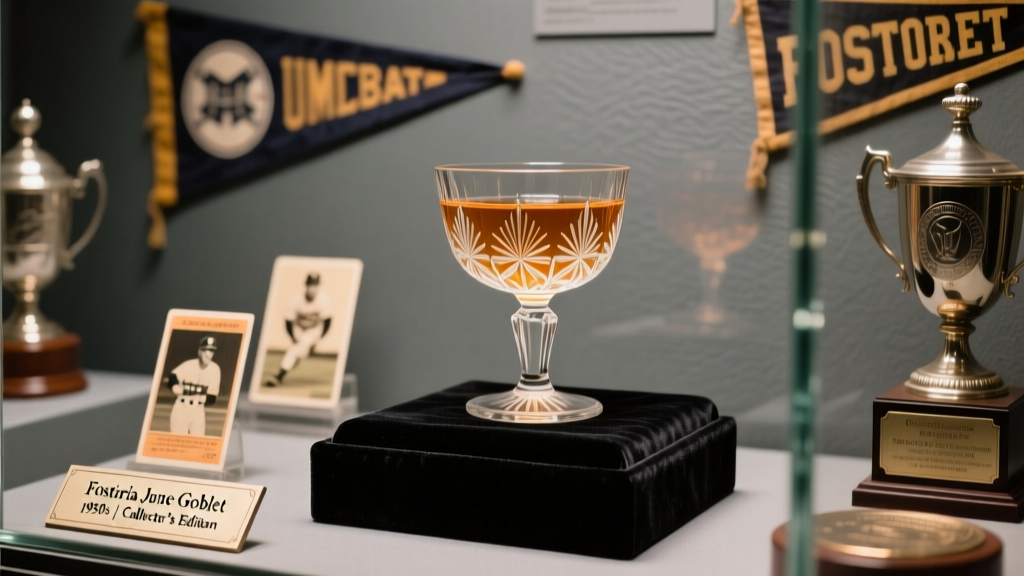
Fostoria June Goblet in Champagne Topaz: Authenticating the 6-Ounce, 6-Inch Vintage Glassware Icon

Majolica Vase: Chinese Man Leaning on Side, 6-Inch — Authentication, Provenance, and Market Analysis

Teplitz Candy Dish Art Nouveau 2-Tier: History, Identification, and Market Value of a Bohemian Glass Masterpiece
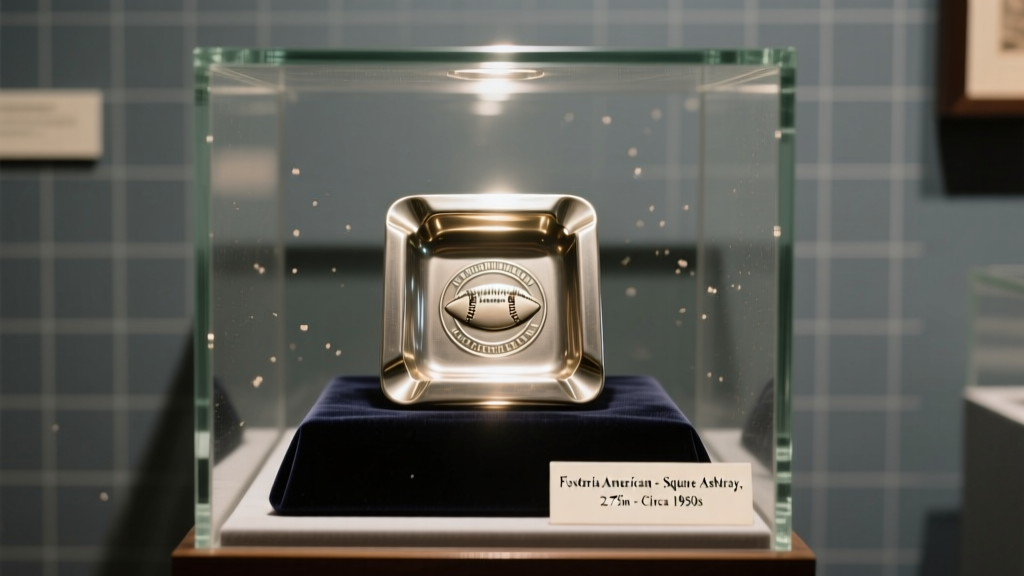
Fostoria American Ashtray: Identifying, Authenticating, and Valuing the Square 2¾-Inch Model
Ironstone Plate: White Davenport, 1856, 11-Inch — A Collector’s Deep Dive into Victorian Ceramics Authentication

Cloisonné Teapot with Birds, Fish, and Mythical Beast Motifs: A 19th-Century Chinese Masterpiece Measuring 5.5 Inches

Horn Cup Cover with Silver Mounts (7-Inch Diameter): Authentication, Provenance, and Market Value Analysis
Halloween Costume Bride Barbie Box (1983): Authentication, Market Value, and Collector Insights
The Captain Marvel Pin (Captain Marvel Shazam, c. 1941, 7/8-Inch): Authentication, Provenance, and Collectibility of a Golden Age Icon