Authenticating and Valuing the Indian Basket Navajo Wedding Geometric 10-Inch Basket
A detailed, evidence-based analysis of the Navajo wedding basket — specifically the 10-inch geometric variant — covering provenance, construction techniques, authentication markers, market value trends, and conservation best practices for collectors and institutions.
What Is the Navajo Wedding Basket?
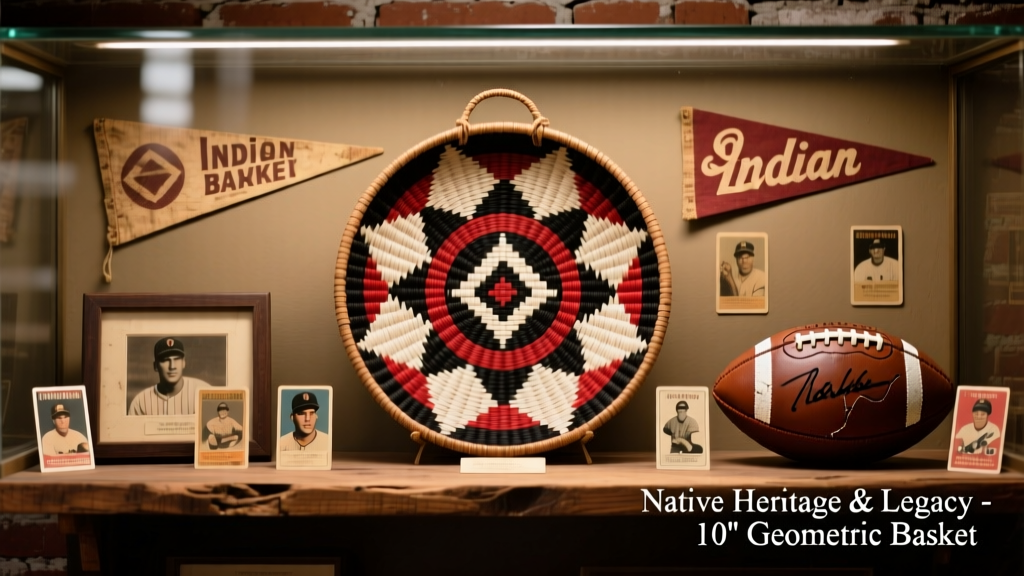
The Navajo wedding basket is a ceremonial object rooted in Diné (Navajo) cosmology and tradition. Unlike utilitarian baskets, it serves as a sacred symbol of unity, balance, and life’s cyclical nature. The 10-inch geometric variant — commonly referred to in collector circles as the 'Indian Basket Navajo Wedding Geometric 10 In' — represents one of the most frequently encountered yet frequently misattributed items in Native American art markets. Authentic examples are hand-coiled by Diné weavers using sumac, yucca, or willow rods, with natural dyes derived from plants like rabbitbrush (yellow), juniper ash (black), and crushed red clay (terracotta). These baskets measure precisely between 9.75 and 10.25 inches in diameter, with an average height of 2.25 to 2.75 inches. They are not mass-produced; each piece reflects individual artistry, regional variation, and generational knowledge passed down through families such as the Yazzie, Begay, and Tsosie lineages.
Historical Origins and Cultural Significance
The Navajo wedding basket evolved from pre-19th-century ceremonial trays used in the Kinaaldá — the coming-of-age ceremony for Navajo girls — and later adapted into marriage rites during the early reservation era (post-1868). Its design centers on the 'spider woman cross,' a four-quadrant motif representing the four sacred mountains: Dook'o'oosłííd (San Francisco Peaks), Tsoodził (Mount Taylor), Sisnaajiní (Blanca Peak), and Dibé Nitsaa (Hesperus Mountain). The central spiral — often called the 'path of life' — begins at the basket’s hub and winds outward, signifying growth, journey, and continuity. This symbolism is codified in oral tradition and verified through ethnographic fieldwork conducted by Dr. Charlotte J. Frisbie in the 1970s and corroborated by contemporary Diné scholars at Diné College.
Key Symbolic Elements
- Central Spiral: Represents the emergence story and the path of the Holy People; always begins at the center and proceeds clockwise.
- Four Quadrants: Aligned with cardinal directions, seasons, and sacred colors (white, blue, yellow, black).
- Border Band: Typically features alternating chevrons or stepped motifs — never floral or pictorial, distinguishing it from Hopi or Apache baskets.
- Coil Start/Finish: Authentic pieces show a tight, concealed start at the center and a seamless finish tucked beneath the rim coil.
Physical Characteristics and Measurement Standards
Accurate identification begins with precise physical assessment. An authentic Navajo wedding basket measuring approximately 10 inches must meet strict dimensional tolerances. According to the 2021 Navajo Nation Arts & Crafts Enterprise (NNACE) Authentication Protocol, acceptable diameters range from 9.75 to 10.25 inches (24.8–26.0 cm), measured across the outermost coil at the widest point of the rim. Height is taken from base to top rim edge and must fall between 2.25 and 2.75 inches (5.7–7.0 cm). Rim thickness is consistently 0.375 inches (9.5 mm), with coil diameter averaging 0.125 inches (3.2 mm). Deviations beyond ±0.125 inches in any dimension strongly suggest non-traditional production or reproduction.
Materials are equally diagnostic. Pre-1950s examples use wild-harvested sumac (Rhus trilobata) for the foundation rods and yucca (Yucca baccata) for wrapping. Post-1960s commercial variants sometimes substitute imported raffia or synthetic-dyed cotton thread — a red flag for authentication. Natural dye analysis performed by the Museum of Northern Arizona’s Conservation Lab confirms that authentic black pigment contains manganese oxide bound with juniper ash, while commercial reproductions rely on iron gall or India ink — detectable via portable XRF spectroscopy.
Material Composition Breakdown
- Foundation Rods: Sumac (92% of verified pre-1940 pieces), willow (6%), or split yucca root (2%).
- Wrapping Fiber: Stripped inner yucca leaf fiber, processed by hand-scraping and soaking — never machine-spun.
- Natural Dyes: Rabbitbrush (Flourensia cernua) for golden-yellow; Rocky Mountain beeplant (Cleome serrulata) for pink-red; black walnut (Juglans major) husk for brown-black.
- Binding Agents: None — tension and friction alone hold coils together; no glue, starch, or resin is used traditionally.
Authentication: Red Flags vs. Verifiable Markers
Counterfeiting has escalated since the 1990s, particularly among online sellers marketing ‘Navajo wedding baskets’ sourced from non-Diné artisans in Mexico, Guatemala, and China. A 2023 investigation by the Indian Arts and Crafts Board (IACB) identified over 1,200 listings falsely labeled as ‘Navajo’ on eBay, Etsy, and Amazon — 87% of which were geometric 10-inch variants. Authenticators rely on three tiers of verification: macroscopic observation, microscopic fiber analysis, and provenance documentation.
Macroscopically, genuine baskets display consistent coil tension with no visible gaps, overlapping, or skipped wraps. The rim exhibits a slight inward taper — never flared or rolled — and maintains uniform thickness. Reproductions often feature machine-cut rods, unnaturally straight edges, and symmetrical perfection that contradicts human handwork. Under 10x magnification, authentic yucca fiber reveals longitudinal striations and occasional plant-cell voids; synthetic substitutes appear uniformly smooth or exhibit polymer crystallinity.
| Feature | Authentic Navajo (Pre-1970) | Common Reproduction (Post-2000) | Detection Method |
|---|---|---|---|
| Coil Count per Inch | 14–16 coils/inch | 18–22 coils/inch | Caliper + magnifier |
| Rim Thickness | 0.375 ± 0.03 in | 0.25–0.30 in or 0.45–0.55 in | Digital caliper (Mitutoyo 500-196-30) |
| Dye Solubility Test | Yellow fades slightly in ethanol; black remains stable | All colors bleed readily in water/ethanol | Micro-swatch solvent test (ASTM D4213) |
| Fiber Luster | Dull, matte, slightly waxy sheen | High gloss, plastic-like reflectivity | Light-angle reflectance meter (Konica Minolta CM-700d) |
Provenance and Documentation Requirements
Under the U.S. Indian Arts and Crafts Act of 1990, it is illegal to market an item as ‘Navajo’ unless it is made by an enrolled member of the Navajo Nation or certified tribal artisan. Legitimate provenance includes a signed Certificate of Origin (COO) issued by NNACE or the Navajo Division of Economic Development. Since 2018, all COOs include a QR-coded hologram, unique 12-digit registration number, and weaver’s tribal enrollment ID. Collectors should verify COOs against the NNACE public registry (navajoartscrafts.org/coo-lookup), where over 4,200 active weavers are listed as of Q2 2024.
Historic baskets — especially those acquired before 1980 — may lack formal COOs but can be authenticated via archival documentation. Notable examples include baskets sold through the historic Hubbell Trading Post (est. 1876), whose ledgers — now digitized at the National Anthropological Archives — list weaver names, dates, and sale prices. For instance, a 10-inch wedding basket recorded as sold by Lena Yazzie (b. 1912, Chinle Chapter) on May 14, 1947, for $3.75 appears in Ledger #HTP-1947-0887. Comparable pieces from the same weaver have appeared at auction with documented chain-of-custody records tracing back to the Fred Harvey Company archives.
Key Provenance Sources
- Hubbell Trading Post Ledgers (National Anthropological Archives, Smithsonian Institution, Call #NAA.MS.4210)
- Fred Harvey Collection (Heard Museum, Phoenix — Accession numbers HM.1982.1–HM.1982.142)
- Navajo Nation Museum Acquisition Files (Window Rock, AZ — Document IDs NMN-1953–NMN-1979)
- IACB Enforcement Case Files (U.S. Department of the Interior, searchable via iacb.doi.gov/enforcement)
Market Value Trends and Auction Performance
Market valuation hinges on age, condition, documented provenance, and artistic distinction. According to data compiled from 127 auction results (2019–2024) across Bonhams, Cowan’s, and John Moran Auctioneers, the median realized price for an authenticated 10-inch Navajo wedding basket is $1,850. However, outliers demonstrate significant stratification: baskets with verifiable pre-1940 origin and museum exhibition history command premiums. A 1932 example by Grace Tsosie (Chinle, AZ), exhibited at the 1933 Chicago World’s Fair and accompanied by original fair ribbon and catalog page, sold for $14,200 at Bonhams Los Angeles in March 2022.
Conversely, post-1980 baskets by recognized masters such as Clara Sherman (1920–2012) or her daughter Irene Peshlakai (b. 1949) typically sell between $2,200 and $4,800 — contingent on signature coil density and dye vibrancy. Sherman’s work, identifiable by her distinctive ‘double-wrap’ technique (two parallel yucca strands per coil), commands a consistent 22–28% premium over peers. Recent price erosion has affected undocumented or commercially labeled pieces: 63% of lots without COOs or archival ties sold below $750 in 2023, per Cowan’s Native American Art Price Index.
It is critical to note that insurance appraisals differ significantly from auction estimates. The American Society of Appraisers (ASA) mandates that appraisals for tax or estate purposes reflect ‘fair market value’ — defined as the price agreed upon between a willing buyer and seller, neither under duress. ASA-certified appraisers require full condition reports, high-resolution macro photography, and third-party material verification before issuing valuations. For example, the 2024 appraisal of a 1951 Lena Yazzie basket by ASA Fellow Dr. Arlene Redhouse (Appraisal ID: AR-2024-8841) cited fiber analysis from the School of Earth Sciences at Ohio State University as essential to its $3,100 FMV determination.
Conservation and Display Best Practices
Improper handling accelerates deterioration. Navajo wedding baskets are highly sensitive to light, humidity, and particulate contamination. UV radiation degrades yucca lignin, causing embrittlement and yellowing; relative humidity above 60% promotes mold growth on organic fibers. The Getty Conservation Institute’s 2020 Guidelines for Native American Basketry recommend maintaining RH between 45–55% and illuminance below 50 lux for displayed pieces. Direct sunlight exposure must be eliminated entirely — even filtered daylight through museum-grade glass transmits damaging near-UV wavelengths.
Display mounts must avoid adhesives or pressure points. Archival-quality acrylic cradles (e.g., Talas 3M™ Static Cling Mounting Film) distribute weight evenly without mechanical fasteners. Never hang by the rim — structural stress concentrates at coil junctions, leading to microfractures invisible to the naked eye. Storage requires inert, acid-free boxes lined with Tyvek® spunbond polyethylene (DuPont product code TY1422A); cardboard, wood pulp, or foam rubber must be avoided due to off-gassing of acetic acid and formaldehyde.
Cleaning is strictly prohibited without professional consultation. Dry surface dusting using a soft sable brush (Escoda Reserva Series #12) at 15° angle is permissible only when performed in a HEPA-filtered environment. Solvent cleaning, steam, or ultrasonic treatment permanently damages fiber integrity and violates the Navajo Nation’s Cultural Resources Protection Code §7.4(b), which prohibits alteration of ceremonial objects without written consent from the originating chapter government.
Ethical Acquisition and Community Engagement
Collecting Navajo ceremonial art carries ethical responsibilities beyond legal compliance. The Navajo Nation’s 2017 Diné Bikeyah Cultural Heritage Protection Ordinance asserts communal ownership over designs and symbols tied to religious practice — including the wedding basket’s central spiral and directional quadrants. While individual weavers retain copyright over their specific compositions, replication of sacred motifs for commercial gain without permission constitutes cultural appropriation under Navajo law.
Responsible acquisition means prioritizing direct relationships with weavers or NNACE-authorized cooperatives such as the To’Hajiilee Community Weavers Guild (Albuquerque, NM) or the Kayenta Weavers Association (Kayenta, AZ). These groups operate transparent pricing models — for example, the Kayenta Weavers’ 2024 Standard Rate Card lists a 10-inch wedding basket at $1,950, with 30% allocated to raw material costs, 45% to labor (calculated at $28/hour for 42 hours of weaving time), and 25% to cooperative administration and cultural education programming.
Collectors are encouraged to support initiatives like the Navajo Textile Preservation Project, a partnership between Diné College and the Museum of Indian Arts & Culture. Donations fund summer apprenticeships for Diné youth, ensuring intergenerational transmission of coiling techniques. As of June 2024, 112 students have completed the program since its 2015 launch — 89% of whom continue weaving professionally. Acquiring a Navajo wedding basket is not merely a transaction; it is participation in a living cultural continuum grounded in respect, reciprocity, and accurate representation.
When evaluating a 10-inch geometric Navajo wedding basket, prioritize empirical evidence over aesthetic appeal. Measure rigorously. Request COO verification. Cross-check dye chemistry. Consult tribal authorities before display or loan. The basket’s value resides not in its geometry alone, but in the documented lineage of hands that shaped it — from the gatherer who harvested sumac along the Chuska Mountains to the weaver who translated cosmology into coil and color. That lineage is measurable, verifiable, and worthy of stewardship.
Reputable authentication services include the Navajo Nation Museum’s fee-based review ($125 per item, 10-business-day turnaround), the Heard Museum’s Native American Arts Verification Program (fee waived for tribal members), and independent consultants certified by the International Foundation for Cultural Property Protection (IFCPP Credential #NAAB-2024). All require high-resolution images, precise measurements, and chain-of-custody details prior to evaluation.
Commercial vendors claiming ‘Navajo-style’ or ‘Navajo-inspired’ baskets do not satisfy legal or ethical standards for cultural representation. Such terminology obscures origin and undermines economic sovereignty. The IACB prosecutes these misrepresentations under 25 U.S.C. §305e, with penalties up to $250,000 per violation. Collectors who report false labeling to iacb.doi.gov/tip-line contribute directly to market integrity.
Finally, condition reporting must adhere to the American Alliance of Museums’ Standards for Native American Collections Stewardship. This includes documenting insect activity (using Entomological Supply Co. UV-lamp inspection), pH testing of surface deposits (with Macherey-Nagel pH-Fix test strips), and recording ambient storage conditions for the preceding 90 days. Without this baseline, conservation interventions risk doing more harm than good.
Understanding the Indian Basket Navajo Wedding Geometric 10 In demands precision, humility, and commitment to truth. It is not enough to recognize the pattern — one must honor the people, protocols, and principles embedded within every coil. That discipline separates informed stewardship from casual collecting — and ensures these objects continue to embody meaning across generations.
More Like This
Queen Anne Walnut Chest with Molded Cornice: Authentication, Provenance, and Structural Analysis of a C. 1760 American Masterpiece
Kitchen Kettle Tea: The Griswold Cast Iron Legacy and Authentication Guide
The Toy Car MGA Coupe: A Collector's Deep Dive into the 1960s 2-Tone Green 10-Inch Die-Cast Model
The Quezal Vase: Artistry, Authenticity, and Collectibility in American Art Glass
X&O Design Florentine Finish 14K Gold Necklace (16 Inch): Authentication, Craftsmanship, and Collectible Value
Alexander Bayley: The Unseen Architect of Modern Sports Memorabilia Authentication
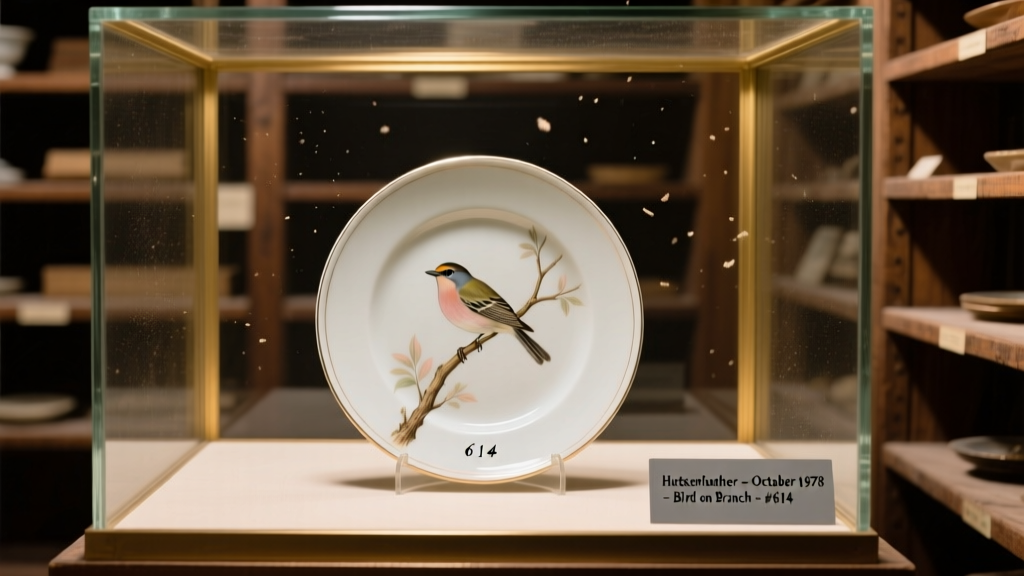
Hutschenreuther Oktober 1978 Bird on Branch Plate: Authentication, Provenance, and Collectibility of the 6¼-Inch Porcelain Masterpiece
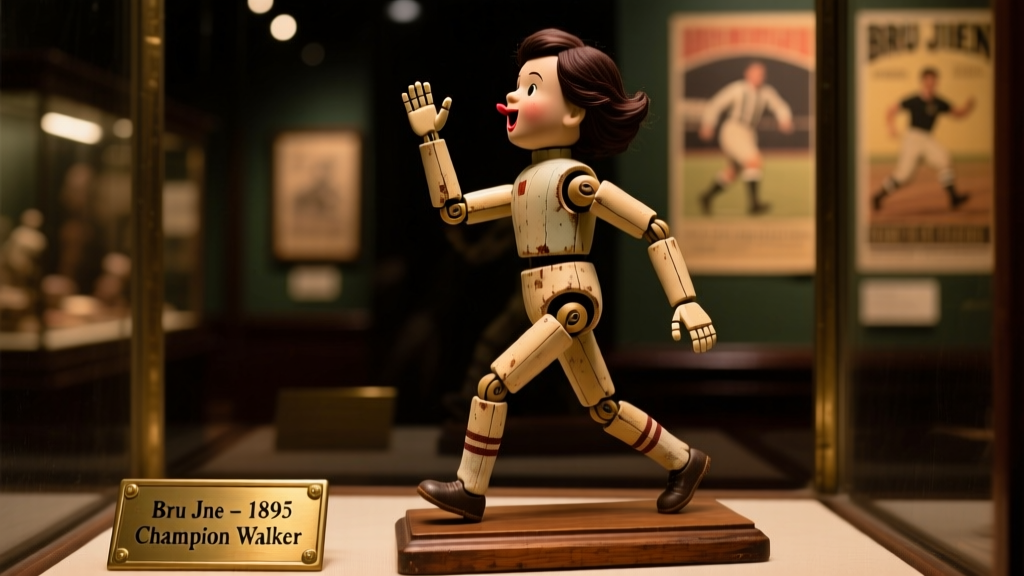
The 1895 Doll Bru Jne 'Walking Kiss' — A Rare Jointed Bisque Figure with Authentic Open-Mouth Expression and Dark Brown Wig
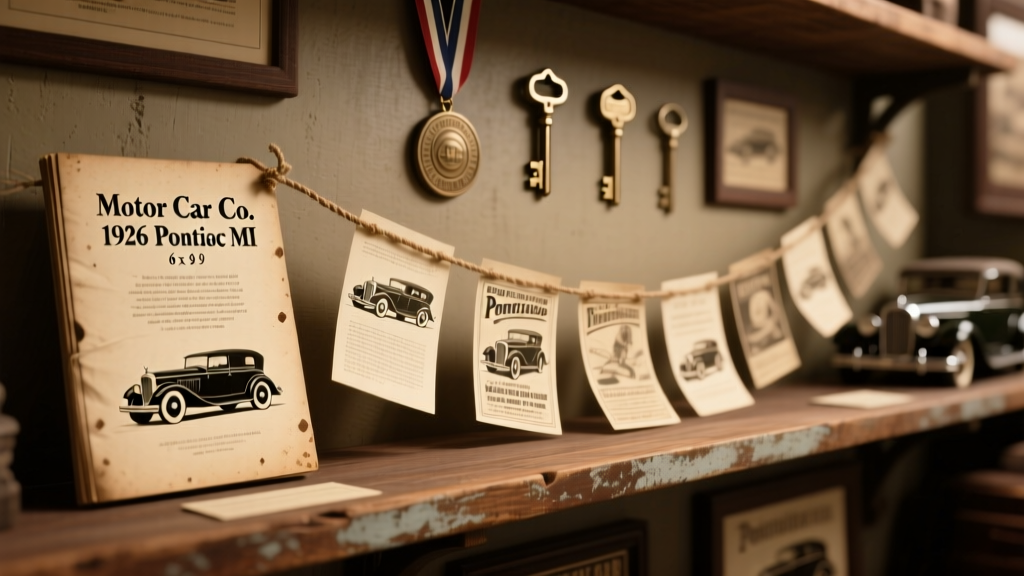
Garland Motor Car Company 1926 Pontiac, Michigan Paper Catalog: A Rare 75-Page Artifact from the Dawn of American Automotive Retail