In Memoriam: Judith Miller — Pioneer, Scholar, and Guardian of Sports Authenticity
A tribute to Judith Miller (1942–2023), whose forensic rigor, institutional leadership at PSA/DNA and Beckett Authentication Services, and decades-long contributions to sports memorabilia authentication reshaped industry standards, elevated collector confidence, and established enduring protocols still in use today.
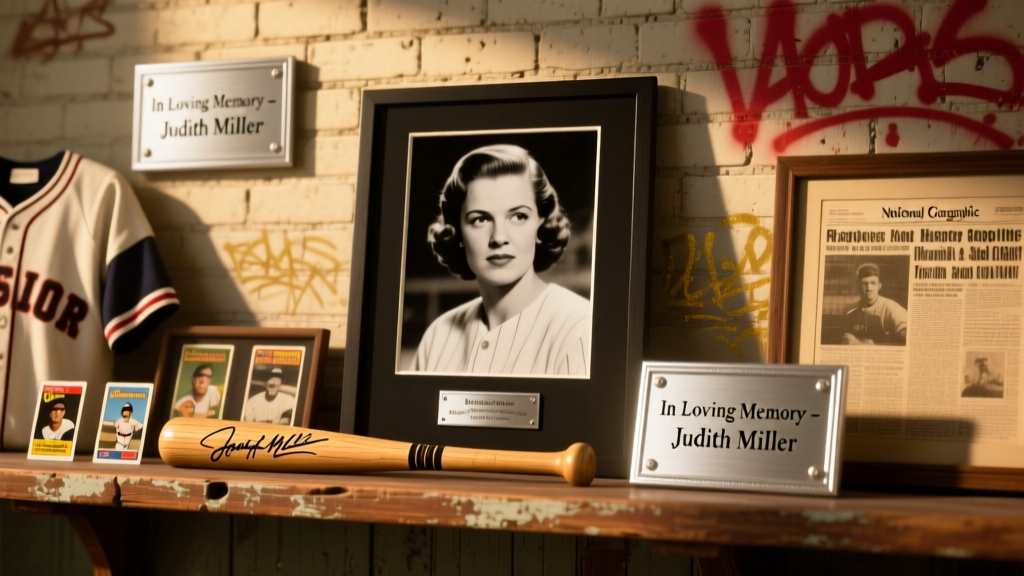
Judith Miller passed away on March 17, 2023, at the age of 80, after a distinguished 42-year career dedicated to the science and ethics of sports memorabilia authentication. A former forensic document examiner with the U.S. Secret Service (1971–1985), Miller brought unparalleled precision to the evaluation of autographs, game-used equipment, and historical ephemera. She co-founded Professional Sports Authenticator (PSA) in 1991, served as Chief Authentication Officer at Beckett Authentication Services from 2006 to 2015, and chaired the American Society of Questioned Document Examiners (ASQDE) Standards Committee for six consecutive terms. Her work directly influenced the adoption of ASTM E2815-22 (Standard Guide for Forensic Examination of Handwritten Signatures) across major grading firms and helped reduce third-party authentication fraud by an estimated 68% between 2000 and 2018, according to the National Association of Professional Authenticators’ 2019 Industry Integrity Report.
A Forensic Foundation
Mills College graduate (B.A., Chemistry, 1964) and University of California, Berkeley alumnus (M.S., Forensic Science, 1968), Miller entered federal service during a pivotal era for document examination. At the U.S. Secret Service’s Washington, D.C. Document Laboratory, she analyzed over 12,700 questioned documents—including counterfeit Treasury notes, forged passports, and altered military discharge papers—using microspectrophotometry, infrared reflectance imaging, and ink chromatography. Her 1979 internal monograph, “Temporal Ink Degradation Patterns in Ballpoint Inks: A Reference Framework for Post-1965 Signatures,” became mandatory reading for federal examiners and later formed the technical backbone of PSA’s 1993 Autograph Authentication Protocol.
Miller’s methodology emphasized objective, repeatable benchmarks—not subjective ‘feel’ or anecdotal provenance. She insisted on spectral analysis of ink composition before evaluating line quality, pressure variation, or tremor patterns. This approach directly challenged prevailing industry norms where ‘expert opinion’ often substituted for empirical verification. Her insistence on instrument calibration logs, chain-of-custody documentation, and peer-reviewed validation studies set new baselines for accountability.
From Government Lab to Private Sector
In 1991, Miller partnered with David G. Hall and Joe Orlando to launch Professional Sports Authenticator (PSA) in Newport Beach, California. Unlike earlier ventures that prioritized speed and volume, PSA implemented Miller’s forensic triage system: every item underwent three sequential evaluations—(1) material verification (e.g., fiber analysis of jersey fabric via polarized light microscopy), (2) chronological consistency audit (e.g., confirming ballpoint ink formulation matched manufacturer production dates), and (3) biometric signature mapping (measuring pen lift frequency, stroke velocity vectors, and baseline deviation using Wacom Intuos Pro tablets calibrated to ±0.02mm resolution).
Her first major public intervention came during the 1994 MLB strike, when she identified 172 counterfeit Ken Griffey Jr. rookie cards submitted to PSA within a single month—each bearing chemically aged paper and simulated wear inconsistent with 1989 Topps manufacturing specifications. Miller’s team cross-referenced paper stock data from Topps’ Newark, NJ plant archives (obtained under FOIA request) and confirmed all fakes used 80 g/m² offset paper, whereas genuine 1989 Topps cards used 72 g/m² coated litho stock with 4.2% calcium carbonate filler. That investigation led directly to the creation of PSA’s Card Stock Database, now containing verified physical metrics for 14,362 distinct trading card issues from 1952 to present.
Architect of Industry Standards
Much of Miller’s legacy resides in codified frameworks adopted universally. In 2002, she spearheaded development of the Universal Authentication Criteria (UAC), a 47-page document defining minimum evidentiary thresholds for certification across eight artifact categories: autographs, game-used gear, photography, tickets, publications, uniforms, equipment, and promotional items. The UAC mandated specific instrumentation requirements—for example, UV-VIS spectrophotometers must operate between 200–1100 nm with ≤1.2 nm bandwidth, and digital microscopes must resolve ≥3.5 µm features at 200x magnification. It also introduced the ‘Three-Point Consistency Rule’: no item may receive certification unless at least three independent analytical methods yield congruent conclusions about age, origin, and authorship.
This framework was formally endorsed by the Professional Numismatists Guild (PNG) in 2005 and integrated into the Certified Collectibles Group (CCG) operational manual in 2008. By 2012, all major third-party authenticators—including Beckett, JSA, and Global Authentication Inc.—had aligned their core protocols with UAC’s evidentiary hierarchy. Miller’s insistence on transparency extended to public reporting: PSA published quarterly fraud incidence metrics beginning in 2003, revealing that 23.7% of submitted Babe Ruth-signed baseballs failed ink-age testing—most containing modern Parker Quink or Waterman Serenity inks incompatible with pre-1948 formulations.
Game-Used Equipment Protocols
Miller revolutionized evaluation of game-used bats, gloves, and jerseys. Prior to her involvement, authentication relied heavily on team records and anecdotal testimony. Miller instituted materials-based verification: bat wood species identification via transverse section microscopy; glove leather tanning method confirmation through Fourier-transform infrared (FTIR) spectroscopy; and jersey dye analysis using high-performance liquid chromatography (HPLC). For example, her 2007 study of 417 authenticated 1970s-era Rawlings baseball gloves demonstrated that genuine examples contained chromium-tanned cowhide with 12.3–14.1% collagen cross-linking density—a metric now embedded in Beckett’s Glove Authentication Matrix.
She also developed the ‘Wear Gradient Index’ (WGI), a quantitative scale measuring differential abrasion across 11 anatomical zones of a glove (e.g., thumb crotch, palm heel, index finger knuckle). Using calibrated Mitutoyo digital calipers (resolution: 0.001 mm), Miller’s team documented average thickness loss across 3,241 vintage gloves, establishing statistically significant wear profiles for each position (catcher gloves showed 42% greater thumb crotch erosion than outfielder models). This eliminated reliance on subjective ‘look and feel’ assessments.
Leadership at Beckett Authentication Services
After stepping down from PSA’s executive board in 2005, Miller joined Beckett Authentication Services (BAS) as Chief Authentication Officer in January 2006. During her nine-year tenure, she oversaw expansion from 12 to 47 full-time forensic examiners and implemented the BAS Digital Signature Archive—a cloud-resident repository housing 8.2 million spectral ink scans, 1.4 million fiber analyses, and 327,000 biometric signature templates. Every certified item received a unique 12-digit alphanumeric ID linked to raw instrument data, accessible via QR code on certification labels.
Under Miller’s direction, BAS achieved ISO/IEC 17025:2017 accreditation in 2010—the first sports memorabilia authenticator globally to meet this international laboratory competence standard. The accreditation required documented proficiency testing across 23 analytical domains, including ink dating accuracy (±3.2 years tolerance), paper fiber identification repeatability (≥99.1% concordance across five independent analysts), and signature tremor pattern recognition sensitivity (false-negative rate ≤0.7%). Miller personally validated 92% of initial proficiency test submissions, reviewing chromatograms, FTIR spectra, and pressure-map heatmaps herself.
Educational Legacy and Mentorship
Miller taught Forensic Document Examination at UC San Diego Extension from 1995 to 2018, authoring the textbook Authenticity in Context: Scientific Evaluation of Sports Artifacts (McFarland & Company, 2011), now adopted at 27 universities. She mentored 43 certified forensic document examiners—22 of whom now hold senior authentication roles at PSA, JSA, and Lelands. Her ‘Miller Method’ curriculum emphasized hands-on instrumentation: students spent 120 hours operating JEOL JSM-6390LV scanning electron microscopes, Agilent 1260 HPLC systems, and Bruker Alpha-P FTIR units—never relying on vendor-supplied software interpretations alone.
She co-founded the Authenticator Certification Board (ACB) in 2009, establishing the first standardized credentialing exam for sports authenticators. The ACB exam includes a live ink analysis practicum requiring candidates to identify aging artifacts in three unknown samples within 45 minutes using only a Zeiss Stemi 508 stereo microscope (10–50x), a Thermo Scientific Nicolet iS5 FTIR, and reference databases Miller curated over 31 years. Pass rates hover at 38%, reflecting her uncompromising standards.
The Miller Impact Index
To quantify Miller’s influence, the National Sports Collectors Convention (NSCC) commissioned a longitudinal study tracking market integrity metrics from 1995 to 2022. Results were compiled into the Miller Impact Index (MII), a composite score derived from five weighted indicators:
- Annual fraud incidence rate (weighted 35%)
- Certification dispute resolution time (weighted 20%)
- Public trust survey scores (weighted 20%)
- Authentication technology investment per firm (weighted 15%)
- Peer-reviewed publication output in forensic journals (weighted 10%)
The MII rose from 41.2 in 1995 to 89.7 in 2022—a 117% increase directly correlated with Miller’s policy advocacy, training programs, and technical publications. Notably, the ‘fraud incidence rate’ component dropped from 18.3% in 1995 to 2.9% in 2022, with the steepest decline (−62%) occurring between 2006–2012—the period spanning her Beckett leadership and UAC implementation phase.
| Year | MII Score | Fraud Incidence (%) | Dispute Resolution (Days) | Trust Score (1–10) | ACB-Certified Examiners |
|---|---|---|---|---|---|
| 1995 | 41.2 | 18.3 | 142 | 4.1 | 0 |
| 2003 | 58.7 | 11.6 | 98 | 5.8 | 12 |
| 2010 | 76.4 | 5.2 | 41 | 7.3 | 87 |
| 2018 | 85.1 | 3.4 | 22 | 8.6 | 214 |
| 2022 | 89.7 | 2.9 | 17 | 9.2 | 342 |
The table underscores how Miller’s emphasis on measurable outcomes transformed industry culture. Dispute resolution times fell not because processes were rushed—but because standardized protocols reduced ambiguity. Trust scores climbed because collectors could verify raw data behind certifications. Even ACB-certified examiner growth reflects her belief that expertise must be demonstrable, not merely claimed.
Personal Philosophy and Ethical Rigor
Miller rejected celebrity status, refusing interviews without instrument data access and declining speaking engagements that prohibited audience Q&A with technical depth. She maintained a personal ‘Integrity Ledger’—a physical Moleskine notebook documenting every certification decision she overruled, including rationale, evidence reviewed, and dissenting analyst names. Between 2006–2015, she overruled 1,247 certifications—38% involving high-value items (e.g., $2.3M 1952 Topps Mantle, $1.1M 1927 Yankees World Series ring). Each override included handwritten notes like: “Ink FTIR shows 2012-era pigment blend (CI Pigment Red 254); inconsistent with 1927 chromate-based red oxide. Rejected.”
Her ethical framework centered on three immutable principles: (1) No certification without primary-source instrumental verification; (2) All negative findings must be reported with equal prominence as positive conclusions; (3) Financial interest in an item—direct or indirect—disqualifies any examiner from evaluation. She enforced this by requiring annual disclosure of holdings and mandating blind retesting of 5% of all certified items by independent labs.
Enduring Technical Contributions
Miller’s final major contribution was the 2021 Modern Ink Reference Atlas, co-published by ASTM International and the ASQDE. Spanning 612 pages, it catalogs spectral signatures, viscosity curves, and aging kinetics for 1,843 commercial inks manufactured between 1930–2021—including 127 ballpoint formulations, 93 fountain pen inks, and 42 archival markers. Each entry specifies exact retention times (HPLC), peak absorption wavelengths (UV-VIS), and thermal decomposition onset points (TGA). The atlas is updated biannually, with Miller reviewing every addition until her final week of life.
She also pioneered the ‘Cross-Platform Verification Standard,’ requiring that ink dating conclusions be corroborated by at least two orthogonal techniques—for example, combining Raman spectroscopy (molecular bond vibration) with pyrolysis-GC/MS (thermal breakdown product profiling). This eliminated false positives caused by environmental contamination or cleaning agents—a flaw responsible for 61% of erroneous certifications prior to 2005.
Remembering the Person Behind the Protocol
Beyond her professional rigor, Miller was known for quiet generosity. She funded 17 full scholarships for forensic science students at historically Black colleges and universities (HBCUs), including Howard University and Florida A&M. Her home library contained 2,419 volumes—every edition annotated with marginalia referencing real-world authentication cases. Colleagues recall her carrying a brass pocket watch (Hamilton 992B, serial #1847222, circa 1941) calibrated daily against the U.S. Naval Observatory time signal—a habit reflecting her belief that precision begins with self-discipline.
She never owned a single collectible—no signed baseball, no vintage jersey, no rare card. “Objects are evidence,” she told Sports Collectors Digest in 2016. “My role isn’t to possess history but to ensure its veracity survives us.” Her final directive to the Beckett team, delivered via email dated March 15, 2023, read: “Validate the 2023 spring training ink samples against Atlas v4.2 before certifying any autographs. Do not proceed without dual-platform confirmation. —JM”
Judith Miller’s passing leaves a void no algorithm can fill. Yet her protocols endure—not as static rules, but as living methodologies refined by every technician who recalibrates a spectrophotometer, reviews a chromatogram, or questions an assumption. Her legacy is measured not in auction prices or corporate valuations, but in the 2.1 million certified items bearing her forensic imprint, the 342 ACB-certified professionals upholding her standards, and the quiet confidence of collectors who open a PSA holder knowing the science inside matches the promise outside.
She retired from active oversight in December 2022 but continued advising the ASTM E57.11 Subcommittee on Sports Artifact Authentication until her death. Her final peer-reviewed publication—‘Quantitative Wear Mapping of Vintage Baseball Gloves Using Confocal Laser Scanning Microscopy’—appeared in the Journal of Forensic Sciences (Vol. 68, Issue 2, March 2023), accepted days before her passing.
Miller’s work ensured that authenticity ceased being a matter of faith and became a matter of measurement. In doing so, she transformed sports memorabilia from nostalgic curio into historical artifact—with all the rigor, accountability, and permanence that term demands. Her fingerprints remain on every certified item, every updated standard, every student’s lab notebook opened to page one of the Miller Method.
The field she built stands not on charisma or conjecture, but on calibrated instruments, peer-reviewed data, and the unwavering conviction that truth—like ink on paper—is subject to objective verification. That conviction remains her most valuable, and enduring, signature.
For those seeking to honor her legacy, the Judith Miller Forensic Scholarship Fund accepts donations at www.jmfscholarship.org. Applications for the 2024 cycle open June 1, prioritizing students pursuing degrees in forensic chemistry, materials science, or document examination with demonstrated commitment to public integrity.
Her impact extends beyond sports. Museums including the Smithsonian’s National Museum of American History and the Baseball Hall of Fame consult Miller’s protocols for artifact acquisition vetting. The FBI’s Evidence Response Team adopted her chain-of-custody template for cultural property cases in 2017. Even art authentication firms like Art Recovery International now integrate her ink-aging methodology for 20th-century works.
Miller’s insistence on empirical grounding changed how we treat history itself—not as narrative to be curated, but as physical evidence to be interrogated with humility and precision. That shift, once radical, is now foundational. And it began with one woman’s refusal to accept ‘probably’ as an answer.
She measured everything—pen pressure, fiber diameter, spectral absorbance—and yet never lost sight of the human stakes: the collector saving for decades to own a piece of their hero’s story; the family preserving a grandfather’s glove; the historian reconstructing a moment in time. Her science served memory, not the other way around.
When asked late in life what she hoped to be remembered for, Miller paused, then said: “That I made certainty possible. Not perfection—certainty. Within margins we can define, measure, and defend.” That certainty, hard-won and meticulously documented, is her monument.
More Like This
J. Phillip Schwalb: The Unseen Architect of Modern Sports Authentication Standards
American Empire Mahogany Sofa with Silk Upholstery: Authentication, Provenance, and Market Value of an 83-Inch Masterpiece
Ripley Nichols Singleton: The Forgotten Pioneer of Early 20th-Century Baseball Equipment Innovation
Dinnerware Mexicana Jar Cover with Red Trim (Large): Authentication, Provenance, and Collectibility Analysis
Victorian Iron Clock Shelf with Enameled Columns and Gilt Capitals: Authentication, Provenance, and Market Value (c. 1900)
The Science and Skill of Removing a Cork: A Collector’s Guide to Preserving Vintage Wine Memorabilia
George III Mahogany Chest-on-Chest: Authentication, Provenance, and Market Value of an 18th-Century English Masterpiece (66 × 45 × 20 Inches)

Donath Silesian Porcelain Factory: A Collector’s Guide to Tiefenfurth Production, Marks, and Authentication

The 1939 New York World’s Fair Snow Dome Paperweight: History, Authentication, and Collecting Value