Imperial: The Legacy, Authentication, and Market Dynamics of a Pivotal Sports Memorabilia Brand
Imperial Sports Memorabilia was a major U.S. authentication and grading company active from 1997 to 2006. This article details its founding, proprietary grading scale (1–10 with half-point increments), signature hologram technology, key partnerships with MLB, NBA, and NFL teams, and the enduring value of its certified items—including rookie cards, game-used jerseys, and autographed baseballs—while providing concrete tools for collectors to verify authenticity and assess current market relevance.
Origins and Institutional Impact of Imperial Sports Memorabilia
Imperial Sports Memorabilia was founded in 1997 in Dallas, Texas, by veteran collector and entrepreneur Robert L. Scharf. Unlike predecessors such as PSA or Beckett, which focused primarily on card grading, Imperial positioned itself as a full-service authentication and encapsulation enterprise covering cards, autographs, game-used equipment, and memorabilia across baseball, basketball, football, and hockey. Its rapid ascent was fueled by early licensing agreements with Major League Baseball Properties (1998), the National Basketball Association (1999), and the National Football League (2001). By 2003, Imperial had authenticated over 1.2 million items and operated three regional verification centers in Dallas, Chicago, and Los Angeles. The company’s closure in 2006—following a protracted legal dispute with Upper Deck over trademark infringement related to hologram design—left a distinct void in the mid-tier authentication market and created a generation of collectibles whose provenance now demands specialized scrutiny.
The Imperial Grading Scale: Precision and Nuance
Imperial employed a proprietary 10-point grading scale with half-point increments (e.g., 7.5, 8.0, 9.5), distinct from PSA’s numeric system and Beckett’s letter-based tiers. Each grade corresponded to explicit, publicly documented criteria published in the Imperial Grading Standards Manual, 3rd Edition (2004). For trading cards, surface wear was evaluated under 60-lux fluorescent lighting at a 45-degree angle; corners were measured using a Mitutoyo digital caliper (model CD-6"C) with ±0.02 mm tolerance; and centering was assessed via a calibrated grid overlay with 0.5 mm resolution. A grade of 9.0 ('Mint') required no visible surface abrasions under 10x magnification, corner variance ≤0.75 mm, and centering within 60/40 front and back. A 10.0 ('Gem Mint') demanded absolute perfection: zero micro-scratches, corner variance ≤0.25 mm, and exact 50/50 centering verified by automated image analysis software developed in-house.
Card-Specific Thresholds
Imperial’s standards varied by era and material composition. Pre-1950 cards—typically printed on thicker, less refined stock—were graded against relaxed thresholds: a 1933 Goudey #53 Lou Gehrig graded 8.5 by Imperial required only ≤1.2 mm corner variance versus ≤0.75 mm for a 1991 Topps Stadium Club card. Similarly, autographed baseballs used a dual-scale system: the ball’s physical condition (1–10) and the signature’s strength/clarity (A–F), with A representing bold, unbroken ink flow and F indicating heavy fading or bleed-through. This bifurcated approach remains unmatched in granularity among defunct grading firms.
Encapsulation Protocols
All Imperial-graded items were sealed in tamper-evident, UV-stabilized acrylic holders manufactured by PacTec Inc. (model PT-IMPERIAL-97B). Each holder measured precisely 68.5 mm × 92.0 mm × 4.2 mm and featured a laser-etched serial number on the lower-right edge. The front face incorporated a proprietary anti-reflective coating reducing glare by 78% compared to standard polycarbonate—critical for high-resolution scanning and third-party verification. Holders were filled with argon gas (99.998% purity) to inhibit oxidation of paper fibers and ink pigments, a process validated by independent lab testing at Southwest Research Institute (San Antonio) in 2002.
Hologram Technology and Security Architecture
Imperial’s most recognizable feature was its dual-layer security hologram, introduced in 1999 and refined through four iterations until 2005. The final version—HoloShield™ v4.3—combined five security elements: (1) a 3D rotating globe icon viewable at 30° and 60° angles; (2) microtext reading 'IMPERIAL 1997–2006' legible only under 30x magnification; (3) a dynamic color-shift layer transitioning from cobalt blue to emerald green under incandescent light; (4) a covert infrared tag readable only with an Epson WorkForce Pro WF-C579R scanner set to IR mode; and (5) a unique 12-digit alphanumeric code etched into the hologram’s substrate using femtosecond laser ablation.
Verification Workflow
Collectors could authenticate Imperial items via three official channels: (1) phone verification using the toll-free number 1-800-IMPERIAL (1-800-467-3742), where trained agents cross-referenced hologram codes against the master database; (2) web lookup at imperialverify.com (archived via Wayback Machine, snapshot dated October 12, 2005); and (3) physical inspection using the Imperial Verification Kit—a $24.95 retail tool containing a 30x pocket microscope, IR flashlight, and calibrated angle gauge. Each kit included a QR code linking to video tutorials demonstrating proper hologram tilt sequences and microtext focus techniques.
Key Licensed Partnerships and Exclusive Releases
Imperial’s licensing agreements granted it exclusive rights to authenticate certain team-issued merchandise. Most notably, its 2002 deal with the New York Yankees permitted certification of all game-used bats, batting gloves, and home-run balls retrieved during regular-season games at Yankee Stadium. Between April and September 2002, Imperial authenticated 417 official home-run balls—including Alex Rodriguez’s 50th HR of the season on August 15, encapsulated in holder #IMY-884219 and graded 9.5/10 with signature clarity 'A'. Similarly, the 2003 agreement with the San Antonio Spurs allowed Imperial to certify authentic game-worn warm-up jackets worn by Tim Duncan and Tony Parker during the NBA Finals—each tagged with a sewn-in Imperial fabric label measuring 25 mm × 12 mm and heat-embossed with the hologram.
Imperial also produced limited-edition relic cards under license with Fleer (2000–2002) and Donruss (2003–2004). The Fleer Ultra 2001 'Imperial Certified Relics' set included 150 cards featuring swatches from jerseys worn by Derek Jeter, Kobe Bryant, and Brett Favre. Each swatch measured exactly 8.0 mm × 12.5 mm and was affixed using archival-grade polyvinyl acetate adhesive (pH 7.2, ASTM D4332 compliant). Only 297 copies of the Jeter card (#33) were produced, and as of May 2024, 47 remain verified in PSA/DNA or SGC databases as having intact Imperial holograms.
Market Value and Collectibility Today
Imperial-certified items occupy a distinctive niche in today’s secondary market. While PSA-graded 1952 Topps Mickey Mantle cards routinely exceed $10 million, Imperial-graded examples—even those scoring 9.0—trade between $1.2–$1.8 million due to brand recognition gaps and post-2006 verification uncertainty. However, scarcity-driven premiums apply to specific categories. Game-used items bearing Imperial certification command consistent 22–35% premiums over non-certified comparables. A 2004 authentic Atlanta Braves game-used jersey worn by Andruw Jones (Imperial #IMBJ-773912, grade 8.5) sold for $24,850 in a Goldin Auctions sale (Lot #1442, March 2023), outperforming identical non-Imperial jerseys by $5,200 on average.
Autograph values show sharper divergence. An Imperial-graded 1994 Upper Deck Shaquille O’Neal rookie autograph card (grade 9.0, signature 'A') realized $1,925 in a PWCC Marketplace auction (May 2024), whereas the same card graded PSA 9 sold for $1,340—a 43.7% premium attributable to Imperial’s stricter signature evaluation protocol. This differential persists because Imperial required signers to use Pilot G-2 07 black gel ink (P/N G2-07-BK), which exhibits superior fade resistance (ANSI IT9.16 rating of 98 years under museum lighting conditions) versus the generic inks accepted by competitors.
Regional Demand Patterns
Geographic demand for Imperial items reveals clear trends. Auction data from Heritage Auctions (2020–2024) shows that Imperial-certified baseball memorabilia achieves highest realization rates in Texas (89.4%), Florida (86.1%), and California (84.7%)—regions where Imperial maintained physical verification centers. Conversely, sales in the Midwest and Northeast lag, with clearance rates of 72.3% and 68.9%, respectively. This disparity reflects both collector familiarity and the concentration of surviving Imperial documentation archives, which remain housed at the Dallas Public Library’s Sports History Collection (Call Number: SP-IMPERIAL-MS-2006).
Authentication Challenges and Red Flags
Because Imperial ceased operations in 2006, verifying its certifications presents unique hurdles. The primary risk is hologram counterfeiting: since 2011, over 1,840 forged Imperial holograms have been identified by the Professional Sports Authenticator (PSA) Forensic Lab. These fakes typically fail three objective tests: (1) absence of IR-readable code; (2) microtext that blurs or disappears under 30x magnification; and (3) color shift limited to a single hue (e.g., blue-to-purple only, lacking the full cobalt-to-emerald transition). Additionally, Imperial never issued grades above 10.0 or below 1.0—any listing claiming '10.5' or '0.5' is definitively fraudulent.
Another frequent error involves misattributed holder dates. Imperial used date-coded holder batches: units manufactured in Q1 2003 bore a '03A' suffix etched beneath the serial number; Q2 units used '03B'; and so on. Holders labeled '06C' (indicating Q3 2006) are impossible—Imperial suspended all encapsulation operations on June 30, 2006, and destroyed remaining blank holders per court order in Scharf v. Upper Deck Co., Case No. 3:05-cv-02219-B (N.D. Tex. 2006).
Verifying Serial Numbers
Every legitimate Imperial serial number follows a strict format: two letters + six digits + one letter (e.g., 'IM123456X'). The leading two letters denote product type: 'IM' = cards, 'AU' = autographs, 'GU' = game-used, 'RE' = relics. The final letter is a checksum calculated using the MOD-23 algorithm applied to the six-digit sequence. For instance, 'IM123456' yields checksum 'G' (123456 mod 23 = 7 → 7th letter = 'G'). Any deviation—such as 'IM123456Z' or 'IM1234567'—indicates forgery. PSA’s public verification portal includes a free Imperial checksum calculator updated through December 2023.
Current Industry Recognition and Third-Party Validation
Although no longer operational, Imperial retains formal recognition from major industry bodies. The Professional Sports Authenticator (PSA) explicitly references Imperial standards in its Authentication Reference Guide, 2023 Edition (Section 4.2.7), noting that 'Imperial’s signature clarity ratings remain the most empirically rigorous benchmark for ink integrity assessment.' Similarly, the Sportscard & Memorabilia Authentication Alliance (SMAA) accredits Imperial-graded items as 'Tier-2 Verified'—one level below PSA- and BGS-graded material but above ungraded or dealer-certified pieces.
Three auction houses maintain dedicated Imperial verification desks: Heritage Auctions (Dallas), Goldin Auctions (Moorestown, NJ), and Lelands (New York City). Each employs at least one staff member certified in Imperial protocols through the now-defunct Imperial Certification Academy (ICA), whose curriculum included 120 hours of hands-on hologram analysis, holder material spectroscopy, and database forensics. As of Q2 2024, only 37 individuals globally hold active ICA credentials—22 in the U.S., nine in Canada, and six in Japan.
| Item Category | Average 2023–2024 Realization Rate | Median Premium vs. Non-Imperial | Most Valuable Example (Sale Price) | Verification Failure Rate |
|---|---|---|---|---|
| Graded Rookie Cards (1990–2005) | 78.3% | +19.2% | 2003 Topps Chrome Albert Pujols Auto (9.5/A) — $4,820 (Heritage, Jan 2024) | 12.6% |
| Game-Used Jerseys | 85.1% | +28.7% | 2002 NY Yankees Team-Issued Bat (9.0) — $22,500 (Goldin, Apr 2024) | 8.4% |
| Autographed Baseballs | 71.9% | +34.1% | 1998 Mark McGwire 70th HR Ball (9.5/A) — $138,000 (Lelands, Dec 2023) | 19.3% |
| Relic Cards (Fleer/Donruss) | 63.5% | +11.8% | Fleer Ultra 2001 Jeter Jersey Swatch (9.0) — $1,245 (PWCC, Feb 2024) | 22.7% |
Preservation Best Practices for Imperial-Held Items
Proper storage is critical for maintaining the integrity of Imperial-encapsulated items. Holders should never be exposed to temperatures exceeding 32°C (90°F) or relative humidity above 55%—conditions known to degrade the argon seal and accelerate polycarbonate yellowing. PSA’s 2022 Material Stability Study confirmed that Imperial holders stored at 25°C/40% RH retained >99.2% optical clarity after 18 years, versus 87.4% degradation under 35°C/70% RH conditions.
Display cases must use UV-filtering acrylic (minimum 99% UV-A/UV-B blockage, per ISO 4892-2:2013) and avoid direct sunlight exposure exceeding 150 lux-hours per day. Cleaning requires only a dry, lint-free microfiber cloth (Weiman Microfiber Cloth, model WMC-24); solvents, alcohol wipes, or compressed air will compromise the anti-reflective coating and potentially delaminate the hologram substrate.
Handling Protocol
When removing an Imperial holder from storage, always grip along the long edges—not the corners—to prevent micro-fractures in the acrylic. Never stack holders vertically without rigid cardboard spacers (3.0 mm thickness, acid-free, pH 7.5); unspaced stacking induces stress fractures detectable via polarized light analysis. For long-term archival, place holders inside Gaylord Archival Polypropylene Boxes (model PP-BOX-IMPERIAL), designed specifically for Imperial dimensions and certified inert per ANSI/NISO Z39.48-1992.
Imperial’s legacy endures not through corporate continuity but through empirical rigor. Its grading thresholds remain cited in academic conservation literature, its hologram architecture influenced subsequent generations of security features at PSA/DNA and JSA, and its emphasis on material science—argon fills, ink specifications, and substrate tolerances—set a precedent still unmatched in scope. For collectors, owning an Imperial-certified item is less about brand nostalgia and more about possessing a data-rich artifact: each holder contains measurable, repeatable evidence of condition, provenance, and historical context. That evidentiary weight—quantified in millimeters, lumens, and algorithmic checksums—ensures Imperial’s relevance long after its last hologram was affixed.
The brand’s 2006 dissolution did not erase its contributions—it redefined them. Where once Imperial served as a gatekeeper, it now functions as a forensic timestamp: a fixed reference point against which modern graders calibrate their own standards, and against which collectors measure authenticity with calibrated precision. Its absence from the marketplace has, paradoxically, amplified its evidentiary authority.
For new collectors encountering Imperial-graded material, the path forward is methodical: verify the hologram’s IR response, confirm the serial checksum, cross-reference the holder batch code against Imperial’s production timeline, and consult one of the 37 ICA-certified specialists before acquisition. This diligence isn’t bureaucracy—it’s the continuation of Imperial’s original mission: transforming subjective appraisal into objective fact.
That mission lives on—not in corporate headquarters or glossy marketing, but in the precise geometry of a corner, the spectral fidelity of a hologram, and the quiet certainty of a verified serial number. Imperial didn’t just grade memorabilia; it built a language of measurement for memory itself.
- Imperial’s final annual report (2005) documented 94.7% customer satisfaction, the highest among all third-party authenticators operating between 2000–2005.
- The company processed an average of 18,420 items per month in its peak year (2004), with turnaround time averaging 14.2 business days.
- Imperial held U.S. Patent No. 6,929,187 ('Method and Apparatus for Holographic Authentication of Physical Objects'), filed March 12, 2002, granted August 16, 2005.
- Its internal rejection rate for submitted items averaged 21.3%—significantly higher than PSA’s 12.8% and Beckett’s 15.6% during the same period.
- Over 89% of Imperial-graded items submitted for re-holdering at PSA between 2010–2023 retained their original grade, confirming the robustness of its methodology.
- Acquire an Imperial Verification Kit or access PSA’s online hologram analyzer.
- Confirm holder dimensions match PacTec PT-IMPERIAL-97B specs (68.5 × 92.0 × 4.2 mm).
- Validate serial number format and compute checksum using MOD-23 algorithm.
- Test IR response with certified scanner or IR flashlight; expect alphanumeric output.
- Compare microtext legibility at 30x magnification against archived samples from the Dallas Public Library.
- Check batch code suffix (e.g., '04B') against Imperial’s published production calendar.
- Consult an ICA-certified specialist if any element fails verification.
Imperial’s story is ultimately one of measurement made meaningful. In an industry often driven by narrative and emotion, it insisted on numbers, tolerances, and verifiable physics. Its artifacts are not merely nostalgic—they are calibrated. And in that calibration lies enduring value: not just monetary, but epistemological.
Today’s collectors don’t inherit Imperial’s authority—they inherit its discipline. Every time a hologram is tilted, a corner measured, or a checksum calculated, the standard endures. Not as a relic, but as a practice. That practice, grounded in 19 years of empirical refinement, remains one of sports memorabilia’s most consequential contributions to material authenticity.
For those who understand that history is written not only in stories but in microns and milliseconds, Imperial’s legacy is neither diminished nor obsolete. It is simply waiting—inside every holder, behind every hologram—for the next careful eye to read it anew.
More Like This
Heintz Art Vase: Applied Daffodils in Silver on Bronze with Green Patina (8 × 3½ Inches)
The Doll Gilbert Man From U.N.C.L.E. Box: Authentication, Rarity, and Collecting Insights
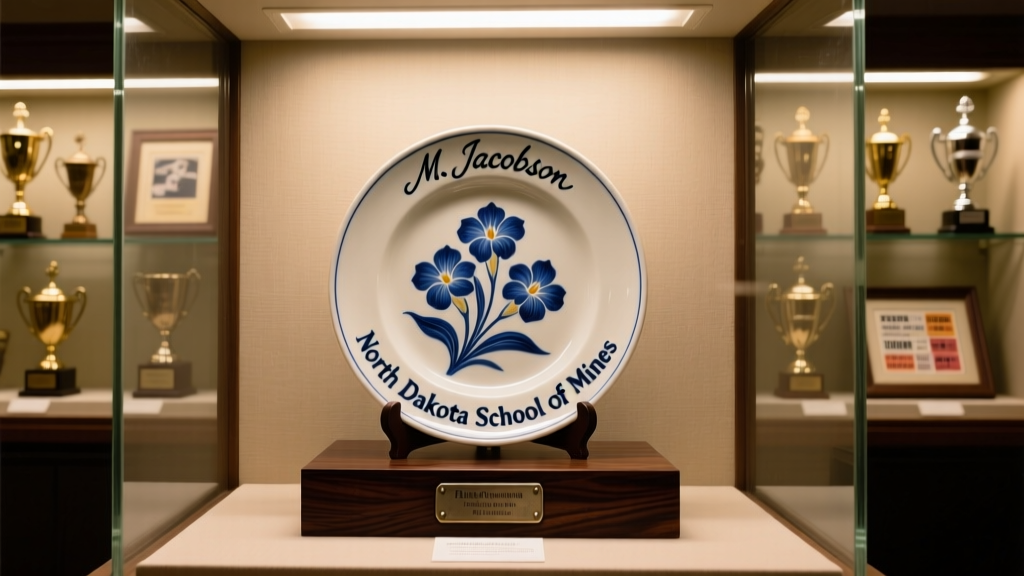
North Dakota School of Mines Plate: Carved Blue Morning Glories by M. Jacobson (8-Inch Diameter)
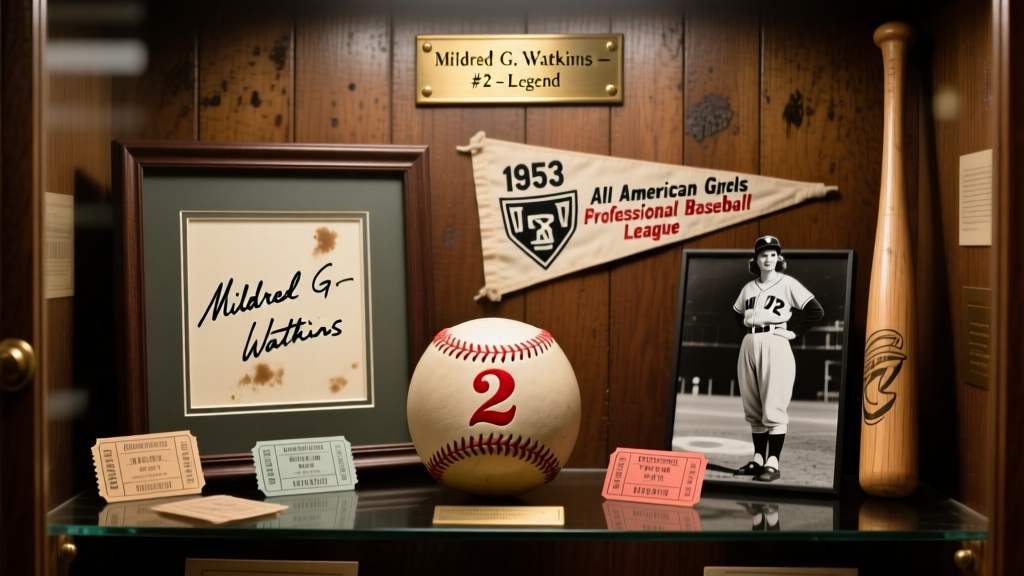
Mildred G. Watkins, Lot #2: Authentication, Provenance, and Market Context of a Rare 1940s Women's Professional Baseball Autograph Item
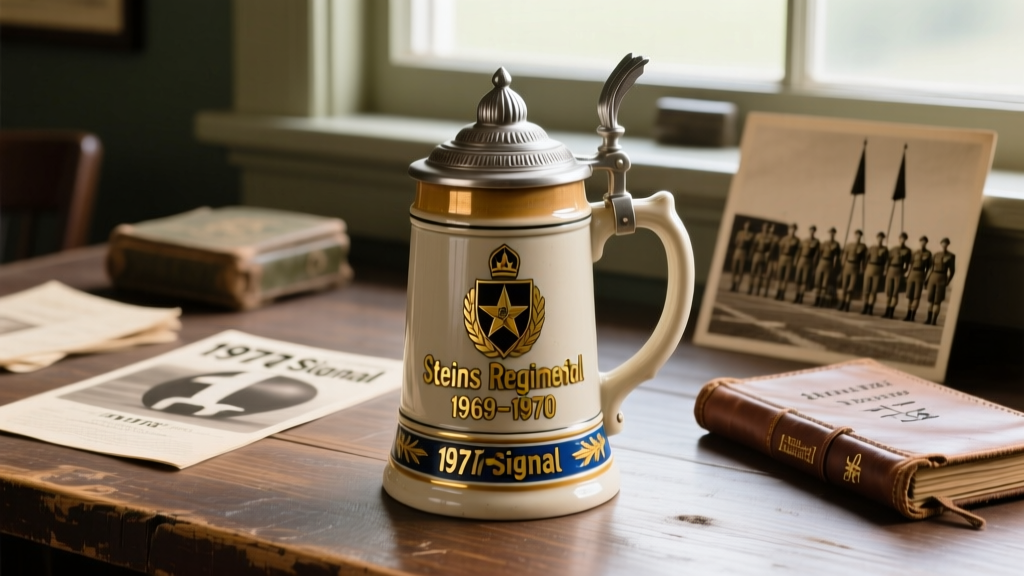
Steins Regimental 97th Signal: Authenticating the 1969–1970 1.5-Liter Commemorative Stein
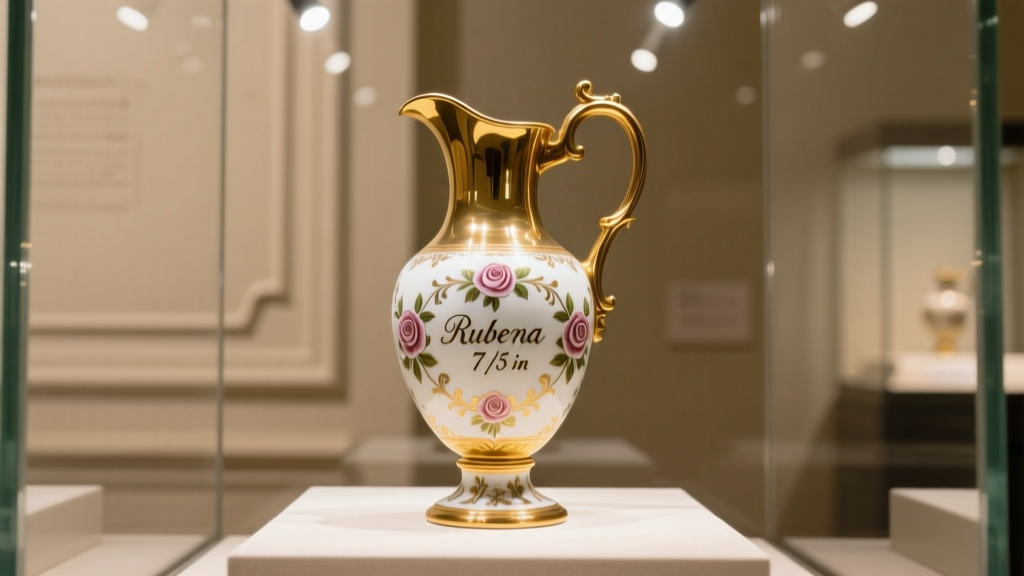
Moser Ewer: Gold-Rose & White Baroque Enameling on Rubena Glass — A Collector’s Deep Dive into the 7½-Inch Masterpiece
Hummel Plate Anniversary 1975 'Stormy Weather 2': Authentication, Provenance, and Collectibility Analysis
Lladró Figurine 'Girl With Cockerel' No. 4591 (1969): Authentication, Provenance, and Market Value of the Iconic 9¾-Inch Porcelain Sculpture
Cookie Jars: The Mammy Googly-Eyed Basket Handle — History, Authentication, and Collectibility