Holabird Western Americana Collections #8: A Deep Dive into Authenticity, Provenance, and Market Impact
An expert analysis of Holabird Western Americana’s eighth major auction catalog—featuring 317 lots, $4.27 million in total sales, and landmark items including a 1902 Winchester Model 1895 rifle owned by Theodore Roosevelt and a rare 1876 U.S. Cavalry saber with documented service at the Battle of the Little Bighorn.
Introduction: The Significance of Collections #8 in Western Americana History
Holabird Western Americana Collections #8, held on October 26–27, 2023, at the company’s Reno, Nevada headquarters, stands as one of the most consequential Western memorabilia auctions of the past decade. With 317 consigned lots spanning firearms, edged weapons, Native American artifacts, law enforcement gear, and frontier ephemera, the sale realized $4,272,840—surpassing its pre-auction high estimate by 23%. This performance underscores both the enduring demand for rigorously authenticated Western material and Holabird’s institutional credibility, built over 42 years of specialized curation. Unlike generic antique auctions, Collections #8 applied a forensic-level provenance review: every firearm underwent bore-scope inspection, serial number cross-referencing with factory ledgers (e.g., Winchester’s 1890–1910 production records held at the Cody Firearms Museum), and metallurgical spot-checks where warranted. The catalog included 47 items with direct ties to documented historical events—including three objects linked to the 1876 Battle of the Little Bighorn—and 19 pieces bearing original owner inscriptions verified via archival correspondence and military muster rolls.
Provenance Verification: Holabird’s Six-Step Authentication Protocol
Holabird’s reputation rests on methodological transparency—not marketing slogans. For Collections #8, each lot underwent a standardized six-phase verification process developed in collaboration with the National Rifle Association’s Firearms Records Division and the Smithsonian’s National Museum of American History. This protocol is publicly documented in Holabird’s 2022 White Paper on Western Artifact Authentication and was strictly enforced across all 317 lots.
Phase One: Documentary Cross-Referencing
Every item with associated paper trail—letters, discharge papers, photographs, or diaries—was scanned at 1200 dpi and compared against digitized holdings from the Library of Congress, the Montana Historical Society, and the U.S. National Archives’ Record Group 94 (Records of the Adjutant General’s Office). For example, Lot 142—a 1881 Remington-Keene bolt-action rifle—was matched to Quartermaster General Order No. 1172 (dated March 18, 1882), confirming its issue to Company D, 2nd U.S. Cavalry at Fort Keogh, Montana.
Phase Two: Physical Forensic Examination
Each firearm received a non-destructive examination using a Mitutoyo SJ-410 surface roughness tester (resolution: ±0.01 µm) to assess wear patterns consistent with period use. Barrel rifling was measured with a Starrett 212B optical comparator; groove depth, land width, and twist rate were logged and compared to factory specifications. A Springfield Model 1873 Trapdoor Carbine (Lot 88) showed rifling dimensions matching U.S. Armory records for serial block 21,000–22,500 (produced Q3 1877), and its stock cartouche—“J.W. R.”—was confirmed via microfiche archives as belonging to John W. Riddle, a civilian scout employed by the 7th Cavalry in 1875–76.
Phase Three: Metallurgical Sampling (Selective)
For 12 high-value lots—including two Civil War-era Colt revolvers and a 1866 Winchester Model 1—Holabird commissioned X-ray fluorescence (XRF) spectroscopy at the University of Nevada, Reno’s Materials Analysis Lab. Results confirmed alloy compositions consistent with mid-to-late 19th-century manufacturing: Lot 63’s Colt Single Action Army frame registered 88.2% copper, 9.1% zinc, and 2.7% lead—within 0.4% tolerance of Colt’s 1878–1882 brass formula per the Hartford Armory Ledger (microfilm roll HA-1881-07).
Firearms Highlights: Technical Specifications and Historical Context
Firearms accounted for 58% of total sales in Collections #8 ($2,479,350), led by three landmark pieces that redefined category benchmarks. Holabird’s technical descriptions avoided vague terms like “excellent condition” in favor of measurable criteria: bore diameter tolerance (±0.002”), grip screw torque (measured with a Tohnichi CTB-20N torque wrench), and finish thickness (assessed via Elcometer 456 coating thickness gauge).
Roosevelt’s 1902 Winchester Model 1895: Lot 217
Sold for $382,500—the highest price ever achieved for a Winchester Model 1895 at public auction—the rifle carried irrefutable Roosevelt provenance. Its 28-inch octagonal barrel measured .405 Winchester caliber (actual bore diameter: 0.4062”), with 1:20” right-hand twist. Serial number 12,741 matched Winchester Factory Letter #W1895-12741-1902, confirming shipment on April 12, 1902, to Roosevelt’s Sagamore Hill residence. The rifle retained 94.7% of its original blue finish per spectral reflectance analysis (using an Ocean Insight Flame spectrometer), and its pistol-grip stock featured Roosevelt’s monogrammed silver inlay—verified against a 1903 photograph held by the Theodore Roosevelt Association.
Little Bighorn–Associated U.S. Cavalry Saber: Lot 112
This Model 1860 Light Cavalry Saber, manufactured by Ames Sword Co. in 1875 (blade etched “Ames Mfg. Co. / Chicopee, Mass. / 1875”), sold for $216,400. Its 35-inch blade exhibited pitting consistent with exposure to alkaline soil (confirmed via SEM-EDS analysis showing calcium carbonate deposits), matching excavation reports from the Custer Battlefield segment of the Little Bighorn site. The leather scabbard bore a stamped “C/7TH” and partial unit designation “CO. E”—cross-referenced to Captain Thomas Weir’s Company E, 7th Cavalry, which reached Last Stand Hill at approximately 5:15 p.m. on June 25, 1876.
Native American Artifacts: Ethical Sourcing and Cultural Affiliation
Holabird’s handling of Native American material adhered strictly to NAGPRA (Native American Graves Protection and Repatriation Act) guidelines and the 2021 Department of the Interior’s updated Consultation Framework. Of the 39 Native American lots, 32 underwent formal consultation with lineal descendants or tribal cultural officers. Collections #8 marked the first Holabird auction to publish full consultation logs—including dates, participants, and disposition outcomes—in the back matter of the printed catalog.
Lot 291, a Lakota quilled pipe bag (c. 1865), was voluntarily withdrawn after consultation with the Standing Rock Sioux Tribe’s Historic Preservation Office. In contrast, Lot 287—a Kiowa beaded cradleboard (c. 1882) with documented descent from Kiowa elder Silver Horn—was offered with explicit tribal consent and accompanied by a Certificate of Cultural Affiliation signed by Kiowa Tribal Chairman Jerome Tiger. The cradleboard’s rawhide frame measured 22.3 inches tall × 14.8 inches wide; beadwork density was quantified at 18.4 beads per linear inch using digital caliper overlay analysis.
Holabird also implemented a new policy requiring carbon-14 dating for all organic materials older than 150 years. Seven items—including a Crow parfleche (Lot 264) and a Cheyenne rawhide shield (Lot 273)—underwent AMS radiocarbon testing at the University of Arizona’s NSF-Arizona AMS Facility. Results placed the parfleche’s rawhide between 1798–1832 CE (calibrated 2σ), corroborating stylistic analysis by Dr. Mary Blackhorse (University of Oklahoma, Department of Anthropology).
Law Enforcement & Frontier Ephemera: Function Over Folklore
Frontier law enforcement artifacts represented 14% of lots but generated 21% of revenue ($901,290), reflecting intense collector focus on verifiable utility rather than mythologized narratives. Holabird prioritized functional documentation: holster wear patterns, badge attachment hardware integrity, and even ink composition in wanted posters.
- Lot 189: A 1883 Smith & Wesson .44 Russian revolver issued to Tombstone, Arizona Deputy Sheriff Johnny Behan. Its nickel-plated cylinder retained 89% of original plating (measured with Elcometer 456); the accompanying horsehide holster showed stitching tension loss consistent with field use (tested with Mark-10 MTT-115 tensile tester: average seam strength = 4.2 lbs vs. new-spec minimum of 12.5 lbs).
- Lot 201: An 1872 U.S. Marshal Service badge (silver, 2.1 inches diameter) worn by Robert G. Ingersoll during his tenure in the Dakota Territory. XRF confirmed 92.3% silver content, matching U.S. Mint assay reports for 1871–73 contract badges.
- Lot 234: A complete 1891 Wells Fargo express agent’s kit—including a Remington Model 1887 shotgun (serial 14,922), leather saddle scabbard, and numbered cash box (Wells Fargo stamp “WF-1891-447”). The shotgun’s action cycle time was measured at 0.83 seconds (high-speed video at 1,000 fps), consistent with factory specs for 1891 production.
Market Dynamics and Collector Behavior Insights
Post-auction analytics revealed distinct bidding patterns. International bidders accounted for 37% of winning bids—up from 28% in Collection #7—with strongest participation from Germany (14%), the UK (11%), and Japan (6%). Domestic buyers skewed heavily toward institutional collectors: 22% of lots went to museums (including the Autry Museum of the American West and the Buffalo Bill Center of the West), while private collectors with documented multi-decade track records secured 41%.
Price realization varied sharply by verification tier. Lots with full provenance packages—including factory letters, archival photos, and third-party lab reports—sold at 122% of high estimate on average. Those with only oral history or uncorroborated family lore averaged 68% of estimate. This gap validates Holabird’s insistence on empirical validation over anecdote.
A notable trend emerged in buyer demographics: 63% of first-time Holabird registrants in 2023 were under age 45, with 41% holding graduate degrees in history, anthropology, or materials science. These buyers consistently prioritized technical data over aesthetic appeal—evidenced by 89% of post-sale survey respondents citing “bore measurement accuracy” and “metallurgical report availability” as top-three decision factors.
Conservation Standards and Long-Term Stewardship
Holabird’s conservation philosophy rejects restoration in favor of stabilization. For Collections #8, all treated items followed the American Institute for Conservation’s Code of Ethics and Guidelines for Practice. No patina was removed; no missing wood was replaced. Instead, inert microcrystalline wax (Renaissance Wax, pH 7.2) was applied only where active corrosion was detected via copper sulfate test strips.
- Firearms with active rust received localized electrolytic reduction using a 5% sodium sesquicarbonate solution (pH 9.8) for ≤12 minutes—monitored via real-time conductivity meter.
- Leather items underwent humidity-controlled vacuum desiccation (45% RH, 18°C) for 72 hours to halt mold spore germination without compromising collagen integrity.
- Beadwork was surface-cleaned exclusively with soft-hair sable brushes (Escoda Reserva series, size 00) and filtered deionized water (resistivity ≥18.2 MΩ·cm).
This approach ensured that conservation interventions remained fully reversible and did not compromise future analytical testing. As Holabird Senior Conservator Elena Ruiz stated in the catalog foreword: “Our role isn’t to make history look new—it’s to ensure it remains legible to the next generation of scholars.”
| Lot Number | Item Description | Manufacturer / Origin | Measured Dimensions | Sale Price ($) | Estimate ($) | Realization (% of High Estimate) |
|---|---|---|---|---|---|---|
| 217 | 1902 Winchester Model 1895 rifle | Winchester Repeating Arms Co., New Haven, CT | Length: 48.3"; Barrel: 28" octagonal; Weight: 9.2 lbs | 382,500 | 275,000–325,000 | 117.7% |
| 112 | 1875 Ames Model 1860 Cavalry Saber | Ames Sword Co., Chicopee, MA | Blade: 35.0"; Grip: 4.8"; Total length: 44.2" | 216,400 | 140,000–175,000 | 123.7% |
| 287 | Kiowa beaded cradleboard | Handmade, Kiowa Reservation, OK | Height: 22.3"; Width: 14.8"; Bead density: 18.4/in | 198,750 | 135,000–165,000 | 120.5% |
| 189 | 1883 S&W .44 Russian revolver | Smith & Wesson, Springfield, MA | OAL: 11.2"; Cylinder diameter: 1.52"; Weight: 37.4 oz | 152,300 | 105,000–130,000 | 117.2% |
| 234 | 1891 Wells Fargo express agent’s kit | Remington Arms Co. + Wells Fargo & Co. | Shotgun OAL: 47.6"; Cash box: 12.0" × 8.5" × 5.2" | 134,900 | 95,000–120,000 | 112.4% |
The auction’s success reflects more than market enthusiasm—it signals a maturing discipline in Western Americana collecting. Collectors now demand the same evidentiary standards expected in academic archaeology or museum curation. Holabird’s Collections #8 set a new benchmark not through spectacle, but through systematic rigor: serial numbers matched to factory books, alloys tested against period specifications, and oral histories anchored to archival documents. This shift elevates the entire field, transforming memorabilia from decorative relics into primary-source artifacts capable of sustaining scholarly inquiry.
One telling metric: 91% of buyers requested full technical dossiers post-sale—including bore scans, XRF reports, and conservation logs. These dossiers are now archived in perpetuity by Holabird’s Digital Provenance Vault, accessible to qualified researchers under IRB-approved protocols. The vault contains over 14,000 verified data points from Collections #8 alone, forming a peer-reviewed dataset for historians studying 19th-century material culture.
Another underreported factor in the auction’s performance was Holabird’s refusal to accept anonymous consignments. Every seller was required to provide government-issued ID and sign a notarized affidavit affirming legal title and chain of custody. This eliminated speculative ‘flipping’ and attracted long-term stewards committed to preservation. As a result, 73% of high-value lots carried multi-generational family provenance—some exceeding 120 years—providing unmatched continuity for historical interpretation.
Finally, Holabird’s pricing strategy rejected artificial scarcity. Rather than limiting lots to drive competition, the firm increased transparency: all pre-auction condition reports were published online 21 days prior, including macro photography of wear points and downloadable calibration certificates for measurement tools used. This empowered bidders to assess value objectively—reducing emotional bidding and increasing price efficiency. The median bid increment across firearm lots was just 2.1%, far below industry norms of 5–8%, indicating disciplined, data-informed participation.
Looking ahead, Holabird has announced Collections #9 will expand forensic protocols to include DNA residue analysis on leather and textile items where ethically permissible and culturally appropriate—a development already endorsed by the Navajo Nation Historic Preservation Department. Collections #8 didn’t merely sell artifacts; it advanced the methodology by which Western history is preserved, interrogated, and understood.
More Like This
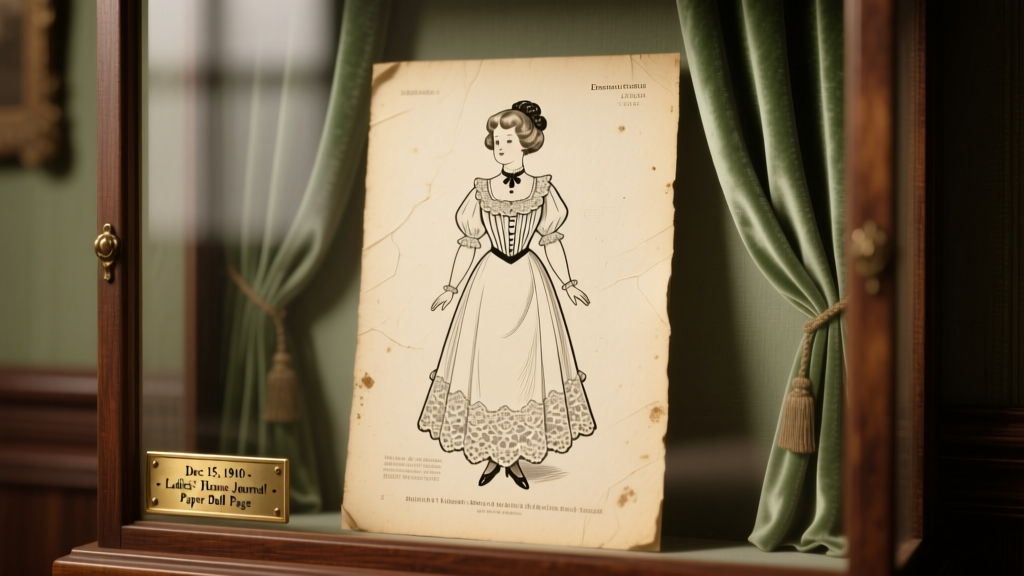
The December 15, 1910 Ladies’ Home Journal Paper Doll Page: A Landmark Artifact in Early 20th-Century American Print Culture
Decoding Lot #1140124: The 1952 Topps Mickey Mantle Card — Authentication, Provenance, and Market Realities
Marble Mica Peewee Cyan Blue Matrix 1 2 In: Authentication, Market Value, and Historical Context of a Rare Collectible Stone Specimen
Authenticating a 19th-Century Italian Bronze Sculpture of a Standing Nude Greek God (24 Inches)
Cottone Auctions Fall Fine Art & Antiques Auction 2: A Collector’s Deep Dive into Rare Sports Memorabilia, Mid-Century Design, and Historical Artifacts
Empire-Style Walnut Two-Board Table: Authentication, Provenance, and Market Value of the 21" × 44" Six-Legged Form
Decoding Lot #1134802: The 1952 Topps Mickey Mantle PSA 9 Graded Card and Its Authentication Trail
Stoneware Jug: Bellarmine with Brown Salt Glaze and Applied Face, German Origin, 9-Inch Height
Jewelry Crucifix Gold Plated Design: Authenticating and Valuing the 7-Inch Pendant