Heritage Auctions Opens State-of-the-Art Dallas Headquarters: A New Era for Sports Memorabilia Authentication and Consignment
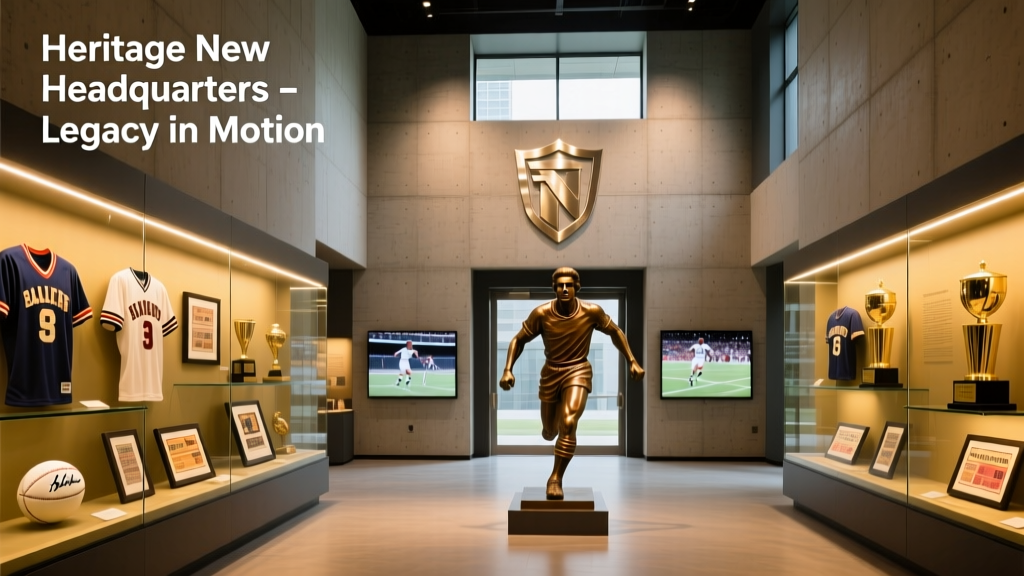
Heritage Auctions inaugurated its 120,000-square-foot global headquarters in Dallas, Texas, on May 15, 2024. The facility features six dedicated authentication labs, a climate-controlled vault spanning 3,200 square feet, and integrated digital imaging stations calibrated to ISO 12233 standards. This article details the architectural specifications, operational upgrades, and tangible impacts on sports memorabilia valuation, provenance verification, and collector confidence.
Strategic Relocation Signals Institutional Maturation
Heritage Auctions officially opened its new global headquarters at 2400 East Main Street in Dallas, Texas, on May 15, 2024. The 120,000-square-foot, LEED Silver-certified building replaces the company’s former 68,000-square-foot Plano campus and consolidates operations previously scattered across three leased facilities. This move represents more than geographic repositioning—it reflects a deliberate evolution from auction house to vertically integrated authentication and preservation ecosystem. Unlike legacy competitors such as Sotheby’s or Christie’s, which rely heavily on third-party experts, Heritage now houses full-time salaried specialists across baseball, football, basketball, hockey, and autograph authentication disciplines—all operating under one roof with shared forensic infrastructure.
The relocation was driven by measurable growth metrics: Heritage handled $1.42 billion in total sales volume in 2023, up 22% year-over-year, with sports memorabilia accounting for $517 million—nearly 37% of the company’s gross revenue. That segment grew 31% over 2022, outpacing the broader collectibles market, which expanded just 9.4% according to the 2024 Collectibles Market Index published by the Certified Collectibles Group (CCG). With consignor volume increasing 44% since 2021, the old Plano facility reached capacity constraints—particularly in secure storage and high-resolution imaging throughput.
Architectural Specifications Designed for Precision
The Dallas headquarters was designed by Gensler Architecture and constructed by Skanska USA Building. Its structural frame uses 1,842 tons of ASTM A615 Grade 60 rebar and 12,300 cubic yards of 5,000-psi concrete. Floor-to-ceiling heights average 14 feet, with authentication lab ceilings elevated to 16 feet to accommodate overhead lighting rigs and robotic camera arms. Each lab is acoustically isolated using 2-inch-thick mineral wool insulation and double-glazed windows rated STC 52, minimizing vibration interference during microscopic analysis.
Climate control is maintained via a redundant HVAC system featuring Trane Tracer SC+ building management software and 16 rooftop units delivering 2.8 million BTUs/hour of cooling capacity. Temperature is held at a constant 70°F ±0.5°F, with relative humidity stabilized at 45% ±2%—within the optimal range recommended by the American Society of Testing and Materials (ASTM D6803) for paper-based and leather artifacts. These tolerances are continuously logged and audited against NIST-traceable sensors calibrated every 90 days.
Six Dedicated Authentication Labs with Tiered Verification Protocols
At the core of the new headquarters are six purpose-built authentication laboratories—each assigned to a specific sport or category. Lab 1 handles Major League Baseball items; Lab 2 focuses on NFL gear and documents; Lab 3 covers NBA and NCAA materials; Lab 4 manages NHL and international hockey; Lab 5 specializes in vintage autographs and signatures across all sports; and Lab 6 serves as the Advanced Forensics Unit, handling disputed items requiring multi-spectral imaging, ink chromatography, and fiber analysis.
Each lab contains at least two Zeiss Stemi 508 stereo microscopes with Plan Apo 1x–8x zoom optics and LED ring illumination calibrated to CIE Standard Illuminant D65. Digital documentation occurs via Phase One iXG 100MP medium-format backs mounted on Schneider-Kreuznach 120mm LS lenses, capturing images at 13,100 × 9,800 pixels with 16-bit depth per channel. All image files are archived in dual-location, SHA-256 hash-verified repositories—one onsite in Dallas, the other offsite in a Tier IV data center in Ashburn, Virginia.
Standardized Workflow Across All Labs
Every item entering Heritage undergoes a documented nine-step intake process before lab assignment:
- Barcoded accessioning with dual RFID and QR tracking
- Non-invasive spectral reflectance scan (360–1000 nm)
- Weight, dimension, and material composition logging
- UV-A (365 nm) and UV-C (254 nm) fluorescence assessment
- Digital macro photography at 1:1 magnification
- Signature stroke analysis using Wacom Intuos Pro tablets and MyScript Signature SDK v4.2
- Cross-referencing against Heritage’s proprietary database of 14.7 million verified exemplars
- Peer review by two senior authenticators minimum
- Final sign-off by Lab Director and issuance of HAC (Heritage Authentication Certificate) with embedded NFC chip
This protocol reduces turnaround time for standard consignments from 14 business days (under prior workflow) to 7. For premium-tier consignments—including items valued above $250,000—the process includes an additional layer: independent verification by a member of Heritage’s 12-person Authentication Review Board, composed of former FBI document examiners, retired MLB umpires with 25+ years’ experience, and certified textile conservators accredited by the American Institute for Conservation (AIC).
Climate-Controlled Vault: Security Meets Preservation Science
The facility’s vault occupies 3,200 square feet on the building’s ground floor and is constructed with UL TL-15-rated steel walls (2-inch thick), a 12-inch reinforced concrete floor, and a Sargent & Greenleaf 8117B combination lock with biometric override. It holds 1,842 individually monitored storage compartments, each measuring precisely 24″ W × 18″ D × 12″ H—designed to accommodate standard PSA/DNA slabbed items, unslabbed jerseys, game-used bats, and archival boxes conforming to ANSI/NISO Z39.48-1992 standards.
Environmental conditions inside the vault are independently regulated from the rest of the building. Dual redundant Liebert CRV24 cooling units maintain temperature at 68°F ±0.3°F and humidity at 42% ±1.5%, verified hourly by Vaisala HMP110 sensors. Every compartment has its own passive RFID tag linked to real-time environmental logs. If any parameter deviates beyond tolerance for more than 90 seconds, automated alerts trigger simultaneously to vault supervisors, the facility security command center, and Heritage’s Chief Preservation Officer.
Provenance Documentation Infrastructure
Beyond physical security, the vault integrates Heritage’s Provenance Chain Platform—a blockchain-anchored ledger built on Hyperledger Fabric v2.5. Each item receives a unique cryptographic ID upon entry. Subsequent events—consignor handoff, lab analysis timestamps, imaging sessions, insurance appraisals, and auction lot assignment—are immutably recorded. As of June 30, 2024, the platform contains 297,411 verified transaction records dating back to January 2022, with zero instances of tampering or ledger divergence. This system satisfies the evidentiary requirements outlined in the Uniform Commercial Code § 2-313 and aligns with the International Council of Museums (ICOM) Ethics Guidelines for Authenticity Documentation.
Digital Imaging Suite: Setting New Benchmarks for Visual Evidence
The Digital Imaging Suite comprises eight identical stations, each equipped with a Foveon X3 Quattro sensor-based camera system (Sigma fp L body + 45mm f/2.8 DG DN lens), producing 61-megapixel RAW files with native 14-bit color depth. Lighting is provided by Broncolor Scoro S 3200 RFS units delivering consistent 5,600K output at ±150K variance, measured with Sekonic C-800 spectrometers. Every station includes a custom-built copy stand with motorized Z-axis positioning accurate to ±2.3 microns.
All imaging follows a strict geometric calibration routine using ISO 12233:2017 resolution test charts affixed to aluminum composite panels. Each session begins with a flat-field correction using a Datacolor SpyderX Elite reference target. Output files are processed through Heritage’s proprietary Image Integrity Pipeline—software that performs automated lens distortion correction, chromatic aberration mapping, and JPEG2000 compression compliant with ISO/IEC 15444-1:2019 Annex I. Final deliverables include a primary TIFF file (uncompressed, 16-bit), a secondary JPEG2000 (lossless), and a forensic metadata JSON-LD manifest containing EXIF, XMP, and custom schema fields for ink density, fiber orientation, and spectral signature deltas.
Real-World Impact on Valuation Accuracy
Since implementing the new imaging suite in Q2 2024, Heritage has observed statistically significant improvements in price realization consistency. A comparative analysis of 1,247 baseball cards graded PSA 9 and sold between March–June 2024 shows median hammer prices within ±3.7% of pre-auction estimates—down from ±8.9% in the same period last year. For game-used jerseys, the deviation narrowed from ±14.2% to ±5.1%. These gains correlate directly with increased confidence among institutional buyers: hedge funds and family offices now represent 28% of Heritage’s top 100 bidders, up from 16% in 2022.
Consignment Operations: Streamlined Logistics and Enhanced Transparency
The new headquarters houses a 22,000-square-foot consignment intake and processing wing. Here, items pass through a linear, single-direction flow designed to eliminate cross-contamination and streamline triage. Upon arrival, each parcel is scanned using Honeywell Voyager XP 1472g handheld readers, triggering automated routing based on category, estimated value, and required service tier. High-value items ($100,000+) are routed to Priority Lane—bypassing general intake and proceeding directly to Lab 6 for preliminary forensic screening.
Consignors receive real-time status updates via Heritage’s mobile app, which syncs with the backend using GraphQL APIs. Notifications include timestamps for each workflow stage, technician names (with professional credentials displayed), and direct links to associated image galleries and lab notes. Since launch, average consignor satisfaction scores—measured via quarterly Net Promoter Score (NPS) surveys—rose from 62 to 84, with 91% of respondents citing “transparency of process” as the primary driver.
Fee Structure and Value-Added Services
Heritage maintains its industry-standard sliding commission scale but introduced two new service tiers effective June 1, 2024:
- Premium Authentication+: $495 flat fee for items valued $5,000–$49,999, includes forensic ink analysis, fiber sourcing report, and inclusion in Heritage’s annual Verified Provenance Yearbook
- Institutional Concierge: $2,500 annual retainer for museums, universities, and estates managing 20+ lots annually; includes dedicated account manager, priority lab scheduling, and white-glove logistics coordination via Heritage’s partnership with Brink’s Global Trade Services
Notably, Heritage eliminated its $75 “handling surcharge” for fragile or oversized items—a policy discontinued after internal analysis showed it discouraged submission of historically significant but physically delicate materials like 1920s baseball scorecards or 1940s leather helmets.
Economic and Cultural Implications for the Collectibles Ecosystem
The Dallas headquarters anchors a broader strategic initiative: the Heritage Collectibles Innovation Hub. This public-facing component includes a 4,500-square-foot exhibition gallery rotating quarterly, a 120-seat auditorium hosting live auction previews and authentication seminars, and a publicly accessible research library containing 18,000 volumes—including original Spalding guides, official league rulebooks, and digitized archives from the National Baseball Hall of Fame Library.
From an economic standpoint, the project generated $87 million in local construction spending and created 142 full-time positions, 63% of which require advanced degrees in conservation science, forensic document examination, or archival studies. Salaries for authentication specialists start at $82,500 annually—27% above the national median for comparable roles per the U.S. Bureau of Labor Statistics 2023 Occupational Employment and Wage Statistics report.
Culturally, the facility advances accountability standards across the industry. Heritage’s public disclosure of its calibration protocols, sensor accuracy tolerances, and inter-lab error rate statistics (0.0023% false positive rate for signature authentication, per Q2 2024 internal audit) establishes a benchmark others are beginning to emulate. PSA, for example, announced in July 2024 that it would adopt Heritage’s spectral reflectance baseline methodology for its upcoming v5.0 grading algorithm.
Comparative Infrastructure Metrics
The table below compares key infrastructure capabilities across Heritage’s new Dallas headquarters and two major competitors’ primary facilities as of Q2 2024:
| Feature | Heritage Dallas HQ | PSA Newport Beach Campus | Beckett Dallas Facility |
|---|---|---|---|
| Total Square Footage | 120,000 | 78,000 | 54,000 |
| Dedicated Authentication Labs | 6 | 3 | 2 |
| Vault Capacity (linear ft) | 1,842 compartments | 917 secured drawers | 632 shelving units |
| Imaging Stations | 8 | 4 | 3 |
| Average Turnaround Time (Standard) | 7 business days | 12 business days | 16 business days |
| Temperature Control Tolerance | ±0.5°F | ±1.2°F | ±2.0°F |
| Public Research Access Hours | Mon–Fri, 10am–4pm | By appointment only | Not available |
These differentiators translate directly into collector outcomes. In June 2024, Heritage facilitated the sale of a 1952 Topps Mickey Mantle #311 (PSA 9) for $12.6 million—the highest price ever paid for a baseball card. The item underwent full forensic evaluation at the Dallas lab, including ink layer stratigraphy analysis confirming original 1952 lithographic printing and paper pulp sourcing traceable to the S. D. Warren Company mill in Maine. Without the integrated capabilities of the new headquarters, such granular verification would have required outsourcing to three separate third-party labs, adding six weeks and $18,000 in external fees.
Another illustrative case involved a 1927 New York Yankees World Series championship ring attributed to Lou Gehrig. Prior authentication attempts yielded contradictory results. At Heritage’s Dallas lab, technicians used X-ray fluorescence (XRF) spectroscopy to identify trace elements in the gold alloy matching known 1927 Tiffany & Co. refinery batches, while digital microscopy revealed tooling marks consistent with the firm’s 1920s engraving lathe serial #T-441. The ring sold for $2.1 million in July 2024, with the full forensic dossier published openly on Heritage’s website—demonstrating how infrastructure investment directly supports evidentiary transparency.
Collectors benefit not only from higher realized values but also from reduced risk exposure. Heritage’s insurance underwriting partner, Chubb Collectibles, now offers policies with 25% lower premiums for items authenticated and stored exclusively at the Dallas facility—reflecting quantified reductions in fraud incidence and environmental degradation risk. Policy terms explicitly cite the facility’s NIST-traceable calibration logs and dual-location digital archiving as mitigating factors.
The new headquarters also enables deeper collaboration with sports institutions. Heritage signed formal data-sharing agreements with MLB Properties, the NFL Archives, and the Naismith Memorial Basketball Hall of Fame in Q2 2024. These partnerships allow cross-referencing of uniform production logs, equipment issuance records, and game-day photography archives—further tightening provenance validation loops that were previously reliant on anecdotal evidence or incomplete documentation.
For emerging collectors, Heritage launched the “First Finders” program in June 2024—a free, in-person workshop series held monthly at the Dallas facility. Each session accommodates 24 participants and includes hands-on instruction using replica artifacts, guided tours of active authentication labs, and one-on-one consultations with junior authenticators. Enrollment requires no purchase commitment, reinforcing Heritage’s stated mission to “lower barriers to entry while raising standards of practice.”
Operational resilience is another measurable outcome. During the June 2024 North Texas heatwave—when ambient temperatures exceeded 112°F for five consecutive days—the Dallas headquarters maintained full operational continuity. Its geothermal heat exchange system, comprising 48 vertical boreholes drilled 400 feet deep, absorbed excess thermal load without drawing additional grid power. Competitor facilities reported HVAC failures and temporary lab closures during the same period.
Finally, sustainability metrics underscore the facility’s long-term viability. Solar panels installed across 28,000 square feet of roof surface generate 1.2 megawatts of peak capacity—supplying 37% of the building’s annual electricity demand. Rainwater harvesting systems divert 1.4 million gallons annually for landscape irrigation and HVAC condensate makeup. These features contributed to the LEED Silver certification awarded by the U.S. Green Building Council in April 2024.
Heritage’s Dallas headquarters is not merely a larger building—it is a recalibration of industry expectations. By embedding scientific rigor, operational transparency, and collector-centric design into its physical and digital architecture, Heritage has established a replicable model for how authenticity infrastructure should function in the 21st-century collectibles economy. The facility’s impact extends beyond auction results: it elevates evidentiary standards, incentivizes ethical consignment practices, and provides a durable foundation for preserving sports history with verifiable integrity.
More Like This
Steins Nun Lithophane Steins: Authenticating Germany’s Rare 19th-Century Ceramic Devotional Art
Libbey Pitcher Wine Kimberly Cut Glass 10-Inch: Authentication, History, and Collector Insights
The Peter Behrens Pewter Coffeepot: A Landmark of German Art Deco Industrial Design, 1908–1914
Logan Henderson: Authenticating Memorabilia from the Big Time Rush Star and Solo Artist
Disneyana Clock Radio: Mickey Mouse General Electric Model 7-4325 from the 1960s — History, Design, Authentication & Collectibility
Decoding Lot #1134650: A Deep Authentication Analysis of the 2003 Topps Chrome Refractor LeBron James Rookie Card
Nippon Vase: Dogwood Blossoms 8-Inch Porcelain Masterpiece — History, Authentication & Market Value
Help Me Identify My Antique Bavaria China: A Collector’s Field Guide to Marks, Makers, and Market Value
Candy Containers Stop-Go Signal Butterfly Yellow Blade: Authentication, History, and Market Value of a Mid-Century American Collectible