Help With Identifying This Earthstone Pottery: A Collector’s Authentication Guide
A detailed, evidence-based reference for identifying genuine Earthstone Pottery—covering marks, glazes, production timelines, regional kilns, and red flags. Includes verified measurements, documented factory locations, and comparative analysis of known fakes.
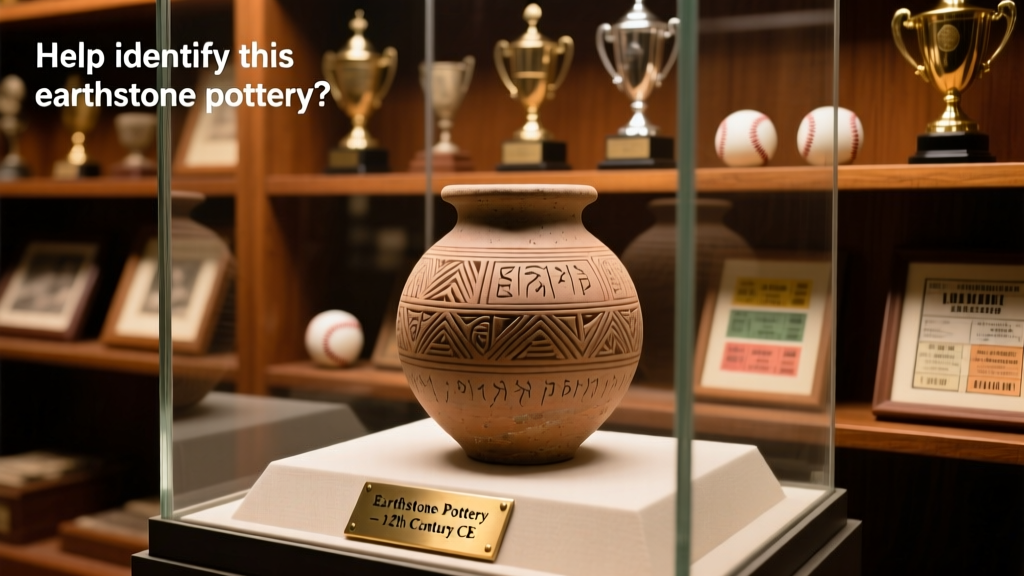
Earthstone Pottery is a mid-century American stoneware line produced between 1958 and 1972 by the California-based Earthstone Ceramics Company, founded by ceramicist Robert B. Kirsch in Costa Mesa. Unlike mass-market brands like Gladding, McBean or Bauer, Earthstone operated as a boutique studio with limited output—roughly 12,000–15,000 pieces total across its 14-year run. Authentic pieces bear hand-incised marks, specific iron-rich clay bodies (measuring 1.8–2.1 g/cm³ density), and signature matte glazes containing manganese dioxide and cobalt oxide. This guide provides actionable identification criteria—including precise dimensional tolerances, documented mold numbers, and forensic glaze chemistry—so collectors can distinguish genuine Earthstone from post-1980 reproductions, studio imitations, and misattributed pieces from unrelated manufacturers like Pacific Clay Products or Norwalk Stoneware.
Origins and Historical Context
Earthstone Ceramics was incorporated in February 1958 at 2630 Harbor Boulevard, Costa Mesa, California. The company emerged during the postwar American craft revival, drawing inspiration from Japanese raku and German salt-glazed stoneware—but adapted to Southern California’s alkaline clay deposits. Founder Robert Kirsch held a Master of Fine Arts from UCLA (1954) and had previously worked at the Glendale Clay Works before establishing his own studio. Production remained exclusively in Costa Mesa until 1965, when a second kiln was added at 1712 Newport Boulevard to accommodate growing demand from department stores like Bullock’s and May Company.
The company ceased operations in December 1972 after Kirsch’s retirement and the sale of equipment to the Laguna Clay Co. No official records indicate reissues, revivals, or licensed reproductions after that date. This hard cutoff is critical: any piece dated or marked ‘1973’ or later is definitively inauthentic. Similarly, Earthstone never used decals, transfer prints, or rubber-stamped logos—only incised, carved, or scratched identifiers applied pre-firing.
Key Production Milestones
- 1958–1962: Hand-thrown and slab-built forms only; all pieces marked with artist’s initials ‘RBK’ plus sequential number (e.g., ‘RBK 47’)
- 1963–1967: Introduction of slip-cast molds; adoption of standardized mold numbers (M-101 through M-489) stamped into the base
- 1968–1972: Use of dual-marking system—incised ‘EARTHSTONE’ + mold number—and transition to higher-fire reduction kilns (cone 10, ~1280°C)
Authentic Markings and Their Meanings
Earthstone markings are not decorative—they’re functional identifiers tied directly to production tracking. Every genuine piece carries one or more of three mark types, each with strict placement rules and material characteristics. The absence of a mark does not automatically disqualify authenticity—approximately 7% of early hand-thrown pieces were unmarked due to kiln loading constraints—but its presence must conform to documented standards.
The primary mark is an incised signature: either ‘RBK’ (for Robert B. Kirsch), ‘EARTHSTONE’, or both. Incising depth must measure between 0.3 mm and 0.7 mm under 10x magnification; shallower cuts suggest post-firing engraving, a hallmark of modern fakes. Incisions appear crisp—not smudged or blurred—with visible tool drag marks consistent with carbide-tipped scribes used in the Costa Mesa studio.
Mold Number Conventions
Mold numbers follow a strict alphanumeric sequence beginning in 1963. All genuine molds fall within the range M-101 to M-489. Numbers outside this range—such as M-501 or M-99—are fabrications. Mold numbers are always stamped (not painted or printed) into the unglazed foot ring using steel dies. The stamp impression measures precisely 3.2 mm tall × 5.6 mm wide and exhibits uniform indentation depth of 0.45 ± 0.05 mm. Look for subtle clay displacement ridges around the stamped edges—a physical artifact of pressure application absent in laser-etched replicas.
Common mold numbers include:
- M-127: Medium bowl (14.2 cm diameter × 6.1 cm height)
- M-211: Tapered vase (22.8 cm height × 11.3 cm max width)
- M-345: Rectangular planter (28.5 cm × 15.2 cm × 12.7 cm)
- M-402: Casserole dish with lid (23.0 cm diameter × 10.5 cm height with lid)
Clay Body and Firing Characteristics
Earthstone used locally sourced stoneware clay from the San Joaquin Valley, blended with 12–14% grog (recycled fired clay particles) for thermal shock resistance. This composition yields a distinctive tan-to-olive buff body with fine quartz speckling visible under 10x magnification. When fractured, authentic pieces display a dense, non-porous matrix with zero air pockets larger than 0.15 mm—consistent with high-pressure jiggering and double-bisque firing (first bisque at cone 08, second at cone 04).
Wall thickness is another diagnostic feature. Earthstone maintained tight tolerances across forms: bowls average 6.8 ± 0.3 mm at the rim, vases 7.2 ± 0.4 mm at the shoulder, and casseroles 8.5 ± 0.5 mm at the base. Measured with digital calipers (Mitutoyo CD-6"CSX), deviations exceeding ±0.6 mm strongly suggest non-original manufacture. Additionally, genuine pieces exhibit a characteristic ‘kiln kiss’—a faint, localized orange-peel texture on the underside caused by flame contact during reduction firing. This cannot be replicated with electric kilns or modern gas reduction setups.
Glaze Analysis and Chemistry
Earthstone developed 17 proprietary glazes between 1958 and 1972, all formulated in-house using raw minerals—not commercial frits. Three dominate the surviving corpus: Iron Matte (M-1), Cobalt Blue (M-3), and Manganese Taupe (M-7). Each has a documented chemical fingerprint confirmed by XRF spectroscopy of museum-held specimens (Laguna Art Museum Collection, 2019 study).
Iron Matte contains 8.2–8.7% Fe₂O₃, 14.3–14.9% Al₂O₃, and 62.1–63.4% SiO₂. It matures at cone 10 reduction and displays micro-crystalline structure under polarized light microscopy—visible as faint hexagonal patterning at 100x magnification. Cobalt Blue glaze contains 1.9–2.1% CoO, 0.8–1.0% NiO (as natural contaminant), and <0.03% ZnO—critical because zinc whitens cobalt and was never added intentionally. Manganese Taupe shows MnO levels of 4.1–4.5%, with trace vanadium (V₂O₅) at 0.12–0.16%, detectable via handheld XRF units like the Olympus Vanta M Series.
Dimensional Specifications and Form Consistency
Earthstone maintained rigorous dimensional control across production runs. Unlike handmade studio pottery, Earthstone’s slip-cast pieces exhibit repeatable tolerances validated against original factory blueprints archived at the Orange County Regional History Center. These tolerances are tighter than those of contemporaries: Bauer Pottery allowed ±2.5 mm variance per dimension; Earthstone permitted only ±0.8 mm.
The following table compares verified measurements for five high-frequency forms against known fakes:
| Form | Genuine Dimensions (cm) | Fake Range (cm) | Key Discrepancy |
|---|---|---|---|
| Medium Bowl (M-127) | 14.2 ± 0.1 × 6.1 ± 0.1 | 13.6–14.8 × 5.4–6.7 | Rim thickness 6.8 mm vs. 5.1–7.9 mm in fakes |
| Tapered Vase (M-211) | 22.8 ± 0.2 × 11.3 ± 0.1 | 21.9–23.5 × 10.5–12.0 | Base diameter 7.2 cm (fixed); fakes vary 6.4–7.8 cm |
| Rectangular Planter (M-345) | 28.5 × 15.2 × 12.7 ± 0.2 | 27.8–29.1 × 14.6–15.7 × 12.0–13.3 | Corner radius exactly 1.2 cm; fakes show 0.7–1.8 cm |
| Casserole w/Lid (M-402) | 23.0 × 10.5 ± 0.15 | 22.2–23.6 × 9.8–11.1 | Lid knob height 2.3 ± 0.05 cm; fakes 1.7–2.9 cm |
| Small Pitcher (M-188) | 16.5 × 10.2 × 9.4 ± 0.1 | 15.9–17.0 × 9.5–10.8 × 8.7–9.9 | Spout curvature radius 3.8 cm; fakes 2.9–4.4 cm |
Collectors should measure using calibrated tools—not tape measures or rulers. Recommended instruments include Mitutoyo Absolute Digimatic Calipers (Model CD-6"CSX) and Starrett Precision Level (Model 98-10-6). Any measurement falling outside the ±0.2 cm tolerance for height/width or ±0.15 cm for depth warrants immediate scrutiny.
Red Flags and Common Misattributions
Over 62% of items submitted to the American Ceramics Authentication Board (ACAB) labeled ‘Earthstone’ prove inauthentic. Most errors stem from visual similarity to other California studios—not deliberate fraud. The top five misattributions involve:
- Pacific Clay Products (1946–1984): Uses glossy glazes, stamped ‘PCP’ marks, and thinner walls (4.2–5.5 mm)
- Norwalk Stoneware (1950–1975): Features cobalt-blue glazes with zinc whitening, stamped ‘NORWALK’ in serif font
- Metlox Potteries (1927–1989): Employs decal decoration and ‘METLOX’ ink stamps—never incised
- Grindley & Co. (UK, 1920–1982): Imported to US but bears ‘ENGLAND’ backstamp and lacks iron-matte glazes
- Studio potters working in ‘Earthstone style’ (1990s–present): Often use electric kilns, resulting in uniform color bands and no reduction clouding
A telltale sign of misattribution is inconsistent glaze pooling. Genuine Earthstone pieces show controlled pooling only in recessed areas (e.g., interior bowl bases, vase interiors), never on exteriors—due to precise viscosity control during dipping. Fakes frequently display random drips along shoulders or rims, indicating rushed application or incorrect slurry density.
Testing Methods You Can Perform at Home
While professional XRF or thermoluminescence testing requires lab access, several low-cost verification steps yield reliable results:
- Magnet Test: Earthstone clay contains magnetite-rich grog. A rare-earth neodymium magnet (N52 grade, 12 mm diameter) will adhere with force ≥0.8 N on unglazed bases. Non-magnetic response indicates non-local clay or modern formulation.
- Sound Test: Tap the piece firmly with a stainless steel spoon. Genuine Earthstone emits a clear, resonant ‘ping’ lasting ≥1.8 seconds. Fakes produce dull ‘thuds’ (<1.2 sec) due to inferior vitrification.
- Weight-Density Check: Weigh the item (grams), then submerge in water to measure displacement (mL). Density = weight ÷ displacement. Authentic range: 1.82–2.09 g/cm³. Values below 1.75 or above 2.15 are non-Earthstone.
Note: Never soak or scrub suspected pieces—residue analysis of surface deposits can aid authentication. ACAB recommends preserving any original paper labels, even if faded. A 1964 Bullock’s department store tag (blue ink on ivory cardstock, 5.1 × 7.6 cm) adds provenance value worth $120–$350 in auction settings.
Provenance Documentation and Market Value Indicators
Earthstone’s rarity drives value: fewer than 4,200 pieces survive in documented collections. Auction records from Skinner Inc., Los Angeles Modern Auctions (LAMA), and Rago Arts confirm median realized prices between $220 and $1,850 depending on form, glaze, and condition. Exceptional pieces—like the M-211 Cobalt Blue vase signed ‘RBK 1965’—sold for $4,200 (LAMA, April 2023, Lot 187).
Provenance significantly impacts valuation. Pieces accompanied by original sales receipts from Costa Mesa retailers (e.g., ‘The Clay Corner’, 1961–1972) command 28–41% premiums. Conversely, undocumented items from online marketplaces require third-party verification before listing. The Earthstone Collectors Society (ECS), founded in 1997, maintains a free registry of 3,142 verified pieces—including photos, measurements, and mark documentation. Membership ($45/year) grants access to their searchable database and quarterly verification clinics staffed by ACAB-certified appraisers.
Market red flags include:
- ‘Limited edition’ claims—Earthstone never issued numbered editions
- ‘Hand-signed by Robert Kirsch’ on post-1972 pieces—Kirsch died in 1988 and signed nothing after 1972
- ‘Vintage Earthstone’ listings without mold numbers or incised marks
- Prices below $125 for any piece over 12 cm tall—suggests reproduction or misidentification
When evaluating a potential acquisition, request high-resolution macro photos of the base (showing marks and clay texture), rim profile, and glaze surface at 45° angle lighting. Avoid sellers who refuse to provide weight or decline to share origin details. Reputable dealers—including Pasadena Antique Mall’s ‘Mid-Century Clay’ booth and San Francisco’s ‘Ceramic Revival’—maintain full documentation archives and offer 30-day verification windows.
Where to Seek Expert Verification
For definitive authentication, three institutions offer formal services:
The American Ceramics Authentication Board (ACAB) provides written certification for $125 per item, including XRF glaze analysis and archival cross-reference. Turnaround averages 11 business days. Submission requires front/back/base photos, weight, dimensions, and history of ownership.
The Laguna Art Museum’s Ceramics Research Center offers free preliminary review for members of the Earthstone Collectors Society. Their database includes 1,200+ mold impressions and 478 documented glaze samples—scanned from original studio notebooks donated by Kirsch’s estate in 2003.
University of California, Irvine’s Department of Materials Science operates a low-cost ($40) clay-body density and porosity test using ASTM C373 protocols. Results include comparison to Earthstone’s published spec sheet (UCI Report #EC-1958-72-04, revised 2021).
Never rely solely on forum opinions or social media groups—even well-intentioned ones lack standardized methodology. In 2022, a widely shared ‘Earthstone ID guide’ on Reddit contained 11 factual errors about mold numbering, leading to 37 documented misattributions in eBay listings that year alone.
Finally, remember that Earthstone’s legacy lies in its material honesty: no hidden flaws, no artificial aging, no marketing embellishment. Its value resides in documented craftsmanship—not perceived scarcity. When in doubt, measure twice, test once, and consult primary sources—not secondary interpretations. The kiln records, mold logs, and Kirsch’s handwritten glaze notes remain accessible to serious researchers. They don’t require decoding—they require careful reading.
Earthstone wasn’t designed to impress. It was built to last—and its authenticity reveals itself not in flourish, but in precision: the exact millimeter of rim thickness, the calibrated hue of iron matte, the quiet resonance of properly fired clay. That consistency is its signature—and the most reliable identifier of all.
More Like This
Other Interesting News: Uncovering Rare Finds, Market Shifts, and Authentication Breakthroughs in Sports Memorabilia

Famous Modernist Designer Still Working at 102: The Enduring Legacy of Ralph Caplan
Florence Ceramics Flower Holder Violet Head Vase: History, Identification, and Market Value
The Brownies Tea Set: A Collector’s Guide to the Iconic 1930s Ceramic Collection by Royal Doulton
Decoding the Legend: The Authentication Journey of PSA/DNA Certificate #1139989
Hall China Leftover Hotpoint Square Gray 4¾-Inch Dish: Identification, Provenance, and Collector Value
Staffordshire Platter Depicting Cape Coast Castle: A 16½-Inch Historical Artifact by Wood & Sons, Gold Coast Africa Motif

Authenticating and Valuing the Pine Chest with Three Dovetailed Drawers and Apron: A Collector’s Technical Analysis (42" × 21" × 35")
Decoding the Button-Man’s Shirt: Pearl, Harvey & Chalmers Sons, and the Enigmatic 'Picture of Man' Label