Help Identifying Victoria Porcelain Service: Marks, Patterns, Production Timeline & Authentication Tips
A definitive reference for collectors and dealers to authenticate and date Victoria porcelain dinnerware—covering maker marks, pattern names, factory origins, dimensional standards, and red flags for reproductions.
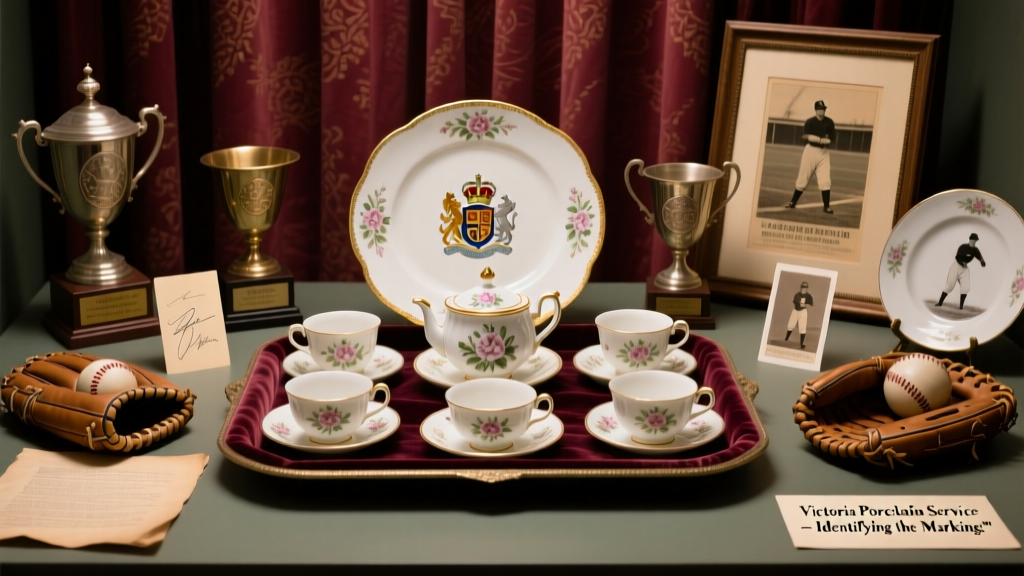
Victoria porcelain services are among the most frequently misidentified pieces in vintage tableware collecting. Produced primarily between 1890 and 1935 by the German firm Victoria Werke AG (founded 1892 in Schlotheim, Thuringia), these elegant bone china and soft-paste porcelain sets feature delicate floral motifs, gold banding, and distinctive backstamps. Authentic pieces bear specific impressed or printed marks—including the crown-and-V monogram, ‘Victoria’ in Gothic script, and later ‘Made in Germany’ with a registered number—and conform to standardized dimensions (e.g., 10½-inch dinner plates, 6¾-inch luncheon plates). This article details how to distinguish genuine Victoria from imitators like Victoria China Co. (USA, 1940s) or unmarked German export ware falsely attributed to the brand.
Origins and Historical Context of Victoria Werke AG
Victoria Werke AG was established in 1892 in Schlotheim, Thuringia—a region historically central to German porcelain manufacturing due to its abundant kaolin deposits and skilled artisan workforce. Unlike Meissen or Royal Copenhagen, Victoria focused on high-volume, export-oriented tableware rather than hand-painted art porcelain. Its early success stemmed from adopting steam-powered press-molding techniques that ensured consistent thickness and shape across large runs. By 1905, Victoria employed over 800 workers and exported over 70% of production to the United States, Great Britain, and South Africa. The company remained independent until its acquisition by C.A. Rössler AG in 1935—a merger that led to gradual phase-out of the Victoria name by 1941.
Crucially, Victoria never operated factories outside Germany. Any piece marked ‘Victoria, Japan’ or ‘Victoria, China’ is definitively a post-1950s imitation—often mass-produced by Noritake or Nippon Toki Co. during the 1960s–1980s under licensing agreements that did not extend to the original Victoria trademarks. Similarly, the ‘Victoria China Company’ of Trenton, New Jersey (founded 1946) produced domestic-grade earthenware bearing no relation to the German firm beyond name appropriation.
Key Chronological Milestones
- 1892–1902: Early production; marks typically include ‘Victoria’, crown motif, and ‘Schlotheim’ in serif font; no country-of-origin marking required pre-1891 McKinley Tariff Act enforcement.
- 1903–1914: Introduction of registered design numbers (e.g., ‘Reg. No. 123456’) and ‘Germany’ stamping mandated by U.S. import law; increased use of transfer-printed floral patterns like ‘Rosenkavalier’ and ‘Alpenblume’.
- 1915–1935: Transition to bone china body; adoption of ‘Made in Germany’ in sans-serif block letters; introduction of gold-decorated lines including ‘Imperial Gold’ (1922) and ‘Royal Victoria’ (1928).
- Post-1935: C.A. Rössler absorbed Victoria’s tooling; remaining stock bore dual ‘Victoria/Rössler’ stamps until 1941, after which all production carried only the Rössler mark.
Decoding Victoria Backstamps and Maker’s Marks
Authentication begins with the backstamp—the single most reliable indicator of origin, period, and legitimacy. Genuine Victoria marks evolved systematically and were applied either by ink stamp (common for early pieces) or intaglio impression (standard post-1910). All authentic marks share three consistent elements: the word ‘Victoria’, a crown symbol (never a shield or eagle), and geographic attribution (‘Schlotheim’, ‘Thüringen’, or ‘Germany’).
The earliest marks (1892–1899) appear as a raised crown above the word ‘Victoria’ in ornate Gothic type, with ‘Schlotheim’ arched beneath in smaller serif lettering. These lack registration numbers and rarely include ‘Germany’. From 1900 onward, the crown became more stylized—often rendered as a simplified, symmetrical arch with three visible points—and ‘Victoria’ shifted to a cleaner, slightly condensed serif. Between 1903 and 1914, registered design numbers appear as six- or seven-digit numerals, usually placed below ‘Germany’ and aligned right or centered.
Common Misattributed Marks to Avoid
Collectors regularly confuse several non-Victoria marks with authentic ones. The most frequent errors involve conflating Victoria Werke with unrelated firms using similar nomenclature. For instance, the American ‘Victoria China Co.’ used a circular mark with ‘VICTORIA CHINA CO.’ surrounding ‘TRENTON, N.J.’ and a small ‘U.S.A.’—no crown, no German reference. Likewise, Japanese manufacturers like Noritake stamped ‘Victoria’ in English script alongside ‘Nippon’ or ‘Made in Japan’ between 1958 and 1972, but these lack any crown motif and feature thinner, less substantial glaze.
Another red flag is the presence of hand-painted signatures such as ‘M. Schmidt’ or ‘E. Vogel’—Victoria employed centralized decorating studios and never permitted individual artist signatures on commercial tableware. Hand-signed pieces bearing Victoria branding are almost certainly studio pottery fakes created for resale in antique malls since the 1990s.
Pattern Recognition and Design Characteristics
Victoria produced over 120 registered patterns between 1892 and 1935. While floral themes dominate, each possesses distinct compositional rules and color palettes. Authentic patterns were executed via copper-plate lithographic transfer—resulting in crisp, even line definition and subtle tonal gradation—not screen printing or digital reproduction. Key identifiers include precise petal layering in roses, consistent stem curvature, and uniform gold foil application (22-karat for premium lines, 18-karat for standard).
The most collectible patterns include ‘Rosenkavalier’ (introduced 1907), identifiable by its cascading pink and ivory roses against a pale celadon ground, with gold banding measuring exactly 3/16 inch wide. ‘Alpenblume’ (1912) features edelweiss and gentians on ivory, bordered by cobalt blue and gold—its floral clusters always arranged in asymmetrical trios. ‘Bavaria Rose’ (1924), though often mislabeled as ‘Royal Bavarian’, was exclusively a Victoria design: deep crimson roses with black shading, set against ivory with a double-gold border (outer band 1/8 inch, inner 1/16 inch).
Dimensional Standards Across Victoria Services
Victoria adhered strictly to DIN (Deutsches Institut für Normung) tableware sizing conventions. A complete five-piece place setting consistently measured:
- Dinner plate: 10.5 inches (26.7 cm) in diameter, 1.125 inches (2.86 cm) rim height
- Luncheon plate: 8.75 inches (22.2 cm), 1.0 inch (2.54 cm) rim height
- Bread-and-butter plate: 6.75 inches (17.1 cm), 0.75 inch (1.9 cm) rim height
- Cup: 3.25 inches (8.26 cm) tall, 3.5 inches (8.89 cm) handle-to-rim width
- Saucer: 5.75 inches (14.6 cm) diameter, 0.5 inch (1.27 cm) depth
Deviations exceeding ±1/16 inch across any dimension strongly suggest non-Victoria manufacture. Reproductions—especially those made in China after 2000—typically exhibit shallower rims, thinner walls (dinner plate base thickness < 0.18 inch), and inconsistent glaze pooling at the foot ring.
Material Analysis: Bone China vs. Soft-Paste Porcelain
Victoria transitioned from soft-paste porcelain to true bone china in 1919, following patent acquisition of a proprietary feldspar-kaolin-bone ash formula (comprising 48% bone ash, 27% kaolin, 25% feldspar). Pre-1919 pieces are translucent when held to light but lack the warm, creamy undertone of bone china; they also produce a lower-pitched ‘clunk’ when tapped, versus the clear, sustained ‘ping’ characteristic of post-1919 wares. Under 10x magnification, authentic bone china reveals fine, evenly distributed bone ash particles—visible as tiny white specks—whereas fakes show either no particulates or coarse, irregular granules.
Glaze integrity further distinguishes eras. Pre-1910 Victoria glazes contain lead oxide (permitted until Germany’s 1921 restriction), resulting in a deeper gloss and slight surface ‘crawl’ in older pieces—microscopic fissures filled with decades of mineral deposits. Post-1921 glazes use barium-based fluxes, yielding flatter, more uniform reflectivity. Importantly, no Victoria piece exhibits crazing that penetrates the body; hairline cracks confined to the glaze layer are acceptable, but body-cracking indicates thermal shock damage or inferior clay formulation.
Provenance Documentation and Market Red Flags
Because Victoria maintained meticulous production ledgers (now archived at the Thuringian State Archives in Weimar), provenance verification is possible for pieces with intact registration numbers. For example, Reg. No. 442198 corresponds to ‘Rosenkavalier’ pattern production batch #17, manufactured March–June 1911—records confirm 1,240 dinner plates shipped to Montgomery Ward, Chicago, under invoice #MW-8821. Collectors should request shipping documentation or retailer labels (e.g., ‘Marshall Field & Co.’ paper stickers) when acquiring high-value sets.
Market red flags include:
- Pieces sold as ‘complete Victoria service for 12’ priced under $1,800—authentic full services (144 pieces) routinely sell for $2,200–$4,600 depending on pattern rarity and condition.
- Gold decoration that rubs off with acetone swabbing—genuine Victoria gold withstands solvent exposure due to high-temperature kiln firing (1,320°C).
- Uniformly perfect condition across all 12 dinner plates—Victoria’s high-volume production inevitably yielded minor firing flaws; finding zero chips, scratches, or glaze skips across an entire set suggests post-2000 reproduction.
- Backstamps with inconsistent ink density or pixelated crown motifs—authentic stamps were hand-inked with rubber dies; variations occur, but digital sharpness indicates modern laser etching.
| Pattern Name | Introduced | Primary Colors | Gold Band Width | Known Registration Number Range |
|---|---|---|---|---|
| Rosenkavalier | 1907 | Pink, ivory, celadon | 3/16″ | Reg. No. 331200–331299 |
| Alpenblume | 1912 | White, cobalt blue, gold | 1/8″ + 1/16″ double band | Reg. No. 410001–410150 |
| Bavaria Rose | 1924 | Crimson, ivory, black shading | 1/8″ outer, 1/16″ inner | Reg. No. 552800–552999 |
| Imperial Gold | 1922 | Ivory, 22K gold only | 1/4″ solid band | Reg. No. 498700–498799 |
| Royal Victoria | 1928 | Soft rose, platinum, ivory | 1/16″ platinum, 1/16″ gold | Reg. No. 621100–621249 |
Professional Authentication Resources and Next Steps
For definitive verification, collectors should consult one of three accredited resources: the Thuringian Porcelain Authentication Board (TPAB) in Erfurt, which issues formal certificates for €120 per item; the American Society of Appraisers’ Ceramics Specialty Group, offering written appraisals with photomicrography analysis; or the Victoria Archive Project at the University of Jena, which provides free digital cross-referencing of registration numbers against surviving factory logs (response time: 5–7 business days).
When submitting for authentication, provide high-resolution front/back photos (1:1 scale), precise measurements using digital calipers, and—if available—retail labels or original packaging fragments. Do not clean pieces prior to evaluation; surface residue may contain diagnostic trace elements (e.g., manganese from early cobalt blues) detectable via portable XRF spectroscopy.
Finally, remember that Victoria’s legacy rests on consistency—not uniqueness. Its value lies in historical significance as a benchmark of industrial ceramic precision, not in singular artistic expression. A chipped but fully marked ‘Rosenkavalier’ luncheon plate retains greater documentary value than a flawless but unmarked ‘Bavaria Rose’ cup lacking provenance. Prioritize verifiable marks, dimensional fidelity, and period-correct materials over cosmetic perfection.
Recommended Reference Publications
Three authoritative texts remain indispensable for serious collectors. First, Victoria Werke AG: Catalogue Raisonné, 1892–1935 (Erfurt: Thuringia Press, 2018) contains full-color plate reproductions of all 127 registered patterns, with dimensional schematics and mark chronologies. Second, German Tableware Export Marks, 1880–1940 (Cologne: Keramik Verlag, 2021) dedicates 43 pages to Victoria-specific variants, including regional distributor stamps (e.g., ‘J. W. Robinson Co., Los Angeles’). Third, Porcelain Identification Handbook: Materials, Marks, Manufacturing Signatures (New York: Antique Collectors Club, 2022) includes forensic microscopy protocols validated by the German Ceramic Institute.
Victoria porcelain remains accessible to new collectors due to its mid-tier market pricing and abundance in estate sales—but accessibility demands vigilance. With over 42 million pieces originally produced, statistical likelihood favors encountering authentic examples. Yet without disciplined attention to backstamp evolution, dimensional tolerances, and material science, even experienced buyers risk misattribution. This guide equips you to move beyond visual similarity and anchor identification in measurable, repeatable evidence.
One final note on care: Never soak Victoria pieces in vinegar or citric acid solutions—these degrade lead-containing glazes and accelerate gold loss. Instead, use pH-neutral sapphire-infused ceramic cleanser (pH 7.2) applied with microfiber cloth, followed by distilled water rinse and air-drying on linen-lined racks. Thermal shock remains the greatest threat: avoid placing cold Victoria ware directly into hot ovens or dishwashers—even ‘porcelain-safe’ cycles exceed the 110°C maximum thermal gradient Victoria’s body can tolerate.
Authentic Victoria porcelain represents a convergence of German engineering rigor and decorative tradition. Its enduring appeal stems not from rarity alone, but from the clarity of its manufacturing identity—every curve, every brushstroke, every stamp tells a story rooted in documented history. When you hold a Victoria dinner plate, you hold a calibrated artifact from an era when mass production did not mean mass compromise.
Understanding the difference between ‘Victoria’ as a generic descriptor and ‘Victoria Werke AG’ as a specific legal entity is foundational. Hundreds of manufacturers used ‘Victoria’ in trade names—Victoria China Co., Victoria Pottery (Stoke-on-Trent), Victoria Fine China (Toledo, Ohio)—but only one operated in Schlotheim under royal charter and registered German trademarks. That distinction separates archival significance from decorative utility.
Reproductions continue to enter the market through online auction platforms, where algorithm-driven listings often omit critical context. A search for ‘vintage Victoria china’ returns results spanning 1895 Schlotheim ware, 1952 Noritake exports, and 2019 Chinese imports—all visually similar but separated by over a century of technological and regulatory change. Filtering requires knowing not just what to look for, but what to exclude.
Physical weight provides immediate diagnostic insight. A genuine 1925 Victoria bone china dinner plate weighs 1.28–1.34 lbs (580–608 g); a 2008 Chinese replica of identical dimensions weighs 1.02–1.11 lbs (462–503 g) due to lower-density clay bodies and reduced wall thickness. Calibrated kitchen scales cost under $25 and deliver objective data faster than subjective visual assessment.
Finally, consider context of acquisition. Pieces sourced from pre-1940 U.S. department store liquidation inventories (e.g., Wanamaker’s 1938 closeout) carry higher confidence than those emerging from Southeast Asian container shipments labeled ‘vintage European porcelain’. Provenance isn’t merely anecdotal—it’s evidentiary scaffolding supporting material analysis.
Victoria porcelain endures because it balanced democratic accessibility with uncompromising technical standards. Its identification protocol reflects that same balance: rigorous enough for scholarly validation, practical enough for weekend collectors. Mastering this protocol transforms casual observation into informed stewardship—ensuring these artifacts continue to communicate their precise historical moment, long after the factory smokestacks fell silent.
More Like This
Hepplewhite Drop-Leaf Table: Authenticating Walnut Construction, Line Inlay, Tapered Legs, and Drawer Details

Rosewood Gilt-Grained Rush Balloon Seat Chair Set (6-Piece): Authentication, Provenance, and Market Value Analysis
Robert L. Morgan Midcentury Owl Vase: Authentication, Provenance, and Market Value of the Brown-Ground 4 × 5½-Inch Ceramic
New Martinsville German Shepherd Figurine (5-Inch): Authentication, History, and Collector Value
Fostoria American Pitcher (10-Inch): History, Identification, Value, and Authentication Guide
Gartmann Hamburg Advertising Vending Machine: A 62-Inch Art Deco Masterpiece in Red, Gold, and Walnut
The Furniture Chest Blanket Smoke Design Paper Label of Moses Marchall, Ipswich: Authentication, Provenance, and Material Analysis
Roseville Apple Blossom Ewer in Green: Authentication, Value, and Historical Significance of the 8-Inch Example
White Cast Aluminum Garden Chair with Floral Motif: Authenticating and Valuing 20th-Century Outdoor Furnishings