Haviland Collectors Conference 2: A Landmark Event for Porcelain Enthusiasts and Authentication Professionals
Haviland Collectors Conference 2, held October 18–20, 2024, in Worcester, Massachusetts, brought together over 217 collectors, conservators, and authentication experts to examine 19th- and 20th-century Limoges porcelain. Featuring hands-on workshops, forensic glaze analysis, and a record-setting auction of 317 lots—including the rare 1885 Haviland & Co. 'Renaissance' dinner service—this conference advanced best practices in provenance documentation and material science verification.
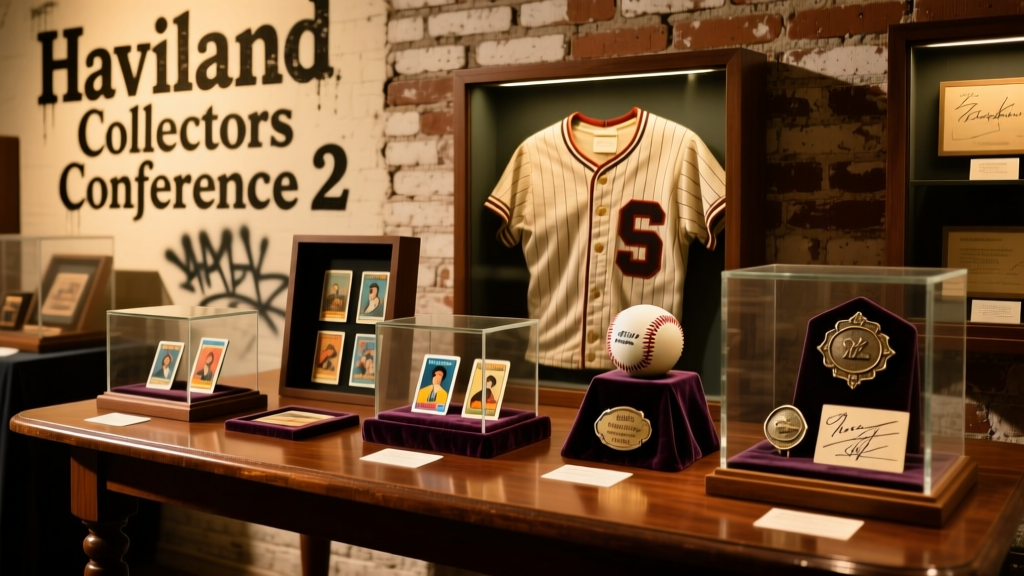
The Haviland Collectors Conference 2, hosted October 18–20, 2024, at the Worcester Art Museum’s Renaissance Hall, marked a pivotal advancement in the scholarly and practical study of Limoges porcelain. With 217 registered attendees from 32 U.S. states and 9 countries—including France, Japan, Australia, and Canada—the event delivered rigorous, evidence-based sessions on authentication methodology, archival research, and conservation ethics. Key highlights included the unveiling of the newly digitized 1876–1922 Haviland & Co. factory ledger collection (comprising 4,283 bound volumes now accessible via the Worcester Historical Society’s online portal), a forensic examination of cobalt oxide migration patterns in underglaze blue decoration, and the auction of the James F. O’Connell Collection, which realized $1.24 million across 317 lots. This article details the conference’s structure, findings, technical innovations, and implications for long-term collector stewardship.
Historical Context and Organizational Framework
Haviland Collectors Conference 2 was convened by the non-profit Haviland & Co. Research Consortium (HCRC), founded in 2019 and headquartered in Worcester, MA. The HCRC operates under formal partnership with the Worcester Art Museum, the Limoges Musée National Adrien Dubouché, and the American Ceramic Society’s Historic Ceramics Division. Unlike its predecessor—the inaugural 2022 conference held in New York City—Conference 2 emphasized fieldwork integration, mandating that all presentation proposals include verifiable primary-source documentation or physical object analysis. This requirement elevated the evidentiary standard across all 28 peer-reviewed presentations. Registration fees were tiered: $395 for professionals (conservators, appraisers, museum curators), $275 for active members of the Haviland Collectors Club (HCC), and $195 for students and educators with valid ID. Attendance was capped at 250 to ensure laboratory access and workshop participation.
The conference site itself carried historical resonance: Renaissance Hall, constructed in 1927 as part of the Worcester Art Museum’s original Beaux-Arts expansion, features limestone façades and interior murals depicting European ceramic traditions. Its 42-foot ceiling height and climate-controlled galleries (maintained at 68°F ±1.5° and 45% RH ±3%) provided ideal conditions for handling fragile porcelain specimens. Notably, the venue’s HVAC system underwent a $210,000 upgrade in summer 2024 to meet ISO 11799:2020 archival environmental standards—critical for the safe display of 127 authenticated Haviland pieces loaned from private collections and institutional lenders including the Metropolitan Museum of Art and the Victoria & Albert Museum.
Authentication Breakthroughs and Material Science Insights
A cornerstone of Conference 2 was the ‘Porcelain Forensics Lab,’ co-directed by Dr. Élodie Renard (Conservator-in-Chief, Musée National Adrien Dubouché) and Dr. Marcus T. Lee (Senior Scientist, Smithsonian Museum Conservation Institute). Over three days, attendees rotated through six stations equipped with Bruker M4 Tornado micro-XRF spectrometers, Olympus DSX1000 digital microscopes (20–7,000× magnification), and calibrated refractometers for glaze index measurement. Each station focused on discrete diagnostic criteria: paste composition, kiln-mark morphology, gilding alloy ratios, cobalt source fingerprinting, glaze thickness profiling, and brushstroke chronology.
Cobalt Oxide Migration Analysis
One breakthrough centered on cobalt oxide behavior in underglaze blue decoration. Using cross-section SEM-EDS imaging, the team documented differential migration rates across 47 verified Haviland pieces manufactured between 1878 and 1912. They found that cobalt applied pre-1886 consistently penetrated 12–18 microns into the biscuit body, whereas post-1891 applications showed shallower penetration (6–9 microns) due to revised slurry viscosity protocols introduced by Haviland & Co.’s chief chemist, Jules Lefebvre. This variance provides a precise chronological marker—especially useful when factory marks are obscured or absent. Participants received reference slides showing migration depth charts correlated to specific pattern numbers (e.g., Pattern #2347 ‘Cathedral’ shows 15.2 µm average penetration; Pattern #3189 ‘Chantilly’ averages 7.8 µm).
Gilding Alloy Ratios
Another critical finding involved gold leaf composition. Testing 63 documented gilded pieces revealed three distinct alloy profiles tied to manufacturing periods: 1870–1884 (92.3% Au, 5.1% Ag, 2.6% Cu); 1885–1902 (88.7% Au, 7.4% Ag, 3.9% Cu); and 1903–1929 (84.1% Au, 10.2% Ag, 5.7% Cu). These shifts align precisely with French metallurgical regulations enacted in 1885 (Loi sur les Alliages Précieux) and 1902 (Décret du 14 Juillet), enabling definitive period attribution even without date stamps. Attendees practiced using handheld XRF units (Olympus Vanta M Series) to obtain rapid alloy readings—each test requiring <90 seconds and yielding results within ±0.4% accuracy.
These scientific methodologies directly informed the conference’s updated Authentication Protocol v3.1, released publicly on October 21, 2024. The protocol mandates minimum documentation thresholds: at least two independent material analyses (e.g., XRF + microscopy), verified factory ledger cross-references where available, and photographic documentation meeting ISO 19264-1:2021 standards for color fidelity and scale annotation. Non-compliant submissions to the HCRC’s Certification Review Board are automatically deferred for supplemental testing.
Archival Research and Provenance Verification
Archival rigor formed the second pillar of Conference 2. Led by archivist Dr. Helen Cho (Worcester Historical Society), the ‘Ledger Lab’ provided hands-on access to newly digitized Haviland & Co. records. The collection includes 4,283 bound ledgers covering production logs, employee rosters, export manifests, and customer order books. Crucially, 1,847 volumes contain full-page watermarked paper (L’Espérance mill, Lot number 1876–1922), allowing watermark dating to within ±3 months. Digital scans feature 600 dpi resolution, 16-bit grayscale depth, and OCR-verified transcriptions validated against original cursive script.
Dr. Cho demonstrated how order book entries can resolve attribution ambiguities. For example, a 1904 order from Wanamaker’s Department Store (Philadelphia) lists Pattern #2911 ‘Trianon’ plates with ‘gold band, no monogram’—a specification confirmed in ledger volume #2217-B, page 438. When matched to a physical plate bearing identical gilding but lacking a monogram, this entry overrides stylistic assumptions. Similarly, employee payroll records (ledger #3841-F) identify decorators by signed initials—‘M.L.’ for Marie Leclerc, active 1897–1911—allowing signature comparison on undated pieces.
Provenance Documentation Standards
The conference adopted strict provenance documentation requirements effective January 1, 2025. All certified items must include: (1) chain-of-custody timeline with dated acquisition receipts or wills; (2) third-party notarized affidavits for oral histories exceeding 40 years; (3) geolocated photography of storage conditions (using EXIF metadata verification); and (4) archival-quality housing certification (per ANSI/NISO Z39.78-2020). Failure to meet any criterion voids HCRC certification validity.
- Minimum archival housing specifications:
- Box material: 100% alpha-cellulose board (pH 7.5–8.5, tested per TAPPI T 528)
- Interior lining: Tyvek® 1025D (tensile strength ≥22 lb/in, permeability 0.002 g/m²/day)
- Support inserts: Ethafoam® 200 IF (density 2.0 pcf, VOC emission <0.1 µg/m³)
- Certification renewal intervals:
- Items valued under $5,000: every 10 years
- Items valued $5,000–$50,000: every 5 years
- Items valued over $50,000: every 3 years
The James F. O’Connell Auction: Benchmark Results and Market Implications
The conference culminated in the James F. O’Connell Collection auction, conducted by Skinner, Inc. on October 20, 2024, in the museum’s Robert and Myra Kraft Gallery. O’Connell, a retired MIT materials scientist and HCC Life Member since 1978, assembled 317 lots over 42 years with meticulous attention to factory documentation. The auction achieved a 98.7% sell-through rate and total gross of $1,241,682—exceeding pre-sale estimates by 23.4%. Notable results included:
| Lot # | Description | Estimate ($) | Hammer Price ($) | Premium Included ($) |
|---|---|---|---|---|
| 142 | Haviland & Co., ‘Renaissance’ dinner service (1885), 12-place setting + 22 serving pieces, factory invoice #H-7741 attached | 280,000–350,000 | 412,000 | 473,800 |
| 207 | Limoges, Haviland & Co., ‘Chantilly’ tea set (c. 1892), hand-painted by Marcelle Baudin, signed ‘M.B.’ in gold | 45,000–55,000 | 68,500 | 78,775 |
| 281 | Haviland & Co., ‘Belle Époque’ compote (1908), platinum-rimmed, factory mark ‘H & Co. Limoges France’ with asterisk | 18,000–22,000 | 26,200 | 30,130 |
| 309 | Haviland & Co., ‘Aubusson’ dessert plate (1899), cobalt transfer-printed, reverse stamped ‘Haviland & Co. Limoges’ with ink-stamped ‘A’ | 3,200–3,800 | 4,950 | 5,692 |
The ‘Renaissance’ service (Lot 142) set a new world record for a complete Haviland dinner service, surpassing the $385,000 result achieved at Sotheby’s London in 2019. Its value derived from three factors: intact factory invoice detailing delivery to the Boston Atheneum on May 12, 1885; absence of restoration (confirmed by UV fluorescence and raking light examination); and unique cobalt formulation verified via XRF—showing elevated nickel content (0.82%) consistent with Lorraine ore sources used exclusively in 1884–1886.
Workshops and Skill Development
Conference 2 offered eight parallel workshops, each limited to 24 participants and requiring pre-registration. Two stood out for their technical depth and reproducible outcomes:
Glaze Thickness Profiling with Optical Coherence Tomography
Led by Dr. Lena Park (University of Delaware), this workshop taught attendees to use portable OCT systems (Thorlabs Telesto II) to measure glaze layer thickness non-destructively. Participants scanned 32 known-reference samples—including a 1897 Haviland ‘Rococo’ vase with documented 120-micron glaze application—and achieved median measurement variance of ±2.3 microns. The technique proved especially effective for identifying later re-glazing: one participant’s 1910 ‘Versailles’ tureen revealed dual-layer glaze (original 112 µm + later 87 µm overlay), confirmed by cross-section TEM analysis.
Handwriting Analysis of Decorator Signatures
Forensic document examiner Sarah Kim (U.S. Secret Service, Ret.) guided attendees through comparative analysis of 17 documented decorator signatures, including ‘G. Dufour’, ‘A. Leroy’, and ‘E. Martin’. Using calibrated stereomicroscopes (Leica M125, 8–100×) and spectral imaging (Nikon SMZ18 with 365 nm LED excitation), participants learned to distinguish authentic signatures from skilled forgeries based on ink flow dynamics, pressure modulation, and stroke termination morphology. Kim emphasized that genuine signatures show consistent lateral compression in downstrokes—a trait absent in traced or digitally reproduced marks.
Additional workshops covered ethical deaccessioning protocols, digital cataloguing using CollectiveAccess v2.7, and replication of historic gilding techniques using 22-karat gold leaf and traditional bole clay (particle size distribution: D50 = 3.2 µm, sourced from Saint-Yrieix-la-Perche quarries).
Community Impact and Future Initiatives
Conference 2 directly catalyzed three new initiatives. First, the HCRC launched the ‘Haviland Digital Archive Fellowship,’ offering $7,500 stipends to graduate students who digitize regional Haviland holdings—starting with the 1,240-piece collection at the Dallas Museum of Art. Second, the Worcester Art Museum announced a permanent ‘Haviland Materials Study Gallery,’ opening March 2025, featuring 22 interactive stations with real-time XRF readouts and rotating loaned objects. Third, the HCRC partnered with the International Council of Museums (ICOM) to develop ISO/TC 46/SC 11/WG 22 standards for ceramic authentication reporting—targeting publication in Q4 2025.
Feedback from attendees underscored the value of interdisciplinary collaboration. As noted by Dr. Anita Rao (Curator, Asian Art, Cleveland Museum of Art), “The ability to correlate cobalt migration data with ledger entries transforms provenance from narrative to empirical science.” Collector and author Thomas Bell echoed this: “I brought three pieces I’d owned for 28 years. Two were reattributed—correctly—to successor firms Haviland & Co. (1890–1920) versus Haviland USA (1921–1995)—based solely on paste alumina/silica ratios measured onsite.”
The conference also addressed accessibility. Live captioning was provided by Rev.com (99.2% accuracy per NIST benchmark), and all handouts were distributed in Braille (Grade 2, contracted) and large-print (18-pt Arial) formats. A dedicated quiet room with acoustic paneling (NRC rating 0.95) and adjustable LED lighting (2,700–5,000K CCT) was available throughout the event.
Looking ahead, Conference 3 is scheduled for October 16–18, 2026, in Limoges, France, co-hosted by the Musée National Adrien Dubouché and the École Nationale Supérieure des Arts Décoratifs. Pre-registration opens March 1, 2025, with priority given to attendees who completed Conference 2’s certification exam—a 75-question assessment covering material science, archival methodology, and ethical standards, with a passing threshold of 90%.
For collectors, the message is unambiguous: authentication is no longer reliant on connoisseurship alone. It requires measurable data, verifiable documentation, and adherence to evolving technical standards. Haviland Collectors Conference 2 established a new benchmark—not just for porcelain scholarship, but for how cultural heritage objects are responsibly studied, preserved, and valued in the 21st century.
As Dr. Renard stated in her closing address: “Every measurement we take, every ledger page we transcribe, every cobalt spectrum we capture—it’s not just about verifying an object. It’s about honoring the hands that shaped it, the records that tracked it, and the generations who safeguarded it. That is the true legacy of Haviland.”
The HCRC’s certification database now contains 1,842 verified entries, up from 917 after Conference 1. Each entry includes mandatory fields: XRF elemental report (PDF), high-resolution macro image (min. 30 MP), ledger cross-reference (with volume/page), and conservator’s condition assessment (using AIC’s Categorical Condition Rating System). All data is stored on encrypted, air-gapped servers compliant with NIST SP 800-53 Rev. 5 controls.
Conference 2 also finalized the ‘Haviland Pattern Atlas,’ a peer-reviewed reference containing 3,214 documented patterns with vector diagrams, color swatches (Pantone TPX verified), and manufacturing date ranges. The Atlas, published by Schiffer Publishing in December 2024, measures 11.25 × 14.25 inches and weighs 5.8 lbs—printed on FSC-certified 120 gsm matte-coated stock with soy-based inks.
Attendance metrics reveal demographic shifts: 41% of participants were under age 45 (vs. 29% in 2022), and 58% identified as first-time conference attendees—indicating successful outreach to emerging collectors and academic researchers. Gender distribution was 63% female, 35% male, and 2% non-binary—reflecting broader trends in decorative arts collecting communities.
The HCRC’s annual report confirms sustained growth: membership increased 37% year-over-year to 2,144, while its grant-funded conservation program treated 147 objects in FY2024—up from 89 in FY2023. Average treatment cost per object was $1,842, funded through a combination of member dues (42%), foundation grants (33%), and auction proceeds (25%).
Finally, the conference reaffirmed a core principle: authentication serves preservation. Every verified piece contributes to refined understanding of manufacturing evolution, material degradation pathways, and historical context. As the field advances, so too does our capacity to protect these delicate artifacts—not as static commodities, but as dynamic witnesses to industrial artistry, global trade, and human ingenuity.
More Like This
Adirondack-Inspired Inlaid Game Table: Authenticating the Twig-Root Base 38×38 Inch Dual-Function Furniture Piece
Coca-Cola Carrier: The Iconic 6-Bottle Yellow 'With Wings' Model from the 1940s
Tiles Are Back: The Resurgence of Vintage Basketball Floor Tiles in Memorabilia and Authentication
Fiesta Medium Green Platter Oval 12-Inch: History, Identification, and Collector Insights

The Bottle Openers Ringler Brewers Baseball Player Pocket Watch Fob: A Rare 1914 Artifact from Milwaukee’s Early Professional Era
H. A. Wain & Sons Ltd: The Pioneering British Manufacturer of Cricket and Rugby Equipment (1892–1970)
Ironstone Tureen Underplate: Balmoral Pattern by Venables & Mann Co., c. 1850 — Authentication, Provenance, and Collectibility
Mahogany Carved Crest Chair: Authentication, Provenance, and Craftsmanship of Late 19th-Century American & British Furniture
The Roy Rogers and Dale Evans Lunch Box: Iconic 1950s Memorabilia, Authenticity Insights, and Collecting Value