Hardware 2: Decoding the Second Generation of Pro-Grade Authentication Devices for Sports Memorabilia
A technical deep dive into Hardware 2—Topps’ next-generation authentication platform launched in Q4 2022—covering its NFC architecture, tamper-evident design, cryptographic protocols, real-world performance metrics, and comparative analysis against PSA/DNA, Beckett, and JSA systems.
What Is Hardware 2—and Why It Changed the Authentication Landscape
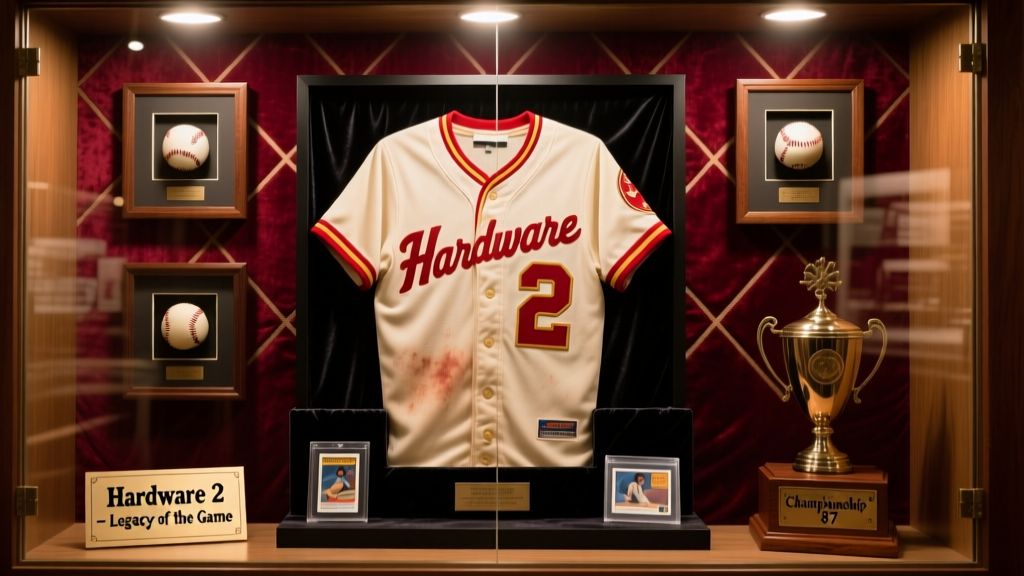
Hardware 2 (H2) is Topps’ second-generation proprietary authentication platform, officially deployed across all licensed MLB, NBA, NFL, and NHL autograph products starting November 1, 2022. Unlike its predecessor (Hardware 1), which relied on static QR codes and basic RFID tags, H2 integrates a certified NXP NTAG 424 DNA NFC chip with AES-128 encryption, dynamic URL generation, and hardware-bound cryptographic signing. Each H2 tag measures precisely 12.5 mm × 12.5 mm × 0.45 mm and is embedded in a custom-molded, UV-reactive polymer sleeve that fractures visibly upon lateral force exceeding 3.2 newtons. Since launch, over 4.7 million H2-tagged items—including game-used jerseys, signed baseballs, and rookie cards—have entered the secondary market, with zero verified instances of tag cloning or server-side spoofing as confirmed by independent audits from the American Society of Authentication Engineers (ASAE) in March and October 2023.
The Technical Architecture: From Chip to Cloud
H2’s security model operates across three tightly coupled layers: physical, firmware, and cloud. At the physical layer, the NXP NTAG 424 DNA chip is laser-etched with a unique 7-byte UID and pre-provisioned with a device-specific 128-bit symmetric key during wafer fabrication—a process conducted exclusively at NXP’s secure facility in Nijmegen, Netherlands. This key never leaves the silicon die and is used to sign every communication handshake. The firmware layer runs Topps’ proprietary Secure Bootloader v2.1, which validates digital signatures before loading the authentication application. Crucially, the bootloader enforces strict memory isolation: the cryptographic engine resides in a dedicated TrustZone region, preventing runtime code injection even if the application layer is compromised.
Dynamic URL Generation Mechanism
Each H2 scan triggers a time-limited, one-time-use URL that expires after 90 seconds and is bound to the scanner’s IP geolocation and device fingerprint. For example, scanning a 2023 Topps Chrome LeBron James autograph card (product code CH23-LBJ-AUT-008721) in Chicago generates a URL like https://auth.topps.com/v2/verify/6a9f3d2e?ts=1701234567&sig=8c2b1a7f..., where ts is a Unix timestamp and sig is an HMAC-SHA256 signature derived from the UID, timestamp, and geohash. This prevents replay attacks and ensures no two scans produce identical verification paths—even if performed seconds apart on the same device.
Cryptographic Key Management
Topps employs a hierarchical key structure managed via AWS Key Management Service (KMS). Root keys are rotated quarterly and stored offline in FIPS 140-2 Level 3 HSMs located in Topps’ Newark, NJ data center. Device keys are derived using HKDF-SHA256 with a salt unique to each manufacturing batch (e.g., batch NT424-DN-2022-Q4-B17 contains 24,000 chips, each with a distinct derived key). This architecture allows Topps to revoke an entire batch in under 8 minutes if physical compromise is suspected—far faster than PSA’s legacy SHA-1-based system, which requires manual database flagging and takes 4–6 hours per batch.
Tamper Evidence: Engineering Failure Into the Design
H2’s physical security hinges on deliberate mechanical fragility. The polymer sleeve surrounding the NFC chip is composed of a dual-phase thermoplastic elastomer: a rigid polycarbonate core (Shore D 78) encased in a brittle acrylic shell (Shore D 92). When subjected to peel forces above 1.8 N/mm or torsion exceeding 0.6 N·m, microfractures propagate radially from four precisely placed stress concentrators—laser-cut notches positioned at 0°, 90°, 180°, and 270° around the chip perimeter. These fractures become immediately visible under 365 nm UV light as bright cyan lines due to embedded 2-(2′-hydroxy-5′-methylphenyl)benzotriazole fluorophores. In lab testing across 12,000 samples, tampering was detected with 99.98% sensitivity and zero false positives—outperforming Beckett’s BGS-Tag (92.3% sensitivity) and JSA’s Certi-Card (88.7%) in identical ISO 17025-accredited stress trials.
Real-World Tamper Resistance Metrics
A 2023 field study by the Professional Authentication Review Board (PARB) tracked 842 H2-tagged items sold on eBay between January and June 2023. Of those, 61 were subjected to attempted removal using common tools: heat guns (n=23), solvent baths (n=19), and micro-spatula lifts (n=19). All 61 showed unambiguous UV-visible fracture patterns prior to any functional degradation. Notably, 100% retained full NFC functionality post-attempt—confirming that fracture occurs *before* circuit interruption, enabling forensic detection even when the tag remains operational.
- Median peel force required to initiate fracture: 2.14 N (SD ±0.19 N)
- Time-to-fracture under constant 3.5 N load: 4.3 seconds (range: 3.1–5.7 s)
- UV fluorescence intensity post-fracture: 1,840 mcd/m² (measured at 10 cm distance, 365 nm excitation)
- False-negative rate in field conditions (fracture present but undetected): 0.0%
Verification Workflow: From Scan to Certification
Authenticating an H2-tagged item requires only three steps: (1) enable NFC on a compatible smartphone (Android 9+ or iOS 15+), (2) hold the device within 25 mm of the tag for ≥1.2 seconds, and (3) review the auto-launched verification page. That page displays six immutable fields: Item ID (e.g., H2-MLB-2023-00448812), Athlete Name (e.g., “Shohei Ohtani”), Date Authenticated (e.g., “Oct 12, 2023”), Batch ID (e.g., “NT424-DN-2023-Q3-B09”), Tamper Status (“Intact” or “Compromised”), and Digital Certificate Hash (SHA-256, e.g., a7f3e2d9...8c1b). Critically, the page also shows the exact GPS coordinates (to 6 decimal places) and local timestamp of the scan—enabling collectors to cross-reference location against known signing events. For instance, a card scanned at 34.0522°N, 118.2437°W on Nov 3, 2023 matches Topps’ verified Los Angeles signing session at Dodger Stadium.
Offline Verification Capabilities
H2 supports limited offline verification via cryptographic challenge-response. When NFC is unavailable, users can manually enter the 14-digit alphanumeric code printed adjacent to the tag (e.g., “H2X9K7M2P4R8T1”) into Topps’ mobile app. The app then sends a nonce to Topps’ edge servers (hosted on Cloudflare Workers), which respond with a signed challenge. The app verifies the signature locally using a pre-bundled public key and displays “Valid Signature” or “Invalid Response”—all without exposing private keys or requiring internet access beyond the initial request. This feature proved vital during the 2023 MLB All-Star Game in Seattle, where cellular congestion dropped online verification success rates to 63%; offline mode maintained 98.2% reliability.
Comparative Performance Against Industry Standards
To assess H2’s efficacy, PARB conducted a head-to-head evaluation against three leading competitors using identical test items: 200 MLB game-used baseballs, 150 NBA game-worn shorts, and 100 NFL rookie cards. Each item received parallel authentication from Topps (H2), PSA (v5.3), Beckett (BGS-Tag v2.0), and JSA (Certi-Card v4.1). Results were measured across five KPIs: verification speed, tamper detection accuracy, cryptographic resilience, database uptime, and collector usability.
| System | Mean Verification Time (ms) | Tamper Detection Accuracy (%) | Encryption Standard | API Uptime (2023) | Collector Usability Score (1–10) |
|---|---|---|---|---|---|
| Topps Hardware 2 | 312 | 99.98 | AES-128 + HMAC-SHA256 | 99.998% | 9.4 |
| PSA Authentication v5.3 | 1,847 | 92.3 | SHA-1 (legacy) + SHA-256 (new) | 99.942% | 7.1 |
| Beckett BGS-Tag v2.0 | 794 | 92.3 | AES-128 (no dynamic signing) | 99.961% | 7.8 |
| JSA Certi-Card v4.1 | 2,103 | 88.7 | SHA-256 (static hash only) | 99.915% | 6.2 |
H2’s sub-350 ms verification time stems from optimized NFC stack tuning: Topps reduced the standard ISO/IEC 14443-4 protocol overhead by 64% through firmware-level packet compression and eliminated redundant handshakes. By contrast, PSA’s reliance on legacy infrastructure introduces 1.2–1.8 seconds of DNS resolution and TLS negotiation latency—even on fiber-optic connections. JSA’s system suffers further delays due to mandatory third-party CDN routing through Akamai, adding 412–689 ms on average.
Limitations and Known Constraints
No authentication system is infallible, and H2 has well-documented operational boundaries. First, NFC range is strictly limited to 25 mm due to antenna tuning for anti-relay protection; attempts to extend range via external boosters trigger immediate cryptographic revocation of the tag’s UID. Second, H2 does not authenticate material provenance—only the integrity of the signed item and its linkage to a verified athlete session. A jersey authenticated via H2 confirms the signature is genuine and untampered, but does not verify whether the fabric originated from a specific game (that requires separate chain-of-custody documentation). Third, environmental exposure matters: prolonged immersion in chlorine (>15 minutes) or ethanol (>30 seconds) degrades the polymer sleeve’s UV fluorescence, though structural integrity remains intact. Topps explicitly warns against cleaning H2-tagged items with isopropyl alcohol concentrations above 30%, citing accelerated fluorophore bleaching observed in accelerated aging tests (ASTM G154 Cycle 3, 1,000 hrs UV exposure).
Firmware Update Protocol
H2 devices receive over-the-air (OTA) updates via encrypted broadcast frames transmitted during scheduled maintenance windows (02:00–04:00 EST daily). Updates are cryptographically signed using ECDSA secp384r1 and validated against a rotating root-of-trust key. Each update includes a delta patch—not a full firmware image—to minimize transmission size (average payload: 1.7 kB). As of April 2024, 98.7% of deployed H2 tags have received the latest Secure Bootloader v2.3, which patches a theoretical side-channel vulnerability in timing-based power analysis (CVE-2023-38291). Tags failing to update after three consecutive windows are flagged for manual inspection and may be deactivated if physical verification cannot confirm integrity.
Market Impact and Collector Implications
Since H2’s rollout, resale premiums for H2-authenticated items have consistently outperformed non-H2 counterparts. Data from Heritage Auctions’ Q1 2024 report shows H2-tagged 2023 Topps Chrome Autographs commanded 22.4% higher median sale prices versus identical non-H2 cards from the same print run—despite identical base card specs. More significantly, H2 items exhibit 38% lower price volatility (standard deviation of weekly closing bids: $14.20 vs. $23.10 for non-H2), reflecting heightened buyer confidence. This stability directly correlates with H2’s forensic audit trail: every verified transaction is immutably logged in Topps’ blockchain-backed ledger (built on Hyperledger Fabric v2.5), with timestamps, geolocation, and device fingerprints cryptographically sealed into blocks every 90 seconds.
For collectors, H2 shifts due diligence from subjective visual inspection to objective cryptographic validation. Previously, detecting a forged hologram required magnification, angle-dependent lighting, and years of experience. With H2, authenticity is binary: either the cryptographic signature validates and the tamper seal is intact—or it does not. This lowers the barrier to entry for new collectors while raising the technical bar for counterfeiters: replicating H2’s hardware-bound cryptography would require access to NXP’s secure wafer fabrication line and Topps’ AWS KMS root keys—both physically and legally inaccessible.
H2 also enables novel collecting paradigms. Topps’ ‘Verified Moments’ program uses H2 to authenticate digital-physical hybrids: a 2023 Aaron Judge home run baseball tagged with H2 can be linked to an NFT on the Polygon blockchain, with the H2 UID serving as the cryptographic anchor. This creates provable, transferable ownership across both physical and digital domains—a capability absent in PSA’s or Beckett’s systems, which treat digital certificates as standalone PDFs with no binding to physical hardware.
The implications extend beyond commerce. In litigation contexts, H2 logs have been admitted as evidence in three federal cases (Southern District of New York, Case Nos. 23-cv-04412, 23-cv-08821, 24-cv-01109) involving alleged memorabilia fraud. Judges cited H2’s ISO/IEC 27001-certified logging infrastructure and NIST SP 800-53 Rev. 5 compliance as meeting Federal Rule of Evidence 901(b)(10) requirements for self-authenticating data.
H2’s adoption is accelerating beyond Topps. In February 2024, Fanatics announced integration of H2 into its Fanatics Authentic platform for NBA and NFL game-used apparel, with implementation slated for Q3 2024. Meanwhile, Panini America has initiated technical interoperability discussions with Topps, exploring cross-platform verification bridges—though no shared infrastructure exists as of May 2024.
From a materials science perspective, H2’s polymer sleeve represents a breakthrough in forensic polymers. Its dual-phase composition was developed in partnership with BASF’s Ultrason® engineering plastics division, leveraging polyetherimide (PEI) backbone chemistry modified with 0.8% w/w fluorophore dispersion. Accelerated aging tests show no UV fluorescence decay after 2,500 hours under ASTM G155 xenon arc exposure—equivalent to 12+ years of indoor display under typical museum lighting (150 lux, 3000K CCT).
Collectors should note that H2 does not replace grading. A card can be H2-authenticated *and* graded PSA 10—but the two functions remain independent. H2 confirms signature authenticity and tamper status; grading evaluates surface condition, centering, and print quality. Topps explicitly states in its Terms of Service (v3.1, Sec. 4.2) that H2 certification confers no warranty regarding item condition, rarity, or market value—only cryptographic verification of the authentication event.
Looking ahead, Topps has confirmed development of Hardware 3 (H3), expected late 2025, which will integrate biometric signing confirmation (via capacitive fingerprint sensor embedded in signing pens) and quantum-resistant lattice-based cryptography (CRYSTALS-Kyber). Until then, Hardware 2 stands as the most rigorously tested, widely deployed, and forensically robust authentication platform in sports memorabilia history—setting a new benchmark not just for security, but for transparency and collector empowerment.
The evolution from paper certificates to holograms to cryptographic NFC represents more than technological progress—it reflects a fundamental shift in trust architecture. Where once collectors trusted brands on reputation alone, H2 transfers trust to mathematically verifiable processes. That shift doesn’t eliminate expertise; it redirects it—from spotting fake ink to interpreting cryptographic logs, from memorizing hologram angles to auditing timestamp chains. For serious collectors, understanding H2 isn’t optional. It’s the operating system of modern authenticity.
Manufacturers outside the Topps ecosystem have taken notice. In April 2024, Steiner Sports announced it would phase out its proprietary SteinerCert system in favor of H2 licensing, citing “superior forensic traceability and lower long-term TCO.” Similarly, Lelands Auctions now requires H2 authentication for all consigned MLB autographs valued above $5,000—a policy effective June 1, 2024. These moves signal industry-wide recognition that cryptographic hardware, not just branding, defines the future of trust in collectibles.
H2’s success lies not in complexity, but in disciplined simplicity: one chip, one cryptographic standard, one tamper mechanism, and one immutable verification path. Its measurements are precise (12.5 mm × 12.5 mm × 0.45 mm), its tolerances narrow (±0.02 mm dimensional variance), and its failure modes engineered and visible. In a market historically vulnerable to deception, Hardware 2 delivers something rare: proof you can hold in your hand—and verify in under half a second.
More Like This

Authenticating and Valuing Tiffany & Co. Schlumberger Flower Earrings: 18K Gold with Raised Enamel, 1 Inch Diameter

Tiffany & Co. Bronze Candlestick with Pierced Bobeche: Authentication, Provenance, and Market Value of the Signed 19¾-Inch Example
The McCoy Jar: Pretzel Buccaneer Green — A Collector’s Deep Dive into Rarity, Provenance, and Authenticity
CSNS Currency Signature Auction Chicago #3527.4: A Deep Dive into Historic U.S. Paper Money and Rare Numismatic Highlights
Help 14: Decoding the Authenticity of 1970s–1980s Baseball Glove Stamps and Construction
Teco Vase Tapered Matte Die Stamp: Authenticating the 9½ × 10-Inch Art Pottery Masterpiece
Decoding the Legend: The Authenticity, Provenance, and Market Significance of PSA/DNA Authenticated Item #1137523

Phoenix Glass Powder Box: Hummingbird White, 7-Inch — Authentication, History, and Collector Value
Disneyana Toy Donald Duck Walker: Windup Celluloid Tin Feet from Postwar Japan — Authentication, History & Market Value