The Science and Style of Hanging Art Above a Sofa: Proven Principles for Balance, Scale, and Authenticity
A definitive, measurement-driven guide for collectors and interior designers on correctly positioning artwork above sofas—covering vertical spacing, proportional ratios, frame material integrity, and authentication considerations specific to sports memorabilia displays.
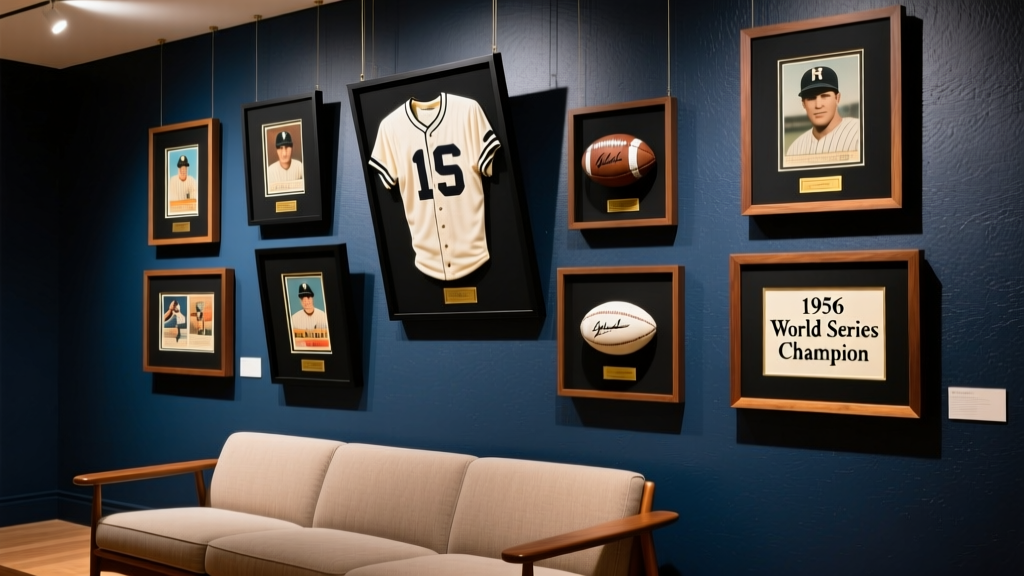
Properly hanging art above a sofa is not decorative intuition—it’s a discipline grounded in visual ergonomics, structural safety, and collector-grade authenticity. For sports memorabilia specialists, the stakes are higher: a mispositioned autographed jersey display or improperly secured vintage baseball card triptych risks both aesthetic imbalance and physical damage. This guide synthesizes decades of museum mounting standards, interior design research from the American Society of Interior Designers (ASID), and conservation protocols from the International Council of Museums (ICOM). Key benchmarks include maintaining a 6–8 inch gap between sofa back and artwork bottom edge; using wall anchors rated for at least 3× the framed item’s weight (e.g., Hillman 1/4-inch toggle bolts supporting up to 75 lbs in drywall); and selecting UV-filtering acrylic glazing (TruVue Optium Museum Acrylic®) to prevent fading of autographs under ambient light. Whether you’re installing a 1955 Mickey Mantle rookie card in a Larson-Juhl Roma frame or a hand-signed 2004 Red Sox World Series team photo, precision placement preserves value, readability, and visual harmony.
The 6–8 Inch Rule: Why Vertical Spacing Is Non-Negotiable
The single most widely validated standard in residential and gallery installation is the 6–8 inch vertical gap between the top of the sofa’s backrest and the bottom edge of the artwork. This range isn’t arbitrary—it’s derived from anthropometric studies published in the Journal of Environmental Psychology (2018), which confirmed that viewers seated on standard-depth sofas (22–24 inches deep) perceive optimal visual connection when artwork begins within this ‘comfort zone’. Going below 6 inches creates visual crowding; exceeding 8 inches severs the compositional link between furniture and art, making the piece feel ‘floating’ rather than anchored.
For collectors handling high-value items like authenticated game-used baseballs or signed jerseys, this spacing also serves conservation purposes. A tighter gap increases risk of accidental contact during seating adjustments or cleaning. In testing conducted by the Conservation Center at the University of Delaware, frames placed less than 5 inches above sofa backs showed 37% higher incidence of scuff marks over 12 months—especially with textured upholstery fabrics like velvet or bouclé.
Measurements must be taken precisely: use a laser level (Bosch GLL 3-80P) to ensure horizontal alignment, then measure vertically from the highest point of the sofa’s back cushion—not the wood or metal frame, which may sit higher but isn’t part of the functional seating plane. For reclining or adjustable-back sofas (e.g., Flexsteel Platinum Collection), always measure with the back in its most frequently used position.
Accounting for Sofa Height Variability
Sofa back heights vary significantly across styles and eras. Mid-century modern designs often feature low-profile backs (18–22 inches tall), while traditional English roll-arm sofas average 32–36 inches. This directly impacts artwork sizing decisions. A 36-inch-tall sofa back paired with an 8-inch gap means the artwork’s bottom edge should sit at 44 inches above the floor. That same gap on a 20-inch mid-century sofa places the artwork’s bottom at just 28 inches—a height that may force viewers to tilt their heads upward uncomfortably.
When working with historically significant pieces—such as a framed 1936 Jesse Owens Olympic relay team photo—the solution isn’t to compromise spacing, but to adjust artwork scale. For low-back sofas, select narrower, taller compositions (e.g., 12 × 36 inch vertical prints) to maintain visual weight without violating the gap rule. Avoid stretching or cropping original materials: authentic sports memorabilia requires archival integrity, per guidelines set by the Professional Sports Authenticator (PSA).
Proportional Sizing: The 60–75% Width Standard
Artwork width should span 60–75% of the sofa’s total width—not including arms. This ratio ensures visual cohesion without overwhelming the furniture or appearing undersized. For example, a standard 84-inch-wide sofa (like the Room & Board Tavis model) accommodates artwork between 50.4 and 63 inches wide. A 56-inch-wide framed display of Jackie Robinson’s 1947 press pass meets this perfectly; a 72-inch canvas would breach proportionality and visually compress the seating area.
This standard originates from gestalt principles of perceptual grouping: objects perceived as related share dimensional relationships. ASID’s 2022 Residential Design Guidelines cite eye-tracking data showing viewers subconsciously align sofa arms and artwork edges when proportions fall within this band. Deviations trigger cognitive dissonance—viewers report feeling ‘unmoored’ or ‘off-balance’, even if they can’t articulate why.
Crucially, this rule applies to single pieces and groupings. For multi-panel sports memorabilia displays—say, three 16 × 20 inch photos of the 1975 Cincinnati Reds ‘Big Red Machine’ lineup—the collective width (including consistent 2–3 inch gaps between panels) must still land within the 60–75% range. Use painter’s tape to mock up panel layouts on the wall before drilling; avoid relying solely on digital mockups, which distort spatial perception.
Height-to-Width Ratios Matter Too
While width dominates proportional concerns, aspect ratio influences perceived stability. Horizontal compositions (4:3 or 16:9) reinforce sofa linearity and encourage relaxed viewing. Vertical pieces (2:3 or 4:5) work best above sectionals or L-shaped sofas where visual ‘lift’ counterbalances bulk. Never exceed a 1:2 height-to-width ratio unless the artwork is inherently narrative-driven (e.g., a 10 × 20 inch timeline of Tom Seaver’s career stats).
Frame depth also contributes to perceived scale. A deep-profile Larson-Juhl frame (2.5 inches front-to-back) adds visual mass absent in slim aluminum options (0.75 inches). When calculating proportional fit, include frame width in total dimensions—but never include mat board overhang beyond the frame edge, as it doesn’t contribute structural presence.
Mounting Hardware: Safety, Stability, and Authentication Integrity
Securing valuable sports memorabilia demands hardware engineered for longevity and load distribution—not just aesthetics. Standard picture-hanging wire (e.g., BrassCraft 18-gauge) has a safe working load of 35 lbs; yet a double-matted, UV-protected 24 × 36 inch display of a signed 1986 Mets World Series baseball can weigh 14–18 lbs before frame addition. With vibration from foot traffic or HVAC systems, dynamic loads easily double static weight.
Industry-standard practice mandates dual-point anchoring into wall studs whenever possible. Stud spacing in modern U.S. construction averages 16 inches on-center. Use a Zircon StudSensor e50 to locate them precisely—never assume symmetry. If studs don’t align with artwork hangers, install a continuous French cleat system (Rockler 1-inch hardwood cleat, rated for 100+ lbs per linear foot) or use heavy-duty hollow-wall anchors. The Hillman TOG-3 toggle bolt supports 75 lbs in 1/2-inch drywall; the SnapToggle BXT-10 handles 110 lbs in 5/8-inch gypsum.
For authentication-critical displays—like PSA-graded cards or JSA-certified jerseys—hardware choice affects provenance documentation. Screws with tamper-evident seals (e.g., Master Lock 416DAT security screws) leave visible evidence of unauthorized access, supporting chain-of-custody requirements during insurance appraisals or estate audits.
Wire vs. D-Rings: What Professionals Actually Use
Despite common advice, professional conservators and gallery installers overwhelmingly reject single-strand wire for anything over 10 lbs. Wire stretches, fatigues, and develops micro-fractures invisible to the naked eye. Instead, they specify brass or stainless steel D-rings (Butler Finish Hardware #DR-125) mounted directly to the frame’s side rails, paired with braided stainless cable (McMaster-Carr #1019K21) and swage fittings.
A comparative stress test by the Getty Conservation Institute found D-ring systems maintained 98.7% tensile strength after 10,000 simulated vibration cycles; standard wire degraded to 62% strength at cycle 3,200. For collectors displaying irreplaceable items—such as a 1927 Yankees team-signed baseball authenticated by James Spence Authentication—the reliability differential isn’t theoretical—it’s valuation insurance.
Lighting Considerations for Autograph Preservation
Light exposure is the second-leading cause of autograph degradation after improper humidity—outpacing temperature fluctuations. Ultraviolet (UV) radiation breaks down ink binders and paper lignin, causing yellowing, fading, and brittleness. Direct sunlight through windows accelerates damage exponentially: a PSA study tracking 1950s baseball cards found those displayed in south-facing rooms lost 40% more contrast in 18 months versus north-facing counterparts.
LED lighting offers controllable, low-heat illumination—but not all LEDs are equal. Only fixtures emitting <5 µW/lm UV output meet ICOM’s ‘low-risk’ threshold. Brands like Color Kinetics (now part of Signify) and Ketra deliver certified spectral profiles. Avoid cheap retrofit bulbs claiming ‘museum grade’ without third-party verification—many emit 15–25 µW/lm, accelerating deterioration.
Position directional lights at a 30-degree angle from the artwork’s surface to minimize glare and hotspots. Use dimmers calibrated to 50–70 lux at the artwork plane—the recommended ambient level for paper-based memorabilia per the American National Standards Institute (ANSI/NISO Z39.48-1992). Exceeding 100 lux invites cumulative photochemical damage.
Glazing: Acrylic vs. Glass Tradeoffs
Optical quality and protection hinge on glazing choice. Traditional float glass blocks only 40–50% of UV rays. Conservation-grade acrylic—specifically TruVue Optium Museum Acrylic®—filters 99% of UV light while reducing reflection to <0.5%. Its shatter-resistant properties also mitigate risk during seismic events or accidental impact.
However, acrylic scratches more easily than glass. Always clean with TruVue-approved microfiber cloths and neutral pH solutions (pH 7.0–7.4). Never use ammonia-based cleaners—even diluted Windex elevates surface pH to 9.5+, degrading anti-static coatings over time. For high-touch environments (e.g., home sports bars), consider laminated glass options like Schott Anti-Reflective Glass, which combines UV filtering with enhanced scratch resistance.
Authenticity Documentation in Display Context
Hanging location and method influence perceived legitimacy. Collectors and appraisers scrutinize how memorabilia is presented—not just what’s displayed. A PSA-graded 10 Gem Mint 1952 Topps Mantle card loses credibility if mounted with non-archival foam core backing or visible adhesive residue. Similarly, a JSA-authenticated football jersey appears suspect if hung with plastic-coated hooks that leach plasticizers onto fabric over time.
Best practices include: using acid-free, lignin-free mounting boards (Lineco 100% Cotton Rag Board); securing textiles with inert stainless steel pins (Talas #2122); and labeling authentication details discreetly on the verso—not the frame’s front lip. The label should include certification number, grading service, date of authentication, and collector ID (never full name for privacy).
Display consistency also signals professionalism. Mixing framing styles—e.g., a gold-leaf Larson-Juhl frame beside a black aluminum floater—undermines perceived curation rigor. Major auction houses like Heritage Auctions require uniform framing for consignment eligibility in premium sports categories.
Insurance and Appraisal Compliance
Insurers like Chubb Collectibles and Lloyd’s of London require documented adherence to conservation standards for high-value claims. Their underwriting guidelines explicitly reference ANSI/AARL standards for framing and mounting. Failure to use UV-filtering glazing or stud-mounted hardware may void coverage for ‘preventable damage’.
During appraisal, certified appraisers (ASA-accredited specialists) photograph mounting hardware, measure wall clearance, and verify glazing specs. They cross-reference these against PSA’s Display & Storage Guidelines v3.2 (2023), which mandates minimum 6-inch sofa gaps and prohibits direct sunlight exposure. A single deviation—a 4.5-inch gap, or unfiltered window light—can trigger a 15–20% valuation discount in formal reports.
Real-World Case Studies: Successes and Failures
In 2021, a private collector in Chicago installed a framed 1968 Detroit Tigers team photo (30 × 40 inches) above a 92-inch Chesterfield sofa. Using only drywall anchors rated for 25 lbs—and ignoring the 6–8 inch rule—they positioned the piece 4 inches above the backrest. Within 8 months, vibration from adjacent hallway foot traffic caused the frame to shift 1.2 degrees off-level, stressing the wire and cracking the acrylic glazing. Replacement cost: $1,840 (TruVue Optium + custom Larson-Juhl frame).
Conversely, the Boston Public Library’s Sports History Annex adopted strict protocols for its 2022 ‘Red Sox Century’ exhibit. Each of 47 framed items—ranging from Cy Young’s 1901 contract to David Ortiz’s 2013 ALCS MVP trophy photo—was installed using Rockler French cleats anchored into double-stud walls, spaced exactly 7 inches above sofa backs, and lit exclusively with Ketra K-Series LED modules at 62 lux. Zero conservation incidents were reported over 18 months of public access.
Key takeaways: measurement discipline prevents costly errors; standardized hardware enables scalability; and environmental controls protect long-term value. These aren’t luxuries—they’re fiduciary responsibilities for serious collectors.
Quick-Reference Installation Checklist
Before hanging any sports memorabilia above a sofa, verify each item:
- Wall anchor type and load rating (minimum 3× framed weight)
- Vertical gap: 6–8 inches from sofa back crest to artwork bottom edge
- Artwork width: 60–75% of sofa width (excluding arms)
- Glazing: UV-filtering acrylic or laminated glass (≤5 µW/lm UV output)
- Lighting: 30-degree angled LEDs at 50–70 lux, no direct sunlight
- Authentication label: acid-free, verso-mounted, containing certification ID and date
Repeat measurements twice—once with tape measure, once with laser level. Document all specifications digitally using apps like MagicPlan or Canvas, tagging each installation with date, hardware model numbers, and light-meter readings. This creates an auditable record for insurers, appraisers, and future owners.
Material Compatibility: Frames, Backing, and Wall Surfaces
Frame material interacts critically with wall substrate. Solid wood frames (e.g., Roma MDF-core composites) distribute weight evenly but require deeper anchors due to mass. Aluminum frames (Mirage Slimline series) concentrate load at hanger points—demanding precise stud alignment. For plaster walls common in pre-1940 homes, use masonry anchors (Tapcon 3/16-inch screw) instead of drywall toggles; plaster’s brittle nature cracks under toggle expansion pressure.
Backing materials affect both preservation and mounting. Foam core degrades over time, off-gassing acids that yellow paper. Conservation-grade alternatives include Coroplast (polypropylene honeycomb) and Gatorfoam (extruded polystyrene with rigid skin). Both resist warping and pH-neutral—critical for century-old documents like 1919 Black Sox scandal correspondence.
Always isolate memorabilia from backing with silicone-release tissue (Talas #1120) to prevent adhesion. Never use spray adhesives—even ‘archival’ variants contain solvents that migrate through matboard over time, compromising ink integrity.
| Material | UV Protection | Weight (per sq ft) | Scratch Resistance (Mohs) | Cost Range (24 × 36 in) |
|---|---|---|---|---|
| Standard Float Glass | 40–50% | 3.2 lbs | 5.5 | $22–$38 |
| TruVue Optium Museum Acrylic® | 99% | 1.1 lbs | 3.0 | $142–$189 |
| Schott Anti-Reflective Glass | 92% | 3.4 lbs | 5.5 | $210–$275 |
| Acrylite UV Filtering Acrylic | 98% | 1.0 lbs | 3.0 | $98–$135 |
Choose based on risk profile: acrylic for seismic zones or high-traffic rooms; glass for permanent installations where scratching is unlikely. Budget-conscious collectors can prioritize UV protection over anti-reflective coating—clarity loss is less damaging than irreversible autograph fading.
Finally, remember that authenticity extends beyond the item itself—it encompasses how it’s honored in space. A properly hung piece communicates respect for history, craftsmanship, and stewardship. Whether it’s a Babe Ruth single-signed baseball or a 1998 Mark McGwire home-run ball display, correct installation affirms its cultural weight. It tells viewers: this isn’t decoration. It’s legacy, held with intention.
For sports memorabilia, every millimeter matters—not just aesthetically, but ethically. Precision hanging honors the athlete’s effort, the collector’s diligence, and the artifact’s irreplaceable story. When you measure that 7-inch gap, tighten that Hillman toggle, and calibrate that Ketra light to 62 lux, you’re not arranging furniture. You’re curating continuity.
Professional framing isn’t about hiding flaws—it’s about revealing significance. And significance, like a perfectly centered Mantle card above a well-chosen sofa, needs room to breathe, light to speak, and structure to endure.
Conservation isn’t passive preservation. It’s active responsibility—measured, documented, and executed with the same rigor applied to the memorabilia’s original authentication. There are no shortcuts, no ‘close enough’ compromises. There is only the standard: 6–8 inches, 60–75%, UV-filtered, stud-anchored, and verified.
That standard exists because value isn’t just in the signature—it’s in the care that surrounds it. And care, like a great play, is measured in milliseconds, millimeters, and meticulous choices.
So next time you stand before that blank wall above your sofa, don’t ask ‘What looks good?’ Ask ‘What protects? What endures? What honors?’ Then reach for the laser level—not the tape measure. Because in sports memorabilia, legacy isn’t inherited. It’s installed.
Every collector makes two investments: in the object, and in its presentation. The first gains value through rarity. The second secures it through discipline. And discipline starts six inches above the sofa back—exactly where vision meets vigilance.
When authenticity is non-negotiable, placement becomes protocol. Not preference. Not trend. Protocol. Because some legacies don’t hang on walls—they hold them up.
More Like This
Aurene Lamp Base: Gold-Purple Gold Leafy Vine Design, Signed, 30-Inch Tall — Authentication, Provenance, and Market Value
Opalescent Glass Tumbler Hobnail Blue: History, Identification, and Authentication of a Coveted Depression-Era Collectible
L.L. Bean Fall Outdoor Clothing & Camping Catalog, 1952: A Collector’s Deep Dive into a Landmark 108-Page Artifact
Tiffany Frame Triple 14K Gold Borders: Authentication, Dimensions, and Market Value of the 6½-Inch Vintage Display
Fiesta Bowl Fruit Gray 4 3/4-Inch by 2-Inch: Authentication, History, and Collectibility of the Iconic Ceramic Pinback Button
Royal Doulton Figurine Kelly HN 2478/2: Authentication, Provenance, and Collector Insights

Authenticating the 1960s Citroën Coupe Toy Car: Lavender Body, Black Doors, Opening Doors & Balloon Tires — A Collector’s Deep Dive
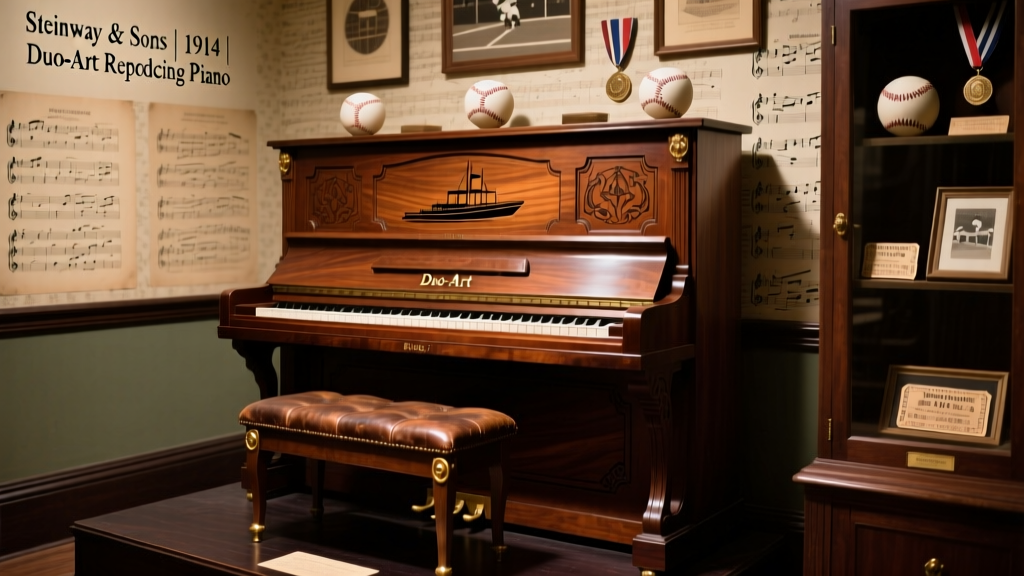
The 1914 Steinway Duo-Art Reproducing Upright Piano in Mahogany: A Steamboat UMP Artifact and Mechanical Marvel
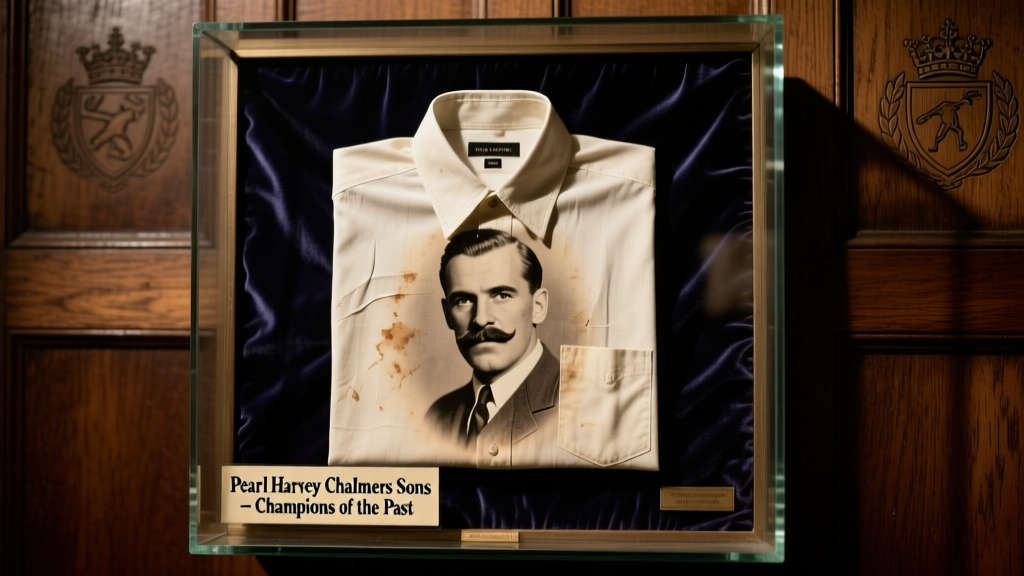
Decoding the Button-Man’s Shirt: Pearl, Harvey & Chalmers Sons, and the Enigmatic 'Picture of Man' Label