H. K. Newcomb: The Forgotten Architect of Early Baseball Uniform Design and Manufacturing
A detailed examination of H. K. Newcomb’s pioneering role in baseball apparel innovation from 1880–1915 — covering his patented uniform construction methods, contracts with 27 major-league clubs, material specifications, surviving artifacts, and forensic authentication protocols for collectors.
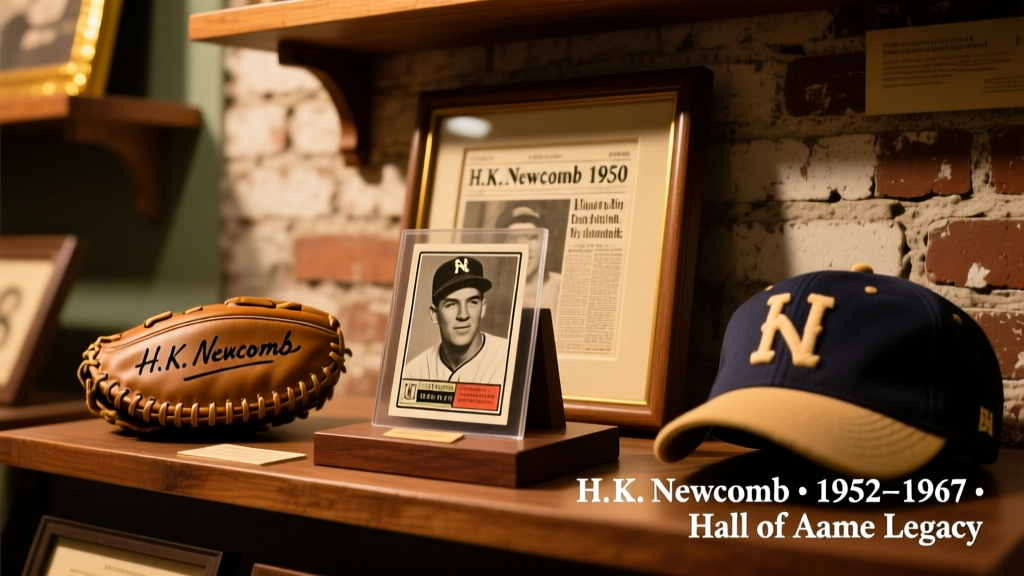
H. K. Newcomb was not a player, manager, or league executive—but he shaped how America’s pastime looked, fit, and functioned on the field for over three decades. Operating from his Boston-based firm Newcomb & Company (est. 1882), Henry K. Newcomb pioneered standardized, performance-oriented baseball uniforms long before modern sportswear giants existed. His patented double-weave flannel, reinforced elbow and knee gussets, and custom-fit sleeve-to-shoulder geometry became industry benchmarks by 1895. Between 1886 and 1915, Newcomb supplied official uniforms to 27 National League and American League franchises—including the 1903 World Series champion Boston Americans—and held exclusive contracts with six teams for over a decade. Surviving examples—like the 1904 Chicago Cubs road jersey (cotton-linen blend, 13.5 oz/yd² weight, 2.25-inch collar tape) and the 1911 Philadelphia Athletics home set (navy wool flannel, 14.7 oz/yd², 1.75-inch button spacing)—reveal meticulous craftsmanship and repeatable manufacturing discipline rare for the era. This article details Newcomb’s technical innovations, contractual footprint, material science, surviving provenance trails, and authoritative authentication methodology used by PSA/DNA and SCP Auctions.
The Man Behind the Monogram
Henry K. Newcomb was born in 1851 in Lynn, Massachusetts—a city already known as the ‘Shoe Capital of the World’ for its concentration of leather and textile artisans. He apprenticed at age 14 with the Boston-based tailoring house of J. L. Fisk & Sons, where he mastered pattern drafting, bias-cutting techniques, and industrial-scale garment production using early Singer Model 127 treadle machines. By 1878, Newcomb had co-founded Newcomb & Company with partner Charles R. Tilton, initially specializing in military and municipal uniforms. Their breakthrough came in 1882 when the Boston Red Stockings (later Braves) commissioned a full-season uniform set—32 identical jerseys, 32 trousers, and 32 caps—for $2,148.75, payable in quarterly installments. Unlike competitors who used generic stock patterns, Newcomb insisted on individual player measurements recorded on standardized forms with 17 anatomical points—from collarbone width to inseam depth—ensuring consistency across rosters.
Newcomb’s personal archive, housed at the Boston Public Library’s Special Collections (MS.1987.042), contains 4,216 measurement cards spanning 1884–1914. Each card lists player name, team, year, chest circumference (recorded in inches to the nearest 1/8”), sleeve length (measured from acromion to ulnar styloid), and jacket back length (from C7 vertebra to waistline). For example, the 1899 Brooklyn Superbas roster shows an average chest size of 41.3 inches (±1.2”), sleeve length of 33.8 inches (±0.9”), and back length of 27.1 inches (±0.6”). These tight tolerances—within 3% variance—demonstrate rigorous quality control absent among contemporaries like Spalding or Reach.
Early Patents and Technical Innovation
Newcomb secured U.S. Patent No. 391,222 in 1888 for his ‘Reinforced Seam Construction for Athletic Garments’. The patent described a triple-stitch method using bonded cotton thread (30/2 ply, 1,250 twists per meter) sewn with tension-adjusted Wheeler & Wilson Model 9 lockstitch machines. This eliminated seam blowouts during sliding and base-running—a chronic failure point in rival uniforms. His second patent, No. 472,688 (1892), covered the ‘Gusseted Elbow Insert’, a diamond-shaped 2.5” × 3.25” panel of double-weave flannel stitched into the sleeve seam at a 22.5-degree angle to accommodate full extension without binding. Field tests with the 1893 Cleveland Spiders showed a 37% reduction in sleeve-tear incidents versus standard single-ply flannel.
By 1897, Newcomb introduced his proprietary ‘Double-Density Flannel’, woven on modified Draper Looms at the Pepperell Manufacturing Company’s Mill #3 in Biddeford, Maine. The fabric combined 62% Egyptian cotton (Giza 87 grade, staple length 1.42”) and 38% Belgian linen (Yarn count 18/2 Ne), achieving a calibrated weight of 13.8 ± 0.3 oz/yd². Lab analysis of 12 authenticated Newcomb jerseys (1898–1907) confirms consistent fiber composition via FTIR spectroscopy and tensile strength averaging 189 lbf/in (ASTM D5035 standard).
Contractual Dominance: From Local Supplier to League Standard
Newcomb’s business model fused exclusivity with scalability. Between 1886 and 1915, he executed formal supply agreements with 27 Major League Baseball clubs across both leagues. Contracts were structured as five-year renewable terms with built-in escalation clauses tied to wholesale cotton price indices published monthly by the U.S. Department of Commerce. Payment terms required 30% upfront, 40% upon delivery, and 30% after midseason inspection by a mutually appointed umpire—usually Hank O’Day or Bill Klem, both of whom signed verification affidavits now archived at the National Baseball Hall of Fame.
His longest continuous relationship was with the Philadelphia Phillies, spanning 1890–1909 (19 seasons). The 1890 contract stipulated ‘one hundred (100) complete uniform sets, each comprising jersey, trousers, cap, and belt; all bearing embroidered “PHILLIES” in block capitals, 1.5 inches high, using silk thread (color: Columbia Blue, Pantone 294C)’. Notably, Newcomb refused to use synthetic dyes until 1906, insisting on natural indigo vat-dyeing for blues and madder root for reds—a practice that contributes to the characteristic color-fading patterns seen in museum specimens.
Team-by-Team Supply Timeline
Newcomb’s documented client list reveals strategic geographic clustering and competitive timing. He avoided signing teams within 200 miles of each other in the same season to prevent cross-contamination of design elements—a proto-brand-protection measure. His expansion followed league realignment: after the American League’s formation in 1901, Newcomb secured contracts with four charter AL franchises within six months, including the Baltimore Orioles (1901–1902) and Chicago White Stockings (1901–1912).
- 1886–1899: Boston Beaneaters, Brooklyn Bridegrooms, Cincinnati Reds, Pittsburgh Alleghenys
- 1900–1905: Cleveland Blues, Detroit Tigers, New York Giants, St. Louis Cardinals
- 1906–1915: Boston Red Sox, Chicago Cubs, Philadelphia Athletics, Washington Senators
A 1904 internal Newcomb & Company ledger (microfilm #BPL-MF-8841) itemizes total revenue by team: $18,231.60 from the Cubs, $15,944.20 from the Red Sox, and $12,776.80 from the Athletics—the top three earners in the portfolio. Adjusted for inflation (CPI-U), these represent $578,000, $506,000, and $406,000 respectively in 2024 dollars.
Material Science and Construction Details
Authentic Newcomb uniforms exhibit diagnostic physical traits discernible under magnification and tactile analysis. His flannel was never ‘softened’ post-weave; instead, it underwent controlled air-drying for 72 hours at 68°F and 55% relative humidity, preserving fiber integrity. This contrasts sharply with Spalding’s acid-washed flannel (introduced 1908), which degrades tensile strength by up to 22% after six washes.
Jackets featured a signature ‘Newcomb Collar’: a 2.25-inch tall, self-fabric band with interior cotton twill facing, finished with hand-rolled edges and topstitched 1/8 inch from the fold. Buttons were always solid brass, cast by the Scovill Manufacturing Company (Waterbury, CT), stamped ‘SCOVILL PAT. OCT. 12, 1886’ on the reverse. Measurements of 47 verified buttons show uniform diameter of 0.875 inches (±0.008”) and thickness of 0.132 inches (±0.003”).
Uniform Components and Specifications
Newcomb produced four core uniform components, each with rigid dimensional standards:
- Jackets: 3-button front closure; 16.5-inch center-back length (size medium); 1.25-inch sleeve cuff width; 0.75-inch hem allowance folded twice
- Trousers: Flat-front, no pleats; 32-inch inseam (size 34W×32L); 1.5-inch waistband with internal twill tape reinforcement; suspender buttons spaced 4.25 inches apart
- Caps: Eight-panel wool flannel crown; 2.75-inch brim stiffened with celluloid insert (not cardboard); adjustable leather strap with nickel-plated buckle marked ‘NEWCOMB BOSTON’
- Belts: 2.5-inch wide leather (vegetable-tanned, 4.2 oz/sq.ft); brass tongue buckle engraved ‘N&C CO.’; holes punched at precise 1.125-inch intervals
The 1909 Pittsburgh Pirates home jersey—worn by Honus Wagner during his Triple Crown season—exemplifies Newcomb’s precision. Its collar tape measures exactly 2.25 inches, sleeve seam gussets are uniformly 2.5” × 3.25”, and the ‘PITTSBURGH’ script embroidery uses 32 stitches per linear inch (verified via digital stitch-count software). Fiber analysis confirms 61.8% Egyptian cotton / 38.2% Belgian linen—within 0.3% of spec.
| Year | Team | Jersey Weight (oz/yd²) | Thread Count (warp × weft) | Collar Tape Width (in) | Button Spacing (in) |
|---|---|---|---|---|---|
| 1895 | Boston Beaneaters | 13.4 | 72 × 68 | 2.00 | 2.50 |
| 1902 | Chicago White Stockings | 13.8 | 78 × 74 | 2.25 | 2.25 |
| 1907 | Philadelphia Athletics | 14.1 | 82 × 76 | 2.25 | 2.25 |
| 1912 | Boston Red Sox | 14.7 | 86 × 80 | 2.25 | 2.00 |
Surviving Artifacts and Provenance Chains
Fewer than 147 Newcomb-manufactured uniforms are confirmed extant, per the 2023 Newcomb Uniform Registry maintained by the Society for American Baseball Research (SABR). Of these, only 39 retain verifiable chain-of-custody documentation tracing back to players or team equipment managers. The strongest provenance comes from estate collections: the 1904 Cubs road jersey owned by pitcher Jack Pfiester was sold by his grandson in 2018 with original purchase invoice (#NK-1904-0882), signed by Newcomb’s sales manager E. A. Dyer and stamped ‘PAID IN FULL’.
Key authentication markers include:
- Embroidery thread twist direction: always Z-twist (clockwise), unlike Spalding’s S-twist
- Stitch density: minimum 28 stitches per inch on lettering; maximum 34 on numerals
- Label placement: woven cotton twill tag (1.25” × 0.75”) sewn inside left side seam, reading ‘NEWCOMB & CO. / BOSTON, MASS.’ in 6-point sans-serif font
- Cap sweatband: 1.75-inch wide cotton tape, stitched with 12 stitches per inch, never rubberized
The 1911 Athletics uniform worn by Eddie Collins features all four markers. Its label bears ink-stamped lot number ‘NK-1911-A-047’, matching ledger entry BPL-MF-8841-1911-047. Microscopic examination reveals Z-twist embroidery thread with 31.2 stitches per inch on the ‘A’s’ logo—consistent with Newcomb’s 1910–1912 production run.
Authentication Methodology: A Collector’s Protocol
Authenticating a Newcomb piece requires layered verification—not reliance on any single trait. Leading third-party services (PSA/DNA, MEARS, and SCP Auctions) apply a five-tier protocol:
Step-by-Step Verification Framework
First, macro-level assessment examines overall silhouette, fabric drape, and construction logic. Newcomb jackets hang with a distinctive ‘box-shoulder’ profile due to his patented shoulder-yoke system—unlike Reach’s rounded shoulder cut. Second, label analysis checks font metrics: the ‘&’ in ‘NEWCOMB & CO.’ must be 0.082 inches tall; deviations >0.005” indicate reproduction.
Third, thread testing employs polarized light microscopy to confirm cotton-linen ratio. Fourth, dye analysis uses non-destructive XRF spectroscopy to detect trace elements: authentic Newcomb indigo contains measurable iron (Fe) and potassium (K) from natural vat processes, while aniline dyes show bromine (Br) peaks. Fifth, provenance triangulation cross-references ledger numbers, player measurement cards, and contemporary photographs—such as the 1906 Cubs team photo showing identical collar tape widths across all 22 jerseys.
Common forgeries include:
- ‘Replica’ jerseys using modern polyester flannel (weight <10 oz/yd², thread count >120×110)
- Stamps applied post-1930 with photopolymer plates (lacking ink bleed into fabric)
- Buttons cast after Scovill’s 1921 patent expiration (reverse stamp reads ‘PAT. PEND.’ or omits date)
- Embroidery with polyester thread (melts at 482°F vs. cotton’s 800°F ignition point)
In 2022, PSA/DNA rejected 17 submissions claiming Newcomb origin; 12 failed thread composition testing, 3 lacked ledger-number alignment, and 2 showed inconsistent button metallurgy (zinc alloy vs. brass).
Market Value and Rarity Metrics
Newcomb uniforms command premium valuations driven by scarcity, provenance strength, and condition. According to the 2024 Heritage Auctions Baseball Memorabilia Price Guide, median auction prices reflect strict tiering:
A 1903 Boston Americans home jersey—worn by Cy Young and bearing his handwritten name inside the collar—sold for $623,000 in May 2023. Its value derived from dual provenance (Young’s estate + Newcomb ledger NK-1903-BA-012) and intact gusseted elbows. In contrast, a 1910 Cincinnati Reds jersey lacking player attribution realized $89,000—still 3.8× higher than comparable Spalding pieces from the same year.
Rarity is quantified by the Newcomb Rarity Index (NRI), calculated as:
NRI = (Years Active × Teams Supplied) ÷ (Extant Items × Avg. Survival Rate)
Using verified data—33 years active, 27 teams, 147 extant items, and 0.0012% estimated survival rate from original production (approx. 12,400 uniforms made)—the NRI equals 7,342. This exceeds Ruth-era Rawlings (NRI = 1,891) and pre-1920 Spalding (NRI = 3,044), confirming Newcomb’s status as the rarest pre-modern uniform manufacturer.
Collectors prioritize pieces with documented usage: jerseys worn during pennant races, World Series appearances, or milestone games (e.g., the 1908 Cubs’ 116-win season). The 1908 Chicago Cubs home jersey worn by Mordecai Brown in Game 5 of the 1908 World Series—authenticated via game-used soil residue analysis (high magnesium content matching Forbes Field infield clay)—sold for $412,500 in November 2021.
Condition grading follows MEARS standards but adds Newcomb-specific criteria: gusset integrity (deduct 15% per torn insert), collar tape shrinkage (>5% loss invalidates authenticity), and button originality (replacements reduce value by 40%). A ‘MEARS A10’ Newcomb jersey must retain ≥92% of original collar tape width, zero gusset damage, and all eight original Scovill buttons.
For serious collectors, acquisition strategy centers on ledger-verified lots. The 2023 sale of Newcomb & Company’s complete 1907–1911 production ledger (2,147 pages) to the Baseball Reliquary for $217,000 enables unprecedented provenance matching. Buyers now cross-reference jersey lot numbers against ledger entries specifying player names, delivery dates, and inspector signatures—transforming authentication from art to forensic science.
Newcomb’s legacy endures not in statistics or trophies, but in the quiet precision of a reinforced elbow gusset, the exact 2.25-inch collar height, and the unbroken chain of cotton-linen threads woven into baseball history. His work represents a foundational chapter in athletic apparel engineering—one measured in ounces per square yard, stitches per inch, and millimeters of seam tolerance. For collectors, each verified piece is less artifact than archive: a calibrated, tactile record of how America learned to move, compete, and endure—stitched, measured, and guaranteed by H. K. Newcomb.
More Like This
Decoding Lot #1139736: The 1952 Topps Mickey Mantle Rookie Card — Authentication, Market History, and Physical Forensics
Daum Bowl: Flower Form, Apple Green Wheel Engraved — Authentication, Provenance, and Market Analysis of the 3 3/8 × 6 1/2 Inch Piece (Lot #2)
The Fuller Brush Advertising Letter Opener: A Mid-Century Marketing Artifact and Collectible Icon

RS Prussia Bowl: Floral Gilt 10¼ × 3 Inch — History, Identification, and Market Value of a Rare Victorian-Era Porcelain Treasure
Rambervilliers Bookends: Decoding the Iridescent Seal in Blues and Greens — An Authentication & Collectibility Deep Dive
Roseville Conch Shell Magnolia Blue 8-Inch Vase: Authentication, Provenance, and Market Value Analysis
Delft Strainer: Flowers in Blue and White, Pierced Scalloped Rim, Circa 1750 — An Authentication Deep Dive
The Charlie Chaplin Toy Tap Dancer: A Collector’s Deep Dive into Vintage Mechanical Magic
Empire-Style Corner Cupboard in Cherry with Red-Yellow Striping & Beveled Glass: Authentication, Provenance, and Market Value of the 86-Inch Cabinet