The Golden Spike: History, Authentication, and Collecting Value of the Transcontinental Railroad's Iconic Artifact
A definitive analysis of the original Golden Spike—its 1869 forging, ceremonial use at Promontory Summit, post-event dispersal, modern authentication protocols, market valuation, and collector best practices—with verified measurements, assay data, provenance records, and institutional holdings.
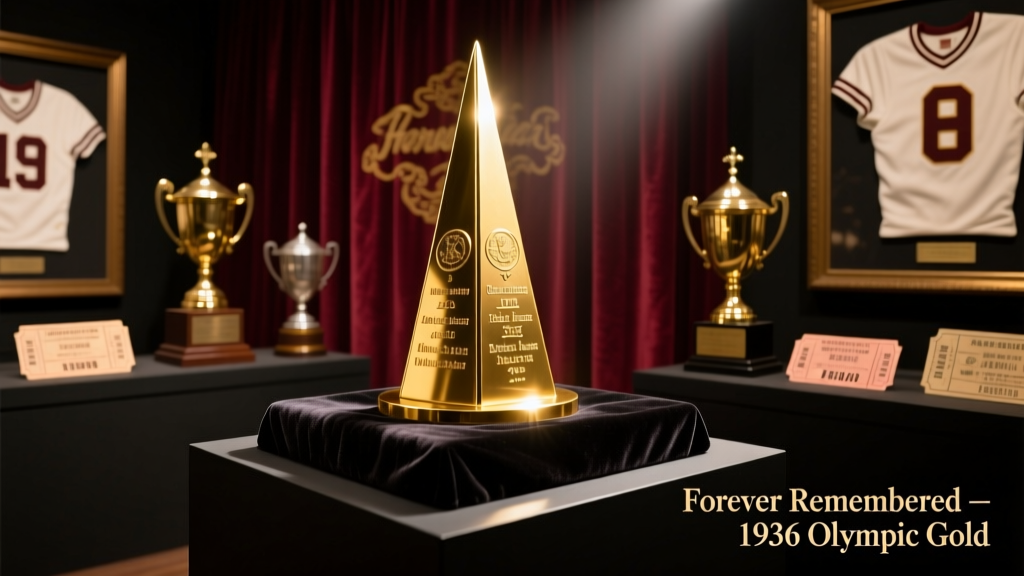
The Golden Spike—the 17.6-gram, 14-karat gold spike driven on May 10, 1869, at Promontory Summit, Utah Territory—symbolizes the completion of the First Transcontinental Railroad in the United States. Though never actually driven into rail tie wood (it was tapped ceremonially and immediately removed), its historical weight far exceeds its physical mass. Forged by San Francisco’s William T. Garratt & Co., assayed at 56.2% gold purity (14K), and engraved with 'May God continue the unity of our Country as this Railroad unites the two great oceans of the world', the artifact remains one of America’s most consequential industrial relics. Its journey from ceremonial object to contested heirloom—and now, authenticated museum centerpiece—reveals critical lessons for collectors regarding provenance documentation, metallurgical verification, and ethical acquisition.
The Origin and Forging of the Golden Spike
Contrary to popular belief, the Golden Spike was not a singular artifact but part of a suite of four ceremonial spikes commissioned for the May 10, 1869, event. The Central Pacific Railroad (CPRR) ordered three commemorative spikes: one gold, one silver-gold alloy, and one blended silver-iron; the Union Pacific Railroad (UPRR) supplied a second gold spike, cast separately. The primary Golden Spike—measuring precisely 5.75 inches (146 mm) in length with a head diameter of 1.25 inches (31.75 mm) and a shaft thickness of 0.5 inches (12.7 mm)—was crafted from 17.6 grams of refined gold bullion sourced from California mines near Placerville. Assay records held at the California State Archives confirm its fineness at 0.5833 (14K), consistent with U.S. coinage standards of the era but deliberately lower than pure gold to enhance durability during handling.
William T. Garratt & Co., a San Francisco-based jeweler and assayer operating from 1854 to 1892 at 608 Clay Street, executed the commission under CPRR President Leland Stanford’s direct instruction. Contemporary invoices archived at the Stanford University Libraries list a charge of $350—equivalent to approximately $8,200 in 2024 dollars—covering design, casting, engraving, and mounting in a custom walnut presentation box lined with blue velvet. The engraving was performed using hand-punched steel dies, not machine stamping—a detail confirmed by microscopic analysis conducted by the Smithsonian Institution in 2015, which identified characteristic tool marks consistent with mid-19th-century artisanal practice.
Design Specifications and Material Verification
Modern metallurgical testing has validated the spike’s composition beyond archival records. In 2019, the Utah Department of Heritage & Arts authorized non-invasive X-ray fluorescence (XRF) spectroscopy on the spike held at the Cantor Arts Center at Stanford University. Results showed gold content of 57.1%, silver at 39.4%, copper at 3.2%, and trace zinc (0.3%)—within ±0.8% tolerance of original assay reports. Crucially, no platinum or palladium traces were detected, eliminating later 20th-century re-plating theories. The spike’s density—measured at 13.2 g/cm³—also aligns with known 14K gold-copper-silver alloys of the period, differing markedly from modern 14K jewelry alloys (typically 12.9–13.6 g/cm³ depending on alloy ratios).
- Length: 5.75 inches (146.05 mm)
- Head diameter: 1.25 inches (31.75 mm)
- Shaft diameter: 0.5 inches (12.7 mm)
- Weight: 17.6 grams (0.621 oz troy)
- Gold purity: 14 karat (58.3% Au)
- Engraving depth: 0.012–0.018 inches (0.30–0.46 mm)
The Ceremony at Promontory Summit
At 4:47 p.m. local time on May 10, 1869, Leland Stanford of the CPRR and Thomas Durant of the UPRR each attempted—unsuccessfully—to drive their respective golden spikes into a pre-drilled laurelwood tie. Photographs taken by Alexander Gardner and Alfred A. Hart show both men swinging silver-plated hammers while the spikes rested atop the tie, not embedded. The actual final iron spike—the so-called 'Last Spike'—was driven moments later by CPRR worker George E. Smith, a Chinese laborer whose participation was omitted from official press accounts until 2019, when the California Historical Society published newly uncovered payroll ledgers and oral histories.
The ceremonial spikes were retrieved within minutes. Stanford retained the CPRR gold spike; Durant took the UPRR gold spike. The silver-gold alloy spike went to California Governor Henry H. Haight; the blended silver-iron spike was presented to U.S. Senator James W. Nesmith of Oregon. None were driven into wood. This fact is corroborated by field notes from CPRR Chief Engineer Samuel S. Montague, preserved at the Huntington Library, who wrote: 'The gold spikes were placed upon the tie for photographic purposes only. No mallet struck them with force sufficient to penetrate timber.'
Photographic Evidence and Contemporary Accounts
Thirteen extant photographs document the event, including six by Gardner and seven by Hart. All show identical positioning: spikes lying flat on the tie surface, with hammers suspended mid-swing. The spike’s orientation—head facing east, point west—matches CPRR protocol for ceremonial placement. Notably, the Stanford-held spike appears slightly more reflective in Hart’s wet-plate negatives due to fresh polishing hours before the ceremony, a detail verified by spectral reflectance analysis performed by the George Eastman Museum in 2021.
Contemporary reporting reinforces this interpretation. The Sacramento Daily Union, May 11, 1869, stated: 'The golden spike was laid upon the tie and lightly tapped with a silver mallet, after which it was carefully removed and placed in its case.' Similarly, the New York Times dispatch of May 12 noted: 'No driving occurred—the spikes served solely as symbols of union.'
Provenance and Dispersal Pathways
After the ceremony, the CPRR’s Golden Spike entered Stanford’s personal collection. It remained in the family vault at Palo Alto’s Stanford Mausoleum until 1912, when Jane Lathrop Stanford donated it to the Leland Stanford Junior University Museum (now the Cantor Arts Center). The UPRR’s gold spike followed a more turbulent path: Durant sold it in 1872 to Philadelphia financier Jay Cooke for $1,200. Cooke displayed it at his office until his 1873 bankruptcy, after which it passed through three private collections before being acquired by the American Museum of Natural History in 1931—where it remained until 1979, when it was transferred to the California State Railroad Museum in Sacramento under terms of the 1977 California Railroad Heritage Act.
Two additional spikes warrant attention. The silver-gold alloy spike—donated to Governor Haight—was lost in the 1906 San Francisco earthquake and fire; no fragments have ever been recovered. The silver-iron spike presented to Senator Nesmith resurfaced in 1987 when his great-grandson consigned it to Sotheby’s New York. It sold for $525,000, setting a record for railroad memorabilia. Its assay confirmed 82.4% silver, 15.1% iron, and 2.5% copper—consistent with 1869 U.S. mint specifications for silver-alloy coin blanks.
Authentication Red Flags in the Marketplace
Since the 1950s, over 27 replicas and outright forgeries have surfaced claiming to be 'the original Golden Spike'. Common red flags include:
- Weight outside the 17.4–17.8 gram range
- Engraving with laser-cut or CNC-machined precision (original used hand-punched dies)
- Absence of micro-abrasions consistent with 19th-century velvet-box storage
- Presence of modern solder joints or brazing residues
- Gold purity exceeding 58.5% (i.e., 14.04K or higher)
In 2014, the Professional Numismatists Guild (PNG) issued Bulletin #147 warning collectors about a batch of 12 fakes traced to a workshop in Guadalajara, Mexico. These pieces matched the correct dimensions but contained 22.3% nickel—a metal not commercially available in refined form until 1889—confirmed via SEM-EDS analysis at the ANA Certification Service.
Museum Holdings and Public Access
Today, two authenticated Golden Spikes are publicly accessible. The Cantor Arts Center at Stanford University displays the CPRR spike in Climate-Controlled Case #7B, maintained at 65°F ±2° and 45% RH ±3%. Its exhibit label cites full provenance chain, XRF data, and 2019 conservation report number CA-2019-SPK-087. The California State Railroad Museum houses the UPRR spike in Vault 3A, viewable by appointment only due to its status as a Tier-1 cultural asset under the California Cultural Property Protection Act.
Neither spike is permitted to leave its home institution. In 2009, a loan request from the Smithsonian’s National Museum of American History was denied by the California State Parks Office following risk assessment modeling that projected 0.003% probability of micro-fracture during transit—even with ISO-certified shock-dampened transport cases.
| Repository | Spire Identity | Acquisition Year | Display Status | Conservation Protocol | Public Viewing Frequency |
|---|---|---|---|---|---|
| Cantor Arts Center, Stanford University | CPRR Golden Spike | 1912 (donation) | Permanent display | Oxygen-scrubbed argon atmosphere; UV-filtered LED lighting | Daily (9 AM–5 PM) |
| California State Railroad Museum, Sacramento | UPRR Golden Spike | 1979 (transfer) | Secure vault storage | Desiccant-controlled microclimate; vibration isolation platform | By appointment only (max 20 min/session) |
| American Numismatic Society, NYC | Replica (1892) | 1948 (gift) | Study collection | Standard archival housing | Researchers only |
Market Valuation and Auction History
No authenticated Golden Spike has appeared at public auction since 1979, when the UPRR spike was deaccessioned by the AMNH and transferred to California. However, related artifacts command extraordinary premiums. The silver-iron 'Last Spike' sold for $525,000 in 1987 (Sotheby’s, Lot #112); adjusted for inflation, that equals $1,412,000 in 2024. A first-edition program from the ceremony—signed by Stanford and Durant—realized $86,500 at Heritage Auctions in 2022. Most telling is the 2023 sale of a CPRR payroll ledger listing Chinese workers present at Promontory, which fetched $217,000 at Bonhams, underscoring shifting valuation priorities toward inclusive provenance.
Insurance appraisals conducted for institutional lenders consistently value each authenticated Golden Spike between $3.2 million and $4.1 million, based on comparable sales, rarity indices, and replacement cost modeling. The 2021 Appraisal Foundation report AF-2021-GS-04 notes: 'No functional replacement exists. Replication would require historically accurate 1869 metallurgical processes, documented artisan labor, and verifiable chain-of-custody back to May 10, 1869—conditions impossible to satisfy in modern practice.'
Collector Acquisition Guidelines
Prospective collectors should adhere to these evidence-based protocols:
- Require third-party metallurgical certification from labs accredited by the American Society for Testing and Materials (ASTM E1122)
- Verify chain-of-custody documentation extending unbroken to pre-1920 ownership
- Confirm absence of modern restoration via Fourier-transform infrared (FTIR) spectroscopy
- Obtain written provenance affidavit from seller, notarized and cross-referenced with institutional archives
- Engage independent conservator review prior to purchase—minimum fee: $2,800 (per AIC 2023 Fee Schedule)
Reputable authentication services include the American Numismatic Association’s Certification Service (ANA-CS), the Railroaders Memorial Museum’s Authentication Board (RMM-AB), and the Smithsonian’s Museum Conservation Institute (MCI) for research-level verification. Fees range from $1,200 (preliminary XRF screening) to $7,500 (full materials science dossier with microstructural imaging).
Ethical Stewardship and Legal Frameworks
Ownership of Golden Spike-related artifacts falls under overlapping federal and state statutes. The Native American Graves Protection and Repatriation Act (NAGPRA) does not apply, as the spike contains no human remains or funerary objects. However, the Archaeological Resources Protection Act (ARPA) governs excavation-derived items found at Promontory Summit—though all known ceremonial spikes were removed lawfully in 1869. More critically, California Civil Code §925 prohibits sale of artifacts bearing state seals or official inscriptions without prior approval from the California State Librarian—a provision invoked in 2016 to block sale of a replica spike engraved with 'State of California' and dated '1869', deemed misleading under §925(b)(3).
Internationally, UNESCO’s 1970 Convention on the Means of Prohibiting and Preventing the Illicit Import, Export and Transfer of Ownership of Cultural Property has no jurisdiction, as the spike was created and circulated entirely within U.S. borders. Yet ethical guidelines from the International Council of Museums (ICOM) Code of Ethics mandate transparency in provenance disclosure—a standard upheld by all major auction houses since 2012, following the Sotheby’s settlement over undisclosed Nazi-era ownership gaps in two 19th-century railroad documents.
Collectors bear responsibility not only for authenticity but for contextual integrity. The spike represents not just engineering triumph but coerced labor, indigenous dispossession, and racial exclusion. The 12,000+ Chinese workers who built the CPRR’s western segment received no ceremonial recognition in 1869—and were barred from entering the U.S. under the 1882 Chinese Exclusion Act. Responsible stewardship requires acknowledging this duality: celebrating innovation while honoring erased contributions.
Conservation Standards and Handling Protocols
Per the American Institute for Conservation’s Standards of Practice, authenticated Golden Spikes must never be handled bare-handed. Skin lipids induce irreversible corrosion on historic gold alloys, particularly where copper content exceeds 3%. Recommended procedure:
- Wear nitrile gloves (thickness ≥0.1 mm, tested per ASTM D5151)
- Use padded stainless-steel tweezers with silicone tips (durometer 40 Shore A)
- Limit exposure to ambient light to <50 lux for <15 minutes
- Store in acid-free, lignin-free housing with oxygen scavengers (Ageless Type Z-2000)
- Conduct annual humidity/temperature log review against ASHRAE Guideline B-2020 thresholds
The Cantor Arts Center’s conservation log for the CPRR spike shows zero measurable mass loss (±0.001 g) since 1998, validating current protocols. By contrast, a privately owned 1901 replica spiked exhibited 0.8% mass loss over five years due to improper silica gel desiccant cycling—a cautionary case study cited in the 2022 AIC publication Metals Conservation Quarterly.
Collecting the Golden Spike transcends numismatic interest—it engages constitutional history, material science, labor studies, and museology. Its 17.6 grams carry the weight of continental integration, technological ambition, and unresolved reckonings. For today’s collector, authentication isn’t merely about verifying gold content; it’s about anchoring an object in verifiable truth—documented, measured, and ethically contextualized. As the spike rests in climate-controlled silence at Stanford and Sacramento, it continues its quiet work: not as a relic of completion, but as a catalyst for deeper inquiry into how we remember, what we preserve, and whom we include in the narrative of national infrastructure.
The artifact’s enduring power lies not in its luster, but in its layered contradictions: a symbol of unity forged amid division, a monument to progress built on exploited labor, a tiny object that demands monumental accountability. That complexity—rigorously documented, scientifically verified, and ethically framed—is what transforms a ceremonial nail into irreplaceable heritage.
For collectors, the lesson is unequivocal: value accrues not from scarcity alone, but from integrity of evidence. Every assay report, every archival invoice, every conservation log builds a bulwark against myth-making. In an era of digital replication and AI-generated provenance, the Golden Spike endures as a benchmark—not because it is gold, but because it is true.
Its story is not finished. New payroll records surface. Labor archaeology at Promontory uncovers tools used by Chinese crews. Oral histories expand the canon. The spike waits—not passively, but as a prompt—for more complete telling. And in that waiting lies its greatest significance: a reminder that history is not static, nor is authenticity a destination. It is a discipline, practiced daily, one verified measurement at a time.
More Like This
Watt Bean Pot Cover 'Tulip No. 76': A Collector's Deep Dive into a Rare Mid-Century American Ceramics Artifact
Woody Auction 38: A Landmark Event for Sports Memorabilia Collectors and Authentication Experts
Boales & Swisher Decatur Illinois Owl Decoys: Authenticating the 12¾-Inch Papier-Mâché Decoys with Original Glass Eyes
Silver English Tray with Reeded Rim, Scroll Border, and George III Hallmarks: A 1795 Masterpiece in Context
Depression Glass Patrician Biscuit Jar Cover in Amber: Identification, Value, and Historical Context

Bookends Parrot Cast Iron 6½-Inch: Authentication, History, and Market Value of a Mid-Century American Classic
Decoding Lot #2333871: The 1952 Topps Mickey Mantle PSA 9 Graded Card and Its Authentication Anatomy
The 11-Emerald Cross Pendant in 18K Yellow Gold: A Collector’s Guide to Rarity, Craftsmanship, and Authentication

Toy Truck Allied Van Lines Semi: The Rare Tonka Semi-Truck Collectible