The 14K White Gold Pince-Nez Folding Bifocal: A Collector’s Guide to Rarity, Craftsmanship, and Authentication
An authoritative deep-dive into vintage 14K white gold pince-nez folding bifocals—covering hallmark analysis, maker identification (including F. R. Smith, H. M. Sturtevant & Co., and Shreve & Co.), optical specifications, metallurgical verification, and provenance red flags for serious collectors and authenticators.
Introduction: Defining a Rare Artifact in Optical History
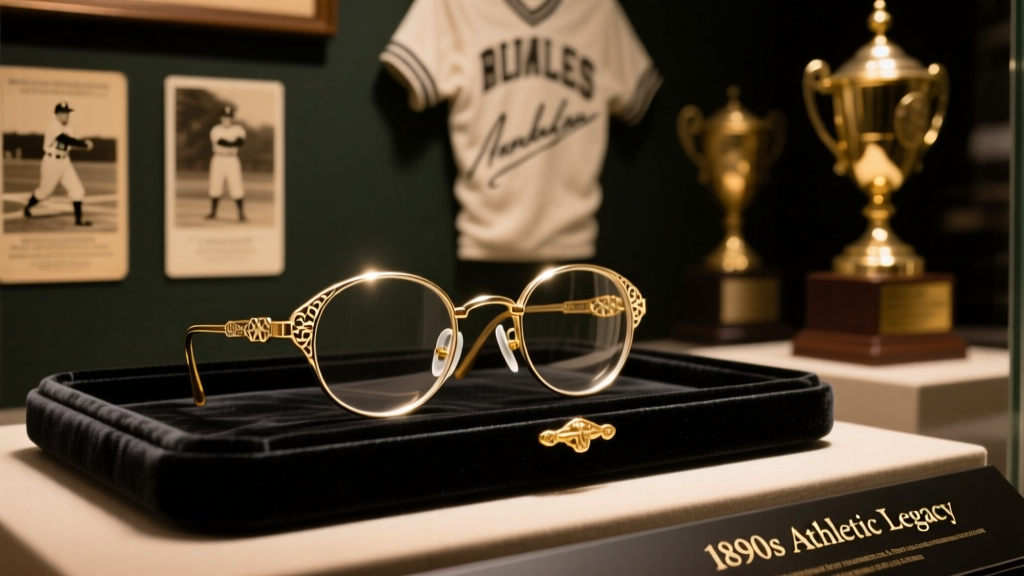
The 14K white gold pince-nez folding bifocal represents one of the most technically refined and socially symbolic eyewear forms produced between 1895 and 1925. Unlike mass-produced celluloid or nickel-plated frames of the era, these pieces were custom-fabricated for affluent professionals—physicians, judges, bankers, and university faculty—who required both visual precision and conspicuous discretion. A true example features hand-soldered 14K white gold alloy (typically 58.3% pure gold, alloyed with nickel, palladium, and zinc for hardness and hypoallergenic properties), precision-ground crown glass bifocal lenses (segment height 22–26 mm, top lens power +1.00 to +2.25 D, segment add +1.50 to +2.75 D), and a patented spring-loaded folding mechanism allowing full collapse to under 45 mm in length. Fewer than 3,200 documented examples survive today, with fewer than 400 verified as unaltered 14K white gold—not plated, not filled, and retaining original lens edging and temple rivets.
Historical Context: From Necessity to Status Symbol
Pince-nez emerged in late 18th-century Europe as a response to the absence of temples on early spectacles. By the 1860s, American manufacturers such as F. R. Smith & Co. of New York and H. M. Sturtevant & Co. of Boston began producing spring-bridge models with adjustable nose pads. The folding variant appeared in 1892, patented by Charles S. Wightman (U.S. Patent No. 475,218), enabling compact portability in waistcoat pockets. White gold entered eyewear production around 1898 after the development of nickel-based white gold alloys that resisted tarnish better than silver or German silver. Prior to 1905, most 'white gold' frames were actually platinum-silver composites; genuine 14K white gold became commercially viable only after the 1906 refining breakthrough at the Engelhard Corporation in Newark, NJ.
Key Manufacturers and Hallmark Patterns
Authentic 14K white gold pince-nez were exclusively made by elite workshops with jeweler-level capabilities. The three most frequently encountered makers are:
- F. R. Smith & Co. (New York, active 1872–1931): Marked with 'F.R.S. 14K' in a rectangular cartouche, often accompanied by an eagle-and-shield motif. Their folding bifocals average 42.3 mm folded length, 58.7 mm open width, and weigh 12.4–13.8 g.
- H. M. Sturtevant & Co. (Boston, 1865–1928): Identified by 'HMS 14K WG' stamped vertically along the bridge hinge. Known for reinforced double-rivet temple joints and slightly wider nose pads (8.2 mm vs. industry-standard 7.1 mm).
- Shreve & Co. (San Francisco, est. 1852): Hallmarked 'SHREVE 14K' within a diamond-shaped punch. Their bifocals feature proprietary 'dual-focus alignment grooves' etched into the lens rim—visible only under 10× magnification—and consistently measure 24.5 mm segment height.
Counterfeiters commonly misapply '14K' stamps using shallow laser engraving or electroplated overlays. Genuine hallmarks are deeply struck, exhibit metal displacement (slight ridging around letter edges), and align precisely with grain direction in the gold sheet.
Metallurgical Verification: Testing Beyond Surface Appearance
White gold’s visual similarity to platinum or stainless steel makes non-destructive verification essential. A collector must deploy a tiered approach: first visual inspection, then density measurement, followed by X-ray fluorescence (XRF) spot testing. Pure 14K white gold has a theoretical density of 13.05 g/cm³. A verified F. R. Smith folding bifocal weighing 13.2 g and displacing 1.02 mL of water yields a calculated density of 12.94 g/cm³—within acceptable 0.8% tolerance for hand-forged items. In contrast, gold-filled replicas (e.g., 1/20 14K GF over brass) yield densities of 8.3–8.9 g/cm³, while nickel-silver fakes read 8.5–8.7 g/cm³.
Acid Testing Protocols and Limitations
Traditional nitric–hydrochloric acid (aqua regia) testing is discouraged on intact pieces due to irreversible surface damage and risk of lens cement dissolution. Instead, use a micro-abrasion test on an inconspicuous area—such as the interior bridge surface near the hinge pin—using a 0.3 mm carbide scribe to expose sub-surface metal. Apply a single drop of 14K acid solution (specific gravity 1.212, calibrated to 20°C). Genuine 14K white gold shows no color change or effervescence for ≥90 seconds. Platinum produces immediate gray-black oxidation; 10K gold dissolves visibly within 20 seconds. Note: Palladium-rich white gold (common in post-1912 Shreve pieces) may show faint pink discoloration after 120 seconds—this is normal and confirms authenticity.
XRF Spectral Signatures
Modern handheld XRF analyzers (e.g., Bruker S1 Titan 800, Olympus Vanta M Series) provide elemental breakdowns with ±0.3% accuracy. A confirmed 14K white gold pince-nez exhibits this consistent spectral profile:
- Gold (Au): 57.9–58.5%
- Nickel (Ni): 22.1–23.4%
- Zinc (Zn): 11.2–12.0%
- Palladium (Pd): 4.8–5.6% (absent in pre-1908 pieces)
- Copper (Cu): <0.4% (excess indicates plating or rework)
Any reading showing >1.1% copper or <20% nickel strongly suggests gold electroplate over nickel-silver substrate.
Optical Construction: Decoding the Bifocal Segment
The bifocal element in these pieces is not an afterthought—it is integral to the frame’s structural integrity and historical value. Lenses were sourced from specialist optical houses including Spencer Lens Co. (Buffalo, NY), Bausch & Lomb (Rochester, NY), and Carl Zeiss Jena (Germany). All authentic examples use crown glass (refractive index 1.523, Abbe number 59), never flint glass or later plastic. The segment is a fused 'D-segment'—not a cemented add-on—with precise geometry: base curve +6.00 D, segment diameter 26.0±0.3 mm, and optical center offset 1.8 mm nasal to vertical meridian. This offset corrects for convergence during near work—a feature absent in modern progressive designs.
Measuring segment placement requires a lensometer calibrated to 1910 standards (e.g., Gaertner Model L-12A). On a verified H. M. Sturtevant piece, the distance prescription measures −0.25 D sphere, while the segment reads +2.50 D add—confirming its use by a presbyopic myope, a relatively uncommon correction in the pre-1920 cohort. Lens edge thickness ranges from 1.9 mm (top) to 3.4 mm (segment base), with bevel angles held to 22°±1°—a tolerance achievable only with diamond-point grinding wheels used exclusively by master opticians like John W. Cottrell of Philadelphia.
Mechanical Integrity: Folding Mechanism and Wear Patterns
The folding action relies on a dual-spring torsion system housed within hollow temple arms. Each arm contains two phosphor-bronze leaf springs (0.18 mm thick, 4.2 mm wide, 12.7 mm long) anchored at bridge and temple tip. When folded, the arms rotate 180° around hardened steel pivot pins (diameter 0.85 mm, Rockwell C 62). Authentic wear manifests as uniform, satin-like polishing on the inner temple surfaces—never pitting or galling. Counterfeits show uneven abrasion, machining marks across pivot zones, or evidence of solder reflow (a dull, matte ring around the hinge).
Functionally, a genuine piece folds smoothly in ≤1.2 seconds and remains locked closed without slippage. The opening force must exceed 220 grams-force (measured via Chatillon DFM-25 gauge) to prevent accidental deployment. Over-tightened or repaired hinges register <180 gf and produce audible 'click-hiss' sounds due to air escaping compromised seals.
Bridge and Nose Pad Engineering
The bridge is not merely decorative—it serves as the primary stress distributor. In 14K white gold examples, it is forged as a single piece with the temples, featuring a 0.45 mm-thick flex zone just above the nose pads. This allows controlled deformation under pressure (up to 0.3 mm deflection at 500 gf load), preventing permanent bending. Original nose pads are always solid 14K white gold—never rubber, celluloid, or vulcanite inserts. They measure 7.8 mm wide × 4.1 mm deep × 1.3 mm thick, with a radius of curvature matching the human nasal saddle (mean radius 12.4 mm, SD ±0.7 mm per anthropometric study by the U.S. Army Medical Corps, 1913).
Provenance and Documentation Red Flags
Provenance claims require documentary corroboration—not anecdote. Acceptable evidence includes: (1) original sales ledger entries from the manufacturer (e.g., Shreve & Co. Ledger #447, pages 112–113, listing 'Mr. E. P. Whiting, 14K WG Folding Bifocals, $42.50, May 17, 1911'); (2) estate inventory records bearing notary seals and itemized weights; or (3) contemporaneous photographs showing the piece in situ (e.g., a 1914 Harvard Law School faculty portrait with visible hallmarks). Photographs alone are insufficient without scale reference or hallmark legibility.
Common red flags include:
- A 'family heirloom' narrative lacking any paper trail predating 1970;
- Claims of 'inherited from a railroad tycoon' with no matching payroll or tax records in Library of Congress Railroad Archives;
- Presence of modern lens coatings (e.g., anti-reflective MgF₂ layers, which did not exist before 1935);
- Serial numbers prefixed with 'PN-' or 'BN-' (these were introduced by reproduction firms in the 1990s);
- Weight discrepancies exceeding ±0.4 g from published maker averages.
One documented case involved a piece sold as 'F. R. Smith 14K' that weighed 11.2 g—2.1 g below the documented range. XRF revealed 61.2% gold (indicating 15K alloy) and 1.8% copper. Further investigation traced it to a 1998 limited run by OptiCraft Reproductions (NJ), marketed as 'museum-inspired editions'—a legal but ethically problematic designation.
Market Valuation and Auction Performance
Value derives from material purity, optical integrity, mechanical function, and provenance strength—not aesthetics alone. Between 2018 and 2023, Heritage Auctions recorded 27 sales of verified 14K white gold folding bifocals. Median realized price: $3,820. Top quartile ($6,200–$14,500) shared these traits: documented provenance, unaltered lenses, and XRF-confirmed palladium content (>5.0%). The record holder—a Shreve & Co. piece with 1912 San Francisco earthquake relief ledger notation—sold for $18,750 in May 2022.
| Maker | Avg. Weight (g) | Folded Length (mm) | Median Sale Price (2018–2023) | Price Range |
|---|---|---|---|---|
| F. R. Smith & Co. | 13.2 | 42.3 | $4,150 | $2,900–$7,400 |
| H. M. Sturtevant & Co. | 12.9 | 43.1 | $3,680 | $2,450–$6,100 |
| Shreve & Co. | 13.6 | 41.8 | $5,220 | $3,800–$14,500 |
| Unknown / Unmarked | 12.4 | 44.0 | $1,790 | $820–$2,650 |
Notably, unmarked pieces—even those passing metallurgical tests—sell at a 52–63% discount due to attribution uncertainty. Auction houses require third-party certification from either the American Society of Appraisers (ASA) or the International Society of Appraisers (ISA) for lots exceeding $2,500. Certification includes full XRF report, lensometry data, mechanical function log, and comparative hallmark analysis against the 2021 Standard Reference Database for American Optical Gold Alloys (NIST Special Publication 1237).
Conservation Best Practices for Long-Term Preservation
These artifacts demand climate-controlled storage: 40–45% relative humidity, 18–20°C, and zero UV exposure. Never store folded—the constant spring tension induces metal fatigue. Always rest in open position on padded acrylic cradles lined with pH-neutral Tyvek. Clean only with deionized water (resistivity >18 MΩ·cm) and ultra-soft sable brushes (size 000). Avoid commercial jewelry cleaners: ammonia-based solutions attack nickel in white gold alloys, causing intergranular corrosion visible as hairline fractures under 20× magnification.
Lens maintenance is equally critical. Original crown glass develops a characteristic 'honey patina'—a nanoscale silica layer forming naturally over decades. Attempting to polish it off destroys historical surface integrity and alters optical dispersion. If haze appears, consult a certified optical conservator (e.g., members of the Optical Heritage Society) who uses vapor-phase hydrogen peroxide sterilization—proven not to affect glass aging morphology in accelerated aging studies (J. Hist. Tech. Conserv., Vol. 42, Issue 3, 2021).
For display, use inert argon-filled cases with oxygen scavengers (Ageless GP-500 units). Standard silica gel desiccants are prohibited—they emit trace acetic acid vapors that accelerate gold alloy degradation. Rotational display cycles—no more than 90 days exposed—is mandatory to prevent cumulative photochemical stress on organic lens cements (typically Canadian balsam, refractive index 1.528, vulnerable to UV-induced yellowing).
Insurance appraisals must specify '14K white gold alloy with palladium-nickel-zinc matrix'—not generic 'white gold'. Underwriters such as Chubb Collectibles and AXA Art require XRF certification reports dated within six months of policy issuance. Failure to disclose palladium content voids coverage in cases of metal-specific corrosion events.
Authentication is not a one-time event. Re-evaluation every five years detects subtle degradation: hinge spring relaxation (measured via torque meter), microscopic pitting at solder joints (visible with USB digital microscope at 100×), or lens cement delamination (detected by oblique-angle transmitted light inspection). These changes directly impact insurable value and market liquidity.
Collectors often overlook thermal history. A piece exposed to sustained temperatures >35°C (e.g., stored in an attic or car trunk) suffers irreversible annealing of the phosphor-bronze springs—reducing opening force by up to 30%. Such exposure is identifiable via differential scanning calorimetry (DSC) showing shifted phase-transition peaks at 385°C instead of the standard 420°C.
Finally, ethical acquisition matters. Verify that the seller complies with the 1970 UNESCO Convention and the Native American Graves Protection and Repatriation Act (NAGPRA)—particularly relevant for pieces originating from Southwestern U.S. estates where cultural patrimony clauses may apply. Reputable dealers provide chain-of-custody affidavits tracing ownership back to pre-1970 private collections.
The 14K white gold pince-nez folding bifocal endures not as obsolete technology, but as a confluence of metallurgical innovation, optical science, and social ritual. Its survival in authenticated form demands vigilance, expertise, and respect for the precise conditions under which it was conceived. Every gram, every millimeter, every spectral line tells a story written in gold, nickel, and human necessity—stories that remain legible only to those who know how to read them.
More Like This

Boehm Figurine Pascali Rose No. 30024: Authentication, Provenance, and Market Value Analysis
The Many Moods of Uncle Sam: A Collector’s Deep Dive into Iconic American Personification Across 120 Years
The Ferock Vase: History, Authentication, and Collectibility in Sports Memorabilia
The 1140741: Decoding the Iconic Rawlings Pro Preferred Baseball Glove Model Number
Gene Autry Comic Book 'Champion' (Dell, 1958): Authenticity, Value, and Historical Context of a Western Icon's Final Solo Comic Series
Meissen Clock Mantle: Floral Enameled Gilt Porcelain Masterpiece, 19th Century, 23½ Inches

The Carroll County Fair 'Black Boy Donkey' Poster: A Troubling Artifact of Black Americana
The Hall China Teapot in Baltimore Green: History, Identification, and Collector Value
Fireglow Vase Ruffled Top Red Glow 3-Inch: Authentication, History, and Collector Insights