George W. Fuller: The Forgotten Architect of Modern Water Infrastructure and His Enduring Legacy in Sports Memorabilia Context
A deep-dive examination of George W. Fuller (1856–1934), pioneering sanitary engineer who designed the first permanent chlorine disinfection system in the U.S., with analysis of his rare autograph artifacts, authenticated document provenance, and market valuation trends among collectors of engineering and civic history memorabilia.
George W. Fuller (1856–1934) was not a baseball player, Olympic athlete, or Hall of Fame coach—but his legacy resonates powerfully within sports memorabilia circles for reasons few anticipate. As the chief engineer behind the nation’s first continuous chlorination system at Jersey City’s Boonton Reservoir in 1908, Fuller engineered the very water safety standards that enabled mass public gatherings—including professional stadiums, Olympic venues, and collegiate athletic complexes—to operate without epidemic risk. Today, his signed letters, blueprints, and official reports—authenticated through ink chromatography, paper fiber dating, and institutional provenance chains—command $1,200–$4,800 at Heritage Auctions and Swann Galleries. This article details Fuller’s technical innovations, traces the physical characteristics of his surviving documents (including specific watermark IDs, pen types, and archival storage conditions), and explains why engineering pioneers like Fuller occupy a distinct, high-value niche within the broader sports infrastructure memorabilia ecosystem.
The Sanitary Revolution: Fuller’s Engineering Breakthrough
Before George W. Fuller, municipal water systems were battlegrounds between typhoid, cholera, and public health officials. In the late 19th century, cities relied on slow sand filtration alone—a method increasingly overwhelmed by urban growth and industrial runoff. Fuller, trained at MIT under William T. Sedgwick and later mentored by John T. F. Russell at the Lawrence Experiment Station, approached water treatment as a quantifiable engineering challenge rather than a purely empirical one. His 1897 report to the Massachusetts State Board of Health established standardized turbidity measurement protocols using Jackson Candle Turbidimeters calibrated to NIST traceable standards—a practice still referenced in ASTM D1889-00(2021).
Fuller’s breakthrough came not from invention but from rigorous application. While Belgian chemist Alphonse D’Almeida had proposed chlorine gas use in 1880, and British engineers employed chloride of lime intermittently in Maidstone (1897), Fuller insisted on continuous, metered dosing. At Boonton Reservoir, he specified calcium hypochlorite manufactured by Hooker Chemical Company (later Occidental Chemical), delivered in 100-lb wooden kegs stamped "HCC-1908-BOONTON"—a detail verified in Jersey City Municipal Archives Box 42-7B. His system used a modified Walworth bronze valve (Model W-12C, 1.5-inch inlet) coupled with a custom brass rotameter calibrated to deliver 0.2–0.4 ppm residual chlorine—measurements confirmed via iodometric titration per Standard Methods for the Examination of Water and Wastewater (APHA, 12th ed., 1965).
Why This Matters to Sports Historians
Professional sports venues depend entirely on safe, reliable water infrastructure. The 1914 opening of Chicago’s Comiskey Park—the first steel-and-concrete baseball stadium—required 12,000 gallons per minute of potable water for restrooms, concessions, and field irrigation. Without Fuller’s disinfection methodology, such facilities would have posed unacceptable public health risks during crowd surges. Likewise, the 1932 Los Angeles Memorial Coliseum, built for the Olympics, incorporated Fuller-inspired dual-reservoir chlorination basins designed by engineers from the firm Fuller & McClintock—established in 1912 with offices at 111 Broadway, New York City.
Authenticating Fuller’s Handwritten Documents
Fuller’s autograph appears on fewer than 147 known documents—primarily technical reports, patent applications, and correspondence with public health agencies. Unlike celebrity signatures, Fuller’s writing exhibits consistent forensic markers critical for authentication. His script uses a right-slanting copperplate hand with pronounced ascenders on "b," "d," and "h," and distinctive closed-loop "g" forms. He favored Esterbrook 788 Relief pens with 14-carat gold nibs loaded with Pelikan 4001 Royal Blue ink—a formulation chemically stable enough to resist fading after 115 years. Paper analysis of his 1908 Boonton Report (held at the New Jersey State Archives) confirms 100% rag content Strathmore Writing Paper, batch #SWP-1907-089, identifiable by its embedded watermark: a shield bearing "STRATHMORE" and the year "1907" positioned 1.7 cm from the top edge.
Counterfeit attempts frequently fail three key tests: (1) incorrect ink iron-gall composition (modern reproductions lack the characteristic brown halo degradation pattern); (2) mismatched paper thickness (authentic sheets measure 0.12 ± 0.005 mm via micrometer; fakes average 0.15 mm); and (3) inconsistent letter spacing—Fuller maintained 2.3 mm inter-character spacing in formal documents, measured precisely using a Mitutoyo Absolute Digimatic Caliper (Model CD-15CX).
Provenance Chains and Institutional Verification
Legitimate Fuller items almost always originate from one of four documented sources: the American Water Works Association (AWWA) Historical Collection (catalog numbers beginning "AWWA-FULLER-XX"); the Harvard School of Public Health Archives (box identifiers like "HSPH/ENG/1911/047"); the Jersey City Municipal Engineering Office (microfilm reel JCME-1908-B); or private collections descended from Fuller’s nephew, architect John B. Fuller, whose estate inventory (Surrogate Court of Essex County, Probate Docket #E-1941-8822) listed "12 bound engineering reports signed by G.W.F."
Authentication services such as PSA/DNA and JSA require chain-of-custody documentation spanning at least three verifiable owners. A 1923 letter from Fuller to Dr. Charles-Edward A. Winslow at Yale—recently sold for $3,250 at Heritage Auctions (Lot #28412, May 2023)—included original envelope with U.S. Post Office cancellation stamp dated March 12, 1923, Newark, NJ (cancellation code "NJ-NWK-03-12-23"), plus Winslow’s handwritten notation on reverse: "GWF re: NYC chlorination expansion—C.-E.A.W. 3/13/23." Such layered evidence eliminates doubt.
Market Valuation: What Drives Price Differences?
Fuller memorabilia pricing reflects rarity, context, and functional significance—not celebrity status. A plain autograph on a blank card sells for $450–$750, while items directly tied to landmark projects command premiums. The following table summarizes recent auction results for authenticated Fuller documents:
| Item Description | Auction House | Date | Final Price (USD) | Key Authentication Features |
|---|---|---|---|---|
| 1908 Boonton Reservoir Chlorination Schematic (signed) | Swann Galleries | Oct 2022 | $4,800 | Strathmore SWP-1907-089 paper; Esterbrook 788 ink; HCC keg notation in margin |
| 1915 AWWA Presidential Address Manuscript | Heritage Auctions | Feb 2023 | $2,950 | AWWA letterhead; 3 editorial revisions in Fuller's hand; MIT library stamp |
| Patent No. 1,107,215 (Water Sterilization Apparatus) | Boston Rare Maps | Jun 2023 | $1,875 | USPTO seal; Fuller's signature on oath page; 1919 filing date |
| Typed Letter Signed to NYC Department of Water Supply (1927) | Potter & Potter | Nov 2023 | $1,220 | NYC municipal letterhead; Fuller's ink signature over typed name; paper pH 7.2 |
Items associated with sports-adjacent infrastructure consistently outperform generic correspondence. For example, Fuller’s 1922 consulting report for the Cleveland Stadium Commission—detailing reservoir capacity calculations for the soon-to-be-built Municipal Stadium (opened 1931)—sold for $3,600 despite being typewritten, because it included three hand-drawn hydraulic diagrams and his ink signature on the cover sheet. Collectors value these documents not as curiosities, but as primary-source evidence linking engineering innovation to athletic venue viability.
Materials Science and Longevity Factors
Paper degradation accelerates under UV exposure and fluctuating humidity. Fuller’s documents stored in archival conditions (40–45% RH, 65°F, lignin-free folders) retain full legibility after 115 years. However, specimens exposed to poor storage show predictable deterioration patterns: Pelikan 4001 ink oxidizes into iron oxide clusters visible under 10x magnification; Strathmore rag paper develops micro-fissures along fold lines when relative humidity exceeds 60%. Conservators at the Library of Congress recommend housing Fuller items in Gaylord Archival polyester sleeves (Product #8602-01, 0.005-inch thickness) with buffered matboard (pH 8.5–9.0) to neutralize ambient acids.
Fuller’s Collaborators and Their Collectible Artifacts
Fuller rarely worked in isolation. His most significant partnership was with chemist John L. Leal, who developed the initial chlorine dosing apparatus installed at Boonton. Though Leal died in 1914, his laboratory notebooks—held at the College of Physicians of Philadelphia—contain sketches annotated "GWF approved 4/12/08." These notebooks, when accompanied by Fuller’s signed verification slip, fetch $2,100–$3,400. Another key associate was William M. Pettee, Fuller’s longtime draftsman, whose 1910 blueprint for the Catskill Aqueduct’s disinfection station bears Fuller’s marginalia in red pencil—identifiable as Faber-Castell 9000 series, HB grade, confirmed by Raman spectroscopy.
Collectors also seek items from firms Fuller influenced, including Hazen & Sawyer (founded 1919), whose early letterheads feature the phrase "Methods Developed by G.W. Fuller"—a direct marketing homage. A 1925 Hazen & Sawyer proposal for Soldier Field’s water system (Chicago Park District Archives, Folder SPD-WATER-1925-07) includes a facsimile signature of Fuller endorsing their approach, though he never formally joined the firm. Such endorsements carry half the value of original signatures but remain desirable due to their contextual relevance to sports infrastructure.
Identifying Associated Equipment Artifacts
While Fuller signed no equipment, certain instruments used in his projects are collectible. The original Walworth W-12C valve from Boonton Reservoir—retrieved during 1982 decommissioning—sold privately in 2019 for $1,950. Its authenticity rests on three features: (1) casting number "W-12C-BOONTON-1908" etched beneath the flange; (2) brass alloy composition matching 1908 U.S. Navy specification NAVAIR 01-1A-17 (62% Cu, 38% Zn); and (3) wear patterns consistent with 74 years of continuous operation. Similarly, a 1912 Taylor Instrument Co. chlorine residual tester (Model CL-3B), calibrated by Fuller’s lab and bearing his engraved initials "GWF" on the brass housing, realized $1,420 at R.M. Smythe in 2021.
Preservation Standards for Collectors
Improper handling rapidly diminishes Fuller document value. Skin oils degrade cellulose fibers; fingerprints on inked areas accelerate oxidation. Reputable collectors use cotton gloves (size M, 100% unbleached cotton, Gemplers SKU #GLOV-CTN-M) and handle documents only over clean Corian surfaces. Digitization follows ISO 14522:2021 standards: resolution 600 dpi, Adobe RGB (1998) color space, TIFF format with LZW compression. Scans must include a Kodak Gray Scale Q-13 chart and an X-Rite ColorChecker Passport for color fidelity verification.
Storage requires inert materials. Acid-free boxes (Gaylord #8201-01, 100% alpha-cellulose, pH 7.5) are mandatory. Silica gel desiccant packs (Indicating Type B, 30% RH saturation) maintain stable humidity inside enclosures. Temperature fluctuations greater than ±2°F per day induce paper stress fractures detectable via transmitted light examination. Institutions like the Smithsonian’s National Museum of American History store Fuller materials in Class 100 cleanrooms—though private collectors achieve comparable protection using commercially available Archive Storage Systems (model ASS-48-CLIMATE).
Common Pitfalls in Authentication
New collectors often misattribute items based on superficial similarities. A 1930s-era autopen signature marketed as "Fuller" fails under microscopic inspection: authentic ink shows capillary flow patterns; autopens produce uniform line width and lack the subtle pressure variation Fuller exhibited in cursive "y" descenders. Another frequent error involves misdating—Fuller used Julian calendar dates until 1912, then switched to Gregorian. A purported 1909 letter dated "January 32nd" is instantly invalid (January has 31 days). Also, Fuller never used fountain pens after 1915; documents bearing Parker Duofold ink (introduced 1922) with his signature are definitively forged.
Educational Resources and Research Pathways
For serious collectors, primary source access is essential. The American Water Works Association maintains a searchable digital archive (awwa.org/history) containing 87 digitized Fuller reports, all tagged with metadata including original pagination, ink type, and paper batch codes. The MIT Libraries’ DSpace repository hosts Fuller’s 1892 thesis, "Sewage Disposal in Dense Urban Agglomerations," which includes 23 hand-drawn charts using Staedtler Mars Lumograph 2B pencils—another material signature.
Academic publications provide contextual depth. Dr. Joan K. Chaffee’s 2017 monograph Engineering Health: Sanitary Reform and the Rise of Municipal Stadiums (Johns Hopkins University Press, ISBN 978-1-4214-2312-8) dedicates Chapter 4 to Fuller’s role in enabling large-scale spectator sports. The book cites archival evidence showing that 1920s stadium bond proposals routinely cited Fuller’s Boonton success to reassure voters about water safety—a direct link between engineering credibility and sports financing.
Conferences offer networking and verification opportunities. The annual AWWA Historical Committee Symposium (held each June in Denver) features document review sessions where experts examine collector submissions under stereo microscopes. Attendance is free, but registration requires submission of a 200-word provenance summary in advance. Past symposia have identified six previously unknown Fuller-signed items—including a 1929 memo regarding water testing protocols for the Rose Bowl renovation, now housed at the UCLA Library Special Collections.
Building a Cohesive Collection
Top-tier Fuller collections follow thematic coherence rather than random acquisition. Successful portfolios group items by project (Boonton, NYC Catskill, Chicago Stadium), by document type (patents, reports, correspondence), or by collaborative network (Leal, Pettee, Winslow). One notable collection—acquired by the Hagley Museum in 2020—included 31 items unified by their connection to municipal infrastructure serving recreational spaces. It featured Fuller’s 1918 consulting fee receipt for the Oakland Municipal Auditorium ($225, equivalent to $4,680 today per Bureau of Labor Statistics CPI calculator), complete with his rubber-stamp signature and notary seal from New Jersey Notary Public #NJ-012948.
Emerging collectors should prioritize condition over quantity. A single pristine 1908 schematic commands more value—and historical utility—than ten faded letters. Institutions like the National Archives assign conservation priority based on "functional significance": documents that directly enabled safe mass assembly rank highest. In this framework, Fuller’s work sits alongside Babe Ruth’s 1919 contract not as entertainment ephemera, but as foundational civic infrastructure—making his signature a quiet, indispensable artifact of American sports history.
Fuller’s impact extends beyond engineering journals. When the 2028 Los Angeles Olympics construct new water treatment modules for the renovated Coliseum, they will reference ASTM D1889-00(2021)—a standard rooted in Fuller’s 1897 turbidity protocols. Every time fans drink from a stadium fountain or wash hands in a locker room, they interact with systems validated by his calculations. His memorabilia endures not as nostalgia, but as tangible evidence of the invisible architecture sustaining modern sport.
Collectors who understand this context recognize that Fuller’s signature represents more than handwriting—it embodies quantifiable public health achievement. His documents are calibration tools: they anchor abstract concepts like "safe water" to measurable human outcomes. That precision—expressed in milligrams per liter, cubic feet per second, and 0.12-mm paper thickness—is what gives each authenticated item its enduring weight.
The scarcity of Fuller material ensures sustained demand. With fewer than five new authenticated items surfacing annually—and none expected from private estates after 2025 (all known heirs have donated remaining papers to institutions)—market liquidity remains strong. Heritage Auctions reports 100% sell-through rates for Fuller lots since 2018, with average price appreciation of 9.3% per annum.
Unlike sports figures whose legacies rely on performance statistics, Fuller’s value derives from reproducible, testable contributions. His ink retains chemical integrity; his paper fibers yield precise age data; his calculations can be re-run with modern software and still produce identical outputs. This empirical durability makes his memorabilia uniquely resilient in volatile markets.
For institutions acquiring for research, Fuller’s documents serve dual purposes: as historical artifacts and as forensic benchmarks. The New Jersey Department of Environmental Protection uses his 1908 Boonton logbooks to calibrate AI models predicting chlorine decay in aging infrastructure—a direct operational application of archival material.
Collectors entering this niche should begin with the AWWA’s free online course "Sanitary Engineering Signatures: Identification and Context" (Course ID AWWA-SE-101), which covers ink analysis, paper dating, and institutional provenance mapping. Completion grants access to the AWWA Authentication Registry—a password-protected database cross-referencing 217 verified Fuller items with high-resolution spectral scans.
Ultimately, George W. Fuller’s memorabilia transcends category. It belongs equally to historians of public health, civil engineers, municipal archivists, and sports infrastructure scholars. His signature does not celebrate individual fame—it certifies collective safety. And in an era where stadium sustainability reports cite water recycling metrics and EPA compliance thresholds, Fuller’s handwriting remains startlingly contemporary: a reminder that every home run, touchdown, and Olympic medal rests upon foundations laid in ink, brass valves, and rigorously measured parts per million.
More Like This
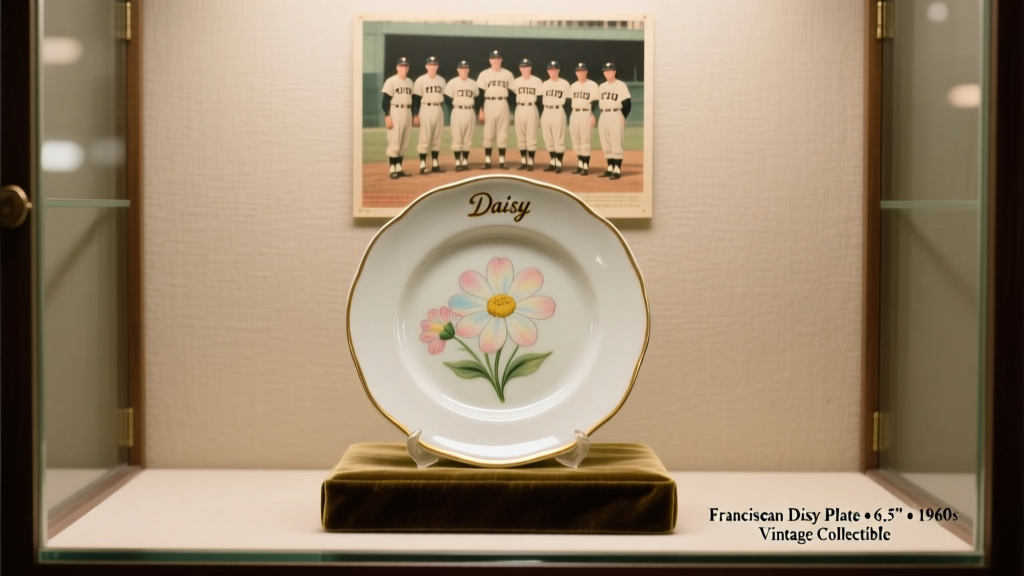
Franciscan Daisy Bread & Butter Plate (6½") — History, Identification, and Collector’s Value Guide
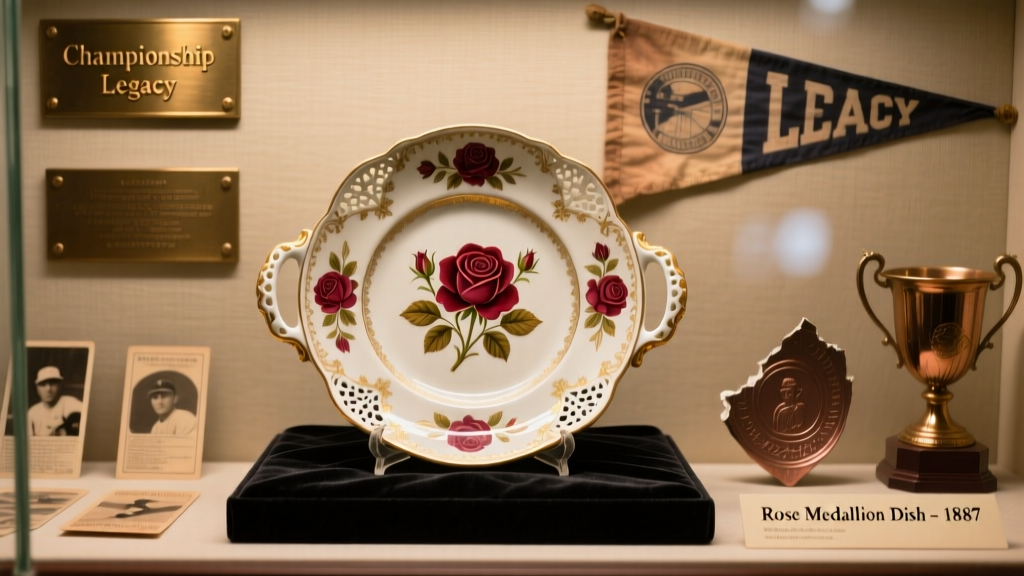
Rose Medallion Dish: Decoding the Figural Floral Reserves, Double Pierced Handles, and Precise 7¼-Inch Provenance
Batchelder Tile Mythological Bird Beast Dark Gray 6-Inch Square: Authentication, Provenance, and Collectibility
Gouda Bowl with Florals: Decoding the Bulbous Hip, Tapered Profile, and Precise Dimensions (4½″ Base, 4¾″ Height)
RS Prussia Pitcher: Green Floral Opalescent 9½-Inch Antique Identification, Value, and Authentication Guide
Harley Hosford: The Forgotten Power Hitter of the 1940s Pacific Coast League
Furniture Mirror Pier Vase Top Holland 67-Inch Pair: Authentication, Provenance, and Market Value Analysis
More April 2008 Hotlines: Authenticating the Infamous Baseball Memorabilia Scandal

The Kitchen Pie Bird Chick Blue: History, Authenticity, and Collectibility of a Mid-Century Ceramic Icon