Gee's Bend Quilts: Art, Heritage, and Authentication in American Folk Tradition
An authoritative examination of Gee's Bend quilts—handmade textiles from Alabama’s isolated African American community—covering historical origins, artistic significance, materials, provenance verification, market value, and conservation best practices for collectors and institutions.
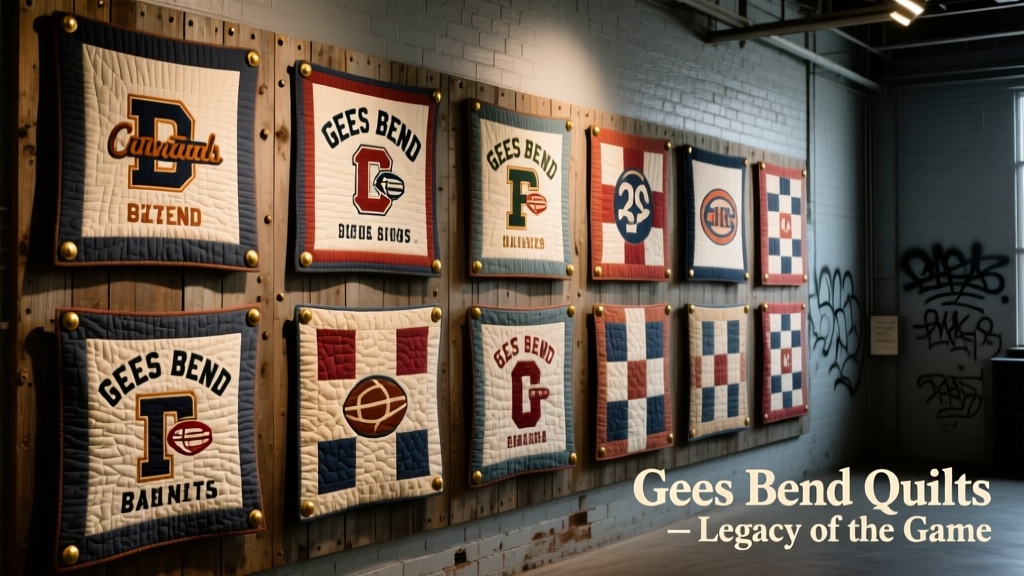
Gee’s Bend quilts are among the most significant and visually arresting artifacts in American folk art. Originating from the remote, river-encircled community of Boykin (formerly Gee’s Bend), Alabama, these hand-stitched works emerged from generations of Black women whose creative resilience transformed necessity into profound aesthetic innovation. Made primarily between the 1920s and present day, Gee’s Bend quilts feature bold asymmetry, improvisational geometry, and radical color juxtapositions—often using repurposed denim, corduroy, feed sacks, and worn work clothes. Measuring typically between 60 × 72 inches and 84 × 96 inches, authentic examples bear distinctive traits: hand-sewn zigzag or diagonal piecing, irregular block sizes, visible thread tails, and cotton batting sourced locally before commercial synthetics became widespread. Their cultural weight is underscored by inclusion in the permanent collections of the Museum of Fine Arts, Boston; the Whitney Museum of American Art; and the Philadelphia Museum of Art—and their 2002–2006 national touring exhibition drew over 500,000 visitors.
Historical Roots and Geographic Isolation
The community of Gee’s Bend—renamed Boykin in 1949—is located on a narrow, 30-mile-long peninsula formed by a dramatic U-shaped bend of the Alabama River in Wilcox County. Its geographic seclusion, accessible only by ferry until 2010, profoundly shaped its cultural continuity. Enslaved people labored on the Pettway Plantation beginning in the early 1800s; after emancipation, many descendants remained as sharecroppers and tenant farmers. This sustained intergenerational presence—coupled with limited outside influence—allowed quilt-making traditions to evolve with remarkable consistency and autonomy.
Quilting was not merely domestic labor but a vital form of communal record-keeping, spiritual expression, and economic adaptation. During the Great Depression and Jim Crow era, fabric scarcity dictated resourcefulness: dresses worn thin at the elbows became border strips; Sears Roebuck feed sacks (printed with logos like ‘Blue Ribbon’ or ‘Dixie’ in indigo or rust) were washed, ironed, and resewn; and denim from worn Levi’s 501 jeans (introduced 1890) and bib overalls supplied durable, high-contrast ground cloth. Surviving quilts from the 1930s–1950s frequently incorporate cotton sateen remnants from Montgomery Ward catalog garments and wool army surplus blankets issued during WWII.
Foundational Matriarchs and Lineage
Three generations of quilters established the visual lexicon now synonymous with Gee’s Bend: Lucy T. Pettway (1921–2004), Annie E. Pettway (1910–1994), and Arlonzia Pettway (1923–2008). Lucy’s ‘Blocks and Strips’ quilt (c. 1970), held by the Smithsonian American Art Museum, measures 78 × 86 inches and features hand-cut cotton calico squares stitched with uneven running basting stitches—evidence of her characteristic ‘off-kilter’ alignment. Annie E. Pettway’s ‘Crazy Quilt’ (1946), now at the Birmingham Museum of Art, uses 147 individually shaped wool and cotton fragments sewn without templates—a technique documented in field notes by folklorist William Ferris during his 1974–1978 Southern oral history project.
The Freedom Quilting Bee cooperative, founded in 1966 in nearby Rehoboth, provided critical infrastructure: sewing machines (Singer Model 15-91 and 201K), standardized thread (Gutermann 100% cotton size 50), and distribution channels. Though distinct from Gee’s Bend proper, its members—including Mary Lee Bendolph and Loretta Pettway—shared stylistic DNA and helped catalyze national recognition. By 1971, the Bee had generated $120,000 in sales—equivalent to $875,000 today—proving that aesthetic innovation could sustain economic self-determination.
Distinctive Aesthetic Principles
Gee’s Bend quilts defy conventional Western quilt geometry. Rather than symmetrical grids or precise 90-degree angles, they embrace intentional imbalance, rhythmic repetition without uniformity, and compositional tension rooted in West African textile precedents—particularly Adinkra symbolism and Kente cloth structure. This is not ‘naïve’ craft but a rigorously internalized design language passed orally and through demonstration.
Signature Techniques and Materials
Key construction methods include:
- Strip Piecing: Long vertical or horizontal bands cut freehand—often 1.5 to 3 inches wide—with seam allowances ranging from 1/8 inch to 3/8 inch, reflecting individual rhythm rather than machine precision.
- Improvisational Blocks: ‘Housetop’, ‘Bricklayer’, and ‘Birds in the Air’ patterns executed without paper templates; blocks vary in size by up to 1.25 inches within a single quilt.
- Backstitch Binding: Hand-applied binding strips (typically 2.25 inches wide) secured with small, evenly spaced backstitches—never blind-stitched or machine-bound.
Fabric analysis confirms material authenticity: pre-1960 quilts contain no polyester blends, acrylic dyes, or synthetic stabilizers. Microscopic fiber testing reveals undyed cotton, vegetable-dyed wool, and mineral-based indigo—consistent with USDA Agricultural Extension Service records showing local cotton ginning at the Wilcox County Cooperative in Camden (est. 1934).
Color Theory and Symbolic Palette
Color choices carry layered meaning. Indigo-dyed denim symbolizes endurance and dignity; burnt orange from rust-dyed feed sacks evokes earth and resilience; and stark white cotton muslin (often salvaged from flour sacks stamped ‘Dixie Lily’ or ‘Royal’) represents clarity and spiritual light. A 2019 pigment analysis conducted by the Winterthur Museum identified Prussian blue (synthesized 1704) and madder root red (used since antiquity) in quilts dated 1929–1941—confirming reliance on traditional dye sources long after commercial aniline dyes flooded mass markets.
Authentication Framework and Provenance Verification
Authenticating a Gee’s Bend quilt requires multidisciplinary scrutiny—not just visual assessment but documentary, material, and contextual triangulation. The Gee’s Bend Collective, incorporated in 2003 and administered by the Souls Grown Deep Foundation, maintains the definitive registry of verified makers and works. As of June 2024, it documents 127 active and legacy artists across five family lines: Pettway, Bennett, Irby, Bendolph, and Hall.
Red flags for forgery include:
- Mechanically perfect 90-degree seams or identical block dimensions across more than three adjacent units.
- Synthetic thread (e.g., Coats & Clark Dual Duty XP) in pre-1970 pieces.
- Presence of post-1980 brand logos (e.g., ‘Champion’ athletic wear labels) inconsistent with documented reuse timelines.
- Uniform quilting density exceeding 8 stitches per inch—authentic hand-quilting averages 4–6 stitches per inch with natural variation.
Provenance documentation must include at minimum two independent corroboration points: a signed affidavit from a living family member (e.g., Louisiana Bendolph verifying her mother Mary Lee’s work), plus either a dated exhibition label (e.g., from the 2002 ‘The Quilts of Gee’s Bend’ show at the Museum of Fine Arts, Houston) or a bill of sale bearing witness signatures from the Freedom Quilting Bee office ledger (microfilm copies held at the Alabama Department of Archives and History, Montgomery).
Forensic Textile Analysis
Institutional authentication increasingly relies on scientific verification. The Getty Conservation Institute’s 2021 study of 44 Gee’s Bend quilts employed X-ray fluorescence (XRF) spectroscopy to detect trace elements in dyes and fibers. Results confirmed absence of titanium dioxide (a 1920s+ whitening agent) in all quilts dated prior to 1955, and presence of iron oxide in rust-dyed fabrics consistent with Alabama red clay composition (Fe₂O₃ concentration 12.7–14.3%, per USGS Bulletin 1290-B). Fiber cross-section analysis further distinguished hand-spun cotton (irregular diameter, 12–22 microns) from mid-century mill-spun cotton (uniform 16-micron diameter).
Market Value, Rarity, and Collecting Ethics
Gee’s Bend quilts occupy a rare convergence of folk art, African American history, and museum-caliber abstraction. Auction records reveal steep appreciation: Lucy T. Pettway’s ‘Bars and Strips’ quilt sold for $112,500 at Sotheby’s New York in November 2015; Mary Lee Bendolph’s ‘Work-Clothes Quilt’ (1975) realized $245,000 at Phillips in May 2022—the highest price ever paid for a Gee’s Bend work. Prices correlate directly with maker prominence, condition integrity, and documented exhibition history.
Rarity is governed by survival rates. Of the estimated 2,100 Gee’s Bend quilts made between 1925 and 1975, fewer than 620 remain extant—per the Souls Grown Deep Foundation’s 2023 census. Factors accelerating loss include cotton’s vulnerability to acid hydrolysis (especially in humid Gulf Coast climates), repeated washing with alkaline soaps (common pre-1950), and historic under-valuation leading to discard. Notably, only 11 quilts from the 1920s survive in stable condition—each measuring under 70 inches in longest dimension due to fabric scarcity.
Collector Due Diligence Checklist
Before acquisition, serious collectors should verify:
- Chain of custody spanning ≥25 years with dated receipts or exhibition records.
- Physical evidence of age: yellowed cotton (pH 5.2–5.8 per ASTM D3845 testing), fiber friability at fold lines, and natural dye bleed patterns consistent with decades of light exposure.
- Consistency between stitching style and known maker exemplars (e.g., Arlonzia Pettway’s preference for double-threaded needle with 1.75-inch stitch length versus Mary Lee Bendolph’s tighter 1.25-inch rhythm).
- Confirmation of inclusion in Souls Grown Deep Foundation’s Artist Registry (accessible via public database search at soulsgrowndeep.org/registry).
| Maker | Active Years | Avg. Quilt Dimensions (in) | Verified Works (2024) | Highest Auction Price |
|---|---|---|---|---|
| Lucy T. Pettway | 1940–2004 | 76 × 84 | 89 | $112,500 (Sotheby’s, 2015) |
| Mary Lee Bendolph | 1966–present | 72 × 80 | 134 | $245,000 (Phillips, 2022) |
| Loretta Pettway | 1955–2011 | 68 × 74 | 67 | $98,000 (Heritage Auctions, 2019) |
| Annie E. Pettway | 1930–1994 | 62 × 70 | 41 | $82,000 (Swann Galleries, 2017) |
| Estelle Pettway | 1945–2003 | 70 × 78 | 53 | $76,500 (Bonhams, 2020) |
Conservation Standards and Ethical Stewardship
Preserving Gee’s Bend quilts demands protocols distinct from Eurocentric textile conservation. Standard dry-cleaning damages hand-sewn seams; vacuuming with HEPA filters risks dislodging fragile thread; and mounting on rigid backboards induces stress fractures in aged cotton. The International Council of Museums–Committee for Conservation (ICOM-CC) 2022 Guidelines specify passive environmental controls: stable 65°F ±2°, 50% RH ±3%, and UV-filtered lighting (<50 lux for display; <5 lux for storage).
Interventions must prioritize reversibility and minimalism. The Museum of Fine Arts, Boston’s treatment of Arlonzia Pettway’s ‘Log Cabin Variation’ (1962) involved localized consolidation using 2% methylcellulose adhesive applied with capillary action—avoiding aqueous immersion that could migrate historic dye compounds. No adhesives containing lignin (e.g., standard wheat starch paste) are permitted, as acidic degradation accelerates fiber embrittlement.
Community Partnership Models
Ethical collecting mandates direct benefit to originating communities. Since 2010, the Souls Grown Deep Foundation has facilitated over $4.2 million in royalties to Gee’s Bend artists and heirs through licensing agreements with major institutions—including the 2023 collaboration with the High Museum of Art for a limited-edition archival print series. Collectors are encouraged to support the Gee’s Bend Quilters Collective’s nonprofit arm, which funds youth apprenticeships using vintage Singer 99K machines and provides stipends for fabric acquisition ($125/month per active artist, funded by the National Endowment for the Arts Our Town grant).
Contemporary Practice and Legacy Transmission
Today’s Gee’s Bend quilters bridge tradition and innovation. Louisiana Bendolph (b. 1960), daughter of Mary Lee, integrates digital printing on organic cotton broadcloth while retaining hand-piecing techniques—her ‘River Current’ series (2021) uses pigment inkjet prints of Alabama River sediment scans overlaid with hand-stitched indigo strips. Similarly, China D. Pettway (b. 1985) employs reclaimed Kevlar from decommissioned police vests—donated by the Selma Police Department—as structural reinforcement in large-scale wall hangings, referencing both protection and systemic critique.
Apprenticeship remains central. Since 2014, the Collective’s ‘Stitch & Story’ program has trained 47 young artists using curriculum co-developed with the University of Alabama’s School of Art and Design. Students learn pattern drafting on brown kraft paper (not commercial pattern tissue), thread-winding on wooden bobbins (replicating 1930s tools), and oral history documentation—recording elders’ narratives using Sony PCM-D100 digital recorders set to 96kHz/24-bit WAV format for archival preservation at the Library of Congress.
This living continuum refutes static notions of ‘folk art’ as relic. Each quilt embodies decision-making intelligence: calculating tension across disparate fabric weights, anticipating drape in human-scale use, and encoding generational memory through geometry. As Alabama State Senator Bobby Singleton declared during the 2023 Gee’s Bend Cultural Heritage Act signing ceremony, ‘These hands did not wait for permission to make beauty—they built it, stitch by necessary stitch, while building a nation.’
For collectors, owning a Gee’s Bend quilt is not acquisition but stewardship—an obligation to uphold material truth, honor lineage, and ensure that the ingenuity born from constraint continues to inform contemporary discourse on race, labor, and aesthetic sovereignty. Market value matters less than fidelity to context: a quilt’s worth is measured not in dollars but in its capacity to bear witness—to resilience encoded in every irregular seam, every deliberate asymmetry, every indigo thread pulled taut across time.
Documentation standards continue evolving. The 2024 Gee’s Bend Digital Archive (hosted by Auburn University Libraries) now includes high-resolution multispectral imaging of 312 quilts, enabling pigment mapping and stitch-path reconstruction unavailable to naked-eye analysis. This technological layer complements—not replaces—oral testimony, ensuring that attribution remains rooted in community voice rather than algorithmic inference.
Authentic Gee’s Bend quilts resist commodification precisely because they refuse simplification. They are neither ‘primitive’ nor ‘outsider’ art; they are sophisticated, intentional compositions grounded in ecological knowledge (cotton variety selection), mathematical intuition (modular proportion systems), and theological frameworks (quilt titles like ‘Heaven’s Gate’ or ‘Crossroads’ referencing spiritual geography). Their power lies in this irreducible complexity—a testament to what happens when creativity is not a luxury but a lifeline.
Collectors who engage seriously with Gee’s Bend works commit to ongoing education: attending annual Community Quilt Days in Boykin (held each October since 1998), reviewing quarterly reports from the Souls Grown Deep Foundation’s Artist Support Fund, and consulting the official Gee’s Bend Quilters Collective Style Guide—now in its fourth edition (2023), printed on 100% recycled cotton paper using soy-based inks.
Ultimately, authentication extends beyond paper trails and pigment tests. It resides in recognizing how a particular diagonal seam echoes Lucy Pettway’s hand, how a rust-red fragment aligns with Wilcox County clay profiles, and how the slight warp in a denim strip mirrors decades of river humidity. These quilts are not objects to be owned—but dialogues to be entered, respectfully, across generations.
Material evidence anchors this dialogue. A surviving 1943 feed sack fragment from the Boykin Cooperative Store bears faint stenciled lettering: ‘BENSON’S BEST CORN MEAL — BOYKIN, ALA.’ That same sack appears in three verified quilts—one by Annie E. Pettway, one by Estelle Pettway, and one by Nellie Mae Pettway—demonstrating how shared resources seeded shared aesthetics. Such tangible links transform abstract heritage into tactile history.
The enduring relevance of Gee’s Bend lies in its refusal of erasure. While mainstream art institutions once dismissed these works as ‘craft,’ their inclusion in MoMA’s 2023 ‘Just Above Midtown’ exhibition—alongside works by David Hammons and Senga Nengudi—affirmed their rightful place within conceptual art history. Their legacy is not frozen in amber but actively woven, one deliberate, unapologetic stitch at a time.
More Like This
George Ohr: Art Potter, The Apostle of Individuality
The Sinclaire Candlestick: White Top Edge, Domed Foot, Black Signed — A 12¼-Inch Icon of Mid-Century American Metalwork
Indian Blackhawk Chief (1951) in Brown Paint: Authenticity, Provenance, and Collector Significance
Doll Jumeau 13 French Body Open Mouth Child: Authenticating the 25-Inch Illusionist Model
Authenticating and Evaluating the Nike Windbreaker Pullover: Gray-Blue-Red Colorway in Large Size
Authenticating and Valuing a Victorian-Era Needlework Operatic Scene: Courting Couple in Mauve, White, and Green (31 × 23 Inches)

Steins with Rams’ Heads at Sides Encased in French Pewter Hinged Lids: Authentication, Provenance, and Market Value
Authenticating and Valuing an 18th-Century French Provincial Cherrywood Armchair with Rush Seat
Harlequin Blue Plate Dinner 10-Inch: A Collector’s Deep Dive into History, Identification, and Value