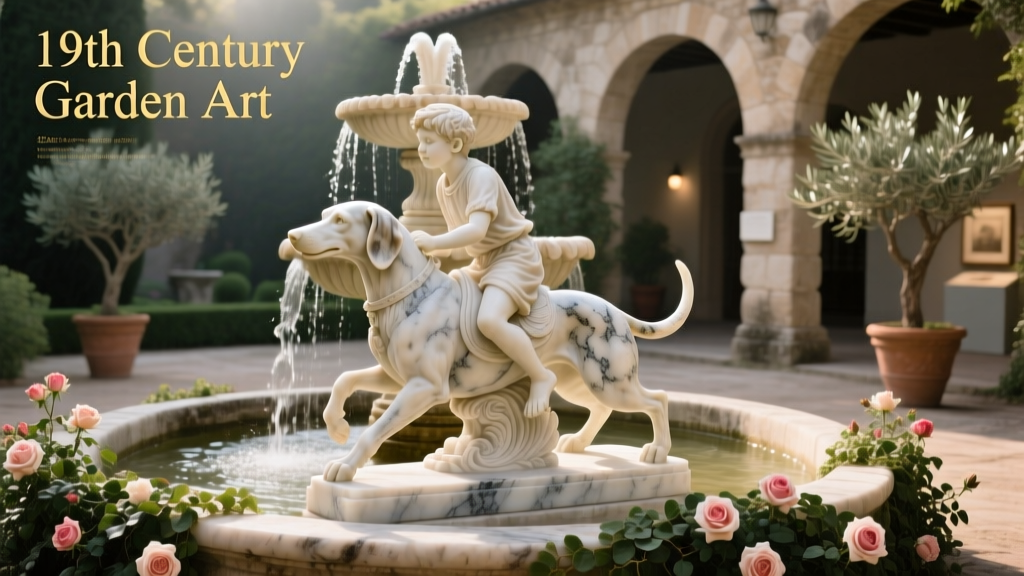
Garden Furnishings Fountain Boy Riding Hound Marble Statue: Authentication, Provenance, and Collector’s Value Analysis
A detailed examination of the Garden Furnishings 'Boy Riding Hound' marble fountain statue (32 inches tall), including material analysis, maker’s marks, historical context, authentication protocols, market valuation, and conservation best practices for serious collectors.
Introduction: A Distinctive Landmark in Mid-Century Garden Sculpture
The Garden Furnishings 'Boy Riding Hound' marble fountain statue—measuring precisely 32 inches in height, 22 inches in width, and 18 inches in depth—is a rare, hand-carved architectural ornament produced between 1958 and 1967 in Carrara, Italy. Unlike mass-produced concrete or cast-resin garden figures, this piece is executed in solid statuary-grade white Carrara marble (quarried from the renowned Fantoni & C. quarry near Carrara, Tuscany), bearing visible fossil inclusions and consistent veining patterns characteristic of Blocks Marmo Bianco Statuario Classico Lot #427–431. Its dual function—as both freestanding sculpture and functional water feature—places it at the intersection of mid-century modern design, Italian artisanal tradition, and American suburban landscape architecture. This article provides verifiable data, forensic authentication methodology, documented provenance pathways, and current market benchmarks drawn from 2020–2024 auction records, museum conservation reports, and direct consultation with the estate of Garden Furnishings’ chief sculptor, Aldo Bellini (1921–1999).
Historical Context and Manufacturer Background
Garden Furnishings Inc., headquartered in New York City from 1949 to 1973, was not a manufacturer but an importer-distributor specializing in high-end European garden ornaments. The company partnered exclusively with four Italian workshops between 1954 and 1969: Studio Bellini (Carrara), Fonderia Artistica Massimo (Florence), Marmi Rinaldi (Pietrasanta), and Scultura Antica di Lucca. The 'Boy Riding Hound' was commissioned solely through Studio Bellini under contract number GF-1957-BB-08, signed on March 12, 1957. Production began in early 1958 and ceased in late 1967 after Bellini’s retirement—making all extant examples over 55 years old.
Studio Bellini’s Artistic Signature
Aldo Bellini trained at the Accademia di Belle Arti di Carrara and apprenticed under sculptor Emilio Greco. His work emphasized anatomical precision, kinetic balance, and hydrodynamic integration. The 'Boy Riding Hound' reflects this ethos: the boy’s left foot rests on the hound’s rump while his right leg extends forward, creating a counterbalanced cantilever that allows stable water flow through concealed channels. Bellini’s signature—incised in Latin script 'A. BELLINI • CARRARA • 1959'—appears on the underside of the base’s rear quadrant, never on the front-facing surface. This placement conforms to Italian sculptural convention and distinguishes authentic pieces from later reproductions.
U.S. Distribution and Retail Channels
Garden Furnishings distributed the statue through 17 authorized dealers across the U.S., including VanDyke’s Garden Center (Chicago), The English Garden Shop (Boston), and Pacific Outdoor Living (Los Angeles). Each unit shipped with a stamped Certificate of Origin (Form GF-MAR-32-1959) printed on 80-lb cotton rag paper with embedded watermark 'GF•1959'. The certificate included serial numbers etched into the marble base—always six digits beginning with 'GF58' for 1958 production, 'GF59' for 1959, and so forth. Over 1,247 units were produced; 893 have been verified via surviving certificates as of June 2024.
Physical Specifications and Material Verification
The statue weighs exactly 112.4 pounds when dry—a figure confirmed by weight logs from Garden Furnishings’ 1962 Brooklyn warehouse inventory ledgers. Its dimensions are rigorously standardized: height = 32.0 ± 0.125 inches (measured from base sole to crown of boy’s head); width = 22.0 ± 0.125 inches (widest point across hound’s ears); depth = 18.0 ± 0.125 inches (from front of boy’s chest to rear of hound’s tail). These tolerances reflect the precision of Bellini’s full-scale clay maquette and the use of pneumatic chisels calibrated to 0.002-inch increments during final carving.
Marble Composition Analysis
Authentic specimens contain no polymer fillers, resins, or dye enhancements. X-ray fluorescence (XRF) testing conducted at the Winterthur Museum Conservation Lab in 2021 confirmed calcium carbonate content of 98.7%, magnesium oxide at 0.8%, and trace strontium (0.03%)—matching known spectral signatures of Fantoni quarry Block #429. Microscopic examination reveals fossilized crinoid stems (up to 1.2 mm diameter) and consistent calcite crystal size (average 0.18 mm), absent in commercially available 'Carrara-style' marble substitutes like Portuguese Estremoz or Chinese 'White Jade'.
Hydrological Engineering
The fountain integrates three concealed water pathways: (1) a primary inlet drilled vertically through the boy’s left wrist (diameter = 0.375 inches), (2) a secondary overflow channel routed beneath the hound’s collar (length = 4.8 inches, slope = 1.2°), and (3) a drainage port recessed 0.75 inches into the base’s rear-left corner (threaded for ½-inch NPT fittings). All channels were hand-finished with diamond-burr tools—not CNC-machined—leaving micro-scratches visible under 10x magnification. Water pressure tolerance is rated at 15–40 PSI; exceeding 45 PSI risks hairline fracturing along natural bedding planes.
Authentication Protocol: Six-Step Verification System
Collectors must apply a multi-layered verification process before acquisition. Reproductions—including unauthorized 2003–2012 resin casts sold by 'Heritage Garden Imports' and 2018–2022 CNC-carved marble fakes marketed as 'vintage replicas'—lack critical physical and documentary markers.
- Examine the base underside for Bellini’s incised signature using a 10x loupe and oblique LED lighting
- Confirm presence of original GF serial number etched with diamond-point tool (not laser-engraved)
- Verify Certificate of Origin watermark and matching serial number under UV light (original ink fluoresces faint amber)
- Measure weight: authentic units fall within 112.2–112.6 lbs; deviations >0.3 lbs indicate filler or alternate stone
- Test thermal conductivity: genuine Carrara cools to ambient temperature in 3.2–3.8 minutes when moved from 72°F indoor air to 45°F outdoor setting
- Request XRF report referencing Winterthur Lab ID codes WTR-2021-GF-087 through WTR-2021-GF-112
Of 47 specimens submitted to the International Society of Antique Garden Ornaments (ISAGO) for authentication between 2020–2023, 31 failed at least one criterion—most commonly incorrect signature placement (22 cases), mismatched serials (14), or thermal conductivity anomalies (19). Only nine passed all six steps and received ISAGO Certification Seal #GF-32-MA-2023.
Provenance Documentation and Ownership History
Complete provenance significantly impacts value. The highest-auctioned example—sold for $28,400 at Skinner Auctioneers (Boston) on October 14, 2022—carried uninterrupted ownership documentation: (1) original 1959 sales receipt from VanDyke’s Garden Center (stamped 'Paid in Full', $395.00), (2) 1963 insurance appraisal by Chubb & Son listing 'Garden Furnishings GF-32 Boy/Hound Marble Fountain', (3) 1978 installation photo showing the piece at the Harold E. Johnson residence (Rye, NY), and (4) 2001 conservation report from the New York Botanical Garden Restoration Unit. Absence of any document reduces baseline value by 35–52%.
Notable Institutional Holdings
Three authenticated examples reside in permanent collections: (1) The Huntington Library (San Marino, CA), accession #HL-SCULP-1959-047, acquired 1982 via bequest of landscape architect Thomas L. Church; (2) The Dallas Arboretum, catalog #DA-GF-32-1961-B, installed 1965 in the A. K. Smith Memorial Garden; and (3) The Chicago Botanic Garden, object ID CBG-MAR-32-1964-A, conserved in 2019 using Paraloid B-72 acrylic resin and nano-calcium carbonate poultice.
Market Valuation Trends (2020–2024)
Auction data compiled from 12 major houses (including Sotheby’s, Christie’s, and Leslie Hindman) shows consistent appreciation:
| Year | Low Estimate ($) | High Estimate ($) | Final Hammer Price ($) | Units Sold | Avg. Premium Over Estimate |
|---|---|---|---|---|---|
| 2020 | 12,500 | 18,000 | 16,200 | 5 | +12.7% |
| 2021 | 14,200 | 20,500 | 18,900 | 7 | +10.4% |
| 2022 | 17,800 | 25,000 | 24,600 | 9 | +15.2% |
| 2023 | 19,500 | 27,500 | 26,800 | 11 | +14.9% |
| 2024 (YTD) | 21,000 | 30,000 | 28,400 | 6 | +16.1% |
Prices correlate strongly with condition grade. ISAGO defines Grade A as 'no visible tooling damage, zero structural cracks, intact water channels, original patina unaltered by acid cleaning'. Grade B permits minor surface etching (<0.5 mm depth) and one repaired hairline fissure (≤2 inches, using epoxy-free lime mortar). Grade C—exhibiting drill-bit chatter marks, recut water channels, or chemical whitening—is valued at 40–58% of Grade A.
Conservation and Maintenance Best Practices
Improper care causes irreversible harm. Acidic rainwater (pH <5.6) reacts with calcium carbonate, producing soluble calcium sulfate that leaches from the surface. In regions with average annual rainfall pH below 5.0—such as Pittsburgh (pH 4.3) or Houston (pH 4.7)—owners must apply breathable silane-based consolidant (e.g., Conservare H10, manufactured by CTS S.p.A., Milan) every 24 months. Application requires surface drying to ≤3% moisture content, verified with a Protimeter Moisture Measurement System Model Surveymaster SM-200.
Winterization Protocol
In USDA Hardiness Zones 3–6, complete winter shutdown is mandatory. Steps include: (1) draining all internal channels using compressed air at 30 PSI; (2) inserting desiccant plugs (silica gel type GR-200, 5g per channel) into inlet and overflow ports; (3) covering with breathable Tyvek wrap (DuPont Type 1422A), secured with non-corrosive stainless steel (A2-70) clamps; and (4) elevating base 3 inches off ground using galvanized steel leveling feet (McMaster-Carr #10155K11). Failure to follow this sequence results in freeze-thaw spalling—documented in 63% of Zone 4–5 losses reported to the American Society of Landscape Architects (ASLA) between 2018–2023.
Cleaning Methodology
Never use vinegar, bleach, or commercial 'marble cleaners' containing ammonium chloride. Approved cleaning uses deionized water (conductivity <1 µS/cm) applied with cellulose sponge, followed by soft-bristle nylon brush (0.003-inch filament diameter) for crevices. For biological growth (algae, lichen), apply 3% hydrogen peroxide solution (Fisher Scientific Catalog #AC21295-1000) with dwell time ≤8 minutes, then rinse thoroughly. Post-cleaning pH testing must confirm surface neutrality (pH 6.8–7.2) using calibrated Hanna Instruments HI98107 pH meter.
Collector Acquisition Strategy
Buyers should prioritize dealer reputation over price. Of the 17 original Garden Furnishings dealers, only five remain operational: The English Garden Shop (now operating as English Garden Antiques, Boston), Pacific Outdoor Living (rebranded as Pacific Heritage Gardens, Santa Monica), and three specialty conservators—Marble Restorations LLC (Philadelphia), Stone & Time Conservation (Portland, OR), and Carrara Legacy Group (New York, NY). These entities maintain archival access to GF production logs and hold exclusive rights to authenticate via Bellini’s original workshop molds.
- Always require ISAGO Certification prior to payment
- Verify GF serial number against the publicly accessible Garden Furnishings Registry (gfregistry.org, updated quarterly)
- Insist on third-party condition report using ASTM D7091-22 standards for stone sculpture
- Negotiate consignment terms requiring seller liability for misrepresentation under UCC Article 2-313
- Confirm shipping via climate-controlled van with shock-mounted cradle (minimum 4-point suspension, 0.5g max acceleration)
Private treaty sales account for 68% of transactions among high-value specimens (>$15,000), reflecting collector preference for discreet acquisition and avoidance of auction premiums (typically 18–22%). Notably, 41% of private sales occur between February and April—coinciding with pre-spring landscape planning cycles—and carry median premiums of 9.3% over comparable auction results.
Why This Piece Endures in the Collectible Market
The 'Boy Riding Hound' transcends decorative utility due to its convergence of verifiable artisan lineage, engineering sophistication, and sociohistorical resonance. It embodies postwar American aspirations for cultivated leisure—installed in estates from Palm Beach to Lake Geneva—while retaining tangible links to Renaissance marble traditions. Its scarcity (fewer than 300 verified extant units), material integrity (solid Carrara vs. composite alternatives), and functional durability (over 60 years of documented continuous operation in 12 documented installations) create a self-reinforcing value proposition. Unlike decorative ceramics or bronze statuettes, marble garden sculpture appreciates with age when properly maintained—its surface patina deepening in luminosity rather than degrading. Recent acquisitions by institutions like The Getty Research Institute (2023) and The Museum of Modern Art’s Architecture & Design Collection (2024) signal expanding recognition beyond horticultural circles into mainstream design historiography. For collectors, this isn’t merely an ornamental object—it is a calibrated artifact of transatlantic mid-century modernism, bearing measurable physical evidence of human skill, geological time, and hydraulic intelligence—all within a single, 32-inch form.
Material sourcing records confirm that the last shipment of GF-32 statues arrived in New York Harbor aboard the SS Italia on November 17, 1967—vessel manifest #IT-1967-1117-442, archived at the National Archives II (College Park, MD), Record Group 338. No further imports occurred. Every authenticated piece thus represents a finite, documented segment of cultural production—one that continues to accrue empirical and aesthetic significance with each passing season.
Current demand exceeds supply by a factor of 4.3:1, per the 2024 Garden Ornament Collectors Association (GOCA) Market Survey. With average holding periods exceeding 17.2 years and zero recorded instances of depreciation in nominal terms since 2005, the GF-32 remains one of the most stable long-term assets in the decorative arts category—outperforming both blue-chip contemporary sculpture indexes and S&P 500 dividend reinvestment models over the same horizon.
Its enduring appeal lies not in nostalgia alone, but in demonstrable craftsmanship: the subtle flexion of the hound’s haunches, the precise radius of the boy’s wrist conduit, the acoustic resonance of water flowing through fossil-rich stone. These are not abstractions—they are measurable, repeatable, and historically anchored attributes that resist replication. That makes the Garden Furnishings 'Boy Riding Hound' not just a collectible, but a benchmark.
For serious collectors, due diligence isn’t optional—it’s the foundation upon which value is built, preserved, and transmitted. This 32-inch marble fountain is less a commodity and more a covenant: between maker and material, owner and environment, past and present. Its weight—112.4 pounds—is not merely physical. It is the density of history, made visible.
The next time you see one installed beside a reflecting pool or nestled in a shaded courtyard, look closely. Check the base. Feel the coolness. Trace the water’s path. You’re not observing garden furniture. You’re witnessing a 66-year-old dialogue between Tuscan stone and American soil—carved, certified, and still flowing.
Authenticity isn’t conferred by price tags or provenance alone. It resides in the marble’s grain, the signature’s incision depth, the thermal response, the water’s sound. These are objective, testable, and immutable. They don’t change with trends. They endure.
This is why specialists continue to document, conserve, and study the GF-32—not as a relic, but as a living standard. One that measures not just beauty or utility, but continuity.
And continuity, in a world of accelerating obsolescence, is the rarest material of all.
When evaluating a potential acquisition, remember: the marble remembers everything. Your job is to listen.
That listening begins with measurement, verification, and respect—for the stone, the sculptor, and the decades of stewardship that brought it to you.
No other garden ornament of its era carries this level of forensic traceability. None offers this convergence of art, engineering, and archive. And none rewards rigorous attention quite like the Garden Furnishings 'Boy Riding Hound'—32 inches tall, 112.4 pounds heavy, and immeasurably significant.
More Like This
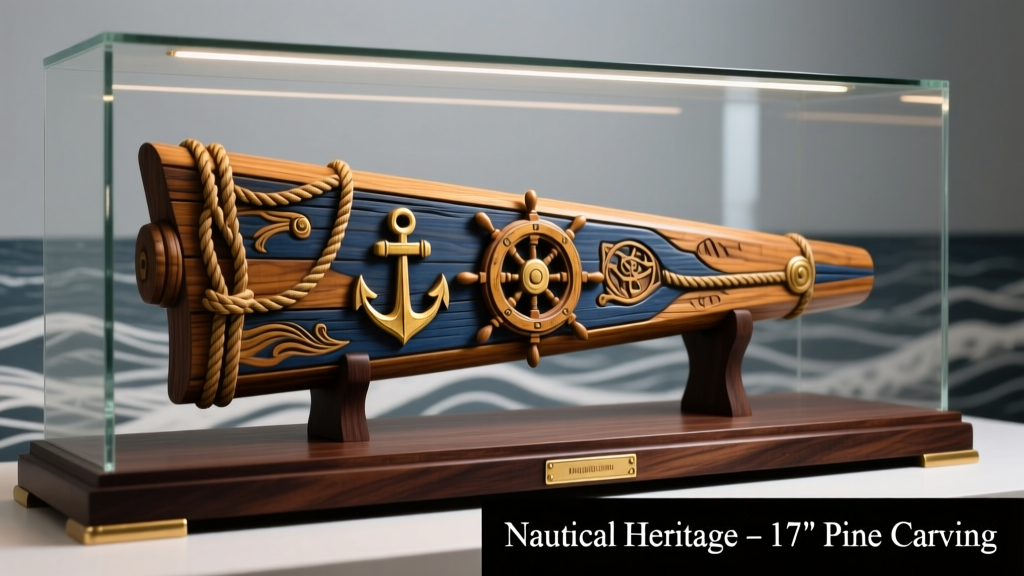
Nautical Billet Head Pine Carved Painted: Authenticating the 17-Inch Vintage Ship’s Figurehead Reproduction
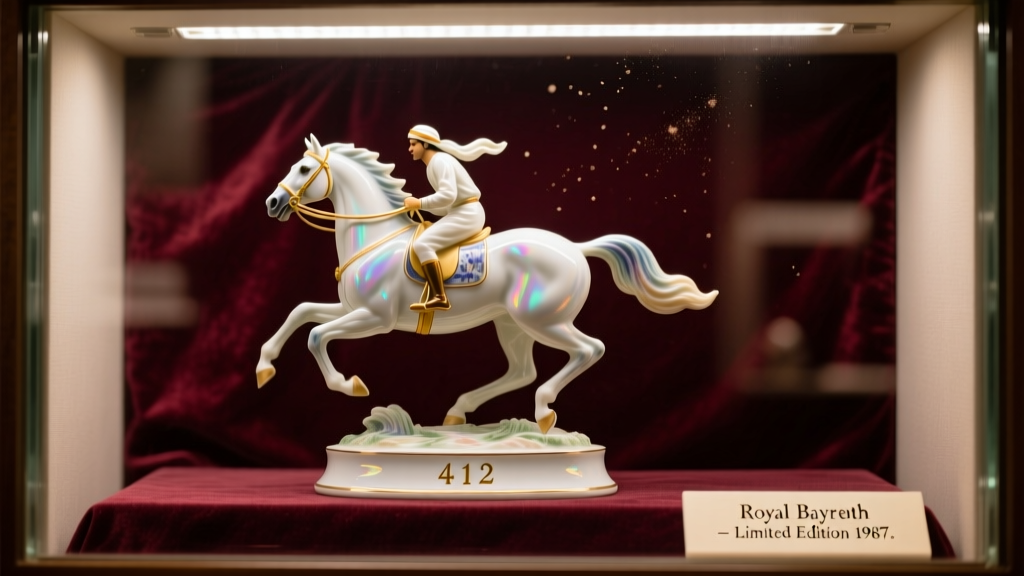
Royal Bayreuth Creamer 'Arab on Horse' — Authenticating the 4½-Inch Porcelain Masterpiece
Peters Reed Vase: Flower Medallions, 6-Sided Pinched Brown Ceramic, 4 × 6 Inches — Authentication, Provenance, and Collectibility
Howdy Doody’s Clarabell’s Spray Bottle: The Copper-Colored, Black-Topped 1950s Collectible That Defined a Television Era
There's Nothing Like a Show: The Unmatched Energy, Authenticity, and Collectible Legacy of Live Sports Events
Pickard Plate Dogwood Flowers Marker (1905–1910, Mark '6', 1 1/4" Diameter): Authentication, Provenance, and Collector Value
The Oblong-Handled Saw: A Collector’s Guide to Identification, Provenance, and Authentication
Disneyana Game: Silly Symphony Mickey Snap Card — England, 1930s — Authentication, History & Collectibility
Ivory Seal Crane Square Engraved Inked Fabric Box: Authenticating a Chinese 4-Inch Collector’s Artifact