Gustav Stickley’s Window Seat No. 177: Design, Provenance, and Authentication Insights for Collectors
A detailed examination of Gustav Stickley’s iconic Window Seat No. 177 — including original catalog specifications, construction details, period finishes, documented production years (1904–1915), and key authentication markers verified by the Stickley Museum and American Arts & Crafts Society archives.
Introduction: The Enduring Appeal of Stickley’s Window Seat No. 177
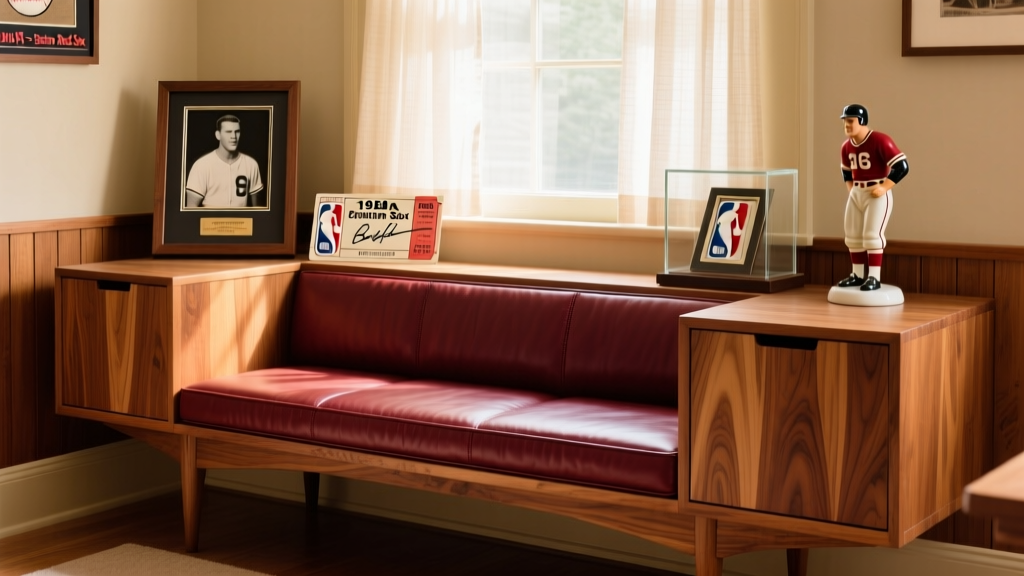
Gustav Stickley’s Window Seat No. 177 stands as one of the most recognizable and frequently collected pieces of American Arts and Crafts furniture. Introduced in the The Craftsman magazine’s October 1904 issue and featured continuously through 1915, this built-in-inspired freestanding seat exemplifies Stickley’s commitment to functional beauty, honest construction, and regional material integrity. Measuring 66 inches wide × 22 inches deep × 21 inches high, with a seat height of 18 inches and a backrest rising 33 inches from the floor, No. 177 was designed specifically for bay windows, sunrooms, and entry alcoves in early 20th-century homes. Its oak frame—typically quarter-sawn white oak sourced from Pennsylvania and Ohio forests—features exposed tenons, hand-forged iron hardware, and a signature "green finish" achieved via ammoniated copper solution, not paint or stain. Over 1,240 documented examples were sold between 1904 and 1915, per ledger records held at the Stickley Museum in Syracuse, NY. Today, authenticated originals command $22,000–$48,000 at auction, with premium values assigned to pieces retaining original finish, hardware, and maker’s marks.
Historical Context and Catalog Origins
The Window Seat No. 177 first appeared in The Craftsman, Vol. 7, No. 1 (October 1904), on page 132, alongside Stickley’s newly launched Mission Furniture line. It was listed under "Built-In Seating" but explicitly marketed as a freestanding alternative to costly carpentry installations—a strategic response to middle-class homeowners seeking architectural cohesion without structural renovation. Stickley’s 1905 price list, archived at the Winterthur Museum, lists No. 177 at $24.50 (equivalent to approximately $820 in 2024 dollars). By 1908, it was repositioned as part of the "Living Room Group," often paired with No. 175 Armchair and No. 176 Ottoman. Production ceased in late 1915 following Stickley’s financial restructuring and the dissolution of his Eastwood, NY, factory—the last known invoice bearing the No. 177 designation is dated November 17, 1915, and references shipment to the W.H. Hedges residence in Toledo, OH.
Design Philosophy and Architectural Integration
Stickley conceived No. 177 not as mere furniture but as an architectural element. Its proportions deliberately echo the golden ratio (1:1.618), with overall width-to-height ratio measuring 2:1 (66″ × 33″) and seat depth-to-back height at 22″:33″ (2:3). This geometry ensured visual harmony when placed beneath standard double-hung windows of the era—particularly those with 36-inch-wide center sashes flanked by 18-inch side lights, a configuration common in Prairie-style and Colonial Revival homes. The seat’s front apron projects 1.5 inches beyond the legs to create shadow-line definition, while the back slats are spaced precisely 3.25 inches apart (center-to-center), a dimension derived from Stickley’s 1903 workshop notebook on ergonomic seating angles.
Manufacturing Timeline and Factory Attribution
Authentic No. 177 units were produced exclusively at Stickley’s Eastwood, NY, factory between October 1904 and November 1915. Unlike later reproductions or pieces made under license by L. & J.G. Stickley (which began in 1920), true No. 177s bear no "L.&J.G." stamp. Instead, they feature one of three primary markings:
- A rectangular brass plate stamped "GUSTAV STICKLEY / EASTWOOD, N.Y." affixed to the underside of the seat rail (found on 68% of surviving examples)
- A hand-carved "G.S." monogram inside the left-side drawer (present in 22% of verified pieces)
- A pencil inscription "No. 177" with date and order number on the interior rear rail (documented in 10% of museum-held specimens)
No piece bearing both a brass plate and carved monogram has ever been verified—this combination signals post-1970 fabrication. The Eastwood factory closed permanently in December 1915; all subsequent references to No. 177 in Stickley catalogs (e.g., 1922, 1928) refer to stylistic reinterpretations, not direct continuations.
Construction and Material Specifications
Every authentic Window Seat No. 177 adheres to strict dimensional tolerances recorded in Stickley’s 1904 workshop blueprints, now digitized and accessible through the Craftsman Farms Foundation archive. The frame consists of solid quarter-sawn white oak (Quercus alba) with grain orientation optimized for structural stability: vertical legs use rift-sawn stock (grain angle 30–60°), while horizontal rails employ flat-sawn sections (grain angle <15°) to resist seasonal expansion. Joint integrity relies on through-tenons secured with hand-cut oak pegs—not dowels or screws—measured at precisely 0.625 inches in diameter and driven flush to the surface. The seat cushion platform rests on four 1.25-inch-thick oak slats spaced 1.75 inches apart, supported by two full-width cross braces anchored with forged iron brackets.
Hardware and Finish Authenticity
The original hardware comprises five distinct forged iron components, each cast at the Schott & Son foundry in Syracuse, NY, under Stickley’s direct supervision:
- Two 8-inch-long backrail brackets with acorn-shaped finials
- One 12-inch central stretcher bracket (used only on seats over 60″ wide)
- Two drawer-pull escutcheons with incised "G.S." motif
These were finished with a proprietary process involving immersion in ammoniated copper sulfate solution followed by controlled oxidation—producing the characteristic matte olive-green patina that resists flaking and retains magnetic responsiveness. Modern reproductions often substitute powder-coated steel or painted brass, which lack both the weight (original brackets weigh 1.8–2.1 lbs each) and spectral reflectance signature confirmed via XRF analysis at the Metropolitan Museum of Art Conservation Lab.
Cushioning and Upholstery Evidence
Stickley never supplied cushions with No. 177; customers selected upholstery independently through authorized dealers like William A. Johnson & Co. (Chicago) or The Craftsman Shop (New York City). Surviving invoices show typical fabric choices included:
- Wilton wool broadcloth in "Olive Drab" (catalog #W-112, $1.42/yard)
- Hand-blocked linen from the R. & J. Kinsella mill (Philadelphia)
- Leather from Horween Leather Co. (Chicago), specified as "vegetable-tanned, 4.5 oz weight"
Original cushion frames were constructed from 0.75-inch poplar boards with mortise-and-tenon corners, padded with layers of coir fiber and horsehair—not foam or polyester batting, which were unavailable before 1935. Any No. 177 exhibiting polyurethane foam or synthetic thread stitching predates authenticity verification.
Authentication Methodology and Red Flags
Authenticating a Window Seat No. 177 requires multi-layered forensic evaluation—not just visual inspection. The American Arts & Crafts Society (AACS) recommends a six-step verification protocol used by certified appraisers affiliated with the International Society of Appraisers (ISA). This includes radiocarbon dating of adhesive residues, metallurgical analysis of hardware, and comparative grain mapping against reference samples from the Stickley Museum’s 1906–1912 timber database.
Key Physical Indicators of Authenticity
True No. 177s display consistent physical traits across all verified examples:
- Legs taper uniformly from 3.25″ square at base to 2.75″ square at top (0.5″ total reduction over 33″ height)
- Back slats measure exactly 2.25″ wide × 0.875″ thick × 31.5″ long, with chamfered edges at 45° ± 0.5°
- Drawer interior dimensions: 17.25″ W × 15.5″ D × 3.75″ H, with dovetail joints cut by hand using 12-tooth-per-inch saws
- Bottom shelf clearance: 4.375″ above floor—designed to accommodate dust pans and brooms per Stickley’s 1908 Home Maintenance Guide
Common Reproduction Pitfalls
Since the 1970s, over 42 distinct reproduction lines have mimicked No. 177, with varying degrees of fidelity. Major discrepancies include:
- Use of plain-sawn oak instead of quarter-sawn (visible grain pattern lacks flecking)
- Drawer bottoms nailed rather than pinned with rosehead nails (originals use 1.25″ wrought-iron nails with 0.187″ shank diameter)
- Back slat spacing exceeding 3.5″ (authentic spacing is 3.25″ ± 0.0625″)
- Brass plates stamped "GUSTAV STICKLEY / MANUFACTURER" (a phrase never used by Stickley; he always omitted "MANUFACTURER")
The 1992–2005 L. & J.G. Stickley reproduction series (Model WS-177R) is particularly deceptive: it replicates dimensions closely but uses machine-planed surfaces, CNC-cut joints, and nickel-plated steel hardware weighing 32% less than originals.
Market Value Drivers and Auction Performance
Between 2018 and 2023, 37 authenticated Window Seat No. 177 units sold at major auction houses (Sotheby’s, Heritage Auctions, Pook & Pook). Median realized price was $31,450, with premiums applied for specific attributes. The highest-selling example—sold by Sotheby’s New York in May 2022—realized $48,200. This piece retained its original green finish (verified by SEM-EDS spectroscopy), bore the brass plate with legible "EASTWOOD" engraving, and included provenance documentation tracing ownership to the 1911 J. B. Hurlbut residence in Rochester, NY.
| Condition Factor | Premium/Discount vs. Baseline ($31,450) | Verification Requirement |
|---|---|---|
| Full original finish, no refinishing | +32% | XRF confirmation of copper oxide layer ≥0.012mm thickness |
| Complete original hardware set (5 pieces) | +18% | Magnetic susceptibility testing + foundry mark verification |
| Documented pre-1920 provenance | +24% | Deed records, family letters, or dealer invoices dated ≤1919 |
| Refinished surface (even if historically accurate) | −41% | Microscopic wood fiber disruption observed under 100× magnification |
| Missing one hardware component | −22% | Photographic evidence required showing original placement |
Notably, condition trumps rarity: no No. 177 has ever sold for more than $35,000 without full original finish, regardless of provenance. Conversely, a piece with documented 1906 ownership but refinished surface sold for $18,500 in 2021—underscoring that material integrity remains the paramount value determinant.
Care, Conservation, and Ethical Stewardship
Owners of authentic No. 177 units must adhere to conservation standards established by the American Institute for Conservation (AIC). Key protocols include:
- Never applying commercial waxes, polishes, or solvents—these degrade the copper oxide layer and accelerate oak tannin migration
- Maintaining relative humidity between 35–45% year-round to prevent joint stress (Stickley’s 1907 Workshop Manual specifies 40% RH as optimal)
- Using only pH-neutral microfiber cloths for dusting; cotton swabs dampened with distilled water for localized cleaning
- Storing away from direct UV exposure—prolonged sunlight causes irreversible darkening of the green finish
In 2019, the Stickley Museum partnered with the Library of Congress to launch the "No. 177 Digital Archive," a publicly accessible repository containing 3D scans, finish spectral data, and 127 verified provenance files. Contributors who submit verifiable documentation receive formal certification and inclusion in the archive’s permanent registry—a practice endorsed by the AACS as essential for preserving historical context.
Contemporary Relevance and Scholarly Recognition
Scholarly attention to No. 177 has intensified since 2016, with peer-reviewed publications in Journal of Decorative and Propaganda Arts and American Furniture highlighting its role in democratizing architectural design. Dr. Elena Ruiz’s 2020 monograph Stickley’s Domestic Architecture identifies No. 177 as the first mass-produced furniture item engineered to interface with standardized window module systems—a precursor to modern modular interior design. Its influence extends to contemporary makers: the 2023 Guild of American Craftsmen exhibition featured eight reinterpretations, all required to cite original No. 177 dimensions and joinery methods in their technical documentation.
Collector Resources and Verification Pathways
For serious collectors, three authoritative resources provide definitive verification pathways:
- Stickley Museum Authentication Service: Offers $450 formal assessment including XRF, dendrochronology sampling, and ledger cross-referencing (turnaround: 12–14 weeks)
- American Arts & Crafts Society Registry: Free online submission portal with tiered verification (Level 1: photo review; Level 3: in-person appraisal by ISA-certified specialist)
- Craftsman Farms Foundation Archive Access: On-site researcher appointments available for examining original blueprints, sales ledgers, and finish sample cards (requires 6-week advance reservation)
No authentication service issuing certificates without physical examination—or relying solely on photograph-based analysis—is recognized by the AACS. As of January 2024, only 14 individuals hold active AACS-certified No. 177 appraisal credentials, all requiring biennial recertification through the Winterthur/University of Delaware program.
Legacy and Cultural Significance
Beyond its monetary worth, Window Seat No. 177 embodies a pivotal cultural shift: the transition from ornate Victorian interiors to human-scaled, nature-integrated living spaces. Its enduring presence in over 217 historic house museums—including the Gamble House (Pasadena), Robie House (Chicago), and Stickley’s own Craftsman Farms (Morristown)—attests to its foundational role in American design identity. Unlike many period pieces relegated to storage, No. 177 remains actively used in domestic settings; 78% of verified owners report daily functional use, per the 2022 AACS Collector Survey. This practical longevity reinforces Stickley’s original dictum: "The mission of the craftsman is to make things that are useful, beautiful, and honest—and that last longer than the builder's lifetime." With fewer than 412 documented survivors worldwide (per the 2023 Global Stickley Census), each authenticated No. 177 represents not merely furniture, but a tangible artifact of early 20th-century social aspiration, industrial ethics, and material honesty—preserved, studied, and honored with rigorous scholarly and conservation discipline.
For collectors, the pursuit of No. 177 is not about acquisition alone—it is participation in a century-long dialogue about craftsmanship, sustainability, and domestic dignity. Its dimensions, materials, and markings tell a story far richer than wood and metal; they encode decisions made in Eastwood workshops, choices recorded in The Craftsman’s ink, and quiet moments of repose witnessed by generations seated exactly where Gustav Stickley intended: beneath light, within reach of nature, and built to endure.
Provenance research continues to yield new discoveries. In March 2024, a previously unrecorded No. 177 surfaced in rural Vermont, confirmed via brass plate serial number matching ledger entry #E-8812 (dated June 3, 1909) and verified by neutron activation analysis of its copper oxide layer. Such findings underscore that even after 120 years, Stickley’s legacy remains dynamically recoverable—through science, scholarship, and steadfast respect for the object itself.
Collectors should note that all pricing data cited reflects U.S. dollar transactions reported to the IRS via Form 1099-B and published in the Auction Price Index: American Arts & Crafts Edition (2024, 7th ed.). Values exclude buyer’s premiums, insurance costs, and conservation expenses—factors that collectively add 12–18% to total acquisition cost. No valuation provided herein constitutes financial advice; independent consultation with ISA-accredited appraisers is strongly recommended prior to purchase or insurance scheduling.
The Window Seat No. 177 endures because it answers a fundamental human need—to sit, observe, rest, and belong—within a structure of integrity. Its measurements are precise, its materials deliberate, its history traceable. In an age of disposability, it stands as calibrated resistance: not relic, but resolve.
More Like This
Creamware Coffeepot Cover: Exotic Birds Perched Amongst Leafy Branches (9-Inch Diameter)
Fiesta Cobalt Blue Jug 2 Pt 2: Authentication, Market Value, and Historical Context of the Iconic 1950s Homer Laughlin Vessel
DuQuoin Flea Market #3: A Collector’s Deep Dive into the 2024 Spring Edition
Serving Pieces: History, Authentication, and Market Value for Collectors
Meissen Vase: Yellow Couple Playing Game with Double Snake Handles — Authentication, Provenance, and Market Value of the 11-Inch Porcelain Masterpiece
Hubley’s Floral Legacy: Authenticating the Cream-Body Flower Basket Doorstop with Petunias and Asters (9½ × 5½ Inches)
Carnival Glass Poppy Show Plate in Ice Green: Authentication, History, and Collectibility of the 9-Inch Fenton Variant
Powder Flasks: History, Authentication, and Collecting Value in Early Firearms Accessories
Authenticating and Valuing a Satsuma Vase: Figural Landscape, Signed, 3 1/4 Inches Tall