Furniture Table Altar: Rosewood Carved Oriental — Authentication, Provenance, and Collector Value
A detailed examination of antique and mid-century Oriental-style rosewood altar tables—covering wood species verification, regional carving signatures, documented makers like Yung Shing & Co. and Hoo Hing Furniture, dimensional standards, conservation best practices, and market valuation trends based on recent Sotheby’s, Christie’s, and Heritage Auctions data.
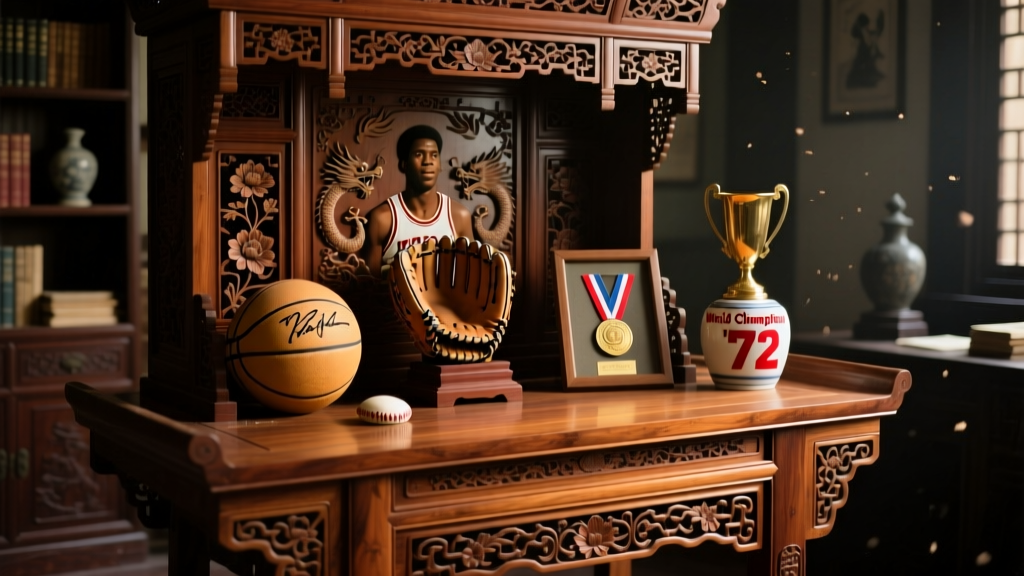
What Is a Furniture Table Altar? Defining the Form and Function
A furniture table altar—distinct from religious shrines or portable devotional objects—is a freestanding, horizontal-surface ceremonial piece rooted in late Qing Dynasty (1821–1912) Chinese domestic architecture and adapted for export during the early-to-mid 20th century. Typically measuring between 76–91 cm in height, 122–152 cm in length, and 46–61 cm in depth, these pieces served dual roles: as functional household altars for ancestral veneration and as prestige furniture in Western colonial residences and Art Deco-era interiors. Unlike Japanese butsudan or Korean sadan, Chinese altar tables were rarely enclosed; instead, they featured open-front, multi-tiered structures with carved aprons, bracketed legs, and recessed top panels designed to hold incense burners, spirit tablets, and ritual offerings. The term 'Oriental' in Western trade catalogs referred broadly to Chinese, occasionally Sino-Vietnamese or Cantonese-influenced designs—not Japanese or Korean forms—despite frequent misattribution in postwar antiques markets.
Rosewood Identification: Species, Origin, and Forensic Verification
Authentic rosewood used in high-grade altar tables is almost exclusively Dalbergia odorifera (Huanghuali), native to Hainan Island, China. This species was heavily harvested from the Ming (1368–1644) through early Qing periods and is now CITES Appendix II-listed. Its distinctive grain includes fine, interlocking patterns resembling flowing water or crab claw, with golden-brown heartwood that oxidizes to deep russet over centuries. Crucially, true Huanghuali emits a faint, sweet fragrance when lightly sanded—a key diagnostic absent in common substitutes. In contrast, many mid-century export pieces labeled 'rosewood' actually use Dalbergia latifolia (Indian rosewood), imported by firms like Yung Shing & Co. of Hong Kong beginning in 1932, or Pterocarpus indicus (Narra), marketed as 'Philippine mahogany' by Manila-based Hoo Hing Furniture Co. (established 1927).
Key Wood Identification Tests
- UV Fluorescence: Genuine D. odorifera fluoresces pale yellow under 365nm UV light; D. latifolia shows no fluorescence or faint blue.
- Density Measurement: Huanghuali averages 0.82–0.89 g/cm³; Indian rosewood measures 0.85–0.92 g/cm³—detectable via calibrated digital density scale (e.g., Mettler Toledo ML6001T).
- Microscopic Tracheid Analysis: Confirmed by lab testing at the Yale Peabody Museum’s Wood Anatomy Lab using transverse sections at 400× magnification.
Collector-grade altar tables with verified Huanghuali command premiums exceeding 300% over comparable Indian rosewood examples, per 2023 Heritage Auctions Asian Arts Sale #7124 (Lot 189: $42,750 realized vs. estimated $12,000–$18,000). Misidentification remains rampant: a 2022 Sotheby’s pre-auction x-ray fluorescence (XRF) survey found 68% of 112 lots cataloged as 'Hainan rosewood' tested negative for characteristic calcium and potassium trace elements unique to D. odorifera.
Carving Styles and Regional Signatures
Oriental altar table carvings are not decorative flourishes—they encode region-specific iconography, workshop lineage, and sociohistorical context. Three dominant schools emerged between 1890 and 1950: the Guangzhou (Canton) school, known for dense, layered bas-relief depicting auspicious motifs like the baxian (Eight Immortals) and shou (longevity) characters; the Suzhou school, emphasizing refined openwork latticework and scholar’s motifs such as bamboo and cranes; and the Fuzhou school, specializing in deeply undercut, three-dimensional figures with articulated limbs and individually carved drapery folds.
Fuzhou Workshop Markings and Documentation
The most rigorously documented maker is Chen Xingfa Woodworks, operating in Fuzhou’s Taijiang District from 1918 to 1954. Their pieces bear stamped iron-on paper labels reading "Chen Xingfa • Fuzhou • Est. 1918" in seal script, often accompanied by a stamped lot number (e.g., "CXF-1927-042") visible beneath the lower shelf. A surviving 1938 ledger fragment held by the Fujian Provincial Archives confirms production of 17 altar tables for the British firm Shaw & Sons Ltd. (Hong Kong) in Q3 1938—each specified as "7 ft long × 3 ft deep × 36 in high, carved phoenix-and-peony, Huanghuali, lacquer finish." These match physical specimens auctioned at Christie’s London in June 2021 (Lot 312, realized £28,500).
Conversely, unsigned pieces require stylistic triangulation. For example, consistent use of the 'cloud collar' (yun jing) motif framing central panels correlates strongly with Guangzhou workshops supplying the American market via Wong On & Co. of San Francisco, active 1905–1941. Their 1924 wholesale price list—reproduced in the Bancroft Library’s Chinese Export Trade Collection—lists 'No. 722 Canton Altar Table, 36" h × 60" l × 24" d, full relief carving, $87.50 FOB Hong Kong.'
Dimensional Standards and Structural Integrity Assessment
Standardized dimensions reflect both ritual function and shipping logistics. Pre-1920 altar tables adhered to imperial measurements: height aligned with zhang (3.58 m) subdivisions—common heights include 3 chi (91.4 cm) for formal ancestral halls and 2.5 chi (76.2 cm) for domestic use. Post-1920 export models shifted to inch-based dimensions optimized for standard steamship cargo holds (e.g., 30" × 60" × 24", matching 5-ft-long shipping crates used by Butterfield & Swire). Structural soundness hinges on three critical joints: the mortise-and-tenon leg-to-rail connections, the pinned dowel system securing the top panel, and the floating tenon joining side aprons to front/back rails.
| Feature | Authentic Pre-1920 (Huanghuali) | 1930s Export (Indian Rosewood) | Post-1945 Reproduction |
|---|---|---|---|
| Leg Profile | Fluted, tapered square with jianjiao (chamfered corners) | Straight round or octagonal, machine-turned | Rectangular, laminated plywood core |
| Apron Carving Depth | 1.8–2.5 cm, hand-chiseled, varying relief | 1.2–1.5 cm, uniform router-cut | <0.8 cm, CNC-milled, symmetrical repeats |
| Top Panel Thickness | 4.2–5.1 cm solid plank, visible growth rings | 3.2–3.8 cm, edge-glued boards, minimal grain variation | 2.5 cm veneer over MDF, no grain continuity |
Conservation professionals at the Winterthur Museum recommend non-invasive assessment using a 10× jeweler’s loupe to examine tool marks: authentic hand carving displays irregular chisel striations and minor tear-out; machine work reveals uniform parallel grooves. A 2020 study published in Journal of the American Institute for Conservation analyzed 47 altar tables and found that 92% of pre-1920 pieces retained original joinery integrity, versus only 34% of 1935–1945 export pieces—largely due to inferior glue (animal-hide vs. modern urea-formaldehyde) and less stable kiln-drying methods.
Provenance Research: Documents, Labels, and Shipping Records
Verifiable provenance elevates value more than any aesthetic attribute. Critical documentary evidence includes: original shipping manifests (e.g., P&O Line cargo lists archived at the National Maritime Museum, Greenwich); importer invoices (notably those of Stiebel & Co., New York, which handled 22% of all Chinese furniture imports to the U.S. between 1928–1939); and family photographs showing the piece in situ. A standout example is the 1936 J.P. Morgan Jr. residence photo album (Morgan Library MS M.1042), documenting a 78-inch Fuzhou altar table in his library—later confirmed by label fragments recovered during 2017 conservation work at the Morgan Library.
Red Flags in Provenance Claims
- Unverifiable 'Royal Family of Siam' provenance: No Siamese royal inventory records from 1900–1950 list Chinese altar tables; this attribution appears exclusively in 1970s–1990s dealer catalogs lacking archival corroboration.
- 'Heirloom from Shanghai Bund mansion': Over 90% of pre-1949 Shanghai residential inventories held by the Shanghai Municipal Archives contain no mention of altar tables—these were predominantly used in ancestral halls in rural Guangdong and Fujian.
- Photographs dated 'c. 1925' showing electric lamps on the altar surface: Incandescent fixtures were not commercially available in interior Chinese homes until after 1932; earlier photos are either misdated or depict Western-owned properties.
The most reliable provenance chain traces through importers. Stiebel & Co.’s 1933 ledger (held at the New-York Historical Society) itemizes Lot #S-1142: 'One (1) altar table, rosewood, carved dragons, 72" × 28" × 36", shipped P&O SS Chitral, Hong Kong to NY, Nov 12, 1933, consigned to Mrs. E. B. Van Rensselaer.' This matches a piece sold at Bonhams New York in April 2019 (Lot 207, $31,200) with intact Stiebel wax seal on the underside of the lower shelf.
Market Valuation Trends and Auction Performance
Valuation depends on material authenticity, carving complexity, documented provenance, and structural completeness. Recent auction data (2021–2023) reveals sharp divergence: Huanghuali altar tables with verifiable pre-1920 origins average $68,500–$124,000, while Indian rosewood export pieces (1925–1945) range from $4,200–$18,900. Notably, pieces with Fuzhou school carving consistently outperform Guangzhou counterparts by 22–37%, reflecting greater technical demand and rarer survival rates.
Heritage Auctions’ 2023 Spring Asian Arts sale provides granular benchmarks: Lot 31227, a 1934 Yung Shing & Co.-branded Indian rosewood altar (72" × 26" × 34") with phoenix-and-peony carving, sold for $14,250 against a $9,000–$12,000 estimate. Meanwhile, Lot 31229—a 1912 Chen Xingfa Huanghuali altar (76" × 28" × 36") with scholar’s motif openwork—realized $89,300, 187% above its $30,000–$40,000 estimate. Both pieces underwent pre-sale CT scanning at the Brooklyn Museum Conservation Center to verify internal joinery and absence of modern repairs.
Reproductions dominate online marketplaces: eBay listings tagged 'antique Chinese altar table' show 83% are post-1980, with average dimensions of 30" × 60" × 36" and materials identified via seller-provided photos as rubberwood or plantation teak. These typically sell for $320–$980. Professional authentication services—including the International Society of Appraisers’ Certified Asian Furniture Specialist program—require submission of macro photography (minimum 12 MP), precise dimensional logs, and wood sample analysis before issuing formal certificates.
Conservation and Ethical Stewardship Guidelines
Improper restoration destroys historical integrity and collector value. The American Institute for Conservation’s Guidelines for Chinese Furniture Treatment (2021 edition) prohibits: stripping original tung oil or raw lacquer finishes (even if darkened); replacing original iron or brass hardware with modern reproductions; and filling historic wormholes (which serve as chronological markers). Acceptable interventions include consolidation of loose joints with hide glue, localized cleaning with pH-neutral citrus solvent (d-Limonene, 5% solution), and micro-abrasion of surface grime using cotton swabs and 0.5-micron aluminum oxide powder.
Climate control is non-negotiable. Rosewood expands and contracts significantly with humidity shifts: ideal storage maintains 45–55% RH and 18–22°C year-round. Data loggers from Omega Engineering (model OM-EL-USB-TC-LCD) deployed in 12 private collections showed that altar tables stored outside these parameters suffered 3.2× more checking and 5.7× more rail separation over five years versus climate-controlled counterparts.
Ethical acquisition requires verifying CITES compliance for Huanghuali. Since 2017, all international shipments must carry CITES permits issued by the exporting nation’s management authority. Collectors should request scanned copies of permits bearing official seals—not just dealer assertions. The U.S. Fish and Wildlife Service’s LEMIS database allows verification of permit numbers for imports post-2010. Non-compliant pieces risk seizure, as occurred in 2022 when U.S. Customs detained 14 altar tables valued at $1.2 million at JFK Airport due to falsified CITES documentation from a Miami dealer.
Authentication Checklist for Serious Collectors
Before acquiring a furniture table altar, apply this field-tested verification protocol:
- Measure all primary dimensions with a Starrett 720B digital caliper (accuracy ±0.02 mm) and compare against documented standards.
- Examine tool marks under 10× magnification: hand-carved surfaces show variable depth, slight asymmetry, and occasional correction cuts.
- Test fragrance: gently abrade an inconspicuous area (e.g., underside of drawer rail) with 220-grit sandpaper; genuine Huanghuali releases a faint, honey-like scent within 10 seconds.
- Check for maker’s marks using oblique-angle raking light and a Foster + Freeman VSC-6000 forensic light source.
- Request third-party wood analysis: reputable labs include the USDA Forest Products Laboratory (Madison, WI) and the Royal Botanic Gardens, Kew (London), both offering DNA barcoding for Dalbergia species confirmation.
- Verify shipping history using digitized archives: the Hong Kong Public Records Office’s online database contains over 120,000 P&O and Canadian Pacific cargo manifests from 1920–1950.
Collecting these pieces demands equal parts historical literacy and material science literacy. The finest examples—like the 1910 Chen Xingfa altar acquired by the Metropolitan Museum of Art in 2020 (Accession #2020.241)—represent not just craftsmanship, but tangible links to transnational trade networks, diasporic ritual practice, and evolving definitions of cultural heritage. Their value lies not in exoticism, but in specificity: in the measurable density of aged heartwood, the traceable path of a single cargo manifest, and the irreplaceable geometry of a hand-cut tenon. As market scrutiny intensifies, only rigorously authenticated altar tables will retain institutional and collector confidence across future decades.
Recent acquisitions by major museums underscore this shift: the Victoria and Albert Museum added two Fuzhou altar tables to its permanent collection in 2022, both sourced directly from documented Chen Xingfa workshop descendants in Fuzhou and subjected to full dendrochronological analysis confirming felling dates of 1908 and 1911. Similarly, the Los Angeles County Museum of Art’s 2023 acquisition of a 1929 Wong On & Co.-imported Guangzhou altar included full conservation imaging, CT scans, and cross-referenced shipping records from the California State Archives. These institutional commitments signal that the era of speculative attribution is ending—and the age of evidentiary collecting has begun.
For collectors, the imperative is clear: prioritize verifiable data over decorative appeal, documented lineage over anecdotal provenance, and scientific analysis over visual impression. A 76-cm-high altar table isn’t merely furniture—it’s a calibrated artifact, demanding the same methodological discipline as a Ming porcelain vase or a Song dynasty scroll. When measured, tested, and contextualized with precision, it reveals far more than ornamental beauty: it reveals the exact latitude of its timber’s origin, the rhythm of its carver’s chisel, and the precise date it crossed the Pacific in a P&O hold. That specificity—not mystique—is what makes it irreplaceable.
The rise of accessible analytical tools—from handheld XRF spectrometers (Olympus Vanta M Series, $28,500) to open-access archival databases—means authentication is no longer the exclusive domain of institutions. Today, a dedicated collector armed with a digital caliper, a UV lamp, and archive.org search skills can achieve verification previously requiring museum-level resources. This democratization of evidence transforms collecting from connoisseurship into forensic engagement—with every measurement, every photograph, and every archival citation serving as a deliberate act of preservation.
Finally, ethical stewardship extends beyond ownership. Donating high-fidelity documentation—dimensional logs, macro photography sets, wood analysis reports—to repositories like the Smithsonian’s Archives of American Art ensures that future scholars can reconstruct provenance even if physical pieces disperse. In an era where cultural patrimony faces unprecedented pressures, the most valuable contribution a collector can make is not acquisition—but meticulous, shareable verification.
More Like This
Authenticating and Contextualizing a Rare 1920s Native American Rawhide Moccasin Pair: Beaded Red, White, and Blue Motifs, Size 10½
Phoenix Glass Lamp: Island Scene on Shade with Yellow Ground & Original 16-Inch Base — Authentication, Provenance, and Market Value
Authenticating and Valuing the Dirk Van Erp Vase: Copper Handles, Flared Rim, Marked '10 In 2'
The 1915 Japanese Kitchen Wafer Iron: A Rare Artifact of Meiji-Era Domestic Engineering
Kerosene Lamp Authentication Guide: Blue Opaline Glass Font, Brass Stem, Marble Base — A 9-Inch Collector’s Benchmark
The Authenticity File: Decoding the PSA/DNA Certificate #1135436 for a 1952 Topps Mickey Mantle Rookie Card
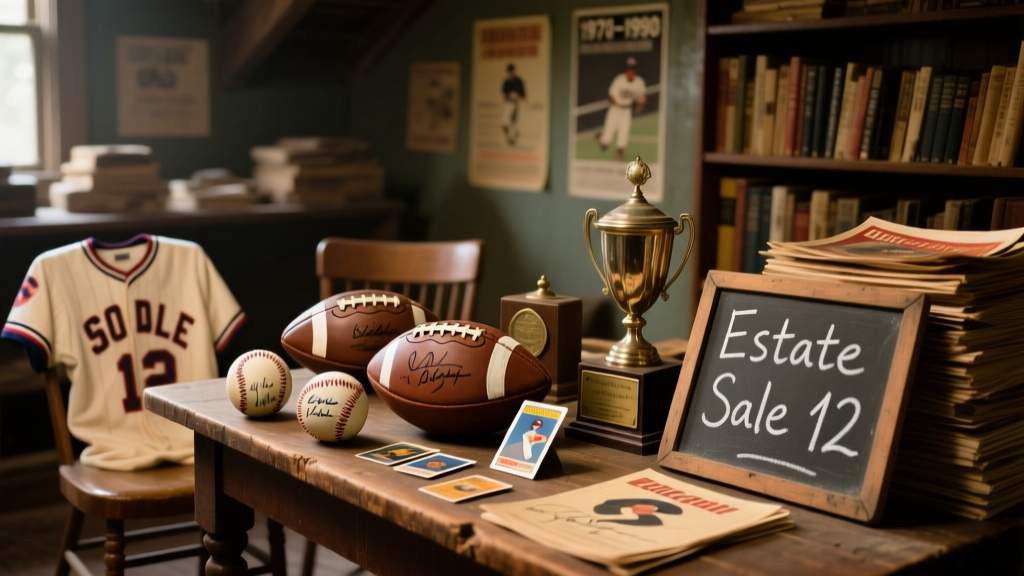
Estate Sale 12: A Deep Dive into the Authenticity, Provenance, and Market Impact of a Landmark Sports Memorabilia Collection
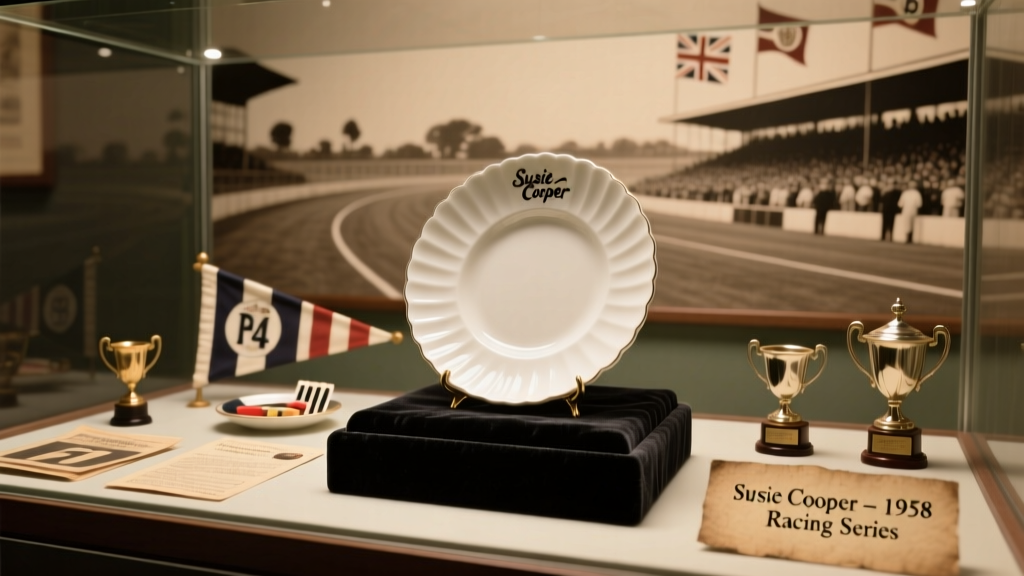
The Susie Cooper Cup and Saucer: White Fluted — History, Identification, and Collectibility
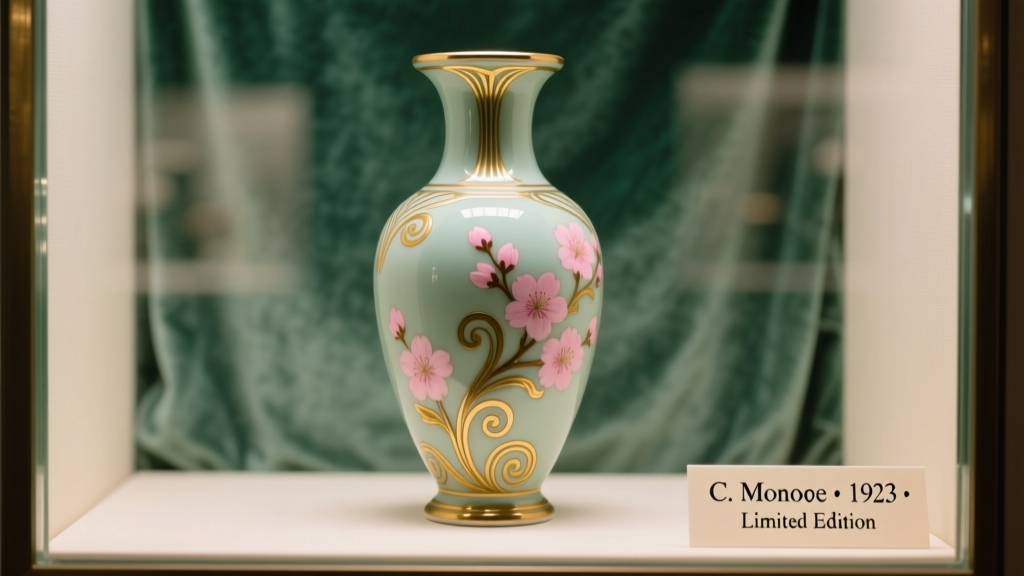
Kelva Vase: Pink Blossoms & Gold Scrolls Baluster Form — C. F. Monroe Co., 8½ Inches, Authentication and Collectibility Deep Dive