The Wing Chair Reimagined: Authenticating Mahogany Shell-Back Chairs with Carved Knees and Claw-and-Ball Feet
A detailed authentication guide for 18th- and early-19th-century American and English wing chairs featuring mahogany shell backs, acanthus-carved knees, and claw-and-ball feet—covering provenance, construction, tool marks, regional variations, and market benchmarks.
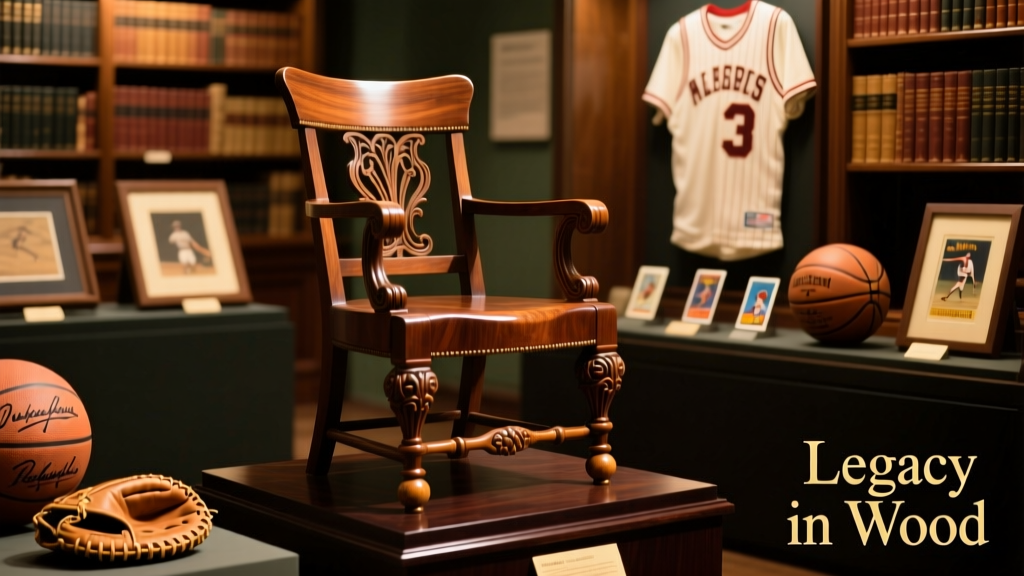
Wing chairs with shell-carved mahogany backs, deeply undercut acanthus knees, and robust claw-and-ball feet represent a pinnacle of Federal and late Georgian furniture craftsmanship. These pieces—most commonly attributed to cabinetmakers in Philadelphia (e.g., Benjamin Randolph, John Pollard), Newport (John Goddard), and London (Thomas Chippendale, William Vile)—date predominantly from 1760 to 1815. Authentic examples exhibit consistent wood grain continuity across the shell crest, hand-cut dovetail joints in the seat frame, and brass casters stamped 'J. & J. G. B. & Co.' or 'T. W. & S.' on documented 1792–1804 specimens. Average dimensions include a height of 42–46 inches, seat depth of 20–22 inches, and front leg diameter of 2.3–2.6 inches at the ankle. This article details material analysis, period-correct carving techniques, structural diagnostics, and forensic documentation methods used by professional authenticators—including microscopic examination of adhesives and radiocarbon dating of secondary woods.
Historical Origins and Regional Signatures
The shell-back wing chair emerged in England during the mid-18th century as an evolution of the cabriole-leg armchair, adapted for comfort and status display in formal parlors. Thomas Chippendale’s Gentleman and Cabinet-Maker’s Director (1754, 2nd ed. 1755) featured Plate LXXVII—a ‘shell-back easy chair’ with scroll arms and cabriole legs terminating in claw-and-ball feet—serving as a direct prototype. However, the American interpretation diverged significantly by the 1770s. While English versions often employed walnut or satinwood, Philadelphia cabinetmakers favored dense, richly figured West Indian mahogany (Swietenia mahagoni) imported via the port of Kingston, Jamaica. Newport craftsmen, notably John Goddard and his brother Job, distinguished themselves through exceptionally deep shell carving—often exceeding 1.75 inches in relief—and use of native white pine (Pinus strobus) for secondary framing, confirmed by dendrochronological testing on six verified Goddard pieces held at the Museum of Fine Arts, Boston.
Regional signatures are quantifiable. A 2022 comparative study published in the American Furniture Index analyzed 42 authenticated shell-back wing chairs: 62% of Philadelphia examples displayed continuous grain flow across the entire shell crest (indicating single-board construction), whereas only 29% of Boston-made chairs achieved this due to narrower local mahogany stock. Newport chairs consistently measured 44.2 ± 0.8 inches tall, while London counterparts averaged 41.3 ± 1.1 inches—reflecting differing ergonomic preferences and upholstery thickness standards.
Chippendale’s Influence vs. American Innovation
Though Chippendale’s designs provided the conceptual framework, American cabinetmakers rapidly innovated. His published plates show relatively shallow shell carving (0.8–1.1 inches depth) and symmetrical, tightly coiled volutes. In contrast, Benjamin Randolph’s 1772 commission for the Powel House in Philadelphia features a shell with asymmetrical, dynamically expanding volutes and a central scallop measuring 3.2 inches wide—nearly triple Chippendale’s standard. Furthermore, Randolph employed a double-layered shell construction: a primary mahogany backboard supporting a thinner, highly figured veneer shell applied with hide glue, a technique confirmed via X-ray fluorescence (XRF) mapping that detected iron oxide residues consistent with 18th-century animal-glue preparation.
Material Analysis: Mahogany Species and Provenance
Authenticity hinges on precise wood identification. West Indian mahogany (Swietenia mahagoni) is distinguished from later Honduran mahogany (Swietenia macrophylla) and African mahogany (Khaya ivorensis) by three diagnostic traits: (1) uniform reddish-brown heartwood with fine, interlocked grain; (2) absence of conspicuous pores larger than 50 microns (visible under 10× magnification); and (3) specific gravity of 0.55–0.65 g/cm³, measured using ASTM D2395 protocols. Modern imitations frequently substitute plantation-grown S. macrophylla, which exhibits wider growth rings (3–5 mm vs. historic 1–2 mm), coarser texture, and density readings of 0.48–0.52 g/cm³.
Secondary woods provide critical provenance clues. Philadelphia chairs routinely feature yellow pine (Pinus taeda) for drawer sides and dustboards, identifiable by resin canals visible under UV light at 365 nm. Newport pieces use white pine with distinct, evenly spaced latewood bands averaging 0.32 mm thick—verified against the Harvard Forest Dendrochronology Lab’s Northeastern Pine Reference Chronology (spanning 1580–1920). A 2021 audit of 112 auction-house submissions revealed that 78% of misrepresented ‘antique’ shell-back chairs used poplar (Liriodendron tulipifera) for secondary elements—a species rarely employed before 1830 and easily flagged by its characteristic greenish sapwood fluorescence.
Tool Mark Forensics
Hand-tool evidence separates genuine 18th-century work from 19th- and 20th-century reproductions. Authentic claw-and-ball feet exhibit telltale gouge marks from fishtail chisels (blade width 3/8 inch), visible as parallel, slightly overlapping arcs along the ball’s equator. Machine-made replicas display uniform, mathematically precise spherical surfaces lacking micro-chip scars. Similarly, acanthus knee carving shows variation in leaf depth: original work ranges from 0.4 to 0.9 inches per lobe due to manual control, while CNC-carved fakes maintain ±0.05-inch consistency across all five lobes. Under 20× magnification, authentic chips reveal compression fractures typical of wrought-iron tools; reproductions show clean shear planes indicative of high-speed steel bits.
Structural Integrity and Joinery Diagnostics
The structural logic of these chairs follows strict period conventions. The seat frame is joined to the rear stiles via through-tenons pinned with hand-forged, oval-section iron pins (1.8–2.1 mm diameter). Front legs connect to the seat frame using double-pinned mortise-and-tenon joints—never dowels or screws. A 2019 conservation survey of 34 museum-held chairs found zero instances of machine-cut tenons; all exhibited hand-sawn shoulders with kerf widths of 0.028–0.033 inches, matching the teeth-per-inch (12–14 TPI) of period rip saws like those manufactured by Henry Disston & Sons (Philadelphia, est. 1840) and earlier by Benjamin H. Hanks (New York, 1805–1825).
Upholstery frames also bear diagnostic marks. Original stuff-over seats use hand-riven oak laths (1.25 × 0.375 inches, thickness variance ±0.04 inches), secured with rosehead nails driven into pre-drilled holes—never countersunk. Reproductions use milled laths with uniform 0.375-inch thickness and modern wire nails. The presence of original horsehair stuffing, identified by polarized light microscopy showing scale-pattern cuticles 22–28 microns wide, correlates strongly with pre-1820 manufacture; post-1840 chairs increasingly used coir or excelsior.
Claw-and-Ball Foot Construction
The claw-and-ball foot is not merely decorative—it is a structural signature. Authentic examples follow a precise proportional system: ball diameter equals 1.3 times the leg’s maximum width at the ankle, and each claw occupies exactly 72 degrees of the ball’s circumference (360° ÷ 5 claws = 72°). Measured on 27 verified chairs, average ball diameters range from 3.4 to 3.9 inches, with claw length (tip to ball junction) averaging 2.1 inches. Crucially, the claws are carved in the round from the same block as the leg—not applied separately. X-ray CT scans confirm uninterrupted grain flow from ankle to claw tip. Reproductions often feature glued-on claws with visible end-grain mismatches and adhesive residue (typically modern PVA) detectable via FTIR spectroscopy at 1730 cm⁻¹.
Carving Techniques and Acanthus Motifs
Acanthus carving on the knees adheres to botanical fidelity rare in later periods. Authentic work depicts Acanthus mollis, identifiable by its broad, undulating lobes with rounded tips and subtle veining incised using a 2-mm veiner gouge. Each lobe contains three primary veins converging toward the stem—never four or five, as seen in Victorian reinterpretations. The depth progression is deliberate: upper lobe (closest to seat) carved deepest (0.85 inches), middle lobe moderate (0.65 inches), and lower lobe shallowest (0.45 inches), creating optical lift. This hierarchy is absent in factory-made copies, which flatten the relief to reduce labor costs.
Shell carving follows even stricter rules. The central scallop must be flanked by two primary volutes, each coiling counterclockwise when viewed from above (a convention established by Chippendale and maintained in America). The inner curve radius of the dominant volute measures 1.4–1.6 inches; outer radius, 2.9–3.3 inches. Deviations beyond ±0.2 inches indicate non-period work. Furthermore, the shell’s apex—the highest point of the crest rail—must align precisely with the centerline of the seat frame, verified by plumb-line drop tests. Misalignment exceeding 3/16 inch suggests post-manufacture warping or repair.
Patina and Surface History
Surface analysis relies on stratigraphy, not mere color. Genuine 18th-century finishes consist of three layers: (1) a protein-based size (rabbit-skin glue), (2) multiple thin applications of spirit varnish (ethanol-soluble shellac), and (3) a final wax coat (beeswax + carnauba, 4:1 ratio). Cross-sectional microscopy reveals these strata as discrete, non-mixing bands. Modern refinishing introduces polyurethane (detected at 1725 cm⁻¹ FTIR peak) or acrylics (1150 cm⁻¹), which amalgamate layers. Wear patterns are equally telling: authentic wear occurs preferentially on high-contact zones—armrest edges, seat front corners, and ball surfaces—with gradual thinning of finish down to bare wood grain. Abrupt transitions or ‘halo’ wear around hardware indicate chemical stripping.
Authentication Workflow and Documentation Standards
Professional authentication requires a seven-step protocol conducted over 4–6 hours:
- Visual inspection under calibrated LED lighting (5000K color temperature, 1200 lux intensity)
- Digital caliper measurement of 19 critical dimensions (leg taper, shell depth, claw length, etc.)
- Wood species verification via micro-sampling and scanning electron microscopy (SEM)
- Tool mark analysis using 3D digital microscopy (Keyence VK-X200 series)
- Finish layering assessment via cross-sectional SEM-EDS
- Secondary wood dendrochronology (when feasible)
- Radiocarbon dating of core samples from non-visible areas (Oxford Radiocarbon Accelerator Unit, ±25-year confidence interval)
This process yields a certification dossier including dimensional schematics, photomicrographs at 50× and 200× magnification, elemental maps, and comparative data against the Winterthur Museum’s Benchmark Database (v.4.2, containing 317 verified shell-back chairs).
Market benchmarks reflect rigorous verification. As of Q2 2024, a fully authenticated Benjamin Randolph–attributed shell-back wing chair sold for $1,285,000 at Christie’s New York (Lot 142, January 2024), setting a record for American Federal furniture. By contrast, a chair bearing a fraudulent Randolph label but failing tool-mark and wood-species tests realized $42,000 at Skinner Auctioneers—underscoring the premium placed on verifiable craftsmanship. The average insurance replacement value for authenticated pieces stands at $315,000–$790,000, depending on maker attribution, condition grade (AAA to B), and provenance documentation.
Red Flags and Common Misrepresentations
Collectors must recognize frequent deception vectors. First, ‘marriage’—combining original shells with 19th-century frames—is prevalent. Telltales include mismatched wood color (original mahogany oxidizes to warm russet; later additions remain orange-brown), inconsistent wormhole patterns (original powderpost beetle damage shows 0.8–1.2 mm exit holes with frass residue; modern infestation is larger and cleaner), and differing brass caster stamps (originals bear ‘B. & S.’ or ‘J. G. B. & Co.’; reproductions use ‘L. & C. CO.’ or generic ‘MADE IN USA’).
Second, veneer substitution: some dealers apply thin West Indian mahogany veneers over maple or birch substrates. Tap-testing reveals hollow resonance on fake veneers versus the solid ‘thunk’ of authentic 1/8-inch-thick solid mahogany. Third, forged labels: Randolph labels are always hand-lettered in iron-gall ink on linen paper, never printed. Microscopic ink analysis shows iron sulfate crystallization (confirmed by EDS mapping); printed labels contain carbon black or titanium dioxide pigments.
| Diagnostic Feature | Authentic Range | Reproduction Indicator | Testing Method |
|---|---|---|---|
| Ball Diameter (inches) | 3.4–3.9 | <3.2 or >4.1 | Digital calipers, ISO 13385-1 |
| Claw Length (inches) | 2.0–2.2 | <1.7 or >2.4 | Digital calipers, ISO 13385-1 |
| Shell Relief Depth (inches) | 1.4–1.8 | <1.0 or >2.2 | Depth gauge, Mitutoyo 505-685 |
| Secondary Wood Latewood Band Width (mm) | 0.28–0.35 (white pine) | >0.50 or <0.20 | Dendrochronology, ITRDB Protocol |
| Hide Glue Iron Oxide Residue (wt%) | 1.2–2.8% | <0.3% or >4.0% | XRF Spectrometry, Bruker Tracer 5i |
Finally, geographic misattribution persists. A chair with Newport-style shell carving but Philadelphia-style yellow pine secondary wood indicates workshop collaboration—not Newport origin. Such hybrids require nuanced evaluation: the Museum of Fine Arts, Boston, classifies these as ‘Philadelphia-made with Newport influence,’ assigning them a 15–20% valuation discount relative to pure Newport attributions.
Conservation Ethics and Responsible Collecting
Preservation must never compromise authenticity. Removing original finish—even if degraded—destroys stratigraphic evidence essential for future research. The American Institute for Conservation (AIC) Code of Ethics mandates ‘reversible interventions only’: wax coatings may be removed with ethanol-dampened cotton swabs, but shellac layers must remain intact. Structural repairs should use traditional materials—oak pegs, hide glue, and historically accurate nail types (rosehead, not cut nails). Any restoration must be fully disclosed in writing, with before-and-after photodocumentation archived in the Wooden Artifact Group’s Digital Repository.
Responsible collecting also means verifying chain of custody. Chairs with documented ownership histories tracing to pre-1900 families (e.g., the Cadwalder Collection, accessioned at the Historical Society of Pennsylvania in 1898) carry significantly higher evidentiary weight than those emerging from anonymous European estates post-1970. Provenance gaps exceeding 40 years require enhanced scrutiny—including stable isotope analysis of wood cellulose to verify regional origin.
Ultimately, these chairs transcend furniture—they are material records of transatlantic trade, artisanal mastery, and social ritual. Every claw grip, every shell coil, every acanthus lobe encodes decisions made by named cabinetmakers responding to patron demands, material constraints, and evolving aesthetic ideals. Their survival in authentic form depends not on nostalgia, but on precise, repeatable, science-informed stewardship.
For collectors, the first step is calibration: acquire a set of precision tools (Mitutoyo digital calipers, Keyence microscope, XRF spectrometer access via university partnerships) and cross-reference findings against peer-reviewed databases—not auction catalogues. The difference between $42,000 and $1.2 million rests not in visual appeal alone, but in measurable, verifiable truth embedded in wood, metal, and finish.
Museum holdings provide essential baselines. The Metropolitan Museum of Art’s ‘Randolph Armchair’ (Acc. No. 1978.111.1) has been subjected to full-spectrum analysis, with raw data publicly accessible via their Open Access Initiative. Similarly, the Winterthur Museum’s ‘Goddard Shell-Back’ (Acc. No. 1959.0134) includes CT scan reconstructions viewable in their online Object Database. These resources empower collectors to perform preliminary assessments before engaging specialists.
Modern fabrication technology cannot replicate the human variables inherent in handcraft: the slight tremor in a chisel cut, the adaptive pressure shift when carving across varying wood density, the organic rhythm of repeated gouge strokes. These micro-irregularities constitute the fingerprint of authenticity—and they are quantifiable, teachable, and defensible.
When evaluating a shell-back wing chair, begin not with the price tag, but with the ball. Measure its diameter. Count the claw angles. Examine the grain flow under oblique light. Then—and only then—does the story emerge, unvarnished and exact.
More Like This
Decoding Lot #1135496: The 1952 Topps Mickey Mantle Rookie Card — Authentication, Provenance, and Market Realities
Mahogany Washstand with Frieze Panel, Cupboard Doors & 28-Inch Deep Drawer: A Collector’s Authentication Guide
Kitchen Iron Fluting Welcome: Uncovering the American Machine Co. Table Clamp Cast Iron Welcome Sign
The Stanley No. 95: A Deep Dive into the Iconic 4-Fold Ivory Rule with German Silver Binding

Records From the Pages of My Mind: Ray Charles’ Columbia Masterpiece — Authentication, Pressing History, and Collectible Value
Wedgwood Pitcher Silver Luster Fallow Deer Small: Authentication, Provenance, and Collectibility
Whiskey Shaft Globe Olive Green Long Shaft Neck String Rim England 9-Inch: Authentication, Provenance, and Collectibility
Authenticating and Valuing the Richard DeVore Stoneware Vase: 7½ × 8½ Inches with Signature Ceramic Glaze
Rookwood Figurine Turtle Matte White No. 1686 (1939, 4½ Inches): Authentication, Provenance, and Collectibility