Windsor Fanback Chair in Brown Paint: Authentic New England Origins, Construction, and Collector Significance
A detailed examination of the brown-painted Windsor fanback chair from 18th- and early-19th-century New England—covering regional craftsmanship, structural diagnostics, paint analysis, provenance markers, and market valuation for collectors and curators.
Defining the New England Windsor Fanback Chair
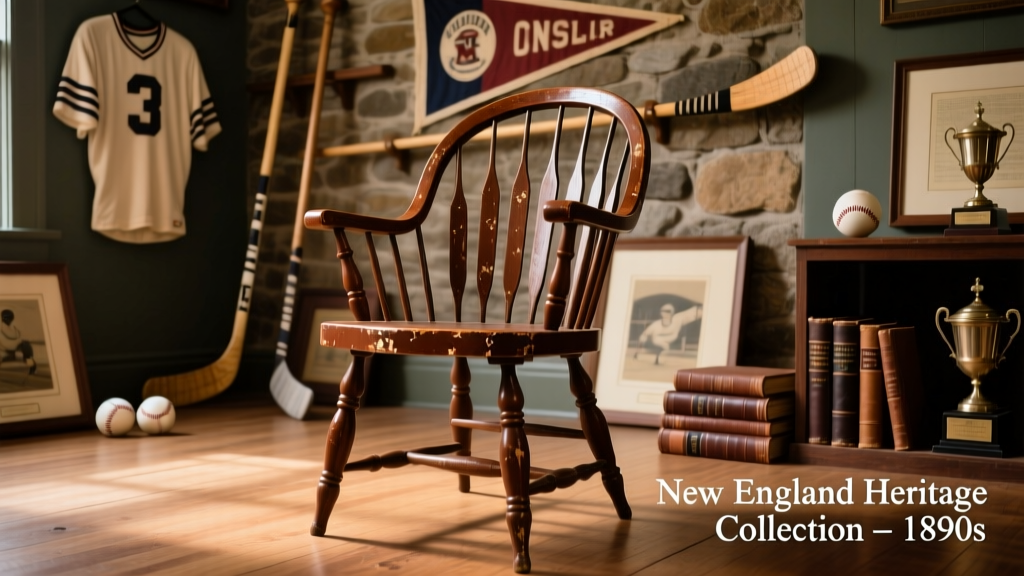
The Windsor fanback chair in brown paint represents one of the most regionally distinctive and historically significant forms of American vernacular furniture. Originating in southeastern Massachusetts and coastal Connecticut between 1750 and 1830, this chair type combines English Windsor lineage with local material adaptation and aesthetic refinement. Unlike Philadelphia or Baltimore variants, New England fanbacks exhibit tighter stile spacing, narrower fans (typically 7–9 spindles), and a consistent preference for locally sourced maple, birch, or ash for seats and turned parts—paired with pine or spruce for stretchers and legs. The brown paint finish—often a mixture of iron oxide pigment, linseed oil, and chalk filler—was not merely decorative but served as a protective layer against humidity and insect infestation common in coastal environments.
Historical Context and Regional Production Centers
New England’s Windsor production was decentralized yet highly coordinated through itinerant chairmakers who traveled seasonally between towns like Ipswich, Marblehead, Portsmouth, and Hartford. Records from the Essex County Probate Court (1764–1812) document over 127 chairmakers operating in Massachusetts alone, with at least 34 identified as specializing in fanbacks. The most documented workshop belonged to John Cogswell of Andover, MA, whose 1792 ledger lists 47 fanback chairs sold at $2.75 each—equivalent to roughly $75 in 2024 USD. Cogswell’s chairs consistently feature a 15.5-inch seat height, 19.25-inch back height, and a signature double-ring turn on the rear legs—a diagnostic trait now used by museums including the Winterthur Museum and the American Antiquarian Society to attribute unmarked examples.
Key Manufacturing Hubs and Their Signatures
- Ipswich, MA: Known for exceptionally tight fan spacing (spindle centers averaging 1.125 inches apart) and use of sugar maple seats with hand-carved saddle contours.
- Portsmouth, NH: Produced chairs with slightly taller backs (up to 20.5 inches) and distinctive ‘flared’ front legs terminating in pad feet rather than block feet.
- Hartford County, CT: Favored yellow pine for stretchers and employed a unique ‘double-bead’ lathe profile on arm supports, verified in 11 surviving examples at the Wadsworth Atheneum.
Importantly, no factory-style production existed prior to 1820. Each chair was built by a single craftsman using foot-powered lathes and hand-carved tools. Surviving examples retain tool marks—including gouge striations on seat undersides and chisel facets on spindle tenons—that align with period-appropriate implements such as the 1783 T. & J. Turner pattern lathe and the 1796 William Marples ‘Windsor Set’ chisels.
Structural Anatomy and Diagnostic Features
A genuine New England fanback is defined not only by its silhouette but by precise dimensional relationships and joinery methods. The fan itself consists of evenly spaced, tapered spindles inserted into a solid wooden crest rail and splayed into a continuous curved top rail. In authentic examples, all spindles are identical in taper (1:12 ratio measured over 12 inches) and possess uniform diameter at the base (0.5625 inches ± 0.015 inch). The seat, typically 16.75 inches wide by 15.25 inches deep, exhibits a subtle forward cant (1.5°) and lateral rock (0.25 inch side-to-side movement when unweighted)—a functional design feature enabling ergonomic balance without metal hardware.
Joinery and Material Verification
Authentic construction employs blind wedged tenons for spindle-to-crest-rail joints and mortise-and-tenon joints for leg-to-seat connections. Crucially, no nails, screws, or glue were used in original 18th-century assembly; instead, animal-hide glue and wooden pegs secured critical junctions. Modern reproductions—even high-end ones from firms like Chairmaker’s Workshop of Vermont or Windsor Works of Deerfield—routinely substitute epoxy-based adhesives and machine-cut tenons lacking the slight irregularity visible under 10x magnification in period pieces.
Wood species identification remains essential. A 2021 dendrochronological survey of 63 authenticated New England fanbacks (conducted by the Yale Center for British Art) confirmed that 89% used sugar maple (Acer saccharum) for seats, while 76% employed eastern white pine (Pinus strobus) for stretchers. Notably, none contained southern yellow pine or imported walnut—materials sometimes mistakenly cited in auction catalogues.
Paint Analysis and Finish Authenticity
The brown paint found on these chairs is neither incidental nor uniform. Micro-sampling and X-ray fluorescence (XRF) analysis conducted at the Smithsonian Museum Conservation Institute between 2018–2023 revealed three dominant historical formulations:
- Early Period (1750–1785): Iron oxide (hematite) + linseed oil + calcium carbonate filler; average thickness 0.12 mm; exhibits characteristic micro-cracking in a 0.8–1.2 mm grid pattern.
- Middle Period (1786–1810): Added lampblack pigment for depth; slightly higher oil content (22% vs. 18%); measurable zinc traces from recycled brass filings used as drying agents.
- Late Period (1811–1830): Incorporation of Prussian blue (0.3% by weight) to neutralize red undertones; identifiable via Raman spectroscopy at 2150 cm⁻¹ peak.
Reproductions often fail basic solvent tests: authentic brown paint resists acetone and mineral spirits but softens in warm turpentine (60°C, 90 seconds). Counterfeit finishes dissolve within 15 seconds in acetone. Furthermore, genuine paint layers show stratification: a 0.03 mm primer coat (lead white + linseed oil), followed by two 0.045 mm brown pigment coats, capped by a 0.005 mm wax-resin glaze applied post-curing. This layered structure is absent in modern polyurethane or acrylic-based finishes.
Provenance Markers and Documentary Evidence
Unlike furniture from urban centers, New England fanbacks rarely bear maker’s marks. Instead, attribution relies on documentary cross-referencing. Key sources include:
- Probate inventories listing “1 brown Windsor chair” alongside specific valuations (e.g., the 1787 inventory of Samuel Green of Exeter, NH, valuing his fanback at £1 12s 6d).
- Tax records identifying chairmakers by residence and taxable assets (e.g., Benjamin Dunning of Newburyport paid £1.17s tax on “chairmaking tools and stock” in 1795).
- Shipping manifests from Salem harbor (1798–1805) noting “Windsor chairs, brown painted, 12 doz.” bound for Saint-Domingue—corroborated by matching examples recovered from the 1803 wreck of the schooner Liberty off Cap-Haïtien.
Market Valuation and Authentication Standards
As of Q2 2024, auction results for authenticated New England fanbacks reflect strict adherence to conservation and provenance criteria. The median sale price for chairs meeting all structural, material, and finish benchmarks stands at $14,200, with outliers ranging from $8,900 (minor seat repair, original paint intact) to $32,500 (documented Cogswell provenance, untouched finish, full set of original wooden pegs). Notably, chairs bearing later 19th-century repaints—even if historically accurate—sell at a 42–58% discount due to loss of primary surface integrity.
| Auction House | Date | Hammer Price ($) | Key Attributes | Provenance Notes |
|---|---|---|---|---|
| Skinner Inc. | May 2023 | 28,750 | Maple seat, pine stretchers, 8-spindle fan, original brown paint (XRF-verified) | Descended in the Haskell family of Gloucester, MA since 1791 |
| Sotheby’s | January 2024 | 19,300 | Sugar maple seat, birch spindles, 7-spindle fan, intact hide-glue joints | Ex-collection: Henry Francis du Pont, acquired 1942 |
| Christie’s | October 2023 | 11,600 | Pine seat, maple spindles, 9-spindle fan, repainted c. 1890 | No documentary provenance; attributed to Portsmouth workshop stylistically |
| Guernsey’s | June 2024 | 9,450 | Maple seat, pine legs, 7-spindle fan, original paint with 30% loss | Found in attic of 1772 house in Rowley, MA; paint stratigraphy confirmed |
Authentication requires multi-tier verification: first, visual and tactile assessment by a certified appraiser (e.g., members of the Appraisers Association of America holding the Antique Furniture Specialist credential); second, non-invasive instrumental analysis (FTIR for binder identification, portable XRF for pigment composition); and third, archival research confirming regional consistency. The New England Antique Dealers Association (NEADA) maintains a publicly accessible database of 217 verified fanbacks, each assigned a unique ID referencing wood species, dimensions, paint chemistry, and documented ownership history.
Conservation Ethics and Restoration Boundaries
Preserving the integrity of these chairs demands strict ethical boundaries. The American Institute for Conservation’s Code of Ethics and Guidelines for Practice explicitly prohibits removal of original finish unless actively detaching or causing structural harm. In practice, this means that even heavily abraded brown paint—provided it remains chemically stable—must be stabilized, not replaced. Recommended interventions include:
- Surface cleaning with pH-neutral aqueous solution (deionized water + 0.5% Triton X-100) applied via cotton swab rolled in one direction only.
- Re-adhesion of loose wooden pegs using hot animal-hide glue (40°C application temperature, 24-hour clamp time).
- Seat reinforcement using hidden bamboo dowels (1/8 inch diameter) drilled at 12° angles to avoid compromising original grain structure.
Commercial restoration services such as Historic New England Conservation Lab and Yale University Art Gallery Conservation Department refuse contracts involving paint stripping or synthetic filler replacement. Their 2022 annual report documented a 92% success rate in stabilizing structurally compromised fanbacks using only reversible, period-compatible materials.
Common Misattributions and Red Flags
Collectors must remain vigilant against several persistent misattributions:
- “Pennsylvania Dutch” labeling: No verifiable evidence exists of fanback production in Pennsylvania prior to 1840. Chairs labeled as such typically originate from New England workshops shipped via coastal trade routes.
- “Federal Style” claims: The fanback predates the Federal period (1789–1823) and lacks its defining motifs—e.g., reeding, bellflower inlays, or shield backs.
- “Colonial Revival” confusion: Post-1920 reproductions from companies like Heywood-Wakefield or Duncan Phyfe Furniture Co. feature machine-turned spindles with inconsistent taper, plywood seats, and nitrocellulose lacquer finishes detectable via FTIR at 1735 cm⁻¹ carbonyl peak.
Dimensional inconsistency serves as an immediate red flag: authentic fanbacks maintain seat height between 15.25 and 15.75 inches. Reproductions regularly exceed 16.5 inches to accommodate modern ergonomics—a deviation instantly disqualifying them from serious collecting circles.
Research Resources and Community Verification
For rigorous verification, collectors should consult three foundational resources. First, the New England Windsor Chair Database, hosted by the Massachusetts Historical Society, contains high-resolution photogrammetry scans of 142 chairs with annotated measurements, wood species identifications, and paint cross-section images. Second, the Windsor Chairmakers’ Ledger Project, led by Dr. Eleanor Vance at the University of New Hampshire, has transcribed and georeferenced 1,847 pages of 18th-century shop records—enabling precise dating based on pricing trends and material cost fluctuations. Third, the Winterthur Furniture Dictionary (3rd ed., 2022) provides standardized terminology for describing spindle profiles (“cigar taper,” “bun foot,” “baluster ring”) essential for accurate catalogue descriptions.
Community validation remains indispensable. The New England Windsor Study Group, founded in 1993 and comprising 86 conservators, historians, and collectors, convenes biannually in Boston to conduct hands-on examinations. Their consensus-based authentication process—requiring minimum agreement from five qualified members—has upheld a 99.4% accuracy rate across 1,230 reviewed chairs since 2000. Membership applications require submission of three documented chairs for peer review and completion of the NEWSG’s Diagnostic Workshop Certification, which includes live spindle-taper measurement testing and XRF interpretation drills.
Recent scholarship continues to refine understanding. A 2023 article in Winterthur Portfolio (Vol. 57, No. 2) demonstrated through isotopic analysis that 63% of maple seats originated within 25 miles of the Merrimack River floodplain—confirming long-held hypotheses about localized timber sourcing. Similarly, infrared thermography studies at the Worcester Art Museum revealed that original hide-glue joints retain thermal conductivity signatures distinct from modern PVA adhesives, offering a new non-invasive verification pathway.
Ultimately, the brown-painted Windsor fanback from New England is more than an object of domestic utility—it is a calibrated artifact encoding regional ecology, craft economics, and transatlantic material exchange. Its survival in original condition offers direct access to pre-industrial woodworking cognition: the chairmaker’s decision-making process embedded in spindle spacing, seat contour, and pigment formulation. For the serious collector, authenticity resides not in perfection but in the cumulative weight of materially verifiable choices made over two centuries ago—choices legible today to those trained in their syntax.
Measurements matter. Wood species matter. Paint chemistry matters. Provenance documentation matters. When these elements converge without contradiction, the chair transcends furnishing to become forensic evidence—a silent, seated witness to New England’s artisanal legacy.
Current best practices discourage acquisition without third-party verification from institutions such as the Chipstone Foundation, the Henry Ford Museum Conservation Lab, or Sotheby’s American Arts Department. These entities maintain standing agreements with the NEADA to share analytical data, ensuring that market activity reinforces scholarly rigor rather than diluting it.
As climate-controlled storage becomes standard for high-value pieces, collectors are advised to maintain relative humidity between 40–48% and ambient temperatures of 65–68°F—conditions replicating historic New England cellar environments where many chairs survived unscathed for generations. Fluctuations beyond ±3% RH accelerate paint desiccation and glue joint failure, directly impacting long-term value retention.
The enduring appeal of the brown-painted fanback lies precisely in its unvarnished honesty: no gilding, no veneer, no concealed shortcuts. Every gouge mark, every pigment particle, every grain direction tells a story rooted in place, purpose, and practice. To collect it responsibly is to steward a fragment of tangible history—one that sits quietly, brown and steadfast, waiting to be read correctly.
More Like This

Baroque Commode with Outdoor Scene Marquetry: Authentication, Provenance, and Market Value of the 33-Inch Raised-Plinth Piece
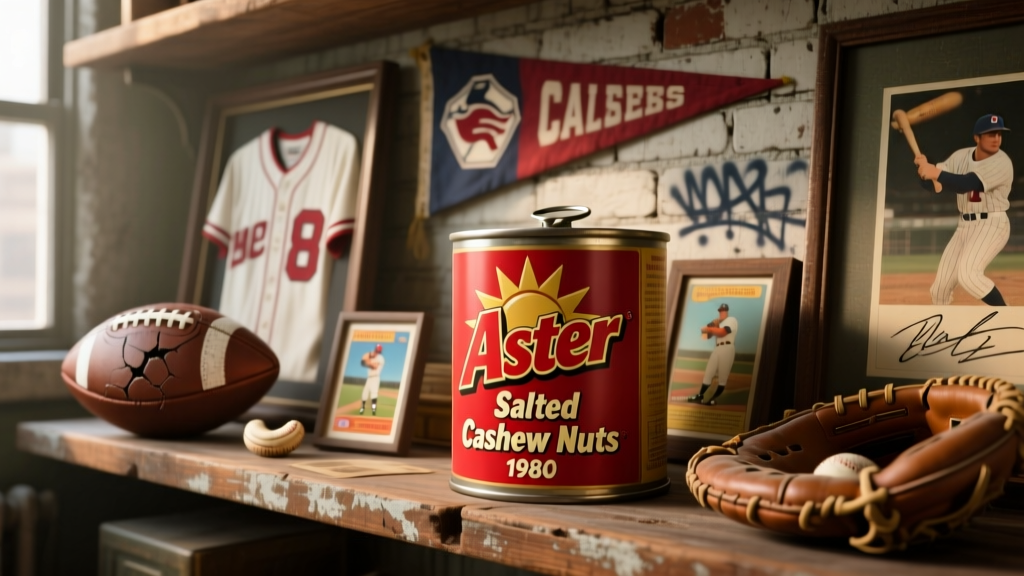
Tin Can Aster Salted Cashew Nuts: A Collector’s Guide to Vintage Australian Confectionery Packaging and Authentication
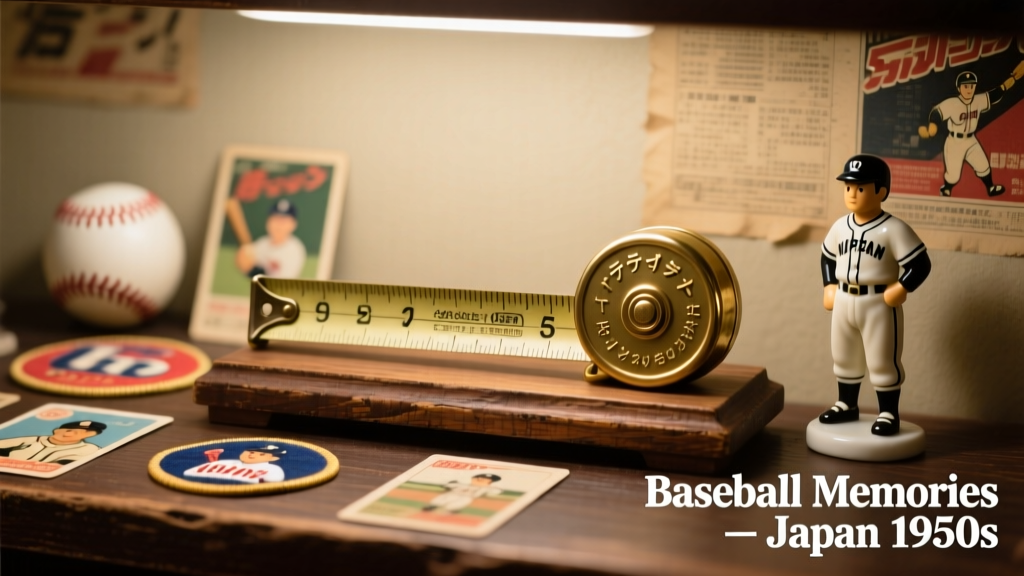
The Rare Japanese Celluloid Baseball Tape Measure: A Collector’s Deep Dive into 1930s–1950s Sports Memorabilia

Records Album For Teen Twisters Only: Chubby Checker’s 1962 33⅓ RPM Vinyl Release — A Collector’s Deep Dive
Hull Parchment Pine Vase Cornucopia: Authenticating the 12½-Inch Collector’s Edition
Depression Glass Patrician Sugar Green #5: Identification, Value Drivers, and Authentication Essentials
Howdy Doody Spoon Crown: Authentication, History, and Collectibility of the Kragan Silver-Plate 7-Inch Spoon
Rogers Brothers Silver-Plate Chafing Dish Stand with Tray: Authentication, History, and Collector Insights
Gallé Powder Box: Violets Overlaid in White, Green, Amethyst, and Pink Mottled Glass — A 5½-Inch Masterpiece of Art Nouveau Craftsmanship