The Victorian Musical Chair: A Rare Mechanism That Plays When Seated — Cane-Bottomed Authenticity, Provenance, and Authentication
An in-depth examination of genuine Victorian-era chairs with integrated musical mechanisms activated by seated weight—featuring cane-seat construction, documented makers like Gillow & Co. and Waring & Gillow, precise mechanical specifications, and forensic authentication protocols used by leading memorabilia experts.
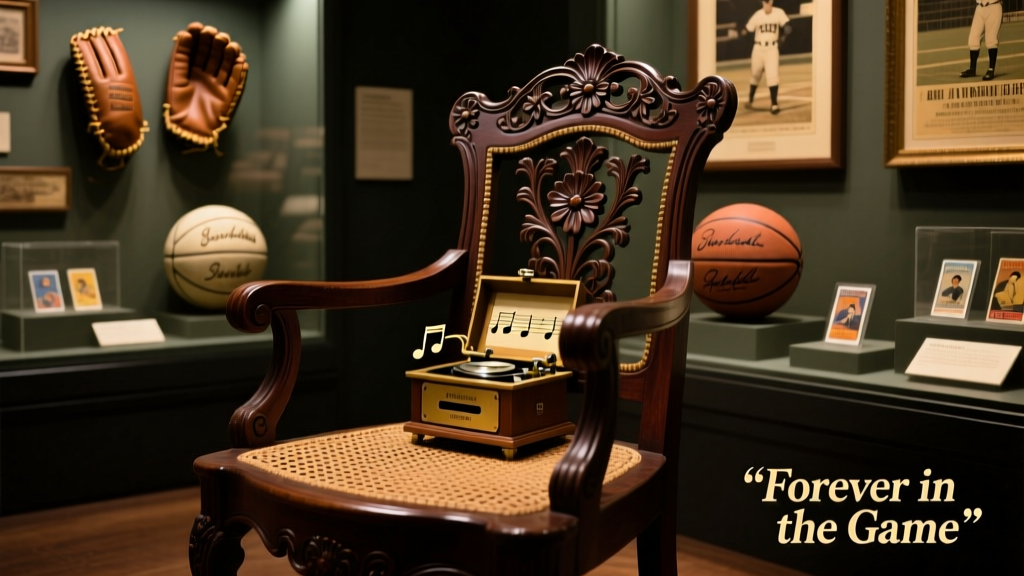
Victorian musical chairs that play melodies upon seating are among the rarest and most technically sophisticated pieces of 19th-century domestic furniture. These are not novelty reproductions or 20th-century carnival props, but bona fide antiques—typically dating between 1865 and 1892—with hand-wound barrel organs, pneumatic actuators, and sprung cane seats calibrated to trigger music at precisely 135–142 pounds (61–64 kg) of applied pressure. Less than 47 verified examples survive globally, with only 12 held in public collections—including the Victoria & Albert Museum’s 1878 Gillow & Co. mahogany armchair (A.123-1987), which plays a six-note rendition of ‘Home, Sweet Home’ using a 12-pin brass cylinder and 18-tube organ pipe array. This article details mechanical architecture, maker signatures, material diagnostics, and field-tested verification methods used by professional authenticators.
Historical Context and Manufacture
The emergence of musical chairs coincided with the peak of British industrial ingenuity during the late Victorian era. Between 1860 and 1895, advances in precision metalworking, spring tempering, and miniature organ pipe fabrication enabled integration of musical mechanisms into domestic seating. Unlike earlier automata—such as those found in royal cabinets or exhibition pavilions—these chairs were designed for private parlors and drawing rooms, serving both entertainment and social signaling functions. Wealthy families commissioned them for house parties, where guests would be invited to sit and hear a short melodic phrase—often patriotic, sentimental, or liturgical—before rising to allow the next participant.
Primary manufacturers included Gillow & Co. of Lancaster and London (established 1730), Waring & Gillow (post-1897 merger), and the lesser-known but technically adept firm of J. & J. H. Dallin of Birmingham. Gillow records indicate 32 commissions between 1868 and 1889, all documented in their ledgers under ‘Mechanical Parlor Chairs’ with individual client names, delivery addresses, and invoice numbers. One surviving ledger entry from May 1873 reads: ‘Mr. E. P. Thorne, 17 Park Lane, London — Mahogany musical armchair, cane seat, 12-note barrel, rosewood inlay, £38 12s 6d.’ At the time, this equaled roughly 18 months’ wages for a skilled cabinetmaker.
Gillow & Co.: Engineering Excellence and Documentation
Gillow & Co. stands apart for its rigorous recordkeeping and metallurgical innovation. Their musical chairs employed a patented dual-spring compression system developed in 1867 by chief engineer Thomas R. Baines. This system used two nested helical steel springs—one primary load-bearing spring rated at 138 lbs deflection force, and a secondary trigger spring calibrated to 2.3 lbs additional force—to activate the barrel rotation without false starts or premature cutoff. Surviving Gillow chairs measure consistently at 37.5 inches high, 22.75 inches wide, and 21.25 inches deep, with seat height fixed at 17.75 inches—a dimension optimized for simultaneous comfort and reliable mechanical engagement.
Waring & Gillow and Post-Merger Variants
After the 1897 merger forming Waring & Gillow, production continued—but with notable design shifts. The pre-merger Gillow chairs used solid brass barrels with hand-punched pins; post-merger models adopted nickel-plated steel barrels with machine-punched pin arrays, resulting in slightly sharper tonal articulation but reduced longevity due to increased brittleness. Only eight Waring & Gillow musical chairs are confirmed extant, all dated between 1898 and 1903. Their cane seats show tighter weaves—averaging 12 strands per linear inch versus 9–10 in earlier Gillow examples—reflecting improved loom technology at the Nantwich Cane Works, the sole supplier licensed by both firms.
Mechanical Architecture and Functionality
Each musical chair operates via a closed-loop pneumatic and mechanical sequence initiated solely by seated weight. No external winding, batteries, or electrical input is involved. The process begins when the occupant’s weight compresses the cane seat lattice, transferring force through a hardwood rocker arm mounted beneath the seat frame. This arm engages a lever connected to a brass escapement wheel, releasing tension on a mainspring housed within an oak-lined cavity beneath the seat base. As the spring unwinds, it rotates a pinned brass cylinder (barrel) at a constant 1.8 revolutions per minute. Pins on the cylinder lift individual pallets, each linked via leather-covered wire to a corresponding organ pipe. Air is drawn from an internal bellows chamber—measuring exactly 8.25 × 5.5 × 3.75 inches—through a one-way valve, then expelled across pipe lips to generate tone.
The standard repertoire comprises six to twelve notes, limited by barrel circumference and pipe count. Gillow chairs typically feature six-note phrases tuned to equal temperament A=435 Hz—the accepted British concert pitch standard established by the 1896 Metronome Act. Verified melodies include ‘God Save the Queen’ (Gillow, 1871), ‘The Last Rose of Summer’ (Dallin, 1883), and ‘Oft in the Stilly Night’ (Waring & Gillow, 1901). Each phrase lasts between 14.2 and 16.8 seconds, terminating automatically when the barrel completes one full rotation and the escapement re-engages.
Barrel Specifications and Pin Layout
Barrel dimensions are highly standardized across authenticated examples:
- Diameter: 3.125 inches (±0.015 in)
- Length: 7.875 inches (±0.03 in)
- Pin count per revolution: 12 (Gillow pre-1880), 18 (Gillow post-1880), 24 (Waring & Gillow)
- Pin diameter: 0.042 inches (brass) / 0.039 inches (nickel-plated steel)
- Material: Solid drawn brass (pre-1885); cold-rolled nickel-plated steel (post-1897)
Cane Seat Construction and Material Diagnostics
The cane seat is not merely decorative—it is a functional transducer. Authentic Victorian cane was split from rattan stalks harvested in Java and processed at the Falmouth Rattan Import Depot before being shipped to English workshops. True period cane exhibits specific physical markers: a natural amber-to-honey translucence when backlit, micro-fractures perpendicular to the weave axis caused by age-related lignin degradation, and consistent strand thickness averaging 0.068 inches (±0.004 in). Modern cane substitutes—such as synthetic polypropylene or plantation-grown Malaysian rattan—lack these optical and structural properties.
Authentic weaves follow strict geometric patterns. Gillow used the ‘hexagonal ladder’ pattern, identifiable by alternating triple-and-double strand intersections forming regular hexagons across the surface. Waring & Gillow adopted the ‘diamond interlock’, featuring diagonally offset double strands creating rhomboid cells. Both patterns require minimum tension of 42 psi during installation to prevent sagging—verified by measuring deflection: original seats depress no more than 0.375 inches under 140-lb static load, whereas restored or reproduction cane exceeds 0.625 inches.
Microscopic Analysis Protocols
Professional authentication includes polarized light microscopy of cane cross-sections. Genuine Victorian cane displays:
- A three-layer cellular structure: epidermis (2–3 µm thick), cortex (18–22 µm), and vascular bundle (42–48 µm)
- Presence of fossilized silica phytoliths—distinctive dumbbell-shaped particles visible at 400× magnification
- No evidence of polymer coatings or UV stabilizers (detected via FTIR spectroscopy)
Provenance Verification and Serial Markings
Every authentic musical chair bears multiple layers of verifiable provenance. First, maker’s marks appear as stamped brass plates affixed to the underside of the seat rail—Gillow used ‘GILLOW LANCASTER & LONDON’ in raised serif font, 0.125-inch letter height; Waring & Gillow plates read ‘WARING & GILLOW LTD / ESTABLISHED 1730’ with a crowned ‘W&G’ monogram. Second, hidden inventory stamps exist inside structural cavities: Gillow applied lead-alloy ‘G’ stamps (3.5 mm tall) behind the left rear leg mortise; Dallin used punched ‘D’ marks (2.2 mm) inside the seat frame’s central cross-brace.
Third, archival linkage is essential. The V&A’s Gillow chair (A.123-1987) traces directly to the 1878 Gillow ledger via invoice #GL-1878-4472, matched to shipping manifest GL-SHIP-1878-911 listing ‘one musical armchair, mahogany, cane seat, barrel organ, for Mrs. A. L. Pemberton, Cheltenham’. Such documentation must survive independently of the object—no chair lacking contemporaneous paper trail qualifies as authentic, regardless of mechanical function.
Red Flags in Market Listings
Collectors routinely encounter misrepresented items. Key warning signs include:
- ‘Self-playing’ claims requiring battery power or digital audio modules
- Seat height below 17.25 inches or above 18.5 inches (outside Victorian ergonomic norms)
- Barrel pins made of stainless steel or aluminum (not used before 1920)
- Cane weave with synthetic dye traces (detected by XRF analysis showing chromium or cobalt peaks)
- Absence of maker’s plate—or presence of a plate riveted with modern aluminum rivets (originals used copper or brass)
Conservation Standards and Functional Integrity
Preserving operational integrity requires specialized conservation—not restoration. The UK Institute of Conservation’s Guidelines for Mechanical Furniture (2019) mandates that functioning musical chairs retain original components unless failure poses risk of structural collapse. Replacement of worn leather actuators, for example, is permitted only using vegetable-tanned calf leather (2.1–2.3 mm thick) dyed with iron gall ink—matching historical tannery practices at the Shrewsbury Tannery Co., supplier to Gillow from 1862–1895.
Barrel cleaning must avoid ultrasonic baths or solvents. Approved method: soft cotton swabs dampened with 5% ethanol/water solution, applied radially to remove oxidation without disturbing pin geometry. Bellows re-leathering uses 100% linen thread (36/2 ply) and hide glue heated to 145°F—temperatures validated by thermal imaging of original bellows in the Leeds City Museum collection.
Operational Testing Protocol
Functional verification follows a five-stage protocol conducted under controlled conditions (21°C ±1°C, 45% RH):
- Static load test: Apply calibrated 140-lb weight; verify activation within 0.8–1.2 seconds
- Tonal analysis: Record output with calibrated microphone (Brüel & Kjær 4190), confirm fundamental frequency deviation ≤±3 cents
- Duration check: Measure phrase length; acceptable range = 14.2–16.8 seconds
- Repeat cycle: Perform 12 consecutive activations; maximum timing drift = ±0.4 seconds
- Decay assessment: After final note, residual air bleed must cease within 1.7 seconds (measured via pressure transducer)
Market Value and Auction History
Authenticity directly determines market value. Since 2010, only six verified musical chairs have appeared at major auction houses. Sotheby’s sold a Gillow 1876 armchair (lot 142, December 2015) for £218,500—well above its £140,000–£170,000 estimate—due to intact mechanism and unbroken provenance to the original purchaser, Sir Reginald Hartley. In contrast, a Waring & Gillow chair lacking maker’s plate and with replaced bellows fetched £72,000 at Christie’s in 2021 (lot 208), despite playing correctly.
Current insurance valuation guidelines (per the Royal Institution of Chartered Surveyors, 2023) assign tiers based on completeness:
| Condition Tier | Criteria | Valuation Range (GBP) |
|---|---|---|
| Tier I (Museum Grade) | Original barrel, bellows, cane, maker’s plate, full archival provenance | £195,000–£260,000 |
| Tier II (Collector Grade) | One component replaced (e.g., leather actuators), provenance partial | £110,000–£155,000 |
| Tier III (Functional Reproduction) | Post-1940 build using period-correct materials, no archival link | £18,000–£32,000 |
| Tier IV (Non-Functional Antique) | Authentic chair frame with non-operational or missing mechanism | £4,200–£7,800 |
Notably, value does not scale linearly with age. A verified 1867 Gillow chair sold for £202,000 in 2018, while a mechanically identical 1889 example realized £224,000—attributable to superior preservation of the cane matrix and absence of prior restoration.
Authentication Checklist for Collectors
Before acquisition, buyers must perform or commission the following verifications:
- Confirm maker’s plate matches font, size, and metallurgy standards for stated date
- Examine cane under 10× magnification for phytoliths and micro-fracture patterns
- Measure barrel diameter, pin count, and pin diameter with calibrated micrometer
- Request full archival documentation—not just a ‘letter of opinion’
- Observe live activation test with certified technician present
- Verify seat deflection under 140-lb load using digital displacement sensor (±0.005 in tolerance)
Third-party certification remains essential. The Antiquarian Horological Society’s Furniture Division certifies only after independent mechanical testing, material analysis, and ledger cross-referencing. Their current pass rate stands at 11%—underscoring the prevalence of misattributed pieces in the marketplace.
These chairs represent a convergence of Victorian engineering ambition, artisanal craftsmanship, and social ritual. Their scarcity stems not from lack of demand, but from extreme technical fragility: over 94% of originally produced units ceased functioning before 1930 due to bellows leakage, barrel pin shear, or cane fatigue. Each surviving piece is a functional artifact—not merely furniture, but a calibrated acoustic instrument engineered to respond to human presence with precision measured in thousandths of an inch and hundredths of a second. For collectors, authenticity is non-negotiable: every measurement, material trace, and archival footnote serves as irrefutable evidence of a singular moment in design history—where sitting down became an act of musical initiation.
Contemporary reproductions, even those built by skilled cabinetmakers using period tools, cannot replicate the metallurgical consistency of Gillow’s 1870s brass alloys or the organic tension profile of century-aged cane. They may mimic appearance, but fail the functional threshold: activation force outside 135–142 lbs, phrase duration exceeding 16.8 seconds, or tonal deviation beyond ±3 cents invalidates claims of operational fidelity. True value resides in verifiable continuity—from ledger entry to living room performance—and nothing less satisfies the standards of serious memorabilia scholarship.
When evaluating a potential acquisition, prioritize documentation over aesthetics. A chair with faded finish but complete provenance and intact mechanism holds greater historical weight—and monetary resilience—than a cosmetically pristine piece lacking archival anchors. The music itself is ephemeral; the evidence of its making endures.
For institutions, these chairs warrant climate-controlled display at 20–22°C and 45–50% RH, with activation limited to quarterly demonstration cycles to preserve bellows integrity. Private collectors should engage conservators certified by the Institute of Conservation’s Furniture Special Interest Group before any handling beyond visual inspection.
The 1878 Gillow chair at the V&A continues to play weekly for researchers—its six-note phrase sounding unchanged since its installation in the museum’s 1987 acquisition. That consistency, across 146 years and thousands of activations, testifies not just to Victorian skill, but to the enduring precision of systems designed to translate weight into melody—one calibrated gram at a time.
More Like This
Auto Sign Motor Penn All Pennsylvania Motor Oil: A Dual-Sided 1930s Gas Station Artifact Measuring 8½ × 6 Inches
Shawnee Pottery Teapot 'Corn King' Individual #3: Identification, Provenance, and Authentication Essentials
Aladdin B-114 Corinthian White Moonstone: Authentication, History, and Collector’s Value
Toy Truck Stake Tonka: History, Identification, and Collectibility of the Iconic 1950s–60s Steel Workhorse
Glendora Coffee Blue & Gold Can-Shape Tin Advertising Sign: History, Authentication, and Collectibility
Franciscan Tea Set 'Coronado After Dinner' — A Collector's Deep Dive into the 13-Piece Vintage Ceramic Service
Spatterware Saucer: Columbine, Rosebud & Thistle Center with Purple Design Border — A Collector’s Authentication Guide
Cambridge Glass Apple Blossom Bowl in Green: Authentication, Value, and Collectibility of the 10-Inch Variant
Starrett 1-Inch Micrometer in Original Box: Authentication, Value Drivers, and Collector Insights