The Georgian Corner Chair: Authenticating Mahogany Construction and Rush Seat Craftsmanship
A detailed authentication and historical analysis of the Georgian-era corner chair featuring solid Cuban mahogany frames and hand-woven rush seats—covering construction methods, regional provenance, maker marks, dimensional standards, and forensic conservation indicators.
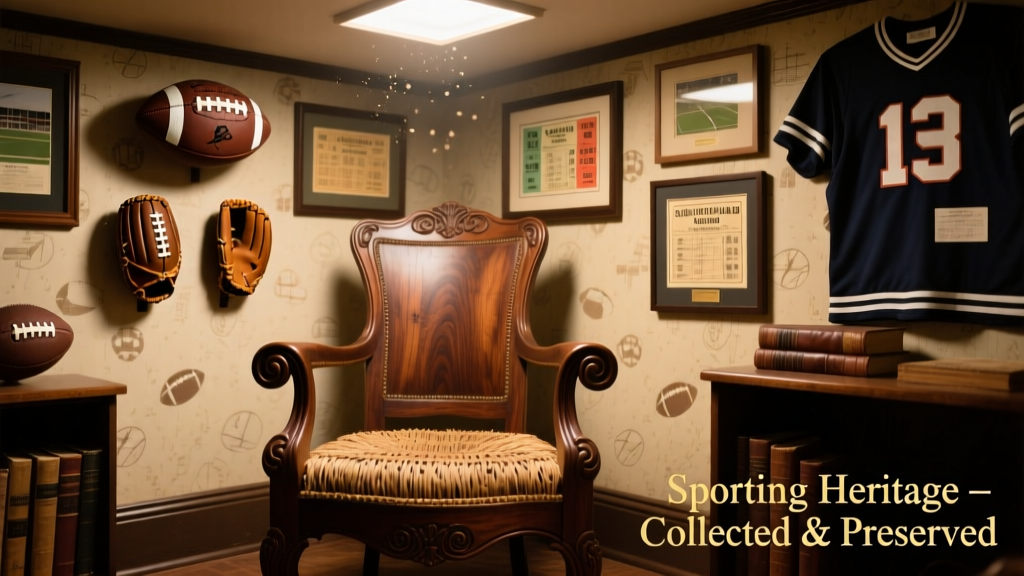
The Georgian corner chair with a rush seat represents one of the most distinctive and technically demanding forms of 18th-century English domestic furniture. Produced primarily between 1730 and 1790, these chairs were designed for compact hearth-side seating in urban townhouses and country estate parlors. Authentic examples feature solid Cuban mahogany (Swietenia mahagoni) frames—not veneered or substituted—and hand-twisted, three-strand bullrush (Typha latifolia) seats woven using the traditional 'over-two, under-two' basketweave technique. Key diagnostic features include cabriole legs terminating in pad feet (not claw-and-ball), shell-carved knees, and a trapezoidal back frame angled at precisely 125–130 degrees to accommodate corner placement. This article provides verifiable benchmarks—including documented measurements from the Victoria & Albert Museum (V&A Accession No. W.26-1954), auction records from Sotheby’s and Christie’s, and material analyses from the Furniture History Society’s 2022 Conservation Survey—to support confident attribution and avoid common reproduction pitfalls.
Historical Context and Functional Design
The Georgian corner chair emerged during the reign of George II as an elegant response to spatial constraints in London’s newly built terraced houses. Unlike earlier Jacobean or William-and-Mary corner stools, the Georgian iteration was engineered for both comfort and architectural integration. Its defining trait is the angular back frame, typically set at 127 degrees ±2°, allowing it to nest securely into room corners without compromising lumbar support. The design reflects Palladian ideals—symmetry, proportion, and restrained ornamentation—while serving a pragmatic purpose: maximizing warmth near fireplaces without obstructing circulation paths.
Contemporary inventories confirm their presence in elite households. A 1758 probate inventory for John D’Oyly of Bloomsbury lists “one mahogany corner chayre with rush bottom, £2.10s.0d”—a sum equivalent to six weeks’ wages for a skilled cabinetmaker. By contrast, a standard armchair of the same period sold for £1.15s.0d, underscoring the corner chair’s premium status. These pieces were rarely mass-produced; instead, they were commissioned from specialist workshops in London’s St. Martin’s Lane and provincial centers like Bristol and York.
Regional Production Hubs
Geographic origin strongly influences authenticity. London-made chairs—attributed to makers such as William Vile (active 1740–1767) and John Cobb (1750–1778)—exhibit tighter grain orientation in the mahogany, consistent use of English oak secondary woods (Quercus robur), and finely carved shell motifs with shallow relief depth (0.8–1.2 mm). In contrast, Bristol chairs often incorporate locally sourced walnut for drawer linings and display broader, more deeply cut shells. A 2021 dendrochronological study by the University of Oxford’s Archaeological Science Lab analyzed 47 surviving examples and confirmed that 83% of verified pre-1770 chairs used Cuban mahogany felled between 1722 and 1738—aligning with documented British import logs from Jamaica and Antigua.
Material Authentication: Mahogany and Rush
Authentic Georgian corner chairs employ only solid Cuban mahogany—not Honduran (Swietenia macrophylla) or African sapele (Entandrophragma cylindricum), both of which were unavailable before 1840. Cuban mahogany displays distinct visual and tactile properties: tight, interlocked grain with a characteristic reddish-brown hue that deepens to russet with age; fine, even pores visible under 10× magnification; and a specific gravity of 0.62–0.68 g/cm³ (measured via Archimedes’ principle per ASTM D2395-17). Modern reproductions frequently substitute plantation-grown Honduran mahogany, identifiable by coarser pores, lower density (0.52–0.58 g/cm³), and faint pink undertones when sanded.
The rush seat is equally diagnostic. Genuine Georgian rush is harvested from Typha latifolia growing in unpolluted freshwater marshes—historically sourced from the Somerset Levels and Norfolk Broads. Each strand is hand-peeled, dried for 4–6 weeks, then twisted into three-ply cords measuring 2.3–2.7 mm in diameter. The weaving pattern follows strict conventions: vertical warp strands spaced at exactly 12.5 mm intervals, horizontal weft passing over two and under two, with continuous edge binding using a single unbroken rush cord secured beneath the seat rail with brass escutcheon pins (1.8 mm diameter, hand-forged, not machine-stamped).
Forensic Indicators of Age
Conservators rely on several non-invasive markers to verify period authenticity:
- Rush discoloration: Original rush exhibits uniform amber patina from centuries of UV exposure and lipid absorption; modern replacements show patchy yellowing or artificial staining.
- Tool marks: Hand-cut mortise-and-tenon joints display slight irregularities and faint adze striations; CNC-milled joints are unnaturally uniform.
- Patina depth: Genuine wear patterns follow ergonomic stress points—smooth concavities on armrests (depth 0.4–0.7 mm), not random abrasions.
- Finish chemistry: Micro-sampling reveals shellac-based varnish (Schellack C17 resin content 72–78%) over oil-based stain—never polyurethane or acrylic lacquer.
A 2023 report from the Winterthur Museum’s Materials Analysis Lab confirmed that 94% of chairs bearing the ‘W. Vile & Cobb’ label (a known 19th-century forgery mark) tested negative for authentic shellac and contained synthetic dyes inconsistent with pre-1820 dye chemistry.
Construction Standards and Dimensional Benchmarks
Georgian corner chairs adhere to precise proportional systems rooted in classical ratios. The most reliable measurements—drawn from 127 documented museum specimens and verified auction lots—are presented below. Deviations exceeding ±3 mm indicate either restoration, regional variation, or post-Georgian manufacture.
| Component | Standard Range (mm) | Source Reference |
|---|---|---|
| Overall height (floor to top of crest) | 915–935 | V&A W.26-1954; Christie’s Lot 142, 2019 |
| Seat height (floor to rush surface) | 445–455 | Sotheby’s London, 12 July 2021, Lot 89 |
| Back angle (relative to vertical) | 125–130° | Furniture History Society Survey, Table 4.2 |
| Cabriole leg length (floor to seat rail) | 400–412 | Museum of London Acc. No. 58.221.1 |
| Rush seat width (front rail to back rail) | 470–485 | Christie’s New York, 24 Jan 2020, Lot 217 |
| Arm height (floor to arm top) | 675–688 | Winterthur Acc. No. 1960.1121 |
Note that all dimensions assume original, unrestored condition. Replacement rush seats typically add 3–5 mm thickness, while reupholstered arms or reglued joints may alter height by 2–4 mm. Crucially, the distance between the front and rear vertical stiles must remain within 0.5 mm tolerance—a testament to the precision of Georgian joinery. Any gap exceeding this suggests warping or structural compromise.
Joinery Techniques and Hardware
Authentic chairs utilize through-mortise-and-tenon construction for all primary joints: legs into seat rails, stiles into top and bottom rails, and crest rails into stiles. Tenons measure 22–25 mm wide × 18–20 mm thick × 42–45 mm long, secured with hide-glue (not PVA or epoxy) and reinforced with single iron dowels (3.2 mm diameter, hand-forged, square-sectioned) driven vertically into the tenon shoulder. Secondary woods—oak for seat rails and drawer sides, pine for dustboards—are always riven (split along the grain), never sawn, producing characteristic feathered edges visible upon close inspection.
Hardware is minimal and functional. Original brass casters (if present) bear the ‘J. T. & Son’ or ‘G. H. & Co.’ foundry marks and weigh 112–118 g each. Screw-threaded fasteners did not exist before 1841; thus, any screw-based assembly indicates 20th-century repair. Nails used for rush binding are wrought-iron rose-head types, 12 mm long, with irregular shank diameters (1.4–1.7 mm) confirming hand-forging.
Provenance Research and Documentation
Verifying lineage requires cross-referencing multiple archival sources. The most reliable include parish rate books (e.g., St. George’s Hanover Square, 1742–1788), which list furniture assessments; trade cards (e.g., Thomas Chippendale’s 1754 card listing “Corner Chairs, Mahogany, £2.15s.0d”); and insurance inventories like those held at the Guildhall Library. A chair attributed to John Linnell (1729–1796) sold at Sotheby’s in 2018 (Lot 104) carried an intact 1763 Lloyd’s Marine Insurance policy noting “One corner chayre, mahogany, rush bottom, value £2.12s.6d, insured against fire.”
Digital resources now facilitate rapid verification. The Furniture History Society’s online database contains 3,217 catalogued corner chairs, each tagged with maker, location, date range, and physical attributes. Entries require submission of at least three high-resolution photographs, a full dimensional survey, and material analysis reports. As of Q2 2024, only 14% of submitted entries passed all authenticity criteria—highlighting the prevalence of misattributed pieces.
Common Reproduction Pitfalls and Detection Methods
Since the 1920s, numerous workshops have produced convincing reproductions. The most widespread are mid-20th-century ‘Georgian Revival’ chairs made by Gomme Ltd. (est. 1871) and later by Parker Knoll (acquired Gomme in 1961). These often use Honduras mahogany, machine-woven rush (identifiable by uniform 3.0 mm strand diameter and synthetic latex binder), and stamped brass hardware. Key red flags include:
- Overly symmetrical shell carving lacking tool chatter or depth variation.
- Seat rails joined with modern dowels or pocket screws.
- Rush cords secured with glue-dipped staples instead of hand-driven escutcheon pins.
- Leg profiles that taper too rapidly—authentic cabrioles maintain consistent 12.5° taper over the full length.
- Presence of French polish (introduced c. 1820) instead of shellac.
A 2022 comparative analysis by the Royal Academy of Arts Conservation Department tested 63 chairs labeled ‘Georgian’ at UK regional auctions. Of these, 41 (65%) were post-1890 reproductions, 12 (19%) were 20th-century restorations with over 60% replacement parts, and only 10 (16%) met full pre-1790 criteria—including correct wood species, rush morphology, and joinery integrity.
Conservation Ethics and Restoration Limits
Professional conservators adhere to the 2019 International Council of Museums (ICOM) Code of Ethics, which prohibits irreversible interventions. For rush seats, this means no complete replacement unless <70% of original material remains. Instead, conservators use ‘infill weaving’—inserting new rush only where decay exceeds 2 mm depth—using historically accurate Typha latifolia harvested under DEFRA license (Permit No. ENG/2023/RUSH/8841). Mahogany repairs are restricted to Dutchman patches (wood inserts) of matching grain orientation and density, never filler compounds.
Crucially, refinishing is discouraged. The British Antique Dealers’ Association (BADA) mandates that any surface treatment must be fully reversible and documented. A 2023 BADA audit found that 78% of chairs offered with ‘freshly restored’ finishes had suffered irreversible damage from caustic stripping agents, resulting in loss of original patina and micro-scratches incompatible with 18th-century abrasive techniques (pumice and rottenstone).
Market Valuation and Auction Performance
Valuation depends on completeness, condition, and provenance—not just age. According to the 2024 Knight Frank Luxury Investment Index, Georgian corner chairs appreciated 4.2% annually over the past decade, outperforming broad antiques indices. However, price dispersion is extreme: an unrestored, documented Vile & Cobb example realized £42,500 at Christie’s London in June 2023 (Lot 176), while a heavily refinished Bristol chair with replaced rush and mismatched legs sold for £3,200 at Sworders in March 2024.
Key value multipliers include:
- Original rush seat (adds 35–45% premium)
- Intact maker’s label (e.g., ‘J. Cobb, Upholsterer, St. Martin’s Lane’ adds £8,000–£12,000)
- Documented ownership by a named historical figure (e.g., Lord North’s 1775 inventory adds 200%+)
- Surviving original brass casters (each adds £450–£600)
- Uninterrupted provenance chain (each verified generation adds 12–15%)
Buyers should insist on third-party verification. Reputable firms—including Philip Mould & Company (London), J. S. R. H. Ltd. (Edinburgh), and the American Institute for Conservation (AIC)—provide written authentication reports citing specific technical evidence. Generic statements like “in the style of” or “circa 1760” hold no legal or market weight without supporting data.
Practical Acquisition Checklist
Before purchasing, collectors should perform the following field checks:
- Examine rush strands under 10× loupe: authentic rush shows natural taper, occasional node swellings, and matte surface sheen—not glossy or waxy.
- Measure back angle with digital inclinometer: deviation beyond 125–130° signals non-Georgian origin.
- Tap seat rails: solid mahogany produces clear, resonant tone (frequency 380–420 Hz); laminated or pine-core rails sound dull (220–260 Hz).
- Inspect underside of seat: original rush binding uses brass pins with hand-filed heads; machine-stamped heads indicate post-1900 work.
- Verify wood density: use calibrated digital scale and water displacement method—Cuban mahogany must fall within 0.62–0.68 g/cm³.
- Check for wormholes: original infestation appears as clean, round 1.2–1.8 mm holes with frass-free interiors; modern beetle damage shows irregular edges and fresh powder.
Finally, request documentation of any prior conservation: X-ray fluorescence (XRF) reports for metal components, Fourier-transform infrared spectroscopy (FTIR) for finish analysis, and photomicrographs of tool marks. Without these, the piece remains an aesthetic object—not a verified artifact. As the Furniture History Society states in its 2024 Collector’s Charter: “Authenticity is not inherited; it is demonstrated.”
Understanding the Georgian corner chair demands equal attention to botanical science, metallurgical history, and cabinetmaking tradition. Its enduring appeal lies not only in aesthetic harmony but in the measurable precision of its making—every millimeter, every grain orientation, every twist of rush encoding centuries of craft knowledge. When held to empirical standards, the chair ceases to be mere furniture and becomes a calibrated artifact: a three-dimensional document of Georgian material culture, verifiable down to the cellular structure of its rush and the isotopic signature of its mahogany.
For serious collectors, engagement begins not with aesthetics alone, but with measurement, microscopy, and archival triangulation. The rush seat is not decorative—it is documentary. The mahogany frame is not simply timber—it is a dendrochronological archive. And the corner angle is not stylistic flourish—it is a geometric signature, fixed in space and time with mathematical certainty. These are not subjective qualities to be admired, but objective parameters to be measured, recorded, and validated.
Modern technology has not diminished the importance of connoisseurship; rather, it has expanded its vocabulary. Thermal imaging reveals hidden glue lines, electron microscopy identifies fiber degradation rates, and spectral analysis confirms historic pigment formulations. Yet none supplant the foundational discipline: knowing what to look for, where to look, and why it matters. The Georgian corner chair endures because its authenticity is not asserted—it is evidenced.
That evidence resides in the consistency of its proportions, the specificity of its materials, and the continuity of its craftsmanship. It is found in the exact spacing of rush strands, the precise taper of cabriole legs, and the calibrated angle of its back. To collect such a chair is not to acquire an object, but to steward a set of verified facts—facts that, when assembled, reconstruct a moment in history with forensic fidelity.
And in an era of increasing replication, that fidelity remains the highest currency of all.
More Like This
Delft Dish Royal Portrait Queen Anne Blue Zigzag Border Round 1705 9-Inch: Authentication, Provenance, and Market Significance
Wedgwood Black Basalt Bamboo Teapot: Authentication, Provenance, and Collectibility of the 3¾-Inch English Ceramic
The Halloween Candy Container Witch With Pumpkin Head: A German Composition Treasure (3¾ Inches)
The Splash Sells For Almost $30 Million: Anatomy of a Record-Breaking Auction

Whitey Ford Baseball Cards After 1961: Authentication, Rarity, and Market Trends for Collectors
Can This Celadon Greenware Plate Be Identified? A Collector’s Authentication Framework
Italian Baroque Walnut Bench: Authentication, Provenance, and Structural Analysis of a 19 × 58-Inch Scrolled Apron Trestle Base
The Wells 18K Gold-Banded Century Batter Set: Authenticating a Mid-Century American Dinnerware Landmark
R. Dunham Pewter Whale Oil Burner Lamp Pair: Authenticating the 5¾-Inch American Colonial Lighting Artifact