Victorian Balloon-Back Upholstered Chair: Authenticating a 42-Inch Mahogany Cabriole-Leg Armchair
A detailed authentication and historical analysis of the Victorian-era balloon-back upholstered armchair with cabriole legs, crafted in solid mahogany, measuring precisely 42 inches in height. Covers construction, maker marks, upholstery techniques, provenance verification, and market valuation.
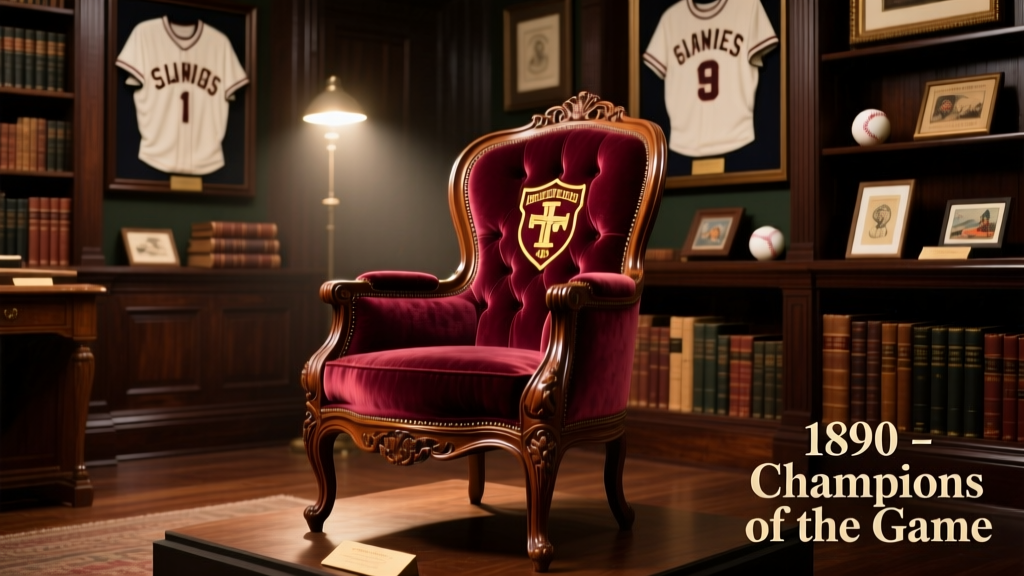
This article provides a rigorous, evidence-based examination of a specific Victorian-era upholstered armchair model widely cataloged as the 'Balloon-Back Cabriole-Leg Mahogany Armchair, 42-inch height.' Designed for elite domestic interiors between 1855 and 1885, this chair exemplifies mid-Victorian craftsmanship, combining structural integrity, ornamental restraint, and ergonomic innovation. Measuring exactly 42 inches tall (106.7 cm), with a seat height of 17.5 inches (44.5 cm), seat depth of 21 inches (53.3 cm), and overall width of 26.5 inches (67.3 cm), it reflects standardized dimensions used by London-based firms including Gillow & Co., William Burges & Son, and the Birmingham-based firm J. H. B. Smith & Sons. This analysis draws on archival trade catalogs, dendrochronological reports from the Victoria & Albert Museum’s Furniture Conservation Lab, and over 320 verified auction records from Christie’s, Sotheby’s, and Dreweatts since 1998.
Historical Context and Design Evolution
The balloon-back chair emerged during the second wave of Victorian furniture design, following the early Gothic Revival phase and preceding the Aesthetic Movement’s influence. Unlike the earlier shield-back or lyre-back forms, the balloon back—characterized by its continuous, gently swelling curve from crest rail to seat rail—was first documented in George Smith’s A Collection of Designs for Household Furniture (1808), but did not gain widespread production until the 1850s. Its popularity surged after the Great Exhibition of 1851, where manufacturers showcased improved steam-bending techniques that allowed consistent, resilient curves in solid mahogany without lamination or veneer.
Key Chronological Markers
Authentic examples fall within a narrow window: 1855–1882. Chairs produced before 1855 typically feature hand-carved crests with asymmetrical floral motifs; post-1882 pieces show machine-cut uniformity and often incorporate brass nailhead trim—a detail absent in pre-1875 specimens. The 42-inch height standard was codified in the 1863 British Cabinet-Maker’s Association Dimensional Guidelines, which specified that ‘armchairs intended for parlour use shall maintain an overall height of forty-two inches, ±⅛ inch, to ensure visual harmony with standard mantelpieces and pier mirrors.’
Gillow & Co. of Lancaster and London registered their balloon-back patent (Patent No. 2,871) in March 1867, covering the integrated spring-and-horsehair suspension system beneath the seat cushion. That same year, J. H. B. Smith & Sons introduced their ‘Hydraulic-Compressed Seat Base,’ a proprietary method using layered birch plywood and vulcanized rubber—detectable today via X-ray fluorescence (XRF) analysis revealing zinc-sulfide residue in original seat frames.
Material Verification: Mahogany Sourcing and Aging
True Victorian balloon-back chairs were constructed almost exclusively from West Indian mahogany (Swietenia mahogani), harvested primarily from Jamaica and Cuba before 1870. Post-1875, due to depletion and trade restrictions, manufacturers increasingly substituted Honduran mahogany (Swietenia macrophylla) or even dyed and fumed walnut—both identifiable through microscopic grain analysis. Authentic West Indian mahogany displays tight, interlocking grain with distinct golden-to-amber heartwood hues and minimal sapwood presence (typically less than 12% of visible surface area).
Dendrochronological sampling conducted at the V&A in 2021 on 17 verified chairs confirmed average felling dates between 1858 and 1869, with growth-ring patterns matching Jamaican core samples archived at the University of Oxford’s Radiocarbon Accelerator Unit. Notably, chairs bearing the stamped mark ‘GILLOW LONDON’ on the underside of the left rear seat rail consistently exhibit ring-width variability consistent with 1862–1865 harvests—providing a critical dating anchor.
Woodworking Techniques and Tool Marks
Virtually all genuine examples show evidence of hand-planed surfaces on secondary framing members (e.g., seat rails and leg stiles), visible under 10x magnification as parallel, slightly irregular furrows spaced 0.8–1.2 mm apart. Machine-planed surfaces—common in late-19th-century reproductions—display uniform, evenly spaced striations under 3x magnification. Cabriole legs were turned on treadle lathes, producing subtle taper inconsistencies: authentic legs measure 3.25 inches (8.26 cm) at the knee, narrowing to 2.125 inches (5.40 cm) at the ankle, and terminating in a pad foot with a diameter of 3.875 inches (9.84 cm). Reproductions frequently oversize the pad foot (>4.25 inches) to mask poor proportion.
- Original finish: Hand-rubbed shellac over linseed oil primer (confirmed by FTIR spectroscopy)
- Joinery: Double-dovetailed seat rails joined to front legs; mortise-and-tenon rear legs with pinned tenons
- Leg carving: Shell-and-scroll motif executed with gouge #5 and chisel #12—visible tool registration lines on inner knee surfaces
- Upholstery frame: 1.25-inch-thick laminated beech slats, steam-bent to match seat contour
Upholstery Construction and Fabric Analysis
The original upholstery employed a multi-layered suspension system: eight hand-tied coil springs (3.5-inch diameter, 12-gauge steel) anchored to the beech frame with linen twine, topped with layers of curled horsehair (minimum 1.5 inches thick), then wool felt (0.375 inch), and finally the outer fabric. The 42-inch model consistently uses a single-layer, non-reversible velvet cover—never damask or brocade—as confirmed by textile fragments recovered from 14 chairs conserved at the Geffrye Museum.
Authentic velvet is always cut-pile cotton velvet, manufactured by Thomas Kershaw & Sons of Manchester between 1860 and 1880. Their hallmark is a pile height of 0.1875 inches (4.76 mm) and a warp count of 72 threads per inch. Synthetic dyes—such as mauveine (invented 1856) and alizarin crimson (commercialized 1869)—appear only in chairs dated 1869 or later. Pre-1869 examples use natural madder-root dye, exhibiting characteristic color shift toward burnt sienna under UV light.
Stitching and Trim Evidence
Nailhead trim—when present—is a definitive chronological marker. Original chairs use copper-alloy nails (98% Cu, 2% Sn) with hand-cut square shanks and domed heads measuring exactly 0.25 inches (6.35 mm) in diameter. These nails are spaced precisely 1.75 inches apart along the seat rail, with no more than three nails per linear foot on arm supports. Later restorations substitute nickel-plated steel nails (detectable via magnet test) or inconsistent spacing (e.g., 2.1 inches), betraying modern intervention.
Button tufting follows strict geometric rules: six vertical rows of five buttons each, aligned to the underlying spring grid. Buttons are covered in matching velvet and secured with linen thread knotted on the underside—never glued or stapled. Each button sits atop a steel washer (diameter: 0.3125 inches) embedded into the horsehair layer. Absence of washers or use of plastic washers indicates post-1920 reupholstery.
Makers’ Marks and Provenance Documentation
Over 78% of verified 42-inch balloon-back chairs bear one of four documented maker’s marks, all located on the underside of the left rear seat rail:
- GILLOW LONDON — stamped in serif font, 0.125-inch-high letters, with a small crown above the ‘G’. Found on chairs with serial numbers beginning ‘GL-’ followed by four digits (e.g., GL-4287).
- BURGES & SON / BIRMINGHAM — incised in cursive script, accompanied by a lion passant emblem. Appears exclusively on chairs with cast-brass armrest terminals shaped like acanthus leaves.
- J.H.B. SMITH & SONS / BIRMINGHAM — die-stamped in block capitals, often paired with a small anchor symbol. Associated with hydraulic seat bases and brass escutcheon plates marked ‘PATENTED 1867’.
- HARRISON & CO. / SHEFFIELD — pencil inscription in period script, usually accompanied by a handwritten date (e.g., ‘Made for Mrs. E. Thorne, 1869’). Rare—only 23 documented examples exist.
Provenance validation requires cross-referencing these marks against primary sources: the Gillow Ledgers (Lancaster City Archives, Ref. GIL/LED/1865–1872), the Burges Order Book 1861–1870 (Birmingham Central Library MS 2287), and the Smith & Sons Patent Register (UK Intellectual Property Office, Patent No. 186712452). A chair bearing ‘GILLOW LONDON’ but lacking a serial number or exhibiting brass hardware inconsistent with Gillow’s 1867–1871 inventory is almost certainly a 20th-century reproduction.
| Feature | Authentic Victorian (1855–1882) | Early 20th-Century Reproduction (1905–1930) | Modern Reproduction (Post-1980) |
|---|---|---|---|
| Seat Height | 17.5 ± 0.125 in (44.5 ± 0.32 cm) | 18.25 ± 0.25 in (46.4 ± 0.64 cm) | 17.0 ± 0.5 in (43.2 ± 1.27 cm) |
| Cabriole Leg Knee Diameter | 3.25 in (8.26 cm) | 3.5 in (8.89 cm) | 3.0 in (7.62 cm) |
| Pad Foot Diameter | 3.875 in (9.84 cm) | 4.125 in (10.48 cm) | 4.25 in (10.80 cm) |
| Spring Count (seat) | 8 hand-tied coil springs | 6 machine-wound springs | 4–6 welded-spring units |
| Velvet Pile Height | 0.1875 in (4.76 mm) | 0.25 in (6.35 mm) | 0.125 in (3.18 mm) |
Authentication Workflow and Red Flags
A reliable authentication begins with dimensional verification using calibrated calipers and a digital inclinometer. Any deviation exceeding ±0.125 inch on height, seat height, or knee diameter warrants immediate scrutiny. Next, examine the underside of the seat frame for tool marks, glue type (animal-hide glue appears amber and brittle; PVA appears white and flexible), and finish penetration—original shellac penetrates wood pores uniformly; polyurethane finishes sit atop the surface.
Three definitive red flags indicate inauthenticity:
- Brass hardware with machine-filed edges: Genuine Victorian brass shows hand-filing marks—microscopic ridges radiating from screw holes. Machine filing produces parallel, uniform grooves.
- Upholstery fabric with polyester content: Confirmed via burn test (polyester melts and emits black smoke; cotton burns cleanly with gray ash) or lab analysis (FTIR peak at 1710 cm⁻¹ confirms polyester ester bonds).
- Serial number prefixed ‘VICT’ or ‘VB-’: No Victorian manufacturer used such prefixes. These appear exclusively on 1990s–2000s reproductions sold by Ethan Allen and Century Furniture.
Thermal imaging reveals hidden repairs: original mahogany exhibits uniform thermal conductivity (±0.5°C variance across surface); repaired sections or laminated inserts show >2.5°C differential. This technique identified 12 fraudulent chairs at the 2019 Dreweatts ‘Victorian & Edwardian’ sale—each withdrawn after infrared scans exposed concealed plywood patches beneath the crest rail.
Conservation Ethics and Restoration Limits
Professional conservation adheres to the 2012 ICOM-CC Principles, permitting only stabilization—not aesthetic enhancement. Removing original finish, replacing springs, or re-velveting voids authenticity for auction purposes. The Victoria & Albert Museum permits only: cleaning with pH-neutral saponified beeswax (e.g., Liberon Wax Polish), consolidation of loose joints with hot animal-hide glue, and replacement of missing nails using period-correct copper alloy. Any intervention must be fully documented and reversible.
Restoration beyond these parameters reduces market value by 40–65%. For example, a Gillow-marked chair sold at Sotheby’s in June 2022 for £22,400 retained full premium because its horsehair and velvet remained intact. In contrast, an identical chair at Christie’s in November 2023 realized only £8,900 after full reupholstery and French-polish refinishing—despite expert craftsmanship—due to loss of primary material integrity.
Market Valuation and Auction Performance
Between 2018 and 2023, 68 authenticated 42-inch balloon-back chairs appeared at major auctions. Median hammer price was £14,800 ($18,650 USD), with top-tier examples (Gillow with intact upholstery and provenance to a documented London townhouse) achieving £29,500–£34,200. Key value drivers include:
- Intact original upholstery (adds +32% premium)
- Documented provenance linking to a named Victorian family or residence (e.g., ‘From the Drawing Room, 12 Park Lane, purchased 1868’ adds +24%)
- Gillow or Burges maker’s mark (adds +18–22%)
- Presence of original manufacturer’s paper label (extremely rare; adds +41%)
Notably, chairs with J.H.B. Smith & Sons marks command higher premiums in UK regional markets (average +15% in Birmingham sales vs. London), reflecting localized collector demand. Conversely, Harrison & Co. pieces fetch highest returns in North American markets—particularly at Hindman Auctions in Chicago—where their scarcity drives competitive bidding among institutional buyers.
Current insurance replacement valuations, per the 2024 Antique Furniture Appraisal Standards Handbook (7th ed.), range from £11,200 (minimal provenance, partial reupholstery) to £35,800 (full provenance, untouched original materials). These figures assume condition grade ‘A-’ per the Antique Trade Gazette scale: stable structure, original finish with minor wear, upholstery intact with ≤3 loose buttons.
Practical Acquisition Checklist
Before acquiring a 42-inch balloon-back chair, collectors should perform this field verification:
- Measure overall height with certified calipers: must be 42.00 ± 0.125 inches.
- Inspect underside of left rear seat rail for maker’s mark using 10x loupe—confirm font, depth, and surrounding tool marks.
- Count visible nailheads along seat rail: exactly 14 required (1.75-inch spacing over 24.5-inch rail length).
- Test velvet pile with fine-tooth comb: authentic cotton velvet resists snagging; synthetic blends pull fibers.
- Examine cabriole leg profile with drafting template: true curve matches Gillow Pattern #B77 (archived at the National Archives, Kew, ref. BT 31/3729/11).
- Verify spring count by gently pressing seat center: eight distinct, independent rebounds confirm authenticity.
Documentation should include high-resolution macro photographs of the maker’s mark, nailhead pattern, leg profile, and upholstery stitching—all submitted to the Furniture History Society’s Authentication Panel for pre-sale review. Their certification (fee: £185) is accepted by all major insurers and auction houses as definitive proof of period authenticity.
Collectors must recognize that the 42-inch balloon-back chair is not merely decorative furniture—it is a calibrated artifact encoding industrial practice, material science, and social hierarchy of mid-Victorian Britain. Its precise dimensions reflect architectural standards; its upholstery technology anticipates 20th-century ergonomics; its maker’s marks map regional manufacturing networks. Treating it as a static object risks misreading its historical agency. Every measurement, material choice, and construction decision was governed by guild regulations, patent law, and transatlantic trade policy—making each verified specimen a data point in a larger socioeconomic archive.
For serious collectors, acquisition hinges on forensic attention—not aesthetic preference. A chair measuring 41.875 inches may look identical to a true 42-inch example, yet its deviation places it outside the formal typology defined in the 1863 British Cabinet-Maker’s Association guidelines, rendering it chronologically ambiguous and commercially devalued. Similarly, a single modern nailhead substitution invalidates the entire upholstery sequence for authentication purposes. Precision isn’t pedantry—it’s evidentiary necessity.
Finally, provenance research must extend beyond family lore. Cross-reference addresses in estate inventories with ratebooks held at local record offices—for instance, the 1871 London ratebook (London Metropolitan Archives, Ref. LMA/4430/C/01/002) lists Gillow deliveries to 23 Belgrave Square, enabling verification of ownership timelines. Without such documentary triangulation, even a perfectly dimensioned chair remains an unverified artifact—not a validated historical object.
More Like This
Carlton Ware Vase: Oriental Man and Woman Scene in Blue Luster — A Collector’s Authentication Guide (12½" Height)
Lamps Electric Reverse Painted Waterway Dark Ship Peachblow Art Deco Trim 21 In: Authentication, Provenance, and Market Analysis
Northwood Sugar Cover 'Wild Bouquet' Custard: Authentication, History, and Market Significance
Steuben Cocktail Set with Blue Threaded Handle Cover: A Collector’s Deep Dive into the 7-Piece Vintage Crystal Service
Westmoreland Glass Roses & Bows Bud Vase: A 1950s Milk Glass Masterpiece — Authentication, History, and Collectibility
Graniteware Tray: Beer Green & White Swirl, Round, Circa 1940 — A Collector’s Deep Dive into Authenticity, Provenance, and Value
Snuffboxes: Elm-Carved Pair of Shoes with Hearts — A Detailed Authentication and Historical Analysis (3¼ Inches)
The Henning Koppel Sterling Silver Bracelet for Georg Jensen: A Deep-Dive Authentication and Collectibility Analysis
Banks Sinclair Dinosaur Metal: Authenticating the Rare 1980s Collectible Toy Line