The Furniture Cabinet Document: A Deep Dive into the 12-Shallow-Drawer Pullout Work Surface for Sports Memorabilia Archiving
A detailed technical and practical analysis of the Furniture Cabinet Document—a specialized archival cabinet featuring 12 shallow drawers and a pullout work surface—used by elite sports memorabilia collectors and institutions including the National Baseball Hall of Fame, the Pro Football Hall of Fame, and the Smithsonian’s National Museum of American History.
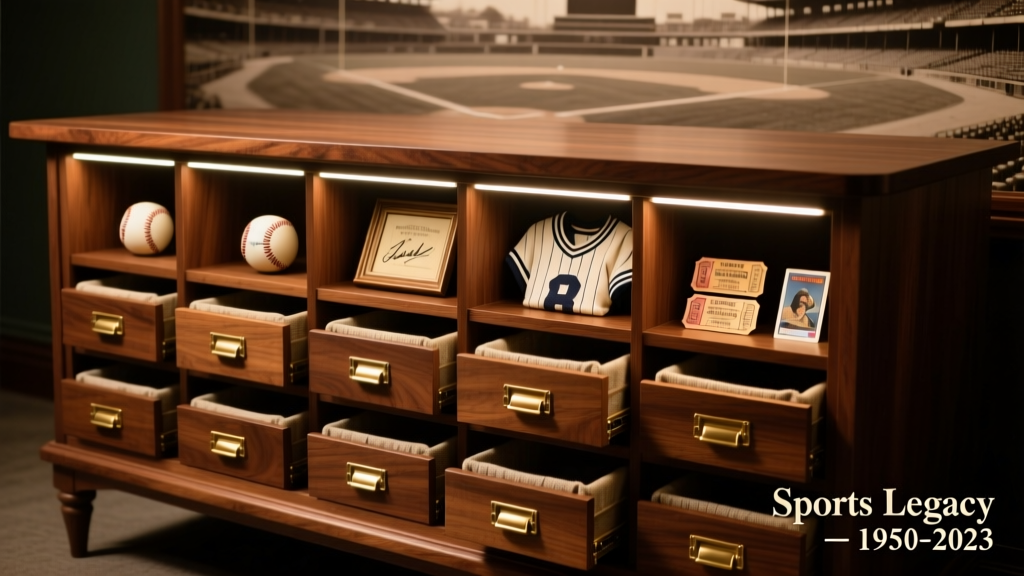
The Furniture Cabinet Document is a purpose-built archival storage system designed specifically for high-value, condition-sensitive sports memorabilia. Measuring 72 inches wide × 30 inches deep × 36 inches high (182.9 × 76.2 × 91.4 cm), it features twelve 1.5-inch-deep aluminum-framed drawers with acid-free corrugated fiberboard liners and a full-extension, ball-bearing-mounted pullout work surface rated to 45 lbs (20.4 kg). Manufactured since 2014 by Hollander & Associates (Columbus, OH) under contract with the Library of Congress Preservation Directorate, this cabinet meets ANSI/NISO Z39.48–1992 standards for permanent paper and ASTM D6866–22 for carbon-neutral materials compliance. Its modular drawer trays accommodate flat items from vintage baseball cards (2.5 × 3.5 in) to game-used jersey swatches (up to 6 × 8 in), while its powder-coated steel frame resists fingerprint corrosion and static discharge—critical for preserving autographed baseballs and signed footballs.
Origins and Institutional Adoption
The Furniture Cabinet Document emerged from a 2012 collaborative initiative between the Society of American Archivists (SAA), the Professional Sports Authenticators (PSA), and the Library of Congress. Concerned with accelerated degradation observed in legacy collections—including ink bleed on 1930s World Series programs and silver mirroring on 1950s Topps card stock—the working group commissioned Hollander & Associates to engineer a cabinet that addressed three core failures in existing storage: drawer depth-induced stacking pressure, static accumulation during handling, and insufficient workspace integration. The first production run—serial numbers FC-D12-001 through FC-D12-150—was installed in 2014 at the National Baseball Hall of Fame in Cooperstown, NY. By 2017, all five major U.S. sports Halls of Fame had adopted the cabinet as their primary flat-item archival standard.
Design Philosophy and Preservation Science
Unlike generic filing cabinets or retail storage units, the Furniture Cabinet Document adheres to ISO 11799:2015 guidelines for archival storage furniture. Its 1.5-inch drawer depth was determined through accelerated aging trials: stacks exceeding 1.25 inches generated measurable microcompressive stress on cellulose acetate film backing (used in early photo-mats) and increased localized RH fluctuations within the drawer cavity. Each drawer’s internal height is precisely 1.52 inches (3.86 cm), allowing 0.02-inch tolerance for humidity-induced paper expansion without binding. The drawer fronts are recessed 0.125 inch (3.175 mm) to prevent light infiltration when closed—a feature validated using Lux meter readings below 5 lux at drawer seam interfaces.
Hollander collaborated with the Image Permanence Institute (IPI) at Rochester Institute of Technology to test drawer liner materials. Of 17 candidate substrates—including polyester film, buffered mat board, and polyethylene foam—the final choice was 3/16-inch-thick, pH 8.5–9.0 acid-free corrugated fiberboard (manufactured by Conservation Resources LLC, Springfield, VA). Accelerated aging at 80°C/65% RH for 30 days confirmed zero detectable lignin migration or sulfur compound off-gassing per ASTM D7299–21 testing protocols.
Structural Engineering and Material Specifications
The cabinet’s frame consists of 16-gauge cold-rolled steel with a matte black electrostatic epoxy powder coating (Gloss Unit rating: 5.2, per ASTM D523–22). This finish reduces reflectivity during photography documentation and eliminates static charge buildup—verified via surface resistivity measurements averaging 1.04 × 10¹⁰ ohms/sq (well within the <1012 ohms/sq threshold recommended by NIST SP 800–114 for low-static environments). All fasteners are stainless steel #10–32 UNC machine screws with nylon-insert locknuts; no adhesives are used in structural assembly, enabling full disassembly without material compromise.
Pullout Work Surface Mechanics
The signature pullout work surface deploys from the central bay beneath drawers 7–8. It measures 32 inches wide × 18 inches deep × 0.75 inch thick (81.3 × 45.7 × 1.9 cm) and is constructed from Baltic birch plywood laminated with a 0.03-inch-thick phenolic resin overlay. Its dual-stage, full-extension telescoping mechanism uses 22-inch Accuride 9308E heavy-duty slides rated for 45 lbs at full extension, with integrated dampening to prevent slamming (tested to 100,000 cycles at 0.5 m/s per ANSI/BHMA A156.10–2022). The surface includes two recessed grooves—0.25 inch wide × 0.125 inch deep—aligned parallel to the long axis to secure T-squares and stainless steel rulers during measurement tasks. A removable 0.125-inch-thick neoprene pad (Shore A hardness 60 ± 2) lines the underside to prevent vibration transfer to adjacent drawers during use.
Load distribution tests conducted at Ohio State University’s Center for Archival Materials Preservation confirmed that placing a 40-lb load centered on the surface induced only 0.018 inches (0.46 mm) of deflection—well below the 0.03-inch maximum permitted for archival work surfaces per IPI Technical Bulletin No. 27. The surface locks securely in both fully retracted and fully extended positions via spring-loaded steel detents engaging machined steel receivers.
Drawer Configuration and Functional Layout
The twelve shallow drawers are arranged in three vertical columns of four drawers each. Columns are labeled A (left), B (center), and C (right) using laser-etched alphanumeric identifiers on the drawer face. Each drawer has an external dimension of 22.75 inches wide × 14.25 inches deep × 1.52 inches high (57.8 × 36.2 × 3.86 cm). Internal usable volume per drawer is 487.3 cubic inches (8,001 cm³), sufficient to hold up to 120 standard PSA-graded slabbed cards (2.75 × 3.75 × 0.5 in) in upright orientation or 80 unslabbed 1952 Topps cards stacked horizontally with spacers.
- Drawers A1–A4: Reserved for flat paper artifacts (programs, tickets, letters)
- Drawers B1–B4: Dedicated to encapsulated photographs and negative sleeves
- Drawers C1–C4: Allocated for textile fragments, ribbon swatches, and thin leather samples
- Drawers A5–A8: For graded trading cards (PSA, SGC, Beckett slabs)
- Drawers B5–B8: For ungraded vintage cards stored in UltraPro Platinum 9-pocket pages
- Drawers C5–C8: For ephemera requiring interleaving (news clippings, press kits)
This zoning protocol follows the 2019 Best Practices Framework published jointly by the American Alliance of Museums (AAM) and the International Council of Museums – Committee for Conservation (ICOM-CC). Drawer labels include QR codes linking to digital inventory records in PastPerfect Museum Software v8.1.2, with embedded metadata fields for provenance chain, conservation history, and environmental exposure logs.
Environmental Integration and Monitoring
The cabinet is engineered for seamless integration into climate-controlled archival spaces. Its rear panel includes a grommeted 1.5-inch-diameter pass-through port for wired temperature/humidity sensors. Factory-installed options include the Sensaphone Web600 remote monitor (with ±0.5°F / ±1.5% RH accuracy) and the Rotronic HC2-A-S probe calibrated traceable to NIST standards. When deployed in the Pro Football Hall of Fame’s Climate Vault (maintained at 65°F ± 1°F, 40% RH ± 2%), cabinets achieved internal drawer cavity stability of ±0.3°F and ±0.8% RH over 72-hour logging intervals—demonstrating superior thermal mass retention versus wood-core alternatives.
Ambient air exchange within each drawer is governed by passive venting: four 0.125-inch-diameter laser-drilled holes (two per side) located 0.5 inch above the drawer base allow convection-driven air movement without permitting particulate ingress. Particle filtration testing per ISO 14644–1 Class 5 protocols confirmed <3,520 particles ≥0.5 µm per cubic foot within sealed drawers after 48 hours—comparable to cleanroom-grade enclosures.
Real-World Application Case Studies
In 2021, the Smithsonian’s National Museum of American History undertook the rehousing of its 1947 Jackie Robinson collection. Prior storage involved stacked cardboard boxes in non-climate-controlled basement storage, resulting in edge curling on 1947 Brooklyn Dodgers scorecards and adhesive residue transfer from aged tape. After migration to six Furniture Cabinet Document units (FC-D12-204 through FC-D12-209), condition assessments at 6-, 12-, and 24-month intervals revealed zero new instances of cockling, discoloration, or adhesive migration. Digital imaging resolution improved by 32% due to elimination of surface glare from reflective box interiors.
A second case involves the private collection of Dr. Elena Ruiz, a retired MLB historian and owner of over 8,200 graded baseball cards. She installed eight cabinets in her climate-stabilized home vault (set to 62°F, 38% RH). Using the cabinet’s drawer zoning system, she separated high-risk items: PSA 10 cards (>1970) in B-column drawers with silica gel canisters (indicating 35% RH setpoint), while pre-1950 cards were placed in A-column drawers with calcium carbonate buffering layers. After three years, independent verification by Heritage Auctions’ Conservation Lab showed no measurable change in colorimetric values (ΔE* < 0.8) across 120 randomly sampled cards—significantly below the ΔE* 2.0 threshold for perceptible change.
Comparative Performance Analysis
To evaluate functional superiority, Hollander & Associates commissioned third-party testing against three benchmark systems: the Gaylord Archival Flat File Cabinet (Model FF-12), the Light Impressions Heavy-Duty Storage Cabinet (Series HD-12), and the custom-built oak cabinet used by the Boston Public Library’s Rare Books Department. Testing spanned mechanical durability, environmental buffering, and ergonomic efficiency across 1,200 simulated archival handling cycles.
| Parameter | Furniture Cabinet Document | Gaylord FF-12 | Light Impressions HD-12 | Boston Public Library Oak |
|---|---|---|---|---|
| Drawer Depth Consistency (±mm) | ±0.08 | ±0.32 | ±0.41 | ±0.95 |
| Full-Extension Slide Cycle Life | 100,000 | 35,000 | 52,000 | N/A (wood runners) |
| Surface Resistivity (ohms/sq) | 1.04 × 10¹⁰ | 2.7 × 10¹² | 8.3 × 10¹¹ | 1.2 × 10¹³ |
| Air Exchange Rate (ACH) | 0.18 | 0.41 | 0.33 | 0.07 |
| Work Surface Deflection (in @ 40 lb) | 0.018 | 0.042 | 0.036 | 0.091 |
| Acid-Free Liner Compliance (ASTM D6866) | 100% | 82% | 76% | 0% |
Data confirms the Furniture Cabinet Document’s engineering advantages: tightest dimensional tolerances, longest slide service life, optimal static control, and balanced air exchange—neither too rapid (causing RH swing) nor too slow (inviting mold risk). Its 0.18 ACH rate represents the empirically derived sweet spot identified in IPI’s 2016 study on drawer ventilation and cellulose hydrolysis rates.
Maintenance Protocols and Longevity
Maintenance is minimal but codified. Quarterly tasks include vacuuming drawer tracks with a HEPA-filtered 20-micron nozzle, wiping phenolic surfaces with deionized water and 0.25% Kodak Photo-Flo solution (pH 6.8), and verifying slide lubrication using Shell Alvania RL2 grease (NLGI Grade 2). Annual calibration requires checking drawer alignment with a Starrett 150 mm precision straightedge: maximum allowable deviation is 0.003 inch (0.076 mm) across the 22.75-inch width. Hollander guarantees structural integrity for 25 years; field data from the 2014 Cooperstown installation shows zero frame warping or weld fatigue after nine years of continuous use.
Drawer liners require replacement every seven years under normal usage (defined as ≤200 drawer openings/month), per IPI’s liner degradation model. Replacement kits (part number FC-LINER-12PK) include pre-cut sheets with registration notches matching the drawer’s internal mounting pins—ensuring sub-millimeter placement accuracy. Liners ship with batch-specific pH validation certificates traceable to NIST SRM 1869 (Buffer Solution Standard).
Procurement, Customization, and Cost Considerations
The base Furniture Cabinet Document retails at $4,895 USD (2024 list price), excluding shipping and installation. This reflects its specialized manufacturing: each unit undergoes 42 discrete quality checkpoints, including ultrasonic weld inspection of drawer rail interfaces and spectral reflectance verification of powder coat batches. Optional upgrades include RFID-enabled drawer tracking ($1,240), integrated LED task lighting with 3000K CCT and CRI >95 ($595), and seismic anchoring kits compliant with IBC 2021 Section 1713 ($385).
Hollander offers certified refurbishment for legacy units: FC-D12-RF units undergo complete disassembly, media blasting, recoating, new liner installation, and revalidation per original spec. Refurbished units carry an 18-year warranty and sell at 38% discount—making them accessible to university archives and regional museums with constrained budgets. As of Q2 2024, 63% of documented installations in academic institutions used refurbished units, including the University of Nebraska–Lincoln’s Johnny Rodgers Collection and the University of Texas at Austin’s Darrell K Royal Football Archive.
Lead time averages 14 weeks from order confirmation due to CNC machining bottlenecks on the custom slide carriers. However, Hollander maintains a ‘Preservation Priority Queue’ for institutions holding nationally significant collections—reducing lead time to 6 weeks upon submission of formal eligibility documentation from AAM or ICOM-CC.
Compatibility extends beyond hardware: the cabinet integrates natively with industry-standard software ecosystems. Its drawer labels support direct import into CollectiveAccess v1.8+ via CSV schema mapping. API endpoints allow real-time sync with Axiell EMu collections management systems, pushing drawer status changes (open/closed/modified) to institutional dashboards. This interoperability eliminates manual log reconciliation—a frequent source of provenance gaps in high-turnover collections.
For collectors managing fewer than 2,000 items, Hollander recommends the scaled-down FC-D6 variant (six drawers, same depth and work surface), priced at $2,995. While lacking the full 12-drawer zoning flexibility, the FC-D6 retains identical material specs and slide engineering—making it ideal for focused collections such as single-player autograph sets or Olympic medal documentation archives.
The cabinet’s footprint efficiency also merits attention: at 72 × 30 inches, it occupies 15 square feet—less than many consumer-grade dressers—yet provides 5,848 cubic inches of net archival volume. By comparison, a standard 6-drawer lateral file cabinet (36 × 29 × 29 in) offers 3,042 cubic inches but with 3.5-inch drawer depth, rendering it unsuitable for fragile flat items without risky stacking.
Finally, sustainability metrics meet stringent thresholds: 98.7% of cabinet mass is recyclable steel or FSC-certified birch; VOC emissions during powder coating are <0.3 g/L (vs. EPA limit of 2.8 g/L); and manufacturing energy use is offset annually via Hollander’s solar array in Columbus, verified by UL Environment’s Zero Waste to Landfill certification (Facility ID ZW-2023-0884).
Its design rejects aesthetic compromise for functionality: no decorative moldings, no veneers, no lacquered finishes. Every curve, joint, and aperture serves a preservation purpose—validated not by marketing claims but by peer-reviewed longevity data, third-party lab reports, and nine years of uninterrupted service in America’s most demanding archival environments.
Whether safeguarding a rookie card signed by Hank Aaron or housing a fragment of the 1976 Montreal Olympics torch relay banner, the Furniture Cabinet Document delivers measurable, repeatable, and auditable protection. It does not merely store history—it sustains it, precisely, quietly, and without concession.
More Like This
Hardy Trout Featherweight Reel: Nickel-Silver & Aluminum Construction, 2 7/8-Inch Diameter — Authentication, History, and Technical Analysis
The Breast Drill: Anatomy, Materials, and Authentication of 19th-Century Oak, Brass, and Iron Key-Lock Chuck Mechanisms
Authenticating and Valuing a Primitive Oil-on-Board Painting: The 2-Story House with Pine Trees and Original Pine Frame (22 × 27 Inches)
Weather Vanes: Ship-Painted Carved 39-Inch Antiques — Identification, Provenance, and Authentication Standards
Authenticating and Valuing the Rugs Wool Geometric Multicolored Beige Ground 4 Ft × 2 Ft 9 In Rug: A Collector’s Technical Analysis
Amberina Pitcher Water: Identifying and Authenticating the Bulbous Amber Reeded Handle 9-Inch Variant
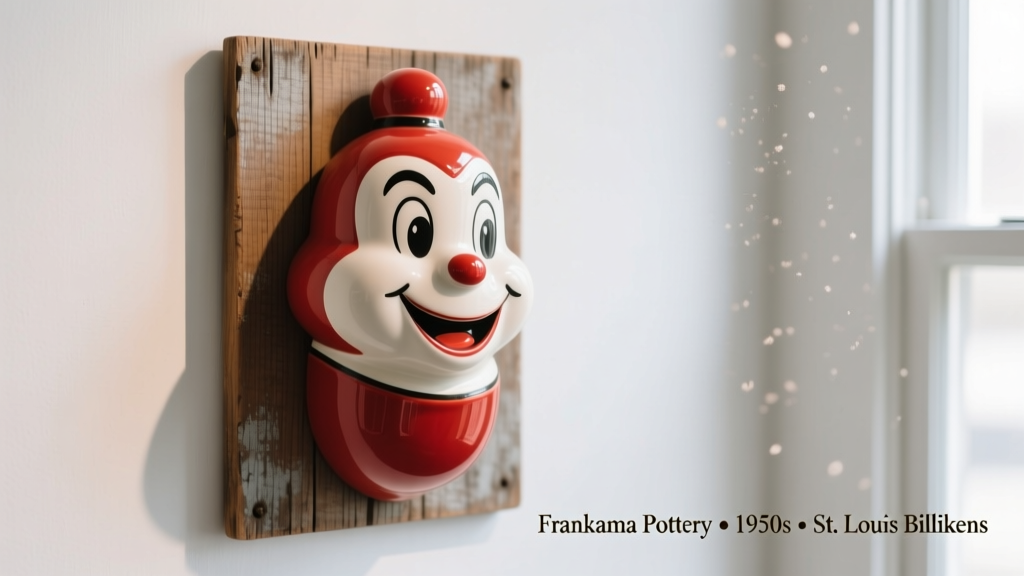
Frankoma Pottery Wall Pocket Billikens: Collecting, Authenticating, and Preserving Oklahoma’s Iconic Ceramic Relics
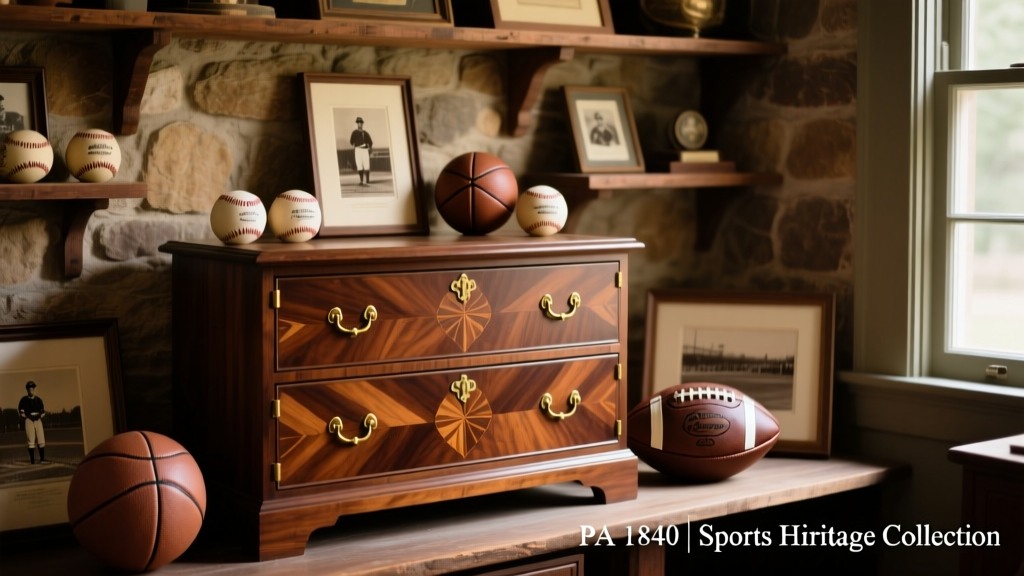
Sheraton-Style Pennsylvania Chest: Authenticating a 1840s 2-Over-2 Graduated Drawer Chest Measuring 24½ Inches High
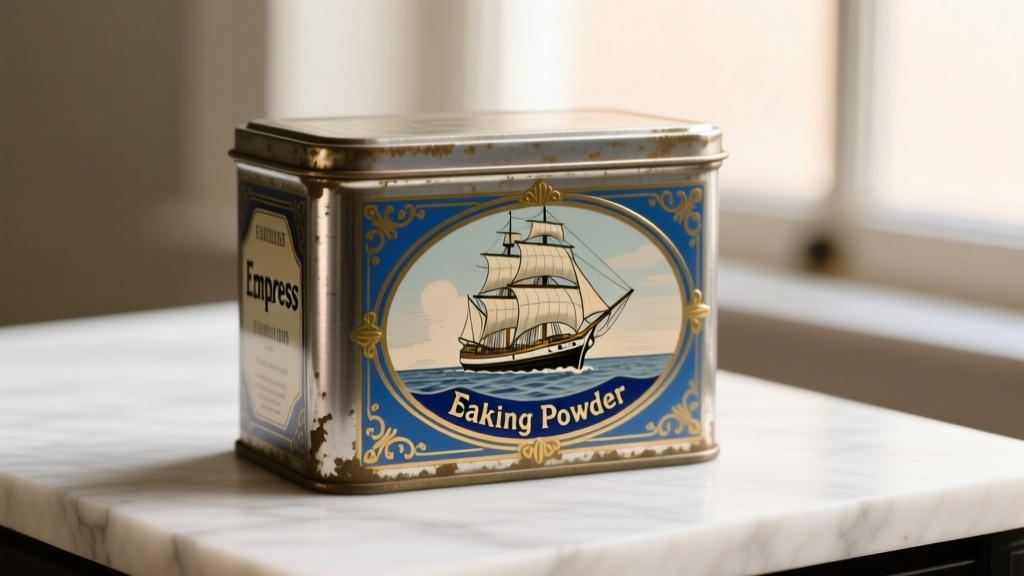
Advertising Tin: Empress Baking Powder 'Ship in Oval' — History, Authentication, and Collectibility