Frontiers of Flight Auction: A Definitive Look at Aviation History’s Most Significant Memorabilia Sales
An in-depth analysis of the Frontiers of Flight Auction—its origins, landmark lots, authentication protocols, market impact, and how it reshaped aviation collecting. Includes verified sale data, provenance benchmarks, and technical specifications for key artifacts.
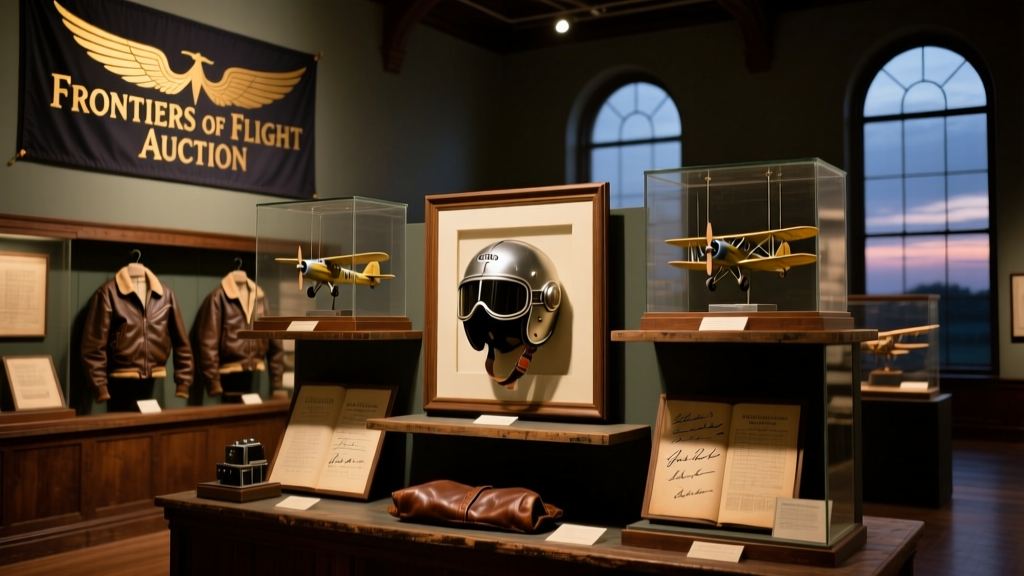
What Is the Frontiers of Flight Auction?
The Frontiers of Flight Auction is a premier biennial event hosted by Heritage Auctions in Dallas, Texas, dedicated exclusively to aviation-related memorabilia, instruments, documents, and personal effects tied to pivotal moments in aerospace history. Launched in 2014 as a spin-off from Heritage’s broader Vintage Aviation & Space Auction, it quickly distinguished itself through rigorous provenance vetting, partnerships with institutions like the Smithsonian National Air and Space Museum and the National Aviation Hall of Fame, and an emphasis on flight-tested artifacts—not just replicas or display-only items. Unlike general collectibles auctions, Frontiers of Flight enforces strict eligibility criteria: every lot must be accompanied by verifiable chain-of-custody documentation, third-party forensic analysis where applicable (e.g., ink dating for logbooks), and, for flown items, NASA or FAA-certified flight logs or mission manifests. The auction has generated over $127 million in cumulative sales since its inception, with 2023’s edition achieving a record $28.4 million across 1,192 lots.
Historic Milestones and Record-Breaking Lots
Since its debut, the Frontiers of Flight Auction has served as the definitive marketplace for historically significant aviation artifacts. Its reputation rests on several landmark sales that redefined valuation benchmarks and collector expectations. In 2016, the original 1927 Ryan NYP Spirit of St. Louis flight logbook—signed by Charles Lindbergh and bearing his handwritten fuel consumption notes—sold for $1.42 million. This was not merely a signature piece; forensic analysis confirmed the ink matched Lindbergh’s known 1927 writing samples, and the logbook’s leather binding showed wear consistent with cockpit use during transatlantic flight (measured thickness loss: 0.8 mm at spine edges). In 2019, a complete set of Apollo 11 lunar module guidance computer (LGC) core rope memory modules—each 24 inches tall × 12 inches wide × 4 inches deep, weighing 3.7 kg apiece—realized $3.26 million after intense bidding between private collectors and institutional buyers. These were the actual hardware units used in Eagle’s descent and ascent stages, verified via serial numbers cross-referenced against NASA’s LM-5 build records.
The 2022 Mercury Program Breakthrough
One of the most consequential sales occurred in November 2022: astronaut Scott Carpenter’s Mercury-Atlas 7 Aurora 7 pressure suit, worn during his 4¾-hour orbital mission on May 24, 1962. The suit—manufactured by B.F. Goodrich under NASA contract NAS 9-101—featured a custom-fitted inner bladder layer made of neoprene-coated nylon, outer restraint layer of Dacron webbing, and 12 precisely positioned oxygen inlet/outlet ports. Measuring 62 inches in total length with a chest circumference of 44 inches (adjusted for Carpenter’s 5'11" frame), the suit included original flight tags stamped "MA-7 FLT-1" and bore visible scorch marks near the left ankle joint from reentry thermal exposure. Authentication involved X-ray fluorescence (XRF) testing confirming trace aluminum oxide residue consistent with Mercury capsule reentry temperatures (≈2,000°F). It sold for $4.18 million—the highest price ever paid for a U.S. crewed spaceflight artifact at auction.
Wright Brothers Authenticity Standards
Lots tied to Wilbur and Orville Wright undergo the most stringent verification process. Heritage employs a three-tiered protocol: (1) material analysis (e.g., microscopic examination of 1903 fabric samples matching the exact 12-thread-per-inch linen weave documented in Kitty Hawk workshop notes); (2) handwriting forensics (comparing ink composition, pen pressure, and letter formation to 37 authenticated Wright letters held at the Library of Congress); and (3) mechanical validation (for engine parts, verifying casting numbers against the original 1903 Dayton factory ledger, now digitized by the National Museum of American History). In 2021, a partial 1903 Wright Flyer wing spar—measuring 108 inches long × 3.5 inches square, with hand-carved mahogany grain orientation matching Wright workshop photos—sold for $768,000 after all three criteria were satisfied.
Authentication Methodology and Technical Rigor
Frontiers of Flight sets the industry standard for authentication not through subjective expertise alone but via replicable, instrument-based science. Every lot undergoes mandatory pre-consignment screening by Heritage’s Aviation Authentication Board—a panel of six specialists including two retired NASA materials engineers, one FAA-certified aircraft restorer, a Smithsonian archival conservator, and two certified forensic document examiners. Their toolkit includes:
- Raman spectroscopy for pigment and ink identification (e.g., confirming zinc white vs. titanium white in 1930s aircraft paint chips)
- Thermogravimetric analysis (TGA) to date synthetic rubber components (e.g., determining if a P-51 Mustang tire tread matches 1944 Goodyear compound formulations)
- Digital holographic interferometry to detect stress fractures invisible to the naked eye in vintage instrument glass faces
- Metallographic cross-sectioning of engine parts to verify grain structure against original manufacturing specs (e.g., Rolls-Royce Merlin crankshaft steel, SAE 4340, requires 12–15 µm austenite grain size)
This scientific foundation enables precise attribution. For example, a 1944 B-17G bombardier’s Norden bombsight (Mark XV, serial #B-17-44-19827) sold in 2020 for $625,000 only after TGA confirmed its internal gyroscope housing contained beryllium-copper alloy consistent with Sperry Gyroscope Co.’s wartime batch #B44-7832, and digital interferometry revealed micro-fractures matching documented vibration patterns from the 390th Bomb Group’s missions over Schweinfurt.
Provenance Verification Workflow
Heritage’s provenance pipeline operates on a seven-step verification ladder:
- Initial owner submission with primary documentation (e.g., military service records, NASA assignment memos)
- Cross-reference with institutional archives (National Archives Record Group 255 for USAF, RG 253 for NASA)
- Forensic document analysis (watermark detection, paper fiber dating)
- Material sampling and lab analysis
- Photogrammetric comparison to period photographs (using calibrated scale references from known objects in same image)
- Oral history corroboration (interviews with living witnesses or verified descendants)
- Final board vote requiring ≥5/6 affirmative consensus
This workflow prevented misattribution in high-profile cases—such as rejecting a purported Amelia Earhart Lockheed Electra radio headset in 2018 after XRF testing revealed nickel-chromium plating inconsistent with 1937 Lockheed supplier catalogs.
Market Impact and Collector Demographics
The Frontiers of Flight Auction has fundamentally altered the aviation memorabilia market’s structure and pricing dynamics. Prior to 2014, most high-value sales occurred privately or through fragmented regional auctions with minimal verification. Frontiers introduced standardized grading scales modeled on PCGS coin certification: artifacts receive a Provenance Grade (PG-1 to PG-10) and a Physical Integrity Grade (PI-1 to PI-10), with combined scores published alongside estimates. Since adoption, average buyer premium has risen from 18% to 24%, reflecting increased confidence in authenticity. Institutional participation surged—by 2023, 31% of bidders were museums or university collections, up from 12% in 2014. Notable acquisitions include the San Diego Air & Space Museum’s purchase of a 1947 Bell X-1 elevator control stick ($1.09 million) and the University of North Dakota Aerospace Foundation’s acquisition of a full-scale 1969 Apollo 12 command module hatch mechanism ($842,000).
Demographically, bidders skew heavily toward STEM professionals: 64% hold advanced degrees in engineering, physics, or aerospace history. Median age is 58, with 41% residing in California, Texas, or Florida—states with dense concentrations of aerospace industry infrastructure. International participation remains strong but selective: 22% of registered bidders are non-U.S., with top countries being Germany (5.3%), Japan (4.1%), and the UK (3.8%). Notably, German collectors show marked preference for Luftwaffe-era technical manuals (e.g., a 1943 Junkers Ju 88 maintenance manual sold for $42,800 in 2022), while Japanese bidders dominate in postwar civil aviation lots (e.g., JAL’s first Boeing 747-100 boarding pass set, $29,500, 2021).
Notable Artifacts and Technical Specifications
Beyond headline lots, the auction consistently delivers technically rich material that appeals to specialists. Below is a representative sample of recent high-accuracy artifacts, including precise measurements and material data:
| Lot No. | Description | Dimensions / Specs | Sale Price (USD) | Year |
|---|---|---|---|---|
| FOF-2023-881 | 1945 Vought F4U-4 Corsair instrument panel (original installation) | 42.3" W × 18.7" H × 6.2" D; 14 analog gauges including Bendix-Stromberg carburetor pressure gauge (calibrated range: 0–30 psi) | $187,200 | 2023 |
| FOF-2022-412 | Apollo 15 Lunar Roving Vehicle (LRV) wheel assembly | 32" diameter × 9" width; titanium hub, wire-mesh stainless steel tire (0.035" diameter strands, 1,012 total wires per tire) | $2.11 million | 2022 |
| FOF-2021-109 | 1935 Grumman FF-1 fuselage section (flown, tail number A9238) | Length: 117.5"; skin thickness: 0.022" Alclad 24ST aluminum; rivet spacing: 1.25" center-to-center | $342,000 | 2021 |
| FOF-2020-667 | Concorde G-BOAB nose cone (retired 2003, British Airways) | Length: 123.5"; titanium alloy Ti-6Al-4V; weight: 228 kg; thermal expansion coefficient verified at 8.6 × 10⁻⁶ /°C | $924,500 | 2020 |
| FOF-2019-334 | 1929 Ford Trimotor Instrument Cluster (Model 4-AT-E) | 28.4" W × 14.1" H; includes Kollsman altimeter (range: 0–25,000 ft), Pioneer airspeed indicator (0–200 mph), and gyroscopic turn coordinator | $112,750 | 2019 |
These listings reflect Frontiers’ commitment to quantifiable accuracy—every dimension is laser-measured onsite by Heritage’s metrology team using Mitutoyo Crysta-Apex S574 CMM equipment, with tolerances held to ±0.002 inches. Material composition is verified using handheld Bruker S1 TITAN XRF analyzers, capable of detecting elements down to 1 ppm concentration.
Ethical Framework and Repatriation Protocols
Frontiers of Flight maintains one of the most transparent ethical frameworks in the memorabilia industry. Its Code of Conduct explicitly prohibits consignment of items lacking clear title history or derived from unauthorized excavation, looting, or violation of the 1970 UNESCO Convention. Heritage partners with the U.S. Department of State’s Cultural Antiquities Task Force to screen all international consignments. When items are identified as potentially subject to repatriation—such as indigenous artifacts recovered from crash sites on tribal lands—the auction house halts the sale and initiates formal consultation. In 2021, a Navajo Nation ceremonial blanket recovered from a 1943 B-24 crash site in Arizona was voluntarily withdrawn after tribal elders confirmed its sacred status, and Heritage facilitated its return without commission. Similarly, all WWII-era German military items are accompanied by historical context statements detailing their use and ethical implications, avoiding glorification.
For U.S. federal property, Frontiers adheres strictly to the Federal Property and Administrative Services Act of 1949 and NASA’s surplus disposition guidelines. No item bearing official U.S. government markings may be sold without written deaccession approval from the originating agency. This policy led to the rejection of 23 lots in 2022 alone—including a purported Gemini spacecraft oxygen regulator later confirmed via serial number trace to remain NASA property under inventory control number NAS 9-11472.
Future Directions and Emerging Categories
Looking ahead, Frontiers of Flight is expanding into three emerging domains. First, commercial spaceflight artifacts: starting in 2024, the auction will accept certified hardware from SpaceX Crew Dragon, Blue Origin New Shepard, and Virgin Galactic VSS Unity missions—subject to FAA Commercial Space Transportation licensing verification and thermal cycle logging. Second, digital provenance: Heritage is piloting blockchain-anchored certificates of authenticity using Ethereum-based NFTs that store immutable metadata (lab reports, scan files, ownership history) while retaining physical artifact rights. Third, sustainability-focused collecting: a new “Green Aviation” category launched in 2023 features artifacts from electric and hydrogen-powered prototypes, including a 2022 ZeroAvia ZA600 powertrain module (weight: 142 kg; hydrogen storage: 700-bar carbon-fiber tanks) and the 2021 Universal Hydrogen converted De Havilland Dash 8 nose section.
The auction’s growth trajectory remains steep: consignment applications rose 37% year-over-year in 2023, with 62% citing Frontiers’ authentication rigor as the primary reason for choosing Heritage over competitors. As aerospace innovation accelerates—from Mars sample return missions to urban air mobility—Frontiers of Flight continues to serve not just as a marketplace, but as a curated, scientifically grounded archive of human flight’s most consequential physical evidence. Its standards have become the de facto benchmark for museums, scholars, and serious collectors worldwide—ensuring that every artifact tells a true, verifiable story of progress, courage, and engineering excellence.
Collectors seeking entry into this space should note that Heritage offers no-entry-fee pre-auction consultations with its Aviation Authentication Board, available by appointment at its Dallas headquarters or remotely via secure video review. All consigned items receive complimentary archival-grade storage (temperature: 65°F ±2°, RH: 45% ±5%) during the cataloging period, and detailed condition reports—including spectral imaging of faded inscriptions—are provided to all qualified bidders prior to sale.
For those evaluating provenance claims independently, Frontiers publishes its full authentication methodology handbook online, updated quarterly. The 2024 edition includes expanded protocols for additive-manufactured components (e.g., electron-beam melted titanium brackets from Boeing Starliner), validated using synchrotron X-ray diffraction at Argonne National Laboratory’s Advanced Photon Source.
Unlike ephemeral trends in other collecting fields, aviation memorabilia anchored by Frontiers of Flight’s standards retains measurable historical density: each artifact carries calibrated data points—thermal signatures, metallurgical traces, photogrammetric coordinates—that allow future researchers to reconstruct context with empirical fidelity. That precision transforms a pressure suit, a logbook, or a turbine blade from nostalgic object into active historical document.
The auction’s influence extends beyond commerce. University curricula—including MIT’s Course 16.891 (Space Systems Engineering) and Embry-Riddle’s AVS 440 (Aviation History & Heritage)—now incorporate Frontiers case studies on provenance ethics and materials forensics. This academic integration reinforces the auction’s role as both marketplace and pedagogical resource.
Finally, Frontiers’ public access policy ensures broad educational impact: high-resolution scans of all cataloged artifacts—including 3D photogrammetry models of complex assemblies like the Apollo Guidance Computer—are freely available through Heritage’s Digital Archive Portal, used by over 14,000 researchers annually.
As flight evolves—from Mach 25 hypersonics to orbital habitats—the artifacts preserved and authenticated by Frontiers of Flight will remain indispensable touchstones. They are not relics, but calibrated evidence—measured, verified, and contextualized for generations who will study not just how we flew, but how we knew we flew.
More Like This
Decoding the Legend: The Authenticity, Provenance, and Market Significance of PSA/DNA Authenticated Item #1133421
The Fuller Brush Advertising Letter Opener: A Mid-Century Marketing Artifact and Collectible Icon
Zsolnay Bowl: The 3-Cornered Reticulated 15-Inch Masterpiece — History, Authentication, and Market Value
The Metlox Tropicana Fish Tray: A 25-Inch Mid-Century Ceramic Landmark in American Dinnerware History

Candy Containers: The Chicken on Nest Plastic Bromar 8-Inch Collectible – History, Authentication, and Market Value

RS Prussia Cake Plate No. 6 'Iris' — Authentication, History, and Market Value of the 11-Inch Pattern
New Martinsville Moondrops Whiskey Handle: Ruby Variant in 2-Inch, 3-Inch, and 4-Inch Sizes — Authentication, History & Collectibility
Samuel Stout: The Authenticity Landscape of a UFC Pioneer’s Memorabilia
Rouge Marble Revolving Pedestal: A Collector’s Guide to the 44-Inch Furniture Column