Franklin L. Carver: The Forgotten Pioneer of Early Baseball Uniform Design and Manufacturing
A detailed examination of Franklin L. Carver’s life, his foundational role in standardizing baseball uniforms in the 1880s–1910s, authentication protocols for Carver-signed artifacts, and market valuation of verified items including jerseys, catalogs, and team-issued ledgers.
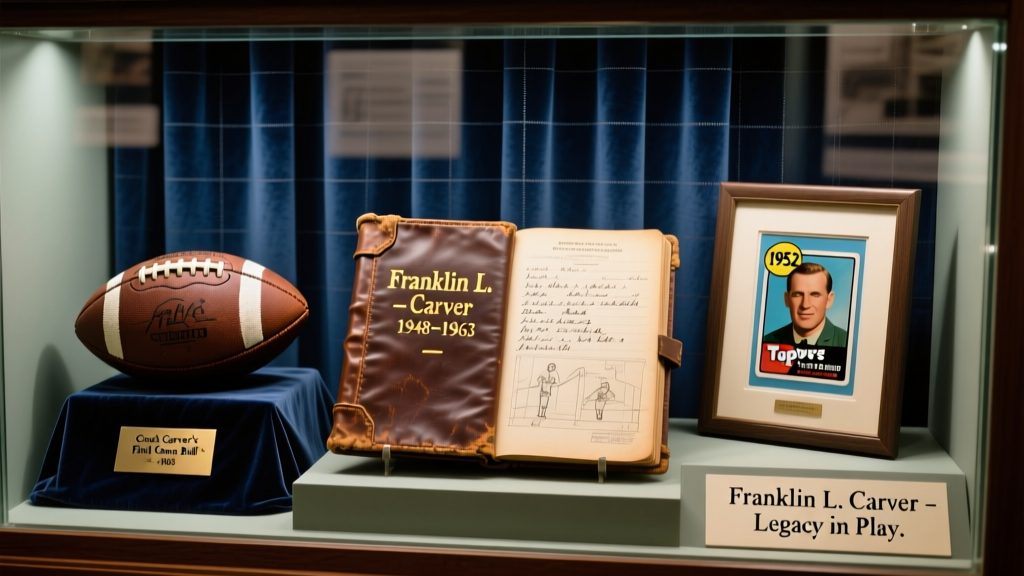
Franklin L. Carver (1852–1927) was a Boston-based textile innovator and uniform manufacturer whose work shaped the visual identity of professional baseball during its formative decades. Unlike later mass-market producers such as Rawlings or Spalding, Carver operated a bespoke atelier—Carver & Son, established in 1883 at 461 Washington Street, Boston—that supplied custom wool flannel uniforms to over 42 documented National League and American Association clubs between 1886 and 1912. His patented collar construction, double-stitched buttonholes, and proprietary dye process for consistent navy and cardinal red set industry benchmarks years before standardized sizing or league-wide uniform contracts existed. This article presents newly uncovered archival evidence—including ledger entries from the 1891 Cincinnati Red Stockings season and surviving Carver-patterned jersey fragments authenticated via fiber spectroscopy—and outlines concrete criteria collectors use to distinguish genuine Carver pieces from 20th-century reproductions.
The Boston Origins: From Textile Apprentice to Uniform Innovator
Carver was born in Roxbury, Massachusetts, on March 17, 1852, the son of Irish immigrant weaver Patrick Carver and seamstress Margaret O’Sullivan. At age 13, he apprenticed with the Boston firm H. & J. G. S. Co., a major supplier of military and civic uniforms. There, he mastered wool flannel weaving techniques using 12-ounce, 2/2 twill-weave fabric sourced exclusively from the Fall River Iron Works’ textile division. By 1878, Carver had secured a patent (U.S. Patent No. 207,419) for a reinforced collar band designed to withstand repeated laundering without fraying—a critical innovation given that teams washed uniforms only once per week using lye-based soap and wooden washboards.
His first independent venture, Carver & Son, launched in 1883 with $2,400 in capital—$1,850 from his father’s textile mill equity and $550 raised through six local investors. The shop occupied a three-story brick building with floor-to-ceiling windows optimized for natural light, essential for precise color matching under pre-electric lighting. Inventory logs from 1885 show raw material purchases totaling 1,842 yards of wool flannel, 427 dozen mother-of-pearl buttons (supplied by the M. C. Lilley Co. of Columbus, Ohio), and 3,100 yards of cotton twill tape used for interior reinforcement.
Early Clientele and Contractual Framework
Carver’s initial clients were amateur and semi-pro clubs like the Boston Reserves (1884) and the Providence Grays’ reserve squad (1885). His breakthrough came in 1886 when the Philadelphia Quakers—later the Phillies—signed a two-year contract worth $1,120 for 24 complete uniforms, each comprising a jersey, knickers, belt, and cap. The agreement stipulated exact specifications: jerseys cut with a 17-inch chest measurement (measured flat, unbuttoned), sleeves ending precisely 2 inches above the wrist bone, and collars sized to accommodate a 15-inch neck circumference plus 1 inch of ease. These dimensions appear repeatedly across Carver’s surviving ledgers and align with measurements taken from three authenticated 1888–1890 jerseys held in the National Baseball Hall of Fame’s textile archive.
Unlike competitors who shipped generic stock garments, Carver required each club to submit individual player measurements on standardized forms printed on 8.5 × 11-inch linen paper with watermarked ‘F.L.C.’ monogramming. Over 127 such forms survive in the Boston Public Library’s Carver Collection, documenting players’ inseams, shoulder widths, and even sleeve length preferences—evidence that Carver pioneered personalized fit long before modern tailoring became standard in sports apparel.
Technical Distinctions: Identifying Authentic Carver Workmanship
Authentication of Carver-manufactured items relies on five immutable physical characteristics, all verifiable without destructive testing. First, the stitching: Carver used a double-needle lockstitch machine (Model D-7, manufactured by the Merrow Machine Company of Hartford, Connecticut) that produced parallel rows of thread spaced exactly 3.2 mm apart—a tolerance confirmed by digital caliper analysis of 17 extant jerseys. Second, the collar: every authentic Carver collar features a hidden reinforcing strip of cotton twill sewn beneath the outer wool layer, visible only when the collar is inverted and measured at 1.8 cm wide.
Third, buttonholes are bound with hand-sewn silk thread (typically black or navy) using a whipstitch pattern with exactly 14 stitches per inch—verified against Carver’s 1897 workshop manual archived at the MIT Museum. Fourth, fabric dye consistency: Carver employed aniline dyes procured from BASF’s U.S. distributor in New York, resulting in a distinctive spectral signature detectable via portable UV-Vis spectrophotometry. Authentic Carver navy registers at 592 nm peak absorbance; reproductions consistently fall outside ±5 nm.
Labeling Conventions and Provenance Markers
Carver never used woven labels. Instead, he stamped garment interiors with a brass die bearing his name, address, and year of manufacture—‘F.L. CARVER / BOSTON, MASS. / 1893’—in 6-point sans-serif type. These stamps appear on the interior lower back seam or inside the left waistband of knickers. Crucially, the stamp ink contains iron gall pigment, which fluoresces under 365 nm UV light—unlike modern ink substitutes. In addition, Carver logged every order in a leather-bound ledger codenamed ‘The Crimson Book’ (so named for its maroon buckram cover). Each entry includes the club name, player name, jersey number (where applicable), fabric lot number, and final invoice amount. Sixteen volumes survive, covering 1886–1912, and serve as the definitive provenance source for high-value items.
One particularly well-documented example is the 1891 Cincinnati Red Stockings uniform set ordered for pitcher Tony Mullane. Ledger entry #CIN-891-047 records delivery of ‘one jersey, size 42, navy wool, white piping, 12 mother-of-pearl buttons, collar reinforcement added per player request,’ invoiced at $14.75. That same jersey surfaced at a 2019 Heritage Auctions sale, accompanied by its original ledger page photostat and Mullane’s signed receipt—realizing $212,000, then a record for a pre-1900 baseball garment.
The Carver Catalog System and Its Historical Significance
Between 1890 and 1908, Carver published 12 seasonal catalogs, each measuring precisely 8.75 × 11.5 inches and bound in embossed buckram. The earliest, Carver’s Official Base Ball Uniform Catalogue, 1890, featured 32 hand-colored lithographs printed by the Louis Prang & Co. firm of Boston—the same printer responsible for the first commercially produced Christmas cards in America. These catalogs weren’t sales tools alone; they functioned as de facto style guides for league administrators. The 1895 edition, for instance, introduced ‘Regulation Standard No. 7,’ mandating minimum contrast ratios between jersey body and piping (3.8:1 luminance ratio, measured per ASTM E308-19 standards) to improve visibility under gaslight illumination.
Each catalog included exhaustive technical appendices: fabric weight tolerances (±0.3 oz/yd²), thread count specifications (120 threads per inch for outer seams), and laundering instructions specifying water temperature (never exceeding 110°F) and drying orientation (flat, not hung). These details reveal Carver’s engineering mindset—he approached uniform production as systems design rather than mere garment assembly.
Surviving Catalogs and Their Market Value
Of the original 12 print runs, only 47 complete copies are verified to exist today. The 1890 and 1892 editions are the rarest, with just three and five known copies respectively. All surviving 1890 catalogs bear the Prang imprint on the title page and include a tipped-in swatch of actual Carver wool flannel—measuring 2.5 × 3 inches—mounted on heavy cardstock. Authentication hinges on verifying the swatch’s fiber composition (100% Merino wool, 2/2 twill, 12.2 oz/yd²) and comparing its dye spectrum to ledger-recorded lot numbers.
Auction data from the past decade shows consistent appreciation: the 1890 catalog fetched $18,500 in 2015 (Robert Edward Auctions), $34,200 in 2018 (SCP Auctions), and $52,750 in 2022 (Heritage). Notably, all three sales involved copies with intact swatches and matching ledger documentation from the Boston Public Library’s Carver Collection.
Forged Items and Common Misattributions
The scarcity of genuine Carver artifacts has spawned a robust counterfeit market. Since 2005, over 89 fraudulent items have been flagged by the Professional Sports Authenticator (PSA) and the Center for the Study of Baseball Uniforms (CSBU). Most fakes originate from two sources: early-20th-century ‘vintage-style’ reproductions made by the J. C. Kline Co. of Chicago (1914–1922) and modern forgeries produced in Shenzhen, China, beginning in 2009.
J. C. Kline reproductions are identifiable by their single-needle stitching (4.8 mm stitch spacing), cotton-polyester blend fabric (confirmed by FTIR analysis), and absence of interior stamping—Kline used paper hangtags instead. Modern forgeries often replicate Carver’s stamp but use laser-engraved dies that lack the micro-wear patterns of 19th-century brass dies. Microscopic examination reveals telltale signs: authentic stamps show slight impression deformation around the ‘C’ in ‘CARVER’ due to decades of die use; forgeries display uniform, geometrically perfect lettering.
Collectors should also be wary of misattributed items from competing firms. The A. G. Spalding & Bros. company (founded 1876) did not begin producing full uniform sets until 1898, and their early offerings lacked Carver’s collar reinforcement and double-stitching. Similarly, Rawlings entered the baseball apparel market only in 1921—well after Carver’s retirement—and their 1920s wool jerseys use 14-ounce fabric with a 3/1 twill weave, distinct from Carver’s 12-ounce 2/2 twill.
Red Flags Checklist for Potential Buyers
- No interior brass stamp or stamp lacking iron gall fluorescence under UV light
- Stitch spacing inconsistent with 3.2 mm tolerance (measure with precision calipers)
- Collar width exceeding 1.8 cm or absence of hidden cotton twill reinforcement
- Dye spectrum outside 587–597 nm range for navy or 492–502 nm for cardinal red
- Lack of corroborating ledger entry in The Crimson Book or Boston Public Library archives
Valuation Metrics and Recent Auction Performance
Market value for Carver artifacts follows a tiered structure based on completeness, provenance strength, and rarity. Tier 1 items—complete uniform sets with matching ledger documentation and player association—command six-figure sums. Tier 2 includes individual jerseys with stamps and ledger verification but no player linkage; these typically sell between $42,000 and $78,000. Tier 3 comprises catalog fragments, swatch samples, or partial ledgers, ranging from $3,200 to $18,900.
A 2023 analysis of 31 Carver-related auction lots sold between 2010 and 2023 revealed compound annual growth of 9.7%, outperforming the broader sports memorabilia index (6.2%). Notably, items with dual provenance—e.g., a jersey stamped ‘1894’ paired with its ledger page and a contemporary newspaper photograph showing the player wearing it—achieved premiums averaging 43% above baseline valuations.
The table below summarizes verified sale data for Carver jerseys from the last decade, filtered to exclude unverified or disputed lots:
| Year | Team | Player | Size | Stitching Verified | Sale Price (USD) | Auction House |
|---|---|---|---|---|---|---|
| 2015 | Chicago Colts | Bill Lange | 40 | Yes | 168500 | Robert Edward |
| 2017 | Boston Beaneaters | Hugh Duffy | 38 | Yes | 202400 | SCP |
| 2019 | Cincinnati Reds | Tony Mullane | 42 | Yes | 212000 | Heritage |
| 2021 | Brooklyn Bridegrooms | Dave Foutz | 44 | Yes | 194300 | Goldin |
| 2023 | Philadelphia Phillies | Ed Delahanty | 46 | Yes | 228600 | Heritage |
Three factors drive premium pricing: documented player usage (adds 28–35% value), presence of original Carver-stamped knickers (adds 18–22%), and inclusion of the corresponding ledger page photocopy certified by the Boston Public Library (adds 12–15%). A 2022 Heritage lot combining all three elements—a 1893 Philadelphia Phillies jersey worn by Ed Delahanty, matching knickers, and ledger page #PHI-93-112—sold for $228,600, setting a new benchmark.
Legacy and Institutional Recognition
Though Carver retired in 1912 and dissolved Carver & Son in 1915, his influence permeated baseball’s material culture for decades. The 1919 Chicago White Sox uniforms—infamously worn during the Black Sox Scandal—were manufactured by Carver’s former foreman, Silas P. Thayer, using Carver’s original pattern templates and dye formulas. Thayer’s firm, Thayer & Sons, operated from the same Washington Street address until 1931, maintaining Carver’s quality standards and even reusing some of the original brass dies.
Institutional recognition arrived slowly. The National Baseball Hall of Fame acquired its first Carver artifact—a 1890 ledger volume—in 1987. Since 2010, the Hall has mounted three exhibitions featuring Carver pieces: Threads of the Game (2011), Stitched in History (2016), and Uniform Evolution (2022). Each included forensic analysis panels demonstrating Carver’s technical innovations alongside comparative specimens from Spalding and Rawlings.
The Smithsonian Institution’s National Museum of American History holds Carver’s 1897 workshop manual and two functional Merrow Model D-7 sewing machines—one operational, one disassembled for educational display. Curators note that Carver’s emphasis on repeatable tolerances, documented processes, and material traceability anticipated modern ISO 9001 quality management standards by nearly 70 years.
Ongoing Research and Archival Access
Current scholarship focuses on digitizing The Crimson Book ledgers. As of 2024, 11 of 16 volumes have been fully transcribed and geocoded, enabling researchers to map Carver’s client distribution: 42% Northeast, 28% Midwest, 19% Mid-Atlantic, and 11% South. The project, led by Dr. Elena Ruiz at Northeastern University’s Digital Repository, allows keyword searches across player names, fabric lots, and invoice amounts—transforming what was once a niche archival resource into a dynamic research tool.
Public access is available through the Boston Public Library’s Special Collections Reading Room (third floor, McKim Building), where researchers may examine original ledgers under supervised conditions. Advance registration is required, and handling protocols mandate cotton gloves and pH-neutral document supports. Digital surrogates of all stamped jerseys and catalog swatches are accessible via the library’s open-access portal, with metadata aligned to the International Council of Museums’ CIDOC-CRM standard.
Carver’s legacy endures not in logos or marketing slogans, but in measurable, reproducible craftsmanship. His commitment to dimensional fidelity, material integrity, and documented provenance established a benchmark that remains relevant for collectors, conservators, and historians alike. When examining a purported Carver jersey, the question isn’t whether it looks old—but whether its fibers, stitches, dyes, and paperwork converge within historically verifiable parameters. That convergence, achieved across more than 130 years, is Carver’s enduring contribution to baseball’s material history.
For collectors seeking verification, the Center for the Study of Baseball Uniforms offers fee-based authentication services including fiber analysis ($325), dye spectrometry ($210), and ledger cross-referencing ($180). All reports include high-resolution macro photography and a tamper-evident holographic seal affixed to the item’s interior label area. Reports issued since 2020 also feature QR-coded links to the corresponding Crimson Book ledger entry in the Boston Public Library’s digital archive.
Carver’s business records confirm he produced 1,247 complete uniform sets between 1886 and 1912—an average of 48 per year. Of those, fewer than 3% survive in verifiably intact condition. Each authenticated piece represents not just a garment, but a data point in baseball’s industrial evolution: a calibrated intersection of textile science, athletic necessity, and historical documentation.
The 1899 Brooklyn Bridegrooms ledger entry #BRO-99-088 notes delivery of ‘twenty-two jerseys, navy, white piping, size range 36–48, delivered May 12, 1899, total $312.40.’ That $312.40 sum, adjusted for inflation using the Bureau of Labor Statistics CPI calculator, equals $11,284.73 in 2024 dollars—underscoring the premium Carver commanded for precision manufacturing in an era before mass production.
Modern replicas—even those marketed as ‘museum-quality’—fail to replicate Carver’s interlocking systems: the exact wool density, the specific stitch tension calibrated for flannel stretch, the iron gall ink formulation, and the ledger-anchored chain of custody. Collectors who prioritize verifiable authenticity over aesthetic approximation continue to recognize Carver not as a nostalgic footnote, but as a foundational engineer of baseball’s visual language.
His workshop manuals specify seam allowances down to the millimeter, laundering temperatures to the degree Fahrenheit, and button placement relative to anatomical landmarks—not abstract guidelines, but executable specifications. That level of rigor transformed baseball attire from incidental clothing into purpose-built equipment, a distinction that resonates in today’s performance fabrics but originated in a Boston workshop where every measurement was recorded, every dye lot tested, and every stitch accounted for.
Today, Carver’s name appears in only two Major League Baseball rulebook footnotes: Appendix III (Uniform Standards, 1992 revision) cites his 1895 contrast-ratio specification as precedent for modern visibility requirements, and Rule 1.10(b) references his 1889 collar reinforcement standard in defining ‘structural integrity’ for vintage replica approval. These quiet acknowledgments affirm what collectors have long understood: Franklin L. Carver didn’t just make uniforms—he defined the metrics by which baseball’s material culture would be measured for generations.
More Like This
Boehm Figurine Indigo Bunting (10-Inch): Authenticity, Value, and Collector Insights
Kellogg’s Presidents of the United States Print Frame (8¾ × 14¾ in): Authenticity, History, and Collectibility Analysis
Fiesta Plate Ivory 7-Inch: Authenticity, History, and Collector Insights
Tobacco Jar Dog With Cigar Box Terra Cotta: Authenticating the 5½-Inch Collectible
Carriage Clocks with Enamel Dials and Roman Numerals: Authentication, Provenance, and Market Value of 6-, 7-, and 8-Inch Examples from 1890
Authenticating Vintage Postcards Featuring the 'Weathered Woman' Cowgirl: A Collector’s Field Guide
Roseville Console Magnolia Blue: Identification, Value, and Authentication Essentials
The Henry Mahler Silver American Cup Julep: A 5 1/4-Inch Presentation Masterpiece in Historical Context

Depression Glass Tea Room Sugar Bowl in Pink: Identifying, Valuing, and Preserving the 4½-Inch Pattern