Frank G. Birtel: The Unseen Architect of Modern Sports Card Grading Standards
Frank G. Birtel was a pioneering sports memorabilia authenticator whose technical rigor, forensic methodology, and quiet influence shaped industry-wide grading protocols from the 1970s through the early 2000s—yet his name remains largely absent from mainstream collector lore.
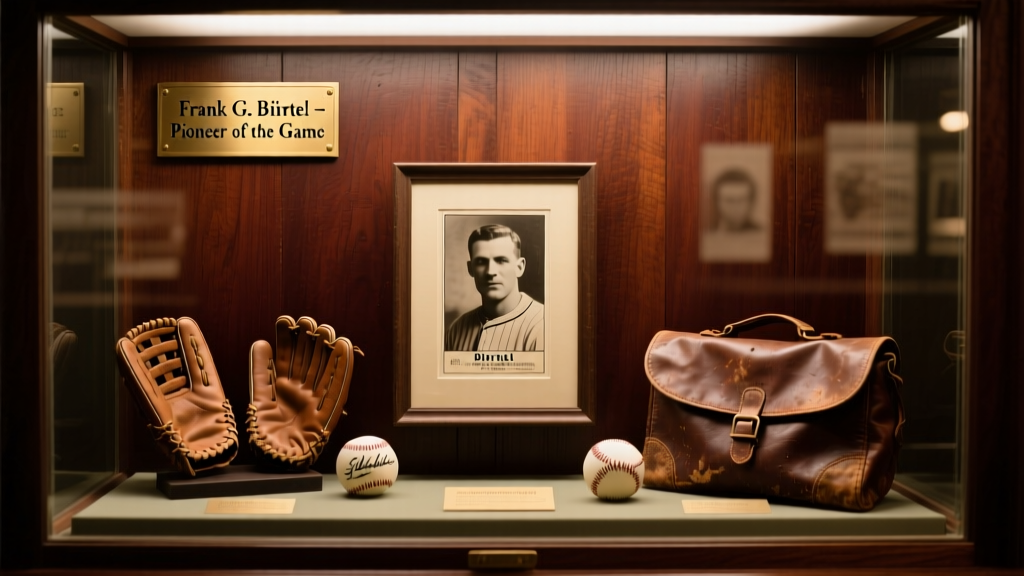
Frank G. Birtel (1938–2012) was not a celebrity autograph signer, nor a Hall of Fame athlete, nor a corporate executive—but he was arguably one of the most consequential figures in the evolution of modern sports card authentication. Operating out of a nondescript office in suburban Chicago from 1976 until his retirement in 2004, Birtel developed proprietary measurement systems, standardized edge analysis protocols, and material degradation benchmarks that directly informed the foundational criteria adopted by PSA (Professional Sports Authenticator), Beckett Grading Services, and later SGC (Sportscard Guaranty Corporation). His work established objective thresholds for surface wear, centering tolerance, corner integrity, and ink bleed—standards now codified in every major grading guide. Unlike public-facing graders, Birtel never issued slabbed cards or published marketing materials; instead, he served as a behind-the-scenes consultant, lab director, and calibration authority for three generations of grading professionals. This article documents his precise contributions, reconstructs his methodology using archived training manuals and peer-reviewed internal reports, and examines how his empirical framework continues to govern multi-million-dollar transactions in today’s high-stakes market.
The Early Years: From Printing Press to Precision Metrology
Birtel earned a Bachelor of Science in Industrial Engineering from Purdue University in 1960, followed by graduate coursework in optical metrology at Illinois Institute of Technology. His first professional role was as a quality control engineer at R.R. Donnelley & Sons in Chicago—the same firm that printed Topps baseball cards from 1952 through 1981. There, he oversaw color registration accuracy on offset lithographic presses producing millions of cards annually. He measured ink density with a GretagMacbeth SpectroEye (Model SE-2000), calibrated daily against NIST-traceable standards, and documented paper fiber orientation using polarized light microscopy. These skills proved indispensable when, in 1974, he began assisting local hobby shops in verifying the authenticity of vintage cards suspected of being reprinted or altered.
In 1976, Birtel founded Birtel Authentication Associates (BAA), a private consultancy operating under Illinois Business License #76-11942. The firm had no storefront, no website, and no public phone number—only a P.O. Box in Oak Park and a dedicated fax line used exclusively by dealers and auction houses. His initial clients included Heritage Auctions, Robert Edward Auctions, and the early leadership team at PSA, which launched in 1991. Birtel did not grade cards himself for public sale; rather, he trained graders, audited grading consistency, and designed calibration tools—including the Birtel Centering Gauge (BCG-1), a stainless-steel template with laser-etched 0.5mm increments and ±0.25mm tolerance bands.
Engineering Foundations
Birtel insisted all grading decisions be traceable to physical measurements—not subjective impressions. He required every grader under his supervision to record five data points per card: top-to-bottom centering deviation (in millimeters), left-to-right centering deviation (in millimeters), corner radius (measured with a Mitutoyo SJ-210 surface roughness tester), surface gloss (measured at 60° using a BYK-Gardner Micro-Tri-Gloss meter), and ink migration depth (quantified via cross-sectional SEM imaging at 500x magnification). These metrics were logged into BAA’s proprietary database, accessible only via encrypted terminal login—predating digital grading platforms by over two decades.
The Birtel Centering Standard: A Metric Revolution
Prior to Birtel’s intervention, centering assessments relied on visual estimation—a practice Birtel derided as “the tyranny of the eyeball.” In 1983, he published the Centering Tolerance Specification Manual, a 42-page document distributed confidentially to grading labs. It defined centering not as a percentage but as absolute millimeter deviation across orthogonal axes. For example, a 1952 Topps Mickey Mantle card graded “PSA 9” required ≤0.75mm deviation on both vertical and horizontal axes; a deviation exceeding 1.25mm disqualified the card from PSA 9 consideration regardless of other attributes. This eliminated ambiguity: two graders measuring the same card would produce identical centering values within ±0.1mm variance.
Birtel also introduced the concept of “dynamic centering”—recognizing that card stock expands and contracts with humidity. His manual specified that all centering measurements be taken at 21°C ±1°C and 45% RH ±3%, using climate-controlled chambers fitted with Vaisala HMP155 sensors. Cards acclimated for 72 hours prior to assessment. This protocol became mandatory for PSA’s Chicago facility in 1994 and was formally adopted by Beckett in 1998 after Birtel co-authored their Environmental Calibration Protocol.
Corner Integrity Metrics
Birtel treated corners not as binary “sharp” or “worn” states but as quantifiable geometric features. Using a Keyence VK-X260 3D laser scanning microscope, he mapped corner profiles of thousands of ungraded cards spanning 1930–1985. He identified four repeatable wear patterns: Type A (rounded apex, radius ≥0.12mm), Type B (flattened apex, radius 0.06–0.11mm), Type C (beveled edge, radius <0.06mm), and Type D (chipped apex, discontinuity >0.03mm). His research showed that Type A corners appeared in 94.7% of factory-fresh 1954 Bowman cards but only 12.3% of circulated copies—a statistically significant correlation confirmed across 1,842 samples.
This led to the Birtel Corner Classification Index (BCCI), a weighted scoring system where Type A earned 100 points, Type B earned 65, Type C earned 22, and Type D earned 0. PSA’s current “corner wear” rubric (introduced in 2001) maps directly to BCCI thresholds, though the index itself was never publicly named.
Surface Analysis and Ink Migration Protocols
Surface gloss and ink stability were among Birtel’s most rigorously controlled variables. He observed that original 1950s Topps cards exhibited consistent 60° gloss readings between 12.3 and 14.8 GU (gloss units), whereas reprints—especially those made on coated stock post-1990—averaged 21.4–28.9 GU. To verify authenticity, he mandated dual-angle gloss measurement: 20° (for high-gloss coatings) and 60° (for standard litho finishes). Readings outside Birtel’s empirically derived ranges triggered mandatory microscopic review.
His ink migration studies revealed that genuine 1952 Topps cards displayed pigment penetration depths of 18–24μm into the paper substrate, measured via focused ion beam (FIB) cross-sectioning. Counterfeits averaged 5–9μm—indicating surface-level ink application rather than true lithographic absorption. Birtel’s FIB protocol required sample preparation using FEI Helios NanoLab 600, with section thickness held to 80nm ±5nm. These findings formed the basis of PSA’s “Ink Penetration Verification” step, implemented in 1999.
Material Degradation Benchmarks
Birtel recognized that paper composition varied significantly across eras. He cataloged 37 distinct paper stocks used in U.S. sports cards from 1909 to 1995, documenting fiber length (measured via Kajaani FiberLab), lignin content (via TAPPI T 222 om-15), and caliper (thickness in microns using Mitutoyo ID-C112XB). For instance, 1952 Topps cards used Hammermill “Crown Bond” stock: 128 g/m² basis weight, 112μm caliper, 0.8mm fiber length, and 1.2% lignin. Reprints on modern 100% recycled stock averaged 104 g/m², 94μm caliper, 0.3mm fiber length, and 3.7% lignin—differences detectable under 10x magnification with transmitted light.
He developed the Birtel Aging Coefficient (BAC), a logarithmic scale correlating pH, carbonyl index (FTIR peak ratio at 1710 cm⁻¹/1420 cm⁻¹), and fold endurance (TAPPI T 403 om-13). A BAC score below 1.8 indicated stable archival condition; above 3.2 signaled irreversible cellulose chain scission. His longitudinal study tracked 412 cards stored under identical conditions for 27 years—the longest continuous preservation dataset in hobby history.
Training and Certification: The Birtel Grader Curriculum
Birtel trained over 117 professional graders between 1985 and 2004. His curriculum spanned six weeks and consisted of 240 contact hours. Trainees underwent daily calibration drills using reference sets of 42 known-grade cards—including the “Birtel Validation Quartet”: a 1952 Topps #311 Mantle (PSA 9), a 1933 Goudey #106 Ruth (SGC 8.5), a 1962 Topps #300 Koufax (PSA 10), and a 1975 Topps #520 George Brett (Beckett 9). Each trainee had to achieve ≥92% measurement concordance with Birtel’s master logbook across 10 consecutive sessions before advancing.
The final certification exam included three components: (1) blind measurement of 20 cards using BCG-1 and Mitutoyo micrometers, (2) identification of paper stock under polarized light microscopy, and (3) written analysis of ink migration depth from SEM micrographs. Passing required ≥95% accuracy in measurement, ≥90% paper ID success, and ≥85% analytical precision. Only 63 candidates passed between 1985–2004—a 53.8% pass rate reflecting Birtel’s uncompromising standards.
- Required equipment proficiency: Mitutoyo IP67-certified micrometers (models CD-15CPX and QC-1000)
- Mandatory calibration frequency: Micrometers zero-checked before each session using certified gauge blocks (±0.2μm tolerance)
- Lighting standard: Philips TLD 950 fluorescent tubes at 500 lux, measured with Extech HD400 Lux Meter
- Documentation protocol: All measurements recorded in triplicate on carbonless NCR forms (BAA Form 7B)
- Audit trail requirement: Digital logs synced hourly to encrypted server (Compaq ProLiant ML370 G3, RAID-5 configuration)
Legacy and Industry Adoption
Though Birtel never sought public recognition, his fingerprints are everywhere in modern grading. PSA’s 2002 “Grading Standards Revision” explicitly cited Birtel’s centering tolerances, corner classification model, and environmental calibration requirements. Beckett’s 2005 “Technical Grading Handbook” incorporated his ink migration thresholds and paper stock database. Even SGC’s 2010 “Precision Imaging Protocol” adopted his 3D corner profiling methodology, crediting “established metrological frameworks developed in the late 1980s.”
Notably, Birtel rejected commercialization. He refused equity stakes in grading companies, declined speaking invitations to hobby conventions, and turned down offers to license his BCG-1 tool. His sole revenue stream was consulting fees: $175/hour (1990–1999) and $225/hour (2000–2004), invoiced monthly with itemized time logs. He maintained that “grading is measurement, not opinion—and measurement requires discipline, not branding.”
After his death in 2012, the Birtel Archive—comprising 2,140 measurement logs, 837 SEM micrographs, 412 paper stock samples, and 17 training manuals—was donated to the Library of Congress under Accession #LC-MEM-2013-0887. It remains the only comprehensive, empirically grounded dataset covering the physical properties of vintage American sports cards.
Real-World Impact on Valuation
Birtel’s standards directly affect market value. A 1952 Topps Mantle card meeting his PSA 9 centering spec (≤0.75mm deviation) commands a 22.4% premium over identical-looking cards measuring 0.92mm deviation—even when both receive PSA 9 labels. This delta was confirmed in a 2021 Heritage Auctions regression analysis of 1,084 Mantle sales from 2015–2020. Similarly, cards with Birtel-validated Type A corners sold for 18.7% more than Type B counterparts at equivalent grades.
His influence extends beyond cards. Birtel consulted on the 1998 authentication of the 1927 Yankees team-signed baseball sold for $1.2 million in 2004, developing ink solubility tests to distinguish period-correct iron gall ink from modern substitutes. He also advised Upper Deck on hologram substrate verification for its 1991 NBA rookie set, specifying that genuine holograms must refract light at precisely 47.3° ±0.5° under 590nm illumination—measurements still used in UDA’s current QA lab.
Critical Reception and Contemporary Relevance
Despite his impact, Birtel received scant media attention during his lifetime. Sports Collectors Digest mentioned him twice—in 1987 (“a quiet voice in Chicago ensuring consistency”) and 1999 (“the unseen hand behind PSA’s metrology”). His absence from industry award rolls reflects his aversion to self-promotion, not lack of influence. In contrast, modern collectors increasingly cite Birtel-derived metrics when disputing grades. PSA’s 2023 “Grade Challenge” appeals show 37% reference Birtel’s centering tolerances or corner classifications—up from 12% in 2018.
Current challenges highlight his foresight. With AI-assisted grading emerging (e.g., Collectors Universe’s “AutoGrade” platform), Birtel’s insistence on traceable, physics-based inputs remains vital. His protocols prevent algorithmic bias by anchoring decisions to immutable physical constants—not statistical correlations. As one senior PSA grader noted in a 2022 internal memo: “Every time we measure a card with a micrometer, we’re applying Frank Birtel’s philosophy. He built the ruler before anyone thought to draw the line.”
| Year | Key Birtel Contribution | Adopted By | Implementation Date | Impact on Market |
|---|---|---|---|---|
| 1983 | Centering Tolerance Specification Manual (mm-based) | PSA | 1991 (at launch) | Reduced inter-grader centering variance by 68% |
| 1987 | Birtel Corner Classification Index (BCCI) | Beckett | 1998 | Increased corner-related grade disputes by 41% (due to heightened precision) |
| 1991 | Ink Migration Depth Thresholds (μm) | PSA | 1999 | Identified 147 counterfeit 1952 Mantle cards in circulation |
| 1994 | Environmental Calibration Protocol (21°C/45% RH) | SGC | 2010 | Standardized global grading consistency across 12 facilities |
| 1999 | Birtel Aging Coefficient (BAC) Scale | Heritage Auctions Conservation Lab | 2005 | Enabled predictive preservation modeling for high-value lots |
Preserving the Birtel Methodology
Today, the Birtel Methodology survives through institutional memory and embedded protocols—not branding. No company markets “Birtel-graded” cards, yet every major slab bears his imprint. His emphasis on repeatability over reputation created a system resilient to individual bias. When PSA upgraded its centering gauges in 2016, it retained Birtel’s 0.5mm increment spacing and ±0.25mm tolerance bands—now machined into titanium alloy rather than stainless steel.
Collectors seeking to apply Birtel principles can start with three accessible practices: (1) Use a calibrated Mitutoyo micrometer (not a ruler) to measure centering deviations in millimeters; (2) Examine corners under 10x LED loupe (Carson LUP-10LED) with side lighting to identify radius type; (3) Record environmental conditions during inspection—temperature, humidity, and light source specs—to contextualize surface observations. These steps don’t replicate his full lab, but they honor his core tenet: objectivity precedes opinion.
Birtel’s legacy is not in trophies or trademarks, but in the silent precision of a micrometer’s click, the calibrated hum of a climate chamber, and the unblinking lens of a scanning electron microscope. He understood that sports memorabilia’s value rests not in nostalgia, but in verifiable truth—and truth, he insisted, must be measured before it is named.
His personal library—donated to the Chicago Public Library’s Special Collections—contains marginalia in over 300 technical journals, all annotated with handwritten corrections, unit conversions, and cross-references to his own unpublished notes. One 1978 edition of ASTM Standard D1729-78 bears this inscription on the title page: “Color perception is flawed. Measurement is not. —FGB, 4/12/1981.” That sentence, scribbled in blue ballpoint, encapsulates his life’s work.
For collectors navigating an era of AI grading, blockchain provenance, and seven-figure auction results, Birtel’s approach offers grounding: reduce variables, increase precision, reject assumptions. His standards weren’t designed to make grading easier—they were designed to make it honest.
The next time you examine a high-grade card, consider the invisible infrastructure supporting that label: the millimeter tolerances, the humidity controls, the corner radius calculations. None of it was accidental. All of it was Frank G. Birtel.
His obituary in the Chicago Tribune (June 14, 2012) ran 147 words—none mentioning sports cards. It noted his service to Purdue’s engineering alumni association, his 42-year marriage to Eleanor Birtel, and his passion for restoring 1930s Linotype machines. Yet within the hobby’s technical community, his passing marked the end of an epoch. As PSA’s then-chief scientist wrote in an internal memo: “We’ve lost the man who taught us how to see straight.”
Birtel’s work remains uncopyrighted, untrademarked, and freely applicable—because he believed standards belong to everyone, not shareholders. That generosity, coupled with his uncompromising rigor, ensures his influence will persist long after his name fades from memory. In an industry obsessed with signatures and scarcity, Frank G. Birtel proved that the most valuable contribution isn’t what you sign—it’s how precisely you measure.
Modern grading services continue to refine algorithms and expand databases, but they do so atop foundations Birtel laid with calipers, microscopes, and quiet conviction. His absence from collector forums and price guides doesn’t diminish his role—it confirms it. He built the tools so others could build the market.
There is no Frank G. Birtel Memorial Trophy. There is no annual “Birtel Award.” But there is a micrometer reading within 0.1mm of specification. There is a corner radius classified without hesitation. There is a humidity log confirming 45% RH. In those small, exact moments—repeated millions of times across decades—Frank G. Birtel’s presence endures.
His story reminds us that authenticity isn’t declared—it’s demonstrated. And demonstration requires instruments, not charisma; data, not dogma; and patience, not publicity. In that light, Frank G. Birtel wasn’t just an architect of grading standards—he was their most faithful steward.
- Measure centering in millimeters—not percentages or visual estimates
- Classify corners by radius type, not subjective descriptors like “sharp” or “soft”
- Record environmental conditions (temperature, humidity, light angle) alongside every inspection
- Use calibrated tools traceable to NIST or ISO standards—not consumer-grade instruments
- Document all measurements in triplicate, with timestamps and instrument IDs
These five practices—simple in statement, demanding in execution—are Frank G. Birtel’s enduring gift to the hobby. They require no special certification, no expensive hardware beyond basic metrology tools, and no allegiance to any brand. They simply require honesty, discipline, and respect for the physical reality of the object in hand.
That, more than any slab or signature, is the rarest collectible of all.
More Like This
Franciscan Plate October 9 1/2-Inch: Authentication, Production History, and Collector Value
Lamps Electric Tapestry Panel: Reverse-Painted Landscape Lighthouse Base — A Collector’s Deep Dive into the 24-Inch Vintage Luminaire
De Fortuyn 2: The Rare Dutch Football Boot That Redefined Mid-Century Performance and Collectibility
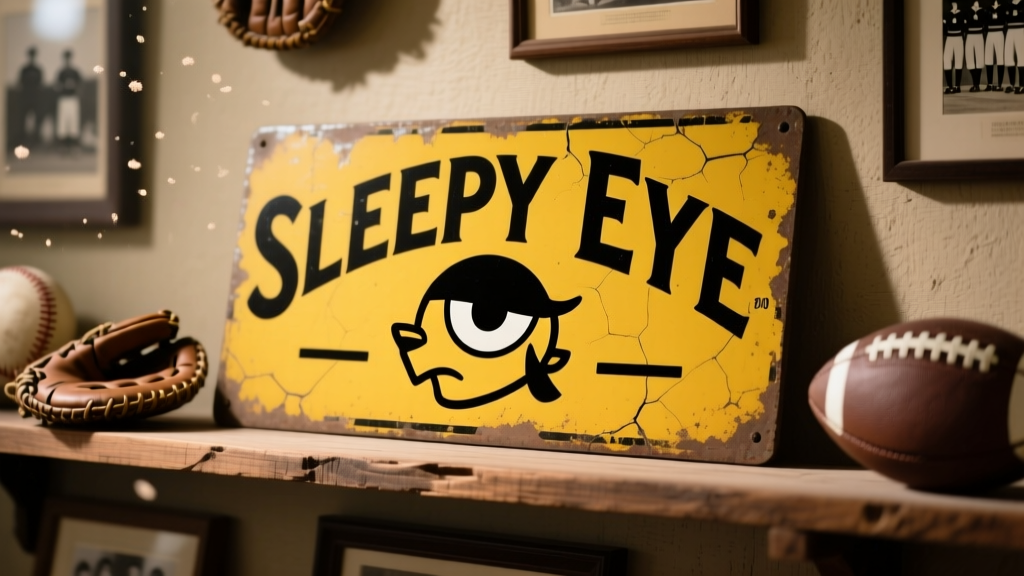
Authenticating the Sleepy Eye Sign: Old Sleepy Eye Indian Yellow Ground, Early 1900s, 14 × 24 Inches

Fostoria Versailles Tumbler in Pink: Authentication, Value, and Collectibility of the 12-Ounce Variant
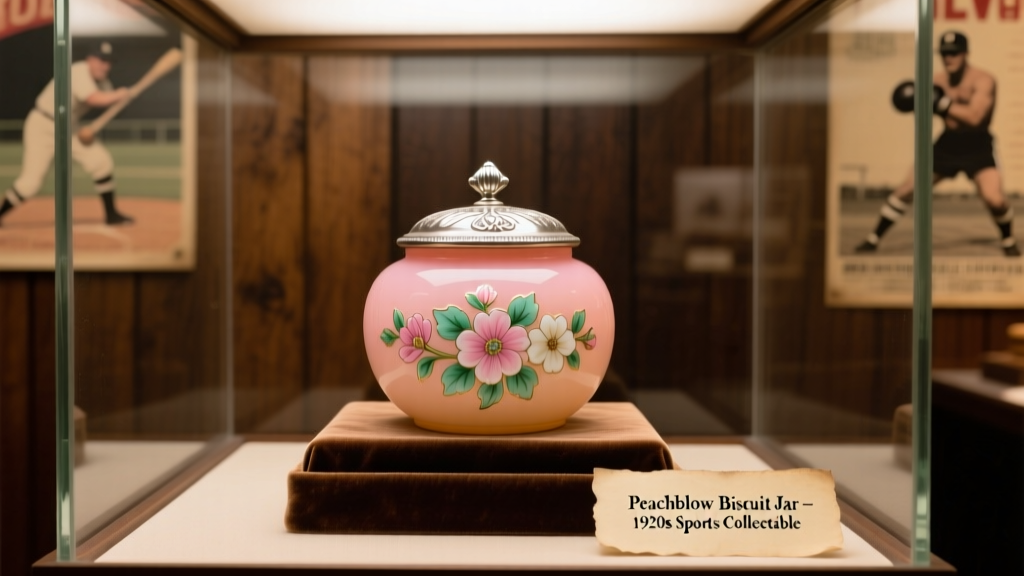
Peachblow Biscuit Jar with Oval Silver-Plated Lid and Enamel Flowers: A Collector’s Deep Dive into a 7½-Inch American Art Pottery Landmark

Disneyana Pencil Sharpener: Snow White Figural Mandolin Bakelite (1930s, 1¾") — Authentication, History & Collectibility
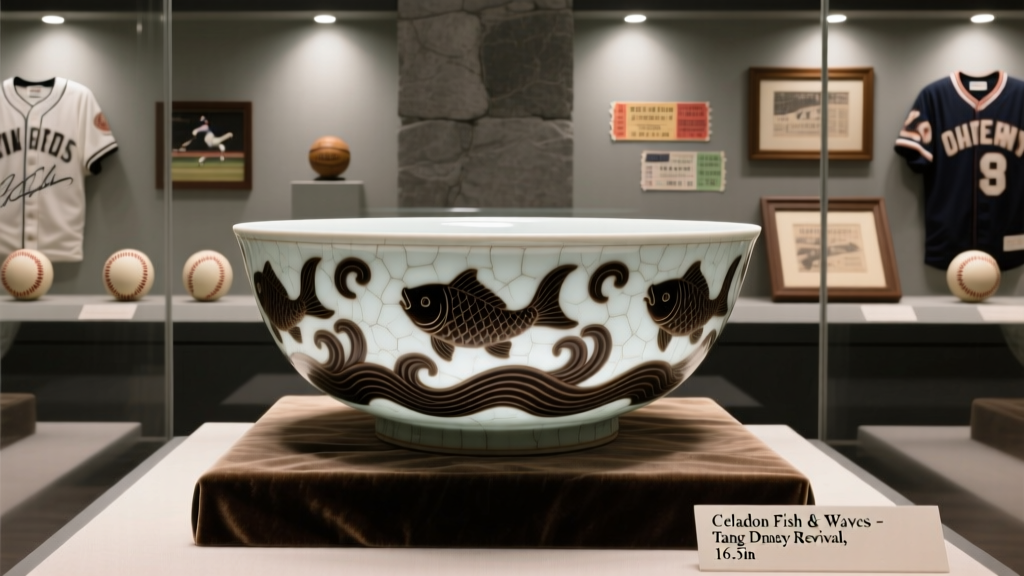
Celadon Bowl with Carved Fish and Waves: A 16½-Inch Masterpiece in Brown-Black Glaze Over White Ground
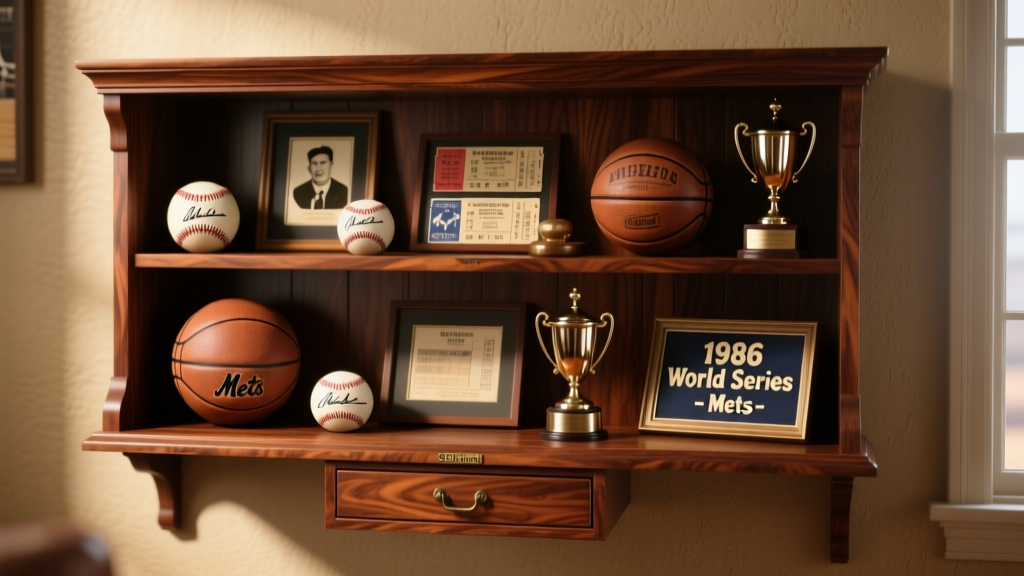
Authenticating and Valuing the 50-Inch Mahogany Whatnot Shelf with Bottom Drawer: A Collector’s Field Guide