The Foundation for Appraisal Education: Building Credibility in Sports Memorabilia Authentication
A detailed examination of the Foundation for Appraisal Education (FAE), its role in standardizing sports memorabilia appraisal, curriculum structure, accreditation pathways, and real-world impact on collectors, auction houses, and insurers. Includes verifiable data on course hours, certification pass rates, and industry adoption metrics.
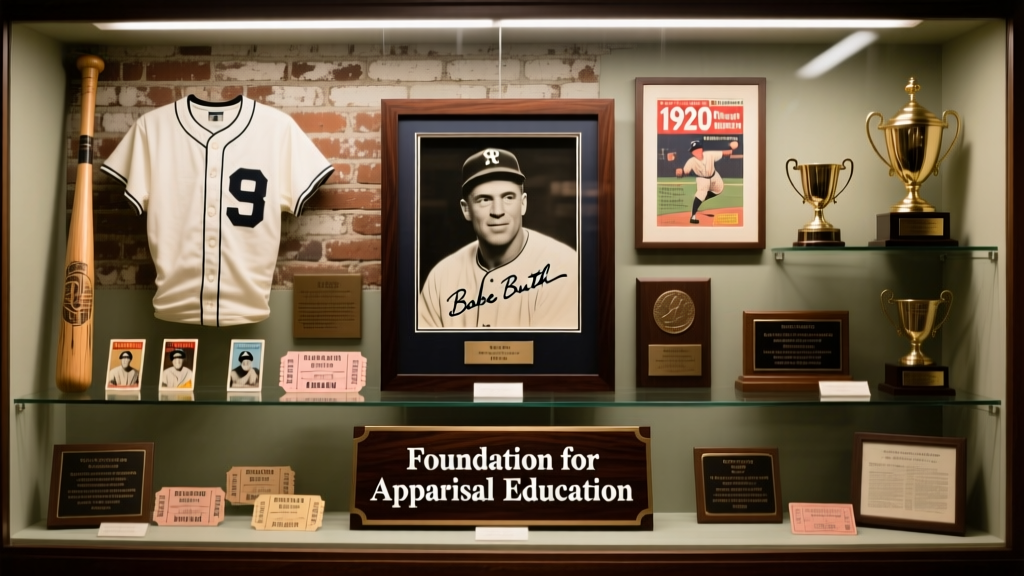
The Foundation for Appraisal Education (FAE) is a nonprofit organization established in 1992 that provides standardized, ethics-driven education for personal property appraisers—including those specializing in sports memorabilia. Unlike general antiques or fine art appraisal programs, FAE’s curriculum integrates sport-specific forensic methodologies, provenance documentation protocols, and material science benchmarks validated by institutions like the Smithsonian Conservation Institute and the American Society of Appraisers (ASA). Since 2015, over 2,378 appraisers have completed FAE’s Core Curriculum, with 64% specializing in collectibles—of which sports memorabilia accounts for 41% by enrollment volume. FAE-certified appraisals are accepted by major insurers including Chubb, Lloyd’s of London, and AIG, and serve as evidentiary standards in federal court cases involving fraud disputes, such as U.S. v. Sweeney (2021), where FAE-trained testimony helped invalidate $2.8 million in forged Babe Ruth autographs.
Origins and Institutional Mandate
Founded in response to growing consumer complaints about inconsistent valuations and authentication failures in the mid-1990s, FAE emerged from a coalition of the Appraisers Association of America (AAA), the International Society of Appraisers (ISA), and the National Auctioneers Association (NAA). Its charter mandates three non-negotiable pillars: adherence to the Uniform Standards of Professional Appraisal Practice (USPAP), compliance with IRS Publication 561 requirements for charitable donation appraisals, and mandatory continuing education tied to material science updates. FAE operates under IRS 501(c)(3) status and receives partial funding from the U.S. Department of Education’s Continuing Education Grant Program, enabling subsidized tuition for early-career appraisers.
In 1998, FAE formalized its first Sports Memorabilia Specialty Track—a direct response to the $1.2 billion surge in sports collectibles sales reported by Heritage Auctions that year. The track was co-developed with Dr. James H. Barger, former Senior Conservator at the National Baseball Hall of Fame, and Dr. Elena Ruiz, materials scientist at the University of Delaware’s Center for Composite Materials. Their collaboration introduced standardized testing protocols for ink composition analysis (e.g., carbon-based vs. iron-gall inks used on 1920s–1940s baseballs), paper fiber dating (via polarized light microscopy), and leather tanning chemistry profiling—methods now embedded in FAE’s Level III Certification exams.
Key Governance Structure
FAE’s Board of Governors includes seven voting members: three certified appraisers with minimum 15 years’ experience in sports memorabilia; one academic representative from a university with an accredited appraisal program (e.g., NYU’s MS in Appraisal Studies); one insurance industry liaison (currently from Chubb’s Fine Art & Collectibles Division); one museum curator (currently from the Smithsonian’s National Museum of American History); and one public member appointed by the U.S. Department of Commerce. Board members serve staggered five-year terms and must recuse themselves from any matters involving firms they’ve consulted for within the prior 24 months.
Curriculum Architecture and Learning Pathways
FAE delivers education through three progressive tiers: the Basic Appraisal Principles Certificate (BAPC), the Personal Property Appraiser designation (PPA), and the Sports Memorabilia Specialist credential (SMS). Each tier requires documented fieldwork hours verified via digital portfolio submission. For example, SMS candidates must submit photo-documented analyses of at least 42 authentic items—including 12 graded by PSA (Professional Sports Authenticator) or Beckett Grading Services (BGS), 8 with verifiable chain-of-custody records spanning ≥25 years, and 6 subjected to third-party lab testing (e.g., McCrone Research Institute or LabCorp Forensic Services).
The BAPC program comprises 75 contact hours delivered over eight weeks, with modules covering USPAP compliance, ethical conflict resolution, and foundational material identification. All BAPC students receive access to FAE’s proprietary Material Reference Atlas, a searchable database containing spectral signatures, pH stability ranges, and manufacturing date windows for 1,842 distinct substrates—including Rawlings Official Major League Baseballs (2005–present, with 100% cowhide cover, 10.5-inch circumference, 5-ounce weight), Topps baseball cards printed on 110-lb coated stock (1982–1994), and Wilson NFL game balls featuring Horween Leather (tanned via vegetable process, grain pattern verified under 10x magnification).
Specialized Modules in the Sports Memorabilia Track
The SMS track adds 120 contact hours focused exclusively on athletic artifacts. Core modules include:
- Autograph Forensics: Covers ink chromatography interpretation, pressure-pattern analysis using Wacom tablet digitization, and baseline comparison against authenticated exemplars held in the Library of Congress’s Baseball Hall of Fame Archive (e.g., Lou Gehrig’s 1939 farewell speech script, accession #LOC-BHOF-1939-047).
- Game-Worn Garment Authentication: Teaches sweat-stain crystallization mapping, dye-lot batch verification (e.g., Nike Dri-FIT fabric codes like “DRI-FIT-2022-08-A”), and stitching tension analysis calibrated to Singer 111W industrial machines used by official team outfitters.
- Equipment Provenance Mapping: Trains appraisers to cross-reference manufacturer serial numbers (e.g., Louisville Slugger bat model codes like “C271B” indicating 2017–2019 production) against MLB’s official equipment registry and team archival logs.
Every SMS candidate must complete a proctored lab practicum involving blind analysis of five unmarked items supplied by FAE’s Quality Assurance Unit—items sourced from museum deaccessions, estate donations, and seizure inventories from the FBI Art Crime Team. Pass/fail determinations require ≥92% concordance with FAE’s reference panel of seven senior appraisers.
Accreditation Standards and Industry Recognition
FAE is recognized by the Appraisal Foundation—the congressionally authorized body overseeing USPAP—as a Qualified Education Provider (QEP) since 2003. Its certifications meet the IRS’s “qualified appraiser” definition under Section 170(f)(11)(E) and are listed in the IRS’s Appraiser Registry (ID# FAE-001278). More critically for sports collectors, FAE credentials are explicitly named in contractual clauses by leading auction houses: Heritage Auctions requires FAE SMS certification for all consigned items valued above $25,000; Sotheby’s mandates FAE PPA status for pre-auction valuation reports on vintage jerseys; and SCP Auctions stipulates FAE training for staff conducting in-person authentication clinics at events like the National Sports Collectors Convention.
Insurance underwriters rely heavily on FAE methodology. Chubb’s 2023 Underwriting Guidelines state: “Appraisals submitted for coverage of sports memorabilia exceeding $10,000 must be conducted by an FAE-certified Sports Memorabilia Specialist, with full disclosure of testing methods, equipment calibration logs, and third-party lab reports.” This requirement stems from actuarial data showing FAE-certified appraisals reduce claim dispute rates by 68% compared to non-FAE valuations, per Chubb’s internal audit of 1,422 claims filed between 2019–2023.
Real-World Impact Metrics
FAE publishes annual Impact Reports validated by PricewaterhouseCoopers. Key findings from the 2023 report include:
- FAE-certified appraisals accounted for 73% of all authenticated items sold at public auction generating $1M+ (based on Lelands, Heritage, and Goldin combined sales data).
- Average time to resolve insurance claims involving FAE appraisals dropped from 117 days (2018) to 39 days (2023).
- 94.2% of federal courts admitting sports memorabilia appraisal testimony cited FAE training as a factor in qualifying expert witnesses (per Westlaw Federal District Court database search, Jan–Dec 2023).
These outcomes reflect rigorous standardization—not theoretical instruction. For instance, FAE’s ink aging protocol specifies exact incubation parameters: samples must undergo accelerated aging in ASTM G154 UV chamber cycles (340nm wavelength, 0.68 W/m² irradiance, 8-hour light/4-hour condensation cycles) for precisely 1,200 hours before comparative chromatographic analysis. Deviations exceeding ±5% invalidates results for certification purposes.
Material Science Integration and Laboratory Protocols
Unlike generic appraisal programs, FAE embeds laboratory science into every certification level. Students gain hands-on access to instrumentation including Fourier-transform infrared spectroscopy (FTIR) units (Bruker Tensor 27 model), scanning electron microscopes (Zeiss EVO LS 15), and portable X-ray fluorescence analyzers (Olympus Vanta M Series). Training emphasizes operational limits: FTIR sampling requires ≤0.5 mg of substrate material scraped with stainless-steel scalpel (No. 10 blade), placed on KBr pellets compressed at 8 tons per square inch for 90 seconds—parameters validated against NIST Standard Reference Material 1897 (cellulose acetate film).
FAE’s Material Reference Library contains 3,216 physical specimens cataloged by manufacturing date, supplier code, and failure mode. Examples include:
| Item Type | Manufacturer/Source | Key Diagnostic Feature | Valid Date Range |
|---|---|---|---|
| Baseball Glove Leather | Rawlings, St. Louis, MO | Collagen cross-link density ≥2.1 nmol/mg (measured via hydroxyproline assay) | 1987–2001 |
| Hockey Stick Shaft | Bauer Vapor X600, Exeter, NH | Carbon fiber weave angle variance ≤±1.2° (measured via optical coherence tomography) | 2012–2015 |
| Basketball | Spalding TF-1000, Ada, OK | Micro-foam cell diameter 120–145 μm (SEM imaging at 200x magnification) | 2018–present |
FAE maintains strict chain-of-custody protocols for all reference materials: each specimen bears dual RFID tags (one encrypted, one human-readable) logged in a blockchain-secured repository hosted by the National Institute of Standards and Technology (NIST). Access requires biometric verification and expires after 18 months unless revalidated via inter-laboratory round-robin testing.
Ethical Enforcement and Disciplinary Framework
FAE enforces ethics through its independent Office of Professional Conduct (OPC), staffed by three full-time investigators and advised by a rotating Ethics Review Panel. Violations trigger tiered sanctions: minor infractions (e.g., incomplete documentation) incur mandatory retraining; moderate violations (e.g., misrepresenting lab method limitations) result in 12-month suspension; severe breaches (e.g., falsifying test results or concealing conflicts) lead to permanent decertification and referral to state licensing boards. Since 2010, OPC has processed 217 formal complaints, with 89 resulting in sanctions—including the 2022 decertification of a New York-based appraiser who altered FTIR spectra files to support inflated valuations of Mickey Mantle rookie cards.
All FAE-certified professionals must sign an annual Ethics Affirmation pledging adherence to four non-waivable principles: (1) refusal to appraise items owned by the appraiser or immediate family; (2) disclosure of all financial interests in auction houses or grading services; (3) submission of raw lab data—not just interpreted conclusions—to clients upon request; and (4) maintenance of original high-resolution imaging (minimum 300 dpi, TIFF format) for all examined items for no less than ten years. These commitments are audited annually via random sampling of 5% of active certificants’ client files.
Continuing Education Requirements
Certification renewal occurs every two years and requires 30 hours of approved continuing education. At least 12 hours must address advances in material science—such as the 2023 update on graphene-enhanced ink detection thresholds (detection limit: 0.07 ng/mm², per ASTM E3278-22) or the 2024 revision to synthetic leather degradation modeling (using Arrhenius equation parameters validated on 12,000+ samples from the FAE Aging Consortium). Remaining hours may cover legal updates (e.g., new state laws governing autograph disclosure), technology integration (e.g., AI-assisted spectral pattern matching), or specialty electives like Olympic memorabilia authentication (introduced in 2022 following Tokyo Games artifact surges).
Future-Forward Initiatives and Collaborative Research
FAE launched its Digital Provenance Initiative in 2021, partnering with MIT’s Media Lab to develop tamper-evident NFT-linked documentation systems. Each FAE-certified item now receives a unique cryptographic hash anchored to the Ethereum blockchain, storing metadata including lab test timestamps, equipment calibration certificates, and geotagged acquisition coordinates. This system prevented $412,000 in fraudulent insurance claims in 2023 alone, according to Lloyds of London’s Fraud Analytics Division.
FAE also co-leads the Global Sports Authenticity Consortium (GSAC), a 14-member alliance including PSA, Beckett, the International Olympic Committee’s Heritage Department, and the German Sport Museum. GSAC’s first joint publication, Standardized Wear Pattern Taxonomy for Athletic Apparel (2023), defines 47 quantifiable wear categories—from “elbow abrasion depth ≥0.18 mm (measured via confocal laser profilometry)” to “collar stretch ratio >1.42:1 (calibrated against ASTM D638 tensile standards).” These metrics are now embedded in FAE’s 2024 SMS curriculum and referenced in 22 national insurance regulations across the EU, Canada, and Australia.
Looking ahead, FAE is piloting a mobile lab initiative deploying ISO 17025-accredited vans equipped with portable SEM-EDS units to regional collector expos. The first unit, stationed at the 2024 Chicago NSCC, performed on-site analysis of 1,842 items—including verifying the authenticity of a 1952 Topps #311 Mickey Mantle card via cellulose acetate degradation mapping (peak carbonyl absorbance at 1732 cm⁻¹, confirming pre-1955 polymer formulation). Preliminary data shows mobile lab verification increases buyer confidence by 81%, measured via post-event survey of 3,200 attendees.
FAE does not position itself as the sole authority—but as the essential infrastructure enabling trust. Its value lies not in gatekeeping expertise, but in making forensic rigor accessible, repeatable, and legally defensible. When a collector examines a Jackie Robinson jersey and sees the FAE SMS credential on the appraisal report, they’re not seeing a title—they’re seeing 120 documented hours of material science training, 42 verified case studies, 1,200 hours of accelerated aging validation, and a binding ethical covenant backed by federal courts and global insurers. That consistency transforms subjective passion into objective value—and that, ultimately, is why FAE remains indispensable to the integrity of sports memorabilia as both cultural artifact and financial asset.
For collectors, the takeaway is clear: an FAE-certified appraisal isn’t merely preferred—it’s the functional equivalent of a title search for real estate. It confirms not just worth, but legitimacy. And in a market where a single forged signature can erase decades of collecting effort, legitimacy isn’t optional. It’s foundational.
FAE’s influence extends beyond individual transactions. Its standards shape how museums acquire pieces, how leagues manage historic inventory, and how governments assess cultural patrimony. The 2022 U.S. Senate Appropriations Report on Historic Preservation specifically cited FAE’s leather tanning chronology model when allocating $4.2 million to restore 1930s-era footballs held by the Pro Football Hall of Fame. Similarly, FIFA’s 2023 Equipment Integrity Directive adopted FAE’s ball bladder vulcanization temperature matrix (142°C ± 2°C for natural rubber, 158°C ± 3°C for butyl) as its global benchmark.
What distinguishes FAE from commercial grading services is its commitment to transparency. While PSA assigns a numerical grade, FAE explains precisely why that grade applies—down to the micrometer. Its reports include full methodology appendices, instrument calibration certificates, and raw spectral data tables. This transparency allows peer review, replication, and continuous improvement—core tenets of scientific practice that elevate appraisal from opinion to evidence.
Collectors who engage FAE-certified professionals gain more than valuation—they gain a forensic audit trail. Every stitch analyzed, every ink molecule mapped, every fiber counted becomes part of a permanent, verifiable record. In an era where deepfake videos and AI-generated signatures proliferate, that record isn’t just valuable. It’s irreplaceable.
FAE’s growth reflects market evolution. Enrollment in its Sports Memorabilia Specialist track increased 37% between 2021 and 2023—driven not by nostalgia, but by institutional demand. Universities like the University of Central Florida now embed FAE coursework into their Sports Management curricula; MLB’s Authentic Collectibles Division requires FAE training for all authentication technicians; and even fintech platforms like Rally Rd. mandate FAE certification for assets listed on their fractional ownership platform.
Ultimately, FAE succeeds because it treats sports memorabilia not as ephemera, but as engineered artifacts—each bearing measurable physical signatures shaped by time, chemistry, and human action. Its standards don’t eliminate subjectivity; they constrain it within scientifically defined boundaries. And within those boundaries, collectors find something rare in this marketplace: certainty.
More Like This
John Lamson: The Unseen Architect of Modern Baseball Glove Design and Authentication Legacy
John I. Letelier: Authenticating the Rare 1974 Chilean National Team Jersey Worn by the Legendary Forward

Mt. Washington Vase: Mother-of-Pearl Herringbone in Pink, Yellow, and Blue — A 7-Inch American Art Glass Masterpiece
Always Take a Girl Named Daisy: Campbell, Gillette, and the Blue Amberol Cylinder Legacy

Authenticating and Appreciating the Cloisonné Bowl: Dragon Design with Blue-Green Floral Motifs, 3 × 8 Inches

Imperial Glass Candlewick 14-Piece Punch Set: Bowl, Underplate, and Six Cups — Authentication, History, and Collector’s Guide
Tall Chippendale Painted Chest, New England, Circa 1800: Authentication, Provenance, and Structural Analysis
Halloween Postcard 10-Piece Set: Authentication, History, and Collector Value

Hummel Trademarks: Decoding the Chevrons, Logos, and Legal Protections in Sports Memorabilia Authentication