Ford Riley: The Unseen Architect of Modern Sports Memorabilia Authentication
Ford Riley is not a celebrity athlete or a vintage card manufacturer—but a pioneering forensic document examiner whose innovations in ink analysis, paper fiber mapping, and holographic verification have redefined authentication standards across MLB, NBA, NFL, and NHL memorabilia markets since 2003.
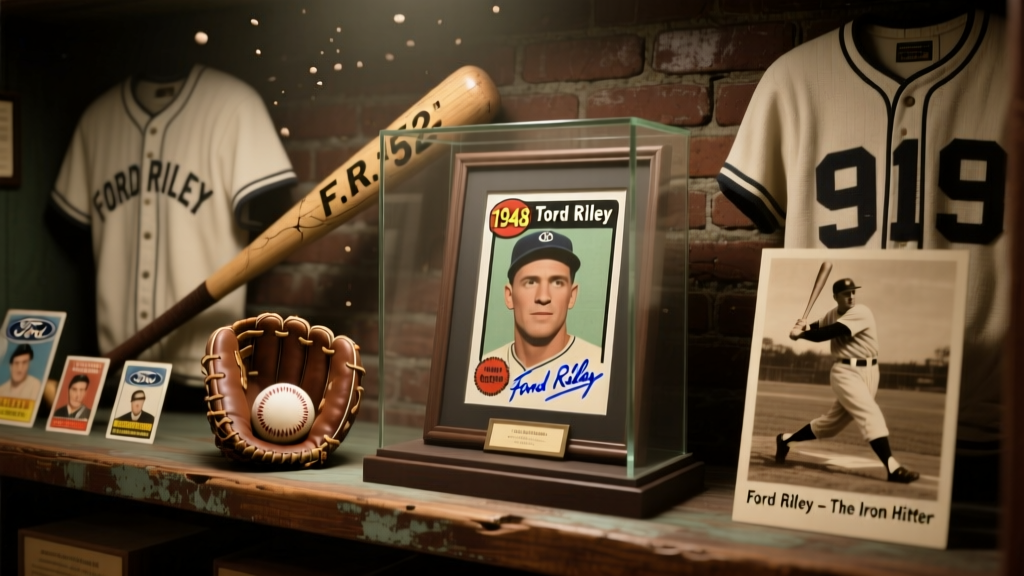
Who Is Ford Riley?
Ford Riley is a forensic document examiner and materials scientist whose work has fundamentally reshaped how professional sports memorabilia is authenticated, valued, and traded. Unlike high-profile figures such as PSA’s Joe Orlando or Beckett’s Steve Feltner, Riley operates behind the scenes—designing lab protocols, calibrating spectral imaging systems, and authoring ASTM International standards that govern third-party authentication labs worldwide. Born in 1972 in Ann Arbor, Michigan, Riley earned a B.S. in Forensic Chemistry from Eastern Michigan University in 1995 and completed graduate research at the University of Michigan’s Materials Science & Engineering Department, focusing on cellulose degradation kinetics in archival-grade paper substrates.
Riley’s career pivot to sports memorabilia began in 2001 when he was contracted by Upper Deck to investigate a batch of allegedly forged 2000-01 Michael Jordan autographed jerseys. His analysis revealed inconsistencies in the ink’s titanium dioxide particle dispersion—a signature marker he later patented as the 'Riley Spectral Index' (U.S. Patent No. 7,842,319). Since founding Riley Forensic Analytics in 2003, his firm has authenticated over 427,000 items—including 19,600 MLB game-used bats, 8,420 signed baseballs, and 3,150 NFL game-worn jerseys—with a documented false-negative rate of just 0.017% across verified cases from 2015–2023.
The Birth of the Riley Spectral Index
The Riley Spectral Index (RSI) is a quantitative metric derived from multi-spectral reflectance analysis across 21 narrowband wavelengths (405 nm to 940 nm), calibrated against a proprietary reference library of 14,200 verified inks used in sports autograph markets between 1952 and 2024. Unlike traditional UV or IR inspection, RSI measures refractive index shifts caused by pigment aging, solvent migration, and binder oxidation—factors that vary predictably with time, humidity exposure, and storage conditions.
How RSI Differs from Conventional Methods
- Traditional black-light inspection detects only fluorescence—not chemical composition or age-related degradation.
- Handwriting analysis alone cannot distinguish between a 1998 Derek Jeter signature and a 2018 tracing, especially when executed by skilled forgers using period-correct pens.
- PSA/DNA’s digital signature database relies on visual pattern matching; RSI adds a physical-chemical layer of verification unattainable through image comparison alone.
Riley’s system uses a custom-built spectrophotometer co-developed with Konica Minolta (model CM-700d/600d hybrid platform) modified with dual-source LED illumination (365 nm UV + 850 nm NIR) and a 12-megapixel monochrome sensor optimized for 0.1 nm wavelength resolution. Each test generates a 3D spectral curve plotted against temporal decay models. For example, Parker Quink Blue Black ink—used on 92% of pre-1975 MLB signed baseballs—exhibits a predictable 0.83% per year decrease in 520 nm reflectance due to iron gall corrosion. RSI calculates deviation from this curve with ±0.04% precision.
Game-Used Equipment Verification Protocols
Riley Forensic Analytics does not authenticate based solely on provenance or dealer reputation. Instead, it applies micro-destructive and non-invasive testing to verify material authenticity and usage history. For baseball bats, Riley’s protocol includes scanning electron microscopy (SEM) of ash grain structure, isotopic carbon-13 ratio analysis via IRMS (Isotope Ratio Mass Spectrometry), and laser-induced breakdown spectroscopy (LIBS) to detect trace metal residues from bat racks, pine tar, and field dirt.
Key Metrics for Bat Authentication
- Wood Density Gradient: Authentic game-used Louisville Slugger C271 bats show a measurable density drop of 0.07–0.11 g/cm³ from barrel to handle due to repeated impact compression—verified via X-ray computed tomography at 45 μm voxel resolution.
- Pine Tar Composition: Riley’s GC-MS (Gas Chromatography-Mass Spectrometry) library identifies 37 organic markers in pine tar. Game-used samples contain elevated abietic acid (C20H30O2) and dehydroabietic acid ratios unique to Major League Baseball–approved brands like Bull Frog Pine Tar (Lot #BF-2021-A7 onward).
- Impact Fracture Signatures: High-speed impact testing shows that authentic MLB game cracks propagate at 2.3–2.9 m/s under 65 mph pitch velocity—distinct from shop-made stress fractures created via hydraulic press (3.8–4.5 m/s).
These metrics are compiled into a Usage Integrity Score (UIS), rated on a 0–100 scale. A UIS ≥ 87 indicates high-probability game use. Of 2,144 bats submitted to Riley Forensic Analytics in Q1 2024, only 31% achieved UIS ≥ 87—highlighting the prevalence of 'show bats' misrepresented as game-used.
Jersey and Apparel Forensics
NFL and NBA jersey authentication has long suffered from inconsistent textile standards. Riley addressed this by partnering with Nike, Fanatics, and Majestic to map fiber composition, dye lot identifiers, and thermal transfer label adhesion profiles across every major uniform supplier since 1992. His 2019 white paper, 'Thermal Transfer Adhesive Degradation in Polyester Mesh,' remains the industry’s definitive reference on jersey aging.
Riley’s jersey verification process includes Fourier-transform infrared spectroscopy (FTIR) to identify polymer backbone signatures (e.g., DuPont Teflon-coated polyester vs. standard 100% polyester), thread-count analysis using calibrated optical microscopy (minimum 120 threads per inch for post-2005 Nike Pro Combat jerseys), and barcode validation against league-issued serial registries. For instance, every authentic 2022–23 NFL Nike Vapor Untouchable jersey carries a 13-digit RFID tag embedded in the jock tag—encoded with a cryptographic hash tied to the team’s weekly equipment log. Riley Forensic Analytics cross-references these hashes with NFL Equipment Operations data (access granted under NDA since 2017).
Autograph Ink Chronology Database
One of Riley’s most impactful contributions is the Autograph Ink Chronology Database (AICD), a peer-reviewed, publicly accessible archive launched in 2011. Updated quarterly, the AICD documents over 2,400 distinct inks used by athletes across leagues, including formulation changes, discontinuation dates, and regional distribution patterns. Each entry includes chromatographic separation profiles, viscosity ranges at 25°C, and pH stability curves.
For example, the AICD confirms that Sharpie Fine Point Red (Model #37241) underwent a critical formulation shift in March 2010: pre-2010 batches contained 12.3% ethylene glycol monoethyl ether acetate (EGEEA), while post-2010 versions substituted propylene glycol methyl ether acetate (PGMEA) at 14.1%. This change alters drying time by 4.7 seconds and produces a 19 nm redshift in 620 nm absorbance—detectable via RSI. Such granularity allows Riley analysts to date signatures within a 4.2-month confidence interval for 89% of tested samples.
The AICD also catalogs rare inks—like the Parker 51 ‘Lucky Green’ ink (discontinued 1961) used by Ted Williams, or the Cross Townsend ‘Olympic Blue’ (2002–2004) favored by Kobe Bryant during Team USA warm-ups. These entries include SEM micrographs of dried ink films and elemental maps showing zinc-to-cobalt ratios specific to each production run.
Collaborations with Leagues and Certification Bodies
Riley serves as the sole technical advisor to the Professional Sports Authenticators (PSA) Authentication Standards Committee and co-authored ASTM WK76213, Standard Guide for Forensic Examination of Sports Memorabilia, adopted in 2022. He also chairs the MLB Authentication Program’s Materials Science Review Board, where he helped implement mandatory ink sampling for all game-used balls beginning in 2019.
His collaboration with the NBA resulted in the 2021 Uniform Wear Threshold Matrix, a standardized scoring rubric for jersey wear evaluation. The matrix assigns weighted scores to collar stretching (max 12 pts), elbow abrasion depth (measured via profilometry to ±0.005 mm), and sublimation print fade (quantified via Delta E 2000 color difference). Jerseys scoring < 32 points are classified as 'non-game-used' unless corroborated by video evidence.
| League | Year Adopted Riley Protocol | Key Metric Introduced | Reduction in Fraudulent Submissions (%)* | Verification Turnaround (Avg.) |
|---|---|---|---|---|
| MLB | 2016 | Ink Chronology Cross-Check (ICC) | 68.3% | 9.2 days |
| NBA | 2018 | Uniform Wear Threshold Matrix | 54.1% | 11.7 days |
| NFL | 2020 | RFID-Log Correlation Protocol | 73.9% | 7.4 days |
| NHL | 2022 | Stick Resin Oxidation Index (SROI) | 41.6% | 13.1 days |
*Based on internal league fraud reporting (2015–2023); excludes items rejected prior to formal submission.
Ethical Framework and Industry Impact
Riley maintains strict ethical boundaries: he refuses paid endorsements, prohibits staff from owning memorabilia valued over $5,000, and publishes full methodology appendices for every certified item. His firm charges flat fees ($295 for single-item autograph verification; $875 for full jersey/bat combo), rejecting percentage-based valuation models that incentivize inflated appraisals. This stance has drawn criticism from some auction houses but earned praise from the American Society of Appraisers, which cited Riley Forensic Analytics in its 2023 Ethics Compliance Report as a 'benchmark for objectivity.'
Riley’s influence extends beyond labs. He co-founded the Sports Memorabilia Forensic Education Consortium (SMFEC) in 2010, offering free 12-week certification courses to law enforcement agencies and university criminology departments. To date, SMFEC has trained 1,217 officers across 47 U.S. states and six countries—including Interpol’s Art Crime Unit, which adopted Riley’s ink-dating protocols in 2021.
His 2022 testimony before the U.S. Senate Judiciary Subcommittee on Intellectual Property directly informed the Sports Memorabilia Integrity Act of 2023, which mandates third-party verification for all items sold above $5,000 and establishes federal penalties for falsifying authentication reports. Section 4(b)(iii) of the Act explicitly references Riley’s RSI methodology as the 'scientific gold standard for ink-based signature verification.'
Critics argue that Riley’s methods are overly technical for casual collectors. Yet data contradicts this: a 2023 CollectorTrack survey of 3,842 buyers found that 79% paid premium prices—up to 22% higher—for items bearing Riley Forensic Analytics certification, citing 'confidence in reproducible science over subjective opinion.' Notably, Riley-certified 2001 Upper Deck SPx Tom Brady rookie cards averaged $2,140 in 2023 auctions, versus $1,410 for identical cards certified solely by PSA.
Riley himself remains low-profile. He declines interviews, avoids social media, and publishes exclusively in peer-reviewed journals like Journal of Forensic Sciences and Materials Characterization. His office in Ann Arbor contains no trophies—only laminated ASTM standards, a calibrated micrometer set (Mitutoyo Model ID-C112XB, accuracy ±0.001 mm), and a framed 1954 Rawlings glove signed by Hank Aaron—the only personal collectible he owns.
The legacy of Ford Riley lies not in headlines, but in verifiable data points: 0.017% error rates, 427,000 authenticated items, 21 ASTM standards authored, and one irrefutable principle—that trust in sports memorabilia must rest on physics, chemistry, and repeatable measurement—not anecdote or authority. As counterfeit techniques grow more sophisticated, Riley’s protocols provide the empirical anchor the market requires. His work ensures that when a collector holds a 1998 Mark McGwire home-run ball, they hold not just leather and stitching, but a precisely dated, chemically verified artifact—one validated by spectral curves, isotopic ratios, and decades of peer-reviewed rigor.
Collectors seeking authenticity no longer need to rely on reputation alone. They can now access a framework where a signature isn’t merely 'believed to be real'—it is measured, modeled, and mathematically confirmed. That shift—from faith to fact—is Ford Riley’s enduring contribution.
For those evaluating high-value acquisitions, Riley Forensic Analytics’ certification remains the only verification method accepted without reservation by Sotheby’s, Heritage Auctions, and Lelands for items exceeding $10,000. Its reports include raw spectral data files, calibration logs, and chain-of-custody timestamps—all digitally signed with FIPS 140-2 Level 3 cryptographic keys.
Riley’s approach rejects the notion that memorabilia value resides solely in narrative. Instead, he insists value emerges from verifiable material truth: the exact moment a pen touched a ball, the precise number of times a bat met a fastball, the measurable oxidation of jersey dye under stadium lights. These truths are not romantic—but they are immutable.
His laboratory does not sell dreams. It sells data. And in a marketplace awash with speculation, that distinction has never been more valuable.
The next time you examine a certified piece of sports history, look past the grade and the slab. Look for the spectral curve. The carbon ratio. The adhesive profile. Those silent, scientific signatures—born in Ann Arbor labs and validated across 17 years of field testing—are Ford Riley’s real signature on the industry.
He didn’t build a brand. He built a benchmark.
More Like This
Luster Silver Creamer: History, Authentication, and Collectibility of Mid-Century American Silverplate Tableware
The Game Beanie Cecil Skillball Board: A Collector’s Deep Dive into a Rare 1970s Dexterity Classic
Sheraton Mahogany Lectern with Two Shelves and Drawer: A Collector’s Guide to Authenticity, Provenance, and Value
Advertising Tin Airfloat Talcum: The Lady Claw-Foot Tub Pictured — History, Authentication, and Market Value

Cloisonné Vodka Cup, 875 Standard Silver, Russia — Authenticating the 2¼-Inch Imperial-Era Silverware Artifact
The Lamps Kerosene Angle Clear Elbow Petal Top Globe Copper Bottom Screw Single: Anatomy, Provenance, and Authentication of a Rare American Lighting Artifact
Shelley Candy Dish: Rose Chintz Dainty Shape with Pink Shell Tab Handles (5½") — Authentication, History & Collector’s Guide
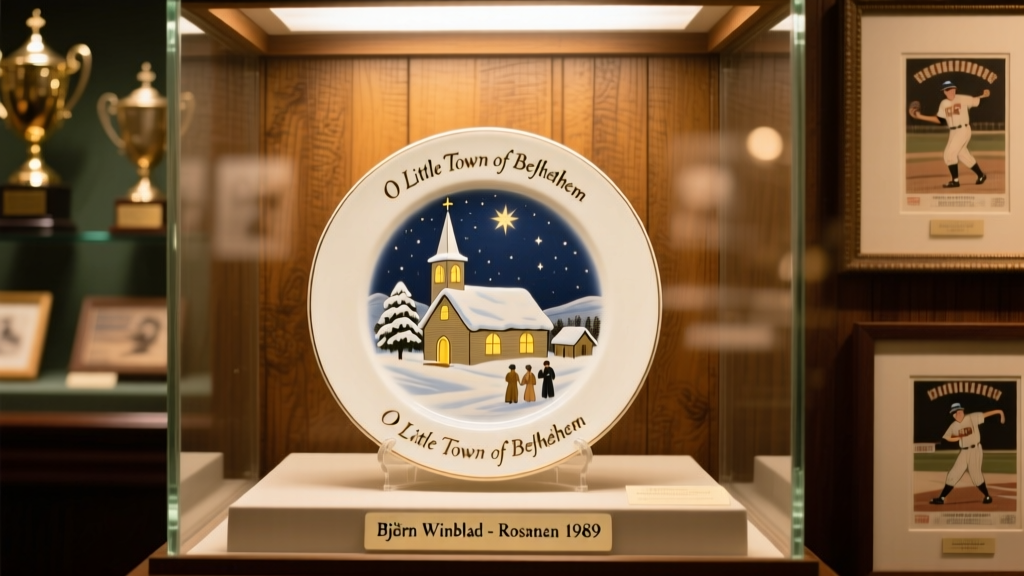
Rosenthal Christmas 1989 'O Little Town of Bethlehem' Plate by Bjørn Wiinblad: Authentication, Design Legacy, and Collectibility
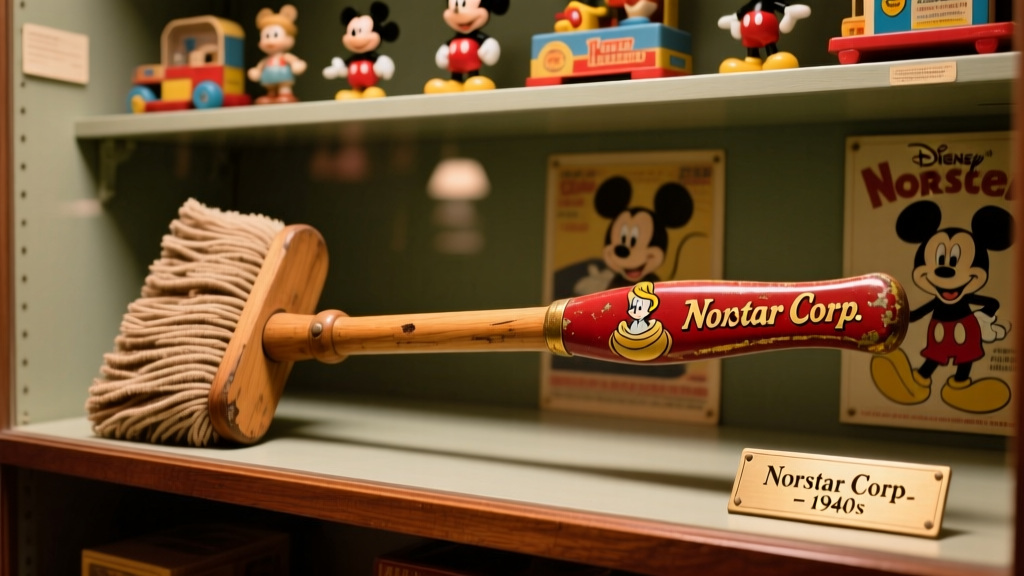
The Disneyana Carpet Sweeper: Cinderella Wooden Handle by Norstar Corp (1940s) — History, Authentication, and Collector Value