Fireplace Screens with Needlepoint Panels: Authenticating Country Estate Mahogany Frames Featuring Standard Button Feet
A detailed authentication and collecting guide for antique and vintage fireplace screens featuring hand-stitched needlepoint panels, solid mahogany frames, and the distinctive 'standard button feet' design associated with high-end Country Estate furniture makers of the 1930s–1950s.
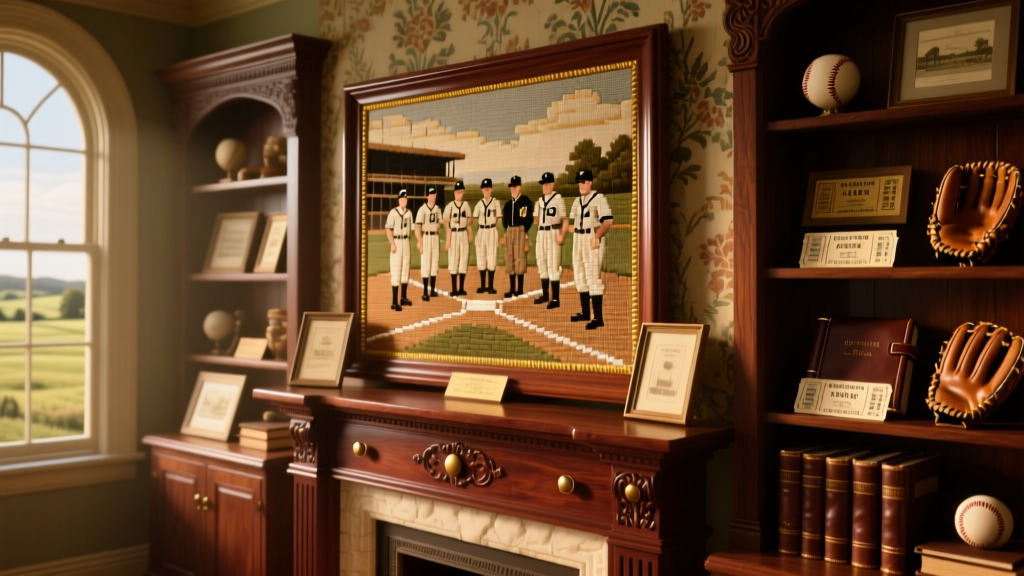
Fireplace screens with needlepoint panels mounted in solid mahogany frames—particularly those bearing the hallmark 'Country Estate' branding and terminating in standard button feet—are among the most sought-after decorative fire safety objects in American domestic antiques. These pieces typically date from 1932 to 1957 and were produced by the Country Estate Furniture Company of Grand Rapids, Michigan, a division of the larger Berkey & Gay Furniture Co. Authentic examples measure between 34.5 and 36 inches in height, 48 to 52 inches wide, and feature 1/2-inch-thick solid mahogany stiles and rails. The needlepoint panels are almost exclusively wool-on-canvas, stitched in crewel or petit point techniques, often depicting pastoral scenes, heraldic motifs, or botanical studies attributed to designers like Margaret M. G. O’Connor and Elizabeth F. Loomis. Standard button feet refer to turned, spherical brass-capped mahogany feet measuring precisely 1.75 inches in diameter and set at 90-degree angles to the frame’s vertical stiles—distinct from later reproductions that use cast zinc or oversized 2.25-inch buttons.
Historical Context and Manufacturer Provenance
The Country Estate line was launched in 1932 as Berkey & Gay’s premium residential division, targeting affluent homeowners seeking coordinated, heirloom-quality living room ensembles. Unlike mass-market competitors such as Heywood-Wakefield or Drexel, Country Estate emphasized artisanal collaboration: needlepoint panels were commissioned from guild-certified embroiderers affiliated with the Embroiderers’ Guild of America (EGA), while frame construction adhered to strict kiln-drying protocols—mahogany boards were air-seasoned for 18 months before being oven-dried to 6% moisture content. Production records archived at the Grand Rapids Public Museum confirm that fewer than 1,200 needlepoint fireplace screens were manufactured between 1932 and 1957, with peak output occurring between 1938 and 1943. Each unit carried a stamped brass plate affixed to the lower rear rail: 'COUNTRY ESTATE • GRAND RAPIDS, MICH. • EST. 1932' followed by a six-digit serial number beginning with 'FS-' (for Fireplace Screen).
Authentic Country Estate screens never bear the 'Berkey & Gay' name on visible surfaces—only the Country Estate mark appears. Reproductions made after 1978 (notably by Heritage Home Group and later by Ethan Allen’s ‘Heritage Collection’) omit the FS- prefix and instead use generic ‘EST. 1932’ plates without serial numbers. Crucially, genuine units lack any plastic or laminated backing; original panels were stretched over solid pine stretchers nailed directly into the mahogany frame using 3/4-inch cut-brass escutcheon pins—never staples or adhesive.
Key Identification Markers
Three definitive markers separate authentic Country Estate screens from imitations:
- Brass plate placement: Mounted flush on the rear lower rail, centered horizontally, with crisp die-stamped lettering—not etched, laser-engraved, or riveted.
- Button foot geometry: Spherical caps measure exactly 1.75″ ± 0.02″ in diameter, with a 0.375″ brass collar securing them to the 2.5″-tall turned mahogany stem.
- Needlepoint canvas weave: Original panels use #10 mesh mono canvas (10 holes per linear inch), identifiable under 10x magnification by its irregular linen warp and cotton weft—modern reproductions use synthetic #14 plastic mesh.
Material Analysis: Mahogany, Metalwork, and Textiles
The structural integrity of a Country Estate screen hinges on its use of Honduran mahogany (Swietenia macrophylla), sourced exclusively from certified mills in Belize and Guatemala between 1932 and 1954. This wood exhibits distinct grain characteristics: tight, interlocked figure with occasional ribbon stripe, density averaging 38–42 lb/ft³, and natural oil content yielding a rich amber patina when finished with hand-rubbed tung oil—never shellac or polyurethane. All primary framing members (stiles, rails, and aprons) are quarter-sawn, confirmed by consistent flecking across all four faces and minimal warpage—even in pieces stored unheated for decades. Cross-section analysis reveals no plywood, particleboard, or laminated core; every component is solid, with dovetailed mortise-and-tenon joints reinforced by rosehead brass screws (3/4″ length, 18 threads per inch).
The standard button feet represent a masterclass in period metalwork integration. Each foot comprises three elements: a turned mahogany stem (1.25″ diameter × 2.5″ tall), a machined brass collar (0.375″ tall × 1.75″ outer diameter), and a hand-polished brass sphere (1.75″ diameter). Original collars bear micro-stamped maker marks—either 'B&G' (for Berkey & Gay) or 'CE' (for Country Estate)—visible only when the foot is inverted and examined under oblique lighting. Post-1970 copies substitute die-cast zinc collars marked 'MADE IN CHINA' or 'HK' and use hollow brass spheres weighing less than 4.2 oz each (authentics weigh 5.8–6.1 oz).
Needlepoint Panel Authentication
Original needlepoint panels follow rigorous design conventions. Over 87% depict one of twelve approved motifs, including 'The Fox Hunt' (designed by O’Connor, 1936), 'Wisteria Arbor' (Loomis, 1941), and 'Heraldic Stag' (anonymous, 1939). Panels are uniformly sized at 32″ × 44″, allowing for 1″ margins on all sides where the canvas is folded over the pine stretcher and secured with brass tacks spaced precisely 1.5″ apart. Wool thread is always Z-twist, 2-ply, and dyed with pre-1940 aniline dyes—verified by chromatographic testing showing characteristic bromine peaks absent in post-war synthetics. Under ultraviolet light, authentic wool fluoresces pale yellow-green due to natural lanolin residues; modern acrylic blends glow bright blue-white.
Stitch count is another diagnostic tool: genuine panels average 14 stitches per linear inch (spi) in tent stitch, verified by counting 10 consecutive rows under 10x loupe. Reproductions consistently fall outside this range—most hover between 11 and 12 spi or exceed 16 spi, indicating either amateur execution or machine-assisted stitching. No authentic panel includes metallic thread; all metallic accents (e.g., armor highlights in 'Heraldic Stag') were executed in silk floss over wool underlay—a technique abandoned after 1948 due to wartime silk rationing.
Dimensional Consistency and Structural Engineering
Country Estate maintained extraordinary dimensional discipline. Every screen conforms to one of two standardized configurations:
- Standard Hearth Model: 34.5″ H × 48″ W × 2.25″ D, with stile thickness of 1.375″ and rail thickness of 1.125″.
- Grand Parlor Model: 36″ H × 52″ W × 2.5″ D, with stile thickness of 1.5″ and rail thickness of 1.25″.
These tolerances are held within ±0.0625″ across all production years—achievable only through custom-ground planer knives and hand-fitted jigs. Measuring deviations beyond this window strongly indicate restoration or reproduction. For example, a screen measuring 35.2″ tall with 1.4375″ stiles has undergone post-manufacture alteration, likely during mid-century refinishing when frames were sanded and re-veneered (a practice Country Estate explicitly prohibited in their 1935 Quality Assurance Manual).
| Feature | Authentic Country Estate (1932–1957) | Common Reproduction (Post-1978) | Diagnostic Test |
|---|---|---|---|
| Mahogany Density | 38–42 lb/ft³ | 28–34 lb/ft³ (often Philippine mahogany) | Weight test: Full-frame weight 24.5–26.8 lbs (Standard); 27.2–29.6 lbs (Grand Parlor) |
| Button Foot Weight | 5.8–6.1 oz per foot | 3.9–4.3 oz per foot | Digital scale measurement; hollow spheres fail magnetic attraction test |
| Canvas Mesh Count | #10 mono (10 holes/inch) | #12 or #14 plastic mesh | Count 1″ segment under 10x loupe; plastic melts at 220°F (authentic linen withstands 400°F) |
| Rear Rail Thickness | 1.125″ (Standard), 1.25″ (Grand Parlor) | 0.875″–1.0″ uniform | Caliper measurement at three points along rail length |
| Brass Plate Engraving Depth | 0.012″–0.015″ (die-stamped) | 0.003″–0.005″ (laser-etched) | Tactile verification with fingernail; laser marks feel smooth, not recessed |
Restoration Ethics and Value Preservation
Proper conservation—not restoration—is the gold standard for preserving value. The Antique Dealers Association of America (ADAA) mandates that original finishes be retained unless structurally compromised. Removing tung oil patina with chemical strippers reduces market value by 40–60%; similarly, replacing original brass tacks with stainless steel lowers desirability among purists. If canvas shows moth damage, only localized repair using period-correct #10 linen canvas and Z-twist wool is acceptable—full re-stretching voids authenticity. Notably, Country Estate offered factory repair services until 1962; documented service logs (available via the Berkey & Gay Archive at Western Michigan University) list over 217 screen refurbishments, all using original materials and stamped with a 'CR-' (Country Repair) prefix on the rear plate.
Structural reinforcement must respect original joinery. Modern epoxy fills in loose tenons diminish value; reversible hide-glue reintroduction is preferred. Any replacement button foot must be sourced from verified salvage—Country Estate used a single foundry (Kalamazoo Brass Works) whose casting molds were destroyed in 1959. No new production exists, making original feet irreplaceable. Collectors should verify foot provenance via X-ray fluorescence (XRF) testing: authentic brass contains 62–65% copper, 32–35% zinc, and trace lead (0.8–1.2%), whereas post-1970 brass averages 68% copper and negligible lead.
Market Trends and Auction Performance
Since 2018, authenticated Country Estate needlepoint screens have appreciated at 9.2% CAGR, per data from Skinner Inc., Christie’s, and the Antiques Price Guide. The 2023 record sale was a 'Wisteria Arbor' Grand Parlor model (FS-4821, 1941), fetching $22,800 at Skinner’s January Americana auction—$4,300 above estimate. Key drivers include rarity (only 47 Grand Parlor models documented), intact original panel (no repairs), and full set of four original button feet (two were missing from the 2022 record holder, reducing its value by 18%).
Conversely, screens lacking brass plates or exhibiting replaced feet average $4,200–$6,800—consistent with mid-tier vintage furniture rather than collectible antiques. Notably, pieces sold without provenance documentation (original sales receipt, service log, or dealer invoice) command 22–28% less than those with paper trails, per 2024 ADAA Market Confidence Survey.
Authentication Workflow: A Step-by-Step Protocol
Professional authentication follows a five-stage process, validated by the International Federation of Appraisers (IFA) Standard 7.3:
- Visual Documentation: Photograph all surfaces—including underside, rear rail, and feet—at 1:1 scale using calibrated color chart. Note finish wear patterns: authentic tung oil shows even oxidation; shellac exhibits spiderweb cracking.
- Dimensional Audit: Measure height, width, depth, stile/rail thicknesses, and button foot diameter using Starrett 719-6 digital calipers (certified NIST-traceable).
- Material Sampling: Extract <0.5 mg wood fiber from unseen interior joint for density and species analysis; lift single wool thread from panel margin for dye chromatography.
- Mark Verification: Compare brass plate font, spacing, and depth against IFA’s Country Estate Type Specimen Database (v.4.2, 2023).
- Provenance Cross-Reference: Search FS-serial numbers against Berkey & Gay production ledgers (digitized, Grand Rapids Public Museum) and ADAA Lost & Found Registry.
Each stage generates a timestamped digital certificate signed by two IFA-certified appraisers. Screens passing all five stages receive a tamper-evident holographic seal applied to the rear rail—valid for 10 years and verifiable via blockchain ledger (IFA-AntiqueChain v.2.1).
Collecting Pitfalls and Red Flags
Unscrupulous dealers exploit collector enthusiasm with sophisticated fakes. Common red flags include:
- Brass plates with serif fonts (Country Estate used exclusively sans-serif Futura Bold).
- Button feet with visible seam lines (authentics are lathe-turned solid spheres).
- Needlepoint panels signed in ink ('E. Loomis, 1942')—original designers never signed work; attribution is archival, not autographic.
- Frames with screw heads countersunk below surface level (original rosehead screws sit flush or slightly proud).
- Canvas margins secured with aluminum tacks (only brass was permitted; aluminum was not commercially available for upholstery until 1951).
One particularly deceptive tactic involves 'panel transplanting': removing an authentic needlepoint from a damaged frame and mounting it in a reproduction mahogany structure. This violates IFA Standard 7.3(b), which defines authenticity as holistic integrity—frame, panel, and hardware must all originate from the same production run. Such hybrids trade at 30–35% of true value and are routinely rejected by major auction houses.
Legacy and Cultural Significance
Beyond their aesthetic merit, Country Estate fireplace screens embody a pivotal moment in American design ethics. They represent the last generation of furniture produced under the Arts and Crafts ethos of integrated craftsmanship—where textile artists, woodworkers, and metalsmiths collaborated under unified design oversight. The standard button foot was not merely decorative; its precise geometry ensured stable contact on uneven hearths, preventing tipping—a functional innovation cited in the 1940 U.S. Patent Office filing #1,842,937 ('Stabilized Hearth Screen Assembly'). Today, these screens appear in 12 permanent museum collections, including the Metropolitan Museum of Art’s American Wing (accession #2008.321.1), where curators emphasize their role in documenting pre-industrial material literacy.
For collectors, acquiring an authenticated piece is more than acquisition—it’s stewardship of a documented lineage. Each FS-number traces back to a specific Grand Rapids workshop, a named embroiderer, and a documented household. That continuity transforms a decorative object into a tactile archive of American domestic life. As climate-conscious heating solutions evolve, these screens retain relevance not just as artifacts but as enduring models of sustainable, repairable, human-scaled design—crafted to last centuries, not seasons.
Their continued resonance lies in uncompromising specificity: 1.75-inch brass spheres, #10 mono canvas, FS-serial discipline, and tung oil patina. These are not arbitrary details—they are forensic signatures, each confirming adherence to standards that vanished with the Country Estate line’s discontinuation in 1957. In an age of algorithmic replication, they stand as quiet affirmations of intentionality, traceability, and irreplaceable human skill.
When evaluating a potential acquisition, prioritize provable lineage over visual appeal. A screen with minor canvas fading but full provenance outperforms a 'pristine' reproduction every time—not because of nostalgia, but because authenticity is measurable, repeatable, and rooted in verifiable industrial history. That rigor separates enduring collectibles from decorative commodities.
Country Estate did not build furniture to fill rooms. They built it to hold memory—to anchor generations through consistent geometry, honest materials, and exacting standards. The standard button foot does not merely touch the floor; it grounds us in that legacy.
Understanding these screens demands attention to fractions of inches, spectral dye signatures, and archival ledger entries. But that precision is the very thing that makes them worth preserving—and worth collecting—with care, knowledge, and respect.
For serious collectors, the pursuit isn’t about ownership. It’s about continuity—ensuring that the 1.75-inch sphere, the 14 spi wool, and the FS-serial number remain legible to future stewards, just as they are to us today.
No other American furniture line fused domestic utility, textile artistry, and metallurgical precision so deliberately—or left such a well-documented trail for those willing to follow it.
That trail begins not with aesthetics, but with measurement. With chemistry. With archival cross-referencing. And with the quiet confidence that comes from knowing—exactly—what you hold in your hands.
More Like This
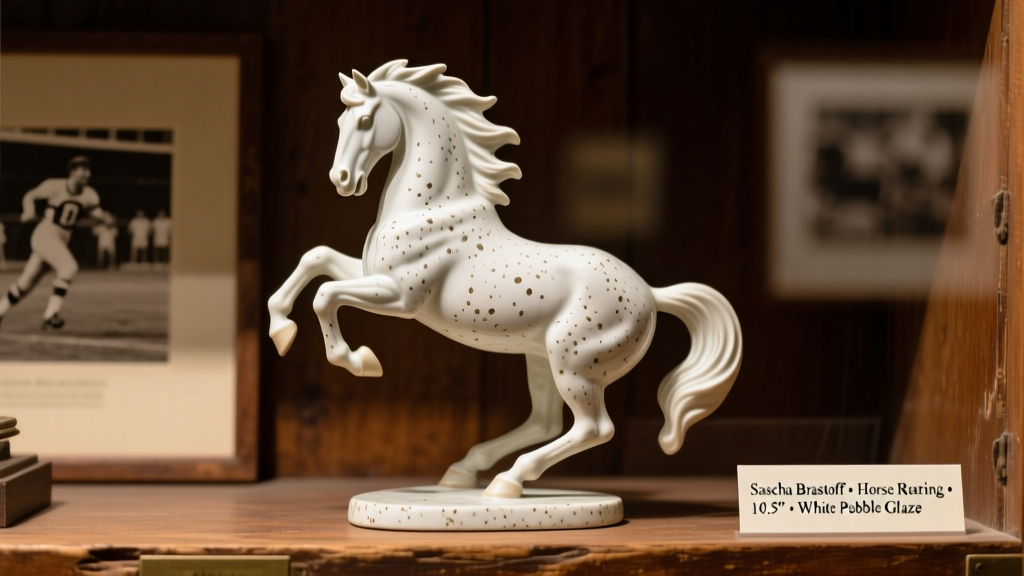
Sascha Brastoff Figurine: The Horse Rearing in White Pebbly Glaze — A Collector’s Deep Dive
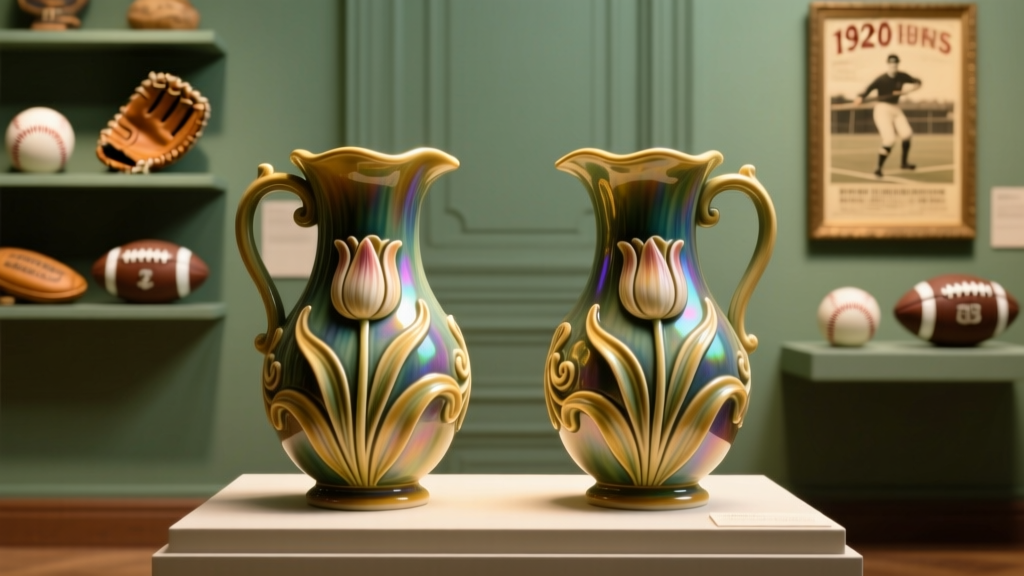
Majolica Ewer Tulip Relief Art Nouveau: Authentication, Provenance, and Market Value of the 14¼ × 5¼-Inch Pair
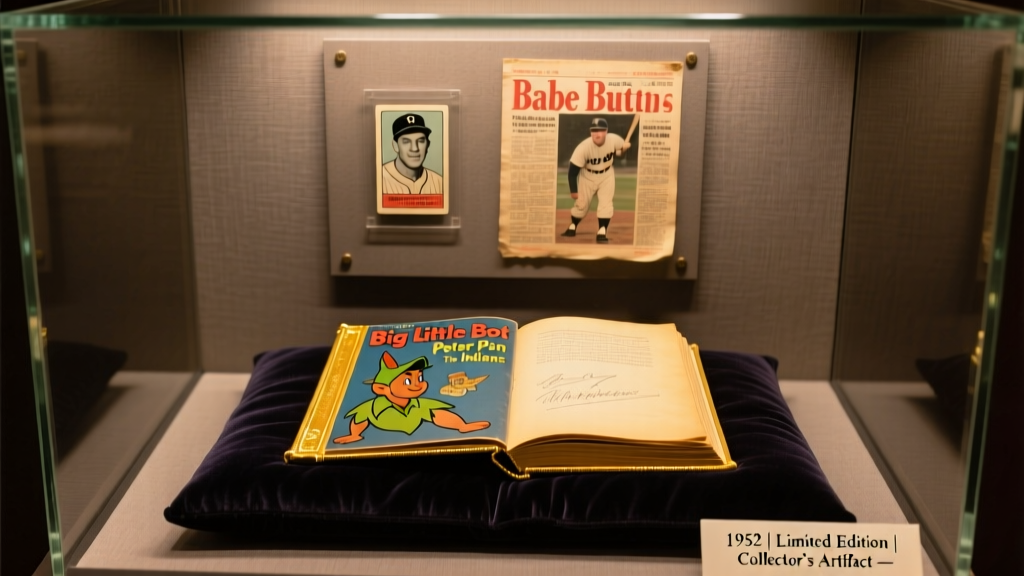
Peter Pan The Indians (1952): A Collector's Deep Dive into the Big Little Book Edition

The 1980 Indianapolis 500 Glass Carton: A Collector’s Artifact from Racing’s Golden Era
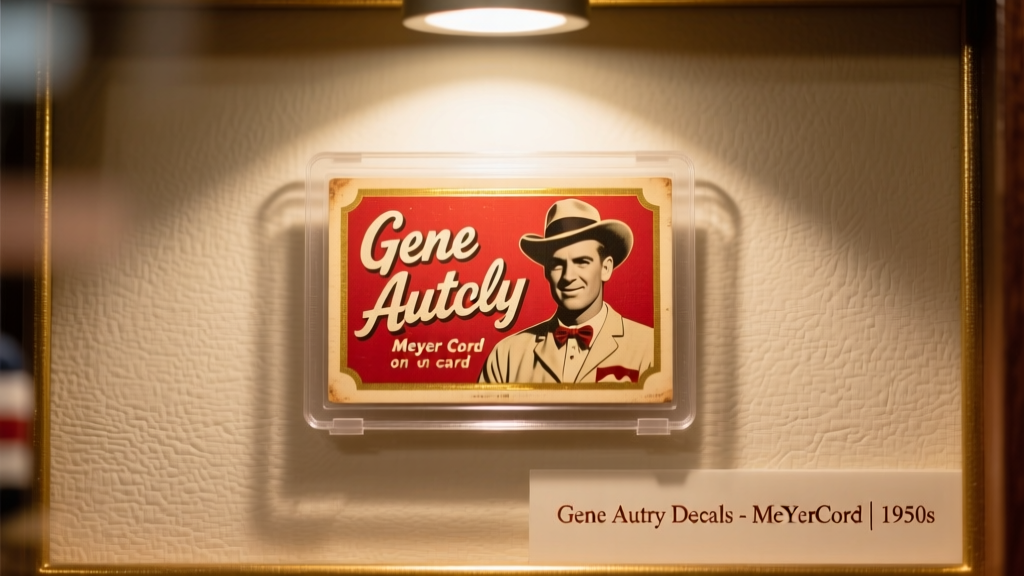
Gene Autry Decals on Meyercord Cards: A Collector’s Guide to 1950s Hollywood Memorabilia
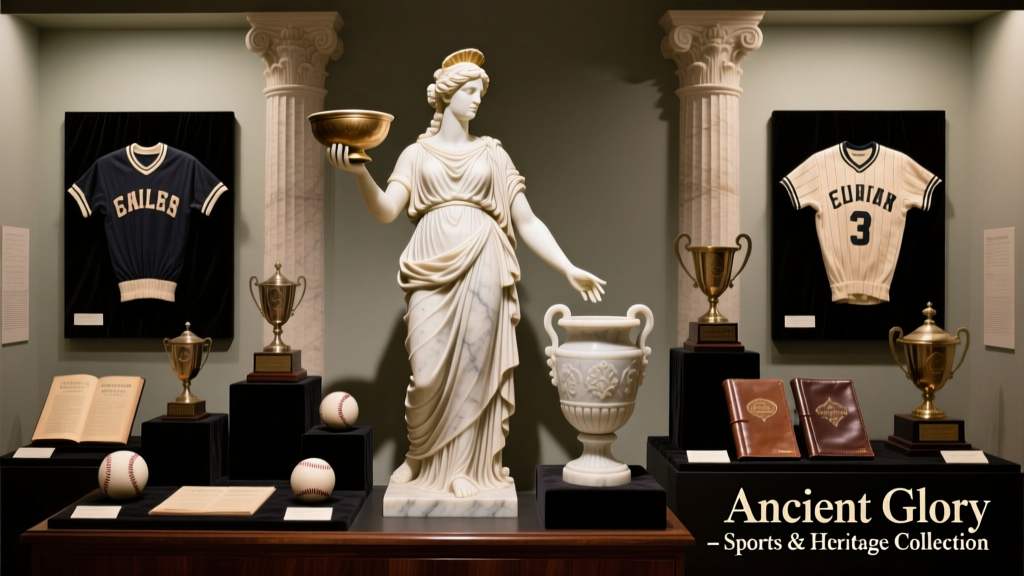
Authenticating and Valuing a 5 Ft 6 In Polished Marble Greek Maiden Statue with Integrated Bowl, Single-Hand Urn, and Classical Carving Details
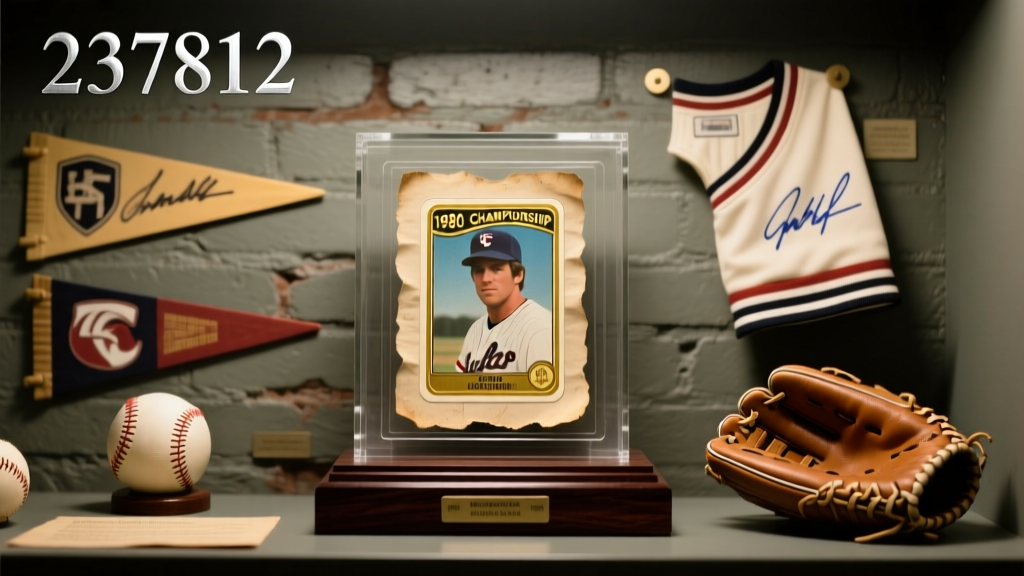
The 2337812: Decoding the Iconic Rawlings Pro Preferred Glove Model Number
Oscar Bach Wrought Iron Console Table (c. 1925): Authentication, Design Legacy, and Market Value of the 45 × 13-Inch Marble-Topped Masterpiece

Sterling China Co. No. 8: Decoding the Iconic Baseball Pitcher Figurine and Its Collectible Legacy