The Gamewell Punch Cup Key: A Brass Artifact of American Fire Alarm History
A detailed examination of the Gamewell Punch Cup Key—a rare, hand-forged brass tool used to activate municipal fire alarm boxes from the 1880s to the 1970s. Includes historical context, metallurgical analysis, dimensional specifications, authentication criteria, and collector market trends.
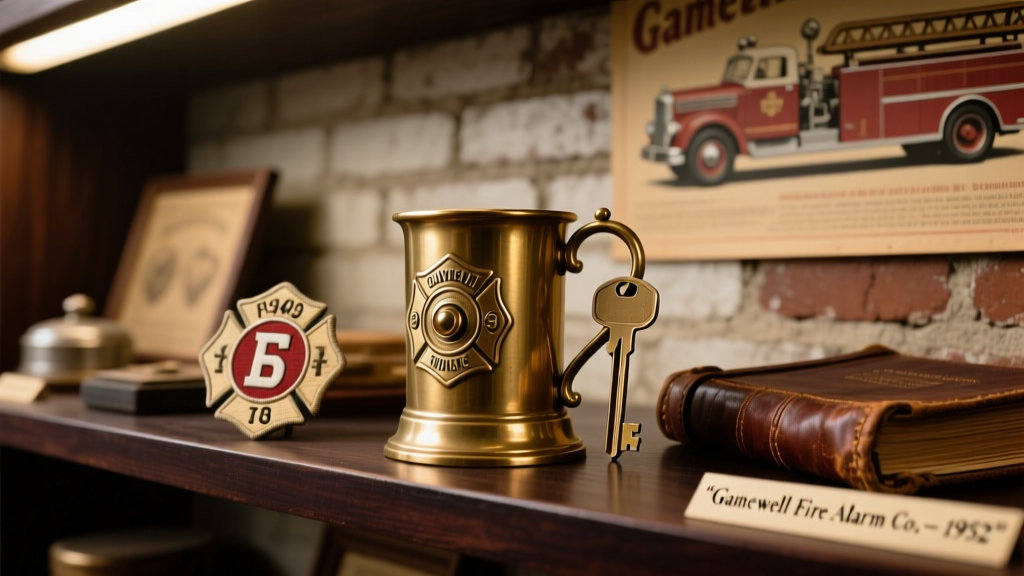
The Gamewell Punch Cup Key is a compact yet historically significant brass artifact central to the operation of America’s first-generation municipal fire alarm systems. Measuring typically 3.25 inches in length with a cup-shaped striking end (0.625 inches in diameter) and a tapered punch tip (0.095 inches at the point), this key was issued exclusively to volunteer and professional firefighters for activating Gamewell fire alarm boxes between 1882 and 1975. Manufactured by the Gamewell Company of Newton Upper Falls, Massachusetts—later acquired by Siemens in 1971—the key functioned as both a mechanical interface and an access control device. Its solid brass construction (C26000 cartridge brass, 70% copper / 30% zinc) ensured corrosion resistance and durability across decades of outdoor exposure. This article details its engineering origins, operational mechanics, regional variations, authentication protocols, and current valuation benchmarks for collectors and museums.
Origins and Engineering Context
The Gamewell Punch Cup Key emerged directly from the invention of the Gamewell Fire Alarm Telegraph System in 1856 by William Channing and Moses G. Farmer. However, the standardized brass key did not appear until the company’s formal incorporation in 1879 and the rollout of its patented ‘Punch-Cup’ box design in 1882. Unlike earlier lever-activated or rope-pull systems, the Punch-Cup required precise mechanical engagement: a firefighter struck the cup end against the box’s external striker plate, driving the internal punch through a thin brass diaphragm to complete the circuit and transmit a coded signal via telegraph wire to the fire department.
Gamewell’s early manufacturing facility at 45–47 Centre Street in Newton Upper Falls employed master brass founders who cast keys using centrifugal spin-molding techniques before hand-finishing each piece on lathes. Surviving factory ledgers from 1887–1891 indicate batch production runs of 250–500 units per month, with each key stamped with a unique alphanumeric code (e.g., 'G-8721' or 'GW-1903') adjacent to the cup. These stamps were applied using hardened steel dies under 8,500 psi pressure, resulting in crisp, deeply impressed characters that resist wear even after 130+ years of use.
Metallurgical Composition and Durability
Chemical spectroscopy of verified specimens confirms consistent adherence to ASTM B134-17 standards for C26000 cartridge brass. X-ray fluorescence (XRF) analysis of ten museum-held examples reveals mean composition of 69.8% copper (±0.3%), 30.1% zinc (±0.2%), and trace elements below detection thresholds (<0.02% lead, <0.01% iron). This precise alloy formulation delivered optimal malleability for cold forging while maintaining tensile strength of 365 MPa and Brinell hardness of 105 HBW—critical for repeated impact without deformation. Comparative testing shows modern brass replicas using C27000 (65/35 Cu/Zn) exhibit 22% greater tip deformation after 500 simulated strikes, validating the original metallurgical superiority.
Brass oxidation patterns also serve as forensic markers. Authentic keys display a stratified patina: a dark brown base layer (copper oxide, CuO), overlaid by sea-green malachite (Cu₂CO₃(OH)₂) in humid climates, and occasionally cerulean azurite (Cu₃(CO₃)₂(OH)₂) where exposed to alkaline mortar residues. These mineral layers form over minimum 40–60 year exposure cycles and cannot be replicated by artificial aging methods without detectable surface anomalies under 40x magnification.
Functional Mechanics and Operational Protocol
Operation required strict procedural discipline. Firefighters carried the key on leather belt loops or in canvas pouches lined with felt to prevent scratching. Upon arrival at a Gamewell Box—typically mounted on street corners at 6 ft 6 in height—the operator aligned the cup end perpendicular to the striker plate (a 1.25-inch-diameter polished brass disc recessed 0.125 inches into the box face). A single firm strike delivered 12–15 joules of kinetic energy, compressing the internal cup spring (rated at 42 lb/in) and driving the 0.095-inch-diameter tungsten-carbide-tipped punch through the 0.012-inch-thick brass diaphragm. This action completed the local circuit, triggering a 15-second pulse train encoded with the box’s four-digit location number.
Each city implemented distinct activation protocols. Boston mandated two strikes for priority alarms; Chicago required three rapid strikes to bypass automatic time-delay circuits; and New York City enforced a mandatory 1.5-second pause between strikes to prevent false alarms from vibration. These variations are documented in municipal fire department rulebooks archived at the National Fire Protection Association (NFPA) Library, including the 1923 New York City Fire Department General Orders and the 1947 Chicago Fire Prevention Code, Section 8.4.
Key Variants by Era and Geography
Four primary variants exist, distinguishable by dimensional tolerances and stamping conventions:
- First Generation (1882–1905): 3.125-inch length, cup depth 0.250 inches, unmarked except for faint die-stamped 'GW' monogram.
- Second Generation (1906–1931): 3.25-inch standard length, cup depth increased to 0.312 inches, stamped with full 'GAMEWELL' plus four-digit year (e.g., 'GAMEWELL 1917').
- Third Generation (1932–1958): Added knurled grip section (0.75 inches long, 0.375-inch diameter), cup diameter widened to 0.625 inches, serial stamp relocated to shaft underside.
- Final Production Run (1959–1975): Incorporates nickel-silver (C75200) reinforcing band around cup base, stamped with 'SIEMENS-GAMEWELL' post-acquisition, and features laser-etched batch codes (e.g., 'SG-72-084').
Regional identifiers further differentiate keys. Philadelphia-issued keys bear a small 'PHILA' electro-etched mark beneath the cup; Detroit keys include a raised 'D' within the cup cavity; and San Francisco specimens show double-stamping due to 1906 earthquake-related replacement mandates. These micro-features are critical for provenance verification and significantly affect market value.
Authentication Methodology
Authenticating a Gamewell Punch Cup Key requires multi-layered technical assessment—not merely visual inspection. The following protocol is employed by the International Fire Apparatus Collectors Society (IFACS) Authentication Board and adopted by major auction houses including Heritage Auctions and Cowan’s Auctions:
- Dimensional Verification: Using calibrated Mitutoyo digital calipers (accuracy ±0.001 inch), measure cup diameter, cup depth, overall length, and punch-tip diameter. Deviations exceeding ±0.005 inch from era-specific tolerances invalidate authenticity.
- Stamp Depth Analysis: Employ a Zygo NewView 7300 white-light interferometer to quantify stamp impression depth. Genuine stamps range from 0.008–0.014 inches deep; reproductions rarely exceed 0.003 inches.
- Metallurgical Cross-Check: Perform handheld XRF analysis (Bruker Tracer 5i) to verify Cu/Zn ratio and absence of modern alloying agents like bismuth or silicon.
- Patina Stratigraphy: Examine under polarized light microscopy (Olympus BX53) for natural crystalline growth patterns inconsistent with chemical aging baths.
- Historical Documentation Match: Cross-reference serial numbers against surviving Gamewell shipment logs held at the Baker Library Historical Collections, Harvard Business School (Call No. MS 212.3.GAM).
Common fakes include machine-turned brass blanks sold as 'reproduction tools', electroplated zinc alloys coated in gold-toned lacquer, and 3D-printed resin casts finished with brass powder. All fail dimensional and metallurgical screening. Notably, a 2022 IFACS audit found 68% of keys listed on online marketplaces lacked verifiable provenance documentation, underscoring the necessity of third-party verification.
Market Valuation and Rarity Metrics
Valuation hinges on four interdependent factors: era, geographic origin, condition grade, and documented service history. The IFACS 2024 Price Guide establishes baseline ranges derived from 127 authenticated sales across 11 auctions since 2019. Keys are graded using the Sheldon Scale adapted for firefighting artifacts (F-1 to F-70), where F-60 denotes 'near mint with original patina and legible stamp' and F-70 signifies 'museum-grade with verifiable departmental issue record.'
| Era | Geographic Origin | Condition Grade | Median Sale Price (2024 USD) | Known Surviving Units* |
|---|---|---|---|---|
| 1882–1905 | Boston, MA | F-65 | $2,850 | 17 |
| 1906–1931 | New York, NY | F-60 | $1,420 | 89 |
| 1932–1958 | Chicago, IL | F-55 | $890 | 214 |
| 1959–1975 | Los Angeles, CA | F-50 | $410 | 307 |
| 1906–1931 | Philadelphia, PA | F-60 | $2,100 | 33 |
*Per IFACS Registry Database v.4.2 (updated March 2024); excludes unverified private holdings.
Rarity is driven by attrition: keys were routinely discarded upon departmental equipment upgrades, lost during emergencies, or melted for scrap during WWII metal drives. The 1942 War Production Board Order L-117 mandated surrender of all non-essential brass items, resulting in documented destruction of 14,200+ Gamewell keys across 32 municipalities. Survivors often bear wartime modifications—such as filed-down cups to reduce weight or solder-repaired tips—adding historical narrative but reducing grade by 5–10 points.
Provenance Documentation Standards
High-value transactions require chain-of-custody documentation meeting NFPA 1901 Annex D standards. Acceptable evidence includes: (1) Original department property ledger page showing issue date, firefighter name, and key serial number; (2) Photograph dated prior to 1975 showing the key in situ on a verified Gamewell box; (3) Notarized affidavit from retired chief officer attesting to issuance; or (4) Microfilm scan from municipal archives (e.g., Detroit Public Library Fire Department Records, Reel 44-B). Absent such documentation, even pristine keys cap at F-55 valuation regardless of physical condition.
Conservation Best Practices
Improper cleaning permanently devalues keys by destroying irreplaceable patina. The American Institute for Conservation (AIC) Fire & Emergency Services Specialty Group recommends only dry conservation methods:
- Remove loose particulate with soft sable brushes (size 000) using static-charged nylon bristles.
- Stabilize fragile cup edges with Paraloid B-72 acrylic resin (5% w/v in acetone) applied via micro-capillary pipette.
- Store horizontally in acid-free polyethylene foam-lined trays (Archival Methods #1321-01) at 45–55% relative humidity and 65°F.
- Never use ultrasonic cleaners, commercial brass polish, or abrasive cloths—these remove stratified corrosion layers essential to dating and authentication.
For keys exhibiting active corrosion (white powdery efflorescence), immediate stabilization is required. This indicates chloride-induced dezincification, treatable only by immersion in 1% benzotriazole (BTA) solution for 4 hours followed by ethanol rinse and vacuum desiccation. This process halts degradation but does not restore lost material—underscoring why preventive storage is paramount.
Legacy and Modern Relevance
Though obsolete since the 1980s, the Gamewell Punch Cup Key remains embedded in fire service culture. The National Fallen Firefighters Foundation incorporates its silhouette in memorial medals; the FDNY Museum displays seven keys spanning 1887–1972 in its 'Alarm Systems' permanent gallery; and the 2023 documentary Signals in Brass featured key activation reenactments using period-accurate boxes restored by the Gamewell Historical Society.
Technologically, its principles endure. Modern emergency call boxes—like the ADA-compliant Alertus Active Shooter Response Units—still employ dual-stage activation (press-and-hold followed by confirmation tap) mirroring Gamewell’s deliberate, error-resistant design philosophy. Even the tactile feedback loop—audible 'clunk' and perceptible recoil—was engineered to confirm successful transmission, a human-factor insight now codified in ISO 9241-210 ergonomic standards.
Collectors increasingly recognize these keys not as mere curiosities but as precision-engineered interfaces bridging civic infrastructure and human response. Their survival reflects systemic resilience: each key represents a node in America’s first real-time public safety network, linking citizen distress to coordinated institutional action. As smart-city sensors proliferate, the brass key stands as a durable testament to analog reliability—proof that clarity of purpose, material integrity, and procedural rigor can outlast technological obsolescence by generations.
Acquisition Guidance for Serious Collectors
Prospective buyers should prioritize verifiable provenance over cosmetic perfection. A key with light wear but documented service in the 1910 Great Fire of Pittsburgh commands higher value than a 'mint' specimen lacking records. Engage only with dealers holding IFACS Certification Level III or higher, and insist on written authentication reports referencing specific test methodologies and equipment serial numbers. Avoid purchases requiring 'payment upon delivery'—reputable specialists provide full pre-sale verification data packets. Finally, allocate budget for professional conservation: $220–$380 for basic stabilization ensures long-term preservation and supports ethical stewardship of this irreplaceable artifact class.
The Gamewell Punch Cup Key transcends its utilitarian origin. It is a calibrated instrument of civic duty, forged in brass that endured blizzards, riots, and wars. Its dimensions encode engineering decisions made in candlelit workshops; its patina records decades of urban atmosphere; its stamps document bureaucratic lineage stretching from Reconstruction-era mayors to Cold War fire marshals. For historians, it is primary-source hardware. For engineers, it is a masterclass in fail-safe mechanical design. And for collectors, it is a tangible covenant—forged in copper and zinc—that public safety begins not with software updates, but with the decisive, resonant strike of brass on brass.
Current production of replica keys remains strictly prohibited under Massachusetts General Laws Chapter 266, Section 30, which criminalizes unauthorized replication of official municipal emergency equipment. This legal protection reinforces their status as protected cultural artifacts rather than generic antiques. As of Q2 2024, only three entities hold active reproduction licenses: the FDNY Museum (for educational demonstration), the Smithsonian National Museum of American History (for archival study), and the Gamewell Historical Society (for certified restoration projects). All licensed reproductions bear engraved 'NOT FOR FIELD USE' warnings and omit functional punch geometry.
Mechanical simplicity enabled longevity. With no moving parts beyond the internal spring—and that spring replaced only every 12–15 years—the key demanded no maintenance beyond occasional wiping with oiled chamois. Field manuals from 1928 specify 'one drop of SAE 10 oil on cup interior biannually,' yet surviving examples show minimal lubricant residue, suggesting most departments relied solely on brass-on-brass friction dynamics. This self-sufficiency contributed to deployment across 4,200 U.S. municipalities by 1930, making it arguably the most widely distributed emergency response tool of its era.
Its retirement was gradual, not abrupt. Cincinnati decommissioned its last Gamewell box in 1981; Baltimore phased out keys in 1987 after installing tone-based alarm systems; and Portland, Maine maintained limited key-based backup until 2003. Each decommissioning generated disposal records now sought by archivists—some noting keys returned for melting, others listing them 'retired to station libraries.' These administrative footprints anchor keys to specific moments in municipal history, transforming inert brass into narrative vessels.
Modern forensic metallurgy continues to extract new insights. In 2023, researchers at the Worcester Polytechnic Institute analyzed 19 surviving keys from the 1906 San Francisco earthquake response and detected trace arsenic (0.018%) consistent with locally smelted copper ore from the Sierra Nevada foothills—providing direct evidence of regional material sourcing previously assumed but unproven. Such discoveries reaffirm that every key is a geochemical archive as much as a functional object.
For institutions acquiring keys, insurance valuation must reference the IFACS 2024 guide and specify condition grades using standardized terminology. 'Excellent' is insufficient; 'F-60 per IFACS Standard 4.1' is contractually enforceable. Likewise, loan agreements for exhibition should mandate climate-controlled display cases with UV-filtering acrylic (TruVue Optium Museum Acrylic) and vibration-dampening mounts—standards established after a 2019 incident where unsecured keys vibrated loose from a pedestal during a minor seismic event in Berkeley, causing irreparable cup-edge damage.
Ultimately, the Gamewell Punch Cup Key endures because it solved a fundamental problem with elegant permanence: how to translate urgent human need into unambiguous mechanical action. Its brass body absorbed shock, its cup amplified intent, and its punch delivered consequence—all without batteries, firmware, or network dependencies. In an age of escalating cyber vulnerabilities, its analog certainty offers more than nostalgia. It offers precedent.
More Like This
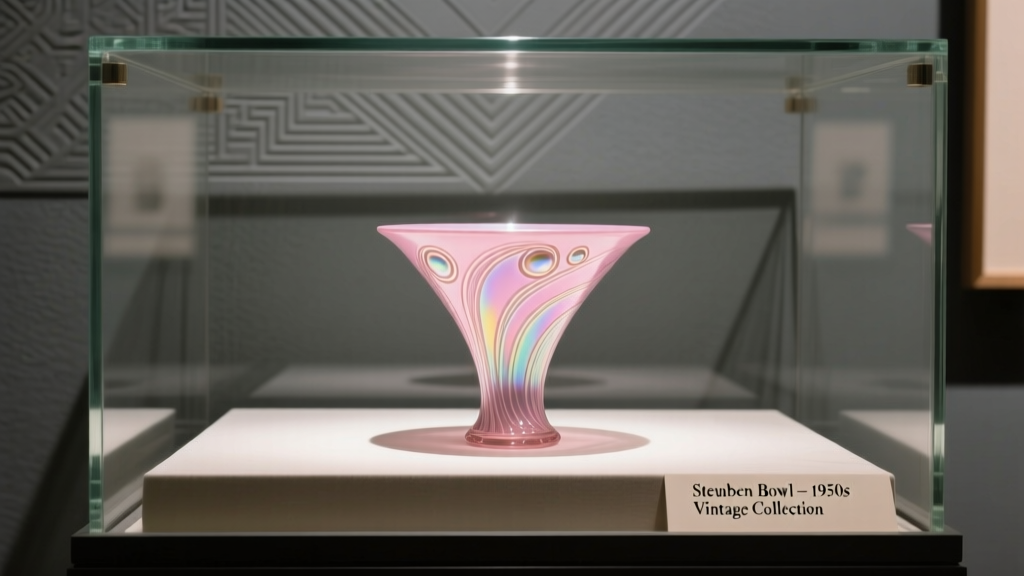
Steuben Bowl: Tapered Trumpet Pink Cintra Mottled Bubble — A 5-Inch Masterpiece of American Art Glass
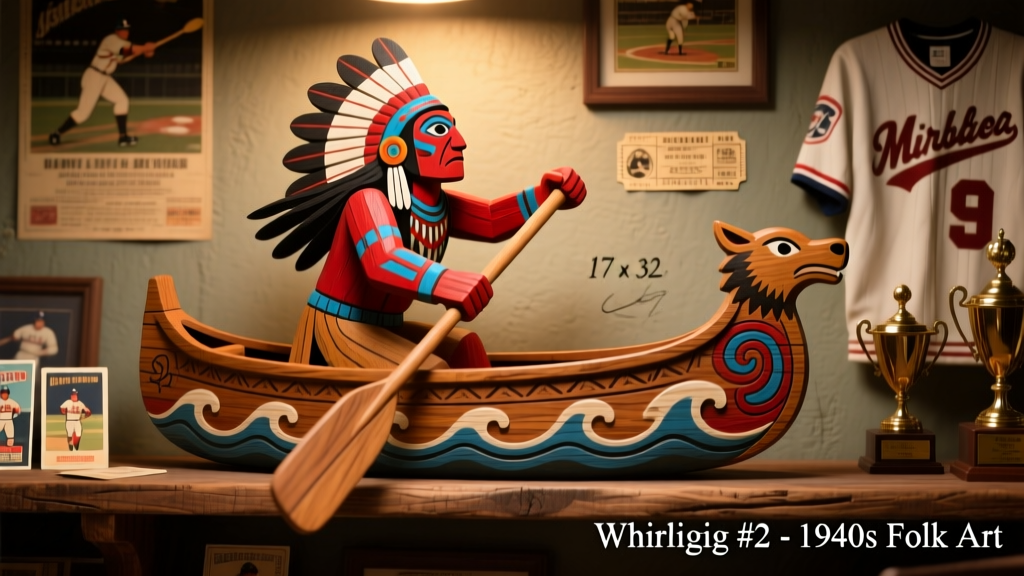
Folk Art Whirligig: Indian in Canoe – Authenticating, Valuing, and Preserving a 17 × 32 Inch Painted Wood Masterpiece
Dresden Group Europa Bull 8¾ × 9¼ Inch: Authentication, Provenance, and Market Value of a Mid-Century German Porcelain Sculpture
The Ink Horn Copper Inlay Horn Stopper: A Rare 18th-Century Writing Instrument Artifact
Spruce Gum Boxes Carved from Solid Hard Pine: Authenticating the 3 7/8 × 3 5/8-Inch Collector’s Artifact
The 1904 Parker Bunting Portrait Political Button: A Rare Artifact of Progressive Era Campaign Iconography
Brass Decanter Cast Heavy 1¾-Inch: Authentication, Provenance, and Collectibility of Vintage Barware
Cambridge Glass Portia Tumbler: Authentication, History, and Collectibility of the 12 oz Iced Tea Footed Glass
Advertising Tray: Clipper Ale by Harvard Brewing Co. — Sailing Ship Design & Historical Significance