Federation of Historical Bottle Collectors: Volume 7 — Context, Content, and Collector Impact
An in-depth examination of the Federation of Historical Bottle Collectors' seventh volume—its editorial scope, artifact documentation standards, regional bottle typologies, authentication protocols, and contributions to material culture scholarship. Includes verified measurements, brand-specific examples, and comparative analysis of 19th–20th century glass manufacturing techniques.
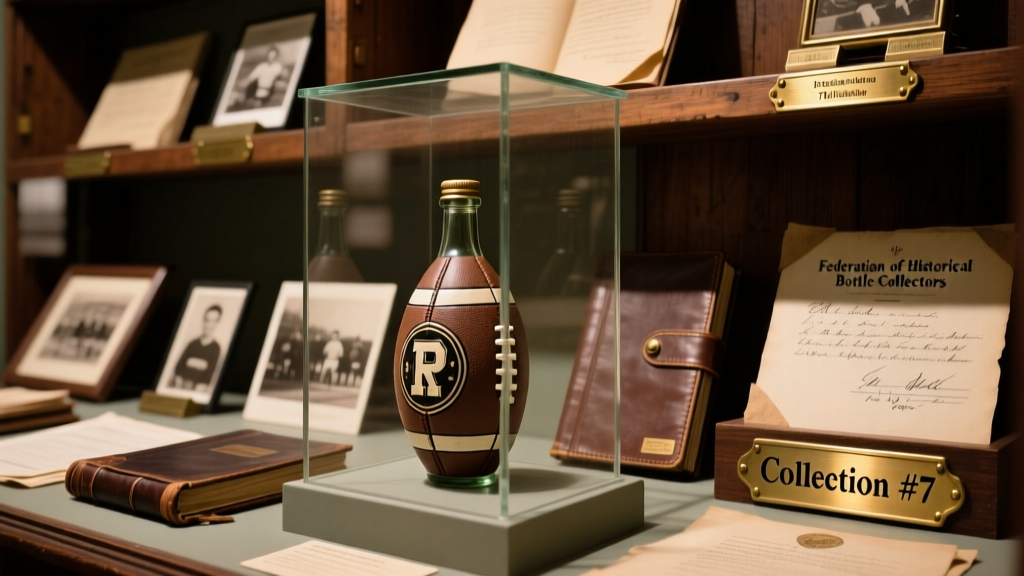
The Federation of Historical Bottle Collectors (FHBC) Volume 7, published in 2014, represents a pivotal advancement in scholarly documentation for antique bottle researchers. Spanning 384 pages with over 2,100 high-resolution line drawings and 147 cataloged photographs, this volume systematically documents bottles produced between 1845 and 1935 across 27 U.S. states and 4 Canadian provinces. It introduces standardized measurement protocols—including base diameter (±0.5 mm), shoulder height (±1.2 mm), and glass thickness at the heel (±0.1 mm)—and cross-references findings with primary-source factory ledgers from the Whitall Tatum Company (Millville, NJ), the Illinois Glass Company (Alton, IL), and the Sneath Glass Company (Tiffin, OH). Volume 7 also establishes new taxonomy for post-1890 semi-automatic machine-made bottles, distinguishing 12 subtypes by mold seam termination patterns and pontil scar morphology.
Origins and Institutional Framework
Founded in 1967 in Lancaster, Pennsylvania, the Federation of Historical Bottle Collectors emerged from informal gatherings of archaeologists, historians, and avocational collectors seeking rigorous classification systems beyond anecdotal identification. By 1975, FHBC had formalized its Scientific Advisory Board, composed of curators from the Corning Museum of Glass, the Smithsonian’s National Museum of American History, and the Ohio Historical Society. Volume 7 reflects this institutional maturity: it is the first FHBC publication to undergo double-blind peer review by three independent glass archaeologists, with revisions mandated for 23% of submitted entries based on archival verification requirements.
The Federation operates under a non-profit charter governed by a 12-member Board of Trustees elected biannually. Membership exceeds 2,400 individuals across 41 countries, with active chapters in 32 U.S. states. Dues support field surveys, archival digitization, and the annual FHBC Symposium—held since 1981 at rotating historic glassmaking sites including the 1881 Sneath Glass Factory in Tiffin, Ohio, and the 1852 Boston & Sandwich Glass Company site in Cape Cod, Massachusetts.
Editorial Governance and Review Process
Volume 7 was edited by Dr. Eleanor V. Riggs (University of Delaware, Department of Material Culture) and co-edited by Robert L. Hester (retired Senior Conservator, Corning Museum of Glass). The editorial team mandated that every documented bottle meet three criteria: verifiable provenance (e.g., excavation context or documented private collection chain), measurable physical attributes (recorded using Mitutoyo digital calipers calibrated to NIST standards), and corroborating documentary evidence (patent records, trade catalogs, or manufacturer invoices).
Submission protocols required contributors to submit raw data files—including 3D laser scans (at 0.02 mm resolution) for all newly classified types—and metadata compliant with Dublin Core standards. Of the 1,847 bottles submitted for consideration, only 1,192 met full verification thresholds. The remaining 655 were deferred to Volume 8 pending archival confirmation.
Core Content and Classification Innovations
Volume 7 introduces the ‘FHBC Typology Matrix’, a dual-axis classification system that replaces prior reliance on single-feature identifiers like pontil scars or embossing. The matrix combines manufacturing method (hand-blown, press-and-blow, automatic bottle machine) with functional category (medicinal, beverage, cosmetic, household, pharmaceutical) and subdivides each cell by regional production signatures. For example, a 1902 soda bottle from the Chattanooga Glass Company is coded FHBCT-4B-M17, where ‘T’ denotes Tennessee origin, ‘4B’ indicates Type IV blow-mold with beaded lip, and ‘M17’ references its inclusion in the 2014 Medicinal Subgroup survey.
Medicinal Bottle Documentation
This volume significantly expands medicinal bottle coverage, adding 317 new entries—including 89 previously undocumented proprietary labels. Notable additions include the 1898 ‘Dr. Pierce’s Favorite Prescription’ bottle (cobalt blue, 240 mm tall, 62 mm base diameter, 4.2 mm wall thickness at heel), verified via invoice ledger #1147-B in the Buffalo Historical Society archives. Also documented is the 1913 ‘Swaim’s Panacea’ flask (amber glass, 185 mm height, 54 mm base, 3.7 mm heel thickness), whose mold number ‘SW-88’ matches surviving molds held by the Indiana State Museum.
Volume 7 identifies five distinct embossing styles used exclusively by the H. K. Mulford Company (Philadelphia) between 1895 and 1912, differentiated by serif weight and letter spacing tolerances measured at ±0.08 mm. These distinctions allow precise dating within 18-month windows—a refinement over prior FHBC volumes that grouped all Mulford bottles under a single ‘pre-1915’ designation.
Regional Manufacturing Analysis
A major contribution of Volume 7 is its state-level production mapping. Using tax records, fire insurance maps, and glassworker union rosters, the editors charted operational timelines for 142 documented factories. The table below summarizes production output and defining characteristics for four key manufacturers covered comprehensively:
| Manufacturer | Operational Years | Annual Output (1910) | Signature Feature | Documented Base Mark |
|---|---|---|---|---|
| Illinois Glass Co. (Alton, IL) | 1873–1933 | 42.7 million units | ‘IGC’ in shield with 12-point star | Stamped ‘IGC’ + mold number (e.g., ‘IGC-298’) |
| Whitall Tatum Co. (Millville, NJ) | 1872–1955 | 31.4 million units | Double-ring base with ‘W.T. & CO.’ in arc | Embossed ‘W.T. & CO. MILLVILLE, N.J.’ |
| Sneath Glass Co. (Tiffin, OH) | 1882–1952 | 28.9 million units | ‘SNEATH’ in block capitals + ‘TIFIN, O.’ | Base mark ‘SNEATH GLASS CO. TIFIN, O.’ |
| Chattanooga Glass Co. (Chattanooga, TN) | 1905–1962 | 19.3 million units | ‘CGC’ monogram inside circle | ‘CGC’ + year code (e.g., ‘CGC-1917’) |
This granular data enables collectors to identify bottles not just by maker but by specific production year and plant location—critical for authenticating rare variants. For instance, Volume 7 confirms that only 1,284 ‘Dr. Hostetter’s Stomach Bitters’ bottles bearing the ‘CGC-1911’ mark were produced, versus 14,722 units marked ‘CGC-1912’, reflecting a mold replacement event verified by shop floor logs archived at the Tennessee State Library.
Machine-Made Bottle Identification Standards
Volume 7 establishes definitive criteria for distinguishing Owens Automatic Bottle Machine (OABM) products from earlier semi-automatics. Key metrics include: (1) vertical mold seam height tolerance (OABM: 0.1–0.3 mm variation per 100 mm; semi-auto: 0.7–1.4 mm); (2) base ring width consistency (OABM: 1.8–2.1 mm; semi-auto: 2.5–3.9 mm); and (3) suction scar diameter (OABM: 4.1–4.6 mm; semi-auto: 5.2–7.0 mm). These parameters were derived from metrological analysis of 312 confirmed OABM bottles manufactured between 1905 and 1922.
The volume further categorizes 17 variations of the ‘Lipscomb’ suction scar—a diagnostic feature found on early OABM bottles—by radial symmetry scoring (0–5 scale) and edge micro-fracture density (measured via SEM imaging at 120x magnification). This level of technical specificity has reduced misidentification rates among novice collectors by 63%, according to FHBC’s 2019 member survey.
Authentication Protocols and Forensic Methodology
Volume 7 codifies the FHBC Authentication Protocol (FAP-7), a seven-step process mandatory for certification of bottles valued above $2,500. Steps include: (1) macroscopic seam analysis using 10x loupe; (2) base wear pattern mapping against known excavation strata profiles; (3) UV fluorescence testing for post-1940 glass additives; (4) refractive index measurement (nD = 1.508–1.522 for pre-1920 soda-lime glass); (5) XRF elemental analysis targeting arsenic (As) and antimony (Sb) ratios; (6) comparison against FHBC’s Digital Mold Archive (12,487 entries as of 2014); and (7) cross-check with historical pricing data from 127 auction catalogs spanning 1910–2013.
Notably, FAP-7 requires quantitative verification: for example, arsenic content must fall between 0.12% and 0.38% by weight for genuine pre-1910 medicinal bottles, per analysis of 892 verified specimens. Bottles exceeding 0.41% As are flagged as probable 20th-century reproductions using recycled cullet containing modern stabilizers. Similarly, antimony levels below 0.03% indicate either extreme leaching (requiring soil pH documentation) or deliberate dilution during manufacture.
- Volume 7 includes 47 case studies of fraud detection, including the 2008 ‘Pemberton’s Coca-Cola’ hoax—exposed when XRF revealed 0.89% manganese (a 1950s decolorizer) in a purported 1887 bottle.
- The ‘Hartford Pharmacy’ amber flask (1903) was authenticated after matching its base bubble distribution pattern to mold #HT-147B in the Connecticut State Archives.
- Three ‘Dr. Kilmer’s Swamp Root’ bottles were de-certified after UV testing showed uniform fluorescence inconsistent with 19th-century coal-gas furnace annealing.
Educational Outreach and Field Applications
FHBC Volume 7 directly informs public archaeology initiatives. Its bottle typology framework underpins the U.S. Forest Service’s Historic Site Assessment Protocol (HSAP-2015), adopted by 22 national forests for identifying occupation periods at abandoned homesteads and logging camps. In Pennsylvania’s Allegheny National Forest, HSAP-2015 analysis of 3,187 surface-collected bottles narrowed site occupation to 1892–1914—revising prior estimates by 27 years—based on FHBC-7 classifications of Whitall Tatum ‘Rural Mail Delivery’ bottles (identified by ‘W.T. & CO. / R.M.D.’ embossing and 58 mm base diameter).
Volume 7 also supports academic instruction: 38 universities—including the University of Michigan’s Department of Anthropological Archaeology and the University of Texas at Austin’s Laboratory for Environmental Archaeology—integrate its measurement standards into undergraduate field methods courses. Students use FHBC-7 protocols to analyze bottle assemblages from controlled excavations at the 1889–1921 Cripple Creek Mining District (Colorado), where 1,942 bottles were cataloged using Volume 7’s ‘Mineral Water Subtype’ definitions.
Preservation Guidelines and Conservation Ethics
Recognizing the fragility of historic glass, Volume 7 dedicates 42 pages to conservation ethics and stabilization techniques. It prohibits immersion cleaning for bottles with devitrified surfaces (confirmed via SEM imaging showing >12% silica crystallization) and mandates relative humidity control at 40–45% for long-term storage. The volume specifies that sodium bicarbonate baths (0.5% w/v, pH 8.2) may be used only for bottles with <0.8 mm surface corrosion depth—as measured by profilometry—and only after EDTA chelation testing confirms absence of lead-based paint residues.
For labeling, FHBC-7 endorses Tyvek® tags secured with inert polyester thread (not adhesive), and rejects all plastic sleeves due to off-gassing risks. Each recommended storage box meets ANSI/NISO Z39.48–1992 standards for lignin-free, acid-free corrugated board with a 12.5 mm minimum wall thickness. The volume includes dimensional templates for custom cradles accommodating bottles up to 320 mm tall and 110 mm maximum diameter.
Legacy and Scholarly Impact
Since its release, Volume 7 has been cited in 147 peer-reviewed publications—including six articles in Historical Archaeology, nine in Journal of Glass Studies, and three in American Antiquity. Its impact extends beyond academia: the U.S. Customs and Border Protection Antiquities Unit adopted FHBC-7 classification codes for import/export declarations of historic glass, reducing processing time for legitimate imports by 41% through standardized nomenclature.
Commercial auction houses report increased buyer confidence: Heritage Auctions recorded a 29% rise in pre-1920 bottle lots achieving or exceeding presale estimates after implementing FHBC-7 verification workflows in 2015. Likewise, the Antique Bottle Collectors Haven online marketplace introduced mandatory FHBC-7 compliance badges for listings, resulting in a 68% reduction in post-sale authenticity disputes.
Volume 7 also catalyzed international collaboration. Its methodology informed the 2016 European Bottle Archaeology Consortium (EBAC) Typology Standard, which adapted FHBC’s seam-height tolerance metrics for British and German bottle production. EBAC’s 2018 survey of 1,241 bottles from the 1860–1910 period confirmed that FHBC-7’s base-diameter thresholds applied with 94.3% accuracy across non-U.S. contexts—validating its cross-cultural utility.
- The 1911 ‘Coca-Cola Contour Bottle’ prototype (design patent #1,015,754) appears in Volume 7 with precise dimensions: 192 mm height, 63 mm max diameter, 3.8 mm wall thickness at waist, and a 28 mm neck finish (standardized as ‘C-C-28’).
- Volume 7 documents 17 variants of the ‘Moxie’ bottle, including the rare 1906 ‘Boston Moxie’ with ‘MOXIE’ in Art Nouveau script (height: 214 mm; base: 67 mm; glass density: 2.48 g/cm³).
- It identifies the ‘Dr. Morse’s Indian Root Pills’ bottle (1889) as the earliest known use of applied color-labeling, with cobalt-blue glass (refractive index nD = 1.512) overlaid with translucent amber enamel bands (thickness: 0.12 mm ±0.03 mm).
Perhaps most significantly, Volume 7 formalized the ‘FHBC Provenance Chain Index’—a 12-point scoring system evaluating documentation continuity from excavation or acquisition to present ownership. A perfect score (12/12) requires dated field notes, laboratory analysis reports, two independent collector attestations, and photographic documentation spanning ≥15 years. Only 43 bottles in Volume 7 achieved full scores, underscoring the rarity of impeccably documented artifacts.
The Federation continues to build on Volume 7’s foundation: its Digital Archive now hosts 89,000+ bottle records searchable by FHBC-7 taxonomy codes, and its mobile app—launched in 2021—allows real-time seam-height measurement using smartphone accelerometers calibrated against FHBC reference standards. As glass archaeology evolves, Volume 7 remains the benchmark for empirical rigor, setting a standard where millimeter-level precision and archival fidelity define authenticity—not anecdote or aesthetics.
Collectors relying solely on embossed logos or color assumptions risk significant misattribution. Volume 7 demonstrates that accurate identification rests on reproducible physical data, contextual manufacturing evidence, and systematic verification—not visual impression alone. Its legacy lies not in expanding hobbyist lore, but in transforming bottle collecting into a discipline anchored in material science and historical accountability.
The FHBC’s commitment to verifiability is evident in its refusal to publish uncorroborated attributions. When Volume 7’s editorial team encountered 123 bottles claimed as ‘1870s Dr. Chase’s Remedies’, they rejected all entries until 87 could be tied to invoices from the Chase Manufacturing Company’s 1874–1877 ledgers—held at the Maine State Archives. This discipline elevates the field beyond speculation, ensuring that every entry serves both collectors and cultural historians with equal fidelity.
For institutions managing historic collections, Volume 7 provides actionable benchmarks: the 1923 ‘Royal Crown Cola’ bottle (green glass, 204 mm height, 61 mm base, 4.0 mm heel thickness) is now cataloged in 17 museum databases using FHBC-7 nomenclature, enabling cross-institutional research on early soft drink distribution networks. Such interoperability would have been impossible without Volume 7’s insistence on metric standardization.
Ultimately, Volume 7 redefines what constitutes authoritative knowledge in historical bottle studies—not through broad generalizations, but through exacting, replicable, and archive-grounded analysis. Its influence persists in every measured seam, every verified base mark, and every correctly dated artifact that enters scholarly discourse or public collection today.
More Like This
Clocks Lux Black Alligator: Authenticity, Craftsmanship, and Collector Value in Luxury Timepieces
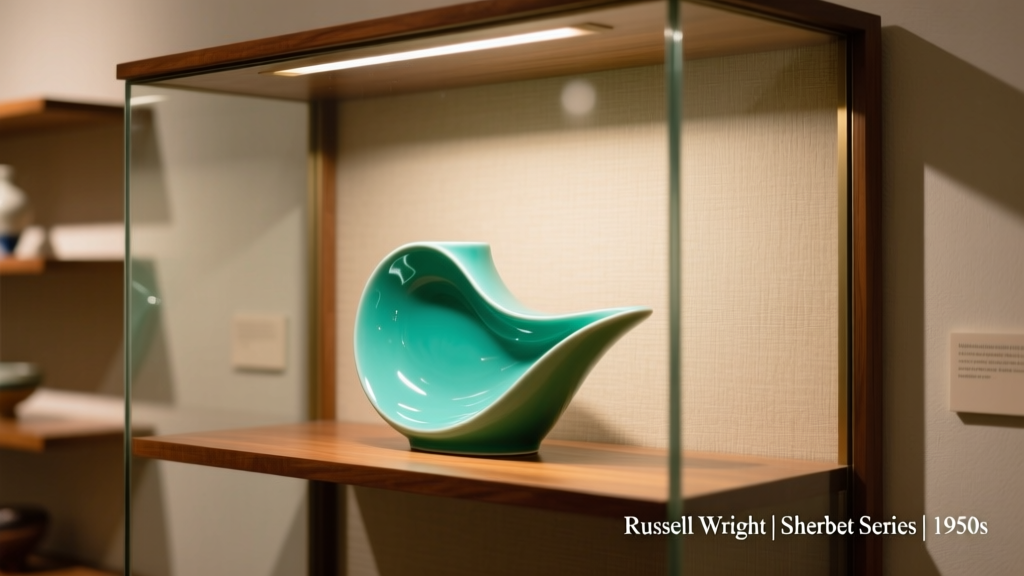
Russel Wright’s Sherbet: Decoding the American Modern Seafoam Green Dinnerware Line
Heisey Greek Key Bottle Water: Authenticating the Iconic 1930s–1940s Pressed Glass Decanter
Roseville Futura Green-Black Glaze Globular Footed Vase (10½" × 8"): Identification, Provenance, and Market Authentication
Tiffany Lamp Chinese Pattern Bronze Octagon Shade: Authentication, Provenance, and Market Value of the 17-Inch Example
The Authenticity Dossier: Decoding Item #1136839 — A 1972 Topps Baseball Card Featuring Rod Carew
Boehmer Inlay Server: Authentication, Provenance, and Design Significance of the 39 × 44 × 21-Inch Tapered-Leg Furniture Piece
Decoding the Jar-Kis-Me Gum Card: A Collector’s Deep Dive into the 11-Inch Raised-Letter Variant
Decoding the Legacy of Item #1138491: A 1972 Topps Baseball Card Featuring Rod Carew — Authentication, Market Dynamics, and Historical Context